
At the end of Season 4 of The Americans, I proclaimed it to be the best show on tv. A bit hyperbolic. It’s much easier to say that the show nobody is watching is better than the last popular tv show. But The Americans had a lot on its side: impeccable writing, a ruthlessly methodical plot, brilliant performances, and the best mic drops in the game (sorry Ed Sheeran). What truly elevated The Americans over other shows was its commitment to its principles and consequences, even at the expense of what its few viewers may have wanted.
In many ways this was what made the show unique. It’s willingness to delay story, to reward patience, and to not give in to cheap thrills. Any fan of the show wanted Philip and Elizabeth’s marriage to work, for them both to be happy, and for their secret identities to remain a secret. But the show was staked on its characters’ identities. Elizabeth as a strong-willed, uncompromising Soviet agent. Philip as more of a free spirit, EST-loving family man. He sees that America offers a lot of advantages over the Soviet Union. Yet, these differences weren’t pushed aside for the sake of the plot. They were woven into the very fabric of it.
After Season Four, my proclamation of The Americans being the best show on television was derailed (a bit). It was announced that The Americans would have two seasons to tie together its ending. An apparent blessing (and truly a blessing considering its viewership numbers). But this extension tripped up the show in Season 5. What was once deliberate and methodical became boring and about digging a hole (seriously). But when the sixth and final season returned, so did the show’s brilliance. In this case it was a miscalculation of story. Too much was saved for the last season. Season 5 was sub par at the cost of Season 6 being fantastic.
If this seems like a ploy just to reassert my love for The Americans, you’re half-right. The other half of it is to point out that I believed Game of Thrones was suffering from the same problem. Before Season 7 it was announced that there would be two final seasons to wrap up the show. What do you know, Season 7 suffered in many of the same ways as Season 5 of The Americans. Sure, there wasn’t hole digging and wheat growing (again, seriously). Instead, Thrones decided to stuff a season full of nonsense plot lines and excursions which had no real bearing on the stakes that had already been established. In other words they punted on the story until Season 8.
Or so I thought. But after the premiere of Season 8 I’m not so sure. With only six episodes left, “Winterfell” promised to be jammed pack. And on paper, a lot of important and long- anticipated things did come to pass. Almost every major character either met or had a reunion, Jon rode a dragon and finally learned the truth of his identity. So why did this episode feel fraught?
First of all, it introduced us to even more story lines. A move that feels like George R.R. Martin’s worst habit: expanding the story at the cost of closing it. We met The Golden Company and Harry Strickland, a company and character who have a lot of history and potential bearing on the story. Briefly, they are delineated from an offshoot Targaryen House, potentially have the lost Valyrian sword Blackfyre, and maybe have been waiting for an invitation to Westeros to claim back kingdoms and castles they believe to be theirs by right. But at this stage what is there left for them to do besides turn on Cersei? I don’t think the show really has the time to give their full story or history justice. Nor should it. But then why introduce them at this point of the series, and not last season?
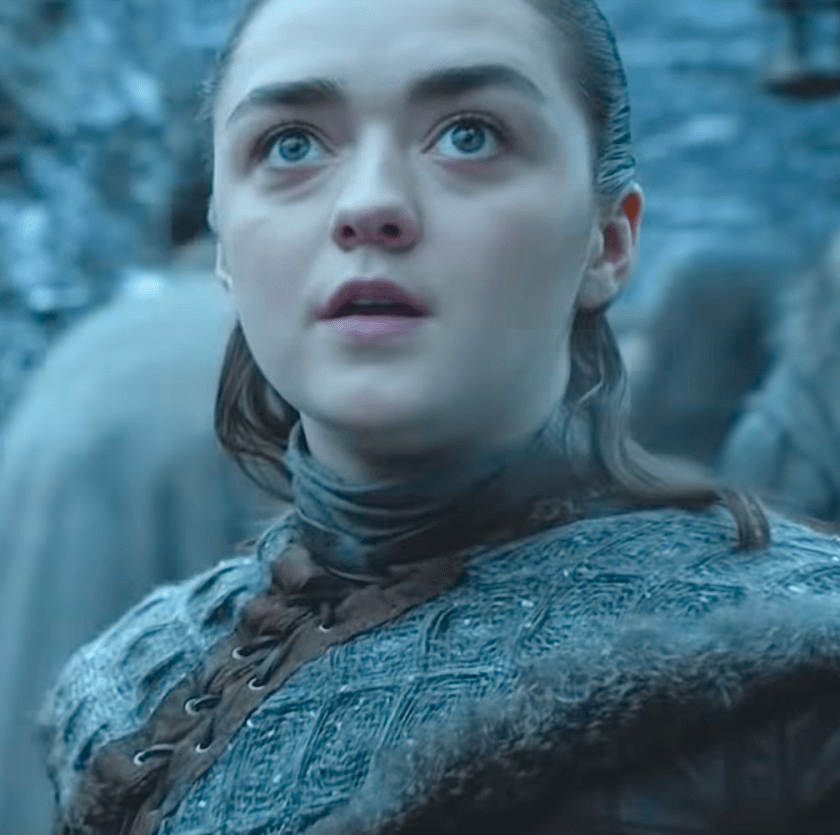
The biggest failing of the show last year was a nonsensical plot that centered on a rift between Sansa and Arya that shouldn’t have existed (and maybe didn’t). In other words, a conflict for the sake of it, not for the larger story. If “Winterfell” is any indication, it seems the show is doubling down on this theme. The premiere featured rifts running through many of the central characters. Some, like the iciness between Sansa and Daenerys, Sansa and Jon, the whole north and Jon and Daenerys, feel real and earned. Others, like the one between Sam and Daenerys, feel manufactured to insert drama into the story.
Throughout the show’s first seasons, Jorah existed as a bystander in awe and in love of Daenerys. More functionally, he existed to provide exposition and information to Daenerys and the audience. There’s simply no way he would introduce Daenerys to Sam without mentioning his background or family. It is a moment created only so Sam can have a reason to despise Daenerys when he gives Jon the truth of his parentage. An attempt to create a rift between Jon and Daenerys.
This again is a symptom of the show’s problem at this stage. It should be tying things up and answering questions, not posing them. All of last season Jon reminded us time and time again that there was no time left. Do these conflicts really elevate the story in any way? Do they even make sense given the context of the story? Or are they designed just to heighten the stakes in the moment? I tend to lean toward the latter.
Which brings me to another question. If there’s no time, then what is Jon and Daenerys’s dragon ride meant to do? As a storytelling device it’s designed to re-emphasize their attraction and love one last time before Jon learns the truth of his lineage. But within the story it makes even less sense. Daenerys grew up on stories and lore about her family. It’s all she and her brother had. She then surely, surely knows the history of dragon riding. Specifically, that only those with Valyrian descent can do it. Something she does not know Jon possesses! Moreover, she would also know that riding a dragon successfully bonds the rider with the dragon for life. In other words, she took a chance that Jon wouldn’t be killed riding Rhaegal with the only other outcome being that she just gave up one of her dragons, literally half of her most powerful claim to the throne.
One counterpoint to all of this is that we don’t fully know what’s happening yet. Perhaps Daenerys’s reaction to Jon’s lineage will inform some of the decisions made in this episode. Perhaps she didn’t even accidentally give up one of her dragons. It’s hard to believe but crazier things have certainly happened.
At the center of many of these questions is Bran’s role as the Three-Eyed Raven. The characters certainly don’t even know who or what he is. As Sam says when explaining Jon’s parentage, “And Bran had whatever Bran had.” Much of the success of this season will be in the show’s ability to explain Bran’s role. Throughout this episode, Bran shows up at the least opportune time for resolution between characters. Case in point being that he pushes Sam to tell Jon the truth directly after Sam has learned that Daenerys executed his family. A curious move for someone who has seemingly unlimited sight. Then again, the show has never addressed what is happening with Bran. More disconcertingly, they have never seemed to be comfortable with Bran’s role in the story as the Three Eyed Raven. Most notably, removing him for a whole season when they had run out of source material on him.
Whether or not Thrones is the best show on television is a bit beside the point. Frankly, there’s nothing else even like it. There is certainly nothing else that has the viewership, book expectations, online theorizing, or scope of the show. And yes, it does remain to be seen whether or not it will have enough time to satisfactorily answer all of its questions with five episodes left. Given this episode, I’m really starting to think not. Yet even in what I felt to be a shaky episode, “Winterfell” still provided more thrills than any other show on television, perhaps answering the most important question it faces.

 Sam Writes Shit
2 thoughts on “Game of Thrones S8E1: “Winterfell””