


Last night I watched My Neighbor Totoro, culminating a two month period in which I watched all of Hayao Miyazaki’s films for the very first time. Of course, this comes on the same day that HBO announced all of Studio Ghibli’s films will come to their streaming platform. In short, I bought a DVD player for nothing. These films are so exceedingly delightful though, I don’t really even mind having spent the time and money to track them all down. I tried to rank how these films fit in Miyazaki’s career. But really it was just a chance for me to relive them and ramble about how good they are. So without further adieu, number 11 is….
 11. Castle in the Sky (1986)
The first official Studio Ghibli film! It’s actually pretty wild how many central elements of Miyazaki’s work are already here. It’s obsessed with flying. The central message of the film is about the environment and conservation. There’s a castle! It’s pretty good. It’s likely the best worst film of any director I admire. Miyazaki truly does not have any complete misses. So what doesn’t work? For one, I’m fairly sure the DVD I rented from the library skipped the first scene. More than anything, this film suffers in that it contains so many elements of Miyazaki’s later work. They are all aspects he would streamline and improve in the future. Here, they’re are a bit dulled by the story. A story which, like a lot of great filmmakers’ early work, is just trying to do too much.
 10. The Castle of Cagliostro (1979)
Ooof. I can hear the several readers of this post already saying “What does he have against castles?” Nothing! I promise. This is Miyazaki’s first feature film. The reason it’s ahead of Castle in the Sky is that the story is more streamlined. It’s based on a manga and television series that Miyazaki worked on. I think that’s why it feels more fully realized than Castle in the Sky. Unfortunately, it is not a Ghibli film. Which is noticeable. The film feels much less magical than Miyazaki’s later work.
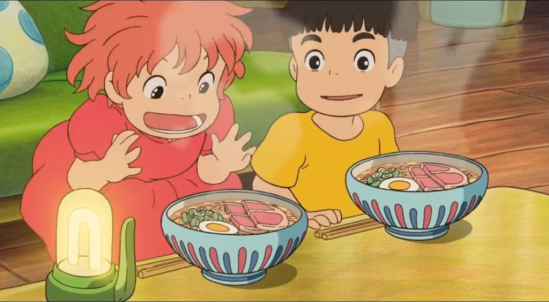 9. Ponyo (2008)
I sense this will be contentious. I like Ponyo! I like all of these films. This is undoubtedly the cutest Miyazaki film. It is so delightful. The animation is truly outstanding. There is so much happening in every shot. I may be talking myself out of this low ranking. My beef (or ham) with Ponyo is that there’s not a whole lot of story here. It’s incredibly simple in design. Something that I usually like in most films. But it really is bare bones here. There’s a part in which Ponyo and Sōsuke take a boat to find Sōsuke’s mom. I realized then that the two characters wouldn’t have anything to say to each other. Which they don’t! The film kind of just cuts around it. The animation and the cuteness of the characters make Ponyo more than worthwhile. Compared to Miyazaki’s other work, it’s just not my favorite.
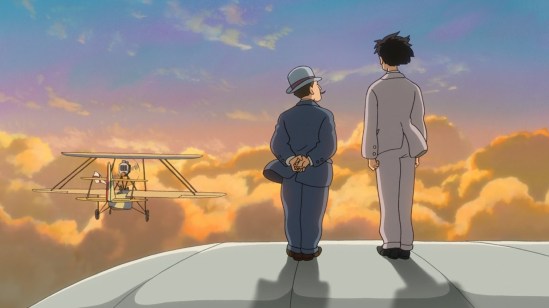 8. The Wind Rises (2013)
The Wind Rises is the most unique movie on this list. It feels like the least Miyazki-ish of any of his films. The film is about the scope of an entire life, not just childhood. There aren’t any distinctly magical elements to the story (to be fair there are some magical dreams). Yet this is the movie that’s supposed to be the most autobiographical. It’s about an artist Miyazaki greatly admires. It’s about a life devoted to perfection in art. I can’t lie. I really like it. These types of stories make sense to me. It’s like Boyhood but about an aircraft engineer. I probably like it more than the next two movies on the list, but I can’t argue that it’s better than them. While the movie works, I kind of think it would be better if it weren’t animated. For that reason, it’s hard to rank it any higher on a list celebrating a master of animated film.
 7. Nausicäa of the Valley of The Wind (1984)
The first unofficial Ghibli film (It was made with essentially the same people but before the studio’s founding). As we are about to get into, Miyazaki’s fantasy stories interest me much less than the magical realism ones. Objectively I don’t think there’s really anything to hold against this film. Especially for how early it’s made. I think the knock on it would be that it feels like an early version of Princess Mononoke. You can make arguments for either film. The advantages for Nausicäa are its unpolished energy and synthy score.
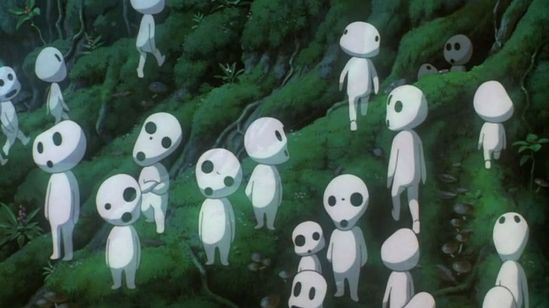 6. Princess Mononoke (2000)
You could make an argument that this is a masterpiece. It’s undoubtedly the biggest and most ambitious Miyazaki film. It really has the scope of something like Lord of the Rings. It’s arguably even more auspicious. It’s a film totally devoted to environmental conservatism that uses magic and fantasy elements to convey its message. So maybe more like Avatar, but good? It also has the distinction of being one of the few films over 2 hours that I didn’t think was too long. This film has so many storylines, turns, and complications and I still think they all work. It’s really, really impressive. It’s not my favorite for the simple reason that it’s not exceptionally fun. Given what the movie is trying to do, that’s probably a credit to it.
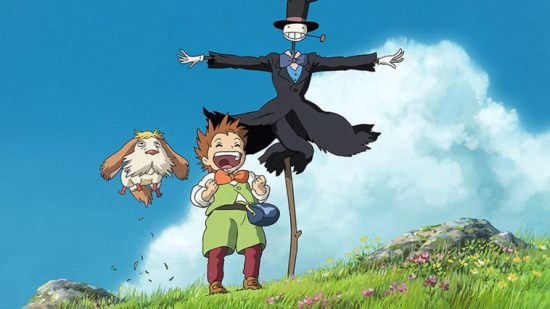 5. Howl’s Moving Castle (2004)
Howl’s Moving Castle is the first Miyazaki film I ever watched. It’s so much fun. It’s light and weird and so funny. Miyazaki makes a lot of subtle decisions in this movie that I absolutely love. The first is when Sophie is transformed into an old woman. He doesn’t have her lament this curse or force a heartfelt moment where the audience realizes how terrible it is. Instead, he just has her journey out to the Waste to try to fix it. One of the best parts of Miyazaki’s films is how much credit he gives to his audience. For as poignant as so many of his movies are, he never really tries to manipulate the viewer. We know that Sophie needs to have the curse removed so the movie doesn’t bother to explain that. It’s intuitive. It makes Sophie funny, tough, and resourceful as a character. It’s such an unusual and smart move. A move by which Miyazaki can keep the movie’s whimsical energy. My favorite parts of Howl’s Moving Castle are its eccentricities. Calcifer and Turnip Head are incredible characters. The reason this film isn’t higher is that I’m not convinced the plot makes any sense. About halfway through things get pretty convoluted. I honestly don’t think I could explain the plot even if I watched it again. I also don’t think that really matters. The movie is too much fun for me to care.
 4. Porco Rosso (1992)
The genius of Porco Rosso is that it’s a pretty normal movie with the major exception that the protagonist is a pig-man. I love that it doesn’t really factor into the movie save for Porco’s own self-worth. Another hallmark of Miyazaki’s best films is how understated they are. This film leaves so many things unsaid. We learn that Porco was at one point cursed into a pig. It’s not really said how, or why, or what he can do to change back. And only at a couple of brief moments does he dwell on it. Otherwise, he just cracks jokes about his transformation. Likewise, we get a backstory with Porco and Gina. But the film intentionally doesn’t resolve that storyline. It’s left for the viewers to decide. I love that Miyazaki frames this story through what feels like a Humphrey Bogart character. There’s so much enthusiasm and charm here. At the beginning, when pirates kidnap the school children, Miyazaki chooses for them to be oblivious to the situation. Instead of being scared, the girls are ecstatic to be amongst the pirates. It’s delightful. It’s a showcase for Miyazaki’s talent in making scenes unexpected and joyful. It elevates the whole movie.
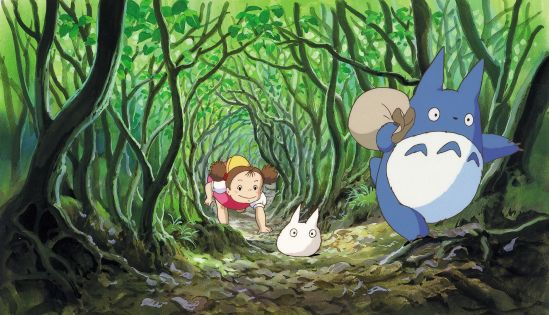 3. My Neighbor Totoro (1988)
Totoro is so beautifully heartfelt. It really feels like a blueprint for all the best parts of Miyazaki’s films. Totoro also plays into the style of his films I like best. The world is mostly normal here, and the trials the characters face are completely natural. The magical flourishes make this world dynamic but don’t really uproot anything. One can make a pretty compelling argument that there is no “real” magic in the film. Our introduction to it is the Soot Sprites which are really just a magical version of dust. Then, over the course of the film, the other creatures appear only to the children and only at trying times in their lives. This tension is wholly intentional. Miyazaki is trying to make a point about beauty, nature, children, imagination and how these things can overcome the worst circumstances of life. I love all the characters on the margins. One of my main takeaways from Miyazaki is how he utilizes secondary characters in his films. The father, for instance, is so full of life. In a typical movie, they would have him be run-down and busy because of his job, the kids, and his sick wife. Miyazaki doesn’t give us this character. Instead, he has the father be present, energetic, and full of life. He’s funny and really pretty strange. We see that he is working at night and that he comes home late from the university. We can assume that all these things are weighing on him. But he never shows it to his kids, which in turn makes him even more sympathetic and likable. Similarly, the neighbor boy is so awkward and shy. In any other film, he would just be a stock character. In this one, I’m genuinely curious about his life and his perspective on the girls. The most impressive part of Totoro is its tone. Throughout the whole movie, I was simultaneously choked up and laughing. I think it does the best job of conveying the bittersweetness of life. That it, like this film, can be both beautiful and tinged with sadness.
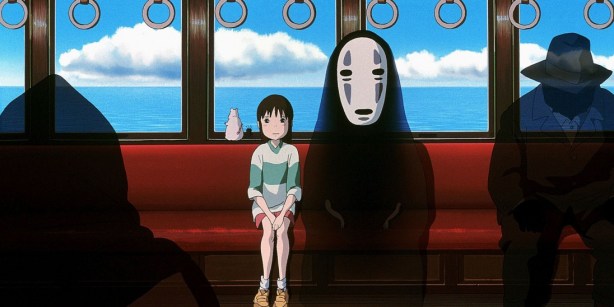 2. Spirited Away (2001)
The New York Times ranked Spirited Away as the 2nd best film of the 21st Century. So how can I only have it at number 2 here? Well, my first choice is technically from the 20th Century. The real answer is that there’s not any type of case I can make against this movie. It’s a masterpiece. What is most remarkable to me is how understated the movie is. Of course, there are spirits, talking animals, witches, and so much magic. But all of these just serve to move you through the story. They aren’t disruptive. The movie isn’t even about these things. What the movie is actually about is Chihiro’s personal transformation. It’s about the sadness and anxiety of leaving adolescence behind. It very well may be the best film on what it feels like to grow up. This theme is the whole emotional force of the film and it is seamlessly interwoven into the story. It is incredibly sophisticated filmmaking. There are two moments that I think perfectly capture the magic of this movie. The first is the very, very, very famous shot of Chihiro and No-Face riding on the train. What I think is so powerful about this shot is that I’ve seen it a million times and only recently realized that in part of the shot we are looking through another passenger. Like physically through their body. That may be more on me for not noticing it. Still, this is the depth and complexity that exists in these films. The second moment is at the very end when Chihiro has finally earned the friendship and respect of the spa and has come into her own. She has to leave the spa to go back to her parents. Finally, there will be the moment where Chihiro reflects and laments how life always pushes forward and leaves everything behind. But then there’s a literal rule that Chihiro can’t look back at the spa or the magic won’t work. It’s so brilliant and true to life. More importantly, it’s so much more heartfelt than in every other movie in which there’d be an engineered moment where she does look back.
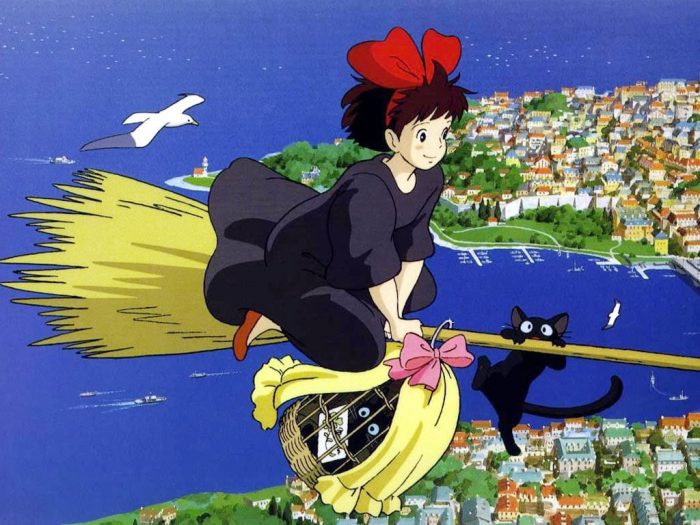 1. Kiki’s Delivery Service (1989)
Every aspect of this film is so, so wonderful. I wish I could live inside it. Kiki is such a funny, lovable character. Kirsten Dunst’s vocal performance is maybe my favorite thing in any Miyazaki film. She speaks so fast. It’s as if all her words were jammed together. Kiki so often can’t control the speed or volume of her voice. She sounds exactly like a 13-year-old girl. For a movie about an adolescent witch, this film is so grounded in the human experience. It’s remarkable at how in-tune Miyazaki seems to be with adolescence. I love that this film centers all of its conflicts internally. There’s not a scene in which Kiki gets in trouble for messing up, or is scolded for being too loud, etc. Instead, everyone loves Kiki. The baker is delighted every time Kiki is excitedly shouting. Kiki’s customers all love her. The tension is whether or not Kiki can figure out what’s happening inside her. It’s about how she can balance the burden of responsibility with her own personhood. One of the things I was most surprised by with this film is how slowly some of the scenes move. It’s kind of incredible. There are just scenes when Kiki is puttering around or making breakfast. They don’t have to be in the film for the plot. But they make the story so much more effective. It really humanizes her. It feels like watching the totality of her life, even the boring, minor details. I don’t know if I can really make a case that Kiki is the best Miyazaki film. I think Spirited Away is doing things that are far more complicated. It’s definitely the more polished of the two. But this film is the one that hits me at my core. It’s the reason why Miyazaki’s films have such an impressive legacy. They’re so deeply connective even if you can’t relate to the details. Kiki is the one that feels most true to me even if I’ve never been a 13-year-old witch who can talk with her cat. That’s why it’s number 1.

 Sam Writes Shit
3 thoughts on “The first-ever, most legitimate, inarguable, completely accurate ranking of the films of Hayao Miyazaki”