
For Part 2 click here!
January
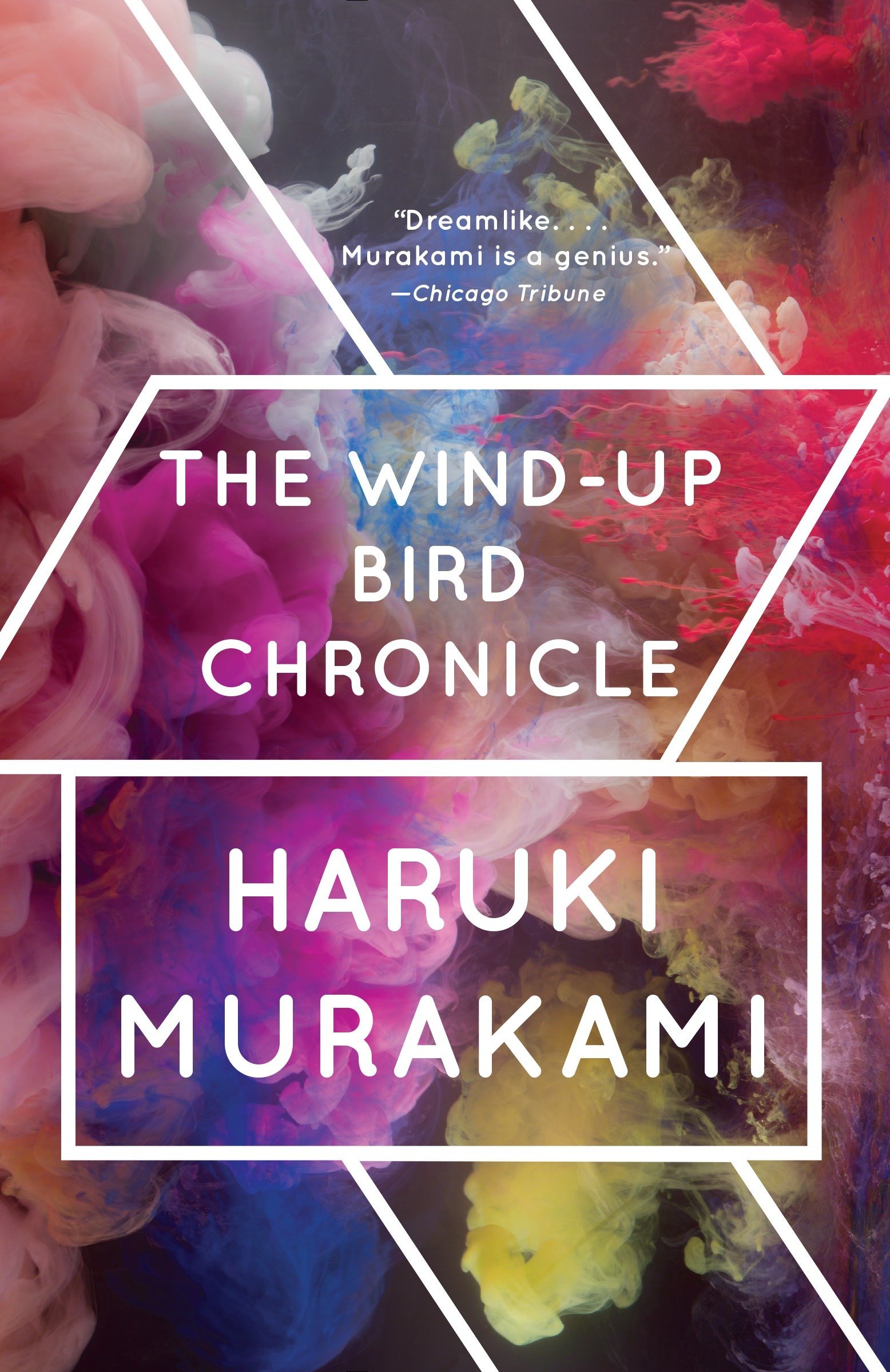
The Wind-Up Bird Chronicle – Haruki Murakami (1997)
The longest book I had read since Gravity’s Rainbow. It was my first time reading Murakami’s fiction. I love his prose. He writes simply and beautifully. His sentences are short and crisp much like Hemingway. There is a dry humor that really helps to carry you through this book. The novel is split into three parts but I think it ostensibly functions in two halves. The first half of the book is a bizarre noir-like mystery. The main character first loses his cat, then his wife. Mysterious women keep calling his phone and then appearing in his life. Each of these interactions seems to mirror the others in strange ways. As if they are the same experiences but seen through a different lens. We meet Creta Cano, for instance, who reveals that for most of her life she had planned to kill herself. She had lived life in an intense, unbelievable, and unexplainable, physical pain. After a failed suicide attempt, she could no longer feel anything. She went through the world numb, desperate for any sensation. We meet May Kasahara, a young girl who grew up not feeling anything. In an attempt to feel alive, she blindfolded her boyfriend on a motorcycle with her hands. He was killed and she’s left to process this in the aftermath. This section was by far my favorite portion of the book. It was so strange and sleepy. Reading it was this bizarre almost hypnotic experience. Not a whole lot was happening but you felt struck by it all.
The second half of the novel introduces magic into the world. Our main character can now transport through a well. He’s in search of a netherworld hotel room in which his wife might be held. We meet a couple characters who take him under their wing. They use him as a medium of sort. Exactly what he does, we’re not sure. Intertwined with this is a history of the Manchukuo conflict told through a few characters’ points of view. How it ties to our main character, we’re not sure. We just know it does. For Gioia, a Murakami fan, this was her favorite part of the novel. It’s this strange magical-realism that opens the book up for her. I would guess that it is a storytelling method that opens up more possibilities of reflecting truth. By writing in magical terms, you can more accurately capture the “real world.” For me, unfortunately, this part never fully clicked. I admired the imagination, the prose, and the story quite a bit. I just struggled with the uncertainty of it all. I believe Murakami to be an elite writer. A genius perhaps. But I also suspect that even he doesn’t even know where he’s going. I tend to prefer more structured stories. But it’s only that, a preference. I’m glad I read this and suspect I’ll return to Murakami before long.
Circe – Madeline Miller (2018)
When I was in undergrad I had considered devoting most of my reading to classics and specifically greek myth. I have always found it an endlessly fascinating subject and wished to have more of a mastery over it. I really liked the way these stories framed and essentially dictated so many aspects of Greek history. The trojan war being the most obvious example of this. I wish that at this point in my life, Circe, had been made available to me. The novel is a narrative retelling of the life of Circe, a character from The Odyssey. Aside from finding the novel plainly compelling to read, I really admired the way Miller told its story through an updated lens. Her re-contextualization of this myth and character is remarkable. It is thoughtful, complex, and nuanced. It is impossible to dismiss the novel as a gimmick or product of “woke culture.” Certainly, the times we live in, as well as Madeline’s world view, shape this novel. Circe is repositioned. She is no longer a selfish, and cruel witch. Instead, she is an abandoned and sympathetic character. The events of her life don’t change, but the reasonings and motivations behind them do. I’m really excited to check out Miller’s first novel, The Song of Achilles. I think her approach and writing is really exciting. I thought this novel had a wonderful premise, and was overall a good book. It just never blew me away. I’m hoping that in Miller’s other or future work the impact of her writing will fully hit me.
February
Watchmen – Alan Moore (author) & Dave Gibbons (illustrator) (1987)
This is the first graphic novel I’d ever read. It’s quite an experience. There was certainly a learning curve to it. In some ways, the book teaches you how to read it. I found it fascinating how different frames would have two concurrent dialogues happening at the same time. The most prevalent example is the recurring scenes at the newsstand. The news seller would be in conversation with someone, often himself. Simultaneously, we get excerpts from a comic book that a customer is reading. It was pretty disorienting for me in the first couple of instances. By the end of the book, I found I had different voices in my head for each of these texts. I was able to decipher back and forth between them subconsciously. One of the things I’ve always heard about Watchmen is that it’s unadaptable. I find I kind of disagree with that. Now, I think it would be pretty difficult to make a film that approaches the greatness of the novel. But I’m not convinced that a mini-series couldn’t capture most of the magic (the HBO series is essentially a sequel). What really struck me about reading Watchmen is how much it feels like the experience of watching television. In most panels, there is both dialogue and the actual action of the characters. It’s the same as watching television or film in which a character is saying one thing and doing another. It’s not explained, it’s shown. Likewise, I think some of the interstitial material would work really nicely on television. In the novel, these items are postscripts for each chapter or edition. I think most would fit neatly as prologues or openings in a visual medium.
As for the content itself, it’s really remarkable. It’s an incredible story. Moore’s design is masterful. The scope of the novel is surprisingly limited. It really only takes place across one week in New York City. The novel flashes back to other years and the characters take us to Florida, Mars, and Antarctica. But I was still surprised by how narrowly focused it was. Paradoxically, I think that’s what opens the book to containing so many universal themes and ideas. The last thing I’ll mention is just how smart and subversive the writing is. Toward the end, we need a lot of exposition. It’s the tricky thing about a really good mystery. You need to give the reader a satisfying explanation. And we get one. Ozymandias goes through the whole outline and justification of his plan. Most of the mysteries of the novel are explained to us. And as satisfying as the answers are, I found myself disappointed by how straightforward the approach was. It’s the bad guy laying out his plan. But then, in a remarkable twist, Ozymandias reveals that these aren’t his plans, they’re his actions. He’s already completed them. There’s nothing left to be done. It exquisitely ties together the central theme of the novel: inevitability. And to be clear, it doesn’t erase any of the things that I just mentioned. It’s still a bunch of exposition dumped at the end of the novel. But it’s done so smartly, and within the confines of traditional storytelling, that it elevates the whole novel. To me, that feels like a perfect summation of Watchmen’s brilliance.
A Room of One’s One – Virginia Woolf (1929)
I don’t know if I’ve ever read anything like this. I haven’t really read any outright feminist literature for sure. But, more specifically, I can’t recall encountering a narrative quite like this. It’s an essay that’s framed as the transcript of a lecture. I was kind of amazed by how compelled I was by it. Not by the arguments or their importance. I already expected that this is a significant piece of literature. Plus I already really like Woolf’s prose in her novels. I guess I didn’t expect just how readable this essay was. In many ways, it felt like one of her novels and we might just be in a character’s head.
The way the argument is framed is certainly fascinating. I think depending on each section, certain elements have held up better or worse (at least to me). Woolf starts out in a plain display of how men and women are treated unequally. A fictionalized version of herself spends time on a men’s campus and a women’s campus. One has all of the resources that an academic mind would need. One does not and it proves distracting. From there, Woolf moves into the way that literature, like these resources, has been unequal. She starts by researching opinions and thoughts about women and realizes that they’ve all been written by men. Similarly, she finds, there is no such literature on men. Woolf supposes a practical reason for this. She finds that if a woman were to write, she would need 500 pounds per year and a room of her own. Both of which were legally unavailable to her until quite recently. Woolf also supposes a less practically-minded reason. She believes that women have always served as a mirror for men. An object for them to raise their egos. She notes that the mind of a creator is fragile. Men have needed women to feel a sense of superiority. It’s why, she realizes, that women function so high and mighty throughout works of fiction and not in the societies they are supposed to reflect.
From there, Woolf details a hypothetical situation in which Shakespeare had an equally talented sister. Based on history, she imagines that even in the best situation, she would have gone mad and killed herself without any of her talent becoming known. We then move into an outline of the first women who wrote fiction. All were wealthy, independent, and had advantageous situations. Yet, there were still other concerns. There was no literary tradition for women. They had to either write untethered from a previous style or in the shadow of men. What’s more, since women hadn’t written before, they had to go through their own evolution. Their literature had to reflect the world they lived in. Because of that, they often wrote only of the interior lives led by women. Not of wars or conquests. Moreover, they only wrote novels when many would have been suited to history or poetry. Woolf argues that this was because to write poetry one needs completely undivided time and attention, which obviously wasn’t available to women.
But, there are other remarkable things that came from women writing. Woolf recounts reading a scene in a book in which one woman remarks that she liked another. Woolf realizes that in the history of literature, there hasn’t been a scene like this. In all previous novels, women have only had opinions of men. Why would they have an opinion of another woman? It would be of no interest to the author or male reader. This indirectly points to the importance of women writing. Not just for women or for equality, but because it would actually serve as an accurate reflection of society. At the end, Woolf finally moves to a thesis of the gendered mind. She argues that each mind has both masculine and feminine sides of their brain and that genius is achieved by reconciling a balance between them. Shakespeare, she insists, had a balanced and androgynous mind.
This last bit is the part of the argument that loses me. I think by now we have a more nuanced understanding of sex and gender. We can realize that gender is not dual and opposed, but fluid. Still, this is really the only part of Woolf’s whole essay that I see as flawed. I think the rest of the book does a really remarkable job of providing irrefutable evidence and hypotheses on the subject. What’s remarkable is that these explanations satisfy both real examples from the past as well as hypothetical cases in the future. At the risk of sounding like a total fuckboy, so much of Woolf’s essay felt completely right and accurate and yet had never occurred to me before. The bit that totally blew me away was the reflection on the lack of tradition for women writers. I didn’t realize how this would influence and obscure the work a current writer puts out. And it totally would! I’d be really interested to read the subsequent literature about this essay. I’m sure there are dozens of nuances, updates, and rebuttals to Woolf’s opinions that similarly have not yet occurred to me. If anything, I think that proves the importance of reading a work like this, especially if you’re a straight white dude like me.
The Wes Anderson Collection – Matt Zoller Seitz (2013)
A few years ago, I read Trouble Boys, the biography of The Replacements. I decided then that that’s the best way to get into a band. I had already liked The Replacements, but reading their biography made me dive right in. I was suddenly a super fan. To this day, they are still one of my favorite bands. I don’t know why I hadn’t considered doing this with film. Or more precisely, why I hadn’t actually done this with film. I’ve had this book on my coffee table for a couple of years. Really, the only thing keeping me from reading it was the fact that it was too big to take anywhere. I’m glad I finally decided to start reading it. It was wonderful! I can’t say that I’m a Wes Anderson expert, or that I even feel really enlightened in terms of filmmaking, but I do think I learned quite a bit from this book. For one, Anderson mentions so many movies that it really helped me curate a list of things to watch. It’s always nice to have context behind some of these classics too. It’s been really cool to watch some of these and connect them with Anderson’s films and the influence they may have had. The other big takeaway for me was just learning a little bit more about visual filmmaking. Or even more precisely, the language of visual filmmaking. I’m still nowhere close to having a proficient knowledge of it. But reading this book was a helpful start down that road. I already feel as though I’m watching films differently. I may not know why they’re done, and I certainly don’t know how, but I can look at some shots and identify them. That’s more than I can say before I read this book. The final thing I’ll say is that this book obviously uncovers Anderson’s identity as a filmmaker. And while many of his traits are obvious, it’s not always easy to identify what makes them his. This book was able to point those out for me.
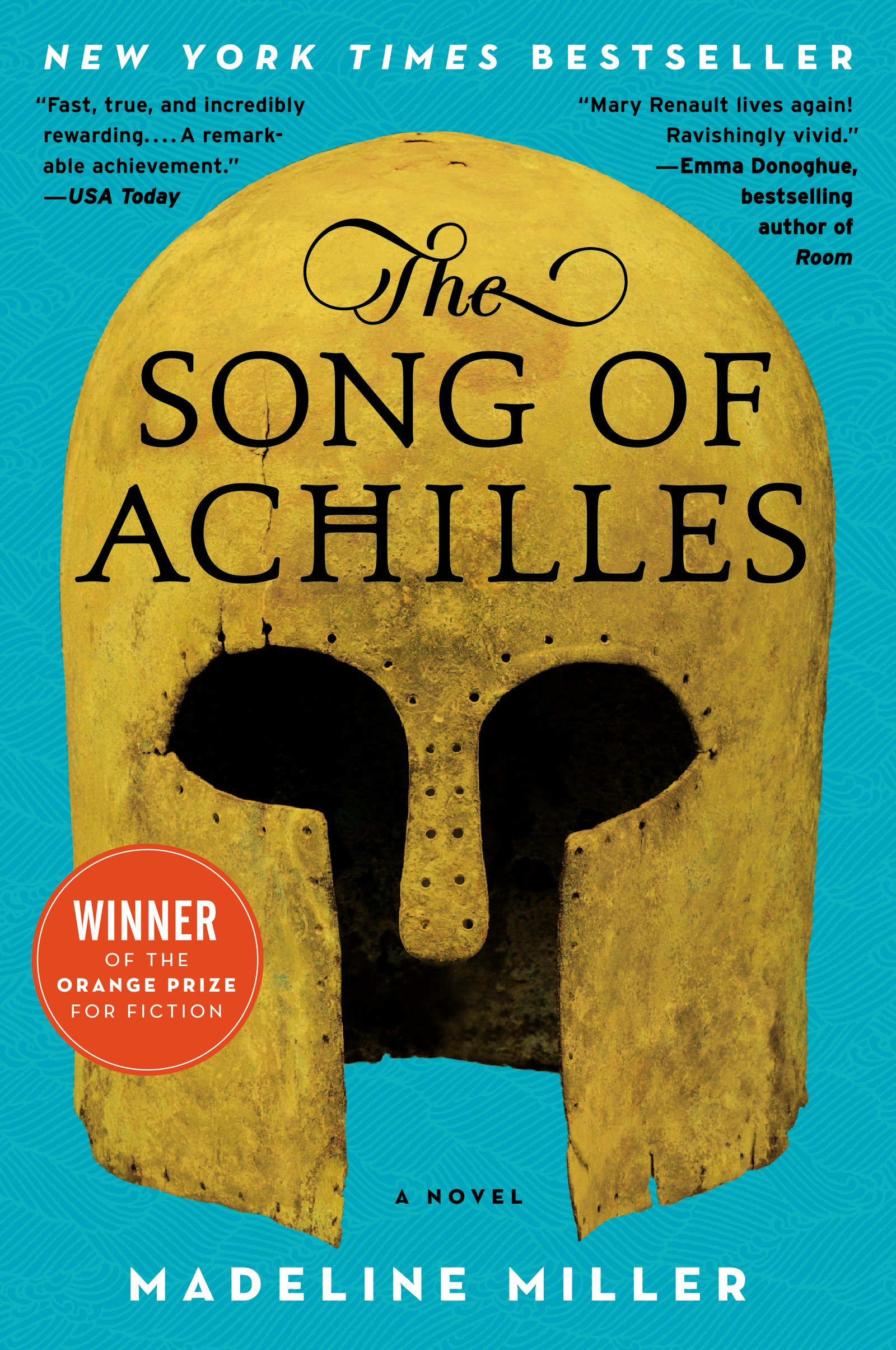
The Song of Achilles – Madeline Miller (2011)
I sought this out after reading Miller’s second novel, Circe, earlier this year. I’m actually not sure why I was so drawn to it. I liked Circe but was never totally blown away by it. In fact, there were a few parts of the prose that I struggled with. Looking back (or above) to my review, I’m probably overselling my hesitation. I clearly loved the subject matter and Miller’s approach in Circe. Anyways, all of that is to say, whatever I was looking for in Circe I found in The Song of Achilles. It is my favorite thing I’ve read so far this year. I think I’ll remember it as one of my favorite novels ever. The writing and story absolutely knocked me out. It is so heartfelt and stirring. You feel as though you are a part of it.
The novel frames the relationship between Achilles and Patroclus as a love story. Now, I believe there is some evidence in The Iliad to read their relationship this way but it is certainly not explicit. Much in the way Circe re-contextualized and updated parts of The Odyssey, this book does that with The Iliad. I think there are a few reasons why it works so well.
First, Greek myth is really fun! There’s a reason I considered studying it full-time. Yet, for as wonderful and essential as these stories are, they have not been adapted that successfully. I think most suffer in the balance of portraying events strictly as they happen in the text. A lot of the details in these myths aren’t that conventionally cinematic. I think where this novel really succeeds is in highlighting the more human moments within them. The best part of the novel, for instance, is when Patroclus and Achilles train at Mount Pelion. It’s a section of the book that focuses on adolescence and their budding love for one another. It doesn’t arise from any grand myth or event. It’s focused strictly on their intimate love story. And, in fact, I think this is Miller’s approach to the whole novel. When we do arrive at Troy, her focus is on the camp, not on the battlefield. That part of it is completely secondary. In these instances, she focuses again and again on character. Finally, at the end of the novel, this approach is almost stated explicitly. Patroclus laments that Achilles’ war memorial focuses only on his battles, not on all the things that truly made him special. This is kind of radical! Achilles is the greatest warrior in storytelling history and this novel is challenging that notion.
I haven’t been this bummed to be done with a novel in a while. I really can’t wait for what Miller publishes next. My guess is that it’d be a companion/update to The Aeneid, the last of the great epics she has to tackle. Whatever it is, I will certainly read it. After this, I think she may be one of the most exciting writers working.
March
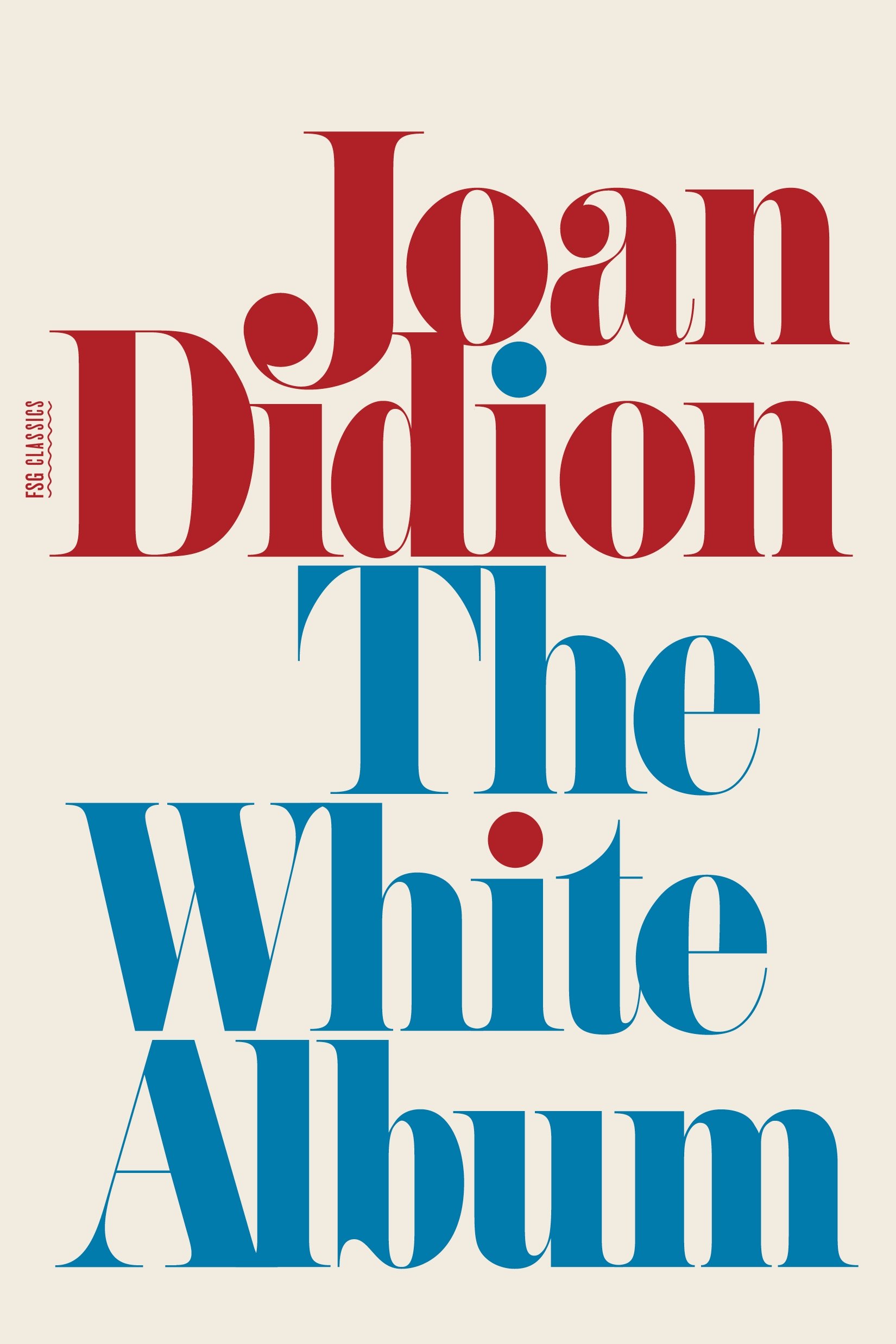
The White Album – Joan Didion (1979)
This was my first time reading Joan Didion! I’m hoping that this is a theme of this year! I.e. this was my first time reading ____. Didion is an incredible writer. The hype is legitimate. In terms of prose, she’s really one of the best that I’ve ever read. Her style and command of language is remarkable. In fact, I’d say there are few people whose strict use of language I have enjoyed reading more. Some of the essays reminded me of the pleasure I get from reading some of my favorite writers. People like George Saunders and David Foster Wallace. When you read them you get the thrill of getting to live inside their heads for a little while. It’s as if they’re guiding you through their thoughts. Obviously, both Saunders and Wallace come after Didion and there’s no doubt in my mind that she provided a heavy influence on them.
The White Album is a series of essays and criticism that are meant to reflect the sixties. The title essay does this most clearly. It is one of the best short pieces I have ever read. Didion weaves these funny, strange, and disturbing scenes from her own life together with the larger events of the sixties. The result covers both that period in American history as well as some of her personal history. You get the mainstays of popular culture. She writes about Charles Manson and The Doors. But it’s really a personal piece. The essay juxtaposes her own growing mental health issues in the wake of these events.
I think “The White Album” is certainly the best essay in the collection. It’s the most ambitious. It captures the scope of what the entire collection is meant to do. But I liked all of the pieces. I thought the closing essay, “Quiet Days in Malibu,” was the most affecting. It was a perfect cap to the book. I was also partial to “In bed,” an essay about being a migraine sufferer. If there was a knock against the book for me it’s that some parts have aged better than others. Not in any political correctness kind of way. But, this is a collection of pieces written in the sixties. There were some essays on figures, people, and events I just wasn’t familiar with. It was never a barrier to reading, but I can’t help but feel I missed the full weight behind what the writing may have once meant. I don’t know? In a strange way maybe that works even more for what Didion was setting out to do. I will certainly revisit Didion. Most likely with The Year of Magical Thinking. Until then…
Girl with Curious Hair – David Foster Wallace (1989)
For years I’ve had this collection on my bookshelf. It was one of the books that I had put off, kind of because I knew I’d be really excited to read it. It would be a safety net if I was ever on a run of books that were tough to get through. Unfortunately, this really didn’t live up to those expectations. In fact, I really couldn’t wait to get through this by the end. I am glad I read it. I think it provided a lot of insight into what I like about Wallace’s writing. Unfortunately, that was because those things aren’t really there in this collection. I think what Wallace really achieved with Infinite Jest (and his non-fiction) was a response to irony and postmodernism. It’s not a refutation of those things, but a reconsideration of them. While Infinite Jest has all the hallmarks of a postmodern novel, it works so well because it underlies those aspects with a profound sense of humanity. The reason why so many people are obsessive about that book is that it’s overwhelmingly earnest, even in its outlandish setting. This collection of stories feels like Wallace learning, mimicking and working within the confines of postmodernism, but not having anything to say about it. There are so many elements in these stories that appear and are improved in his later work. There’s the emphasis on entertainment, attempts at capturing dialects of the downtrodden, and a reimagining of popular figures. But, there’s not really any humanity. I came away thinking the stories were clever, funny, and mostly well-written, but never moving. What’s more, I wonder if some of these stories were over-written. One of the cool things about reading someone as smart as Wallace is getting to live in his brain for a bit. But here, that experience was often exhausting. Some of the choices of language and theme were so hyper-intellectual. It just felt show-offy and self-serving. Like I said, I’m glad I finally read this. I can’t say I’ll ever go back.
April
The Great Believers – Rebecca Makkai (2018)
This is one of the most humanistic, heart-wrenching, and beautiful books I have ever encountered. I’m still floored. I still feel real sadness for these characters. I think the overwhelming power of this novel is the fact that these are people’s stories, even if they’re not literally any one person’s story. The gay community in this book is made of fictional characters. And the way the AIDS crisis impacts their lives did not literally happen. But the AIDS crisis did happen. And it happened to real people. One of the things that I think is so significant about this work is how tender it is. Makkai treats these characters so lovingly. As devastating as this book is, its sadness isn’t because it’s a litany of tragedies against an oppressed community. Its power comes from these characters who are so well-considered, lived-in, nuanced, and flawed. They’re written so beautifully. You feel and consider their lives as if they were real.
This novel really has me considering what I want to do with my life. I want my stories to be meaningful and represent the lives of those who society doesn’t treat fairly. A complicated issue in doing this is the line between allyship and appropriation. In this book, I’m sure this line is different depending on the reader. To me, I thought Makkai wrote with respect and sensitivity. I think the book gives a comprehensive view of what this epidemic was like. But I wasn’t there. I’m not gay. I’m sure to some in the gay community or those who lived through the crisis, there are issues of portrayal. These are complicated issues that I certainly can’t untangle now. But I wanted to mention them. They’re really important and this novel had me thinking about them a lot. I found Makkai’s approach to be really thoughtful and well-done. It gives me hope, as someone with privilege, that I could do meaningful work in fiction.
Aside from its approach and subject matter, Makkai strikes me as an incredible writer. I found her prose endlessly captivating. Perhaps even better than her writing was the way she shaped the novel’s story. At first, I didn’t love that the book moved between two stories in two timelines. I preferred the 80s storyline far more than the 2015 one. But as the novel moved, it became clear that Makkai had a real plan for this approach. The way she was able to reveal information in one timeline and have it affect the other was remarkable. Toward the beginning, in the 80s timeline, we learn that Fiona told Charlie that Yale was with Teddy. It is a piece of misinformation that leads to Charlie cheating on Yale. But that fact doesn’t fully come together until the 2015 timeline when we learn that Fiona was in love with Yale, and though she was drunk, that was perhaps a subconscious reason why she made up the lie. The way things unfolded in the novel was continually surprising. For instance, I expected Charlie to cheat on Yale, but I thought that would be the climax of the book, not the beginning. I expected Yale to get the virus, but I thought that would be an aftermath, not a midpoint. And I had no anticipation that the ending, by which we already knew how things would unfold, would be more powerful for the very fact that we already knew it. Reading as Yale dies, even if we know it’s coming, is devastating.
I can’t say enough good things about this book. I will be seeking out the rest of Makkai’s work. It is definitely the best thing I’ve read this year.
Pastoralia – George Saunders (2000)
George Saunders is my favorite writer. It’s official. This collection is so wickedly funny. I’m starting to hone in on the characteristics of his stories that I find so appealing. He is the best at writing interior monologues. At capturing the insane, mundane, and often sick games people play in their heads. I’m thinking of the titular barber in “The Barber’s Unhappiness” or of Firpo in “The end of FIRPO in the world.” Both of these characters are inherently unlikable. Yet, there’s something in the way they communicate with themselves that rings true. It feels so human, even though their actual thoughts are despicable. I can’t help but read along with them. Going with that. I love how these stories all center on the truly downtrodden. These aren’t characters who are inherently winning but just haven’t had a fair shake. They’re ugly, stupid, cowardly, old, and they haven’t had a fair shake at the world. I find it to be such a charming perspective. It’s certainly unique. I wanted to briefly mention both “Pastoralia” and “Sea Oak.” They are truly brilliant stories. I think the two best in this collection. I’m so fascinated by the way Saunders just tweaks a piece of reality and it radically changes the story. The job Saunders invents in “Pastoralia” is so outlandish and yet sickeningly imaginable. It’s brilliant. And in “Sea Oak” he employs a bit of magical realism. He has this dead aunt come back to life. There’s no explanation for it. There doesn’t need to be. It’s devastatingly funny and changes the complexion of the entire story. That’s all I can really say. I can’t wait to read more.
Ordinary Grace – William Kent Krueger (2013)
This is the second time I’ve read this book in the past year. The reason is that I’m trying to adapt it into a screenplay. I think this book is almost perfectly suited to be a movie. Krueger’s description of the town is so vivid it feels like you’re already watching it. What really struck me the first time I read the book is Krueger’s focus. The novel is set over a summer in a small town in which five deaths happen. And on the surface, the majority of the plot centers on the death of the narrator’s sister. But for the most part, Ordinary Grace isn’t exploring these tropes. It doesn’t hinge itself to the true-crime nature of its plot. Instead, it turns inward. Into grief, death, and growing up. It’s about the narrator’s path to letting this summer go. I was really struck by how subversive that felt the first time I read it. And that aspect of it was still there the second time through. But I did notice how there was more plot than I remembered. I think because it was everything else that really grabbed me. It’s what I’m going to hold on to as I attempt this adaptation.
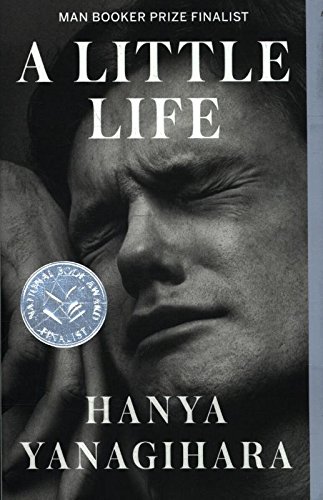
A Little Life – Hanya Yanagihara (2015)
A Little Life starts out as my favorite type of story. Its first section is a document of life. It’s a hangout movie. We follow four friends: Malcolm, JB, Willem, and Jude as they adjust to life after college in New York City. They eat, they go to parties, they strive toward the professional breakthroughs that have not come yet. It’s so ordinary. It feels so wholly realistic. I understand these interactions and these desires. I recognize myself in these characters. Then, we learn about Jude.
Although it starts out as a story about ordinary life, A Little Life is anything but that. As we meet Jude, we learn that he has had an exceptionally horrific life. One that transforms the novel from what it may have been to a story about trauma. And Jude’s life is not the only way in which Yanagihara strays from the tone of the opening section. Willem becomes an A-list movie star. JB becomes a world-renowned artist. Malcolm becomes a world-renowned architect. Jude, despite his horrific first fifteen years of life, goes on to have massive professional success as well. He becomes a partner at a top law firm. He makes millions and millions of dollars. All of these characters do. These are not ordinary people, and this book doesn’t document ordinary lives.
And while the characters have success and make tons of money, it’s really only a silver lining. Because the novel hones in so closely on Jude’s physical deficiencies, his mental illness, and most especially the trauma that exists in his past and present. In fact, I would argue that Yanagihara only gives her characters professional success because if it wasn’t there, I don’t know how they would keep going. I don’t know how I would have kept reading.
A Little Life is easily the most painful, sad, and horrific book I’ve ever read. It is so utterly deflating. I have said again and again that its premise and circumstances are not ordinary. This novel punishes Jude beyond imagining. We read detailed accounts of his life. Details that I cannot imagine any human being recovering from. By my count, there are five major traumatic periods we learn about: his early life at the monastery, his adolescent life on the road with Brother Luke, his life as a prisoner of Dr. Traylor, his relationship with Caleb, and the untimely death of Willem, his best friend and partner. Each trauma seems like one too many for any human being to ever recover from. And that’s not to mention the death of Jude’s social worker and first friend. Nor to mention the various physical deficiencies that haunt Jude’s present. And to be fair, Jude doesn’t really recover from any of these by the end. But up until the end of the book, he keeps living.
Now, I certainly would have preferred some changes in the novel. I don’t know ultimately that I can really accept that Yanagihara kills Willem too. It seems like one punishment too far. I hate that the last character left standing is Harold. Harold who has lost everyone. It’s just so fucking brutal. There are minor points I have issues with too. There’s no way in my mind that Jude wouldn’t have been committed to a psychiatric hospital long before he is in the book. I think the transition of Willem from friend to romantic partner works, but it’s not very nuanced. But these are minor issues. Especially in an 800+ page novel. Especially in a novel that elicited more sadness and grief from me than any piece of fiction I can ever remember reading.
So what’s the point of all of this? To depress the reader beyond belief? Maybe. It is certainly successful at that. I thought there would be a silver lining at the end. Some happy coda. But there’s not. The story ends in the worst way it could. With Jude’s suicide. I think Yanagihara’s goal in this novel is to document the most horrific life she can imagine. One that seems in its very nature to defy reason. One that asks the same question Jude asks, why would he keep going? And as a reader, I think we’re meant to ask the same question. But the novel gives us an answer. It’s because as unequivocally terrible as Jude’s life has been, there are so many joys in it too. There are Harold and Julia. There is Andy. There is Richard. There are Malcolm and JB. And of course, there is Willem. These things don’t add up to a full recovery, or even close to one, for Jude. He kills himself and he does so with all of his demons with him. But as a reader, it is also unequivocal that Jude’s life was worth living, even if he couldn’t go on any longer. That despite all of the pain, there was so much love. That even though there is extraordinary evil in the world, there is extraordinary goodness as well.
The Golden Compass – Philip Pullman (1995)
Part 1 of His Dark Materials! I’ve decided that I will journal about each book as I read them. So that being said, all my comments should be taken with a grain of salt considering I don’t know where the books are going. This series has been frequently recommended to me, usually in the context of my love for Harry Potter. However, The Golden Compass actually reminded me most of The Lord of the Rings. The world seems to consist of good and evil characters. A young, innocent person is given a magical object. She has to use it to navigate through different regions of the world. Although she doesn’t possess any magical properties, she’s aided in her quest by characters who do.
I think the most impressive part of the novel so far is its world-building. I love how this world closely resembles our own, but with strange and subtle differences. I’m really excited for this concept to be explored in the subsequent books. I think the best invention of the series so far is the concept of dæmons. It’s a remarkable idea. I love the idea of your soul being shared by another creature. The bond between Lyra and Pantalaimon is so endearing. It’s my favorite part of the series thus far.
There is one major issue I have. I’m hoping as the series continues, it’ll improve. It is the sheer amount of exposition in the book. On the one hand, it’s obviously necessary. Exposition is part of any story and we as readers need a lot of information about this world. Yet, Pullman is not subtle at all in delivering it. Most of our information comes in huge downloads in these really unnatural conversations. They almost take me out of the story. One of the major things that irked me about these downloads too is that they often happen outside of Lyra’s perspective. For instance, there is a long conversation between Lee Scoresby and Serafina Pekkala when they’re in the hot air balloon. While we’re privy to that information, Lyra is asleep. She’s not hearing it. Another instance would be the end of the book. Which, I actually thought the end was tremendously compelling. However, there is this long and unnatural conversation between Lord Asriel and Mrs Coulter in which they explain everything that’s happening. I just can’t believe a conversation would ever occur like that.
Now, even with this gripe, there is more than enough to keep me excited for the rest of the series. I do like the story quite a bit. I think Pullman’s world-building and character development is quite good. But I do hope some of the storytelling becomes more nuanced. I’ll soon find out!
The Subtle Knife – Philip Pullman (1997)
Well, that didn’t take long! I loved this book. Quite a bit more than The Golden Compass in fact. These are a few reasons:
One, the book doesn’t have much set-up in it. Pullman’s already established the world and most of the stakes in book 1. So this book doesn’t really need to have much of a beginning or even a resolution. And Pullman uses this advantage really well. The Subtle Knife is all action. There’s hardly a wasted moment. And he ends it at the most exciting part.
Two, I love the introduction of Will. He’s as compelling a protagonist to me as Lyra. I loved seeing them work together. I loved the fact that they each have a companion now. It’s so cool how Pullman expands this story out to multiple universes. To see Will and Lyra interact, being from two separate worlds, is really fascinating.
Three, one of my favorite things in fantasy stories is this idea of how the fantastical world would interact with ours. One of my favorite chapters in Harry Potter is the opening of Half Blood Prince in which the Minister of Magic has to contact the Muggle Prime Minister. I can’t really explain it beyond that, but it’s a topic that really intrigues me. Needless to say, I thought it was incredibly compelling to see Lyra enter our universe. I was even delighted just by some of the comic relief in it. I loved reading about her trying omelets and hamburgers and cokes.
Four, I just think this book was incredibly thought out and still constantly surprising. I loved how when Lyra first consults the alethiometer about Will it says he’s a murderer. It’s technically true because of the opening chapter. But it felt off to me. It was really bothering me the whole book. I just wouldn’t have said that Will being a murderer was his defining feature by any means. But at the end of this book, we learn why the alethiometer said it. It’s his purpose as the bearer of the subtle knife. He’s destined to kill The Authority. Likewise, I loved Lee Scoresby’s last stand. I could hardly believe that he was going to die. The same goes for Will’s reunion with his father (I do have to toot my own horn and say that as soon as I saw the name Jopari I called that it was Will’s dad). We get hints throughout the book that that one witch is seeking revenge on John Parry, but it’s still shocking to see her kill him.
I feel like this book was the one that made the series really click for me. That being said, I do hope we reunite with some of the characters from book one. I miss Iorek especially!
May
The Amber Spyglass – Philip Pullman (2000)
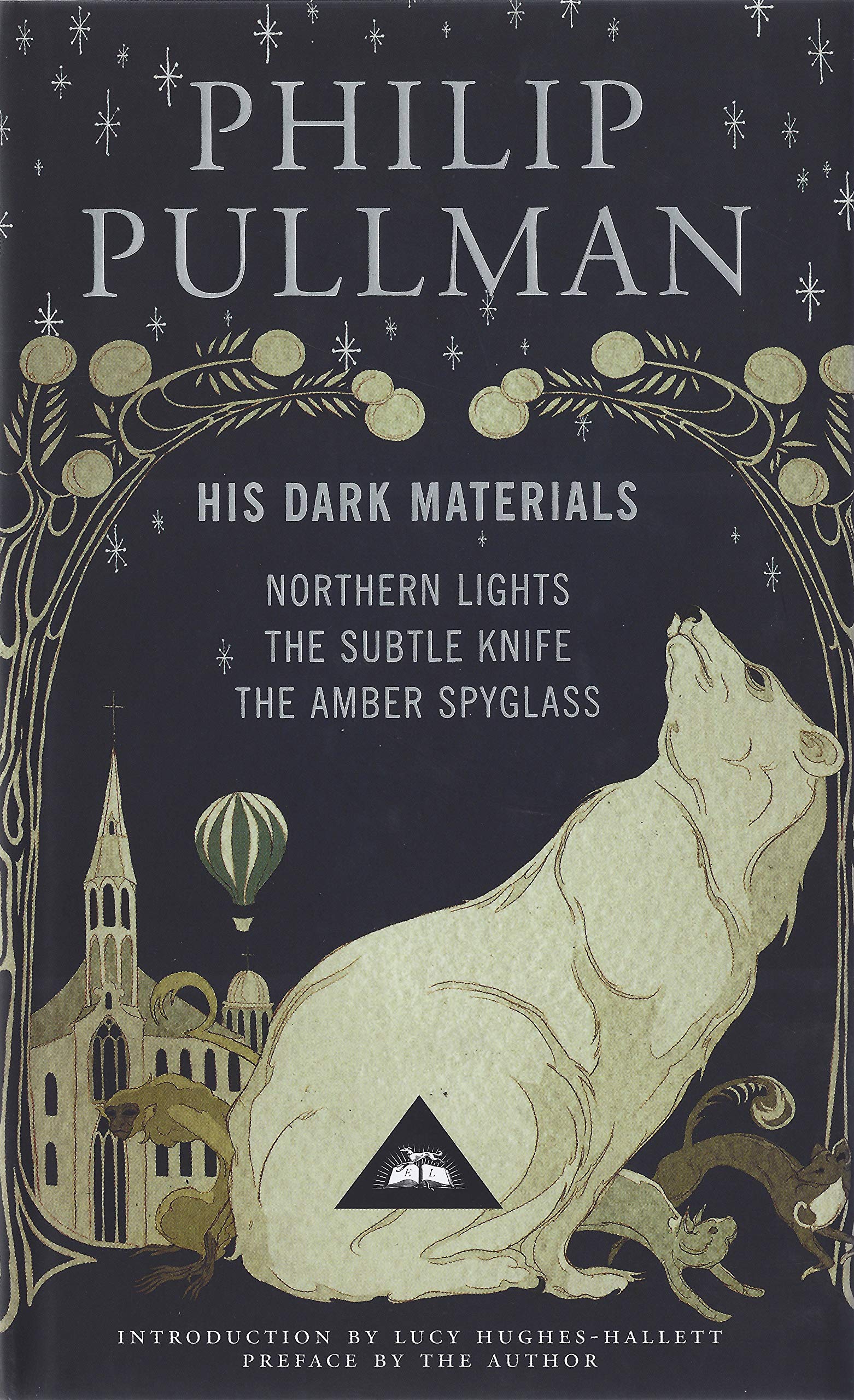
So how did it all come together? Mostly well, I think! The Subtle Knife remains for me the highlight of this series. It feels the most unencumbered. The first book obviously has to set up this whole world. As much as this series is not a “kid’s series,” I think the first book is certainly a “kid’s book.” Much in the way The Hobbit is a kid’s book compared with The Lord of the Rings. For as much as The Golden Compass is accessible to kids, it is hard for me to imagine any kid reading and fully grasping The Amber Spyglass. It is so ambitious. There is so much going on, both in terms of the actual novel and in Pullman’s writing. He is drawing on The Inferno, The Iliad, William Blake, and of course the bible. It’s really heavy stuff. Honestly, my main reaction to The Amber Spyglass is sheer admiration for Pullman’s ambition. I think the thing I’ll really remember most about this series is how Pullman expanded the scope so rapidly. It’s amazing to me that The Amber Spyglass and The Golden Compass exist in the same trilogy. They’re so wildly different in style, scope, and even genre. I think it’s remarkable that Pullman doesn’t introduce Will until the second book when he has such a major part to play. I think, in fact, the major change in the HBO show is that Will is introduced much earlier.
As I’ve said though, The Subtle Knife remains for me the highlight. For as much as I really admire Pullman’s ambition in The Amber Spyglass, I think it’s honestly too overwhelming. The things that work best for me are the most human moments. Lyra and Will leaving their dæmons behind, Mary meeting and interacting with the mulefa, Lyra and Will making their sacrifice at the end. These moments are so good, I wish we could have got more of them. I think where this novel feels bogged down is in how quickly it has to race to an epic conclusion. And it is purely epic. I like the way in which Pullman writes it as almost chaos and madness. Before we know it, we’re reading about the battle to end all battles. There are bears, witches, angels, spectres, and a whole procession of the dead. I actually found it comical and quite brilliant that The Authority is killed in about two lines. It’s really a great subversion. To kill The Authority is Will’s whole destiny and it happens so fast you could almost miss it!
I got the sense when I was reading it though, that I was almost just along for the ride. I’m not sure how to quite explain this feeling. I feel bad for comparing all fantasy to Harry Potter, but here I go anyway. I think the thing that works so profoundly well about the end of Harry Potter is that you, as a reader, are making the discoveries at the same time as Harry. I remember reading Deathly Hallows and just being gutted reading “The Prince’s Tale.” Because while you discover that Harry must sacrifice himself in that moment, you also know that’s always been the case. That there would be no other way to satisfy this ending. It’s the only thing that would work for the series.
I don’t think there’s anything bad about the ending in The Amber Spyglass. As I will say for the millionth time, it is so ambitious it’s hard to have anything but admiration for it. But as I was reading it, I didn’t have any inkling about where the story had to go. Frankly, I still find it a little weird that the big revelation is Lyra and Will’s sexual awakening. I think their parting and sacrifice after that is really moving. But the lead up to it left me underwhelmed. It was almost as if Pullman is just going through answering all of the prophecies, foreshadowing, and questions of the novel as quickly as possible. I don’t know? I just didn’t feel a spark for finally discovering what was happening to dust, or where the spectres came from. I was more or less like, “man, this dude really hates the church.”
But let’s end on a positive note! Because there is so much to love about His Dark Materials. When I think about this series, I’ll think about how it started out as a simple quest and ended so grandly that killing God was almost a footnote. I’ll think about Pullman’s wonderful inventions. I’ll think about how fun it is to travel between worlds. About how exciting it is to read about Lyra and Will meeting each other and comparing their own Oxfords to one another’s. I’ll think about the Gyptians, and Iorek, and Lee Scoresby. And most of all, I’ll probably think about how fucking cool it is to have dæmons. It’s one of my favorite fantasy inventions ever.
The Iliad – Homer; Translation by Caroline Alexander (2015)
I had been wanting to revisit The Iliad since reading The Song of Achilles earlier this year. And whether by coincidence or fate (a major theme of The Iliad!), Max got me this recent translation for my birthday. I had read Robert Fagles’ translation in an Ancient Epics class that studied The Iliad as well as The Odyssey and The Aeneid. But shamefully, I had lost a lot of it to memory. I think that is partially due to reading the poem along with two other ancient epics. It’s just a lot of material to retain. It’s probably only natural that they would blend together. However, revisiting The Iliad, I think a lot of it has to do with the text itself.
In fact, I was a bit disappointed in re-reading the first half. I think there were two main things happening. One is that the first half of The Iliad does blend together. Book One gives us Achilles and Agamemnon’s quarrel. Book Two lays out the two armies as they approach. Book Nine offers a reprieve from fighting as Agamemnon entreats Achilles for his forgiveness. Book Ten is a bizarre interlude in which Odysseus spies upon and kills enemy soldiers during the night. But besides these books, every other book covers different stages of the same battle. Which isn’t to say that the poetry, description, and general action in these parts isn’t enticing. At times it’s riveting. There are characters and moments that really stood out to me from these sections. I forgot, for instance, how forceful Diomedes is. I loved the descriptions of Ajax and Teucer working together. The interplay of the gods in the story never ceases to amaze me. But I did feel this time that the story doesn’t really begin in earnest until Book Sixteen in which Patroclus decides to enter the battle.
The other major thing that was a struggle for me was Alexander’s specific translation. Now, I am not a translation or language expert by any means. I wouldn’t even consider myself a student. I’m a complete novice. But examining Alexander’s text side-by-side with Fagles’, I noticed how literal Alexander’s feels. There are many places in which Alexander will mention a character by their lineage. “The son of Cronus” for example where in Fagles’ translation he just writes Zeus. So much of Alexander’s translation writes things out beat to beat. It’s more rhythmic and poetic. Fagles doesn’t ignore the poetry of Homer by any means, but I think he often cuts to a more concise or specific description. So in the first half of this translation, I was adjusting to the language. I really believe it was a barrier to entry for me. I had to focus so specifically on the meaning, it was hard to just enter the story. It took me time to adjust to the rhythm of the poetry. Once I was able to do this, I found it incredibly rewarding.
Reading the last ten books of this poem I was floored. It was so gripping, so compelling, and so beautiful. The inherent story of The Iliad is, of course, foundational. Its drama feels so essential to humanity even if thousands of subsequent stories have borrowed from it. And it doesn’t feel outdated for it but all the more remarkable to read. The other part that really blew me away was the specific language of this translation. It is remarkably beautiful. I felt almost in a trance reading the back half of the poem. And I’m sure Alexander’s translation works like this throughout the poem. But once the barrier started to slip away for me, somewhere during the middle of the poem, I felt so rewarded for it. I wouldn’t want to read another translation of this text.
I would love to revisit both The Odyssey and The Aeneid soon. Perhaps even later this year. For my own good, I think I have to pace them out. I find reading any Greek myth so addictive that I only want to read more. I would love to be able to hold on to these texts, as well as those of Sophocles, and the comics as well. Hopefully, I can revisit them all over the next couple of years, and this time really retain these myths and names and characters. Until then, I at least have The Iliad fresh in my mind.
June
Mason & Dixon – Thomas Pynchon (1997)
“A screaming comes across the sky. It has happened before, but there is nothing to compare it to now.” So begins Gravity’s Rainbow. A novel that is seemingly everything at once. Historical war novel, middle-finger to the literary canon, profane sex-farce. Most importantly, it is always consistent with the grim tone of this opening. For as fun as the musical banana breakfast is in the next pages, the rocket is always coming for us. The novel literally ends with its imminent landing all while Pynchon invites us not to look up, but rather to sing along, “Now everybody-.” I can’t say that I even understand 75% of Gravity’s Rainbow, but I’m confident that the unrelenting mania in the face of the ceaseless destruction of World War II is its point. So for as wild, fun, and unpredictable as the novel is, each piece of it ultimately becomes quite purposeful.
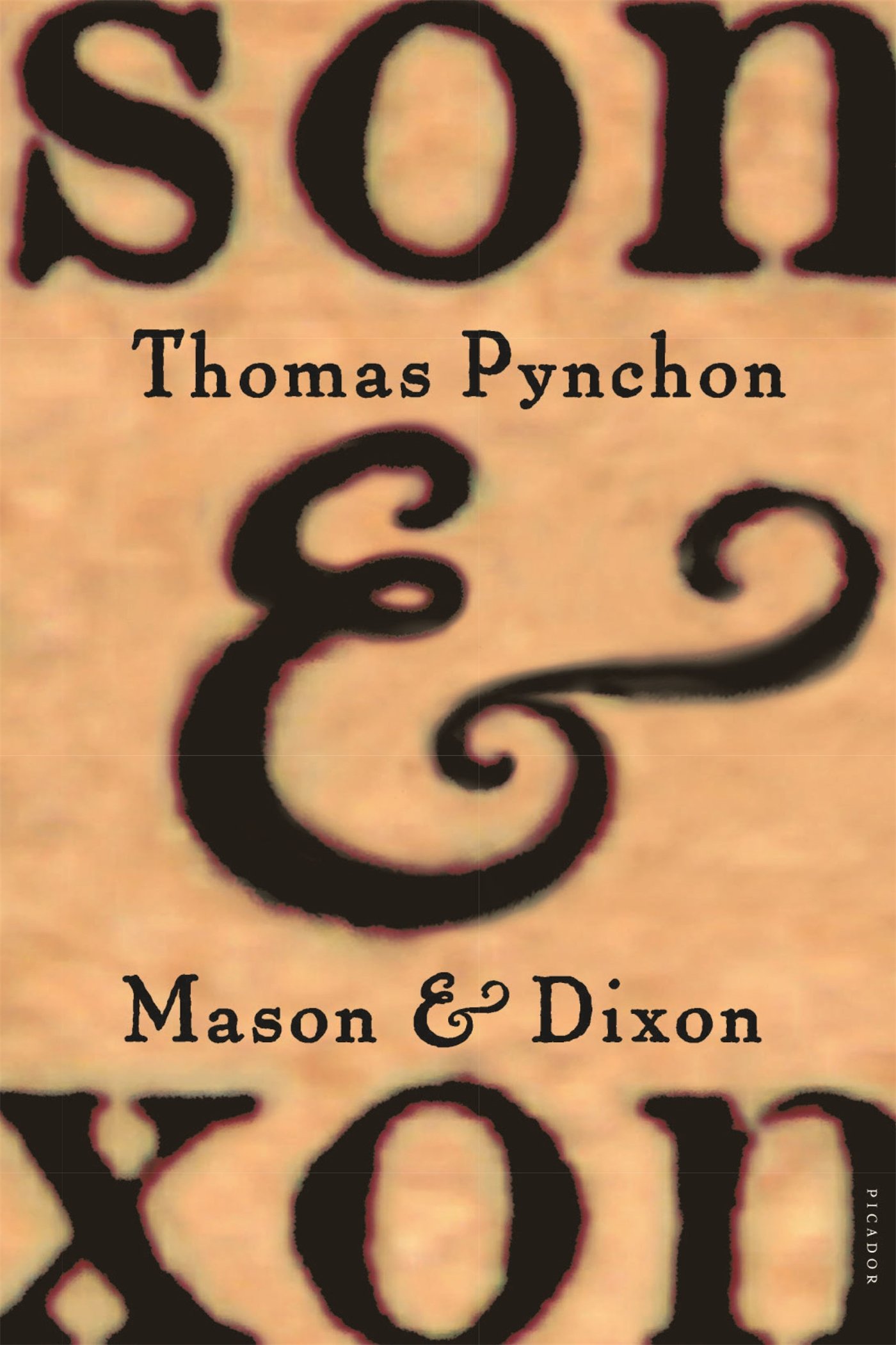
Now, Mason & Dixon is another enormous, historical (almost) war novel complete with all of Pynchon’s usual flourishes. There are talking animals, sing-alongs, sex, drugs, conspiracy, and an intense fascination with the metaphysical. Yet, there is one major difference from Gravity’s Rainbow and that is apparent from the start. This novel is for fun. “Snow-Balls have flown their Arcs, starr’d the Sides of Outbuildings, as of Cousins, carried Hats away into the brisk Wind off Delaware-…” It is about as stark contrast from the rocket as you can get.
This is not to say that Pynchon is letting up his guard. After all, the novel focuses on the historical establishment of the Mason-Dixon line. He is fully aware of the enormous consequences that event has. And while this may not always be the novel’s main focus, he never lets us forget that wherever these characters go (Cape Colony, Saint Helena, or America), slavery is the constant. In fact, the main focus of Mason & Dixon is precisely in the way that history is recorded. The novel is told from the perspective of one Rev’d Wicks Cherrycoke. A man whose primary motivation is not to convey an accurate telling of this story, but to entertain his audience with it. Unlike Pynchon’s other works, we have a legitimate excuse for some of the more unbelievable events in this novel. After all, what’s more, entertaining to an audience than talking dogs, time-travel, alien abduction, or were-beavers? Moreover, we see Wicks’ story change depending on who his audience is. When there are children, it’s a wild fantasy. When there are amorous teens, it’s a romance.
When I read Gravity’s Rainbow I always had the historical weight of the novel in the back of my mind. I was reading it as a masterpiece. I had reference books, I took notes, I re-read. This worked for better and for worse. I did take an incredible amount away from the novel. Just comprehending the amount of research Pynchon put into it was mind-blowing. There are so many pieces that would have gone right over my head had I not been working so hard at deciphering them. But unfortunately, Pynchon’s work is not always the best for logical analysis. Part of the point of Gravity’s Rainbow is that it doesn’t make logical sense. It’s emotional. It’s a fever dream. I do wonder if I would have been better served to just read straight through it.
So in a way, reading Mason & Dixon was completely freeing. I took the latter approach to it. And not for nothing, it certainly lends itself to this kind of reading much more than Gravity’s Rainbow. There’s not much pressure to understand Pynchon’s references or allusions. Many of them are just there for coloring. Many of them are literally just there because Cherrycoke is making this story up. So on the one hand, this approach made reading and enjoying the novel much easier than I anticipated. Especially for Pynchon. On the other hand, it is not always easy for a 773-page book to hold you, particularly when the author seems to be constantly reiterating that this is all just for fun.
Luckily, the novel really is fun. Have I mentioned the talking dog? So yes, it is easily worth reading. Pynchon’s zaniness shines through as brightly as ever. What was most surprising to me though, is that I found the novel to be moving. You begin to really care about Mason, Dixon, and their friendship by the end. It’s not something I ever would have expected from Pynchon. And for as wild as this novel gets, I somehow keep thinking of it as being restrained. Which…that is certainly not a descriptor of its literal content. I mean, there is lovelorn anthropomorphic mechanical duck after all. The novel’s flourishes are as wild as Pynchon ever gets.
But I really do find something about his approach to Mason & Dixon to be more tender. I think with Gravity’s Rainbow or even The Crying of Lot 49, Pynchon is (metaphorically) standing on a table, holding two middle fingers up, and screaming about every conspiracy in the world. These novels are so fucked up precisely because the real world is fucked up. Yet, with this one, it seems like Pynchon is okay sitting back a bit. Instead of saying “fuck you” to everyone and everything, he is making his point with a wink. And honestly, for me, that worked just as well.
Catch-22 – Joseph Heller (1961)
Catch-22 is a novel I had been meaning to get to for a long time. I think I’ve had it on my shelf since I moved to Chicago. The funny (or perhaps Heller-ian) thing about it is that I always anticipated it would be kind of a light read. It’s highly esteemed. It’s one of the best selling novels ever. Stephen King has a blurb on the back of my edition. I just assumed it’d be a breezy time. It’s not!
To be fair, I did read it pretty quickly. And it’s big too. So the novel is certainly, engaging, readable, engrossing, etc. But it really never clicked for me. For most of the time I was reading, I was just waiting for something in it to change. I was waiting for the big revelation, for some “oh shit!” moment. Honestly, for most of it, I just didn’t get the appeal. I think this comes down to a few things. First, I have a suspicion that I might just not be a fan of the genre. I haven’t read a ton of literary satire, but even someone like Vonnegut, who is so esteemed in the genre, has never fully hit me the way it does for so many other people. I have to believe part of the reason I didn’t love Catch-22 is just that.
The second reason is that the novel doesn’t really click into gear until pretty late. The first 400 pages are strictly just satire or even slap-stick. There’s not a ton of humanity or emotion behind them. Which I get is done purposefully. But to me, it seems hard to satirize war without the emotional aspect of it. Even something like Gravity’s Rainbow oscillates from absurdity into deeply personal and painful passages. In Catch-22, Heller only starts lifting this veil in the last hundred pages. And according to the afterword in my edition, this was apparently the part of the novel that didn’t work for most readers. But for me, I thought it was far and away the best part. Once again, I suppose I just may not like the genre.
And in fairness to the ending, I have to say that I really can’t remember a book that pulled me so drastically with its final pages as much as Catch-22. Perhaps The Elegance of the Hedgehog? So for as much as I have issues with the rest of it, I did really love Catch-22‘s ending. To me, it’s what the book should have been all along. Perhaps the only way to get there was the route Heller took. Unfortunately, for me, that was a bit underwhelming.

 Sam Writes Shit
3 thoughts on “2020 Reading Log: Part 1”