

January

Harry Potter and the Half-Blood Prince – J.K. Rowling (2005)
Let’s start by getting down to it. This is my favorite book of all time. Revisiting it did nothing but reinforce that notion. What Rowling pulls off in this novel is simply astounding. In particular, I think there are two angles to view this book as her signature achievement. First is that even as a stand-alone story, Half-Blood Prince is the best book in the series. Everything Rowling weaves together is expertly done. There are mysteries of the Half-Blood Prince’s identity, of what Draco is up to, of Slughorn’s hidden memory, and of Voldemort’s past. That all of these are seamlessly interwoven in a way that’s both unpredictable and yet 100% logical is a massive achievement. It is an expertly crafted suspense story. Second, of course, is that as part of the larger Harry Potter series, this is again the best and most important entry in the series. This book sets into motion everything the story needs to conclude in its next chapter. We learn the truth about Voldemort’s past and the secret of how he can be defeated. We see the massive scope of Voldemort’s evil in the cave. And most importantly, we witness the most important and significant death in the series as well as the mater stroke of Dumbledore’s long-term plan with Snape. Whew! There is just not enough I can say about this book. Thank god it exists.
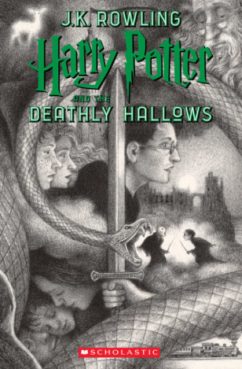
Harry Potter and the Deathly Hallows – J.K. Rowling (2007)
The climax of Deathly Hallows (and, by extension, the entire series) is as good as literature gets. The chance (however small it may be) that the book I am reading may unfold as masterfully as this one is the reason I read. I remember precisely what it was like to read Deathly Hallows for the first time. I was quite literally unable to put the book down for the final 300 pages. By the time I had finished, it was 4 am, and though I was physically and emotionally exhausted, I knew my life would never be the same. Revisiting Deathly Hallows was, by and large, a similar experience. Once again, I was unable to put the book down for the final few hundred pages (and that was even knowing how everything would turn out). Only 15 days ago, I asserted that Half-Blood Prince was my favorite book of all time. …That is still true. But in ranking HP books, I do think Deathly Hallows is a close second. It undoubtedly has the most difficult job in closing out the series. There are a few stretches, especially in the middle of the book, that drag a little bit. However, Rowling closes out Hallows with her best and most important writing in the entire series. That three of the final chapters, “The Prince’s Tale,” “The Forest Again,” and “King’s Cross,” are somehow the three best chapters in the entire series feels miraculous. Fairly or unfairly, stories like Harry Potter really depend on their endings. It is what separates Lost from Breaking Bad and Game of Thrones from Lord of the Rings. I can’t say how grateful I am that a series I care about this much was able to close with a perfect ending.
March

In Search of Lost Time Volume I: Swann’s Way – Marcel Proust (1913)
I need to note at the top that this review will be nowhere near sufficient in capturing all my thoughts and praise for this novel. Part of that is simply because of the scope and depth of the novel itself (I mean, it’s considered one of the greats for a reason). And part of it is because I do not have the time to write the type of entry that this book deserves. So, in short, Swann’s Way is as good a novel as I have ever read. I expected my foray into Proust to, of course, be worthwhile and rewarding. I did not expect it to be so captivating or immediately accessible. I wish I could put my finger on what makes Swann’s Way so readable. There is little plot. The sentences weave in and out of different clauses, usually lasting at least five or six lines. On paper, it should not be a fun book to read. And yet, something about Proust’s writing is so connective that these aspects don’t feel like a hindrance but a reward. In George Saunders’ A Swim in a Pond in the Rain, he remarks that when boiled down, the only rule to writing that really matters is making the reader want to move on to the next sentence. That’s as close as I can get to why this book is so successful. I’m not sure I’ve ever enjoyed reading a writer’s prose as much as I have enjoyed Proust’s so far. For that reason, I’m moving straight into Volume 2!
May

In Search of Lost Time Volume II: Within a Budding Grove – Marcel Proust (1918)
At this point, it should come as no surprise that I am drawn to long novels. Boy, oh boy, I sincerely hope that nobody would undertake Proust if they weren’t! One idea that I’ve been fascinated with is how that length affects a reader’s reception of the novel. My good friend Bryce once made the point that when one undertakes a lengthy book, they’re more likely to have a bias towards liking it because of all the time they’ve invested in it. Now, there are some other mitigating factors to consider as well. If an 800-page novel were bad, one likely wouldn’t finish it in the first place. Still, I think it’s an intriguing point and one that, at least in my own experience, rings true. Reading Proust, there’s a second thought I’d like to add to this: Specifically, how a skilled author uses a novel’s length to their advantage. That is, more or less, the main crux of In Search of Lost Time. I mean, just think about the title! In fact, it feels like the novel’s length, or in other words, the time spent reading the novel, is as essential to the book as the plot, story, or themes themselves! It’s a really fascinating experience. I hope as I keep reading, I’ll have more insight into exactly what Proust is able to do with all of this time. For now, though, I’m really drawn to the idea that a long novel is something that really can’t be replicated in any other art form. For a novel and a series that’s centered on these moments of transcendence and epiphany, I think time and length are an essential part of the equation.
June
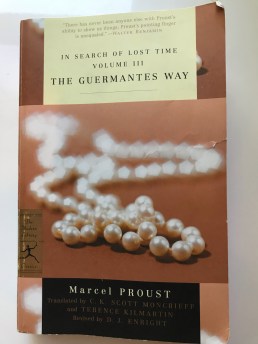
In Search of Lost Time Volume III: The Guermantes Way – Marcel Proust (1921)
Without any inclination as to the reception or legacy of each part of In Search of Lost Time, my guess is that The Guermantes Way is perhaps the most divisive. As a modern reader, it was probably the most challenging, not in the sense of the actual difficulty of the language or Proust’s conception of the novel, but rather because this volume is hyper-focused on the manners, customs, behavior, politics, and history of the old French aristocracy present in that time. It is similar to the way Dublin functions as a place and culture in Joyce’s novels. It’s an approach in which the specificity of the time and place both assimilates the reader into the world and keeps them at a distance if, for instance in this novel, they don’t know the ins and outs of the Dreyfuss Affair. Luckily, there were only a couple of places where this scope really affected my enjoyment of the novel. For the rest, I am still mesmerized (and honestly clueless) by how Proust makes these novels so compelling. This volume is certainly the funniest in the series to date. The way in which Proust mocks both the narrator and the aristocracy in throughout the novel is tremendously funny. Overall, I have to say that being now halfway through, I am enamored with these novels. Hopefully, I’ll be able to better explain why as I keep moving through them.
August

In Search of Lost Time Volume IV: Sodom and Gomorrah – Marcel Proust (1921)
I feel bad that I don’t have more to say about this specific volume in the series. Like the previous volumes of this novel, Sodom and Gomorrah continues to dazzle me. What’s especially fascinating to me here is how Proust continues to work through the same themes, characters, and even settings that he has for the past three volumes. I can confidently say that I’ve never read anything that digs as deep into itself as In Search of Lost Time. What amazes me more is that this digging, for the most part, doesn’t feel like a chore. I’m not lying or even trying to be pretentious when I say that I am enjoying myself immensely in reading this series. It’s extraordinarily entertaining! Ultimately, I think it’s this balance, between the sacred and profane for lack of a better phrase, that is Proust’s ultimate achievement.
September

In Search of Lost Time Volume V: The Captive – Marcel Proust (1923)
I have finally arrived at the point that I dreaded when starting this series. The Captive is by a wide margin the least successful and least entertaining of these novels so far. In the previous novels, I’ve been astounded by how little I’ve been bored or disinterested. After all, these are enormous novels that revolve around long, repetitive monologues by the narrator on life and art in early 20th-Century Paris. But, by and large, Proust’s writing in these monologues is so lively, engaging, and often funny that, as a reader, I’ve felt the profundity of his writing far more than the tedium. The Captive, to be fair, doesn’t do anything that the previous novels don’t do. However, whether it’s from the subject (Marcel’s possessive hold over Albertine) or the writing (this was the first posthumous novel in the series, meaning that many of the revisions and edits were handled by editors instead of Proust himself), more often than not, The Captive just can’t rise to the level of brilliance and insight of the previous installments. To be fair, there is one sequence at Madame Verdurin’s salon that belongs with the great set-pieces throughout the entire novel. Besides that, however, much of this book felt long and tedious.
October

In Search of Lost Time Volume VI: The Fugitive – Marcel Proust (1925)
I am happy to report that Proust gets back on track with The Fugitive. After almost no action and very little plot in The Captive, The Fugitive feels almost pulpy by contrast. Over just 400 pages (making this the shortest volume of the entire series), we see Marcel grapple with the fact that Albertine has finally left him, use St. Loup, along with his own hilariously misguided tactics to try and win her back, fall into grief and despair as he learns that she has died, return to society, sojourn to Venice, reacquaint himself with Gilberte, and discover that St. Loup has the same romantic tastes as M. de Charlus (in other words, is gay). Here I should note that, in principle, judging the volumes of In Search of Lost Time by how much action they contain is really fucking stupid. Still, if ever the series needed an injection of plot, it was after the entirely introspective previous volume. Interestingly, these are the two volumes with the least oversight by Proust. While Time Regained was also published posthumously, Proust had written, rewritten, and edited large parts of it from the start of his work on the series. I can’t help but wonder how closely these two volumes, The Captive & The Fugitive, would have aligned with a work that Proust had lived to see published. Considering that these two are the shortest volumes of the series and that they both are centrally concerned with Albertine, it seems to me that they perhaps should have been one condensed novel.
November

In Search of Lost Time Volume VII: Time Regained – Marcel Proust (1927)
The search is over! Look, before I even begin, I should just say that there is no way I’m going to be able to capture even a portion of all that I think and feel about this great novel. As pretentious as it sounds, I now understand how and why people devote years and even entire lives to Proust. In my own limited reading history, I have not encountered anything that comes close to the scope and ambition of In Search of Lost Time. It will certainly be the foremost work I think of when approaching grand subjects like time, aging, memory, and the purpose of art. Not to mention, of course, that the novel provides so much insight and detail into a specific time and place. Here, I’ll offer just a few takeaways from my experience reading this novel in the hope that it may encourage others to embark on the search themselves. First, I need to note that this series is rarely ever a slog. Yes, it is very long. Yes, Proust writes in minute detail about almost everything. But only rarely does that depth feel unnecessarily cumbersome for the reader. Pretty quickly, you learn the rhythms of Proust’s prose and in all honesty, it becomes a joy to read. What’s more, this series (including Proust’s writing, the characters, and the plot) is full of life and humor. This is not a dry, scholarly book. It is full of vitality, vulgarity, depravity, comedy, and beauty. Second, I will acknowledge that the series does grow a bit weaker as the books go on. The ones that Proust lived to see published (Volumes I-IV) are better than the ones he didn’t (Volumes V-VII). That being said, there is still plenty in those final three volumes to keep reading. I will also add that the ending of the novel is tremendous and really ties everything together. Lastly, how is there not a film adaptation of these? Yes, certain volumes have been adapted individually, but I am begging for a Netflix 10-episode treatment. Someone make it happen!
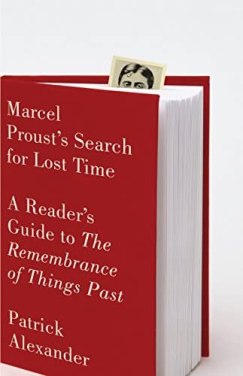
Marcel Proust’s Search for Lost Time: A Reader’s Guide to the Remembrance of Things Past – Patrick Alexander (2009)
This is the most successful reading companion I’ve used! It is certainly not the most in-depth. If, however, you are looking to read In Search of Lost Time, this is a really useful guide for summary recaps, keeping track of the hundreds of characters throughout the novel, and exploring the series’ major themes. The historical and biographical information the book compiles about both Proust and the novel’s setting in late 19th Century France is remarkably helpful too.
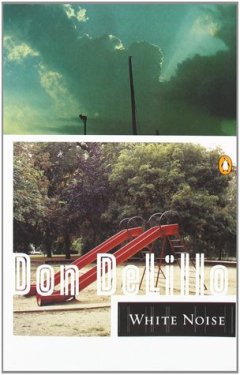
White Noise – Don DeLillo (1985)
I wanted to revisit this before Noah Baumbach’s adaption comes out later this year. White Noise has left a huge impression on me. It was the first book that opened my eyes to postmodernism. Really, it was the first book that made me realize you could write in a non-classical or modernist way. As such, it’s kind of remained the platonic ideal of postmodernism for me, even as I’ve gone on to read authors like Thomas Pynchon, David Foster Wallace, and George Saunders. Revisiting this, I was honestly surprised at how well my impression of the book held up. I suppose it’s a classic for a reason. But in all honesty, I think I would still pick this out of any book if I were looking to define or introduce someone to postmodernism. It’s really that perfect.

 Sam Writes Shit
One thought on “2022 Reading Log”