

January

Fleishman Is in Trouble – Taffy Brodesser-Akner (FX on Hulu)*
I technically watched Fleishman at the end of 2022 but forgot to log it in time for my year-end media diary or best TV shows of the year posts. Fleishman is a show that I enjoyed immensely and truly admired. The series has a tremendous amount of insight into relationships, identities, aging, and how we relate to the world without ever hitting you over the head with grand pronouncements or major lessons. I cannot say enough how much I liked this cast. Jesse Eisenberg and Lizzy Caplan are obviously long-time favorites. But I particularly enjoyed the turns Brodesser-Akner gets out of actors like Adam Brody, Claire Danes, and even Josh Radnor. Had I not been so neglectful, Fleishman probably would have juuuuuust missed out on making my top ten series of the year. That has more to say about the strength of this past year than Fleishman. Although, and this may not be a valid criticism, whereas series like House of the Dragon, We Own This City, and Station Eleven all built on or even elevated their source material, Fleishman strikes me as a series that would perhaps be even better in its original form as a novel. I suppose there’s only one way to find out.
*Aired in 2022
Atlanta (Season 4) – Donald Glover (FX)*
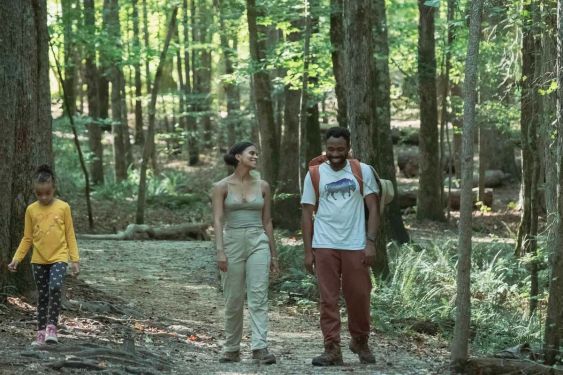
Out of all of the series I’ve reviewed over the course of this blog, Atlanta may be the one I’ve taken most for granted. That, on a number of levels, is extremely foolish. First, Atlanta is a series that I really, really love. Maybe mistakenly, I overlooked Season 3 for my 2022 year-end list. Season 4, had I watched it in time, surely belonged on the list. Hell, there’s a pretty easy argument for why it could and maybe should have been #1. No other series has been as innovative in its space over the past 6 years as Atlanta. It is a series that was not only consistently excellent and entertaining but never stopped challenging its viewers. It is one of the only shows I can think of where week to week, you truly did not know what to expect even down to which cast members will be in the episode. To me, it seems like some of the packaging and marketing for these last two seasons may have hurt its reputation or at least its place in the cultural zeitgeist. It’s weird to think how a show that was such a critical and commercial breakout in its first two seasons could fly under the radar in its final episodes. Unfortunately, that may just be the world that we’re living in. Still, I thought Season 4, in particular, was as excellent as the show has been at any point in its run and the last two episodes, in particular, were a perfect send-off for what should be remembered as one of the all-time great television series.
*Aired in 2022
March

The Last of Us (Season 1) – Craig Mazin, Neil Druckmann (HBO)
Everything about this series just rules. I’m happy for all the fans of the video game who finally got to see non-gamers (like me) embrace the beauty in this story. I’m happy for all the non-gamers (me!) who got to experience this world and story for the first time. To me, this is the pinnacle of genre storytelling. The world and story of The Last of Us is cruel and punishing. There’s no getting around that. But instead of using this setting to hammer the viewers week after week, Druckmann and Mazin instead point their attention to the pieces of humanity worth saving.

You (Season 4) – Sera Gamble, Greg Berlanti (Netflix)
I have no objective criteria for whether a season of You is good or bad. All I can say is that yet again, I just about inhaled this installment of episodes. Also, I’m quite smitten with Charlotte Ritchie as this season’s love interest.

Band of Brothers – Tom Hanks, Steven Spielberg (HBO)*
Look, I’m pretty skeptical when it comes to war films. This is one that I had been curious about, and wary of, for a long time. And so, I’m delighted to report that I found this to be a real triumph. In fact, a huge differentiator of this series compared to other war films is its duration. It allows for the series to explore these characters and this war in the amount of detail and nuance they deserve. Sure, there is still plenty of “greatest generation” and “rally around the flag” messaging here. But, for each of these moments, there are also counterweight passages of violence and cruelty. For someone like me, with only a surface familiarity with World War II’s events, I thought this was about a perfect telling.
*Aired 2001
May

Andor (Season 1) – Tony Gilroy (Disney +)*
Star Wars might very well be the most difficult media franchise to evaluate critically. The original films literally changed the way movies are made, watched, thought about, and loved. The next three films (the prequels) are perhaps the earliest and most definitive example of what intellectual property means, both from a filmmaking perspective and also from a fan/community lens. The next iteration of movies (the sequel and anthology films) covered the spectrum from updating themes for the 21st Century, becoming the subject of toxic and abhorrent fan backlash, as well as serving essentially as a case study in studio risk management. And somewhere in between all of this, we have 20-odd films and TV series that rank amongst my all-time favorite and least-favorite pieces of media.
My point with this lengthy introduction is to say that there’s basically no way to separate any Star Wars property from the context in which it was made and received and unfortunately, there’s no other franchise with as much context or baggage as Star Wars. This is where Andor comes in. The common piece of praise I’ve heard time and again about Andor is that it’s the least-connected piece of media in the series. Meaning, more or less, that this show, as opposed to any other film or series, stands on its own as a complete or isolated story. After watching and (spoiler alert!) loving this first season, that sentiment is mostly true. Andor approaches its story with a different scope and tone than almost every other Star Wars property. It’s a terse spy thriller that (mostly) focuses on a different class of people than your typical Star Wars property. The closest comparison to it is the anthology film, Rogue One, which, of course, is the story that launched the idea for this series.
Now, if you sense any hesitation in my voice in validating this claim, it’s not because of any failure by Andor in being unique and original, but because claims like this in media franchises are pretty common and often not that meaningful. For instance, despite all of its costumes, masks, and comic book characters, many people would tell you that The Dark Knight is not a superhero movie. It’s just not true. Likewise, I’d hesitate to call Andor anything besides a Star Wars series. For all of its unique aspects, it’s still a hero’s origin story set in space featuring droids, lasers, and spaceships all centered on a rebellion against the evil empire.
So what’s my point with all of this? It’s certainly not to call out Andor for being anything less than excellent or original. Let me get that all out of the way now. Andor does everything with a precision and professionalism that’s incredibly rare to see on television. The writing, plotting, and pacing of the series is air-tight. Gilroy is a master of letting the viewer know exactly as much as they need and nothing further. There are no lengthy pieces of exposition that tell us what this planet is and how its inhabitants behave. Instead, the series stays laser-focused on its story, and through masterful direction, leaves the rest to the audience. But, to me, more than anything else, it’s the performances that stand out. In a lot of ways, the casting of this series reminds me of Game of Thrones or Succession in which every part, no matter how small or short-lived, is played with a nuance and commitment worthy of the theater. This of course is not even getting to what is perhaps my favorite element of the series, which is the extraordinary headline performances by the likes of Stellan Skarsgård, Fiona Shaw, and Diego Luna.
Tying this to my previous line of thinking, what I really want to say is this. Right now, we live in a world dominated by IP and the franchising of almost every story. For the most part, it sucks and there’s just no getting around it. While no studio or property has really figured out how to tell unique and original stories through this lens, it’s safe to say that Star Wars has been among the least-successful properties in that pursuit. That is at least, until now. Look, in another universe, would I like to have seen Tony Gilroy and Diego Luna make anything they wanted with this budget and cast? No question. But in the world we live in, Andor is a remarkable case study for how to make brilliant and uncompromising art within a mass media franchise. I hope it’s one that all studios and filmmakers are paying attention to.
*Aired 2022
Jury Duty – Lee Eisenberg, Gene Stupnitsky (Freevee)
There’s been a strange tension bubbling up around television comedies in the past few years about whether the recent wave of “nice” tv series, like Schitt’s Creek and Ted Lasso, are actually funny. To me, it’s a stupid argument made in bad faith for the sake of gate-keeping what makes “true” comedy. There are, quite obviously, very funny bits in both Schitt’s Creek and Ted Lasso. To me, their enormous popularities and critical nitpicks have much less to do with whether each is funny, but whether or not, the writing, stories, and larger production decisions in each make for quality TV.
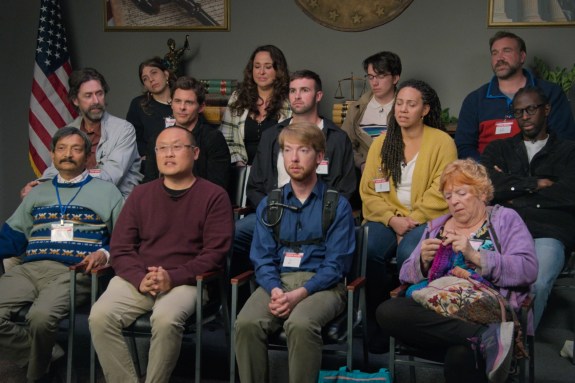
That being said, if there were a series to thwart this entire notion, we may have found it in Jury Duty. Not only is this series extremely funny, it is just an extremely wholesome and feel-good story which, is particularly remarkable, considering it is a mostly unscripted reality show. To cut right down to it, there are, I believe, two miracles that make this show as extraordinary as it is. The first is just in the casting, writing, and production of the series. I think in most circumstances, this show would either not work or not be particularly funny. Here, it does both. The second miracle, of course, is Ronald Gladden, who handles this entire situation which as much grace and kindness as anybody possibly could. I shudder to think how much of an asshole I would look like had I been selected as the subject of this show. Luckily, we got Ronald instead, and through him, we get a series that in both the critical and moral meaning of the word, is good.

Survivor (Season 44) – Charlie Parsons, Mark Burnett, Jeff Probst (CBS)
For the first time since Winners at War (Season 40), we have a good season with a great winner. Sick.
June

Ted Lasso (Season 3) – Jeff Ingold, Liza Katzer, Bill Lawrence, Jason Sudeikis (Apple TV+)
Ted, oh Ted. One of the unfortunate truths of the world is that an artist’s legacy is always malleable. No matter how incredible an album, a film, or in this case, a season is, it can be tarnished by its surrounding body of work not being up to par. For music, take someone like Interpol. Does the fact that they never fully delivered on the promise of their first two albums change their legacy? Most definitely. Does it change how people think and feel about those first two albums? Unfortunately, I think so. If you need a TV example of this, they’re quite abundant. Series like Lost, Dexter, House of Cards and even a truly great show like The Americans have had their legacies challenged because of lackluster seasons (s).
Now, if one remembers all the way back three years ago, Ted Lasso burst onto the scene like a supernova. It was, for all intents and purposes, the tv equivalent of Interpol’s Turn on the Bright Lights or The Stroke’s Is This It. Anecdotally, it’s the series that I’ve heard most about from friends and family since I started this here blog. Non-anecdotally, one can simply look at its Emmy wins to understand the magnitude of this show’s reach and appeal. Without having gone back myself, I must say that I believe the first season is still legitimately great. The problem is that these past two seasons, concluding the entire series this week, have been mediocre to downright bad.
So what happened? This is obviously all speculative, but to me, Ted Lasso is a case of a series being overrun by its own popularity. Season 1 rightfully earned its reputation by being a well-made comedy centering on themes of positivity and optimism. Not only was the series great, but it was pretty different from other shows on the air. Unfortunately, I think the series took all of this hype too much to heart. These past two seasons felt specifically engineered to not tell a good story, but a “nice” story. Instead of following what made sense for the plot or for each of its characters, Ted Lasso seemed to go out of its way to prioritize this theme of positivity and optimism even when it didn’t make sense. Really, I think you can boil Ted Lasso‘s run to these two lessons: A great show can also be kind, but a show that is kind is not necessarily great. I hope in five years we remember Ted Lasso for the former lesson. My fear is that it will be remembered for the latter.

Yellowjackets (Season 2) – Ashley Lyle, Bart Nickerson (Showtime)
I have not struggled with a series like this in some time. Even during Season 1, which received almost universal praise (and to be fair, high praise from me) I kept bumping on certain aspects of the storytelling. More broadly, I don’t think I’ve ever adjusted to the show’s tone. Are parts of Yellowjackets intentionally campy? Should I take a bumbling moment from one of the characters seriously or as piece of comedy in an otherwise bleak show? Are the stakes for the adults based in reality? If so, they do and get away with an extraordinary amount of shit. If not, is that because of the otherworldly factors we see more prominently in the wilderness timeline or just a convenience of storytelling? Are New Jersey State Senators really significant public figures? If so, are there no repercussions to Taissa for being AWOL for like all of Season 2?
And look, I must say that other series have had these issues and still worked for me (at least in a I kept watching sort of way). Lost, in particular is a prime example. It’s another series that navigated multiple timelines for its characters, centered its narrative on the idea of being stranded somewhere remote, and used the mystery behind otherworldly forces to entice its viewers to keep watching. That should be enough for any Yellowjackets wobbler like me to trust in the vision of this show.
Moreover, Yellowjackets has plenty going for it already! For the entirety of these two seasons, I’ve completely enjoyed the wilderness timeline. I find that narrative to be utterly captaining. The characters in that timeline all make decisions that track to me based on their situation and what we’ve seen. I’d also note that the filmmaking, in every aspect of the show but especially in the wilderness, is as good as horror filmmaking gets. I was delighted to see Karyn Kusama return this season to direct its finale. Her visual language fits this series remarkably well.
The aspect I’m having the hardest time navigating is the adult’s timeline. I’m not heartless. I recognize these characters have trauma for days. But still, the decisions these adults make every episode just baffles me. Honestly, I think my frustration with this show is it renders most of the characters unlikable to me. That’s a really hard thing for any series to overcome! Lost, for all of its flaws, at least kept most of its characters sympathetic throughout its ru
I have not struggled with a series like this in some time. Even during Season 1, which received almost universal praise (and to be fair, high praise from me), I kept bumping on certain aspects of the storytelling. More broadly, I don’t think I’ve ever adjusted to the show’s tone. Are parts of Yellowjackets intentionally campy? Should I take a bumbling moment from one of the characters seriously or as a piece of comedy in an otherwise bleak show? Are the stakes for the adults based in reality? If so, they do and get away with an extraordinary amount of shit. If not, is that because of the otherworldly factors we see more prominently in the wilderness timeline or just a convenience of storytelling? Are New Jersey State Senators really significant public figures? If so, are there no repercussions for Taissa for being AWOL for like all of Season 2?
And look, I must say that other series have had these issues and still worked for me (at least in an I kept watching sort of way). Lost, in particular, is a prime example. It’s another series that navigated multiple timelines for its characters, centered its narrative on the idea of being stranded somewhere remote, and used the mystery behind otherworldly forces to entice its viewers to keep watching. That should be enough for any Yellowjackets wobbler like me to trust in the vision of this show.
Moreover, Yellowjackets has plenty going for it already! For the entirety of these two seasons, I’ve completely enjoyed the wilderness timeline. I find that narrative to be utterly captaining. The characters in that timeline all make decisions that track to me based on their situation and what we’ve seen. I’d also note that the filmmaking, in every aspect of the show but especially in the wilderness, is as good as horror filmmaking gets. I was delighted to see Karyn Kusama return this season to direct its finale. Her visual language fits this series remarkably well.
The aspect I’m having the hardest time navigating is the adults’ timeline. I’m not heartless. I recognize these characters have trauma for days. But still, the decisions these adults make every episode just baffles me. Honestly, I think my frustration with this show is that timeline renders most of the series’ characters unlikable to me. That’s a really hard thing for any series to overcome! Lost, for all of its flaws, at least kept likable characters throughout its run.
What does this all mean for me? I kind of want to quit this show. I don’t like watching something I don’t enjoy. I don’t like critiquing something that so many people love. Sometimes a series is just not for you. On the other hand, when Season 3 rolls around next year, I might not be able to resist tuning in. For all its faults, Yellowjackets is nothing if not captivating.

Succession (Season 4) – Jesse Armstrong (HBO)
Amongst fans and critics, there’s more or less a consensus on the Mt. Rushmore of scripted dramas being The Sopranos, The Wire, Breaking Bad, and Mad Men. Now, that doesn’t mean that each individual fan or critic doesn’t have their own picks and challengers. Even in Alan Sepinwall and Matt Zoller-Seitz’s landscape-defining TV: The Book, those series all ranked behind their number 1 choice, The Simpsons. Still, the reason I bring this all up is that since Mad Men left the air in 2015, I think there’s been only one legitimate challenger to this consensus Greatest TV Series of All Time list, and that’s Succession. And as much as I love list-making and haggling, for now, that’s enough of an accomplishment without worrying about whether it’s better series than Mad Men or The Wire. Succession is legitimately in the conversation and that’s a remarkable feat.
So, without writing an entire book on the subject, what did Succession do to earn its place at the top? Like all of the aforementioned series, Succession centered itself on a cast of just incredibly gifted actors. To name them all here would be to essentially just read the cast list. But I’d say especially all of the top-billed talent, and in particular, Jeremy Strong reached heights that are rarely seen at all, let alone on television.
I’d also say that I think this show always knew what it was. That’s actually something that’s really not seen all that much even amongst the great shows. The Wire constantly reinvented itself, Breaking Bad took about two seasons to land on what it was, and Mad Men had digressions and uncertainty in its narrative for large stretches of episodes, even late in its run. Moreover, it’s not simply that Succession knew what it was, it’s that it stuck to that identity even when it was challenging to the audience. The most consistent ding on this show was that its stakes didn’t matter. No matter what dramatic moment transpired at the end of an episode or end of a season, its characters would essentially be reset back to their original positions.
After finishing the series, it’s clear to me this wasn’t a bug but a feature. The fact that none of these characters’ actions, no matter how consequential they feel, have any lasting meaning is what’s at the core of this series’ heart. People are not only incapable of growth and change, they are trapped within their own failings of human nature. For Succession to essentially use this very human idea to expertly critique the ills of American society is just master-level storytelling and something I’m not sure we’ll ever see again.
ore or less a consensus on the Mt. Rushmore of scripted dramas being The Sopranos, The Wire, Breaking Bad, and Mad Men. Now, that doesn’t mean that each individual fan or critic doesn’t have their own picks and challengers. Even in Alan Sepinwall and Matt Zoller-Seitz’ landscape-defining TV: The Book, those series all ranked behind their number 1 choice, The Simpsons. Still, the reason I bring this all up is because since Mad Men left the air in 2015, I think there’s been only one legitimate challenger to this consensus Greatest TV Series of All Time list, and that’s Succession. And as much as I love list-making and haggling, for now, that’s enough of an accomplishment without worrying about whether it’s better series than Mad Men or The Wire. Succession is legitimately in the conversation and that’s a remarkable feat. So, without writing an entire book on the subject, what did Succession do to earn its place at the top? Like all of the aforementioned series, Succession, centered itself on a cast of just incredibly gifted actors. To name them all here would be to essentially just read the cast list. But I’d say especially all of the top-billed talent, and in particular, Jeremy Strong reached places in their performances that TV rarely reaches.

I Think You Should Leave with Tim Robinson (Season 3) – Tim Robinson, Zach Kanin (Netflix)
This entry was long overdue. After inhaling Seasons 1 and 2, Gioia and I really paced ourselves in Season 3. The end result? Ummmm the same? I Think You Should Leave continues to be my absolute favorite show. Initially, I couldn’t even tell if these new sketches were actually funny or if I was just comforted and delighted by having Tim Robinson back in my life. But, with a little distance, I can safely say that these sketches, like Seasons 1 and 2, are absolutely fucking hilarious. I don’t know how he does it, but it is a miracle.
July
The Bear (Season 2) – Christopher Storer (Hulu)
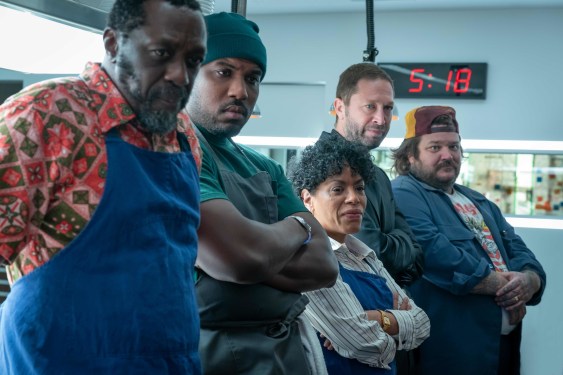
This show is so special. Whatever I write here is not going to do it justice. And to some extent, maybe that’s actually fitting. After all, while I (a Chicago-living, R.E.M-loving, sensitive man-child) do seem to fit into the series’ target demographic, the show has clearly connected to a wide range of people beyond that identity. In fact, my Mom had just about the best summary of the series that I have heard, which is that it serves as a real case-study for what happens when you give people legitimate chances to succeed. That’s nice! I’m going to end it there for now, although you will surely see this on my year-end Top Ten. Thanks, Mom!
September

What We Do In The Shadows (Season 5) – Jermaine Clement (FX)
Five seasons in and this remains not only the funniest show on tv, but also the one I most look forward to watching.
October
Over the Garden Wall – Patrick McHale (Cartoon Network)*
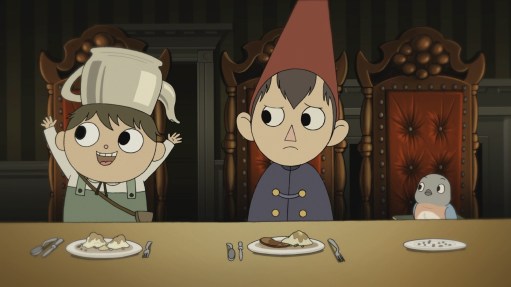
A delight! I apologize to Bryce and Gioia for not watching this in full before now. Henceforth it will be an annual tradition.
*Aired 2014
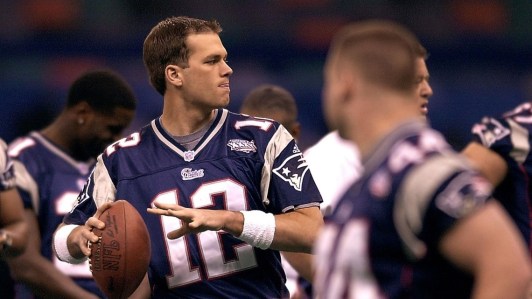
Man in the Arena: Tom Brady – Gotham Chopra, Erik LeDrew (ESPN+)*
I am as biased as it gets, but this is pretty well done. Out of all sports leagues, NFL probably does the best job of having comprehensive footage to pull for a series like this. I do wish Brady would have waited a few years to make this. It just can’t be a comprehensive reflection without participation from someone like Bill Belichick or Bob Kraft.
*Aired 2021
December

Survivor (Season 45) – Charlie Parsons, Mark Burnett, Jeff Probst (CBS)
Easily the best post-Winners at War season of the show. Despite some early hiccups that were honestly about as entertaining as they were frustrating, this season (like all good seasons) succeeded on the back of its cast. In the NBA there’s a silly perception where people think because the players are friends with one another it makes the league less competitive than it once was. One of the things that was unique to Season 45 and worked out really wonderfully is that, especially post-merge, the cast seemed to genuinely really like one another. I think it’s not a coincidence then, that this season had some of the biggest twists and blindsides we’ve ever seen. Perhaps this dynamic actually makes the game less predictable and thereby more competitive?

 Sam Writes Shit
2 thoughts on “2023 Television Log”