

5th: The Boys from Fengkuei – Hou Hsiao-Hsien (1983)
A Taiwanese i vitelloni! I’m not sure I would have connected Hsiao-hsien to Fellini without seeing this film, but it certainly makes sense. He’s already such a stylist here. I have to imagine it takes a lot of determination and strength in your vision to make a film that’s this fluid so early into your career.
Grade: A-
5th: Le Bonheur – Agnès Varda (1965)
Has anyone been as good at so seamlessly blending overt social issues into their narratives as Agnès Varda? The whole film is immaculately executed but the final act in particular is just masterfully told. The nuance and subversiveness of it reminds me of the final act in California Split, which is to say that this ranks amongst my very favorite film ending ever.
Grade: A-
5th: Pee-wee’s Big Adventure – Tim Burton (1985)
In the very best of ways, it feels like I’ve had this entire film stuck in my head since seeing it.
Grade: B
6th: The Creatures – Agnès Varda (1966)
I’d love to read more about this! From Varda’s own introduction, this was one of her “misses.” And to be fair, I don’t think the film totally works. But it’s an enormously ambitious project and one where I think a lot of the decisions are fascinatingly bold, most centrally the choice to have Catherine Deneuve in an almost entirely mute role.
Grade: B-
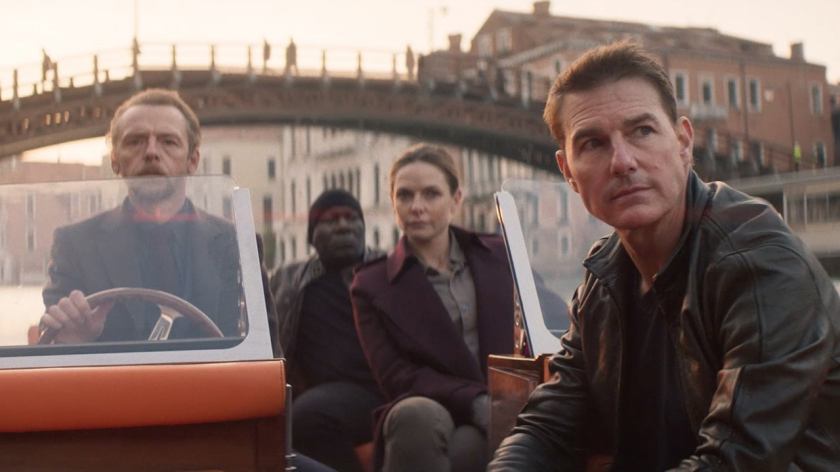
6th: Mission: Impossible – Ghost Protocol – Brad Bird (2011)
Can you imagine being Simon Pegg waiting five years for this script after MI:3 and you go from being the fun nerdy/smart character to the walking punchline? Probably better than Jeremy Renner waiting in the wings to take over Bourne and M:I and both of those not happening I suppose. Anyways this movie rips most especially every time someone says “Ghost Protocol”
Grade: A-
13th: Mission: Impossible – Rogue Nation – Christopher McQuarrie (2015)
Honestly ready to have the Mission Impossible series is the best franchise out there conversation
Grade: A
16th: Shiva Baby – Emma Seligman (2020)
Somehow I only rated this 3.5 stars last time? I’m guessing my discomfort outweighed how fucking good of a movie this is? It’s an extraordinary debut. I love that Seligman takes the restrictions of a small budget (small cast, few locations, etc.) and makes them the best part of the film. I may never eat a bagel again.
Grade: A-
17th: Léon: The Professional – Luc Besson (1994)
A lot of great individual parts to this movie: Natalie Portman’s performance, the shootout at the end, etc. I kind of have my doubts about how it all fits together.
Grade: B-
17th: Mission: Impossible – Fallout – Christopher McQuarrie (2018)
The best movie in the history of movies?
Grade: A
18th: Mission: Impossible – Dead Reckoning Part One – Christopher McQuarrie (2023)
Still great and features some of the best sequences I’ll see in a movie this year. Honestly, it’s probably wrong to bring up issues with the plot mechanics when…(gestures broadly at preceding six installments). Still, for whatever reason, I bumped up against some of them here when, at least for the past 3 or 4 films, they haven’t bothered me in the slightest. Who knows, I’m probably just mad about [redacted] dying 😦
Grade: B+
19th: Lions, Love, (and Lies) – Agnès Varda (1969)
I’m pretty sure I hate hippies. I trust Varda implicitly and have no concerns this was made with bad intent or without a thesis but man oh man, it took everything I had to finish this
Grade: D
20th: Mur Murs – Agnès Varda (1981)
I’m very partial to Varda’s documentaries. Even without the subject matter (murals baby!) this is more that worthwhile just for the incredible snapshot of 1980 Los Angeles. That being said, I liked the murals, but your mileage may vary.
Grade: B
25th: The Pianist – Roman Polanski (2002)
Kind of undeniable? A rare film about history that goes much deeper than what’s most easily accessible in a narrative. Thinking specifically here about how Adrien Brody’s character is portrayed and how he moves through these events. Even the ending, and specifically the two historical notes in the credits, resist tying things up in a neat moral bow.
Grade: B+
26th: Documenteur – Agnès Varda (1982)
Not breaking any news here, but Varda’s eye as a director is unparalleled. She sees and renders images down to their very essence. She has this remarkable quality in which she never compromises a specific and often nuanced vision and yet it’s always completely accessible to the viewer. There’s this complete lack of pretension in her work that feels almost singular to her within art-house cinema (and this, of course, is all coming from someone who often falls for and can’t help but admire pretension).
Grade: A-
28th: Downfall – Oliver Hirschbiegel (2004)
Clearly, I’ve been on a bit of a kick watching these narrative films about historical events. Say what you will about Oppenheimer, but it’s really made me think deeply for the first time about what it means to portray historical events in a film and what, in each case, a film is trying to accomplish through its portrayal.
For a lot of reasons, Downfall is kind of endlessly fascinating to me. I should preface this all by saying 1) I’m not a historian and 2) I’m American without any German heritage (at least that I know of). To that end, I do have a somewhat morbid fascination with Hitler and Nazi Germany and this movie, I think, attempts to portray his/their final days with as much historical accuracy as you can have in a film.
Taking that one step further, it seems from some light reading into the production of the film, that the underlying motivation behind this approach was taking the opportunity to essentially demystify Hitler. In other words, to show him as the human he was as opposed to the amalgamation of root evil he’s come to symbolize. I think it’s also important to note here that this is a German film and while one should always keep in mind an international audience, I have to imagine there were decisions made in the production of this film that were tailored specifically to a German audience as their reconciliation with the film and its historical context will obviously differ from an outsider’s.
So, after taking in three paragraphs of qualifiers, do I think this film is successful, responsible, worthwhile? I don’t know. I wish I did.
For what it’s worth, I think the idea of rendering Hitler as a real human being is worthwhile and mostly accomplished. Again, it goes back to the lingering morbid curiosity that I (and I think many people) have, but making an audience face a reconciliation with the fact that despite all his actions, Hitler was a human being and not some supreme deity of evil, I think is important.
Here’s kind of the issue I’m bumping up against though. A major way in which the film portrays Hitler’s humanity centers around one of the film’s sources and the de facto protagonist of the film, Traudl Junge, who served as Hitler’s final secretary from 1942-1945. And in fact, the film opens and closes with the real-life Junge confessing and lamenting her ignorance of Hitler’s true character during this time. In the film’s own narrative, the film beings and ends on Junge as well. First, as she’s hired by Hitler in 1942 and again as she leaves Berlin following its fall and surrender in 1945.
In theory, I’m not really opposed to the idea that Hitler would have been charming enough in his inner circle where someone like Junge would not have only been loyal to him but have a deep admiration for him as well. And look! However, you portray history, it’s going to be flawed and incomplete. That’s just the business you’re in. But I have to question the film’s decision to portray her as (and Junge’s own assertion that she herself was) completely blind to Hitler’s actions until the Nuremberg Trials. Especially as that’s more or less the assertion which closes the film.
OR! And this is the sticking point, if that’s really true (and Junge would be the only person to really know), does it makes sense to feature her so prominently as a protagonist in the film? Would not a better approach be to question why/how someone could be charmed by Hitler, not through ignorance of his actions, but despite knowing the extent of his destruction? Again, maybe this all just comes from my skepticism that Hitler’s secretary for three years would not have realized at least some of the actions stemming from his policies?
In any case, I have written way too much on a subject I know too little about. But, in closing, I must say that I still don’t know if a narrative film like this is worthwhile. I do think there’s real power in seeing historical events visualized. But for a narrative feature at least, I question whether there’s enough room for dueling perspectives or nuance which is kind of essential in understanding history. Like, is this film worthwhile on its own? As part of a suite of films to understand these events? Or at some point, do you just tell people to actually read historical sources or watch something like Shoah? I really don’t know.
Tl;dr: Boy dinnnnnnnnnnerrrrrrrr
Grade: B-
29th: Night and Fog – Alain Resnais (1956)
Completely chilling. The narration and music is totally unnerving in a way I can’t fully articulate, not to mention images here that I’ll likely never forget.
Grade: A-
30th: City of Sadness – Hou Hsiao-Hsien (1989)
There’s an interview with Paul Dano about A Brighter Summer Day in which he talks about how he’s not a fan of politics leading the way in art, but “if you move me first…that’s the way to get me to think about something*.”
After spending this week watching a bunch of narrative films centered on historical events, I think my emerging feeling on the subject is closely aligned with Dano’s. I also think Michael Haneke’s notion about presenting events without manipulating the audience is a good north star** (though if taken rigidly probably eliminates most of these films).
In the case of A City of Sadness, there’s an even greater complexity to this issue. This film was made just two years after the KMT’s 40-year period of Martial Law came to a close. As such, the film’s centers on events that were not only being dramatized for the first time, but had been forbidden to even acknowledge in Taiwan until then.
Even more impressive is that in making this movie, Hou Hsiao-hsien, would have been faced with the challenge of making a film both for a Taiwanese audience openly confronting historical traumas for the first time, and also the complexity of introducing these events to an international audience that had been, and still to some extent is, unaware of these events. Not to mention, of course, that this film has to work as a movie. It is, after all, a work of narrative fiction set amongst these events.
I’m not sure anyone could have done better than this film. Hsiao-hsien has this amazing ability to present events within a narrative that allows the audience to almost choose how deeply they want to engage with them. One could come into this film with no context and still be moved by this story of four brothers, the natural beauty in the film’s compositions, and the paranoia, confusion, and brutality that occurs all around them. And yet, one could go into the film armed with historical context, and still pull out new details, dynamics, and themes that emerge with subsequent viewings. It’s a film that works the first time you see it and also encourages multiple viewings and perspectives.
I should also say, that I watched this on a shitty youtube rip with English subtitles. There are undoubtedly many themes and complexities that went right over my head. For instance, the film features multiple languages based on its historical context, which different characters understand at different times. God, what a movie!
In closing, I would like to say that for anybody worried about me watching like six films about traumatic historical events in a row, I have been countering with a healthy dose of Toast of London.
*www.criterionchannel.com/videos/paul-dano-on-a-brighter-summer-day
**www.youtube.com/watch?v=Y_osgrcpes4
Grade: A

 Sam Writes Shit
2 thoughts on “2023 Movie Log: August”