Big fan of TV, movies, and books. Even bigger fan of maniacally recording my thoughts on them in the desperate and inevitably futile attempt to keep them in my memory forever.
4th: Born on the Fourth of July – Oliver Stone (1989) Unhinged in the best way possible? You can count the filmmakers on one hand that’d be willing to show their protagonist at such vulnerable and dehumanizing moments. It’s kind of amazing now to see Cruise in this role given that he’s only been an action hero for the better part of two decades now. Grade: B+
5th: The Bikeriders – Jeff Nichols (2024) I love Jeff Nichols and this totally works for me without necessarily blowing me away. There’s a lot to like in the margins here between the cinematography and the perfromances. Hopefully we won’t have to wait eight years until his next project. Grade: B+
28th: Rap World – Conner O’Malley, Danny Scharar (2024) I don’t even know if this counts as a movie but it’s about the most I’ve laughed at anything in years. Just an absolutely electric viewing experience that I pray will become available on streaming or physical media some day. Grade: A-
4th: Hitman – Richard Linklater (2024) We’re so back. I have genuinely liked all of Linklater’s endeavors since Bad News Bears & Fast Food Nation (yes, even you, Where’d You Go, Bernadette) but this is undeniably his best film in a while (since Everybody Wants Some!!).
As a plot-heavy, broadly appealing comedy, I imagine the litmus test for this one will be School of Rock, which I think is totally apt. Although we’ll never know because of Netflix, I anticipate this will also do the best business since that movie.
What I’ve found most endearing about Hit Man is that while broad appeal and financial success can often be misconstrued as negatives for an “indie” filmmaker, I genuinely find no point of compromise in Linklater’s direction here (as there wasn’t in School of Rock).
While there may be plot, there’s still all the trademarks of his usual style. The film is an amazing vehicle for its actors, the story is rooted first and foremost in character, and even as a straight comedy, it still retains his singular shortstop/poet, philosopher/jock tone of voice.
Linklater was my gateway drug to falling in love with movies and I just could not be more thankful he keeps turning out films with the ability to surprise and subvert expectations. Especially excited for him to pivot into his next two projects about The French New Wave and the Transcendentalists. Grade: B+
7th: One Sings, The Other Doesn’t – Agnès Varda (1977) A film only Agnès Varda could make work. In any other hands, the film is immediately sunk by the weight of its idealism. And to be clear, at just about every corner I was waiting for this to cross that threshold from being a film with ideas to being a manifesto disguised as a piece of art. But across the film, Varda’s singular charm and experience blending styles win out and for that she’s able to convey her message all the more meaningfully. Grade: B+
8th: Vagabond – Agnès Varda (1985) Along with Le Bonheur, this is Varda at her most scathing. In fact, Vagabond is perhaps all the more remarkable for not being shrouded in the warmth and color of the false eden portrayed through the first two acts of the former film. Instead, Vagabond is a desolate wasteland throughout in which you’d be hard-pressed to find a single redeeming quality in any of its occupants (the sole exception being our protagonist who at the very least is uncompromising). What’s remarkable is that along with Le Bonheur, I also think this is Varda’s greatest film, which is just endlessly fascinating to me. Like how is it that in the enormous body of work of one of our most colorful and humanistic filmmakers, these two cynical outliers are perhaps her best work? Of course, that’s all subjective, but for me, I almost wonder if the messages in these films are all the more effective because they stand out so starkly from the rest of her filmography. Grade: A-
8th: Jane B. by Agnès V. – Agnès Varda (1988) I can think of few filmmakers in which this would not feel like the most indulgent vanity project. While I’m not quite sure it all entirely works, it’s really quite a delight to watch. And let’s be honest, the Laurel and Hardy homage is just transcendent. Grade: B
9th: RoboCop – Paul Verhoeven (1987) This is toward the very top of the list of movies I wish I could have seen in theaters. It’s remarkable to me, albeit not all that surprising, that people have tried to remake both this and Total Recall. Granted when I’m going back and watching these older films, I’m selectively picking what I expect to be good. But watching these films really shows how much we’ve lost the plot in terms of quality filmmaking and storytelling, especially in genre work. Like, know what’s a good way to deliver a critique of the growing military-industrial complex that will actually reach audiences? Make something that’s satirical and fun and works not only as a political message but as a stand-alone movie. Anyways, this was fucking sick, Verhoeven rules, and that one guy sure got shot in the dick. Grade: A-
9th: Kung-Fu Master! – Agnès Varda (1988) Boy oh boy, I was dreading this one. Should I be concerned that this isn’t the only Blu-ray I own featuring an acclaimed filmmaker putting their real-life child in a role in which they carry out an inappropriate relationship with an adult? Looking at you, Sweet Sweetback’s Baadasssss Song. Um yeah, I really don’t know what else to say about this one. Overall, it was much better than I had anticipated. The three leads (Mathieu Demy, Jane Birkin, and Charlotte Gainsbourg) all give great performances. They feel authentic and natural, which I imagine is a direct result of making a film with your real-life friends. And I admire Varda taking a swing like this and not shying away from it at all. But ultimately, I’m not sure I can really reconcile my discomfort at the premise. Grade: B
9th: Showgirls – Paul Verhoeven (1995) This is not a perfect movie, but it is a five-star one in that the sum total is far greater than its parts. Could a film be more prescient or scathing in that the message it foretells about the entertainment industry played out in its own reception, most tragically in essentially cutting down the rest of Elizabeth Berkley’s career? It’s great to see that this has since had a critical re-evaluation and yet I have to say, even if this came out today, I think audiences would react poorly to it. If anything, people today are far more afraid of sex, entertainment, and power dynamics than they were in the 90s. But what can you do? At the very least this has and will continue to stand the test of time. How much is that worth? You’d have to ask Verhoeven, Berkely, or any of the other people who took the fall for making something this bold and ambitious. Grade: A
When Gioia and I first started dreaming of this trip, my hope was that our travels would shake me out of my comfort zone. Part of the reason why I wanted to visit places literally halfway across the world was precisely to be as far away from home and the things that were familiar to me as possible. Certainly, this trip did some of that. In fact, I’d imagine it’s impossible to visit three countries with three distinct languages, cultures, and customs without taking away a deeper understanding of the enormity of this world and by contrast the relative smallness of our lives. I’ll also go out on a limb and say that as an American, it’s probably healthy to see how the rest of the world operates (just because you were born somewhere does not mean you have to live your life that way!). I would never want to disrespect the individual people and cultures of Taiwan, Japan, and South Korea by generalizing them into one group, but I’ll say that in each country it was easy to find customs and ways of living that felt more natural and far better to me than whatever it is we’re doing here.
And yet, despite all of that, I must say that my single biggest takeaway from this trip was not how different these countries or cultures are but, by contrast, how much there is in common between people and places situated thousands of miles apart. Far from being pushed outside of my comfort zone, I felt myself more at ease than maybe I’ve been in my whole life. By finding and embracing these commonalities, I was able to connect with people whose lives, backgrounds, and even language were completely different from my own. Here, I do want to make a quick note of the inherent privilege I had in traveling and feeling comfortable in these environments. It’s something I hope to never take for granted.
But, if you’ll allow me one last soliloquy on the power of Taiwanese Cinema… Five years ago I couldn’t have told you one thing about Taiwan and then, almost by accident, I stumbled upon a series of Taiwanese films that spoke to and moved me as much as anything I’d seen before. And again, this was all in spite of having absolutely no knowledge or insight into Taiwan let alone its culture, history, or customs. But at a core level, I felt an unmistakable connection to these films and from there began to learn about Taiwan which eventually led Gioia and I to journey there as part of this trip. And once there, I felt as comfortable as I’ve felt anywhere to the point where, still without a common language, I was able to order food, get around, and even interact with a merchant about the films that led me there and which films I should watch next.
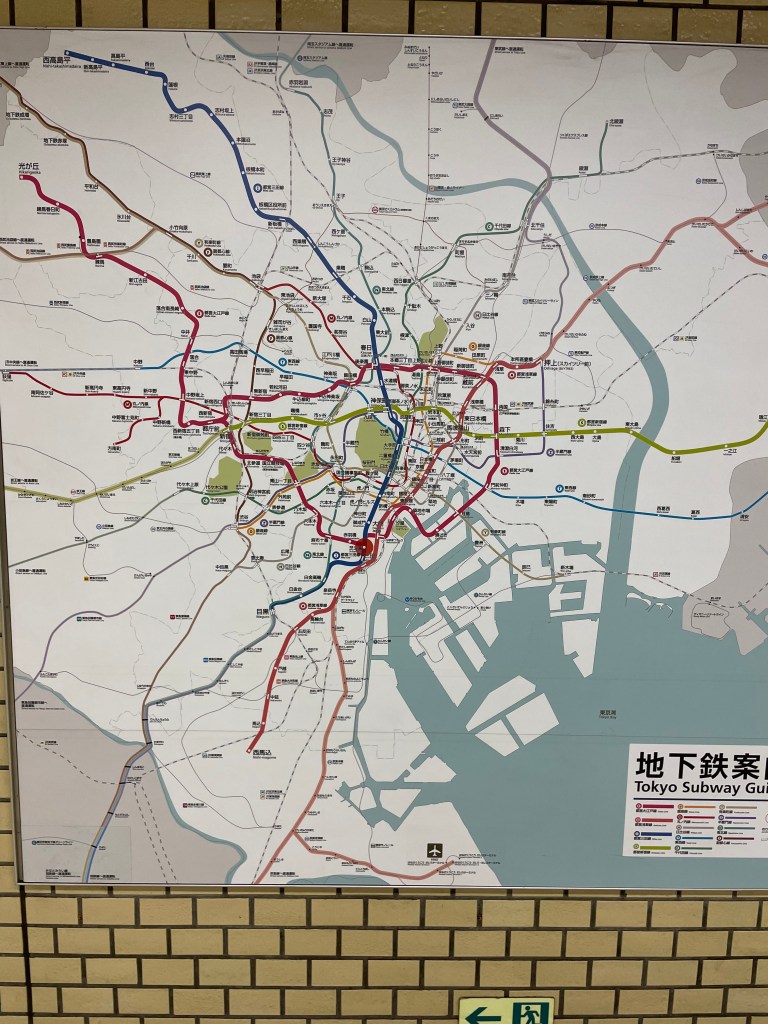
Now look, there are a million considerations to take when traveling abroad: be respectful, make an effort to engage with and adapt to the culture around you, always be cautious. Like seriously, don’t show up to Japan without an idea of some basic phrases and how to use the Metro. But, if you put your best foot forward, it’s amazing what travel can do for you. Not only did this two-week journey across Taiwan, Japan, and South Korea give me some of the best times and memories of my life so far, but it undeniably has changed my perspective on how I see people and the world around me. My hope is that those changes have been evident in these posts. If not, then I guess I’ll just have to go back and try again. Thanks for reading 🙂
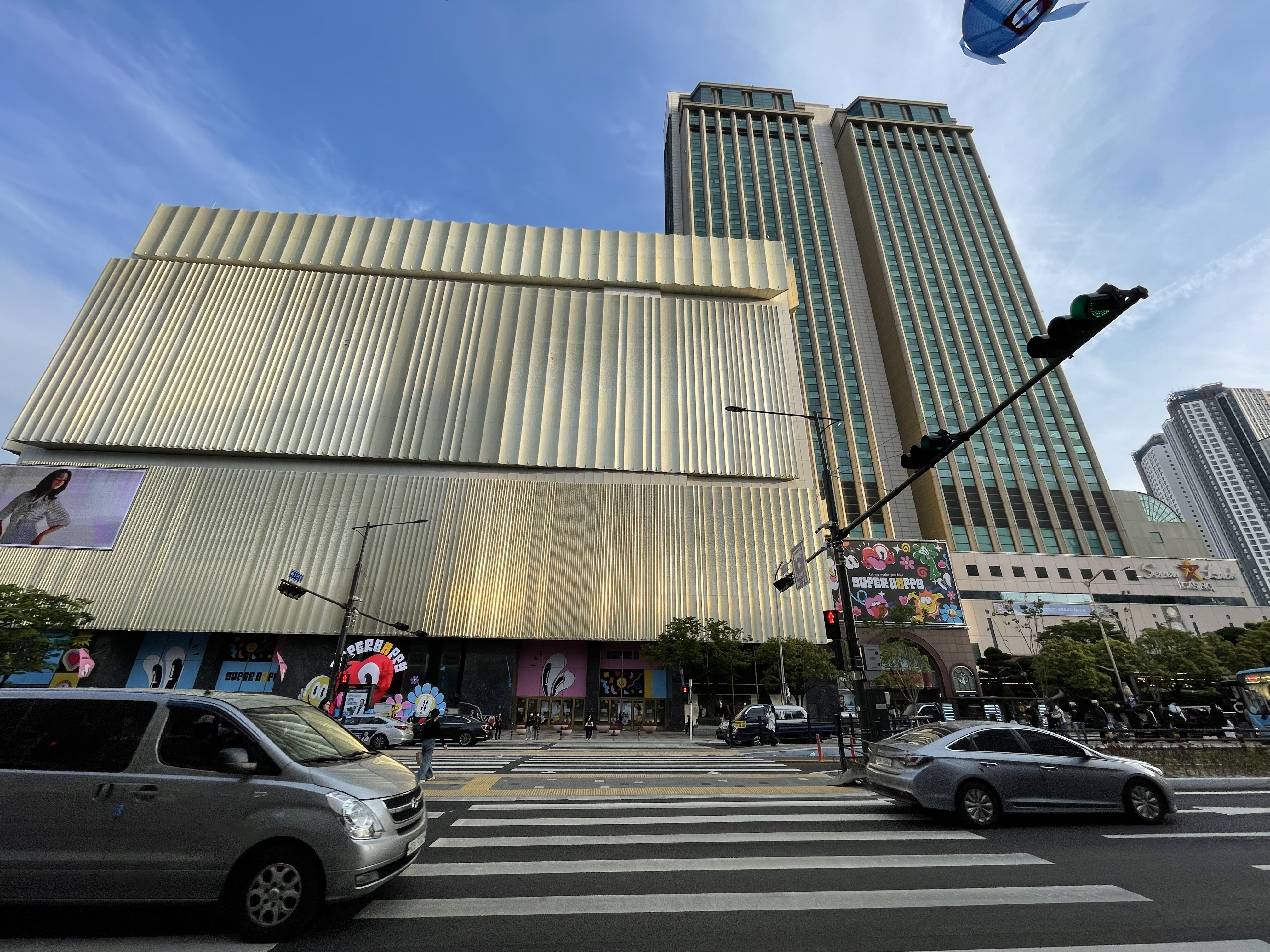
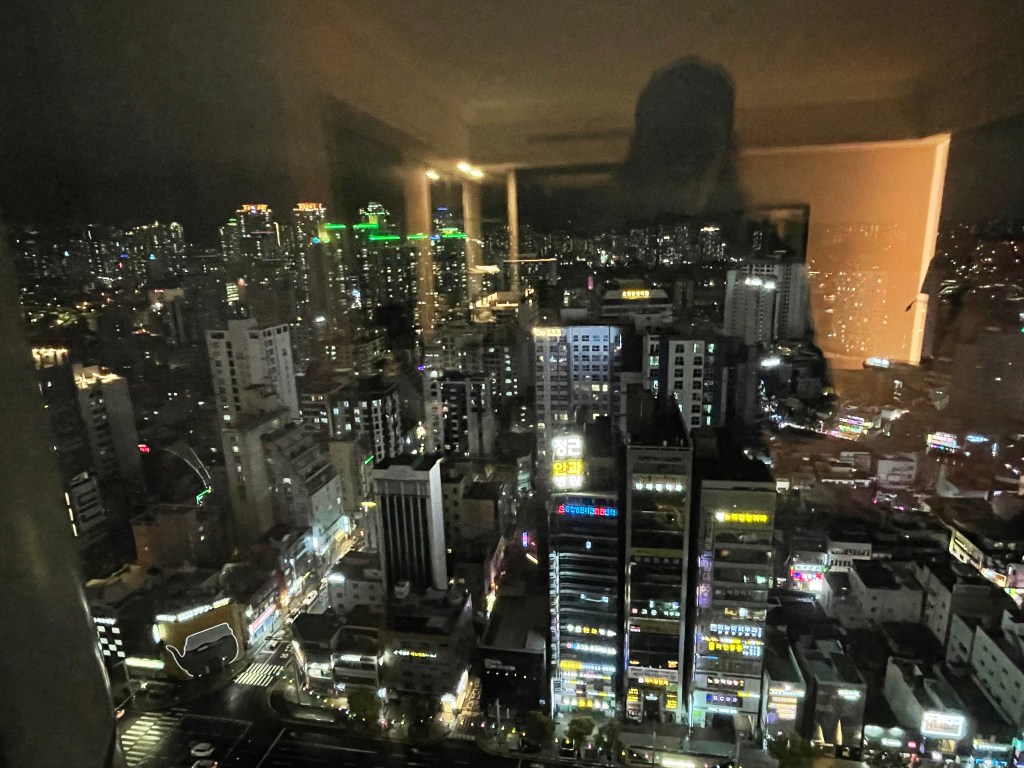
Oh, Busan. Our trip did you dirty. Even before the travel hiccups in getting there, our stay in South Korea was already planned to be the shortest of the tour and as you can see, I’m doubling down on that mistreatment by giving it just one entry in this here travel blog (I do have to wrap this thing up at some point). In any case, by the time we finally arrived at our hotel, three days had turned into two. What’s more, unlike our previous two stops, our hotel in Busan was a full-fledged resort featuring amenities like a casino, shopping mall, movie theater, pools, restaurants, saunas and, you guessed it, a spa! So when we woke up the next day to a full-on downpour, was it really a surprise that we spent the entirety of our second day indoors? I do absolutely regret that we spent any of our time abroad seeing Guardians of the Galaxy 3, but other than that, it was a much-needed day of rest and relaxation after two weeks of non-stop exploration.
Alas, that left us with just one full day to see everything we could of South Korea before embarking on the lengthy trip home. No pressure! All kidding aside, I’m happy to report that we rose to that occasion. Obviously, we could only scratch the surface of what Busan has to offer, but by the end of the day, our takeaway from South Korea was not that it was the least impactful stay on our trips, but rather, the one we would be most anxious to do again (maybe next time as stop #1).
So what does one do with just a day to explore a foreign city? Our answer was to walk around and eat (and I mean really eat). Luckily, Busan is the perfect city to do just that. Located on South Korea’s southeastern coast, Busan is a port city nestled between mountains featuring hilly terrain, stunning views, and some of the world’s freshest seafood. Even better for us was that after two days of rain and fog, the weather on our final day could not have been any more beautiful. And so, on a sunny, clear, spring day, we set out first to grab some breakfast and then explore Busan’s film district neighborhood, both of which garnered five stars in my book.
After taking in the sights and exploring some movie shops, it was time to climb as we were determined to get a view of the city’s Gamcheon Culture Village, a historic neighborhood noted for its twisting and hilly terrain as well as its delightfully colorful houses.
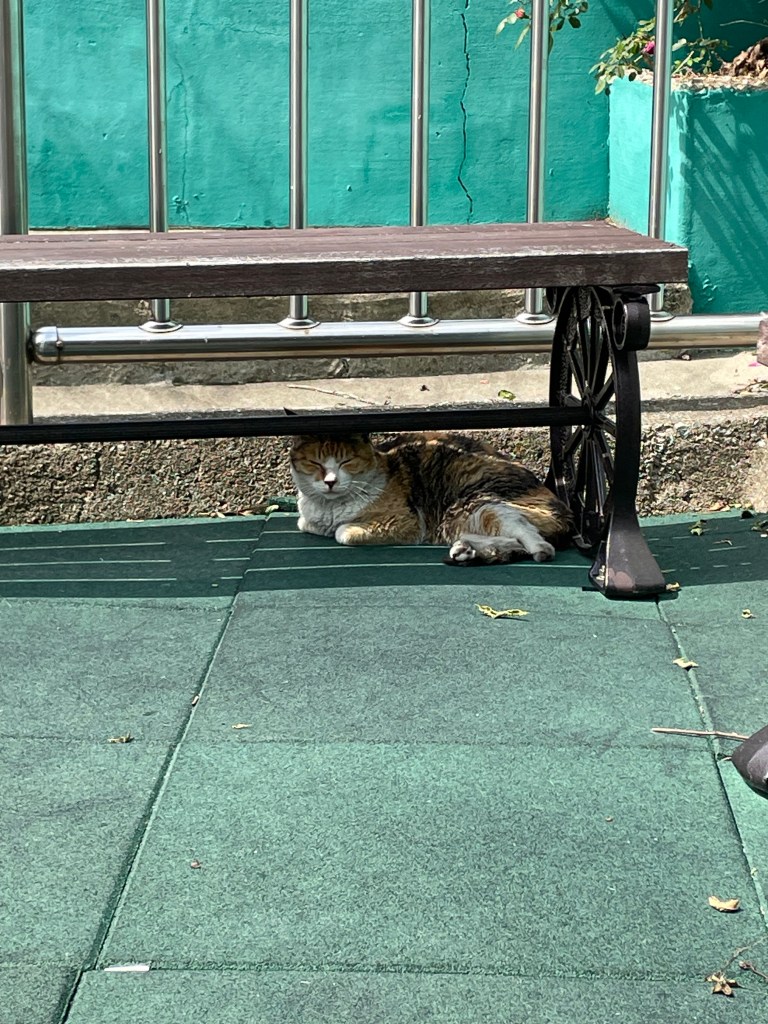
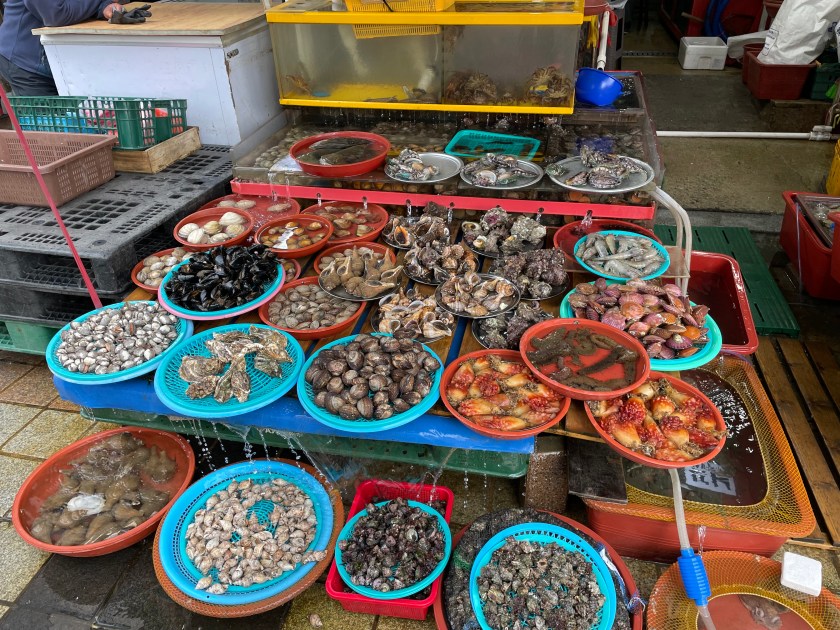
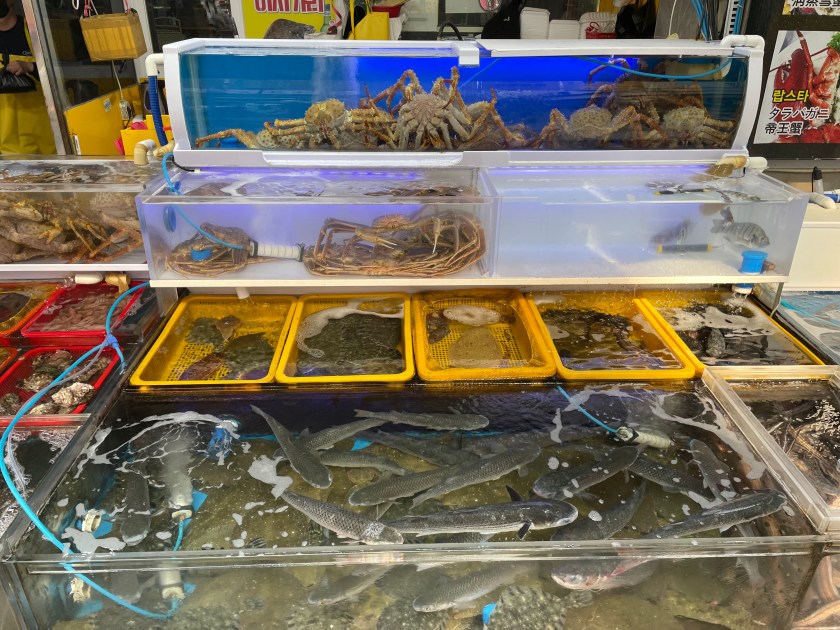
From the Gamcheon Culture Village, we slowly descended down the narrow and winding alleys back to sea level, making our way toward the Jagalchi Fish Market and, perhaps, our most memorable meal of the trip. For my family, it has certainly been the most entertaining story of the trip! But before diving straight into the food, we worked our appetite back up by strolling through rows and rows of stalls featuring the day’s latest catches.
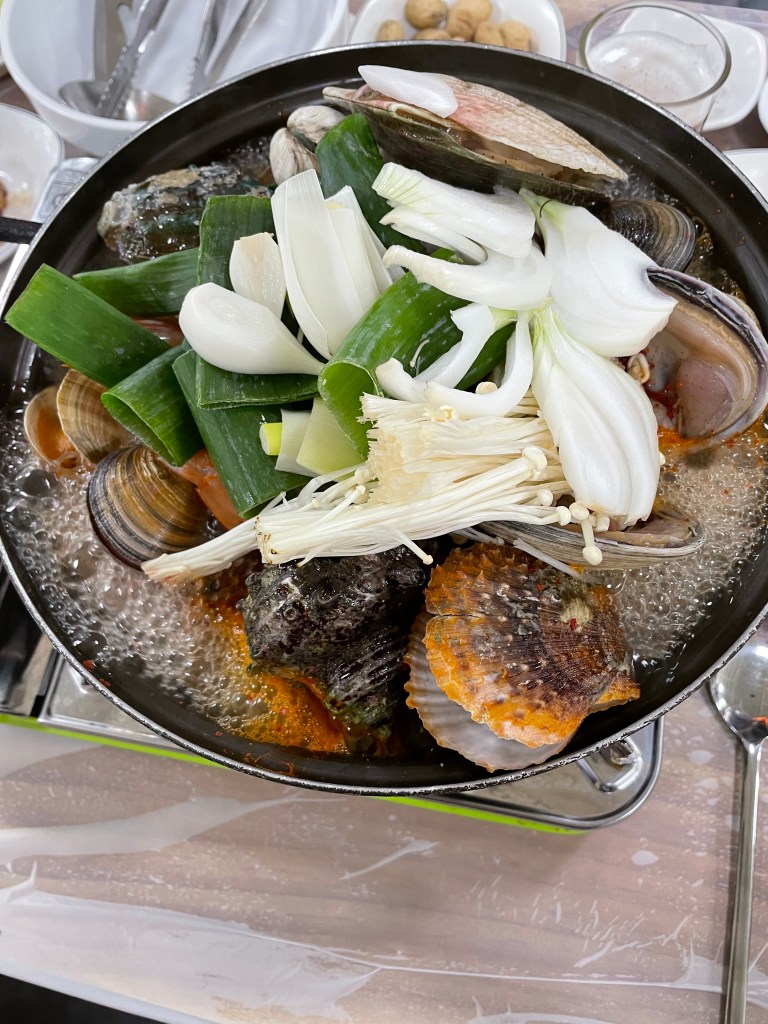
Finally, after taking in the scenery from the top of the Fish Market building, we made our way to the dining area of the complex in which dozens of vendors stand prepared to make the seafood meal of your life. For me, this was easy. While I did have some hesitation based on the 30ish hours of travel ahead of me, I couldn’t turn down the spicy seafood stew featuring clams, mussels, and prawns served in a mouth-numbing broth. Not only was it spectacular, but I am happy to report that I had no digestive issues on any of the flights home the next day! A true blessing.
Gioia’s choices were a bit more…raw. First, she ordered the Marinated Snow Crab, a dish in which a raw snow crab is marinated in soy sauce and served. I shared in this dish and can attest that it was fantastic. The next delicacy, however, was hard for me to watch let alone stomach. This was San-nakji, a dish in which a live octopus is cut up and served so fresh that its tentacles, cut up into bite-size portions, still move as you eat it. Served with Sesame Oil, this octopus is not only a local delicacy but something of a choking hazard if eaten incorrectly as the tentacles are still writhing as you eat them. I’d like to think I am an adventurous eater but even after insistence from both Gioia and the shop owner that I try it, I could not rise to the task. Maybe next time.
For anyone who has been lucky enough to go on a once-in-a-lifetime trip, you’re likely all too familiar with that sobering realization that your final day is coming to a close and with it, your vacation will come to an end. Despite taking as many detours as we could on the walk back to our hotel, it was soon time for us to turn in and pack for the long journey back to Chicago.
Three Times – Hou Hsiao-hsien (2005) Astoundingly beautiful. Considering you have Chang Chen and Shu Qi as the two leads and love interests, that’s not a total surprise. But truly, few people are as gifted as Hou when it comes to mood, atmosphere, and framing. I love that this project really lets him flex those muscles without it ever coming at the expense of the story. In fact, because of the film’s narrative structure, each vignette is allowed to be its own slow burn. We derive meaning from the look and feel of each section as much, if not more than we do from the plot. A Time for Love: A+ A Time for Freedom: A A Time for Youth: A- Grade: A-
Green Fish – Lee Chang-dong (1997) Easily one of my favorite debut films. The first 30 minutes or so have a real Bottle Rocket scrappiness to them. And even as the film gets much darker, Chang-dong still leaves room for darkly comedic moments. Really, the only aspect of the film I have to quibble with is the ending, which is not bad but a tad over-engineered; something that’s kind of ironic considering in his later work, Chang-dong’s brilliance often comes from letting the audience sit with uncertainty. In any case, between the story, the tone, and the incredible cinematography, this is as good as it gets. Grade: A-
Peppermint Candy – Lee Chang-dong (1999) With all due respect to Joachim Trier, I’d like to nominate another film/character for the title of Worst Person in the World. This was a harrowing watch. In reading some of Chang-dong’s comments about Korean cinema at the time of his debut, I get the sense that showing this much violence, harassment, and misogyny was rare and is very much an intentional move here. That doesn’t make it any easier to watch. That all being said, the cinematography here is once again so captivating that the film as a whole is undeniable. Grade: B
Poetry – Lee Chang-dong (2010) I thought Lee Chang-dong’s other films were harrowing but compared to this, they’re practically romps. This is absolutely not for the faint of heart. Something this bleak often falls into the trap of becoming trauma porn; the point at which the film uses devastation to manipulate the audience into a feeling that’s unearned. And to be fair, if one were to simply read the plot description of this film, they’d be right in having that skepticism. And yet, what I find so remarkable about Chang-dong’s work is how reserved he always remains in his filmmaking. So many aspects of this story are left for the audience to discover and interpret. It’s the ultimate testament to the rule of “show, don’t tell.” Like seriously, use this in any writing course or film class to show the power of theme and subtext over plot. I could go on forever but let me close on this note. This is the first time I have seen Yoon Jeong-hee on screen and my god, she gives the performance of a lifetime. Just across the board, a masterpiece of a film. Grade: A
Burning – Lee Chang-dong (2018) Much more to say but yeah this is definitely like my favorite movie. Grade: A
Wildcat – Ethan Hawke (2024) I have no idea whether this works as an adaptation of Flannery O’Conner’s work as I have not read any of Flannery O’Conner’s work. That being said, I certainly feel compelled to now. And regardless of the context, Maya Hawke’s performance here is truly captivating. Grade: B
Troy – Wolfgang Peterson (2004) Every year I get a Sling TV subscription for a few months so I can watch the NBA playoffs and then wind up watching cable broadcasts of movies I would have never thought to put on. And you know what, it rules! Even in the case when the movie is poorly conceived, cast, and executed as is the case with Troy. Grade: C
The Iron Claw – Sean Durkin (2023) As someone who has never watched one single wrestling match, I found this to be way more successful than I anticipated. I really admired the tone and approach Sean Durkin takes in telling this story. For the most part, the film maintains a healthy balance of being wrenching and humanistic without falling into any trauma porn pitfalls. To me, the most successful aspect of the film is the performances, and in particular, Zac Efron’s. Would that be the case if I were more familiar with the Von Erichs? Maybe not. But as a wrestling agnostic, it worked for me. Grade: B+
Oasis – Lee Chang-dong (2002) This film should absolutely not work and yet it totally does. There are parts in it, in fact, that I think border on greatness. I really don’t have much to say except for once again lauding the brilliance of Lee Chang-dong. We are incredibly lucky to live in a time with a filmmaker who is as bold and daring as he is. If you ever feel like you’re in a rut of seeing the same types of movies over and over again, watch one of his. I can guarantee it’s something you haven’t seen before. Grade: B+
Total Recall – Paul Verhoeven (1990) This movie absolutely rips. Just not enough I can say about it except that I am long overdue to read some PKD. I’m in love with the economy of the story (a bit ironic considering at the time this was made it was the 2nd most expensive film of all time). But in all seriousness, in the course of two hours, we are introduced to a whole world and universe in which our protagonist doesn’t even know his identity. That the film is able to explore ideas such as memory, control, free will, and colonization without needing some extended lore behind it is absolutely remarkable. Not to mention that Verhoeven’s feel for this story is just top-notch. A lot of the effects and the technology in this film would have normally aged poorly, but because the film is infused with such a sense of fun and camp, it remains timeless. Grade: A
Traveling halfway across the world in order to visit three different countries, each with their own distinct language and culture, we were certainly bound to run into a bump along the road somewhere. Alas, it was in the early morning hours of day ten when that snafu finally arrived. As we woke up for our early morning flight, I noticed that we had received a notification that our flight information had changed. At first, everything looked fine: same takeoff time, same gate, same seats, same flight number even. And then we noticed it: a new destination. With only a few hours warning, our flight had been rerouted from Busan, our intended target, to Seoul, a six-hour drive away.
And look, as far as international snafus come, this was about as minor as it gets. Although it was a bit unsettling in the moment (I did spend a frustrating amount of time trying to book a bullet train to no avail), we were finally able to ascertain that there would be a complimentary bus service when we arrived in Seoul that would shuttle passengers to Busan. In retrospect, would I have preferred to have landed at our original destination six hours earlier and have avoided a long bus ride? Sure! But at the end of the day, we arrived in Busan in one piece, and I had a pretty decent time watching the entire first season of Andor on the extended trip there.
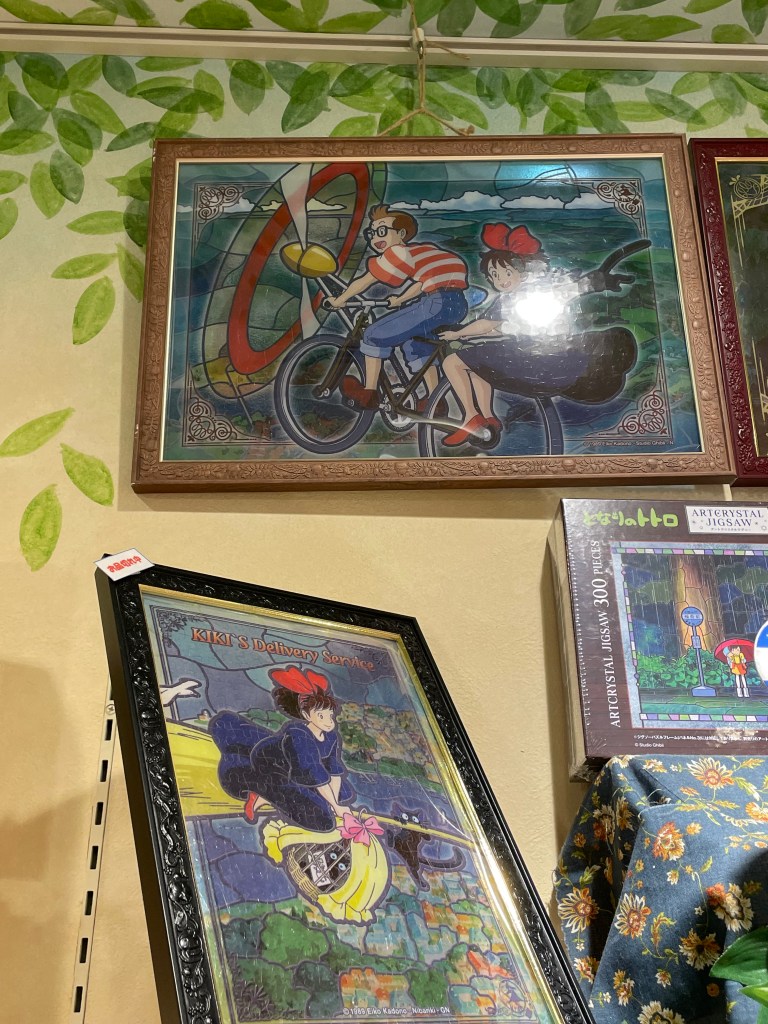
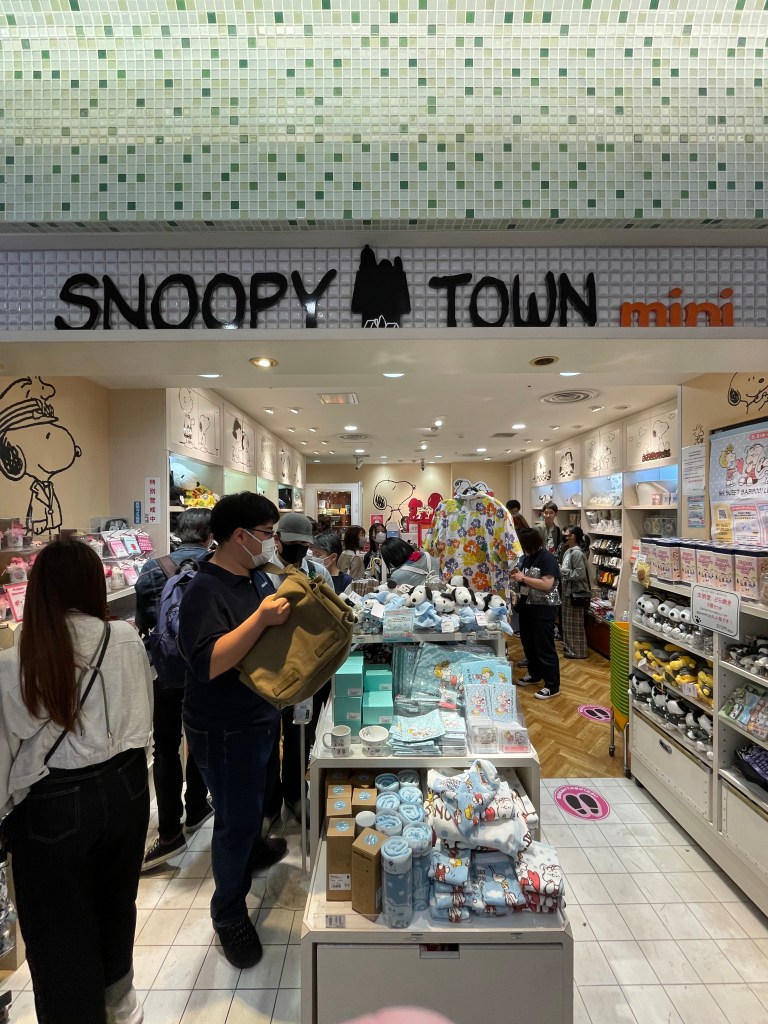
Without much else to report, here are some bonus pics from our time in Tokyo!
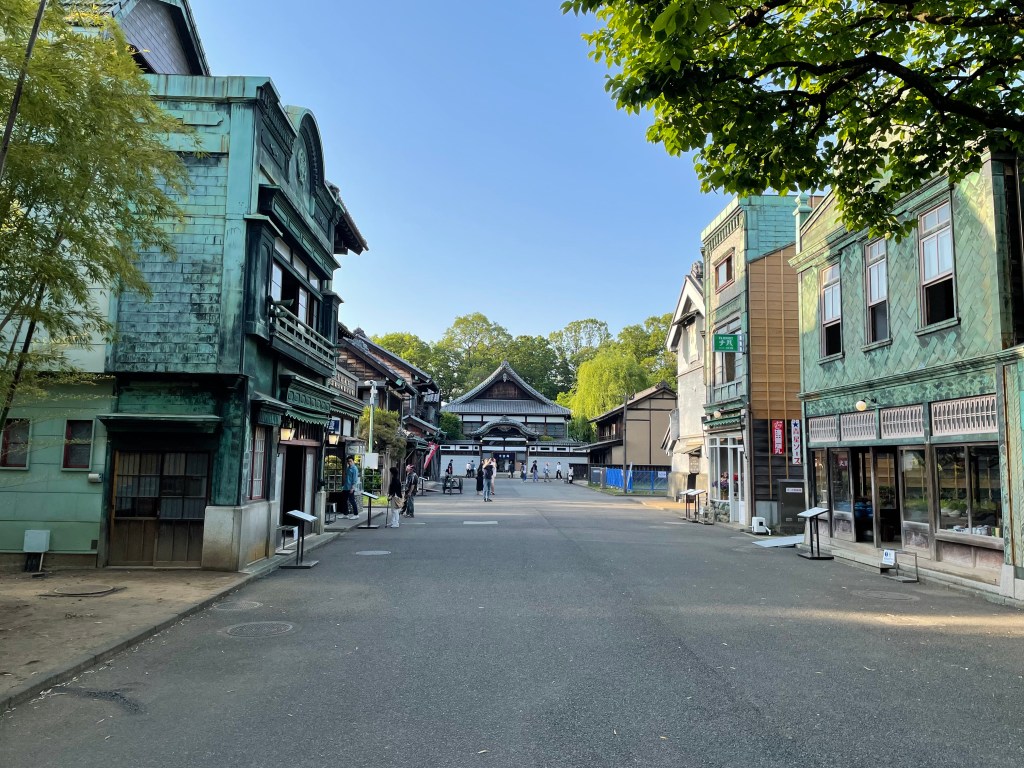
As I hope you’ve been able to gather from these entries, our stay in Japan had gone so smoothly and was filled with so many amazing destinations, that I hesitate to even enter the word regret into this post. That being said, if there was a regret about our stay in Japan, it’d be that we didn’t have more time to explore the rest of the country, especially given that springtime in Japan, particularly with the arrival of cherry blossoms, has a reputation for being astoundingly beautiful. And while Tokyo did offer beautiful weather, green space, and even a museum of natural wonder, it was still a city. Thankfully, our last day in Japan offered us a chance to get outdoors and experience a small taste of what spring in a more rural setting could look like by exploring the Edo-Tokyo Open Air Architectural Museum.
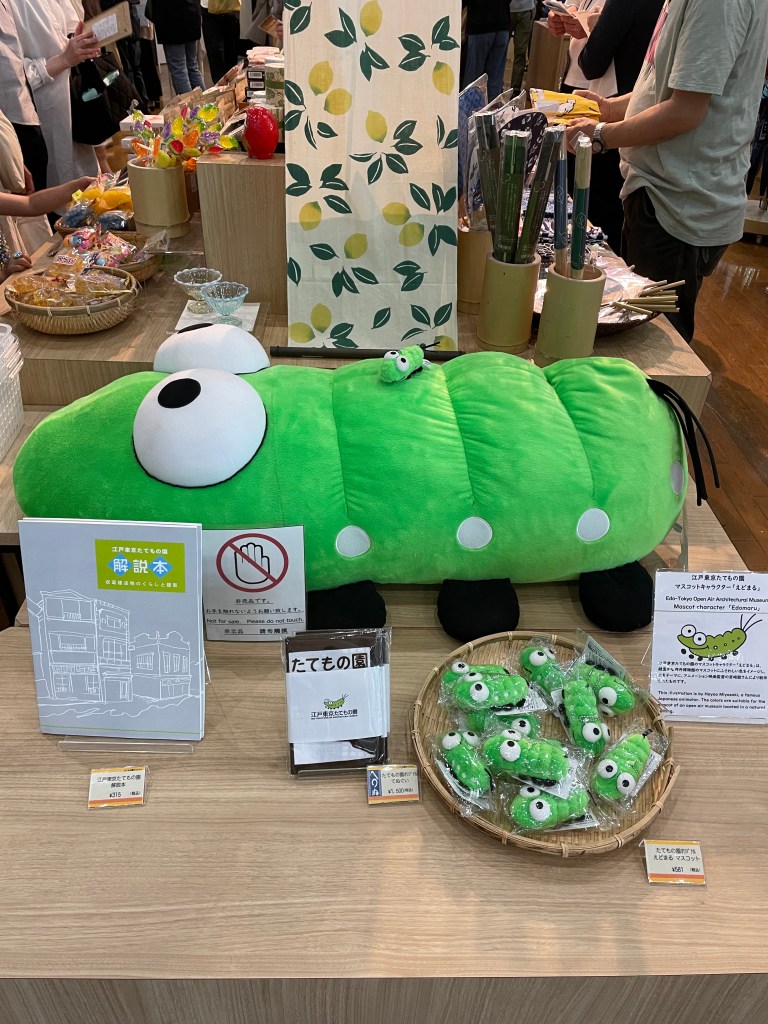
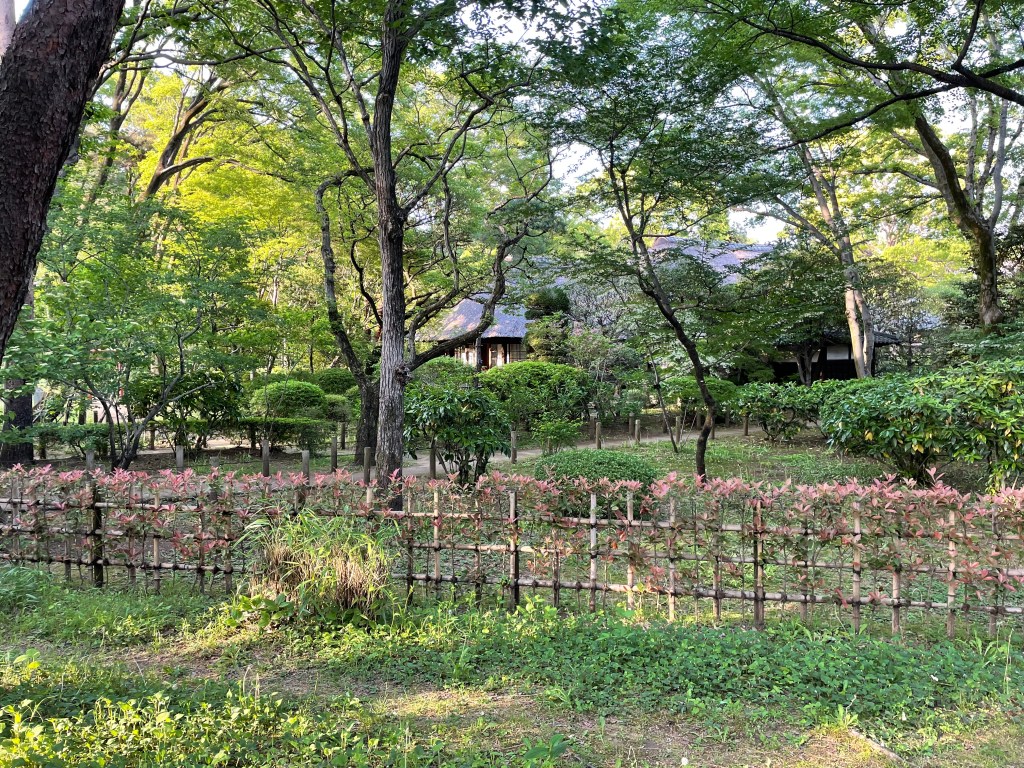
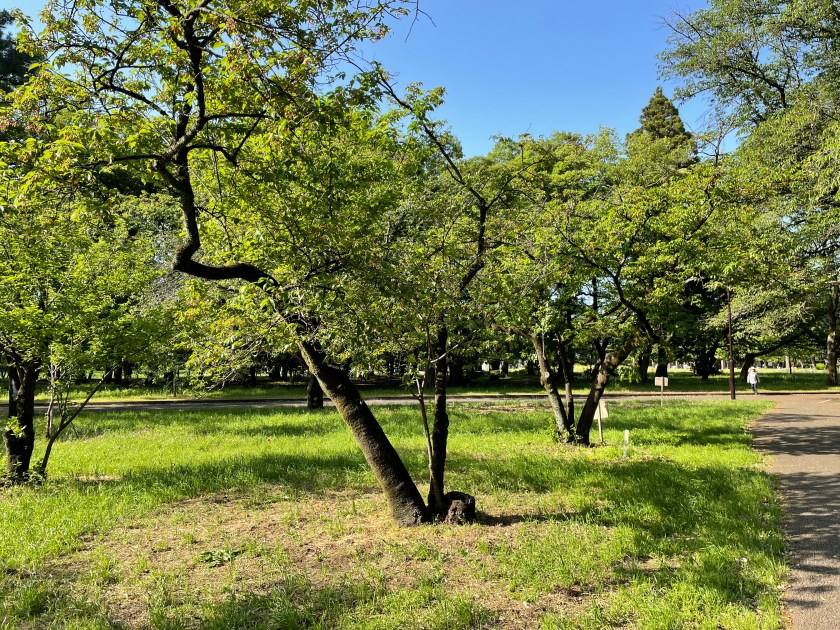
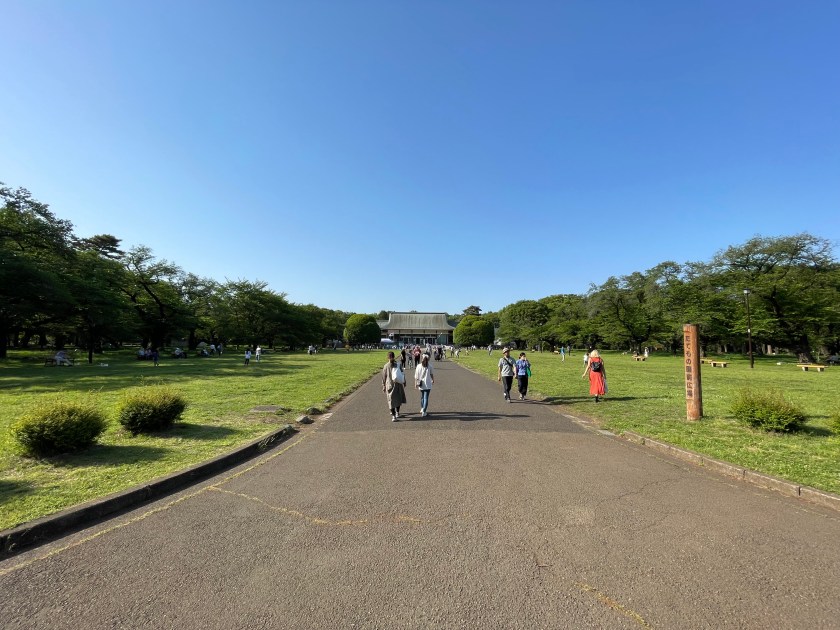
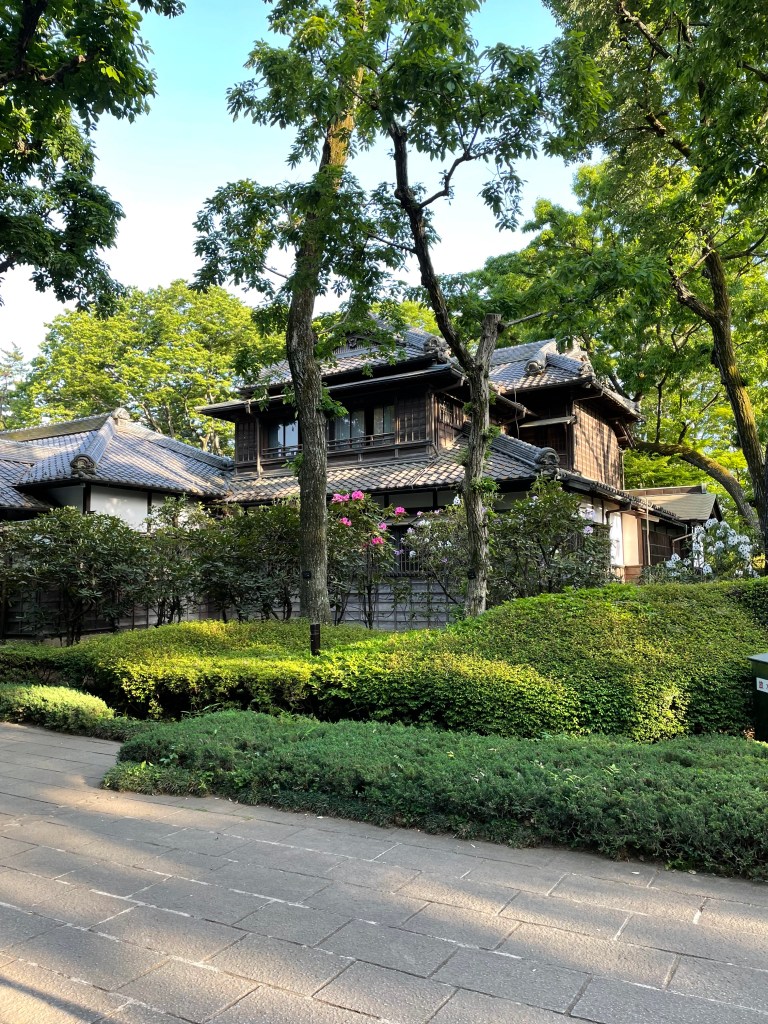
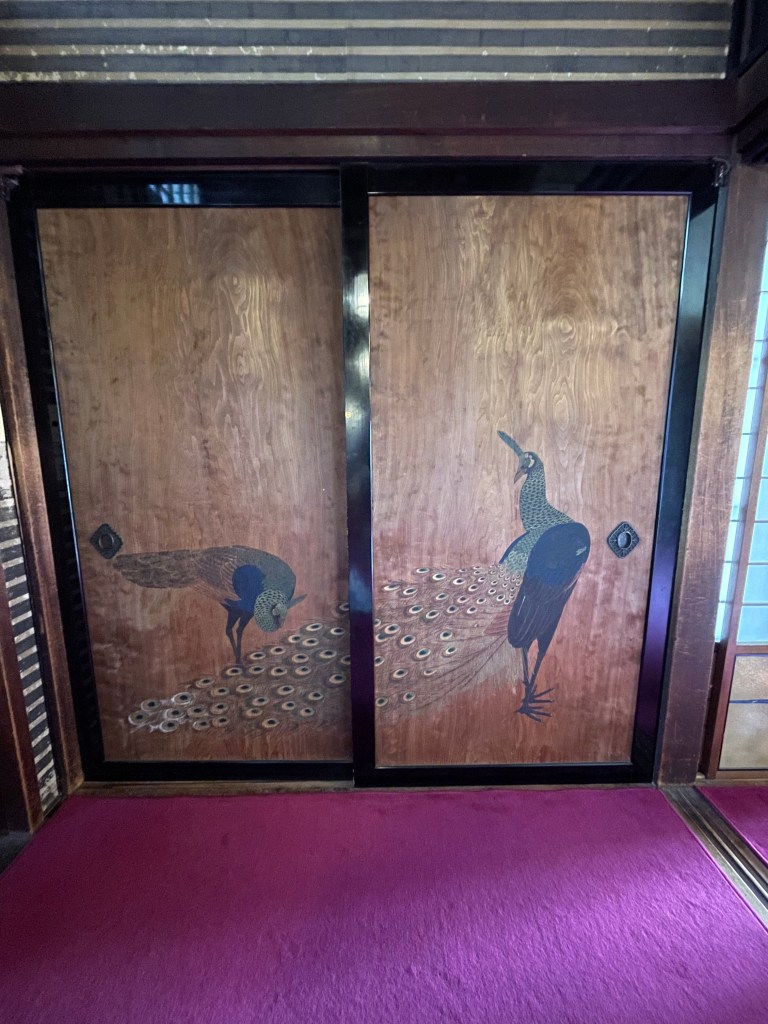
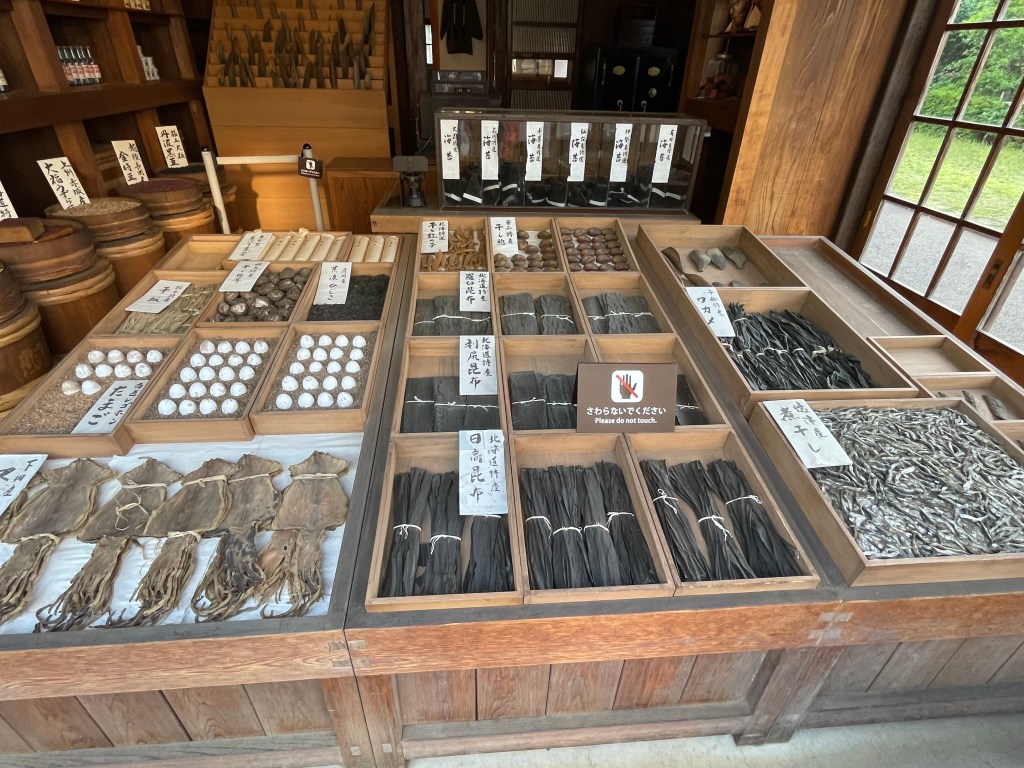
Located about 30 minutes west of Tokyo, this museum affords visitors the opportunity to walk through a village comprised of moved, preserved, and reconstructed buildings that range in date and style from the 17th to the 20th century. Similar to our stay in Jioufen, I’m not sure there’s much I can offer about the beauty of these buildings except to post my pictures below. But for anybody who is visiting Tokyo or even has the slightest interest in historic architecture, I could not recommend this museum any more highly. As it turned out, Gioia and I spent almost the entirety of our final day in Japan there and for that, I have no regrets.
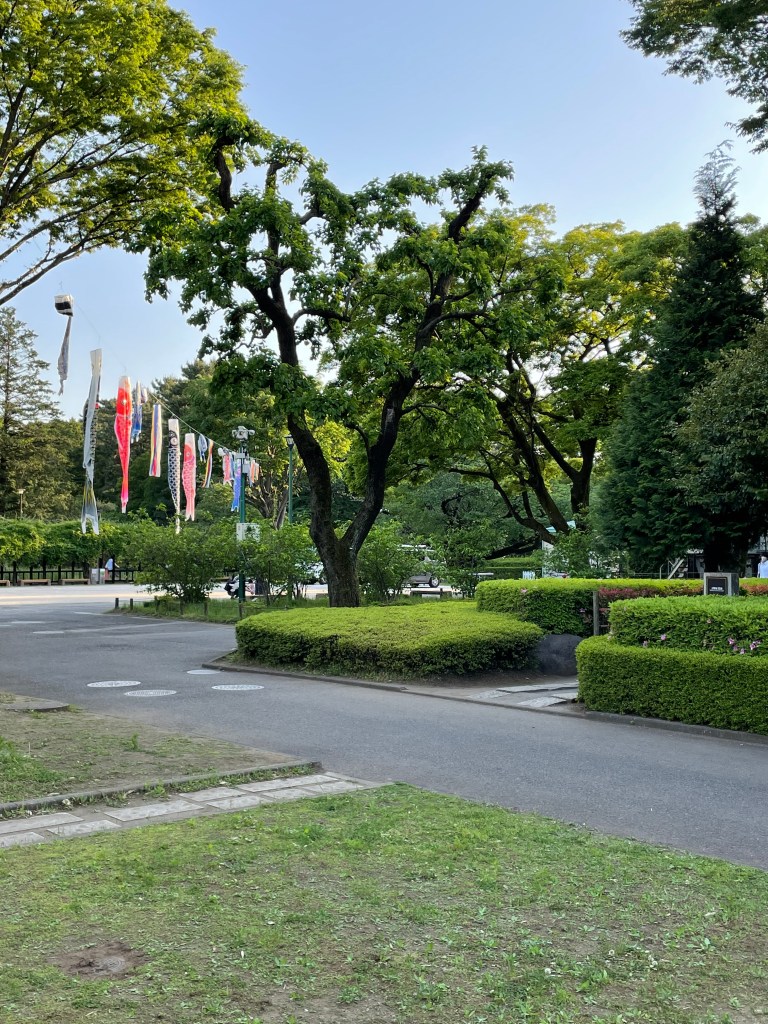
The entrance to the museum, located at the center of Koganei Park:
A photo studio making use of natural light:
Residences and their interiors:
A public bathhouse and various shops:
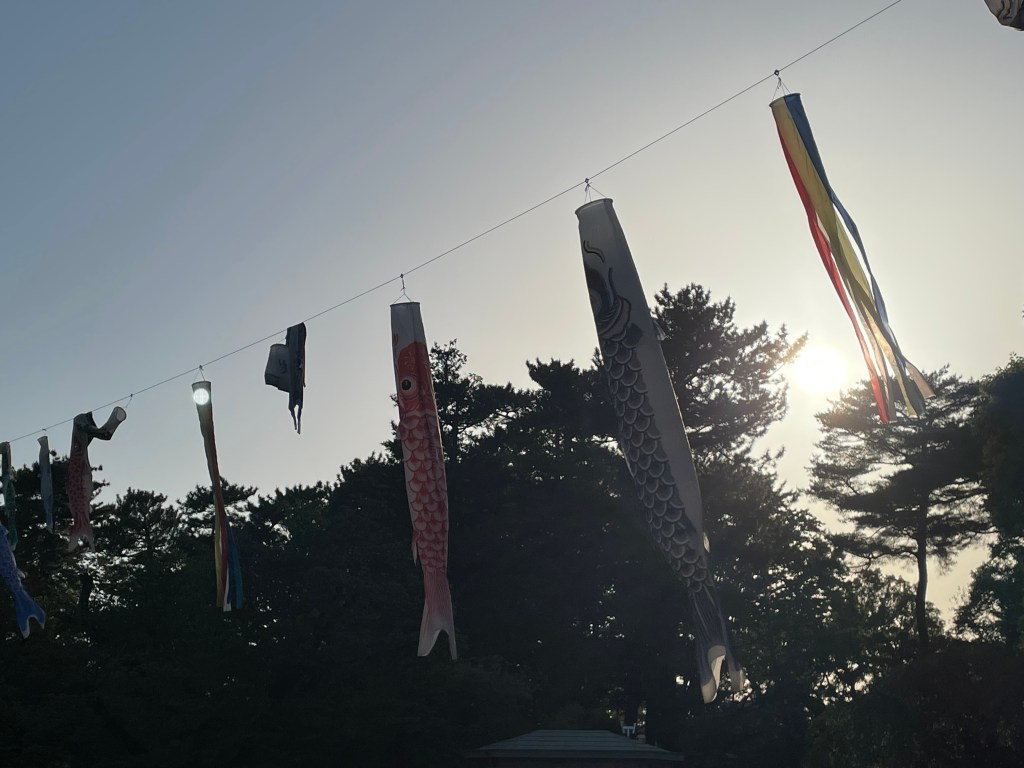
Miscellaneous sites around the museum:
It was on this note of tranquility that our stay in Tokyo reached its end. For the sake of full transparency, I’ll note that we spent the rest of our evening grabbing dinner at a dumpling house close to our hotel before packing our belongings for an early flight the next morning to Korea. That journey would be a bit bumpier than we expected but alas, that is a story for another post.
I am generally not one for hitting the super touristy, instagrammable spots on a vacation. You know me, I’m a regular guy! I like to mix it up with the real people, the locals. The last thing I want to do when abroad is be surrounded by a bunch of tourists who all look like me [insert tough guy emoji].
In any case, if you’ll excuse my hip, white boy, Anthony Bourdain wannabe bullshit, I use this preface to say that teamLab Planets is not the type of place I had ever been before nor expected to be at during this trip. But again and again, it kept popping up in my research as a can’t-miss experience. And so, day eight of our journey, already our third full day in Tokyo, brought us to teamLab Planets.
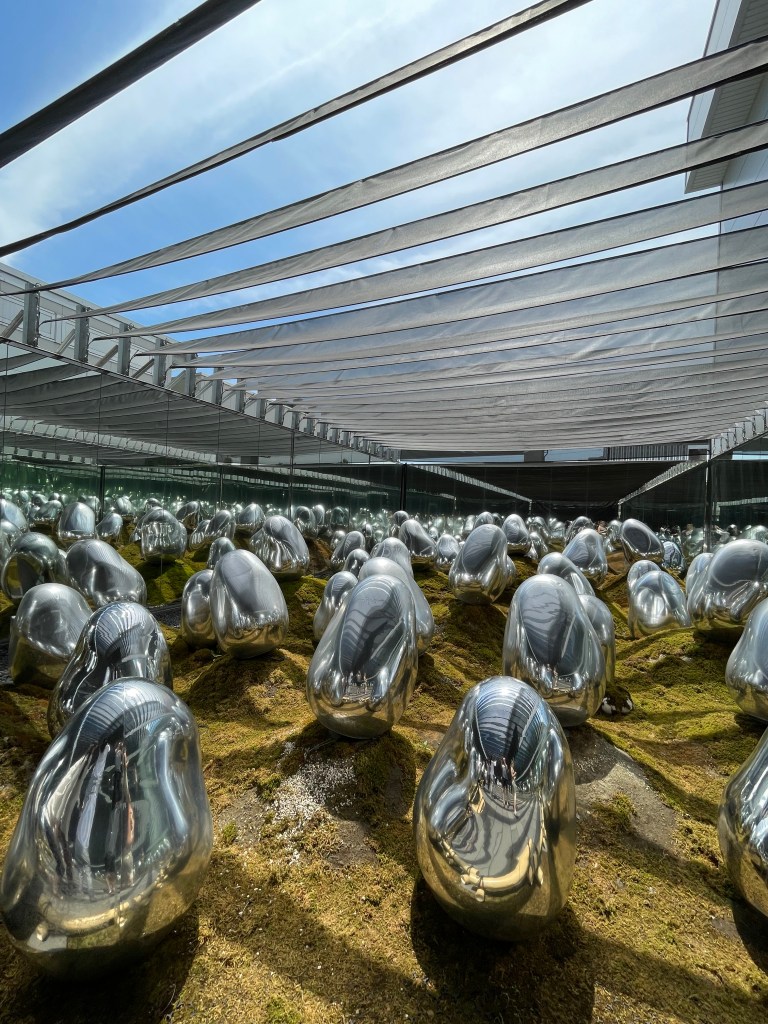
What is teamLab Planets? It’s a bit hard to explain and unfortunately, I fear my pictures and videos won’t do it enough justice. It is essentially a fully immersive art experience focused on the ways in which we engage with, and thereby change, the natural world. From their website:
teamLab Planets is a museum where you walk through water, and a garden where you become one with the flowers. It comprises 4 large-scale artwork spaces and 2 gardens created by art collective teamLab.
People go barefoot and immerse their entire bodies in the vast artworks together with others. The artworks change under the presence of people, blurring the perception of boundaries between the self and the works. Other people also create change in the artworks, blurring the boundaries between themselves and the works, and creating a continuity between the self, the art, and others.
Of course, the only way to truly get the experience is by partaking in it. But in lieu of that, I’ll at least recount our journey through the museum.
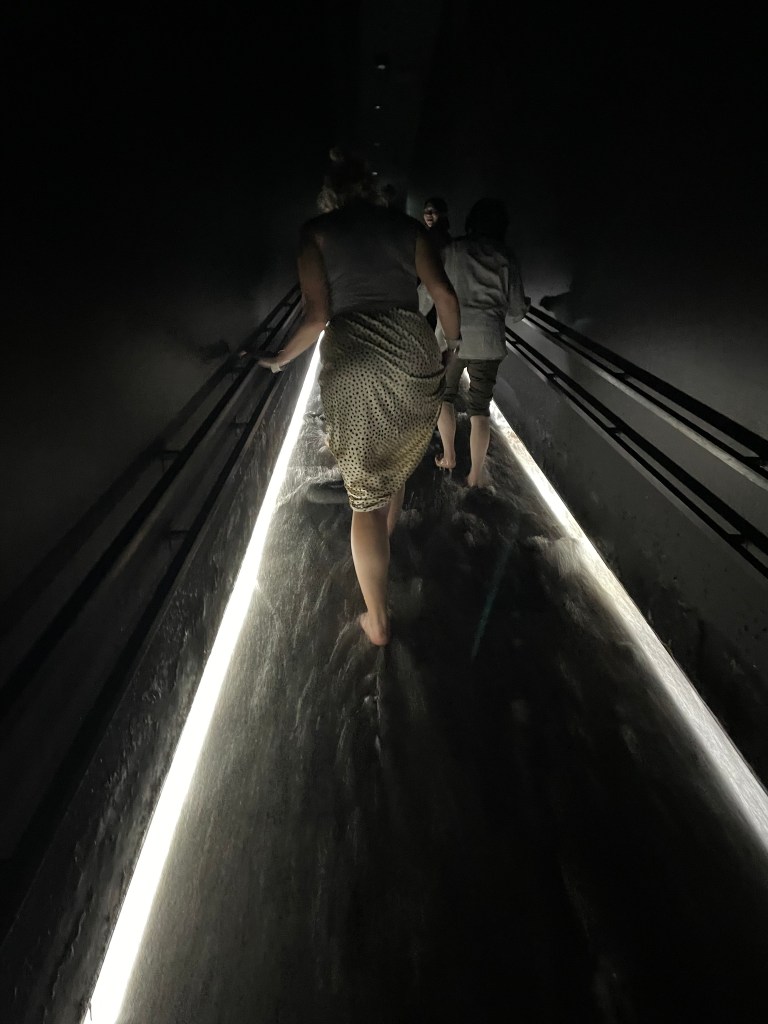
We started by dropping our belongings, including shoes and socks, into designated lockers. We did, of course, take our phones with us, which should save me some time and energy in having to describe everything. The museum follows an ordered path and so we started, like everyone else, at the beginning, by ascending through a beautifully lit water walkway, eventually reaching a lone waterfall at the top.
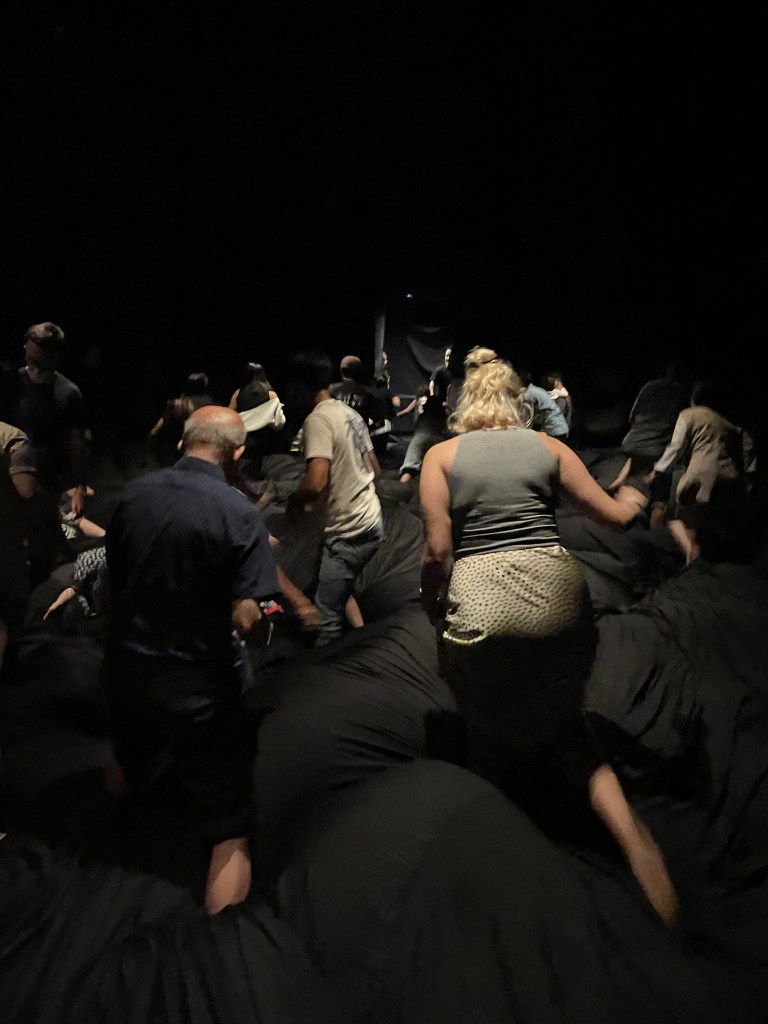
Next up is what I will call the Stalker room. Here, we bounded our way over a matted terrain that moved and changed with each body that passed across it. For those of you that have not seenAndrei Tarkovsky’s 1979, slow burn masterpiece, I’ve included an image below for comparison. Please note, that there is certainly no actual connection between Stalker and this museum, I just happen to think about that film a lot.
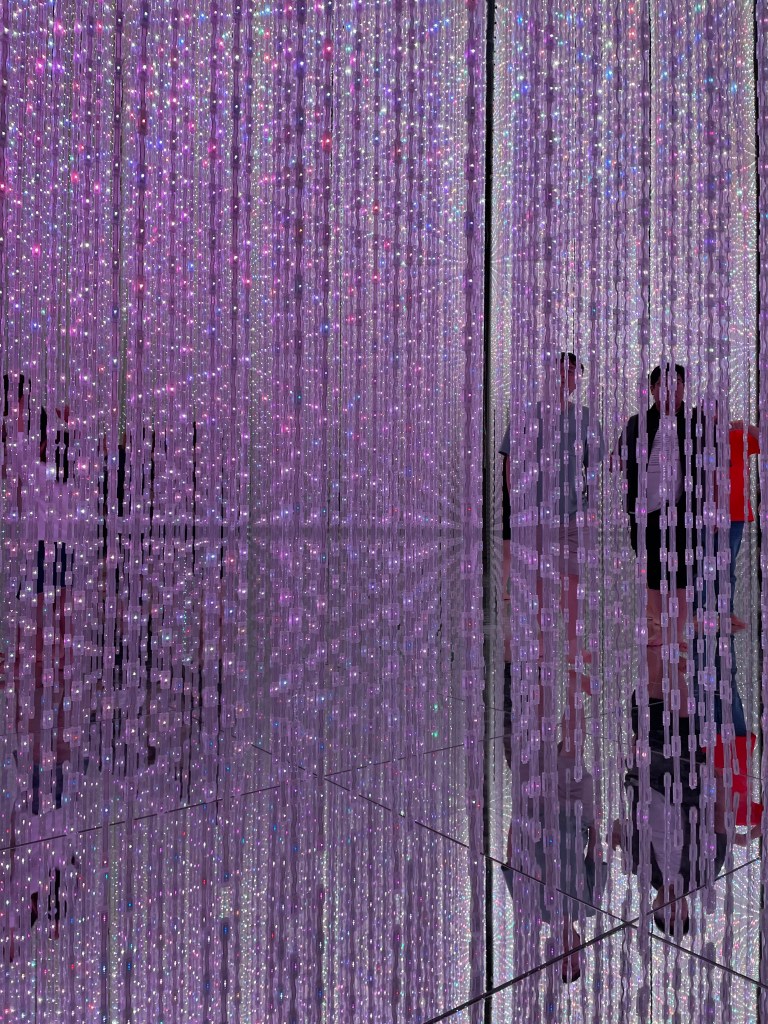
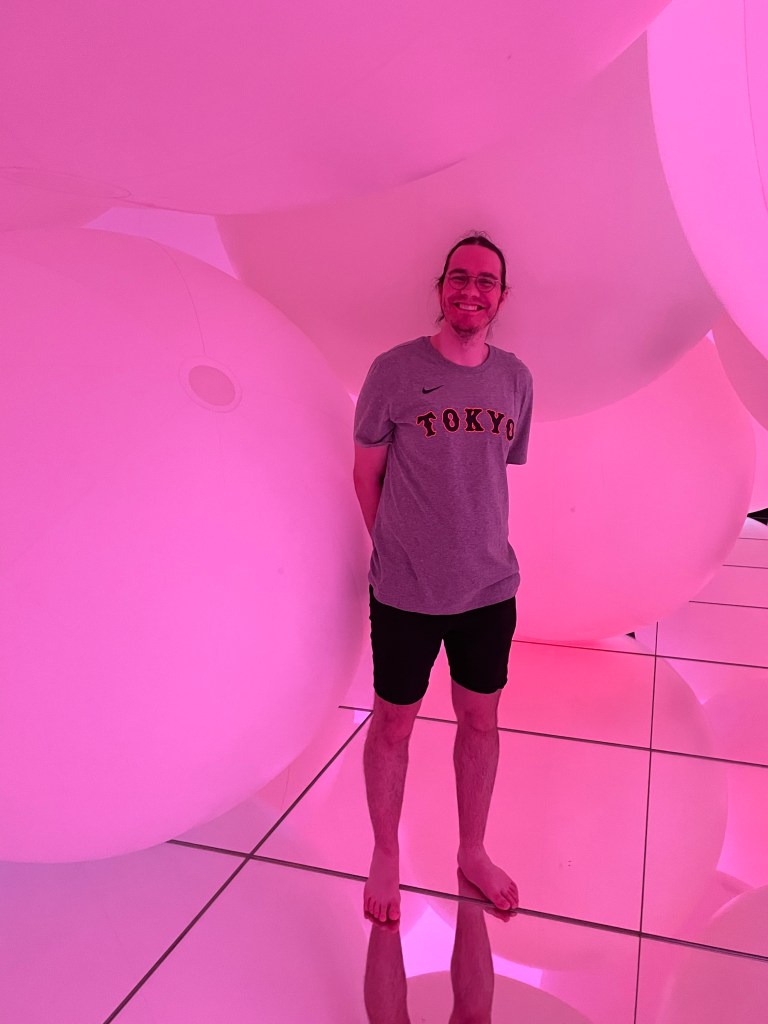
After moving through the relative darkness of the previous two spaces, we emerged into an enormous, radiant, maze of crystal-like lights that continually changed in color and motion, eventually leading to a room full of large orbs. Here, I won’t even try to explain anymore and let the images do the talking.
Back to the water! To me, this was by far the coolest exhibit of the museum, a pond we got to wade through full of projections, lights, virtual flowers, and virtual koi!
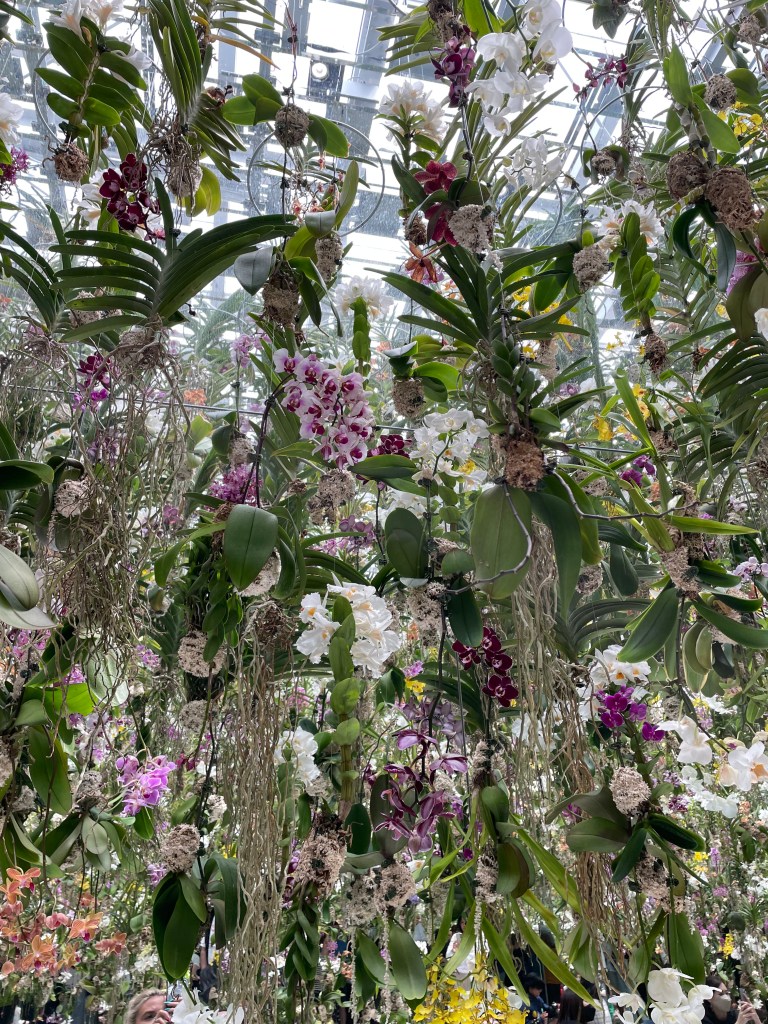
The final exhibits in the museum all had a specific focus: flowers. We started in what felt like a planetarium, looking at projections of flowers and colors in space, moved through an alien-looking sculpture garden, and closed by literally sitting in a display in which flowers descended from the ceiling and surrounded you.
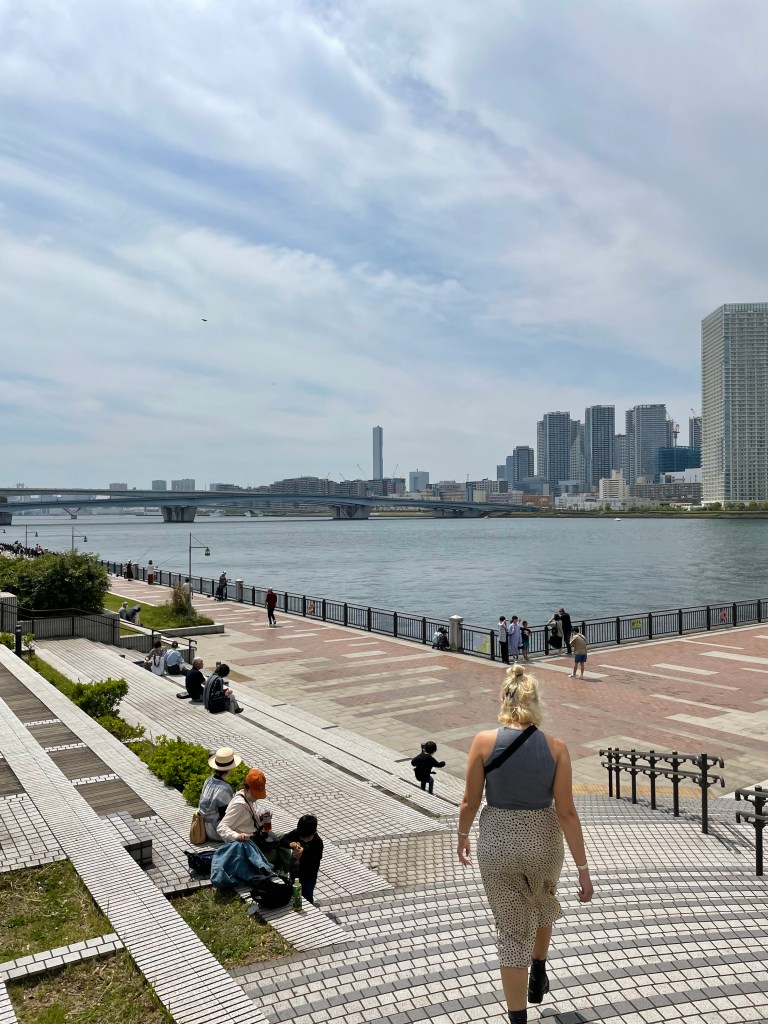
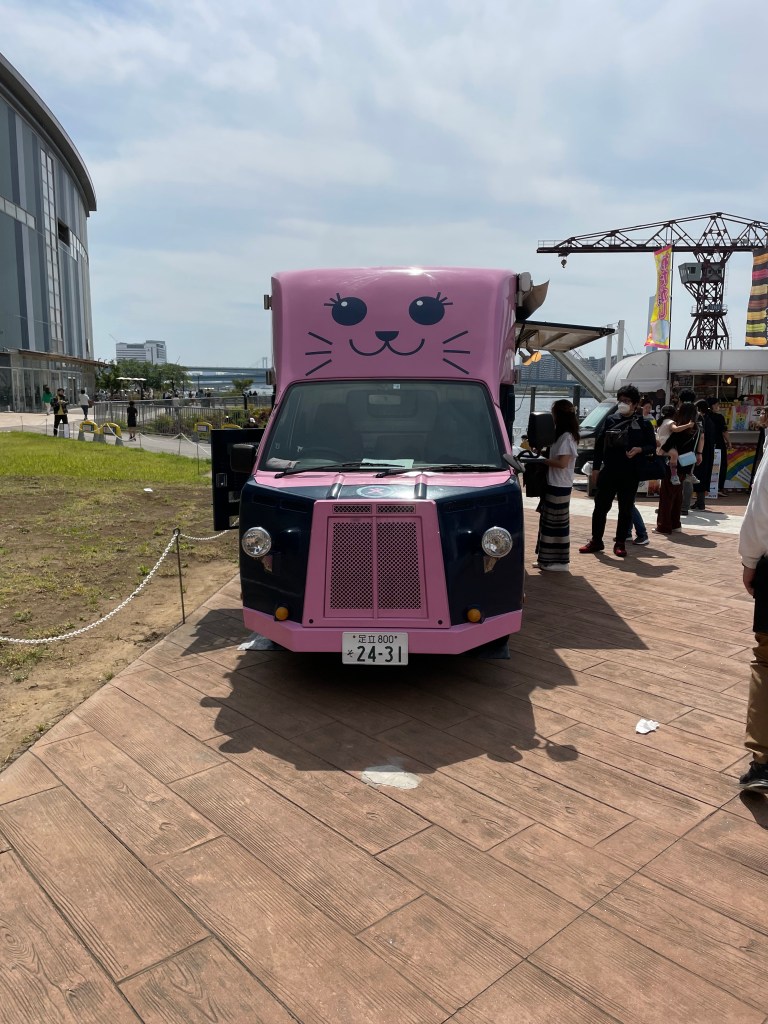
The irony in spending our morning in an immersive art gallery intended to celebrate nature was that when we returned outside, it was a spectacular day! It also happened to be Constitution Memorial Day in Japan, part of a collection of holidays celebrated as part of Golden Week. From the museum, we made our way to a public park nearby where all sorts of food stands and shops were set up along the water. It was a great spot to regroup, catch our breath, and of course, eat more sushi.
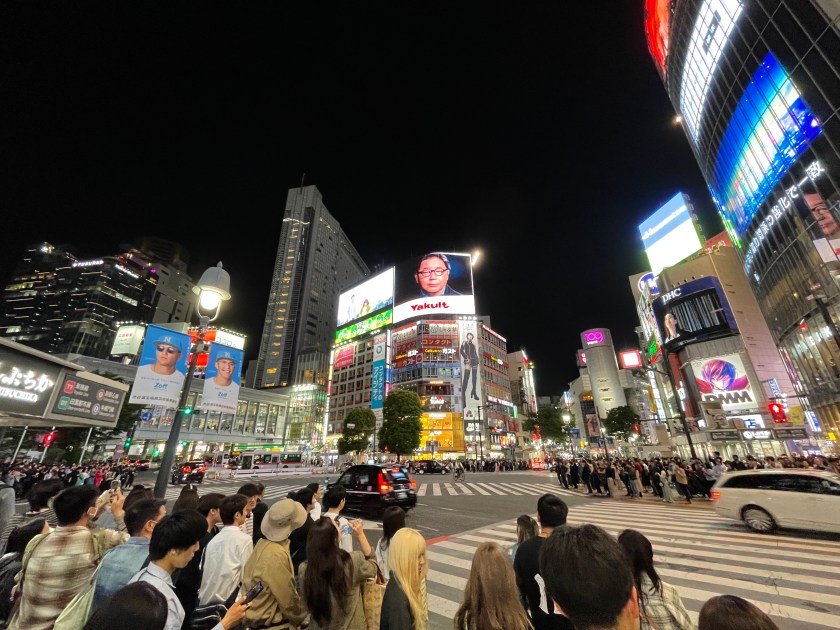
After relaxing at the park and refreshing back at our hotel, our evening plans were to finally see the world-famous Shibuya Crossing. This is a place where again, my photos will fail to capture everything we were able to see, specifically the enormity and chaos of the scramble. Nonetheless, it was well worth experiencing in person. If, however, merely walking the crossing is not adventurous enough for you, do note that you can Mario Kart your way through it. That seemed a little intense for us.
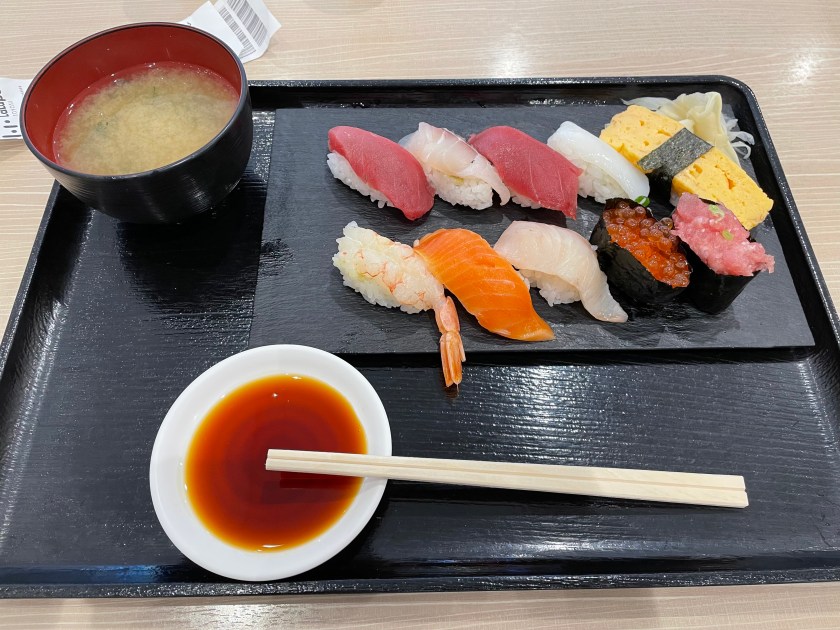
After taking in the sights it was, you guessed it, time for more sushi. Our spot for this evening was a conveyor belt sushi restaurant. Although many have popped up across the U.S., for those unfamiliar, the appeal of a restaurant like this is essentially that there’s as little human interaction as possible. You are seated at a bar with dividers separating you on all sides from your neighbors. To order, you simply select what’d you like to order on the touchscreen menu. And before you know it, a literal conveyor belt stops with the order right in front of you. You can even play a sushi roulette game to see if you win a free roll! Technology, man.
For me, this restaurant was particularly memorable for the fact that horse meat was not only one of the options but one that Gioia selected (a shocking crime considering our decorative wall of horses at home!). I, being less worldly than my partner, made the mistake of asking Gioia whether it was gamey. Stupid question she enlightened me, “Horse is not a game animal.” For myself, I played it safe with the classic miso soup, sushi, ice cream sundae combo.
As another full day was winding down, it was time for Gioia and I to pay tribute to two media legends. The first was my travel hero Anthony Bourdain who, in his Season 2 episode of Parts Unknown, stops by Bar Albatross. Being nearby, we had to do the same.
Our last hero needs no introduction, he’s your favorite Kaiju and mine, everybody give it up for Godzilla! We were quite pleased with our hotel on the trip, but if one of the rooms next to the lizard’s head is available next time, you know where I’ll be booking.
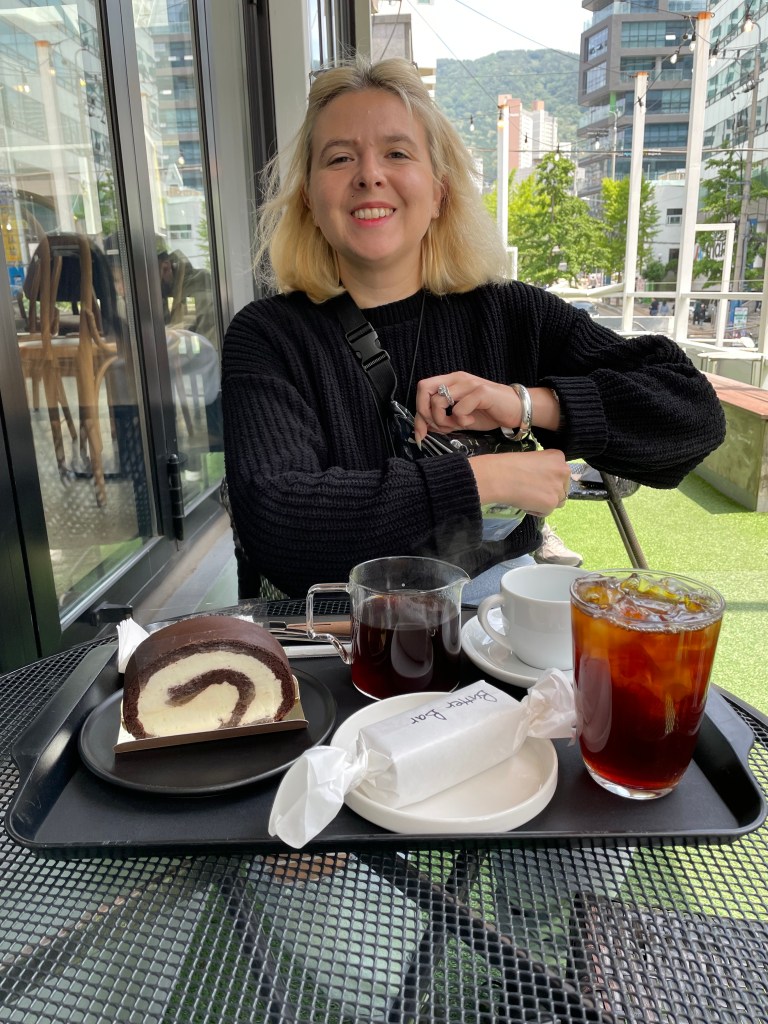
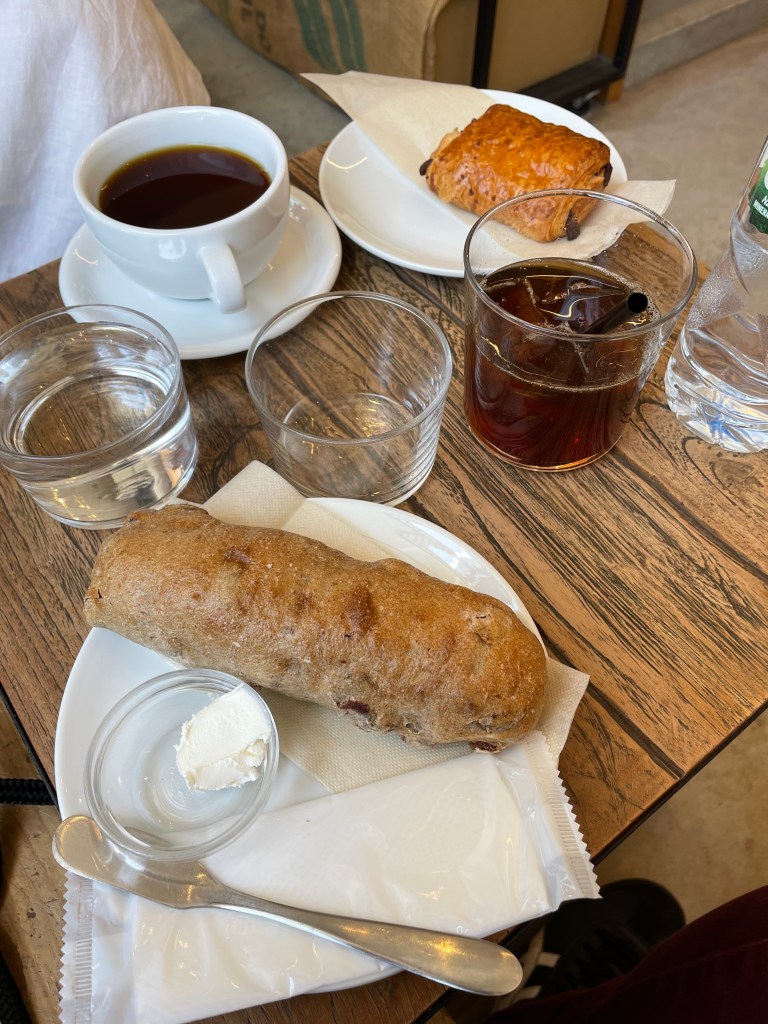
We began another bright and beautiful spring day by grabbing coffee and pastries at the nearby Passage Coffee. Here, I would like to take a brief pause to shout out all of the exceptional coffee we had on our trip. Asia, on the whole, is often associated with its love for craft and specialty tea. Our journey, however, quickly revealed that this care and attention to detail is most assuredly applied to its coffee as well. Working in specialty coffee for years, I had never heard much about Asian-sourced coffee let alone had the opportunity to try much of it. And while all of the coffee shops we visited in Asia had the usual sourced offerings from Africa and South America, it was a delight to experience the bold and bright offerings of their locally sourced coffee.
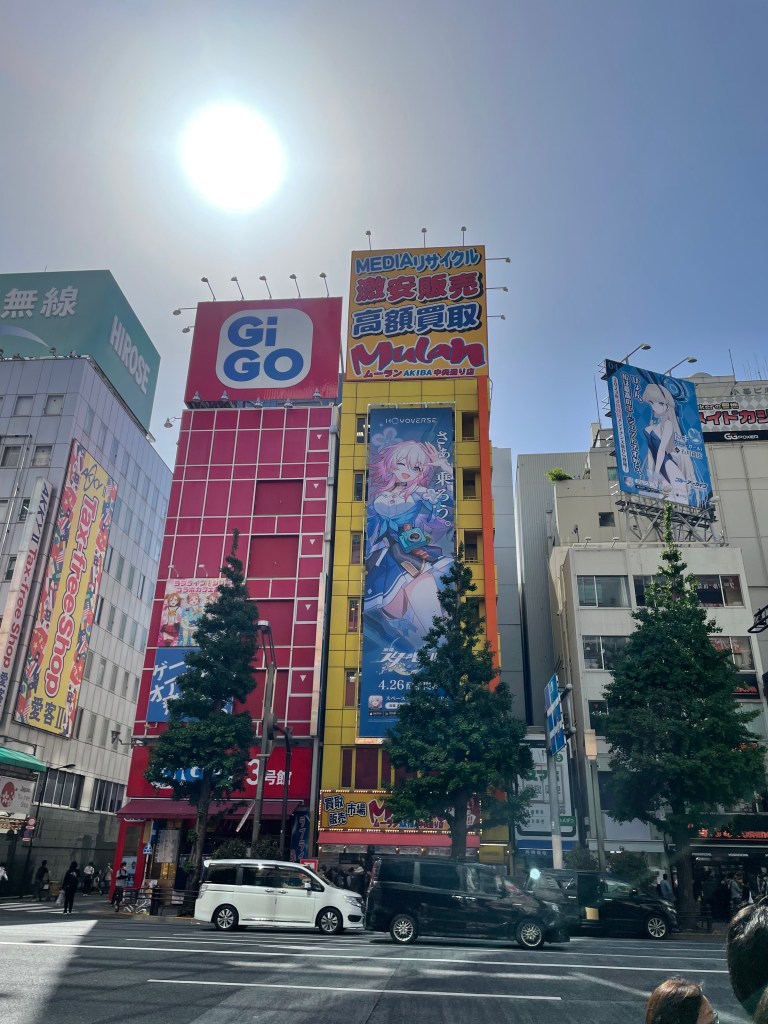
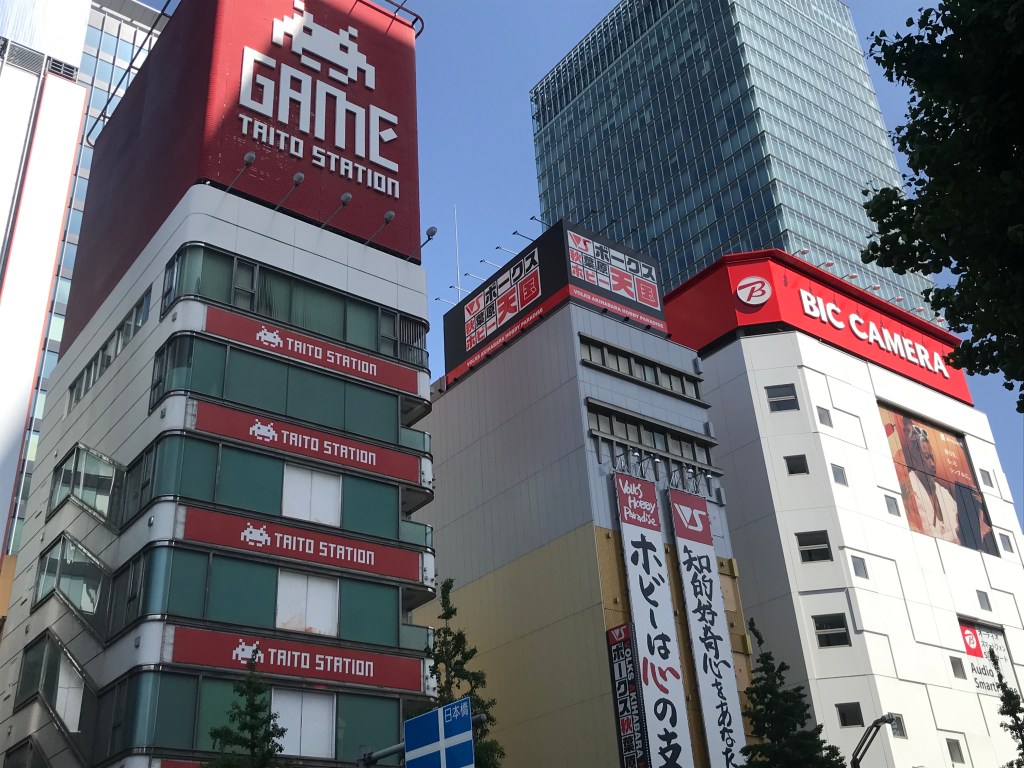
In any case, with some beans and sweets in our system, we proceeded to the Akihabara district of Tokyo, which, to those unfamiliar, is essentially the big anime district of the city. As was the case with Shimokitazawa, this was another place in which one could spend hours (and maybe even days) just wondering around and looking at the incredible amount of toys, cards, apparel, and other goods celebrating this world-popular medium. I, myself, am not even much of an anime-head and was still utterly captivated by everything to be seen.
Here I should offer some sort of content warning as at the very seams of Akihabara is where a significant amount of Tokyo’s adult entertainment lives. I must iterate as strongly that I can that I am in no way qualified to cover Japan’s cultural relationship to sex, porn, and adult entertainment, nor the way in which it differs to America’s relationship to these things, except to say that it is much more out in the open than it is in America. So, for every store that had one or two floors dedicated to anime, at least that many, if not more, were dedicated to adult entertainment. What I’m really getting at is this: If you want to find merchandise dedicated to your favorite anime, Akihabara is a great place to start. But if you are also interested in highly-specific porn, purchasing an elaborate sex toy or doll, or buying used underwear from a gumball machine, Akihabara is the place to be.
Alrighty then, making the seamless transition from explicit content to family fun, it was time for our evening plans which, that night, consisted of attending a baseball game at the historic Tokyo Dome! In all honesty, this game was not only my favorite activity of the day (porn and anime be damned), but of our whole trip. Now, I love baseball, so that was definitely a big part of it. But the atmosphere at this game was unlike anything I had ever experienced. We were especially lucky in that the contest was between Tokyo’s two local teams, the Yomiuri Giants and the Tokyo Yakult Swallows, and as such, had a packed stadium full of fans representing both teams.
So what makes a game in Japan’s Nippon Professional Baseball League so fun? If you start anywhere, it has to be the intensity of the fanbase. The crowd here was more akin to a college football or basketball crowd than any American professional league. Not only were there distinct supporters sections for each team, but when it was that section’s team at bat, the supporters would rise to their feet with specific cheers for each batter. Moreover, each of these two fanbases had their own unique celebration. The Giants fans’ consisted of swinging a towel in the team’s color (orange), which of course is done in America as well. The Swallows’ celebration, however, was completely new to me and all the more delightful for it. It consisted of doing a dance, set to music, by raising open umbrellas up and down in the air. A truly spectacular sight.
All of that alone was more than worth the price of admission. But, if for some strange reason you’re still on the fence, you should at least go to sample the many distinct food offerings you can get at an NPB game. There is, of course, the classic baseball fare: hot dogs, fries, popcorn, soda. Not to mention plenty of beer options (I was particular impressed with the technology that allows the Uriko or salesgirls to pour drafts at your very seat). And then, there is just an obscene wealth of local options ranging from bento boxes to donburi to popular Japanese street fare like crepes, ramen, teriyaki, and fried squid.
And still, if all of that is not enough to persuade you, I will make an appeal to the baseball purist. The game was really good! At the end of the day we left with full stomachs, nice buzzes, and full satisfaction in witnessing a Swallows come-from-behind 7-5 victory over the Giants.
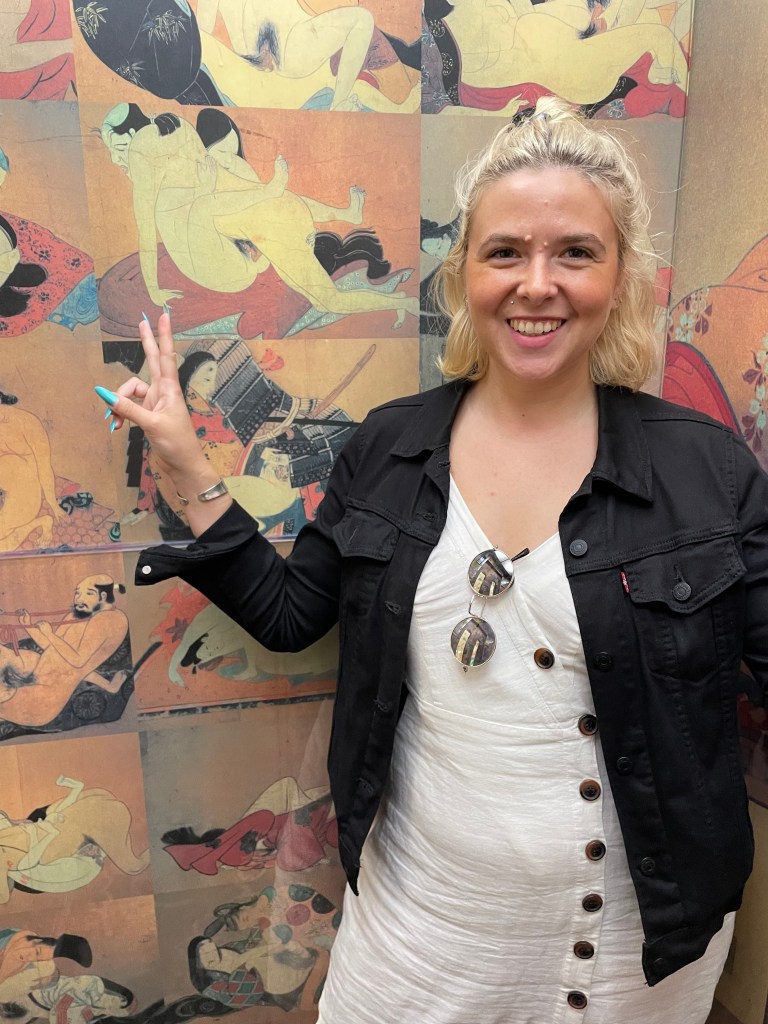
After a day exploring the various entertainment options found around Tokyo, it was only natural that we closed our night by partaking in one of the oldest forms of entertainment known to man (no not that): having drinks at a bar. For this, we traveled to Tokyo’s legendary Golden Gai section, an area famous for its narrow alleyways littered with hundreds of tiny bars. Though it is not always easy finding a spot at one of these bars (many only sit 6-8 patrons at a time), there is just about every type of joint you could imagine.
The two spots that Gioia and I picked are really a pretty good display of the range in our individual tastes. I settled for Bar Cinema Club, a quiet, sleepy spot with some old movie posters and A24 signage littered about. If anything though, it was most notable for its large selection of local whiskies. In fact, when I ordered one, they not only poured me a glass but left the whole bottle with me. Was I supposed to pour myself the second round? How would they charge me? Alas, those answers we never found out as after one drink it was time for Gioia’s pick.
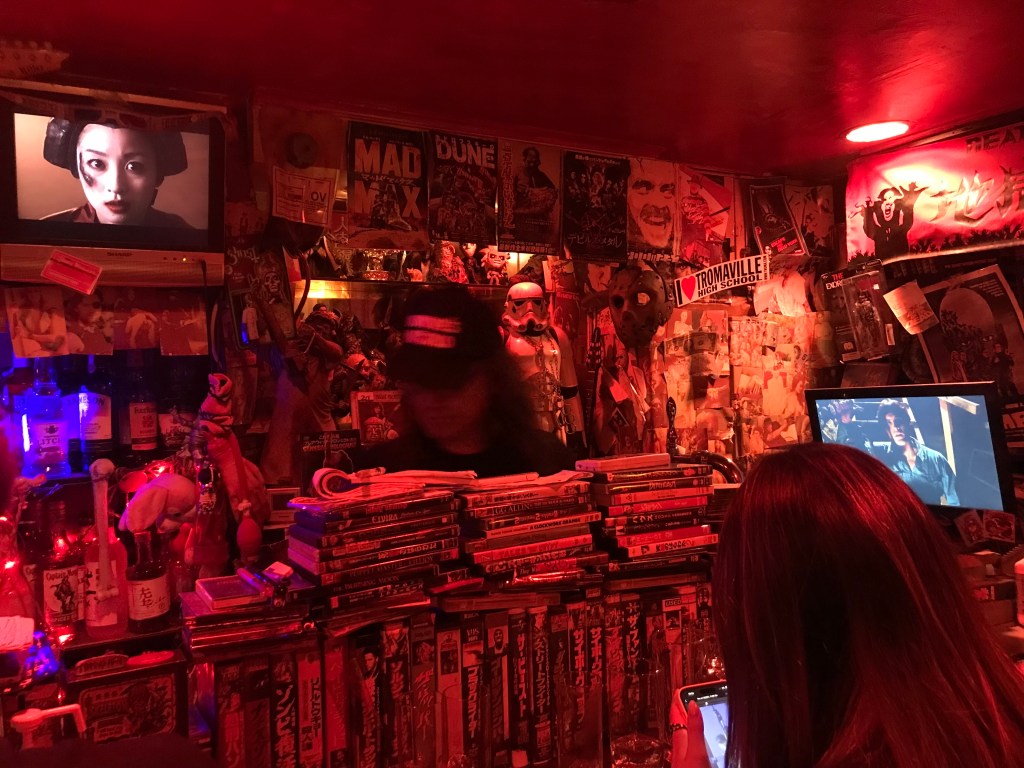
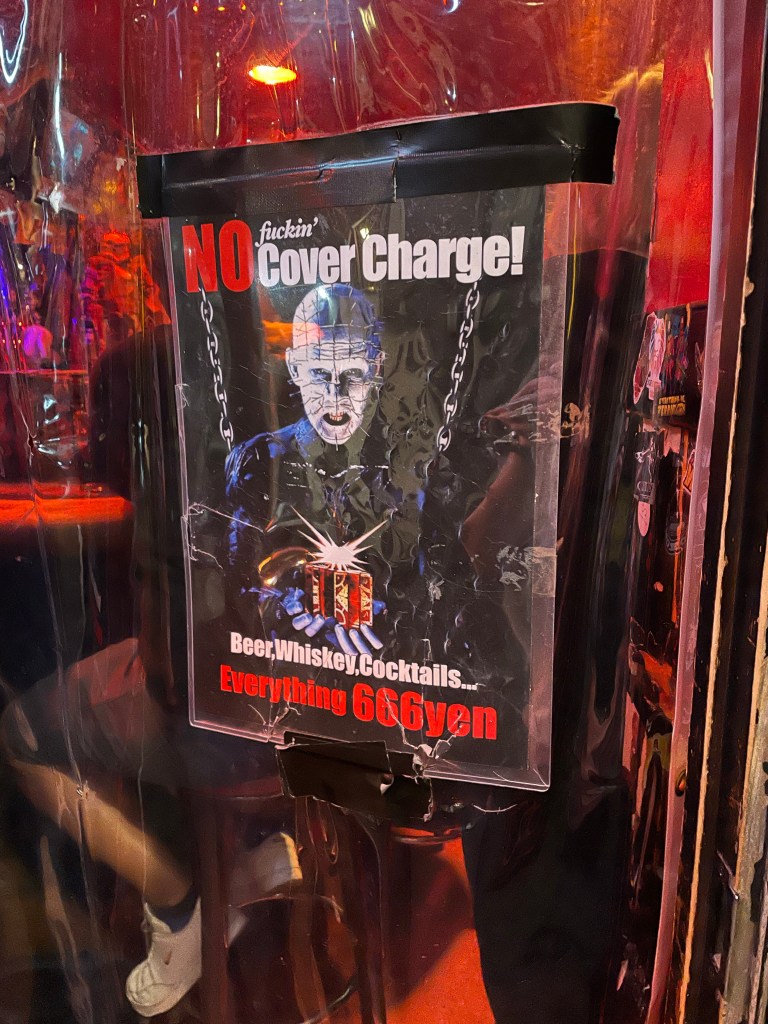
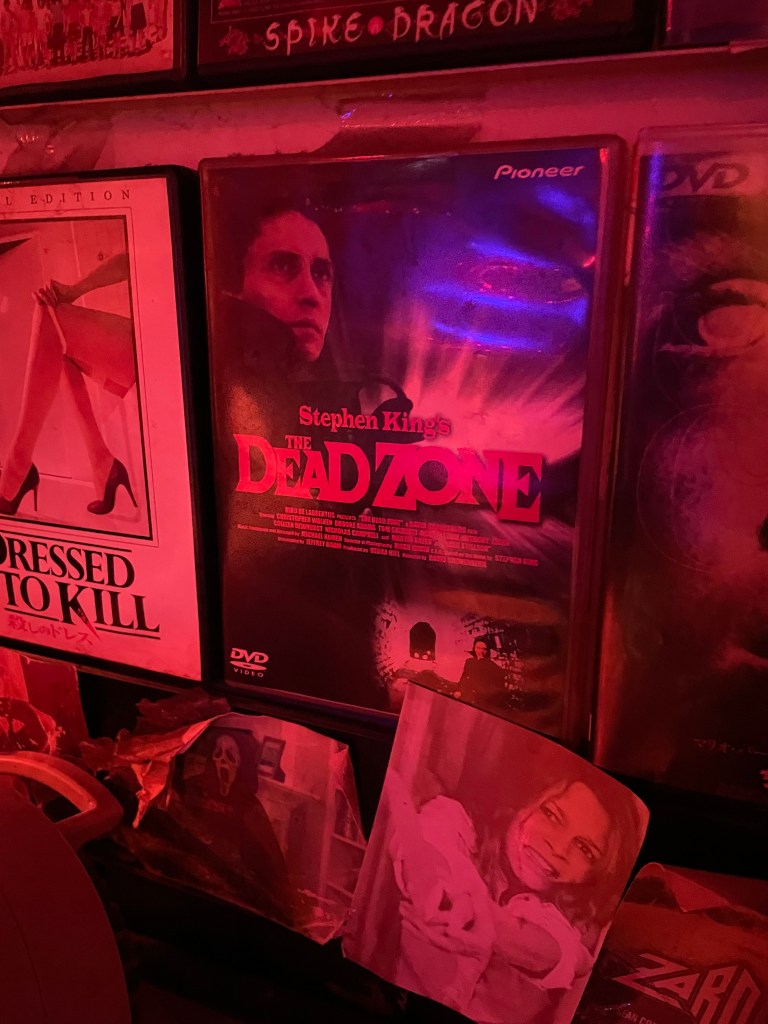
Gioia’s spot, as is almost always the case, was where things were really popping. Given the place was called Death Match in Hell, how could it not be? In any case, it was here, under the hazy glow of slasher b-films and horror memorabilia, that we wound down our night, changing pace from high-end Japanese whisky to cold drafts of Dry Asahi.
1st: Super Citizen Ko – Wan Jen (1995) The third in an unofficial white terror trilogy along with Hou Hsiao-Hsien’s City of Sadness and Edward Yang’s A Brighter Summer Day. This one is particularly fascinating in that it connects us between timelines: one during the KMT’s takeover of Taipei in the 1950s and one in the aftermath of the KMT’s fall in the 1980s. Grade: B
1st: A Visitor from the Living – Claude Lanzmann (1997) In every effort to not sound supremely glib or like the 18 year old who just discovered existentialism, it feels like a whole lot of the world can be summed up in the explanation about how the International Red Cross was “legally”powerless to help most Jews in the Holocaust because they were technically considered enemies of the German state and not prisoners of war. Grade: B
2nd: Late Spring – Yasujirō Ozu (1949) I’m sure I will only repeat platitudes that have been laid upon Ozu for decades but his films truly feel like their own cinema. Even as someone who loves world cinema and the most meditative of stories, it still took me a couple of features to settle into Ozu. On the surface, you might be inclined to think that the structure of his films are really simple. What I’m finding is that while they are surely paired back, they’re almost more inventive and complicated for that reason. Grade: A
2nd: Tokyo-Ga – Wim Wenders (1985) Love Wenders and genuinely admire this as a vision of Tokyo and a travelogue. Where it works best is as a pseudo-documentary of Ozu. The closing interview with Ozu’s assistant director is especially moving. That being said, the film can be a bit shortsighted when Wenders (along with Werner Herzog in a legendary scene) laments how modernity has eclipsed Japan and Ozu’s world doesn’t exist anymore. I mean, there’s also a part where Wenders implies that the rise of pachinko parlors was a way for Japanese citizens to process nuclear trauma? In any case, this is absolutely worth a watch even if at times it’s a series of European filmmakers complaining about modern day Tokyo. Grade: B-
3rd: Play While You Play – Hou Hsiao-Hsien (1981) Look, I’ll probably never watch this again and would not generally recommend it unless you’re a Hou Hsiao-Hsien completionist, but I’m so in the bag for the guy I was charmed nonetheless. More movies should have pop songs that narrate the plot. Remember Jonathan Richman in There’s Something About Mary? That stuff is so good. I also didn’t know that you could go from being blind to seeing with surgery in this day and age, let alone in Taiwan in 1981 so this was educational in that respect as well. Grade: B
4th: Sobibor, October 14, 1943, 4 p.m. – Claude Lanzmann (2001) Nothing else that Lanzmann did could possibly live up to Shoah. That film is not only brilliantly devised and assembled but by its very nature transcends time. All that being said, this doc, made from the same research material is certainly worthwhile as a standalone film and I’d recommend it to anybody. There’s a description that the survivor, Yehuda Lerner, makes about the rebellion that is so specific it gives you chills. Lanzmann really hit upon something profound in focusing on specificity to bring about larger truths. Grade: B+
4th: The Karski Report – Claude Lanzmann (2010) A film that feels weirdly vital to today’s world. A cynic will look at this film with little surprise that Karski’s report of the Warsaw Ghetto and the genocide that was beginning failed to bring about any evident western action. An optimist could look at this and note that even in the face of great evil, that individual leaders still took the time to meet with Karski and hear his report even though their actions would be tied by endless bureaucratic red tape (the most charitable read of Felix Frankfurter’s infamous response). I think today it’s just hard to understand if people, governments, and leaders have changed fundamentally or if political response has always been theater. You can understand the perceived limitations of the US government taking action in 1942 when it’s one person giving a report about what’s happening in another country. Yet today, we see genocide and injustice happen in realtime on our phones and it’s assumed that our government won’t take action (if they aren’t the ones perpetrating it). In any case, I don’t know what answers can be found in this doc, but I think it’s pretty essential viewing. Grade: B+
6th: Flight of the Red Balloon – Hou Hsiao-Hsien (2007) When we were in Taipei, we went to a bookshop of the same name and I asked if there was any connection to the film and it turned out the owner is friends with Hou and named it after his favorite of Hou’s movies!! Grade: B
6th: The Red Balloon – Albert Lamorisse (1956) Magical. A fabulous portrait of Paris. Oh, to be a French boy in 1956! Grade: A-
17th: The Lusty Men – Nicholas Ray (1952) An almost perfectly executed film? The story, while highly compelling, is by no means reinventing the wheel. We follow the usual plot points of a love triangle as well as a student/master parable. And even if you can sense where we’re inevitably headed, it’s never boring. The performances (especially Mitchum’s) combined with Ray’s direction bring so much life to the screen. It really makes me want to watch a hundred of these films, though I doubt nearly that many exist (especially ones as great as this). Grade: A-
19th: A Man Escaped – Robert Bresson (1956) I may have just watched the best movie of all time on an airplane. Honestly, I’ll take it. Grade: A
19th: Sans Soleil – Chris Marker (1983) Might have a spicy take coming in on this one, gotta think about it…Okay, here’s my spicy take. This film really bothered me. It is undeniably beautiful. Marker’s eye as a documenter is as good as it gets. My problem with the film lies in its narrative framing. It’s the same issue that I had with Wenders’ Tokyo-Ga (a film in which Marker makes a cameo) and perhaps Sans Soleil is receiving some of the blowback from having watched that so recently. Still, I can’t help but think this film’s attitude is a bit leery and dismissive of the foreign cultures we visit. In general, I gravitate toward art that explores the world by revealing how similar we are. Here, it feels like Marker takes pride in showing these foreign cultures as if they are completely alien. In some context, that approach probably can be a worthy effort but here, either due to Marker’s background, the narration, or both, it feels pretentious and condescending. Grade: C
22nd: The Emperor’s New Groove – Mark Dindal (2000) Okay, new addendum for aspiring screenwriters: You’re allowed, and even encouraged, to start your movie with the “Hey, so you’re probably wondering how I wound up here” bit if it involves your character being a llama. Grade: B+
23rd: Past Lives – Celine Song (2023) Damn, could you imagine a scene in Before Sunset where Ethan Hawke calls his wife and she’s playing video games and has no personality? Grade: B-





















































 Sam Writes Shit