Day Six: Tokyo

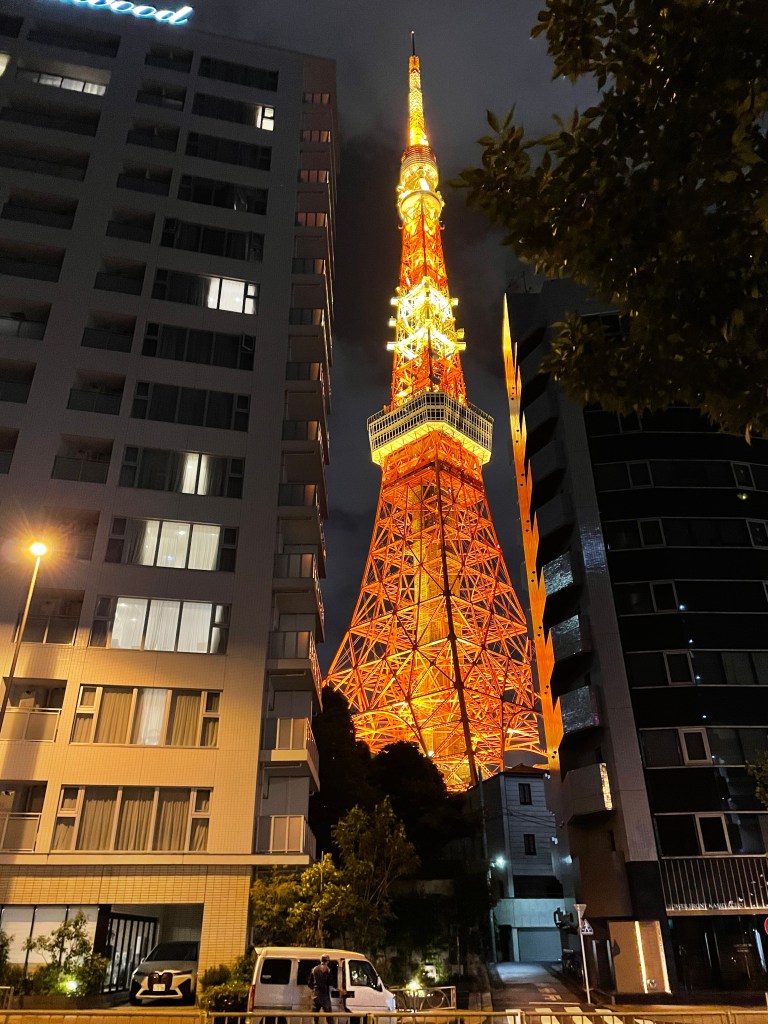
Our first full day in Tokyo! In such an enormous city, and Tokyo is truly enormous, it becomes almost more difficult to figure out what to do. The world was our oyster and as soon as we landed, the analysis paralysis was threatening to settle in. But, as it is with most things, the key is to not put too much pressure on it. And so, after sleeping in for just about the first time all trip, we set out for Shimokitazawa, a neighborhood known for its narrow streets, coffee shops, bars, and many thrifts.

First, however, we took a brief detour to Shiro-Hige’s Cream Puff Factory. I mentioned Hayao Miyazaki briefly in my Jioufen post, noting the town’s striking similarity to the setting of Miyazaki’s masterpiece, Spirited Away. But for those not in the know, Miyazaki is a legendary Japanese director who also founded the brilliant animation studio, Studio Ghibli (I even, once upon a time, wrote a ranking of his films). What’s more, there is now an entire Ghibli Park open in Japan, though it was tragically closed to foreigners at the time of our visit.

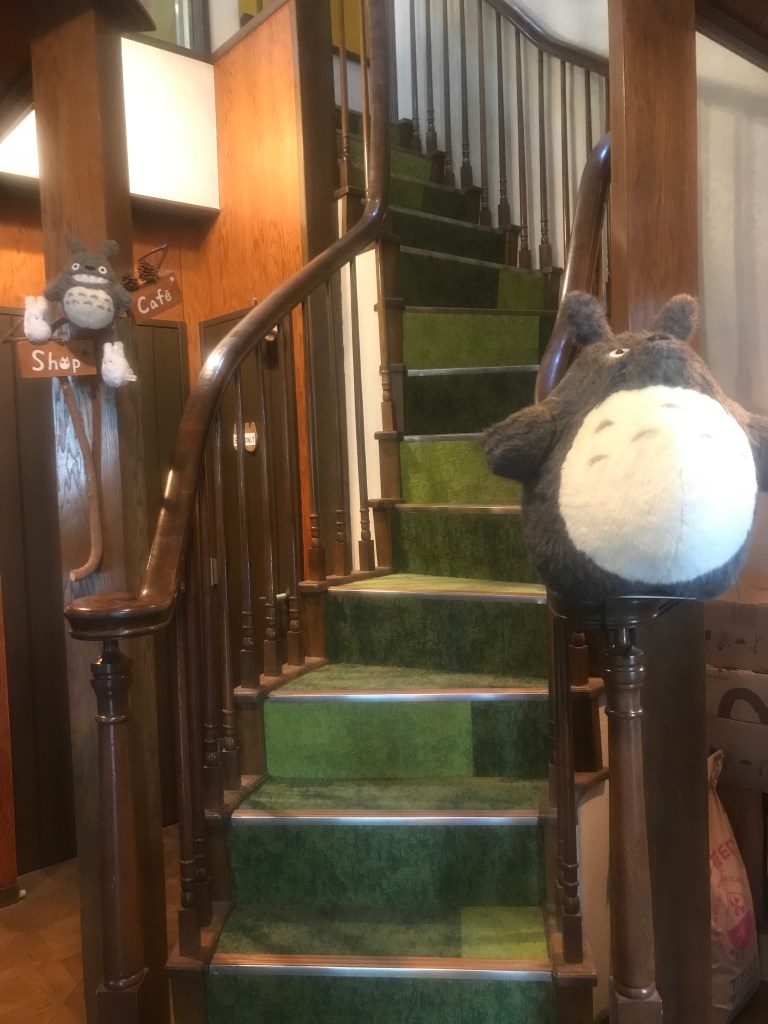
In any case, Shiro-Hige’s Cream Puff Factory is a bakery owned by Miyazaki’s sister-in-law that specializes in making cream puffs in the style of one of Miyazaki’s most beloved characters, Totoro! Sadly, by the time we arrived, the famous Totoro cream puffs (or those available for sale) were long gone. But in any case, it was still a beautiful place to grab a coffee and begin our day.

Back to Shimokitazawa! This truly was one of the most fun neighborhoods I’ve visited. It was a beautiful day and we spent hours just browsing around the many, many thrift stores there. And while I have some questions about what constitutes a thrift price in Japan, one couldn’t argue with the quality of goods we found.

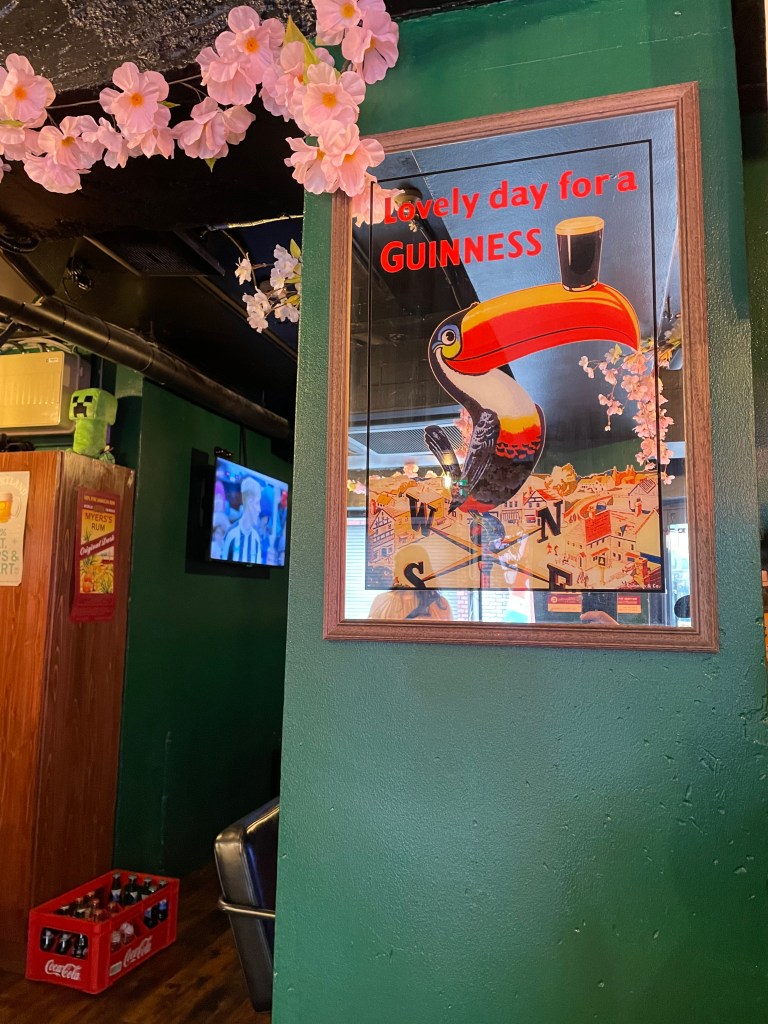
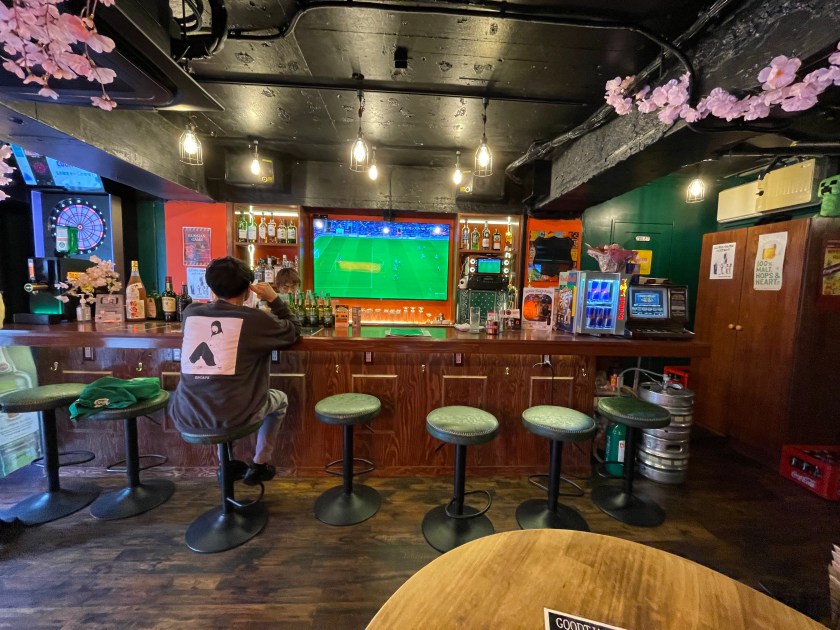
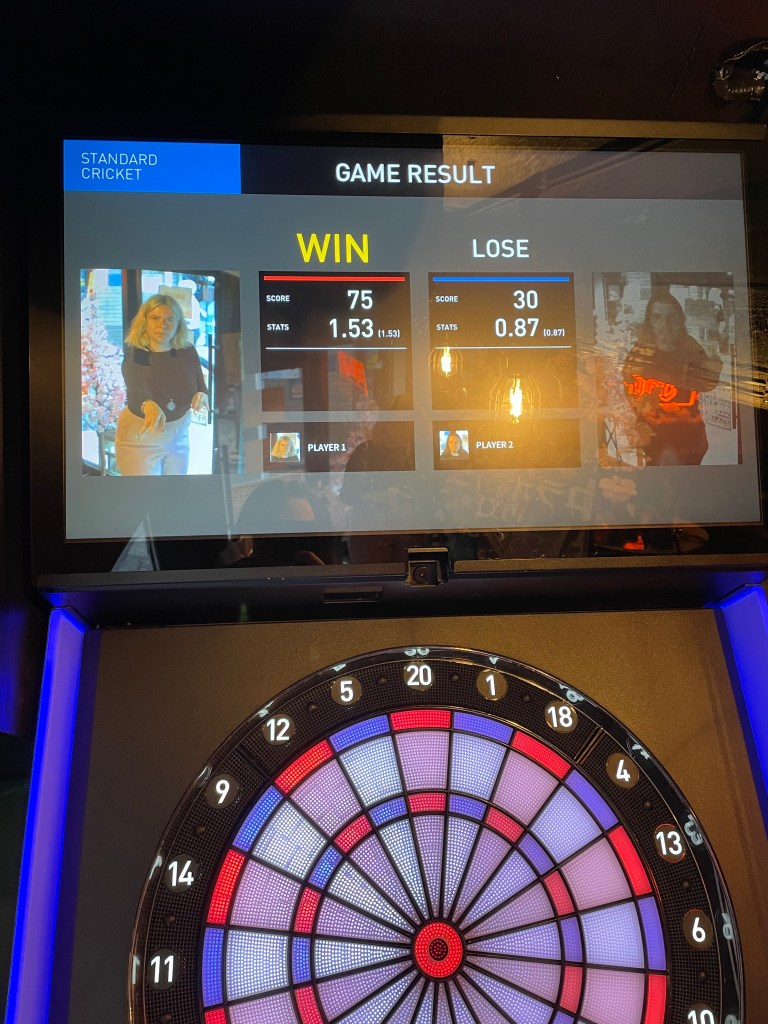
After doing as much window shopping as we could, it was time for a bite and a drink, and boy oh boy did we find the place! Should you find yourself in Tokyo, please do yourself the favor of going to Good Time Bar. All in all, it’s a pretty laid-back bar with plenty of drinks, fun games, and most importantly, a legendary owner/bartender ready to ensure that you have a good time.

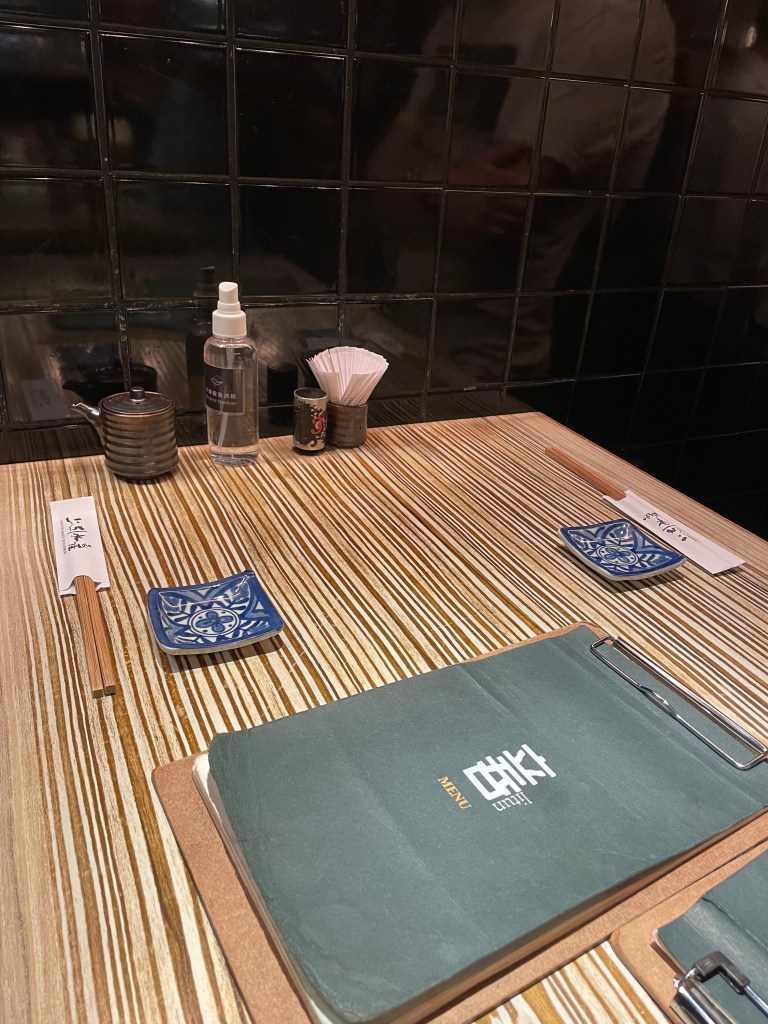
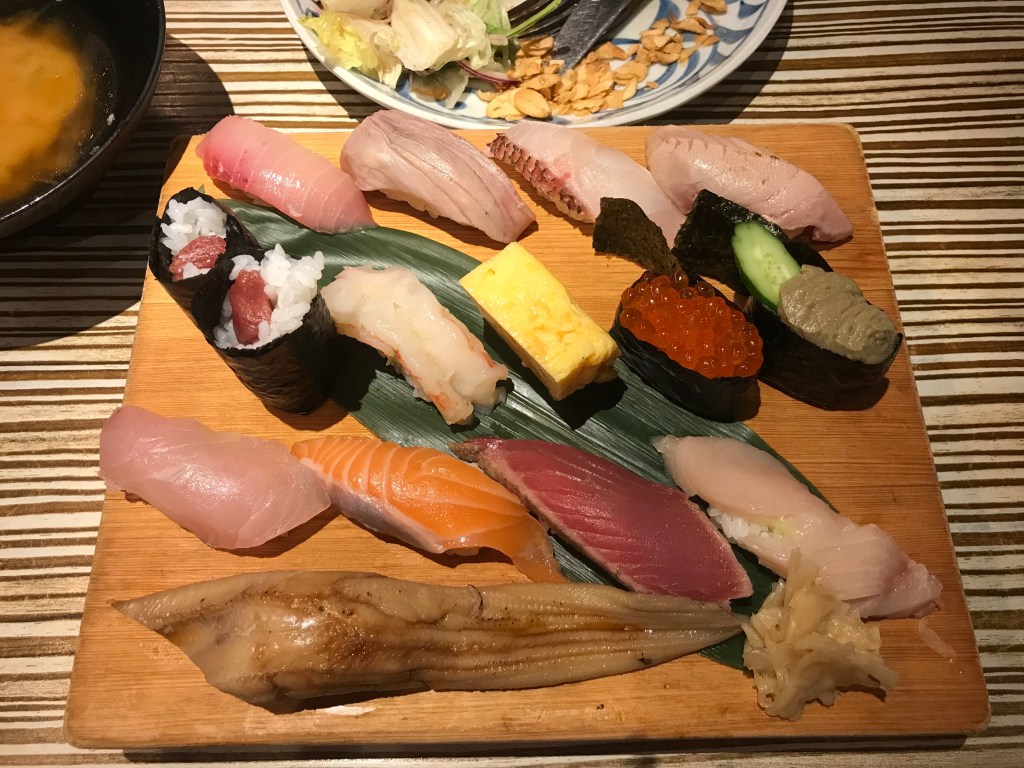
We ended up having such a #goodtime noodling around Shimokitazawa that before we knew it, the sun had set and it was time to figure out dinner. We made our way back to our home base in Minato City and ventured out for arguably the most formal dinner of the trip. Where was this place you might ask? Alas, I have spent the past two hours scouring the web in an attempt to find the magical sushi spot to no avail. Seriously, you’d think in this day and age my phone would have just automatically tracked my location. Who knows? Maybe there is some mystery in the world after all.

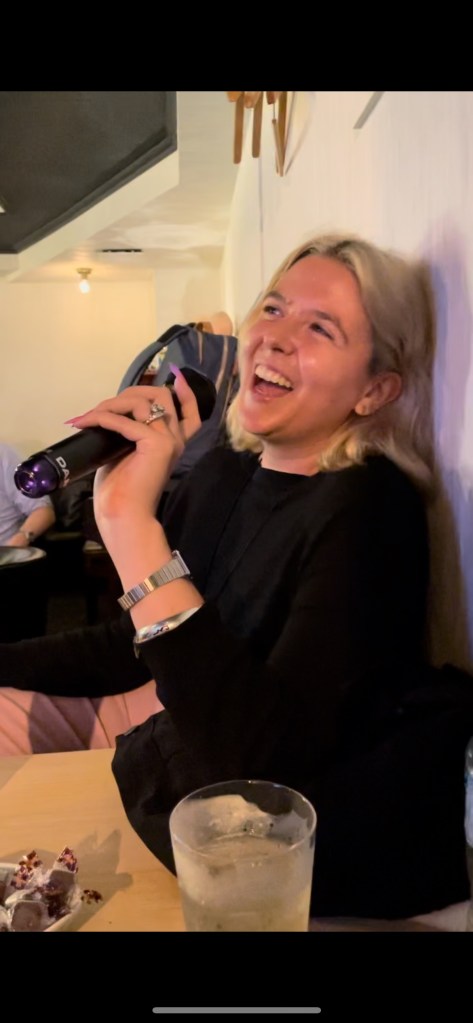
Speaking of Google Maps, after some spectacular sushi and a few beers (a true recipe for success), Gioia and I went in search of some karaoke. And what luck, Charlie’s Bar, a karaoke joint with a perfect rating on Google Maps was right around the corner! When we got there, however, we quickly learned that this was a true locals’ spot, by which I mean that its patronage each night consists of the same 5 or 6 friends catching up, having a few drinks, and singing their favorite songs. And while they opened up a couple of spots for me and Gioia, it was not without many questions inquiring, in more polite terms of course, “How the fuck did you find this place?”

Perhaps that’s the promise of Tokyo? That in a city whose metropolitan area is home to over 37 million people (the most in the world), hidden gems, good times, and even the neighborhood karaoke joint are around every corner.

Day Seven: Tokyo

Day Five: Taipei to Tokyo

Day Five of our trip was one spent almost exclusively in transit. Though our flight between Taipei and Tokyo was only a breezy 3.5 hours, after traveling to and from airports, clearing customs, and gathering our new pocket wifis, etc., it was already midnight by the time we arrived at our hotel. But, as we were to learn over the course of our stay in Japan, there is magic and convenience around every corner. After dropping off our bags, we found a late night ramen shop nearby and before long, were sitting in front of the most satisfying and rejuvenating bowls of ramen you could ever hope to order.

Without much further to report for the day, I’ll leave off with more pics of our now beloved Taipei. Until next time <3!

Day Four: Taipei

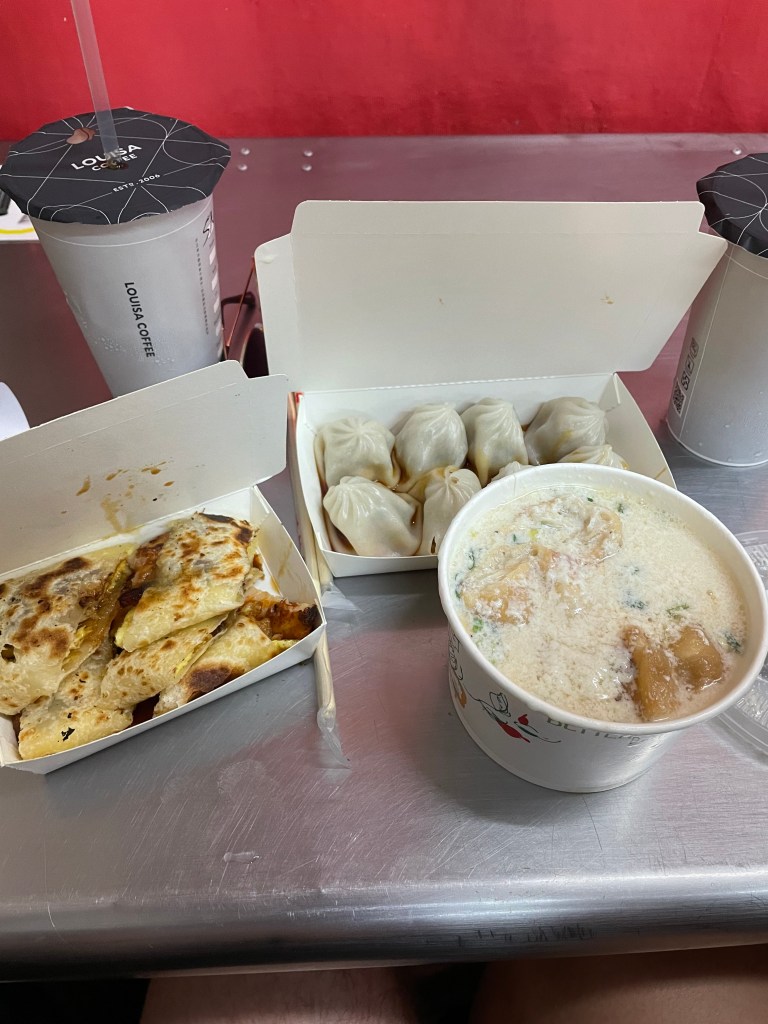
You’d think after a fifteen-hour flight, three full days on a new continent, and an engagement, that Gioia and I would have been ready to take it easy. Alas, we have always marked an important distinction between a trip and a vacation. Taipei was a trip so even after 72 maxed-out hours, we still had plenty to see and even more to eat. And so, where else could we start but by checking out another local favorite? Our fourth morning in Asia brought us to Sinai Soy Milk where we had a hearty and fantastically greasy breakfast consisting of soup dumplings, hot soy milk, and egg sandwich bites. Note, as always the requisite cold brews from Louisa Cafe.

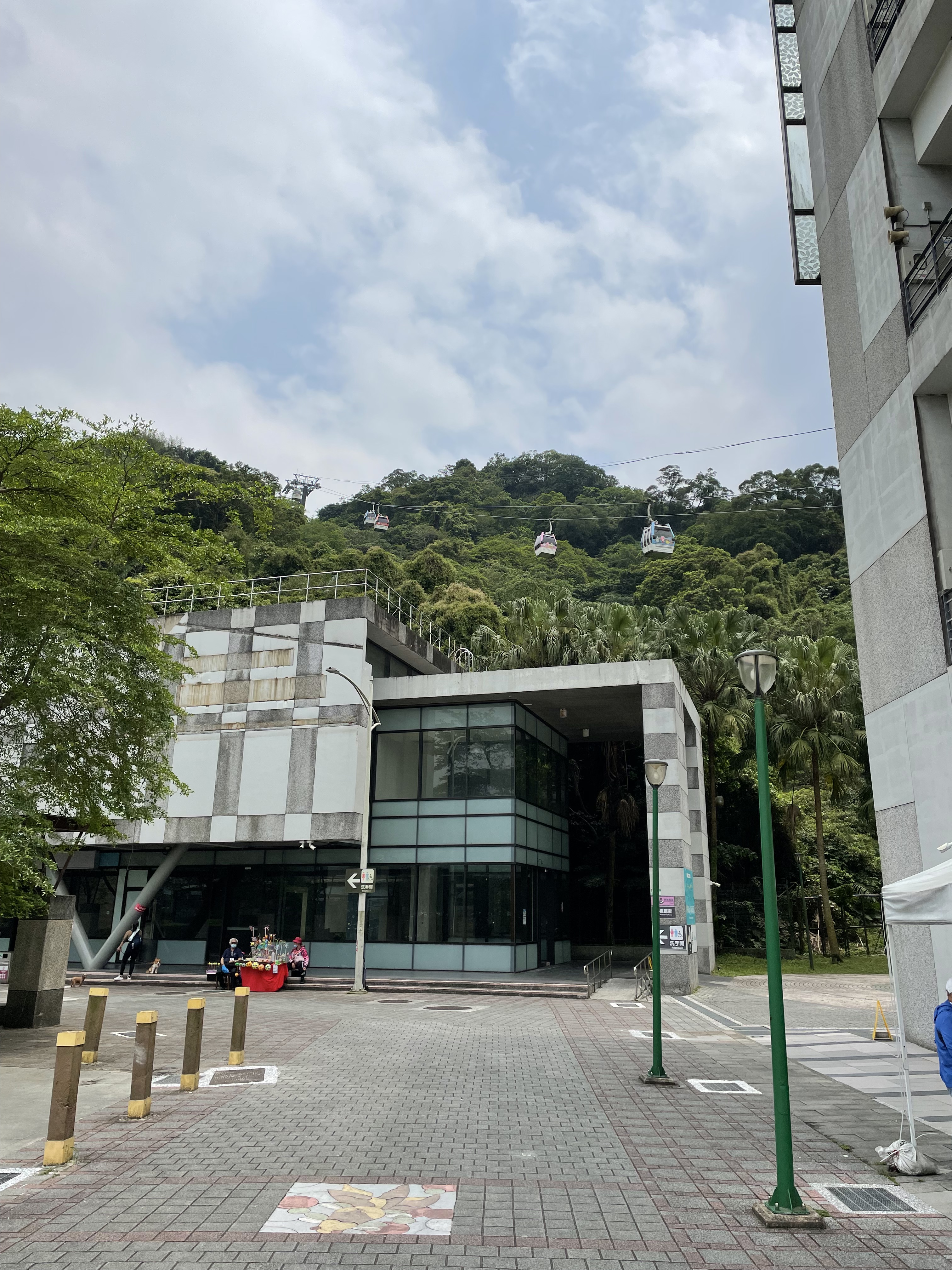
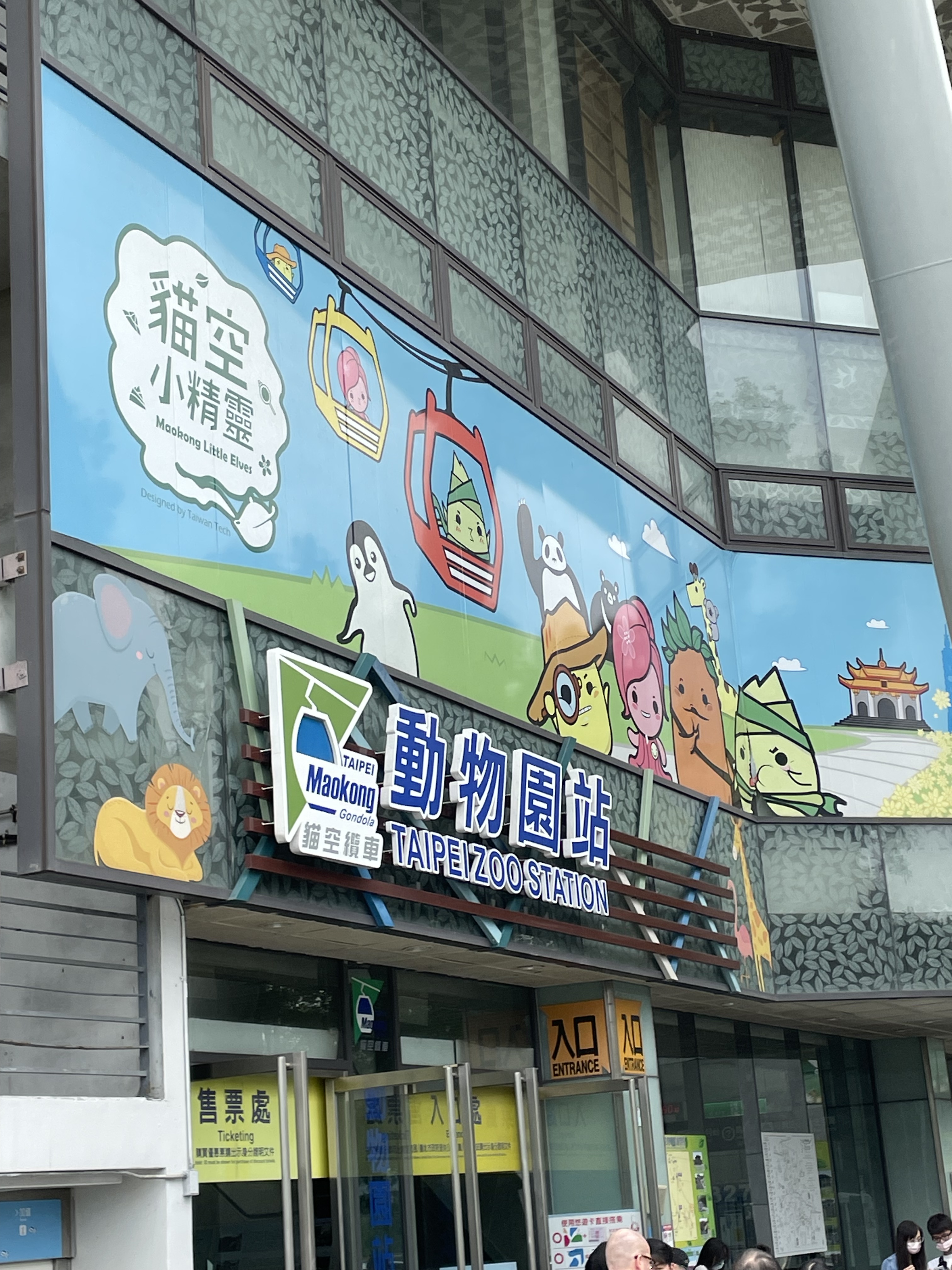
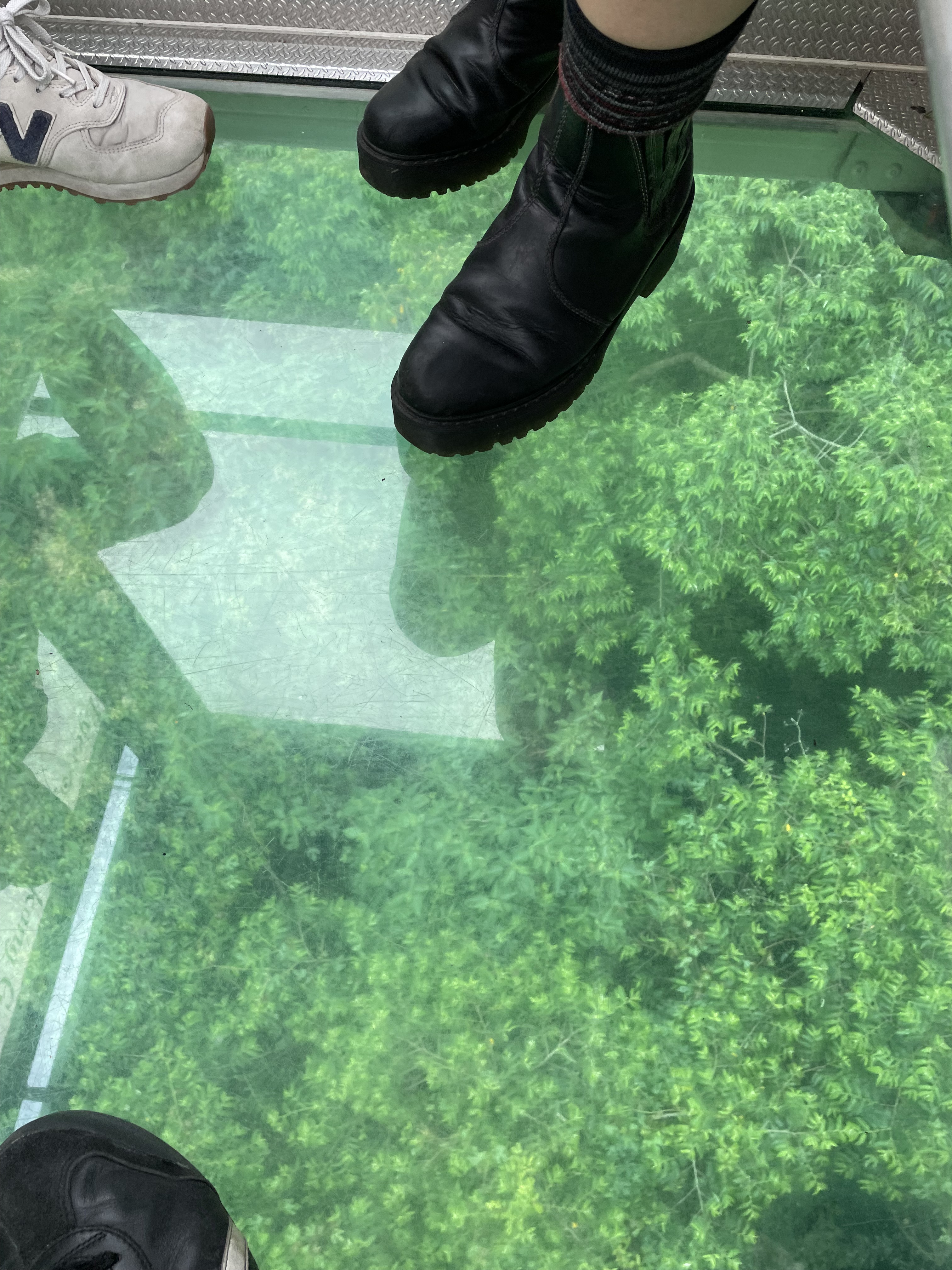
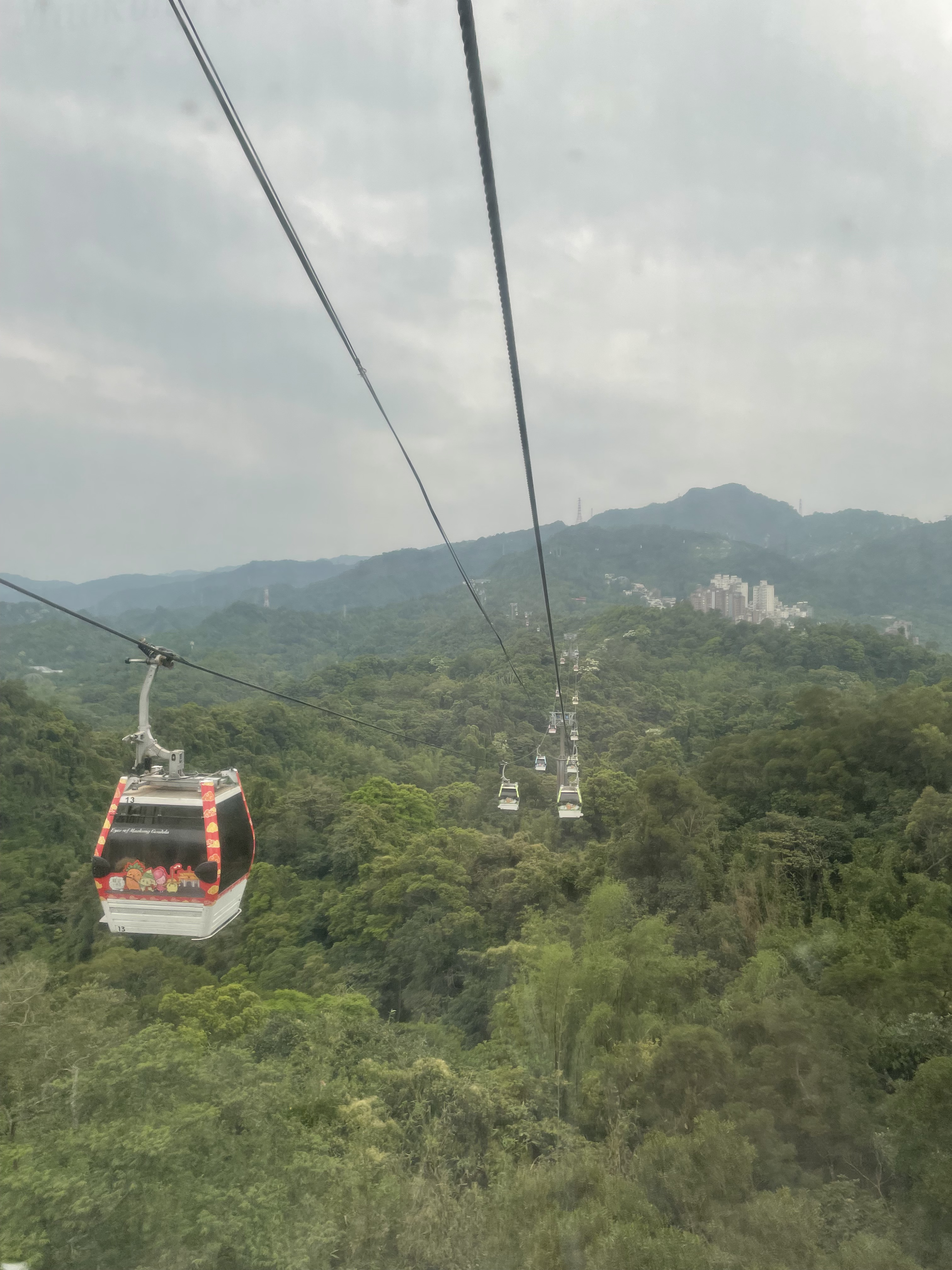
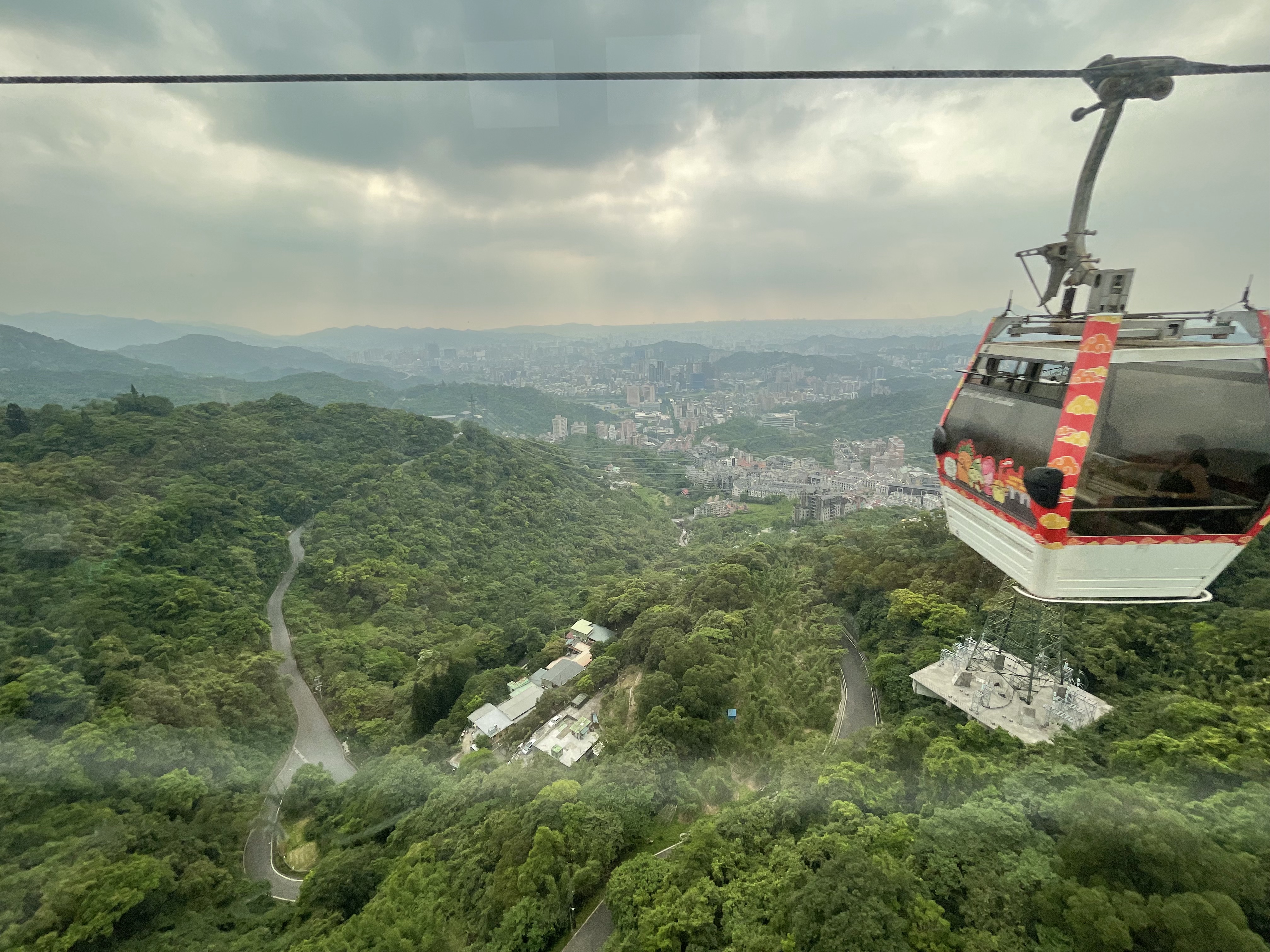
From Sinai Soy Milk, we made our way to Taipei Zoo Station. Despite what you’d think we actually had no intention of seeing the zoo on this trip but instead taking a ride on the magnificent Maokong Gondola. The gondola is, believe it or not, simply a part of public transportation for those living or working in the steeply elevated Wenshan district of the city. Still, for us and many others, it was a joy ride, which probably explains why you can join a special queue for crystal cabins in which the floor of the gondola is clear glass.

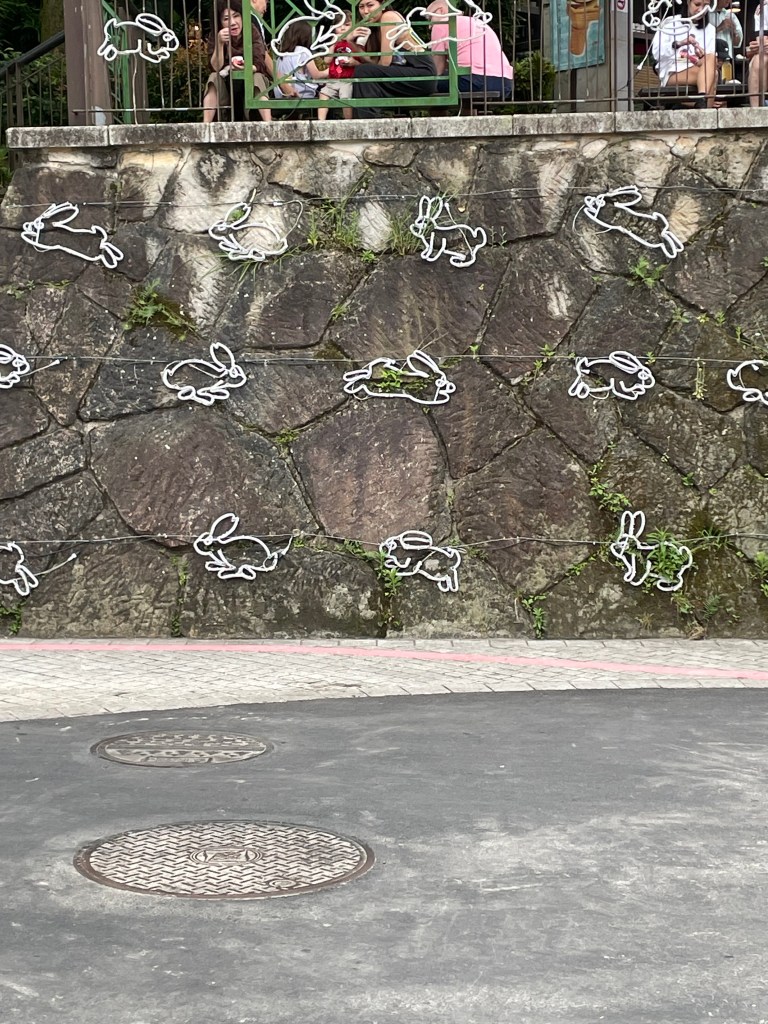
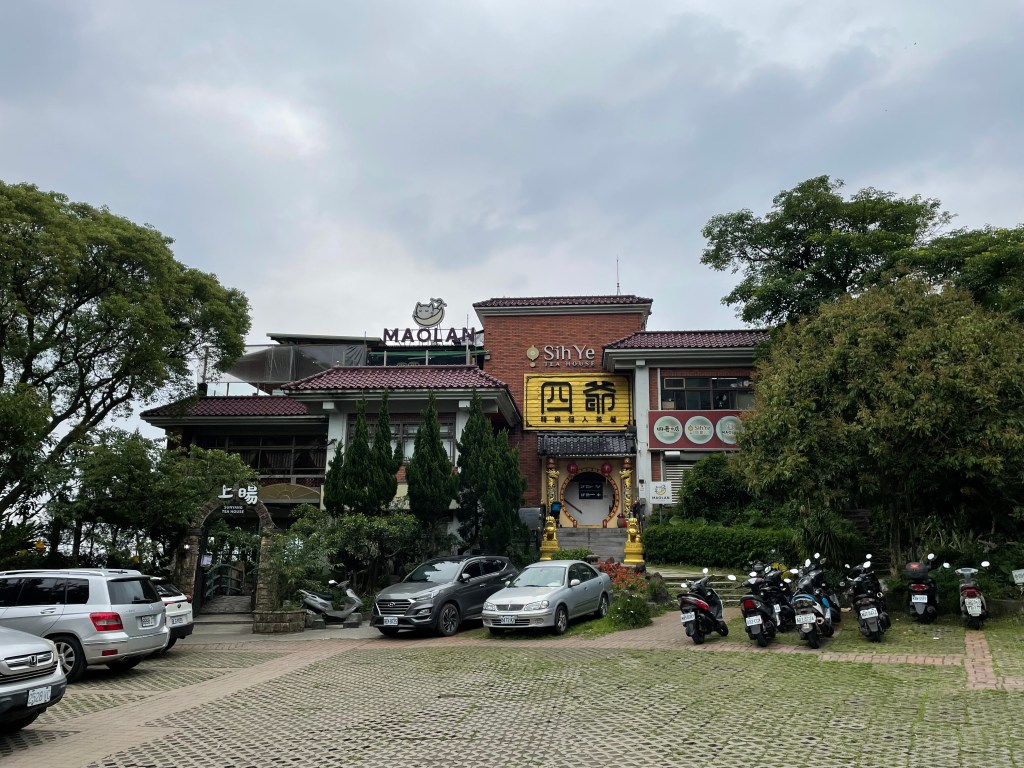
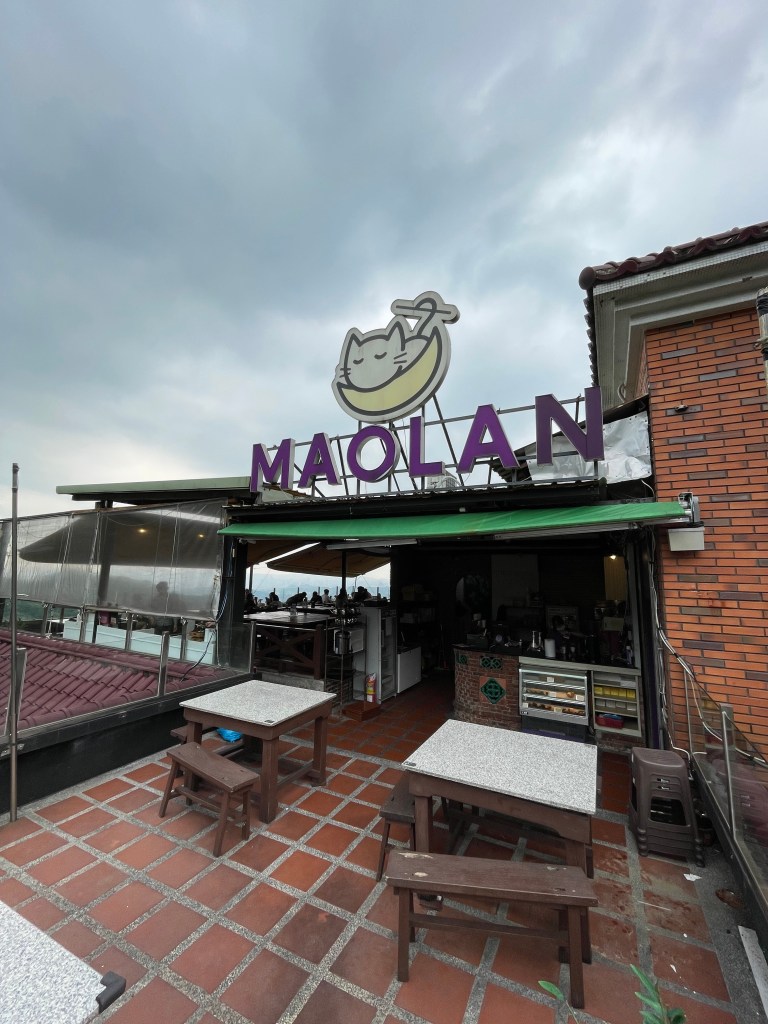
Some 300 meters up from where we started, we grabbed a bite at the Maolan restaurant and tea house and explored the lovely scenery that Maokong has to offer.

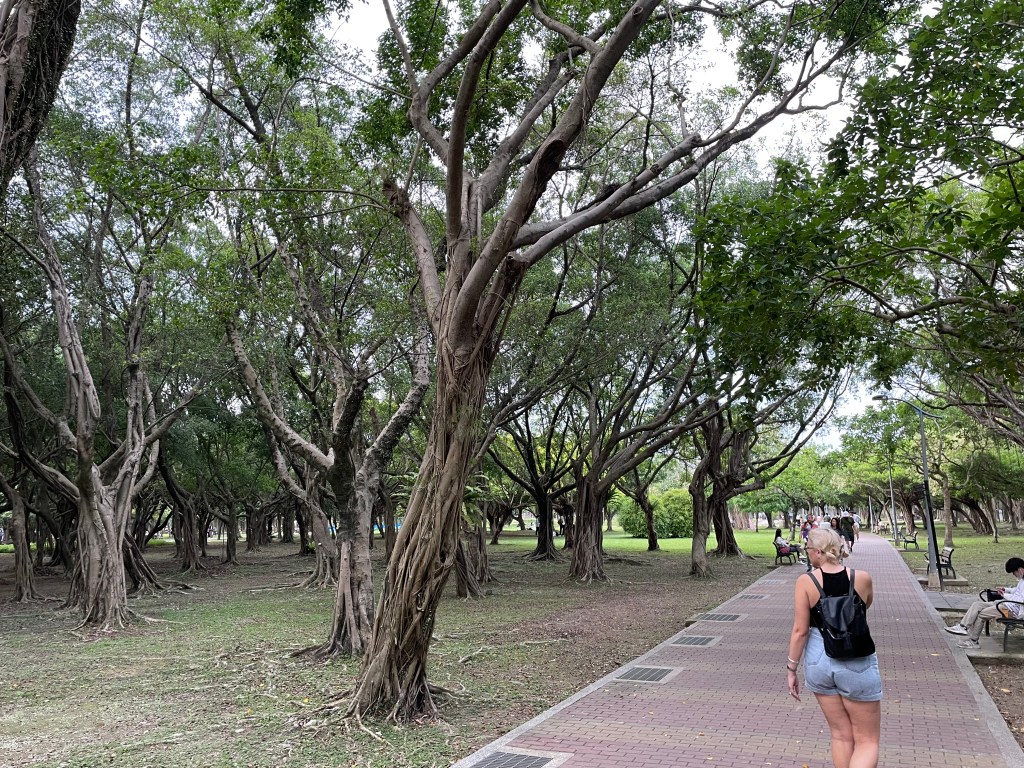
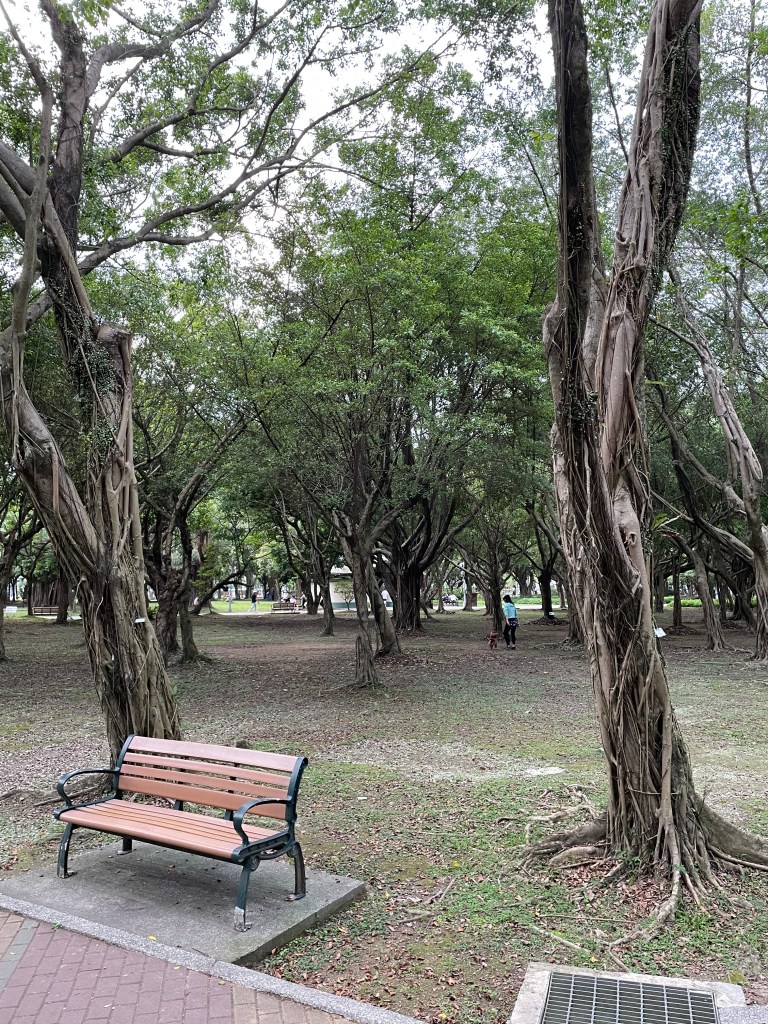
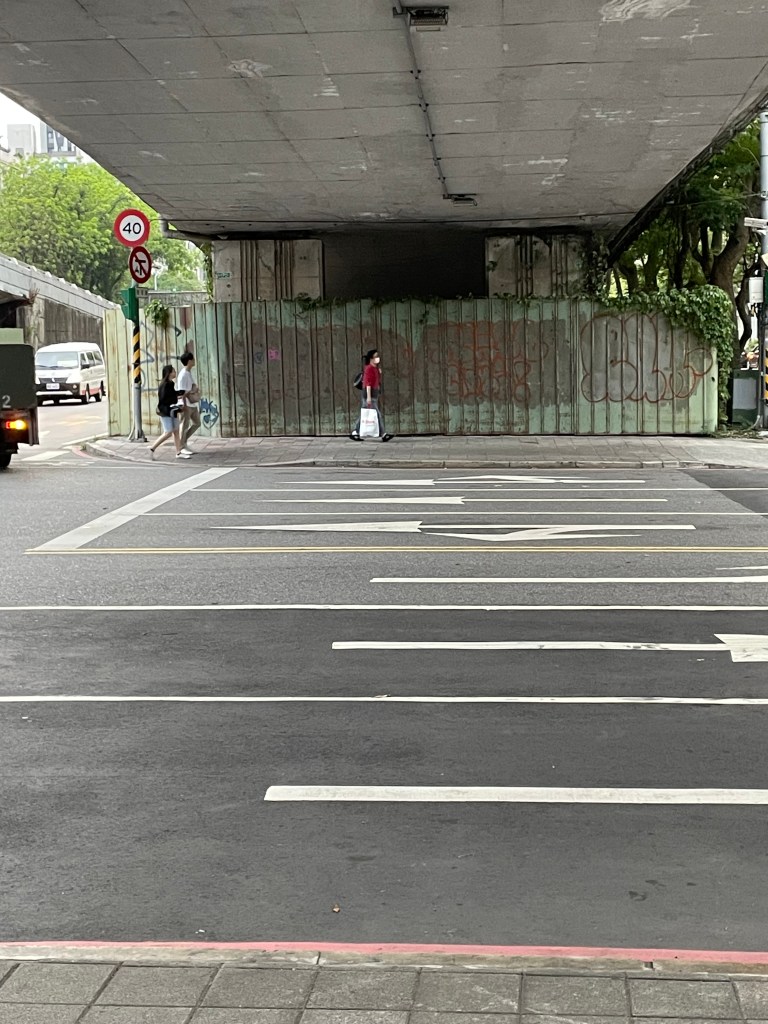
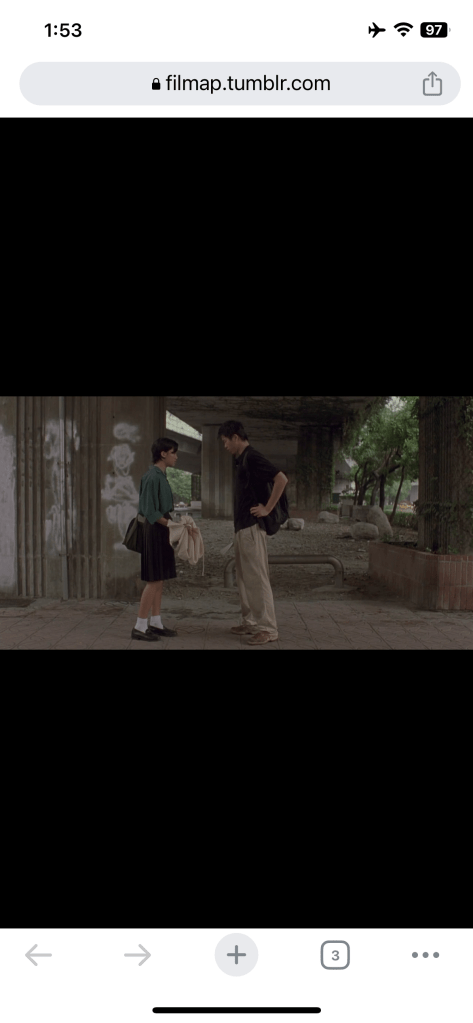
After descending via gondola back to where we started, it was time for some more movie sightseeing. Today’s focus was on Edward Yang’s 2000 film, Yi Yi. We started by checking out the city apartment at the center of that movie, albeit with a quick detour to the neighboring Daan Forest Park. I was thrilled nonetheless, but as you’ll see, some things look just a bit more romantic in the movies.

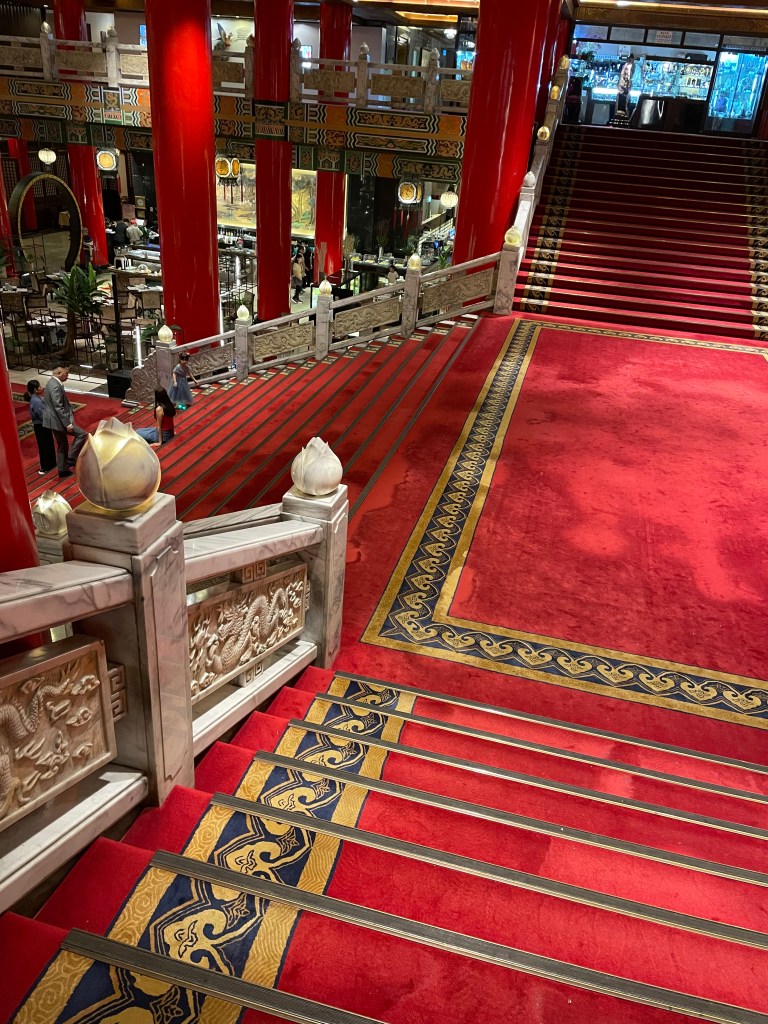
Our final movie location, however, did not disappoint. We made our way to the Grand Hotel Taipei which serves as the wedding venue at the beginning of Yi Yi. This place is beautiful on-screen and off and is easily one of the most glorious buildings I’ve ever seen.

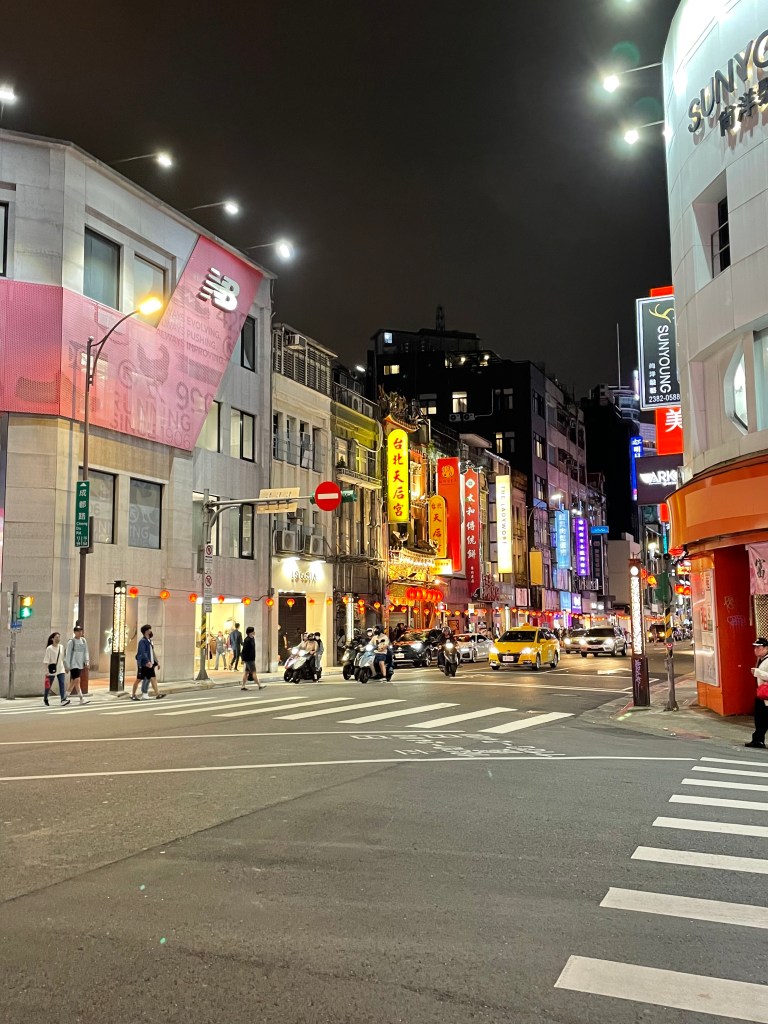
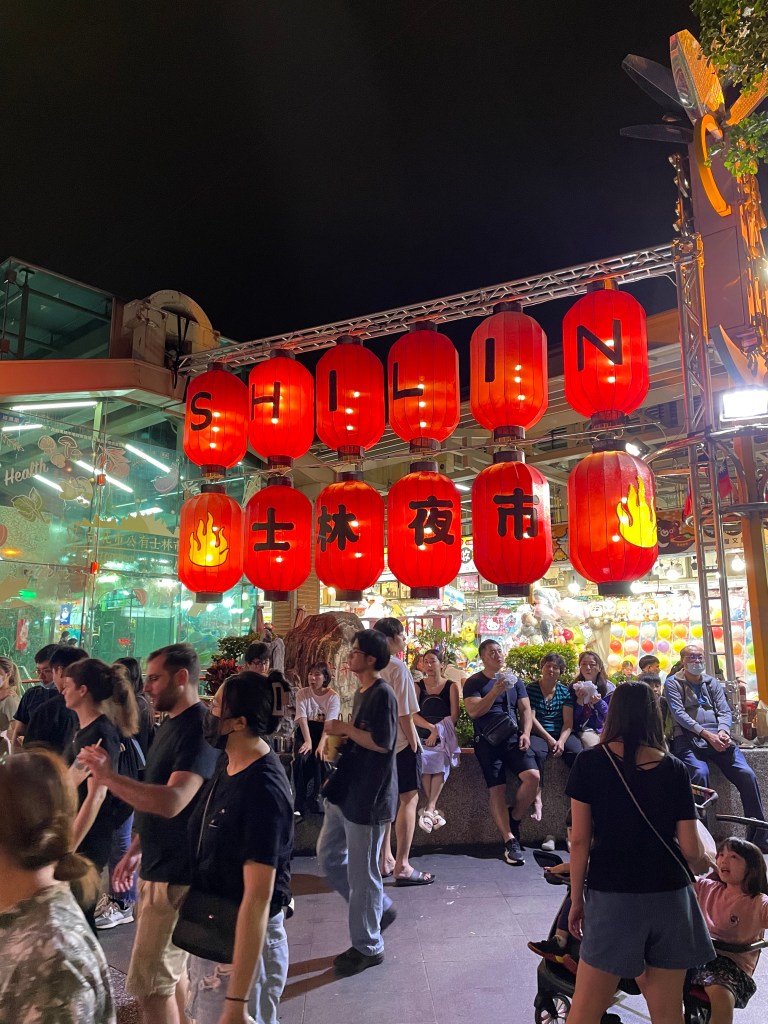
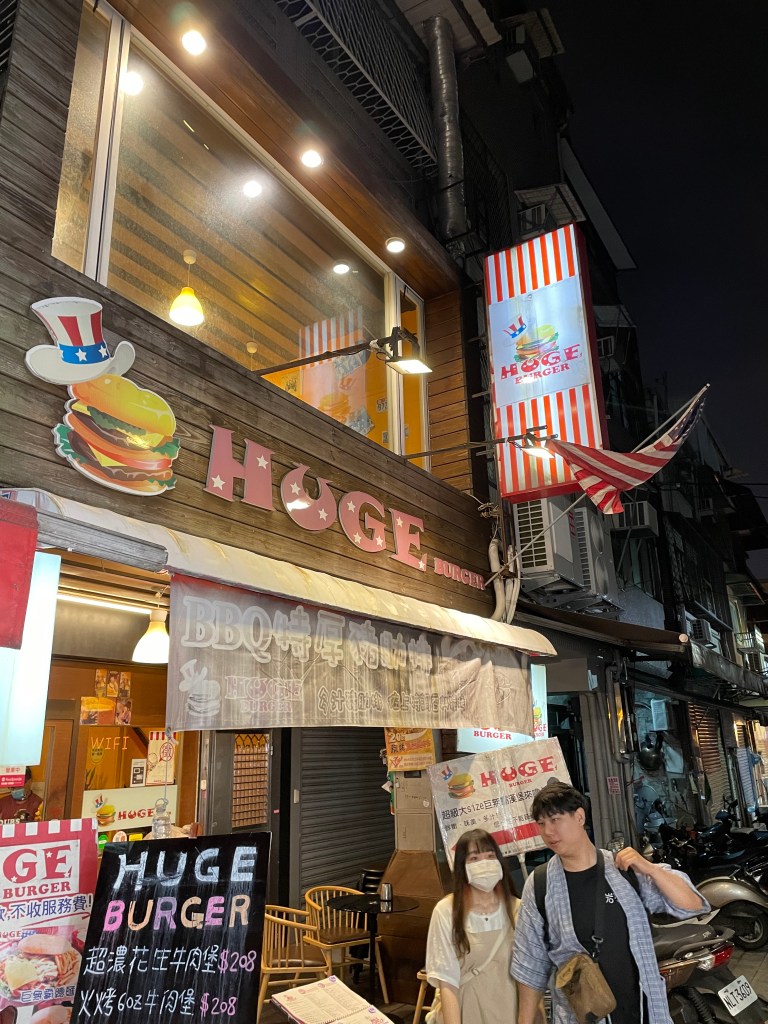
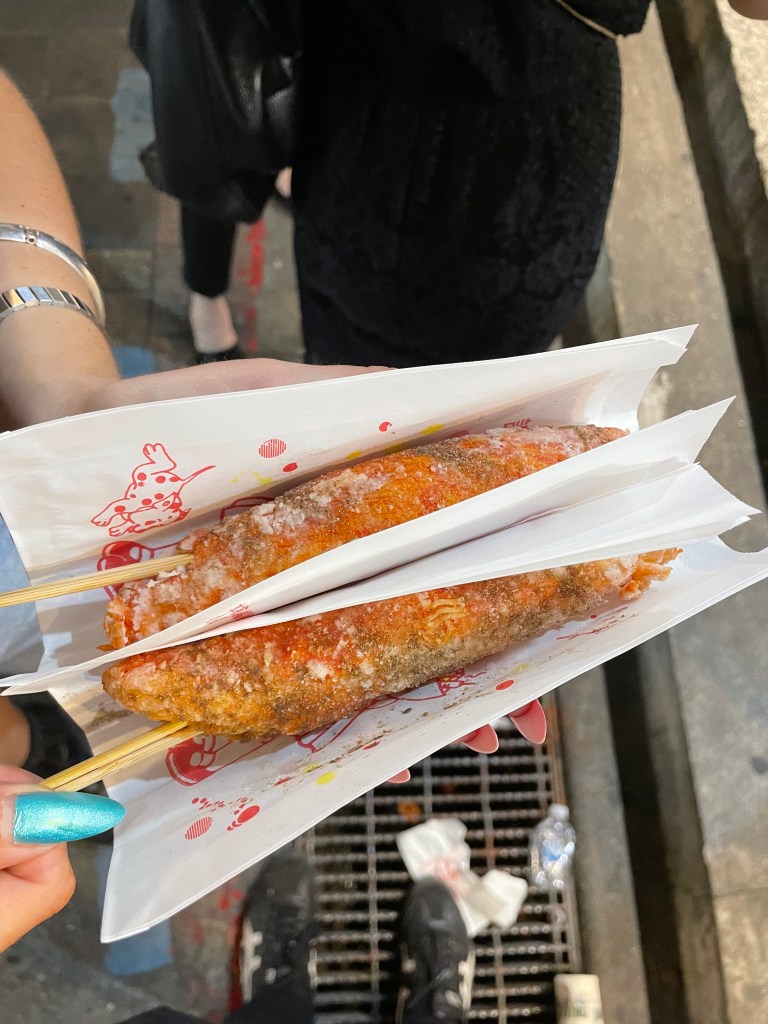
Amidst such a whirlwind day, we were suddenly facing our final hours in Taipei. Luckily, we had just one item left on the docket. From my research and now experience, I can confidently say that any trip to Taipei is not complete without a journey to one of its many night markets, and so we set out for the Shilin Night Market, one of the biggest and most famous of them all. The beauty of these markets is that it truly feels like the world is at your fingertips. You can get any assortment of fried, greased, or even Americanized/supersized food, try your hand at one of the many carnival games, find almost any shop you could hope for, and even, as was our case, find your exact contact prescription over the counter.

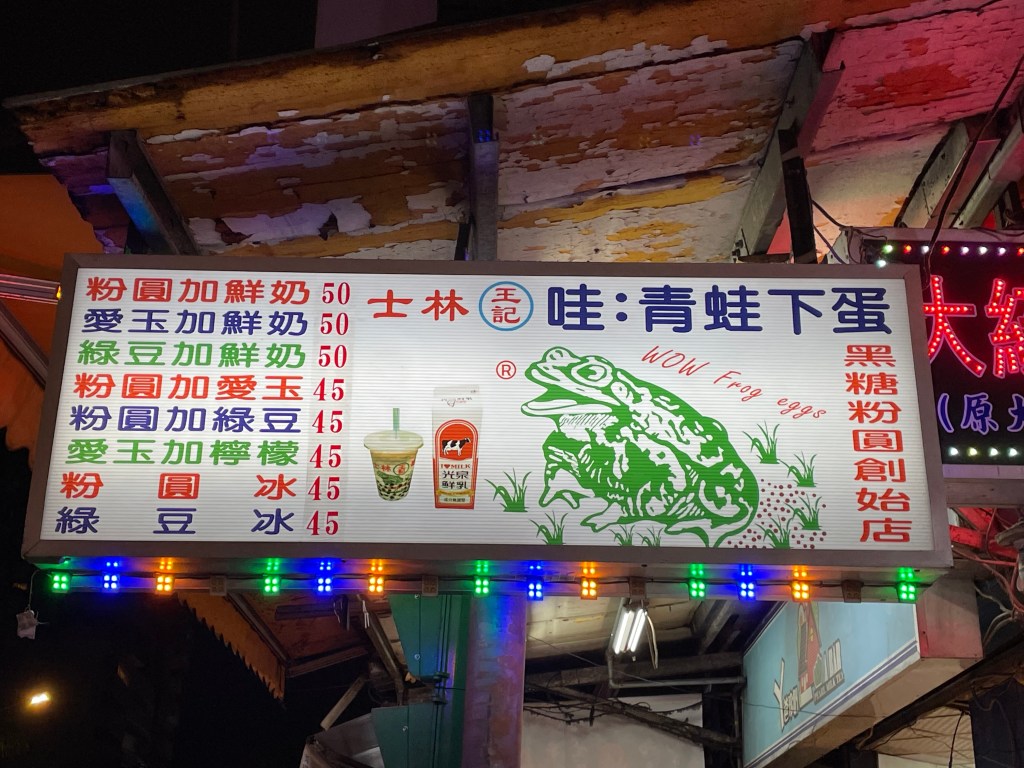
And for the record, let me say that despite Gioia’s supremely adventurous pallet, we managed to stay away from some more of the exotic offerings including but not limited to snake meat, frog eggs, and stinky tofu.

As we come to the end of our Taipei adventure, I’d be remiss not to mention our final stop of the trip: the Don Quijote superstore or as it is named in Taiwan, Don Don Donki. There we wandered among our fellow late-night revelers, looking for a sweet treat to cap off a perfect end to a perfect trip. As with everything in Taipei, it was a success.

Day Three: Jioufen

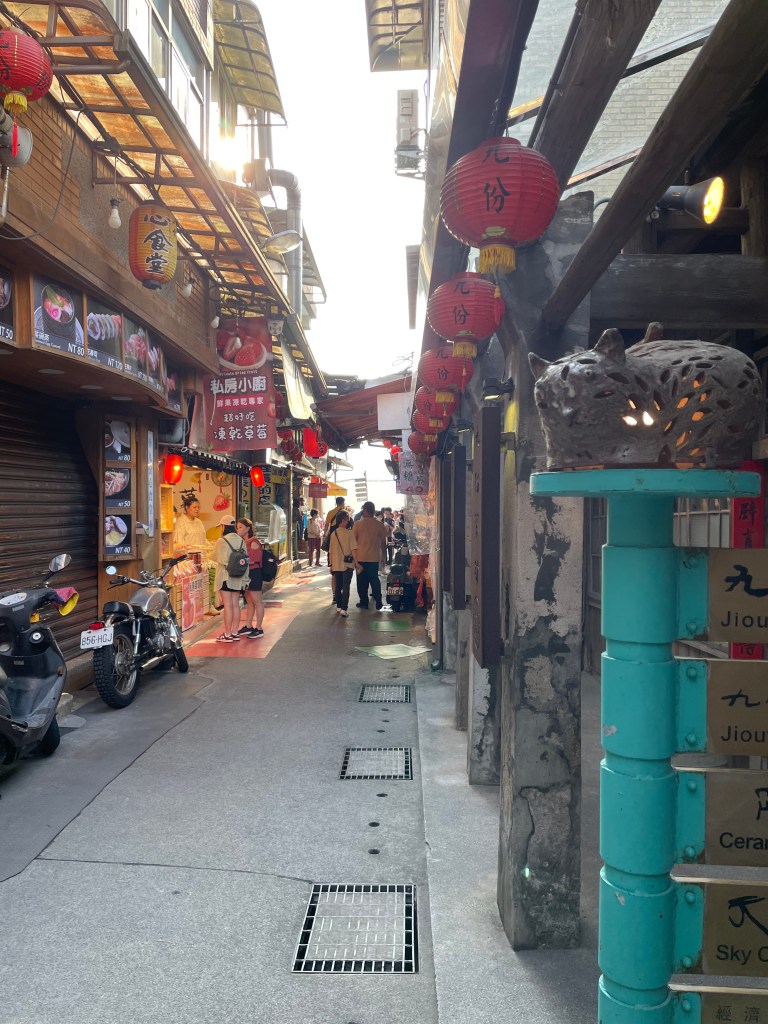
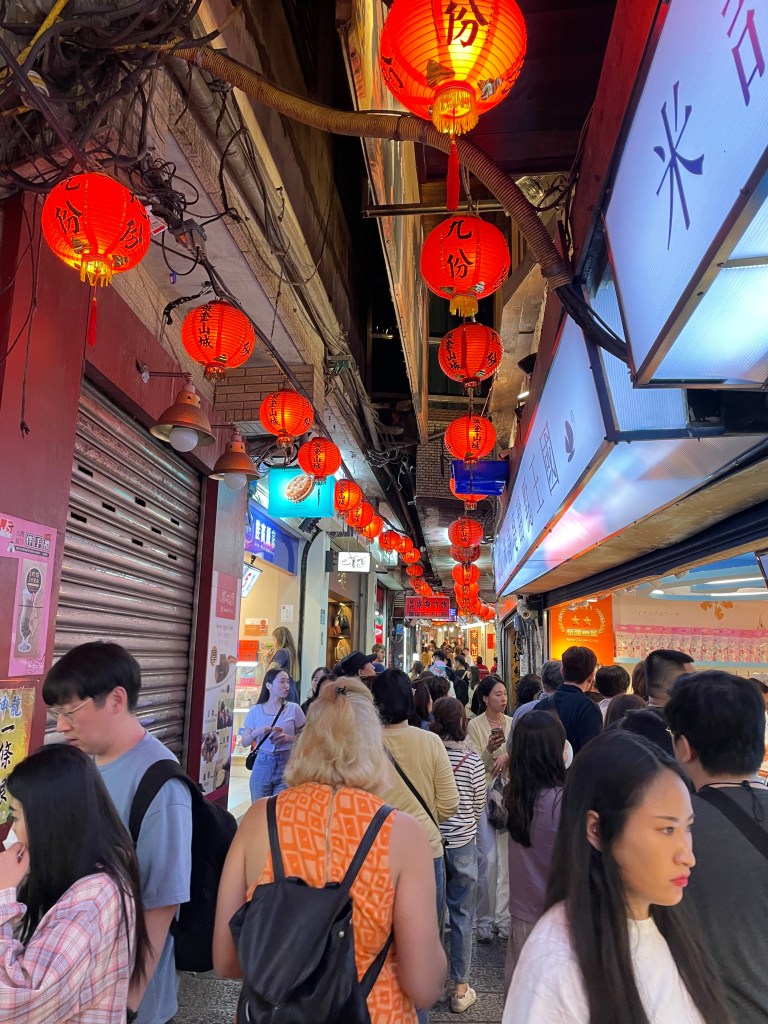
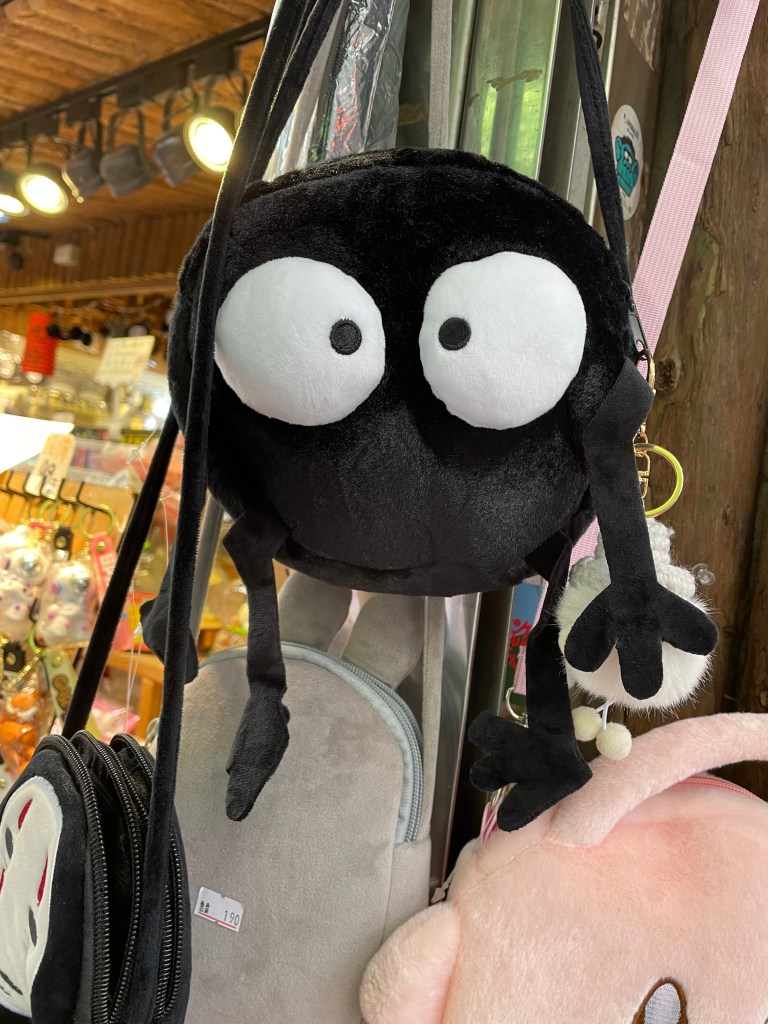
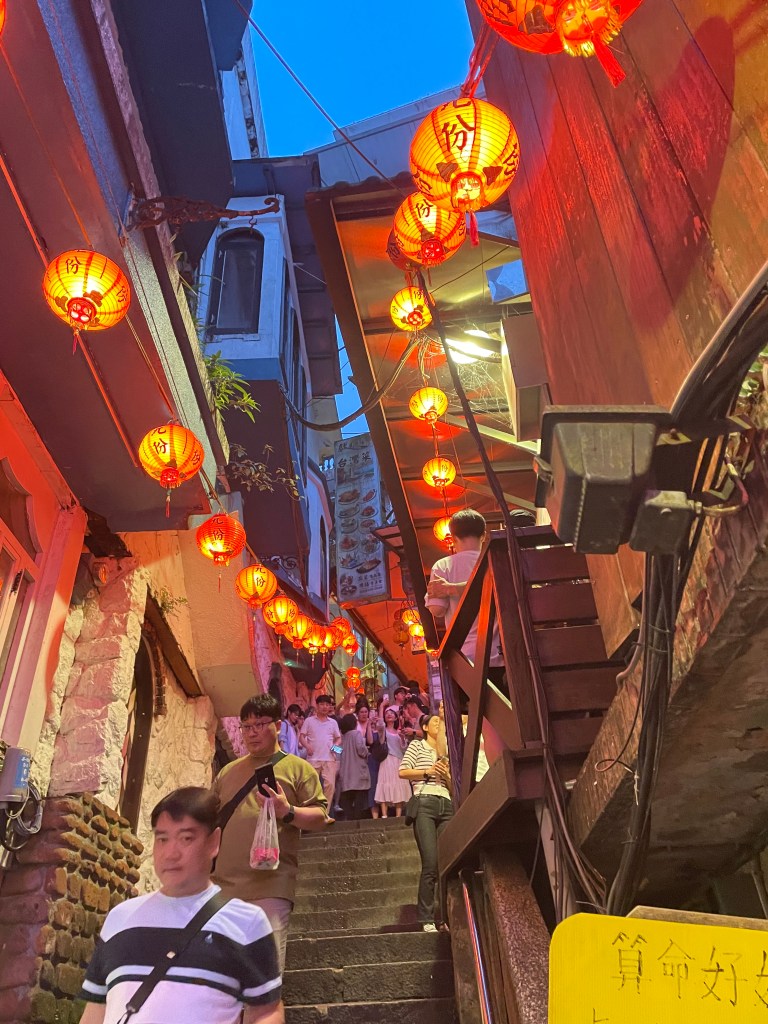
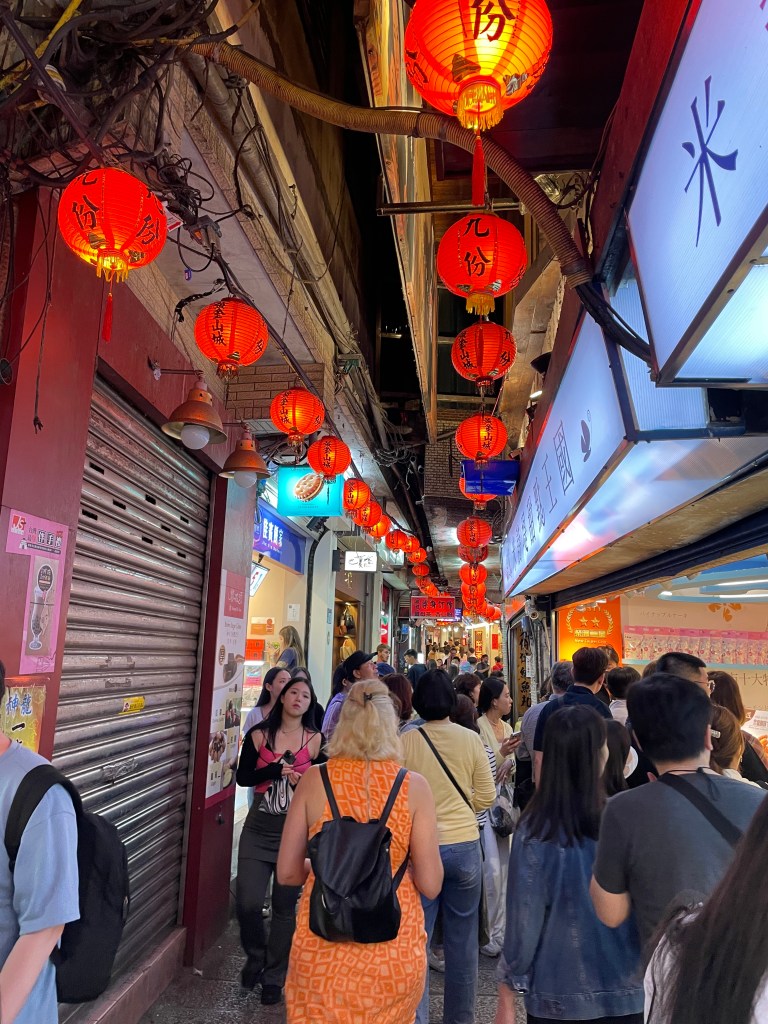
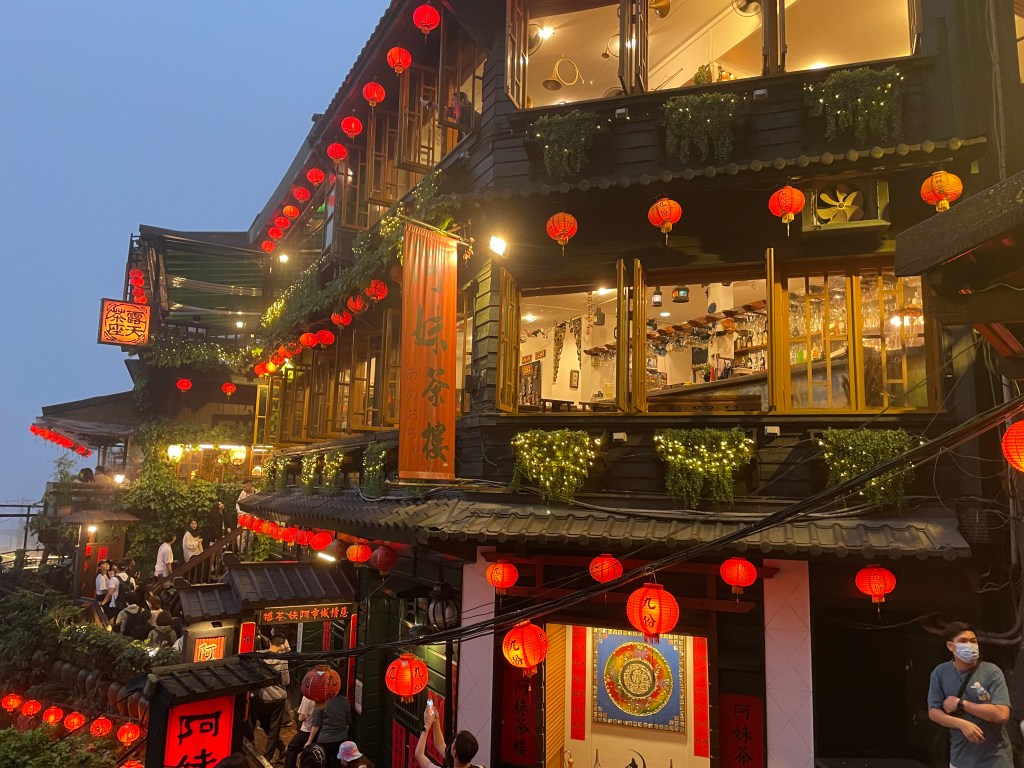
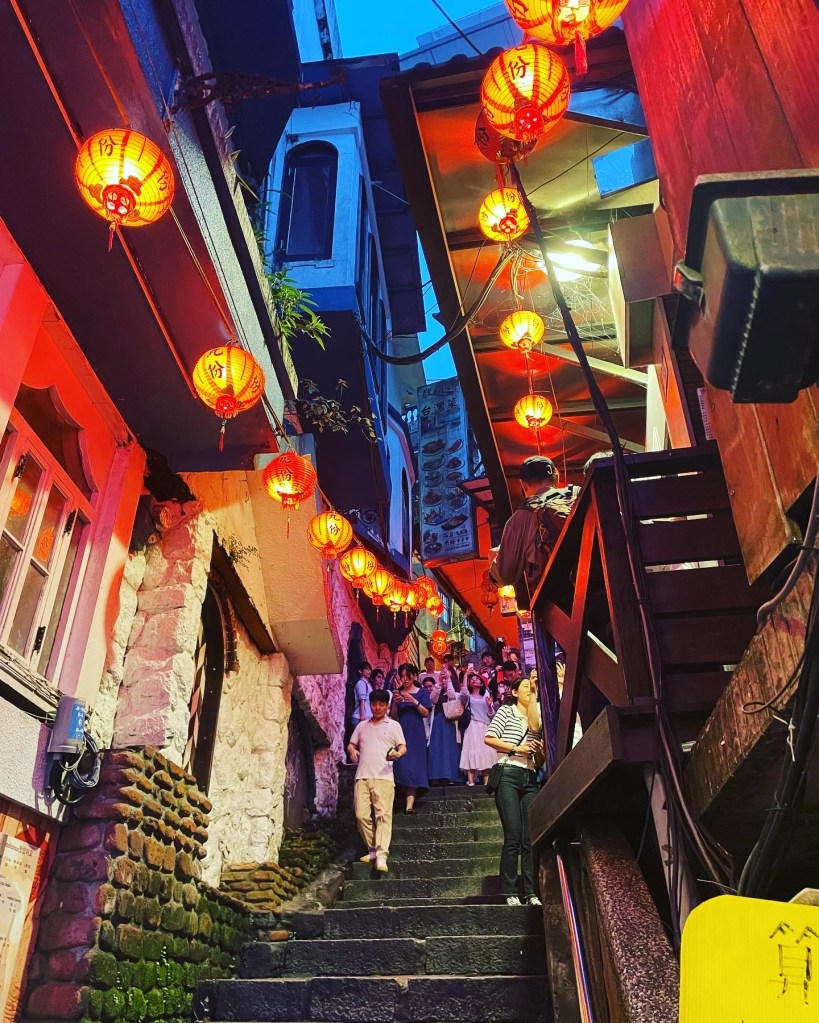
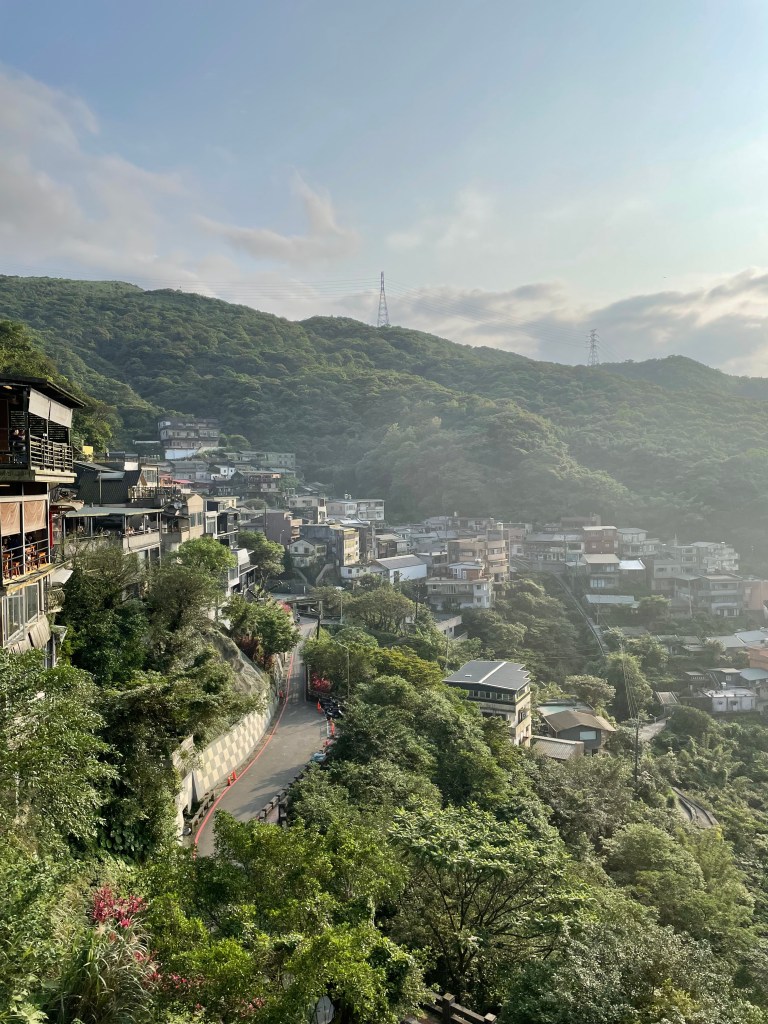
Located some 35km east of Taipei lies Jioufen, a seaside mountain town, and former prominent mining community that has to be one of the most beautiful places in the entire world. At the very least, it’s the most beautiful place this blogger has seen. Today, the town is famous for its Old Street, a winding alley lined with shops, stores, and restaurants all immaculately adorned and lit with gorgeous hanging Chinese lanterns. Many have noted the town’s striking resemblance to the village at the center of Hayao Miyazaki’s Spirited Away, and given the amount of Studio Ghibli merchandise available, Jioufen certainly doesn’t shy away from that comparison. 

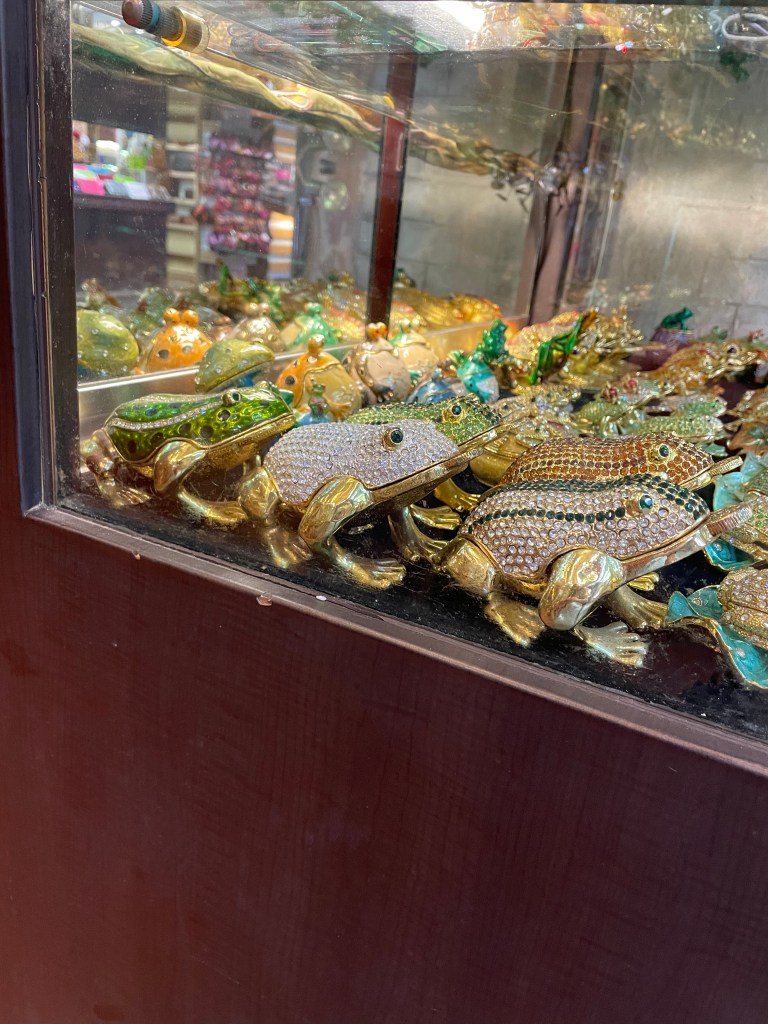
Alas, some places are just hard to capture with words so for most of today’s post, I’ll let the pictures do the talking. Still, here were the major beats of an unforgettable day:

We began by taking a convenient city bus ride from Taipei to Jioufen. How a city bus navigates the twists and turns of this narrow, mountainous journey, I tried hard not to think about. Ultimately though, we arrived in and left Jioufen in one piece for just two swipes of the transit card. Not too shabby!

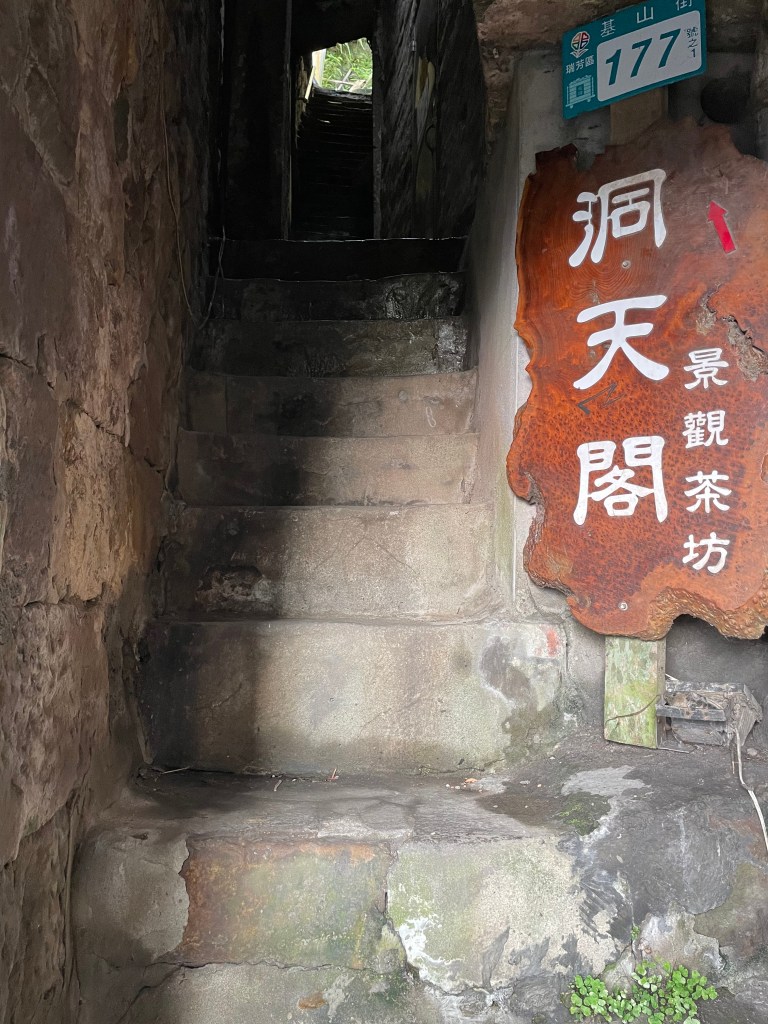
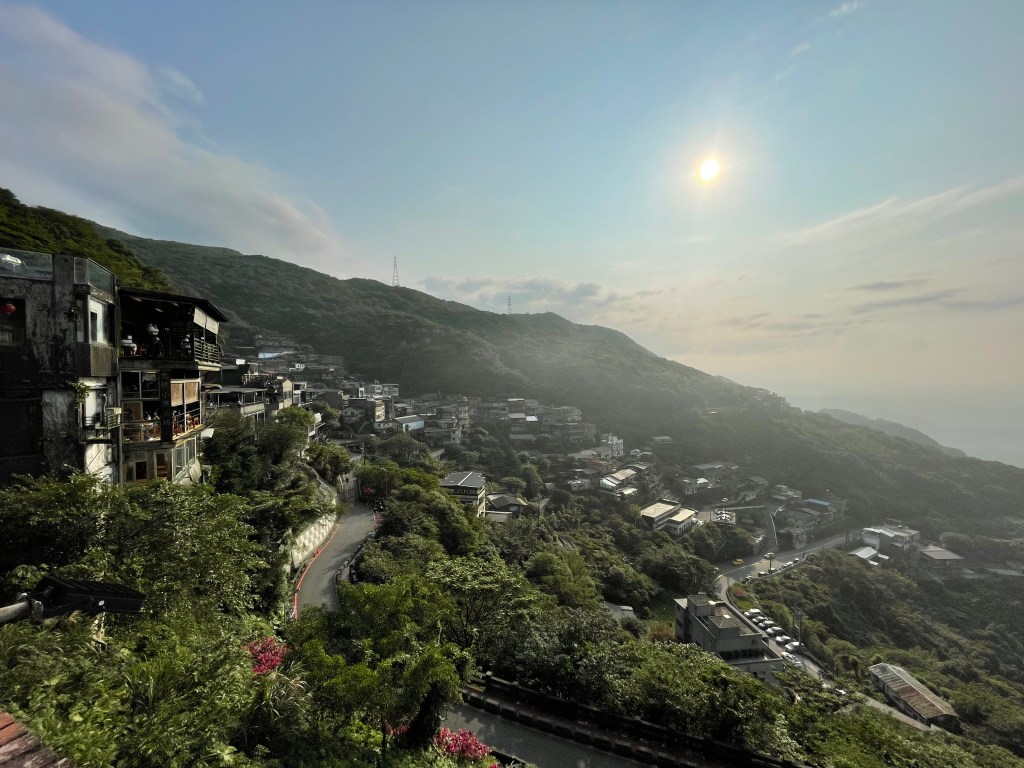
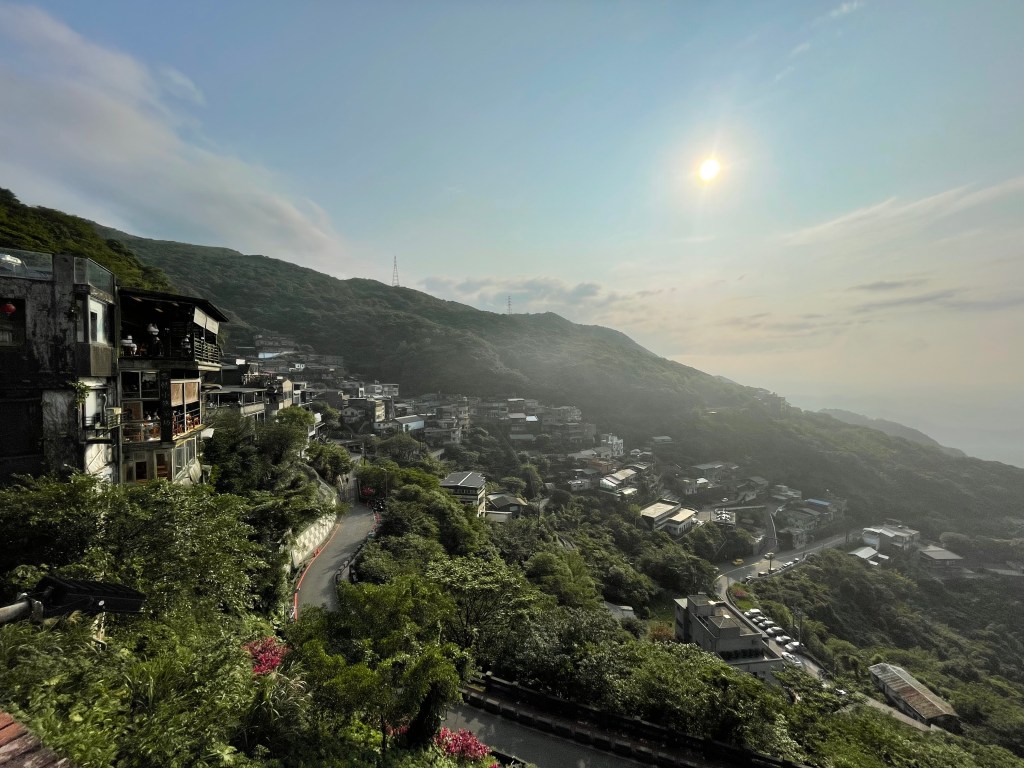
Once in Jioufen, we started by going as high as we could. At times the journey upward became a bit unusual as lines between public pathway and residents’ backyard seemed to merge. But the hike was more than worth it as, at the top, we were rewarded with stunning views of the town, sea, and mountain below. We also managed to find some stellar points of interest including a temple, a gated town sign, and a monument dedicated to the miners who shaped Jioufen’s past.

From the top there was only one direction to go and so we descended back down Jioufen’s alleys, streets, and walkways managing to only get slightly lost in the process. Eventually, we made it back to Old Street which, again, is really the heart of the town. Now that evening had descended it was especially magnificent to see all lit up. After spending what must have been hours in this tiny stretch exploring every gift shop and eatery available, we headed toward our final destination of the day.

As I mentioned, there is more than a passing resemblance between Jioufen and the town at the center of Hayao Miyazaki’s Spirited Away. At no point is this more closely felt than at the elevated mountainside Amei Tea House that overlooks Jioufen’s coast. We closed our day by having a full tea service and trying to take in as much beauty of the area and town as we could.

Full Gallery:

Day Two: Taipei

Thursday, April 27th
9am
Our first full day in Asia presented me with a (let’s hope) once-in-a-lifetime opportunity: when and where to propose to Gioia! I had already committed to popping the question on the trip and for a whole host of reasons (wanting to fully relax, not wanting to lose the ring, etc.) intended to get it done as soon as possible. So day two, the first day in which we would be fully awake and not sporting sweat-stained airplane clothes, was the day it was going to be. My mission then, was to figure out the perfect time and place to do it.

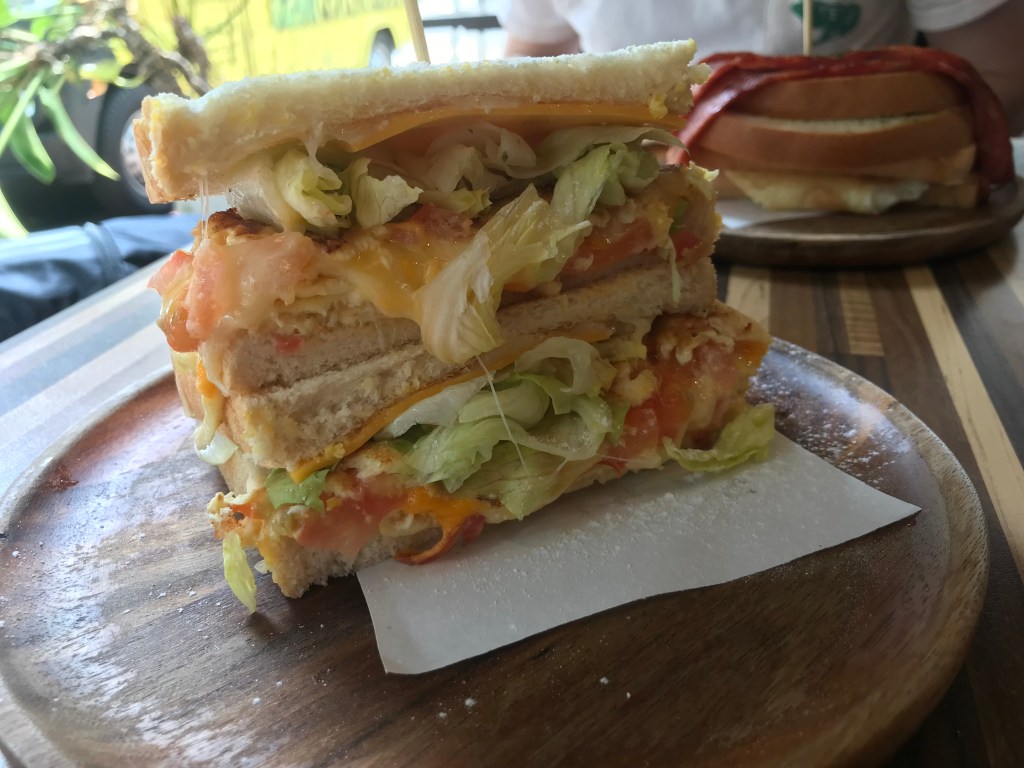
I obviously needed some coffee in my system to figure it all out so we returned to our trusty Louisa Cafe to get the day started. From there, we took a short walk over to Golden Flower Grilled Toast, a breakfast stand that specializes in grilled cheese sandwiches with just about any topping you could want. Even better, it’s mess free! Check out the plastic gloves they give out instead of napkins. As tempting as it was to slip the ring on one of those gloves and propose there, it seemed a bit risky, and thus we moved along with the day.

11am
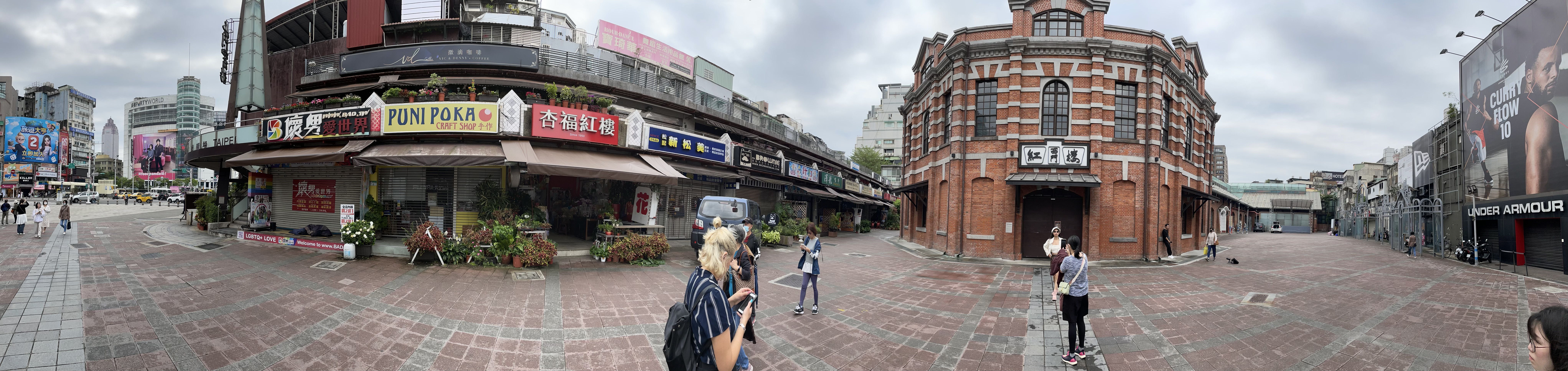
With full bellies and caffeinated bloodstreams, it was time for more sightseeing! First up was The Red House, a beautiful octagonal brick building that formerly served as Taiwan’s first public market. Today, the building functions as a historic site and cultural center in the city.

Near the Red House, I had one of the most wholesome and best interactions of my life as we found a street shop that sold movies. The merchant there noticed me browsing around the local cinema section and although he couldn’t speak English and I couldn’t speak Mandarin, we communicated our love for many of the same titles through gestures and Google Translate. The end result was that he threw in an extra movie (Super Citizen Ko) that I had not seen yet as a recommendation based on what I had picked.
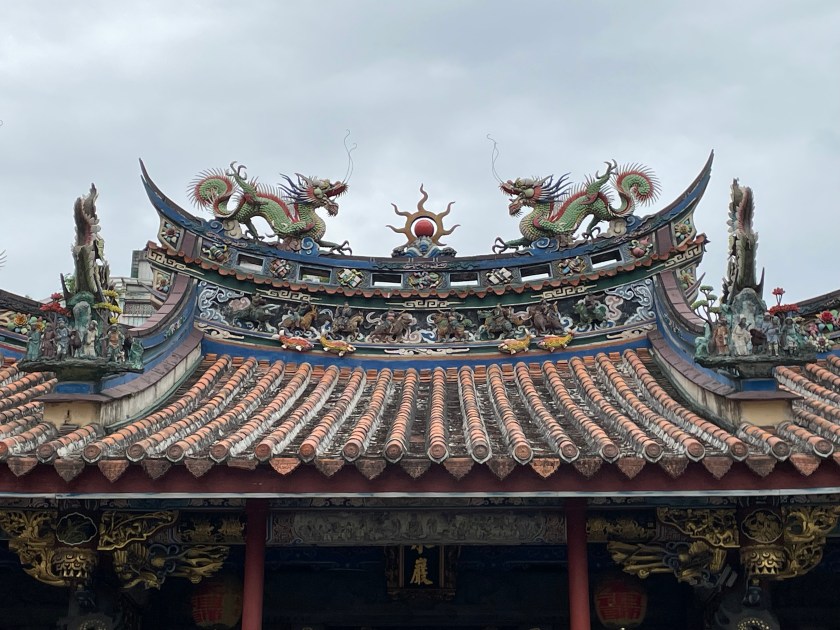
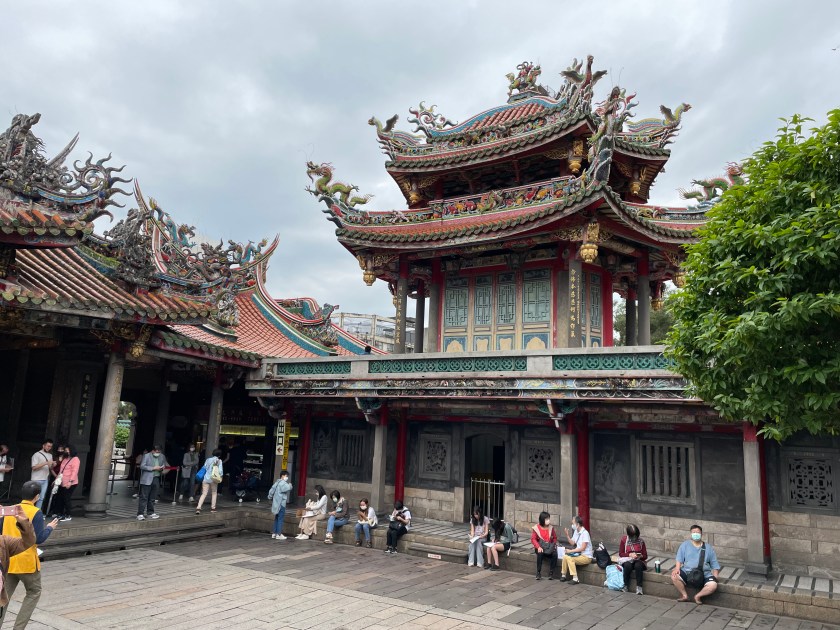
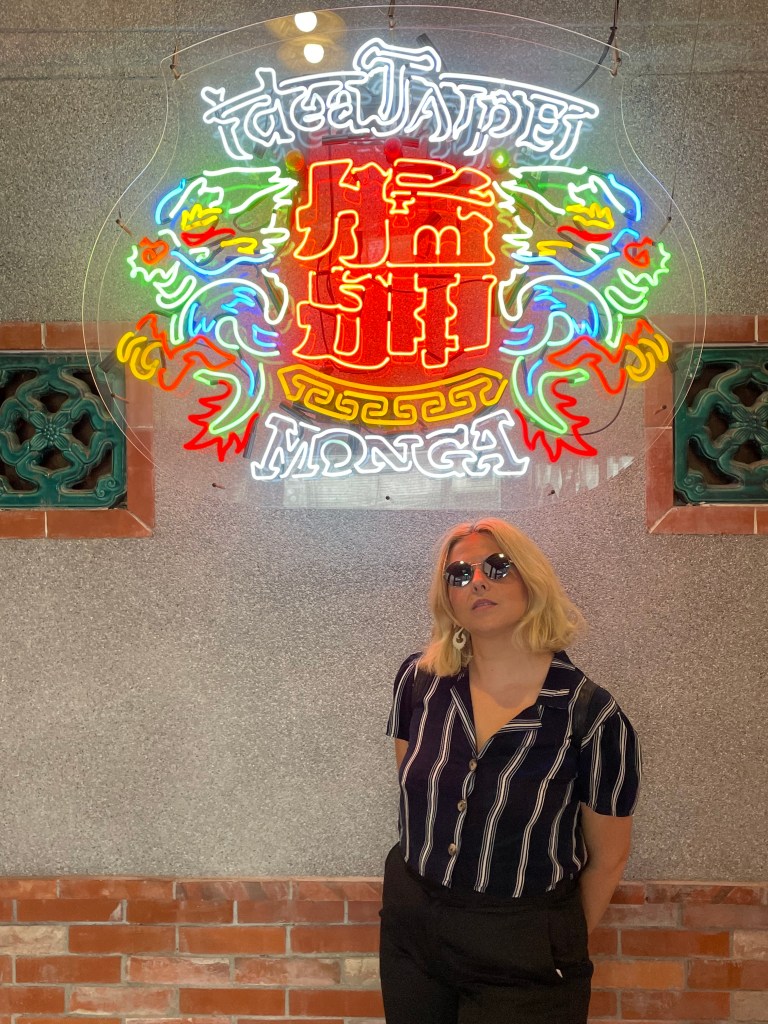
Next up was the Bangka Lungshan Temple. While it was my first time seeing a Chinese or eastern-styled temple, I imagine its not any less stunning on your tenth or hundredth trip. The precision of the temple’s finest details contrasted with its sheer size made it impossible to do justice to on camera. Still, I tried my best.

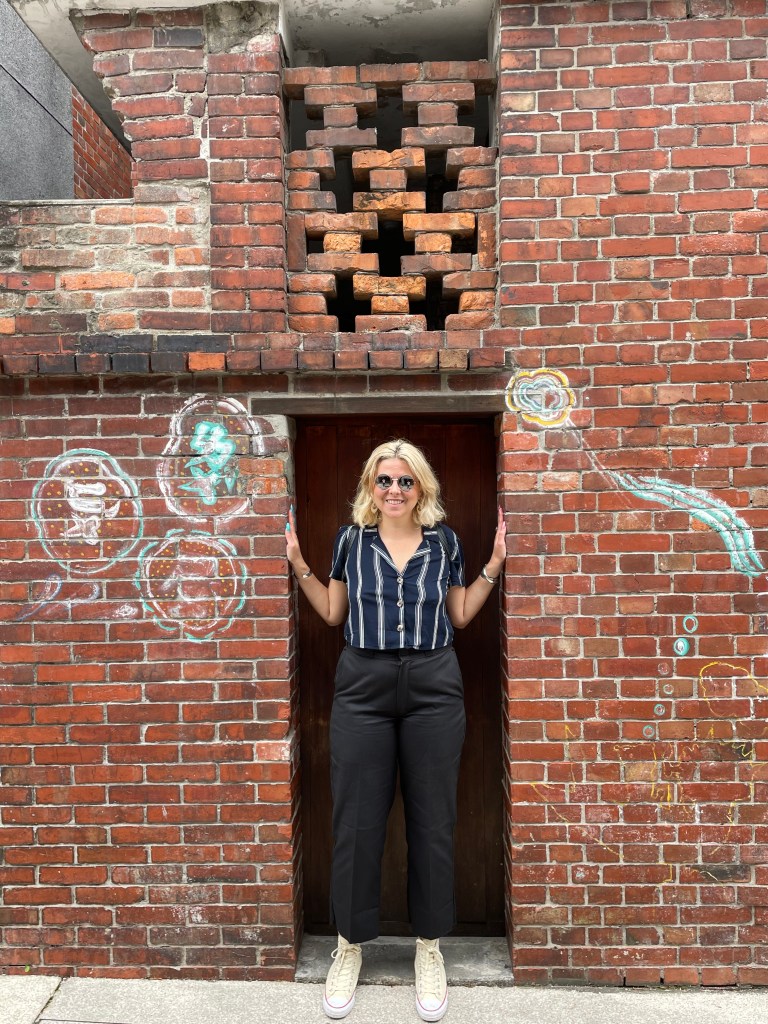
We closed our historic city sightseeing (all of which was conveniently located in the nearby Wanhua District) with a trip to the Bopiliao Historic Block. Dating back to 1644, this block was literally the beginnings of what would become Taipei. In present day, its buildings are not only preserved to represent the stylings of Taipei’s past, but function as shops, museums, and cultural centers. One of the coolest facts we learned over the entire trip was that this block had historically served as a first-aid station during periods of war or epidemic and had reprised that role during the Covid-19 pandemic helping Taiwan have one of the lowest Covid-19 transmission rates in the entire world.

2pm
Time for a food break. For lunch, we headed to the Taipei Fish Market to check out the array of catches and eat some spectacularly fresh sushi at Addiction Aquatic. Not only would it turn out to be Gioia’s favorite meal of the day (impressive considering we had an 8-course, Michelin star-rated meal on deck), but it’d be her activity maybe of our entire trip. I realize we’re only halfway through day two of this trip and we’ve already covered both mine and Gioia’s favorite meals, but I promise there is plenty of amazing food still ahead! Those first 30ish hours in Taiwan just happened to be otherworldly.

3pm
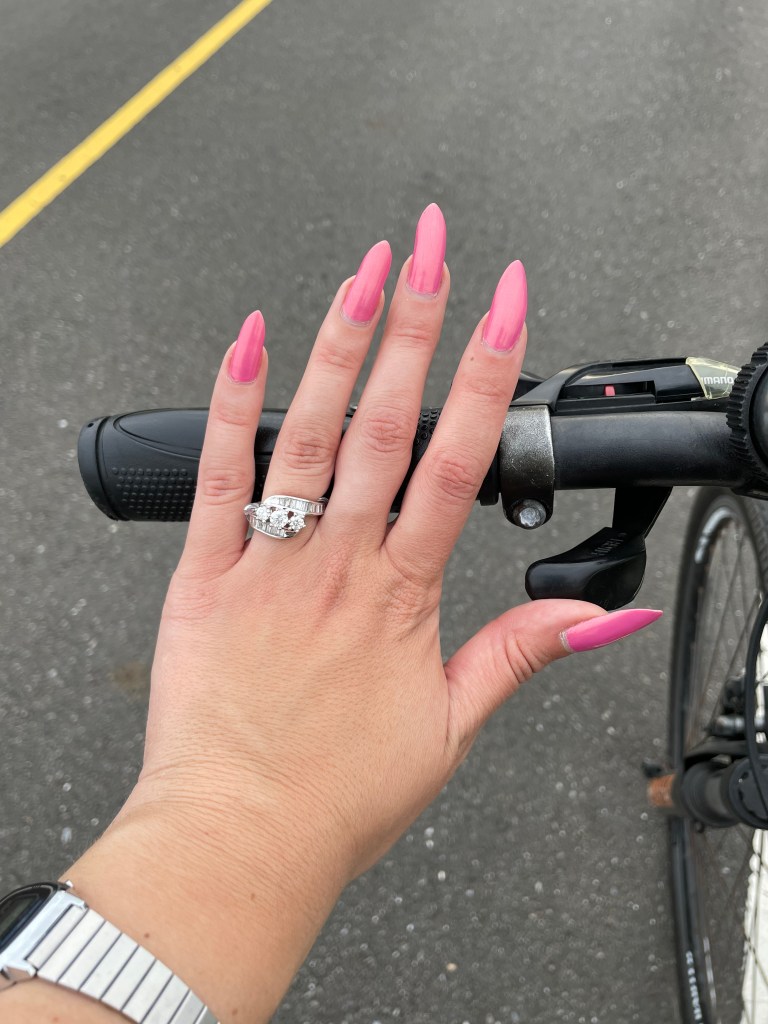
If you’re ever stuck on an idea, let me tell you this, a pile of sushi and a couple beers is great for inspiration. Suddenly it hit me. We happened to be fairly close to the Keelung River, I knew there was a park and a trail along the water, why not rent bikes for a romantic river ride. What can I say? Sometimes things just go according to plan. We found a bike rental place, burned off some sushi, saw some stunning views, and when I pretended that I needed to stop and got off my bike, I asked Gioia to marry me and she said yes. If I made one mistake, it was not taking any pictures of the beautiful skylines we could see from the trail. I can live with that.

7pm
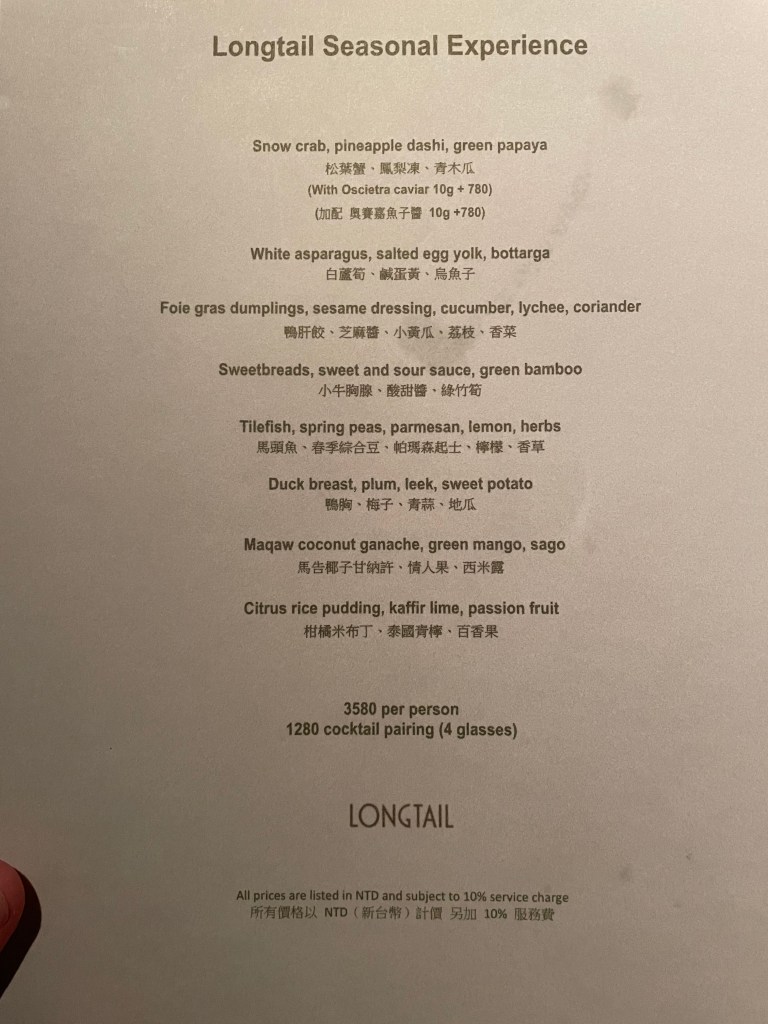
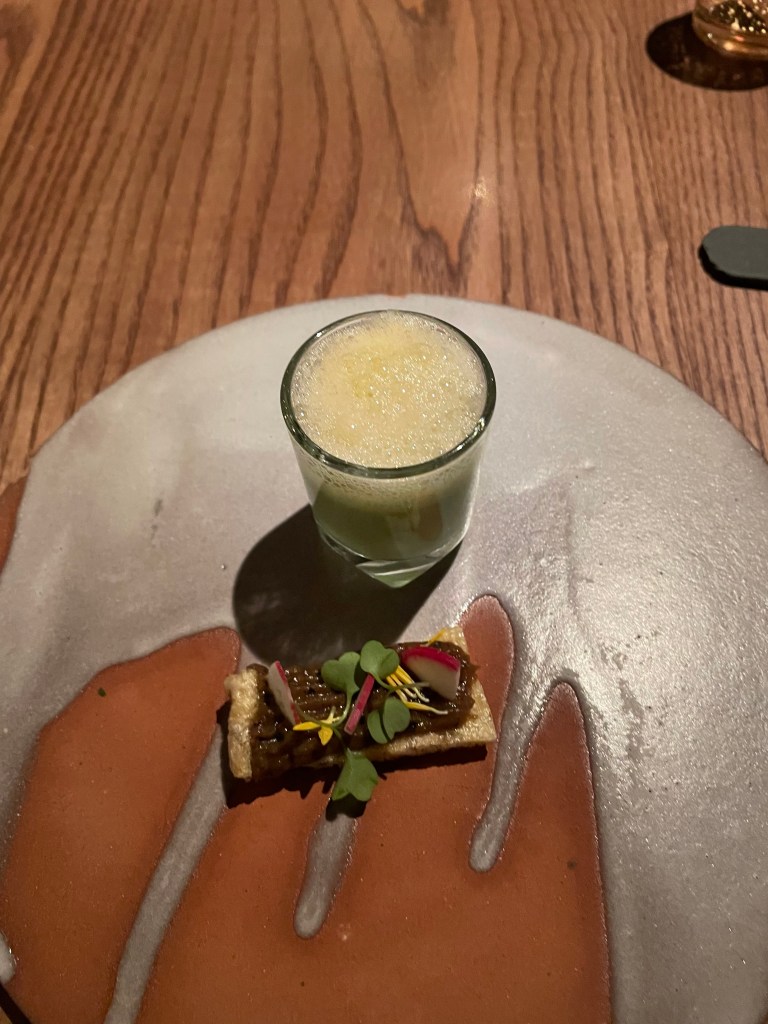
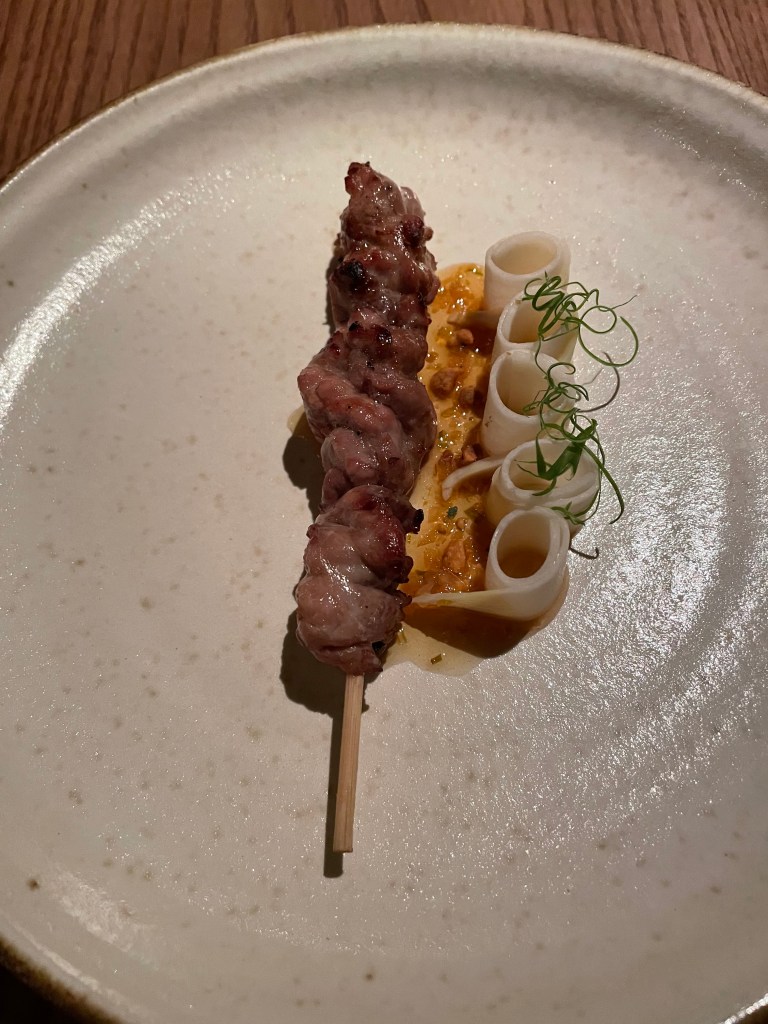
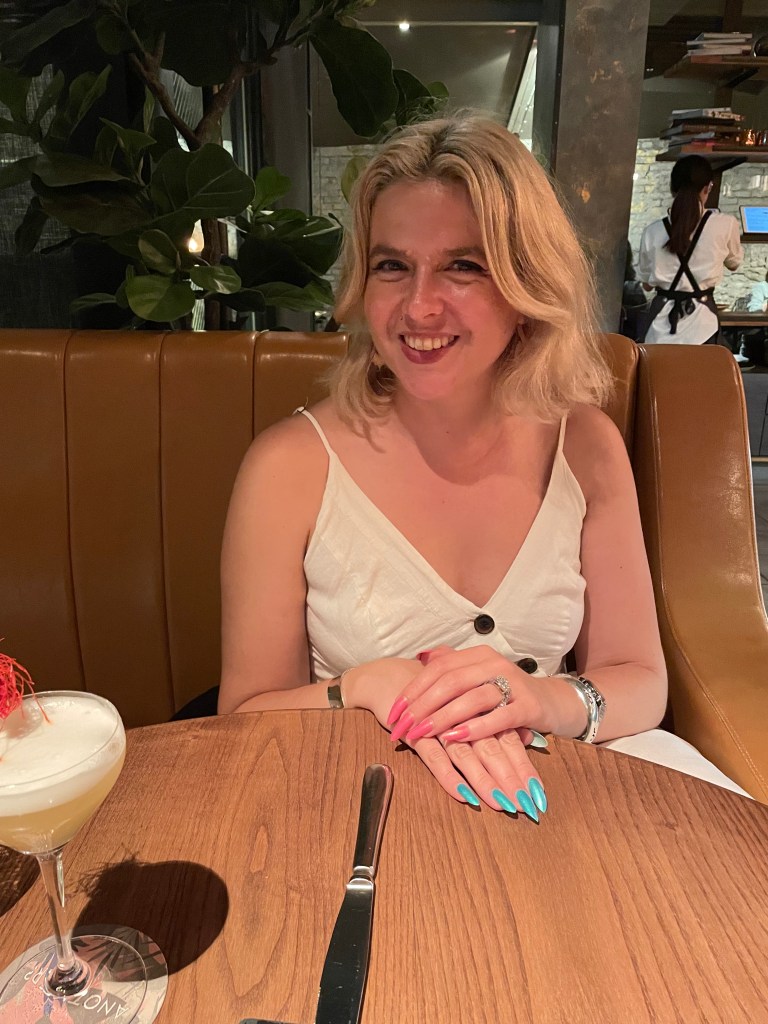
Another reason for proposing when I did was because that night we had reservations for Longtail Restaurant, a Michelin-star rated restaurant with a seasonal menu that specializes in fabulous dishes representing the local food offerings paired with unique cocktails. I managed to capture the menu and most of the courses (my memory is a bit fuzzy as my dinner package included four different cocktails).

11pm
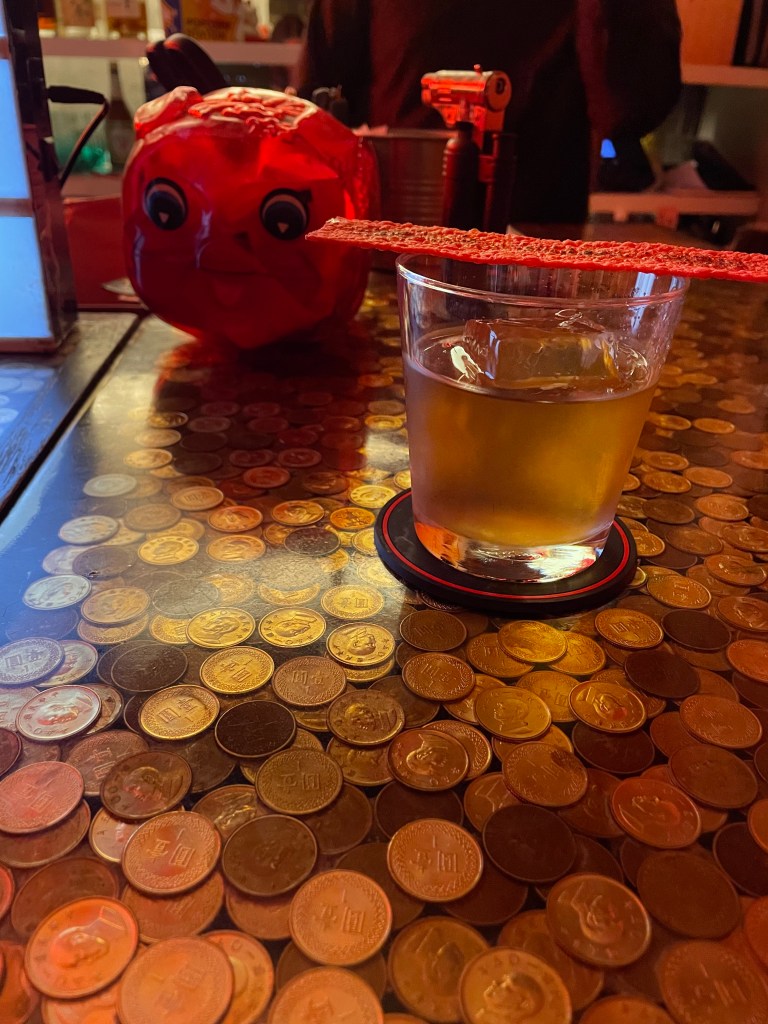
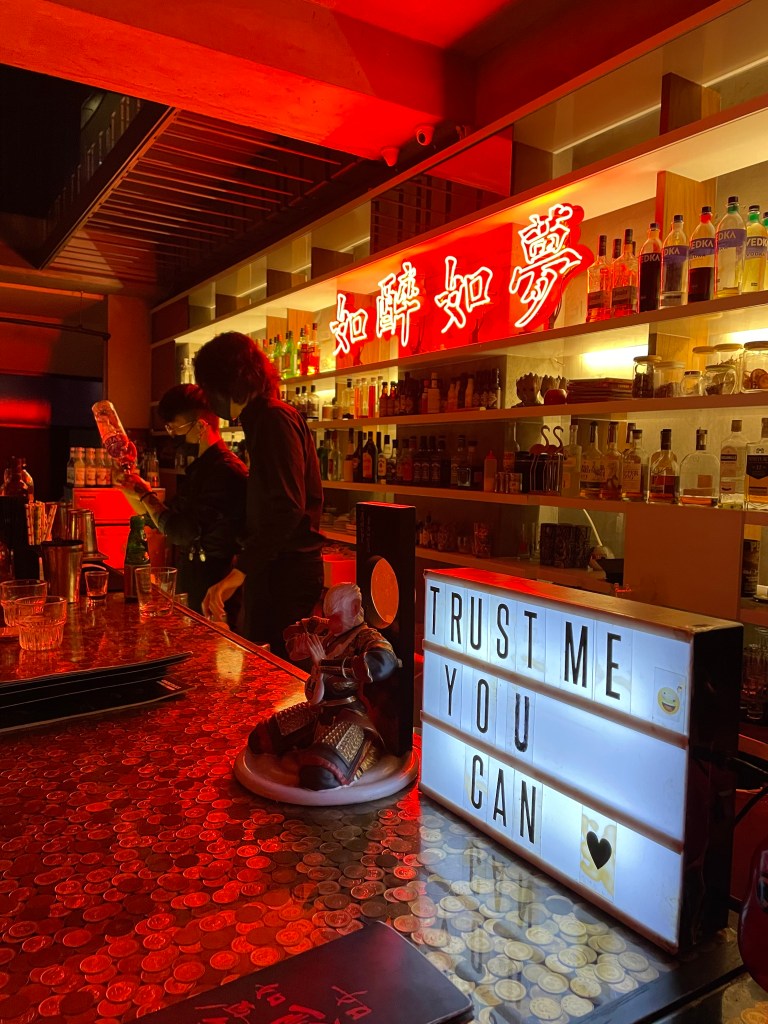
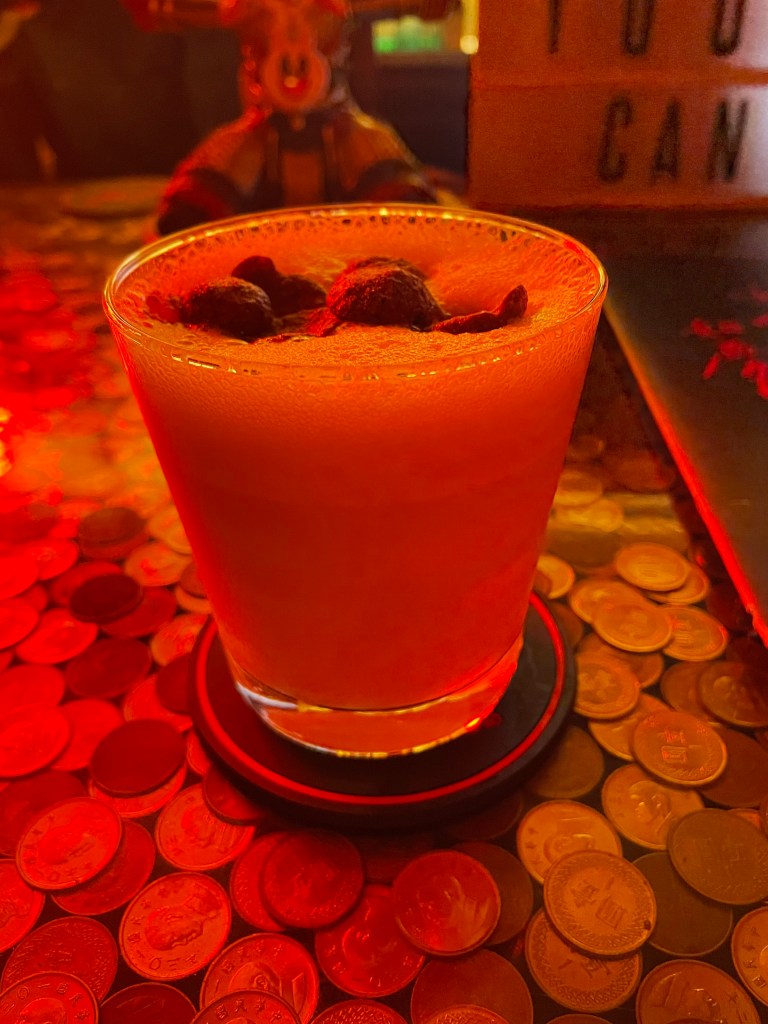
Sure! We may have had two of the best meals of our lives, gotten engaged, and had about 8-10 drinks already, but it was a night to celebrate! We made our way back to our neighborhood and checked out Hanko 60, a speakeasy disguised as a movie theater featuring some of the most elaborate and cleverly-disguised cocktails I’ve ever seen. It was the perfect end to the perfect day.

Day One: Chicago to Taipei

Tuesday 4/25 (12:30am CST) – Wednesday 4/26 (5:30am GMT+8)
Here is some free advice should you ever find yourself preparing for a 15.5-hour flight:

1. Anticipate that the restaurants in O’Hare’s International Terminal may not in fact keep international hours so by the time you get to the airport most food options could be closed. So much for that nutritious pre-flight dinner.

2. Don’t take the window seat if you’re somebody who has to go to the bathroom every hour (or like five times before you can finally go to sleep). Luckily, our aisle-mate literally played angry birds for the entire flight so I felt less bad about continually interrupting him to get out.

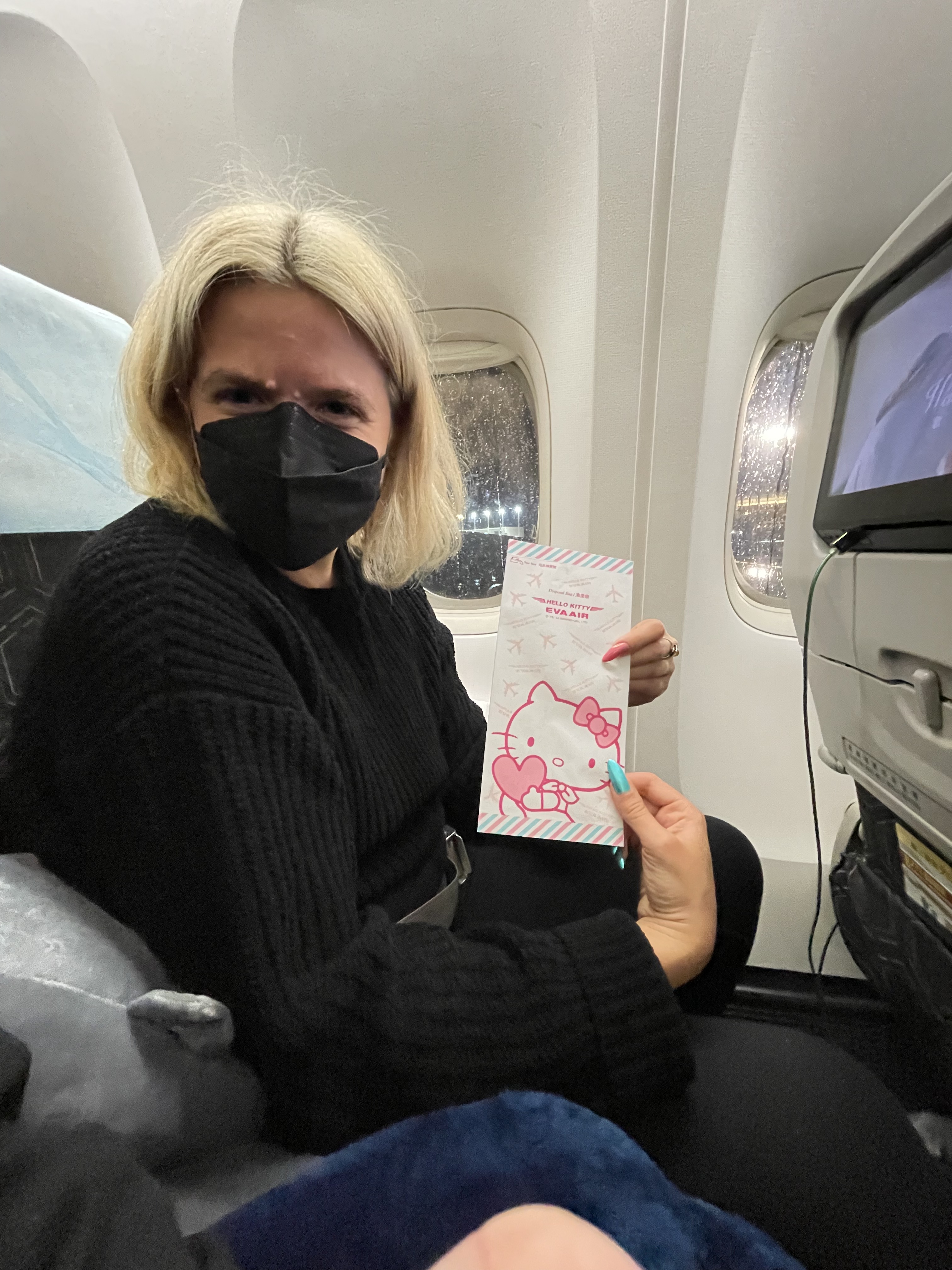
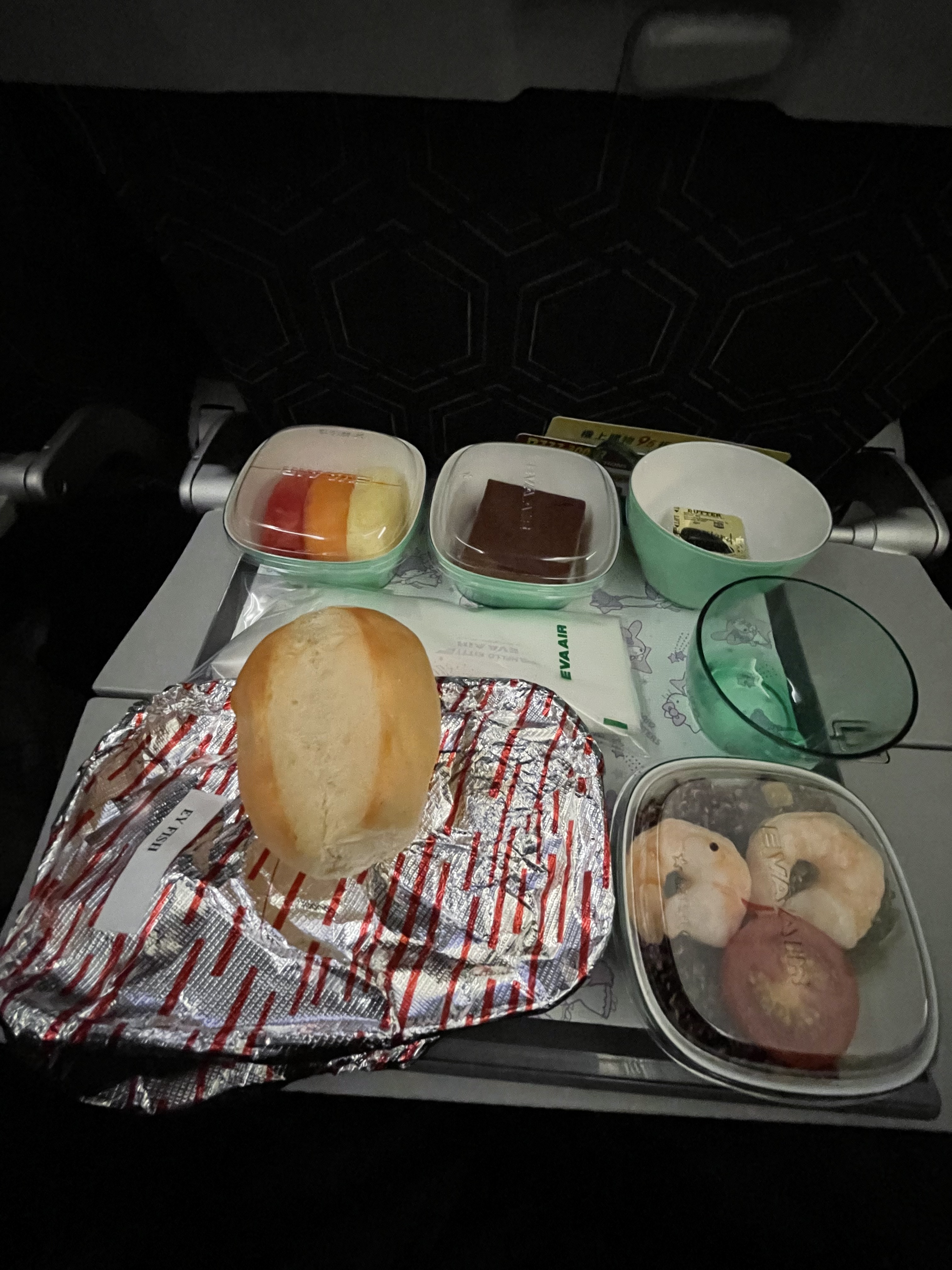
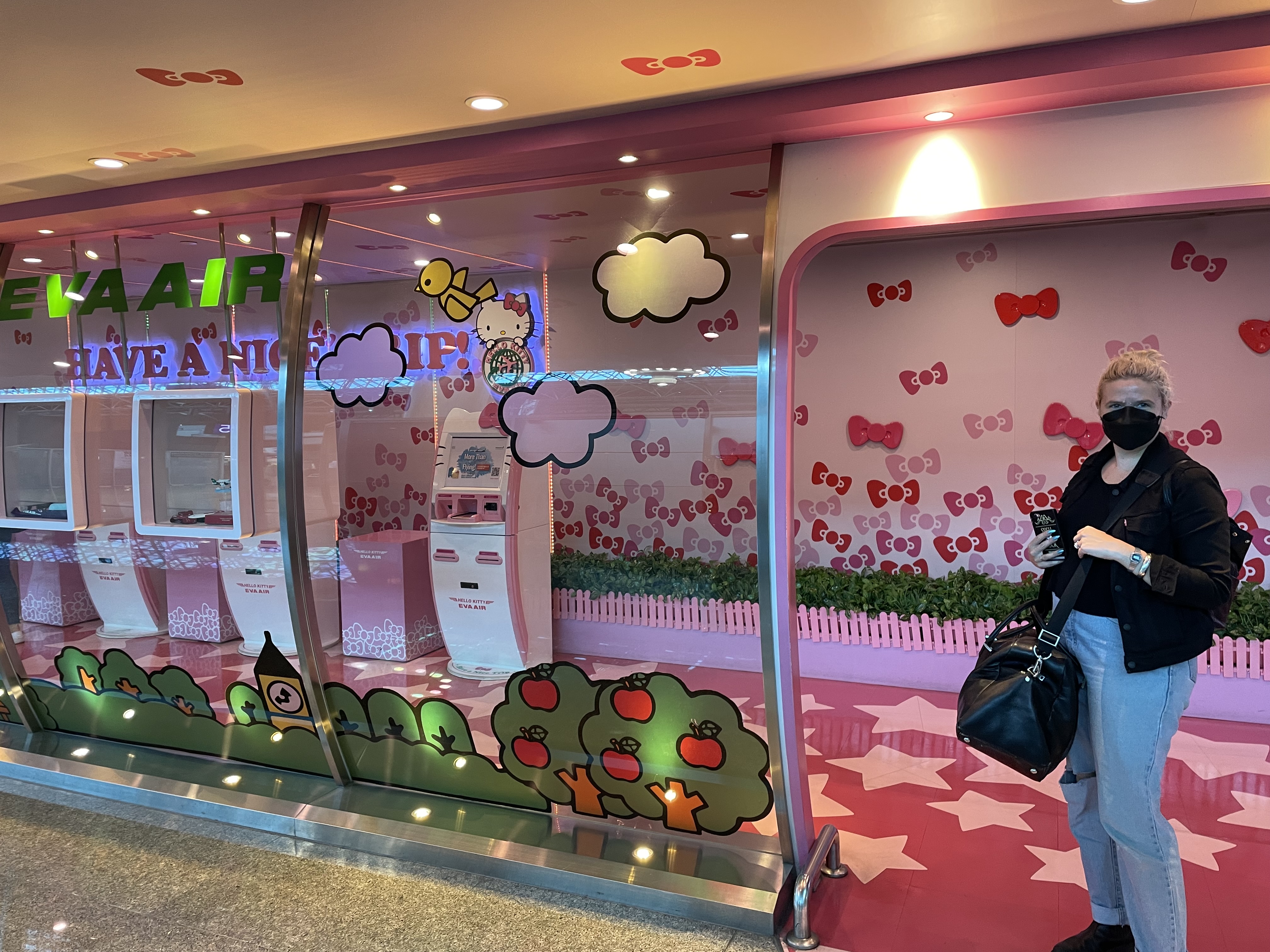
3. The seafood stew on EVA Airlines is surprisingly tasty! Doesn’t hurt either when your airline, and all its utensils, are Hello Kitty themed.

Wednesday 4/26 (5:30am)
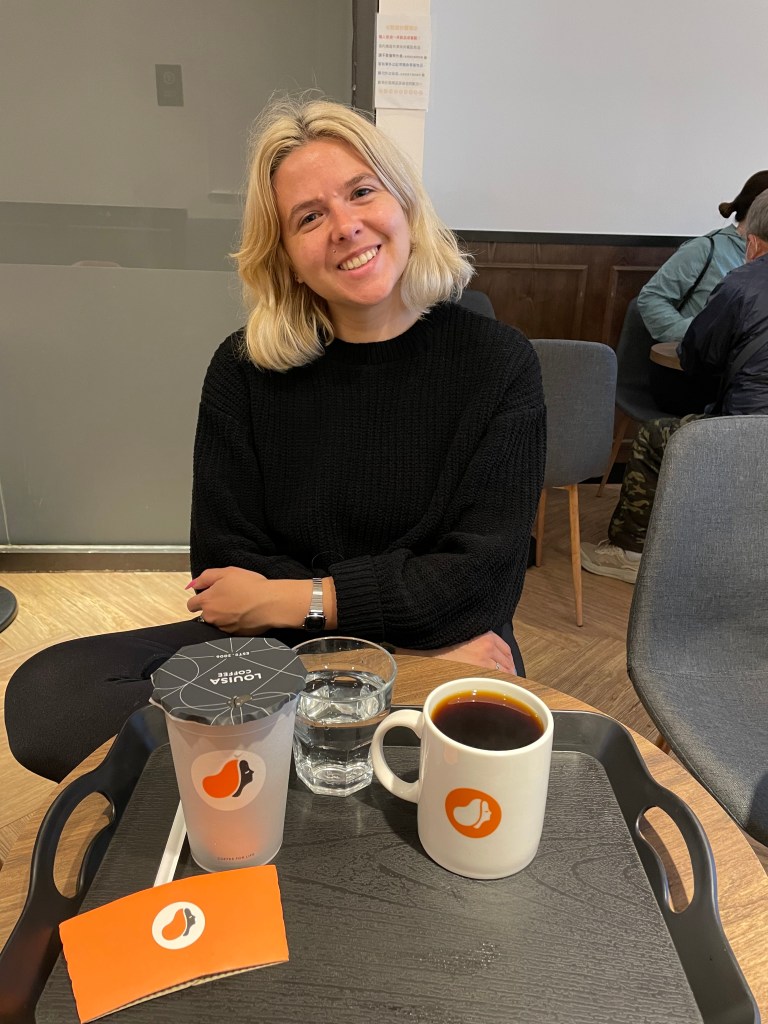
Supposedly the trick to beating jet lag is getting on your destination’s clock as soon as possible. For us, that meant staying awake for quite a while because by the time we landed it was already 5:30am the next morning. In actuality, we couldn’t have slept even if we had wanted to as our hotel check-in wasn’t until the afternoon. As such, our first stop after journeying from airport to city and dropping off our luggage was Louisa Coffee, a local shop with delicious pourovers and pastries that would become a staple for the rest of our stay.

Photogenic even after a 20ish-hour journey!

9:30am
With coffee in our system, it was time to venture out and get a proper breakfast and so we made our way to Fuhang Soy Milk, perhaps the least pretentious Michelin Star-rated restaurant in the world. The famous breakfast here is essentially a fried dough crawler that you dip into hot soy milk (flavored savory or sweet). I was just a little skeptical of having to to survive a 30+ hour day with only a donut in my system and so I attempted to order something a bit more substantial. I ordered badly. What I wanted was the donut and soy milk combo plus an egg and cheese breakfast sandwich. What I got was the donut and soy milk combo plus a breakfast sandwich in which the bread was fried dough and the filling was also fried dough. No wonder everyone was so confused by my order. Still quite tasty.

BB5A9E82-9CD7-46AD-A7CE-5E9D84A35634IMG_4074
Pretty impressed this is still in focus given the copious amounts of caffeine and sugar in my bloodstream at the time

10:30am
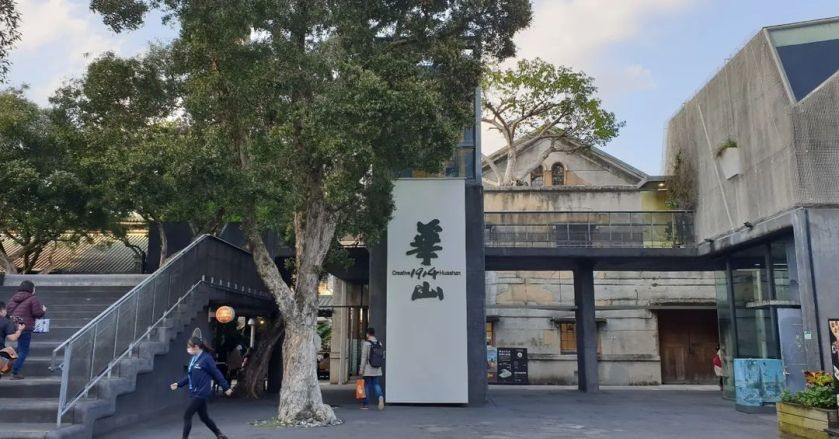
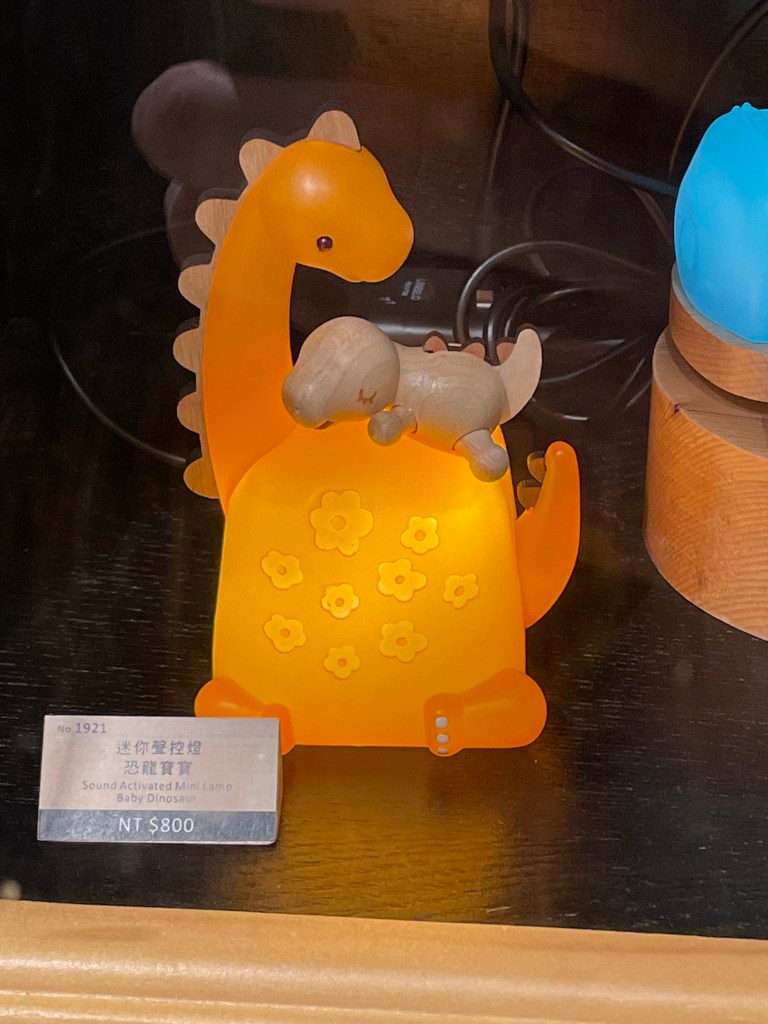
From Fuhang’s we bopped over to the Huashan 1914 Creative Park, a string of shops, galleries, and green space set in and around a historic building (formerly a wine and sake distillery). My favorite of the businesses was Wonderful Life, a shop specializing in tiny woodwork figurines. We also popped into Le Ballon Rouge as I was curious if the bookstore’s name was connected to the film of the same name by legendary Taiwanese filmmaker, Hou-Hsiao Hsien. Indeed it was! The owner turned out to be good friends with the filmmaker and had named the shop after his favorite of Hou’s works.

1:00pm
Speaking of Taiwanese cinema, it was now time for some movie-based sightseeing! Here, I must acknowledge Taiwan’s New Cinema Movement as the root of my entire fascination with, and love for, Taiwan.

As much as I am a fan of this movement, I can’t say I’m the most qualified to give background on it, let alone the inextricable context of 20th Century Taiwanese history. Still, I’ll try my best. To keep it short, Taiwanese New Cinema was a movement born as a result of the ruling government’s 38-year period of Martial Law coming to an end in the 1980s. As a result, filmmakers were finally able to make films free of the strict censorship laws that had been enforced on citizens over this time (including a ban on acknowledging brutal periods of recent history such as the White Terror in which tens of thousands of Taiwanese citizens were killed and hundreds of thousands were imprisoned as a result of real or perceived opposition to the KMT’s military takeover of the country). With these new artistic and personal freedoms came an explosion of brilliant Taiwanese films and filmmakers that not only captivated the country but burst into the international spotlight. For my part, I couldn’t recommend exploring these films more highly. For starting points, I’d recommend Edward Yang’s A Brighter Summer Day as well as Hou-Hsiao Hsien’s A City of Sadness.

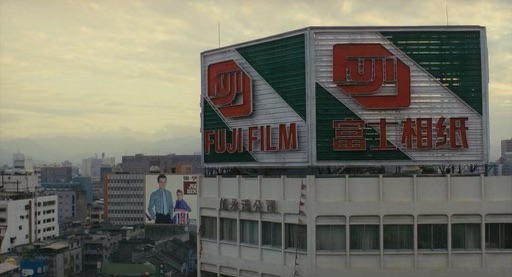
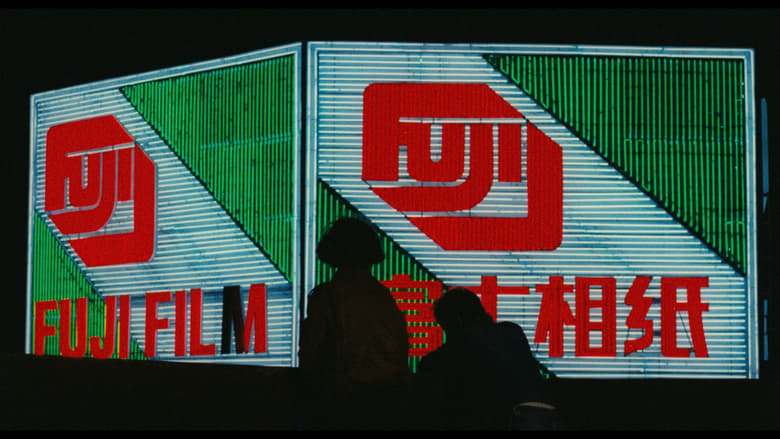
Where was I? Oh yes, movie sightseeing! Before the trip, I had used the great Filmap to scout out some locations from my favorite Taiwanese films. First up was a building featured prominently in Edward Yang’s masterful, Taipei Story. Sadly, the Fuji Film sign was gone, but I was delighted nonetheless.

2:00pm

From the former Fuji Film Sign Building, we wandered over to Taipei’s North City Gate. Built in 1884, this is the last remaining of the city’s five gates that were established during the Qing dynasty in which Taipei was completely walled-in. Today, the gate sits at the center of busy intersection, one of the many spots all over the city where past and present collide.
3:00pm
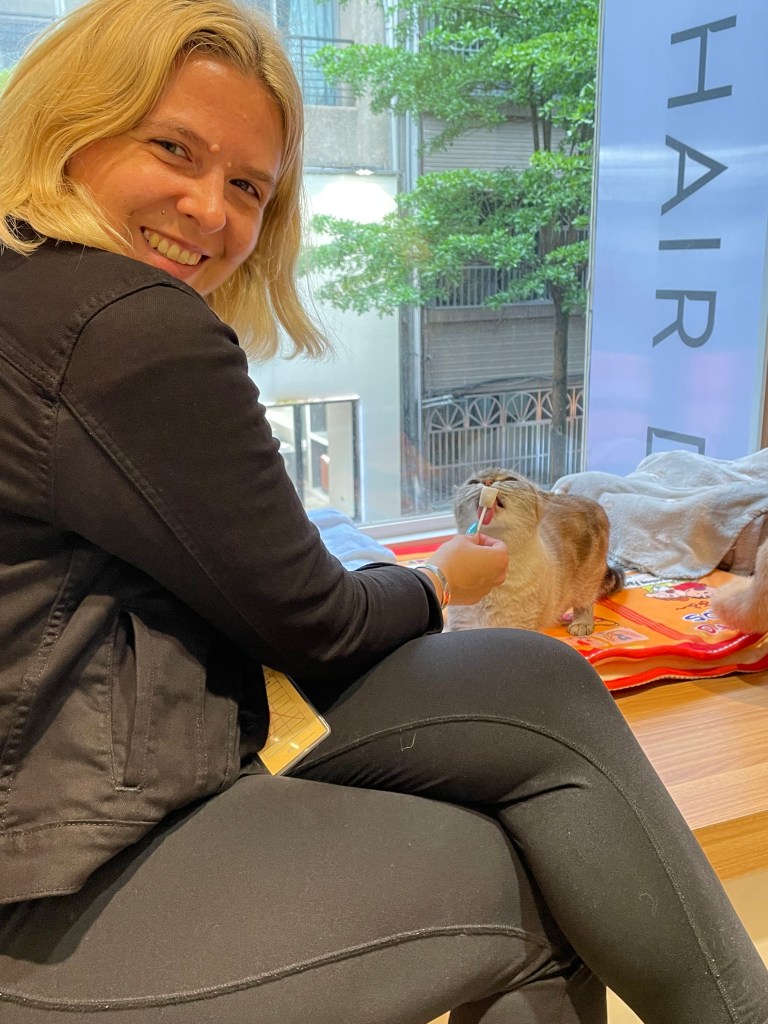
After long last, it was time for us to check into our hotel. You’d think that after 40ish hours of not seeing a bed, we’d be more than ready to hunker down. That may have been the case but as fate would have it, we passed a cat cafe on our way back and couldn’t resist checking it out. For those unfamiliar with the popular Asia attraction, it’s basically what it sounds like. You pay for a coffee or tea and enjoy it in the company of some pretty neat cats. My favorite was a hairless little freak who I was able to entice with the help of a frozen fish lollipop (yum!).

5:00pm
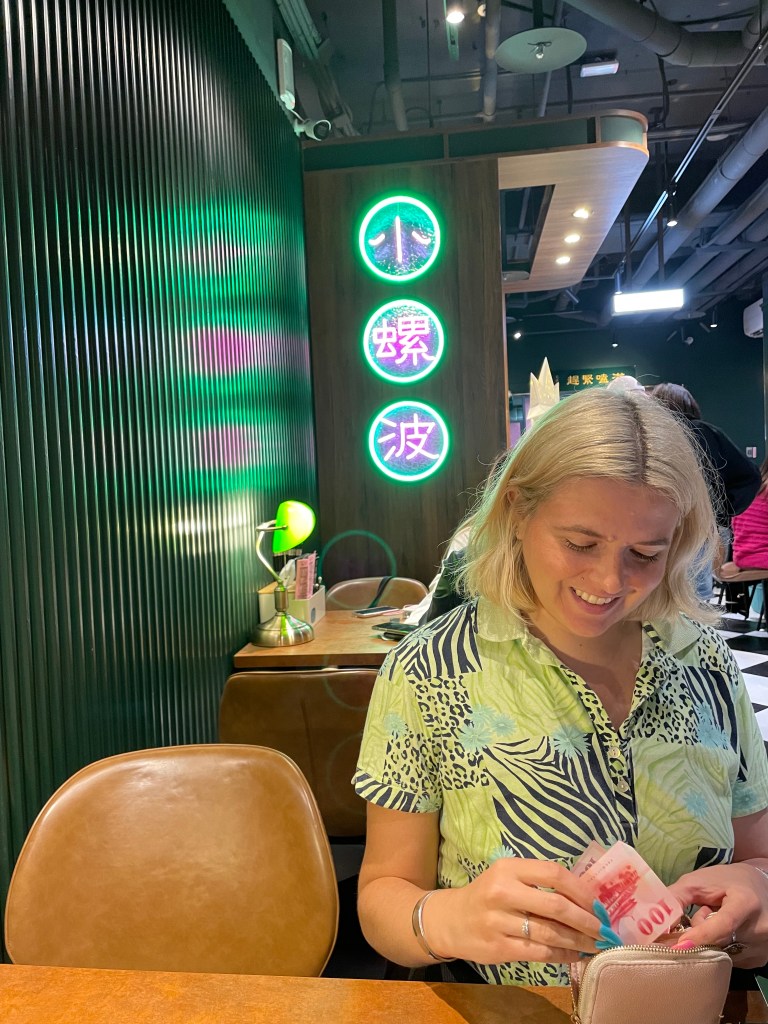
Now it time for us to return to the hotel. We checked in, washed the accumulated grime of Chicago, EVA Airways, and Taipei from our bodies, managed to resist the urge to sleep, and set out for dinner. As it turned out, I was in store for my favorite meal of the entire trip and quite possibly my entire life. The place was Xiao Luo Bo, a spot specializing in spicy soups with a particular focus on their signature Snail Noodles, described via their menu:


Luosi (river snails) Rice Noodles (luosifen) is a Chinese noodle dish and a specialty of the city of Liuzhou, in Guangxi, southern China. The dish consists of rice noodles boiled and served in a soup. The ingredients of the Luosi broth are local river snails, along with pork bones and mixed spice. After simmering for hours, the Luosi broth tastes savory and meaty, being surprisingly delicious.

Usually, Luosi Rice Noodles are served with fermented bamboo shoots, beans, fungus, peanuts, fried yuba, quail eggs, and fresh vegetables. It is a mouth-watering dish with rich and tangy taste which you should try at least once in your life!

It was here that I also learned the Taiwanese are much more sparing in their use of napkins than Americans, which proved problematic as the soup immediately made my nose and eyes run like a faucet. Alas, these are trivial problems to face when you’re in a state of pure, sleepy, culinary bliss.

9:00 pm
Juiced up from the city and the best soup of our young lives, we caught what must have been the 6th or 7th wind of our day and grabbed a pint at the local bar. Somewhere along the way, probably as I regaled the local bartender with long-winded explanations of how movies brought me all the way to Taipei from Chicago, Gioia fell asleep right at the bar and it was time to officially call it on a day that spanned two continents and about 50 hours. I wouldn’t have had it any other way.

2024 Movie Log: March

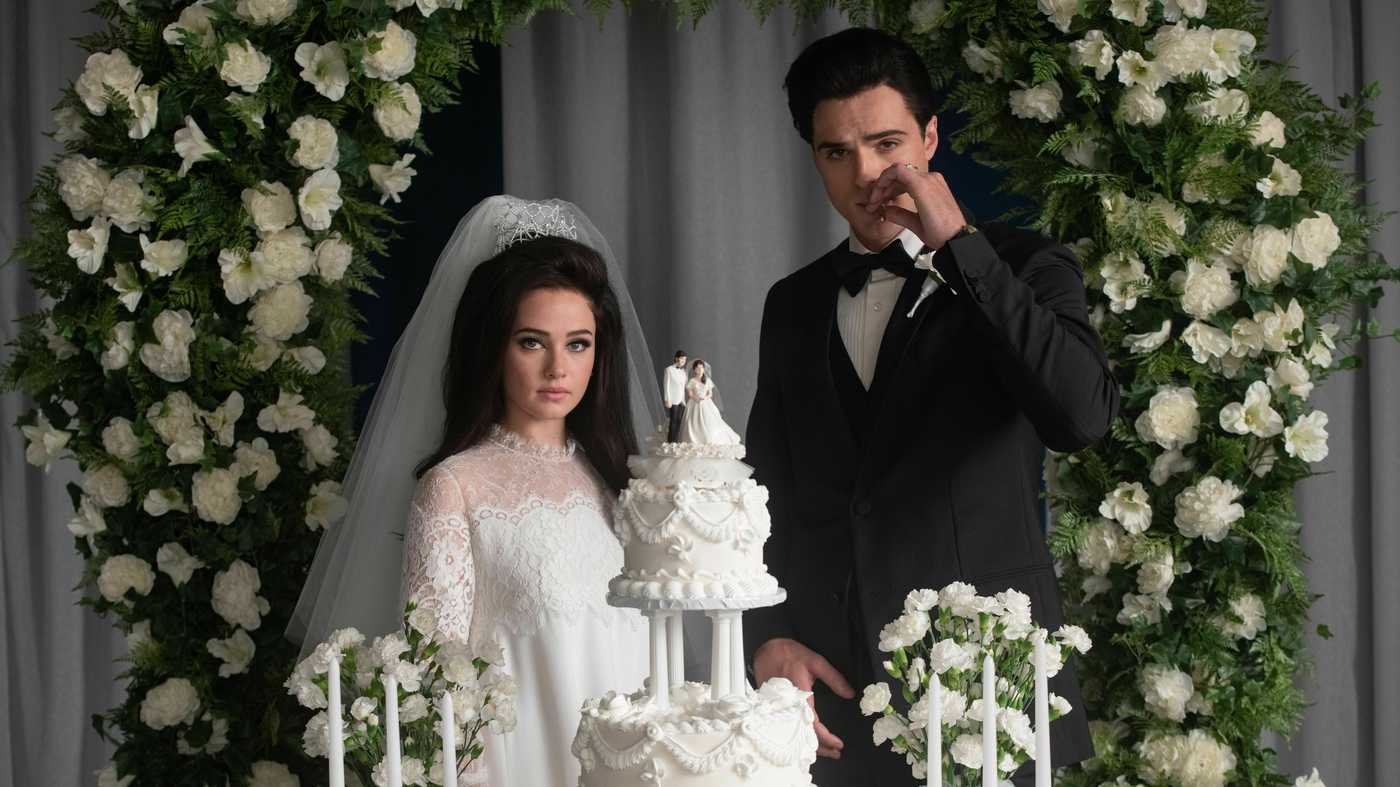
priscilla

3rd: Priscilla – Sofia Coppola (2023)
Feels like we’ve gotten to this strange place where Coppola’s influence is more prominent than ever and yet her own films are kind of flying under the radar? To some extent, that just might be the Apple TV of it all. But genuinely think this is one of her best features in a while and deserves to be seen.
Grade: A-

3rd: Elvis – Baz Luhrmann (2022)
Normally I only log movies I finish but the first ten minutes of this told me everything I needed to know
Grade: F

9th: Cute Girl (Lovable You) – Hou Hsiao-Hsien (1980)
The Alien 3 of Hou Hsiao-Hsien’s career?
Grade: C+

10th: The Green, Green Grass of Home – Hou Hsiao-Hsien (1982)
This is not that far removed (in both time and structure) to “Cute Girl” and yet Hou ups his game in every way. It still has some elements of a fun, rompy made-for-tv movie, but there’s an eye for beauty and detail that makes it irresistible. One of my absolute favorites so far.
Grade: A

10th: Fallen Angels – Wong Kar Wai (1995)
I just found out that Wong Kar Wai’s latest work is a 30-part Chinese miniseries and my impulse is to try and figure out a way to watch it, all while I own a lovely boxset of his work with films I haven’t even seen before. I’m a fool!
Grade: A-

15th: Down Terrace – Ben Wheatley (2009)
I remembered this as a comedy and in some parts I’m not sure that it isn’t.
Grade: B+

15th: Anyone But You – Will Gluck (2023)
Grade: C-

17th: Widows – Steve McQueen (2018)
One of the best Chicago movies ever imo
Grade: A-

22nd: Once Upon a Time in America – Sergio Leone (1984)
Seems like I have a thing for four hour, dreamy, historical, gangster epics 🤔
Grade: A-

23rd: A Fistful of Dollars – Sergio Leone (1964)
When Tom Petty invited The Replacements to tour with him they apparently kept telling him they loved his song “Running Down the Drain” and if I ever meet Clint Eastwood I’ll tell him I love your film “A Fistful of Ball Hairs”
Grade: B+

23rd: For a Few Dollars More – Sergio Leone (1965)
I know I’m way late to the game, but these films absolutely rip. What a delight to find something you like way more than you would have thought
Grade: A-

24th: Daughter of the Nile – Hou Hsiao-Hsien (1987)
Can tell this is a film right in the middle of Hsiao-Hsien’s career. Still has some of the family/slice of life dna of his early features but with a wider scope and really ambitious cinematography.
Grade: B

29th: Café Lumière – Hou Hsiao-Hsien (2003)
Have not watched enough Ozu to judge this based on being an homage to Ozu (which it is). But I sure do like Hou and trains and Tokyo 🙂
Grade: B-

2024 Movie Log: February

dune part 2
Dune: Part Two – Denis Villeneuve (2024)

2nd: Saltburn – Emerald Fennel (2023)
In the twist nobody saw coming, I’m totally behind this movie. Had a blast and have since listened to “Murder on the Dancefloor” approx. 200 times.
Grade: B+

3rd & 4th: Berlin Alexanderplatz – Rainer Werner Fassbinder (1980)
See February’s Featured Review!
Grade: A

13th: The Godfather: Part III – Francis Ford Coppola (1990)
I had gone into this thinking I might be pleasantly surprised based on the film’s poor reputation. Instead, I had the opposite reaction. The film’s certainly not a disaster by any means but I’m finding that nothing really works for me across the entire film.
Grade: C-

13th: Sunset Boulevard – Billy Wilder (1950)
Love a movie about the movies. This is seriously so good, I’m ashamed it had been stuck on my watchlist for so long. The Gloria Swanson performance is an all-timer.
Grade: A-

13th: Some Like it Hot – Billy Wilder (1959)
This movie is 65 years old and is as funny as anything that’s come out in that time. One of my favorite watches ever.
Grade: A

14th: Erin Brockovich – Steven Soderbergh (2000)
A really successful and largely (by Soderbergh’s standards at least) traditional movie. Not breaking any news here, but Julia Roberts is really incredible. I love her being the lone star/main character and Soderbergh setting up a film to take advantage of that. Just really efficient storytelling.
Grade: B+

14th: The Night of the Hunter – Charles Laughton (1955)
Goddamn. There are shots in here that are as good as anything you’ll ever see in a movie. I wonder how many villains since this film have drawn something from Mitchum’s portrayal here. Just absolutely magnetic and terrifying at the same time.
Grade: B+

14th: Double Indemnity – Billy Wilder (1944)
Getting to the point where I’m just going to have to watch all of Billy Wilder’s films over the next month. He’s so masterful in creating, playing, and paying off suspense in his movies. I do have a note for Walter Neff which is that if you are trying to make it to Mexico before you bleed out, I would maybe wait on making your long-winded confession till you get there. Just a thought!
Grade: A-

14th: Chungking Express – Wong Kar Wai (1994)
Watched this circa 2017 when I was a newbie to world and art cinema. At the time I was confused, in awe, and even a bit frustrated by something that was so totally unique and uncompromising in its identity. Since then I’ve watched a lot more movies and really the only thing that’s changed in my reaction to rewatching Chungking is a total absence of frustration. I think as you see more movies, you learn to be comfortable not knowing what everything means or how it works as well as to appreciate the films that are so totally different from everything else.
Grade: A

15th: Dune – Denis Villeneuve (2021)
The first two hours of this movie are perfect and as good as any fantasy/sci-fi film ever. Think that momentum wanes a bit in the final 30 minutes, but nonetheless, a marvelous adaption of a novel I don’t even like.
Grade: A-

16th: Four Falls of Buffalo – Ken Rodgers (2015)
This really isn’t a very interesting or insightful documentary given the subject matter. Kind of surprised in fact that this isn’t better.
Grade: C-

16th: The Apartment – Billy Wilder (1960)
A perfect film. In awe of how Billy Wilder and Jack Lemmon thread the needle between comedy and drama. And of course, Shirley MacLaine is so captivating in her role. An absolute masterpiece.
Grade: A

16th: The Holdovers – Alexander Payne (2023)
Far and away the best thing Alexander Payne has done. A couple spots where maybe you can bump against the story being a bit traditional, but all in all, just a tremendously written, cast, and executed story. Maybe my favorite of 2023?
Grade: A-

19th: Sherlock, Jr. – Buster Keaton (1924)
I spent this entire movie trying to figure out how Keaton pulled off these scenes and for the most part I have no answers. 100 years old and really holds up.
Grade: B+

22nd: Imitation of Life – Douglas Sirk (1959)
There is a lot going on in this movie from a plot and production standpoint that I am in no way qualified to discuss (though would love to read more). If one can assume the film acts in good faith and any questionable decisions come from the time in which it was made (which I think this is the case), this is a tremendous film and maybe the finest melodrama I’ve seen. I think what I admire most about the film is how it balances these grandiose moments with huge production value (the broadway shows, the costumes, the funeral) while still feeling as earnest and devastating as an intimate character study.
Grade: A

25th: Once Upon a Time in the West – Sergio Leone (1968)
My only regret is not seeing this sooner or in a theater. Please Music Box, add this to your Morricone retrospective! There’s so much to admire from a production standpoint that I could spend my entire review on that alone. The scale, size, and ambition of it is amazing. A true, “this is why we love movies” movie. Also really rewarding to watch after seeing these shots and music cues replicated in a million homages and parodies. But if I had to close with one thought it’s that I think the pacing and plot of this movie is really ambitious and masterfully done. Maybe the best thing the film does is trust its audience to stay engaged and wait for the payoffs to all these questions that aren’t clear at first.
Grade: A

29th: Dune: Part Two – Denis Villeneuve (2024)
I was very tired and this movie is long and I was way too close to the screen and still, I’m totally blown away. I think this is best big budget Sci-Fi/Fantasy project since Peter Jackson’s Lord of the Rings. Like those films, the scope, ambition, and execution of this film is awe-inspiring and totally unique. There is so much here that I’ve never seen before and can’t even fathom how it was made. I’m really not trying to be hyperbolic but it’s just rare I am this excited by a contemporary film. Last time was probably Parasite. I truly believe when the next wave of “Greatest films” polls and lists come out this will and should be on it. And for anybody reading this that’s like “yeah, yeah, yeah, whatever, Sam, what a rube,” I do not even fucking like Dune as a book so take that!

Grade: A

2024 Reading Log

February

To Paradise

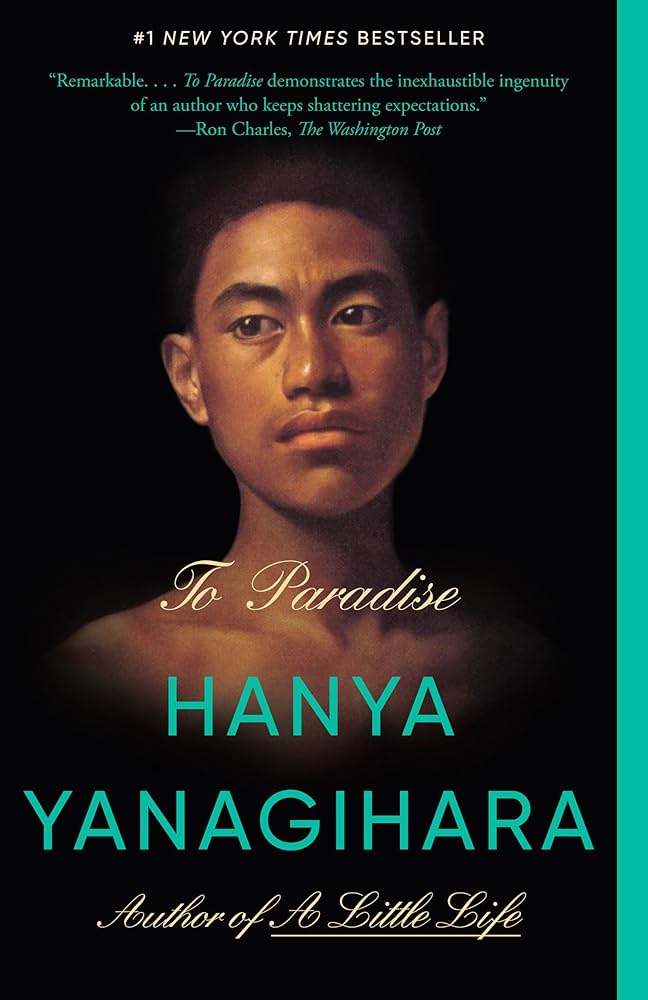
To Paradise – Hanya Yanagihara (2022)
I like this book and its enormous ambition and Yanagihara’s writing more than I think it all totally works. From what I’ve read, this novel started out as three separate ideas that Yanagihara then turned into the three composite parts of the novel. While I like the interconnectedness of the book, I think I would have preferred a full novel of each section instead.

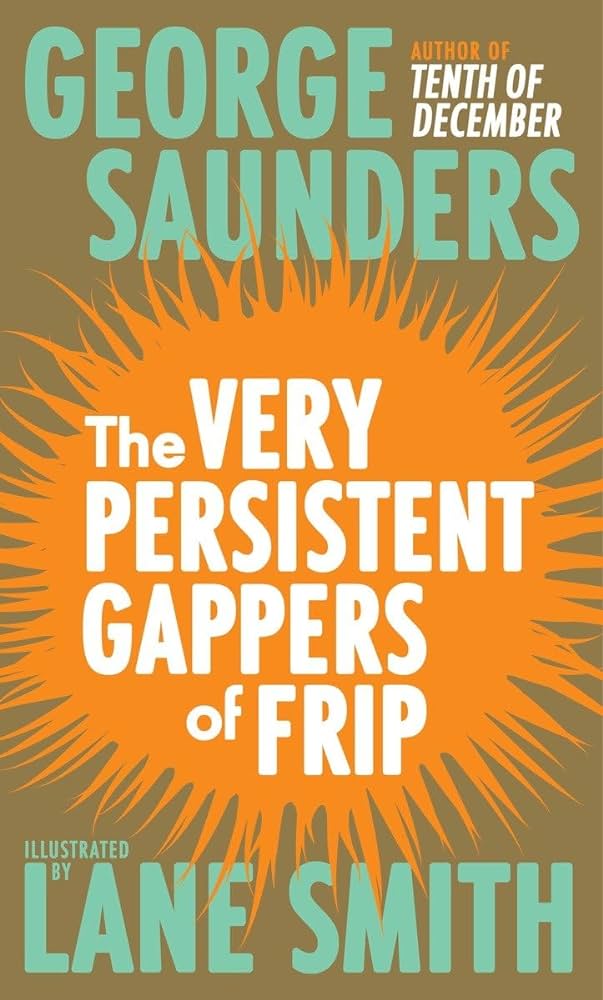
The Very Persistent Gappers of Frip – George Saunders (2000) 
This is a short story with wonderful illustrations that I believe was intended as a children’s book? I loved it as I do almost any George Saunders work. I am also not the intended audience (a child) so take it all with a grain of salt. 

March

71ghfhh0mrl._ac_uf10001000_ql80_

CivilWarLand in Bad Decline – George Saunders (1996)
This was a fascinating exercise in exploring my favorite author. CivilWarLand is Saunders’ first collection and while I mostly liked it, it certainly isn’t the same voice I’ve grown to love and admire. Here, Saunders is meaner and far more cynical. In fact, the trait I typically love most about a Saunders story is the almost uncrushable optimism in the face of great hardship and perversity. In this collection you have those same elements but that stray bit of optimism always seems to get crushed. Still, while I wouldn’t recommend this as a starting place for Saunders, it’s more than worthwhile for any of his fans.
September

War and Peace – Leo Tolstoy (1867)

Time and Place: Berlin Alexanderplatz

berlin alexanderplatz

February’s featured review details the metaphorical and literal numbing that comes from watching a fifteen-hour film in one weekend

About eight years ago, the confidence I had in my artistic sensibility was briefly rocked by a pretty obvious revelation. As I defended the merits of Infinite Jest as a great novel (this was 2016 Sam after all), my friend asked whether IJ was truly the best novel I had read or simply the largest. After all, he wisely pointed out, you’re inevitably more interested in a work being great when you’ve invested so much of your own time and energy into it. At the time I had not considered this idea and so that version of me would have been horrified to learn that my favorite novel has continued to be whatever stands as the largest work I have most recently consumed (from present to past, In Search of Lost TimeGravity’s RainbowInfinite JestUlyssesLord of the RingsHarry Potter, and so on).

It’s here I should also note that my favorite film, A Brighter Summer Day, also happens to be just about the longest non-episodic film I’ve seen. Thankfully, the me of today is not only at peace with this notion but even proud of it. It’s not that I simply love long works of art because I happen to be more invested in them. I love these long works precisely because I am more invested in them. The epiphanies, catharses, and even satisfactions one gets at the end of an In Search of Lost Time or A Brighter Summer Day are only made possible with the requisite amount of time that the piece requires you to spend with it. In many cases, this can be most easily seen cyclically. We see a repetition of an event or characters and come to realize what has changed (or remained the same) in them and in us. In Harry Potter, Harry, a character defined by defying death as a baby, realizes he must enter death willingly in order to preserve what’s so sacred about life. In simpler terms, more time equals more payoff.
This is all to set the stage for Berlin: Alexanderplatz, Rainer Werner Fassbinder’s 15-hour, 32-minute, 1980 film adaption of the 1929 novel of the same name that, by over 11 hours, now stands as the longest screening I’ve ever seen. Funnily enough, it was made and produced episodically for German television so seeing it all at once over a weekend is almost like its own viewing anachronism (though I am absolutely delighted that the Film Center presented it this way). This, of course, is all a preamble to say that this review can only cover my initial surface-level impressions and feelings about the film because right now, that’s all there is. For those of you who haven’t seen it, this boy’s dense!

Though I began with a soliloquy on my love for long works, my first impression of Berlin Alexanderplatz is that it’s a decidedly different type of long film than any that I’ve seen. Typically in an epic, the outsized investment of time is rewarded by a deeper connection to or understanding of the work. And yet, with Berlin Alexanderplatz, I am more puzzled by the film as a whole than any of its component parts. What’s especially unusual about this is that in terms of plot, the beats of this story are fairly traditional: A man is freed from prison after killing his lover, makes a vow to do good, finds a lover, and in the end, she is killed despite (and perhaps because) of his attempts to change. And yet, in some ways, the fact that this work is perfectly cyclical is jarring because the film feels completely devoid of catharsis or meaning from this repetition…at least in its initial 13 parts, which brings me to my second impression.

Though Berlin Alexanderplatz is billed as one 15-hour film/miniseries, I think it’s really two distinct, mirrored films. The first film is the initial thirteen parts: a linear story detailing the gradual fall of Franz Biberkopf in his quest to become a good man. The second is the epilogue in which Fassbinder largely forgoes narrative in lieu of a surrealistic spectacle full of the emotionality that I found missing in the first part. I want to also mention here that despite it coming at hour 13 of this marathon, Berlin Alexanderplatz’s epilogue was not only my favorite part of the film but maybe ranks up there with my favorite films full-stop (time will tell).

So what makes this epilogue so effective? I’ve described the first thirteen parts of the film as largely devoid of catharsis. I want to make clear that I don’t think it’s devoid of emotion. There is, however, something that puts the audience at a distance from the events. The film is shot in a way that, to me, recalls a music box (this is most clearly seen with the sparkling, distorted reflections of light in each shot). What’s more, while the narrative, dialogue, and performances are all brilliant, there’s a layer of artificiality, or perhaps melodrama, baked into the film (Fassbinder comes from Germany’s folk theater scene and I imagine that’s the root of this element I’m talking about). Though the film documents a historic time and place (1928 Berlin), this does not feel like a real place. Surely people don’t talk and act like this? Surely even an impoverished, ineffective, and doomed state wouldn’t allow for anyone, including the audience, to be so mesmerized by and forgiving of Franz Biberkopf and his associates?

There is a chance I am overstating my reaction here because of the method in which I watched the film, but by the conclusion of Part 13, which on paper culminates a grand tragedy in brutal terms, I mostly felt numb. If there was a grand effect on me, it was the absence of catharsis. To me, it seemed we had watched 13 hours (hours which I mostly loved by the way) to end up exactly at the same place as we started. And then, the epilogue.

Believe it or not, I have actually not spent much time watching surrealist or experimental cinema in my life. It’s in many ways the opposite of my favorite types of films (all usually grounded firmly in realism). And so, really the only comparison I have for Berlin Alexanderplatz’s epilogue is Twin Peaks: Fire Walk With Me. But like Fire Walk With MeBerlin Alexanderplatz’s epilogue plays as a fever dream of consequence for its preceding chapters (I don’t think it’s coincidental that the epilogue culminates in a literal trial of one of the characters). In any case, if the preceding 13 parts were all narrative largely devoid of catharsis, this epilogue was all catharsis largely devoid of narrative. It’s mesmerizing, horrifying, and even punishing (in the best way). Watching it, was like a delayed onset of conscience. I had spent 13 hours following a character who was spineless, ignorant, a murderer, a rapist, an abuser, a misogynist, and a thief and had been conditioned to find him amusing and helpless because that’s how he saw himself and how the world saw him.

When I watch a film, I try to judge it by this formula: “Did the film accomplish what it set out to achieve?” It’s obviously an easier question to ask than answer, but I think provides a good framework to judge a film on its own terms. So, does Berlin Alexanderplatz accomplish what it sets out to do? I’m probably going to read thirty more articles that will complicate this picture, but in its simplest terms, Berlin Alexanderplatz is an adaption of a novel that, from scanning the Wikipedia page, seems to be remarkable for one, being so experimental in its form and two, capturing the state of 1929 Germany and anticipating the horrors that were to come. By those standards, Berlin Alexanderplatz is wildly successful and unlike anything I’ve seen. Fassbinder obviously has an advantage that Alfred Döblin didn’t. He knows exactly what will happen to this place and these characters after the narrative ends. But in capturing this story as mirrored parts (the narrative first, then the reckoning second) he shows, and makes the audience complicit in its viewing, just how easy it is to be swept up in the tide of evil and how hard it is to realize before it’s too late.