2022 Movie Log: April

Apollo-10-12
Apollo 10 1/2 – Richard Linklater (2022)

2nd: Heat – Michael Mann (1995)
A perfect choice to break in our new tv and sound system! What can I say about Heat? It might be the most fun movie you can watch. The special/practical effects are jaw-dropping. The action setpieces are as good as I’ve seen in any movie. It’s astounding that this film is 27 years old and still looks better than any action movie since. Gimme all you got!
Grade: A

3rd: Apollo 10 1/2 – Richard Linklater (2022)
Delightful! For as much as I admire Waking Life and A Scanner Darkly, this is the first time I felt the rotoscope animation fully lived up to the source material. As a Linklater fan, this also felt like a return to form after some good-not-great films. It’s easily my favorite since Everybody Wants Some!! 
Grade: B+

9th: The Social Network – David Fincher (2010)
Frickin’ best movie ever.
Grade: A

9th: Drive My Car – Ryusuke Hamaguchi (2021)
This is the type of film that makes a movie blog seem foolish. There is too much in Drive My Car to process in the course of a day. It’s the kind of movie that should sit with you for a week. For now, I’ll say this. It is one of the most beautifully shot films I have seen in some time. I’m glad to have finally seen it.
Grade: A-

12th: Dekalog: IV -Krzysztof Kieślowski (1988)
Without any idea of how Polish TV works, I am amused at the idea of someone in 1988 Warsaw flipping channels and deciding to see how this one unfolds.
Grade: B+

15th: Flowers of Shanghai – Hou Hsiao-Hsien (1988)
The intricacy in making something like this is just mind-blowing to me. The long, uncut takes remind me a lot of Tarkovsky. Excited to watch more of Hsiao-Hsien’s work!
Grade: A-

16th: Ambulance – Michael Bay (2022)
One of the best movie experiences I can remember in when all 9 of us at the theater were bound together in disbelief over what we were witnessing. The “We used to be friends” line is an all-timer.
Grade: B-

16th: Jumanji: The Next Level – Jake Kasdan (2018)
Woof. This was pretty bad. I liked the first film, and I like all the people involved but still…
Grade: D

17th: The Worst Person in the World -Joachim Trier (2021)
I wish I had something more profound to say about this movie, it deserves it! I think everything about it is magnificent
Grade: A

18th: Saving Private Ryan – Steven Spielberg (1998)
Feels like Spielberg weirdly doesn’t get enough credit for being a great director. Like I know he’s not the most experimental storyteller in the world, but how many people could have pulled off this movie?
Grade: A-

24th: National Treasure – Jon Turteltaub (2004)
A completely ridiculous movie that I think still holds up! Don’t get me wrong, the conspiracy and logic in this movie are both completely asinine. But I think the film does a great job positioning its action and stars so that it doesn’t matter.
Grade: B

27th: National Treasure: Book of Secrets – Jon Turteltaub (2007)
Look, I get why they made a sequel but come on.
Grade: D

2022 Movie Log: March

dekalog
Dekalog: One -Krzysztof Kieślowski (1988)

11th: Turning Red – Domee Shi (2022)
I wish I had more to say about this film. It’s charming, clever, and visually creative – in short, a Pixar movie.
Grade: B

13th: Dekalog: One -Krzysztof Kieślowski (1988)
Good golly, Kieślowski! I loved his Three Colours trilogy. And yet, I was still a little hesitant heading into the Dekalog. The scope of the series, just on paper, is so serious. It’s daunting! Having watched the film now, it is, of course, serious. In fact, it’s probably even bleaker than I imagined. But there’s something in the mastery of Kieślowki’s filmmaking that makes it so mesmerizing to watch. I’m not sure if I’ve encountered another filmmaker with his power over (for lack of a better word) moral storytelling. The conflict he sets up and resolves in just one hour is just exquisite. Don’t judge a book by its cover!
Grade: A-

14th: Dekalog: Two -Krzysztof Kieślowski (1988)
I might have liked two even more than one! I’m flat out amazed at Kieslowski’s ability to create a complete story with a runtime of under an hour. I was struck in this one by how much is conveyed about these characters without spelling out every detail of their lives.
Grade: B+

18th: Red Rocket – Sean Baker (2021)
This is a tricky one! I loved Tangerine and The Florida Project for their ability to empathize with characters that usually don’t get the most favorable light in society. Red Rocket does not seem to share this trait. At least to me, it feels somewhat dismissive of its characters. I’m not sure I’d go as far to say it’s mean-spirited toward them. Still, it often feels like they are the punchline of the joke. Now, if that’s the film, that’s fine! Sean Baker isn’t required to make the same type of movie over and over. But, for as much as I like the performances and the filmmaking here, it doesn’t quite come together for me.
Grade: B

23rd: Dekalog: Three – Krzysztof Kieślowski (1988)
Not bad by any means but the weakest installment so far. This one feels less mysterious than the first two. Probably because there’s something more human and familiar in the sin of adultery as opposed to that of, say, worshiping other gods. This felt closer to something I had seen before, whereas the first two were entirely new for me.
Grade: B-

2022 Movie Log: February

the beta test
The Beta Test – Jim Cummings, PJ McCabe (2021)

3rd: Harry Potter and the Deathly Hallows: Part One – David Yates (2010)
In a vacuum, this is probably the best adaption of any of the Harry Potter books. There are obviously plenty of changes I disagree with. But for the most part, they come from issues with the other films. As a piece of entertainment, I think the movie suffers a bit from its content. Because it only covers the first half of the film, there aren’t any big climactic showdowns or resolutions. Still one of the better films in the series.

5th: The Girl with the Dragon Tattoo – David Fincher (2011)
The only Fincher movie I’ve seen in theaters. I wish I could remember my reaction to it. I was surprised by just how much I loved rewatching this. To me, it’s on par with Se7enFight Club, or Gone Girl. Now, this movie is obviously very dark and extremely violent. I can fully understand anyone having objections to those aspects of it. Otherwise, I think the big weak spot is the final 25 minutes in which Fincher seems to set up the next film. Can we get a director’s cut in which he either removes this section or makes the next two movies?

6th: The Beta Test – Jim Cumming, PJ McCabe (2021)
I really hope this amasses a cult following. It’s so good! It’s the type of dark, cynical, funny, and chillingly insightful movie I wish I could make. This film really has something to say about the internet and the current age of information. Importantly though, it packages that message in a completely digestible way. It’s surprising and hilarious throughout. It doesn’t need to hit you over the head with any big ideas. Instead, Cummings and McCabe seem to focus on making the best movie possible. From that execution, the audience can choose whether or not to engage with its message.

8th: Panic Room – David Fincher (2002)
I don’t have a lot to say about this one. Its premise is pretty silly (though not in an unenjoyable way). Fincher is able to keep it compelling throughout. I loved the cast. Jodie Foster and Kristen Stewart are great. I was kind of blown away by Dwight Yoakim as the central villain. To be honest, I wish there were more movies like this.

12th: Kimi – Steven Soderbergh (2022)
Hard to complain about Soderbergh whipping up a cool little movie like this. I just wish it didn’t feel so half-baked. Oh well. On the plus side, Zoë Kravitz is phenomenal.

17th: Tick, Tick…Boom! – Lin-Manuel Miranda (2021)
I enjoyed this movie! Hard to start anywhere except with Andrew Garfield. He is phenomenal in this part. The movie can’t work without you buying into his performance. There are a couple of things that don’t necessarily work. I’m not sure if Miranda completely nails down the complexity of Larson’s feelings. An uncharitable reading of the film would be that this is a musical about a man who, in the face of a breakup and his friends dying from the AIDS crisis, is preoccupied with turning 30 (I mean, that is to some extent what the film is about). There are a few moments too where I think some of the reactions are just a bit over the top. But, after all, it’s a musical, so I guess that’s the point? Anyway, I liked it and was ultimately moved.

18th: Licorice Pizza – Paul Thomas Anderson (2021)
Well, what do you know, I liked this quite a bit. I have a hard time really dissecting hangout movies. Perhaps that’s why I like them so much! Obviously, there are big themes and questions PTA is poking at here. You don’t make the central tension of your film a romance between a 15-year-old and a 25-year-old just for the vibes. But that’s kind of what I love so much about Anderson’s movies. They’re accessible and also enigmatic. I have ideas about the film, but not a full picture. And that, more or less, is my ideal movie-going experience.

19th: The Last Duel – Ridley Scott (2021)
A well-made movie that left me completely cold. Not to take too much stock in Ben Affleck complaining why this movie didn’t do well, but are we sure this bombed because the film landscape has changed and not because this is a 150-minute film full of brutality that centers on rape?

25th: The Other Guys – Adam McKay (2010)
I feel like this has become something of a sleeper hit in the decade since it was released. It is very funny. I especially love seeing someone like Michael Keaton in his role. Not the best film in the McKay-Ferrell partnership, but certainly a pretty good one. 

25th: Jackass: The Movie – Jeff Tremaine (2002)
Honestly one of the most ingenious ideas for a tv series/movie. 

26th: Juliet, Naked – Jesse Peretz (2018)
Was in the mood for a specific type of movie and this nailed that vibe. Endearing, cheesy, goofy. I think this one stands out amongst some of the other Nick Hornby adaptations because it doesn’t take itself too seriously. Only thing missing from this was an Ethan Hawke cover of The Replacements “Rock & Roll Ghost.” 

27th: Chocolat – Lasse Hallström (2000)
Everything I would like to say about this movie can be captured in these two clips:

2022 Reading Log

January

hp 6

Harry Potter and the Half-Blood Prince – J.K. Rowling (2005)
Let’s start by getting down to it. This is my favorite book of all time. Revisiting it did nothing but reinforce that notion. What Rowling pulls off in this novel is simply astounding. In particular, I think there are two angles to view this book as her signature achievement. First is that even as a stand-alone story, Half-Blood Prince is the best book in the series. Everything Rowling weaves together is expertly done. There are mysteries of the Half-Blood Prince’s identity, of what Draco is up to, of Slughorn’s hidden memory, and of Voldemort’s past. That all of these are seamlessly interwoven in a way that’s both unpredictable and yet 100% logical is a massive achievement. It is an expertly crafted suspense story. Second, of course, is that as part of the larger Harry Potter series, this is again the best and most important entry in the series. This book sets into motion everything the story needs to conclude in its next chapter. We learn the truth about Voldemort’s past and the secret of how he can be defeated. We see the massive scope of Voldemort’s evil in the cave. And most importantly, we witness the most important and significant death in the series as well as the mater stroke of Dumbledore’s long-term plan with Snape. Whew! There is just not enough I can say about this book. Thank god it exists.

hp deathly hallows

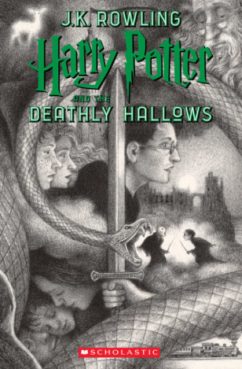
Harry Potter and the Deathly Hallows – J.K. Rowling (2007) 
The climax of Deathly Hallows (and, by extension, the entire series) is as good as literature gets. The chance (however small it may be) that the book I am reading may unfold as masterfully as this one is the reason I read. I remember precisely what it was like to read Deathly Hallows for the first time. I was quite literally unable to put the book down for the final 300 pages. By the time I had finished, it was 4 am, and though I was physically and emotionally exhausted, I knew my life would never be the same. Revisiting Deathly Hallows was, by and large, a similar experience. Once again, I was unable to put the book down for the final few hundred pages (and that was even knowing how everything would turn out). Only 15 days ago, I asserted that Half-Blood Prince was my favorite book of all time. …That is still true. But in ranking HP books, I do think Deathly Hallows is a close second. It undoubtedly has the most difficult job in closing out the series. There are a few stretches, especially in the middle of the book, that drag a little bit. However, Rowling closes out Hallows with her best and most important writing in the entire series. That three of the final chapters, “The Prince’s Tale,” “The Forest Again,” and “King’s Cross,” are somehow the three best chapters in the entire series feels miraculous. Fairly or unfairly, stories like Harry Potter really depend on their endings. It is what separates Lost from Breaking Bad and Game of Thrones from Lord of the Rings. I can’t say how grateful I am that a series I care about this much was able to close with a perfect ending.

March

swanns way 2

In Search of Lost Time Volume I: Swann’s Way – Marcel Proust (1913)
I need to note at the top that this review will be nowhere near sufficient in capturing all my thoughts and praise for this novel. Part of that is simply because of the scope and depth of the novel itself (I mean, it’s considered one of the greats for a reason). And part of it is because I do not have the time to write the type of entry that this book deserves. So, in short, Swann’s Way is as good a novel as I have ever read. I expected my foray into Proust to, of course, be worthwhile and rewarding. I did not expect it to be so captivating or immediately accessible. I wish I could put my finger on what makes Swann’s Way so readable. There is little plot. The sentences weave in and out of different clauses, usually lasting at least five or six lines. On paper, it should not be a fun book to read. And yet, something about Proust’s writing is so connective that these aspects don’t feel like a hindrance but a reward. In George Saunders’ A Swim in a Pond in the Rain, he remarks that when boiled down, the only rule to writing that really matters is making the reader want to move on to the next sentence. That’s as close as I can get to why this book is so successful. I’m not sure I’ve ever enjoyed reading a writer’s prose as much as I have enjoyed Proust’s so far. For that reason, I’m moving straight into Volume 2!

May

IMG_6358

In Search of Lost Time Volume II: Within a Budding Grove – Marcel Proust (1918)
At this point, it should come as no surprise that I am drawn to long novels. Boy, oh boy, I sincerely hope that nobody would undertake Proust if they weren’t! One idea that I’ve been fascinated with is how that length affects a reader’s reception of the novel. My good friend Bryce once made the point that when one undertakes a lengthy book, they’re more likely to have a bias towards liking it because of all the time they’ve invested in it. Now, there are some other mitigating factors to consider as well. If an 800-page novel were bad, one likely wouldn’t finish it in the first place. Still, I think it’s an intriguing point and one that, at least in my own experience, rings true. Reading Proust, there’s a second thought I’d like to add to this: Specifically, how a skilled author uses a novel’s length to their advantage. That is, more or less, the main crux of In Search of Lost Time. I mean, just think about the title! In fact, it feels like the novel’s length, or in other words, the time spent reading the novel, is as essential to the book as the plot, story, or themes themselves! It’s a really fascinating experience. I hope as I keep reading, I’ll have more insight into exactly what Proust is able to do with all of this time. For now, though, I’m really drawn to the idea that a long novel is something that really can’t be replicated in any other art form. For a novel and a series that’s centered on these moments of transcendence and epiphany, I think time and length are an essential part of the equation.

June

IMG_6359

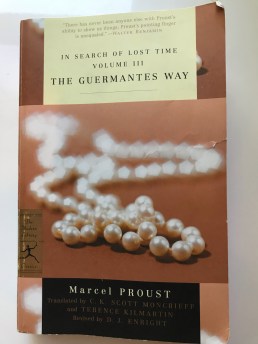
In Search of Lost Time Volume III: The Guermantes Way – Marcel Proust (1921) 
Without any inclination as to the reception or legacy of each part of In Search of Lost Time, my guess is that The Guermantes Way is perhaps the most divisive. As a modern reader, it was probably the most challenging, not in the sense of the actual difficulty of the language or Proust’s conception of the novel, but rather because this volume is hyper-focused on the manners, customs, behavior, politics, and history of the old French aristocracy present in that time. It is similar to the way Dublin functions as a place and culture in Joyce’s novels. It’s an approach in which the specificity of the time and place both assimilates the reader into the world and keeps them at a distance if, for instance in this novel, they don’t know the ins and outs of the Dreyfuss Affair. Luckily, there were only a couple of places where this scope really affected my enjoyment of the novel. For the rest, I am still mesmerized (and honestly clueless) by how Proust makes these novels so compelling. This volume is certainly the funniest in the series to date. The way in which Proust mocks both the narrator and the aristocracy in throughout the novel is tremendously funny. Overall, I have to say that being now halfway through, I am enamored with these novels. Hopefully, I’ll be able to better explain why as I keep moving through them.

August

41tYpgMF1VL._AC_SY780_

In Search of Lost Time Volume IV: Sodom and Gomorrah – Marcel Proust (1921) 
I feel bad that I don’t have more to say about this specific volume in the series. Like the previous volumes of this novel, Sodom and Gomorrah continues to dazzle me. What’s especially fascinating to me here is how Proust continues to work through the same themes, characters, and even settings that he has for the past three volumes. I can confidently say that I’ve never read anything that digs as deep into itself as In Search of Lost Time. What amazes me more is that this digging, for the most part, doesn’t feel like a chore. I’m not lying or even trying to be pretentious when I say that I am enjoying myself immensely in reading this series. It’s extraordinarily entertaining! Ultimately, I think it’s this balance, between the sacred and profane for lack of a better phrase, that is Proust’s ultimate achievement.

September

captive

In Search of Lost Time Volume V: The Captive – Marcel Proust (1923)
I have finally arrived at the point that I dreaded when starting this series. The Captive is by a wide margin the least successful and least entertaining of these novels so far. In the previous novels, I’ve been astounded by how little I’ve been bored or disinterested. After all, these are enormous novels that revolve around long, repetitive monologues by the narrator on life and art in early 20th-Century Paris. But, by and large, Proust’s writing in these monologues is so lively, engaging, and often funny that, as a reader, I’ve felt the profundity of his writing far more than the tedium. The Captive, to be fair, doesn’t do anything that the previous novels don’t do. However, whether it’s from the subject (Marcel’s possessive hold over Albertine) or the writing (this was the first posthumous novel in the series, meaning that many of the revisions and edits were handled by editors instead of Proust himself), more often than not, The Captive just can’t rise to the level of brilliance and insight of the previous installments. To be fair, there is one sequence at Madame Verdurin’s salon that belongs with the great set-pieces throughout the entire novel. Besides that, however, much of this book felt long and tedious.

October

captive

In Search of Lost Time Volume VI: The Fugitive – Marcel Proust (1925) 
I am happy to report that Proust gets back on track with The Fugitive. After almost no action and very little plot in The CaptiveThe Fugitive feels almost pulpy by contrast. Over just 400 pages (making this the shortest volume of the entire series), we see Marcel grapple with the fact that Albertine has finally left him, use St. Loup, along with his own hilariously misguided tactics to try and win her back, fall into grief and despair as he learns that she has died, return to society, sojourn to Venice, reacquaint himself with Gilberte, and discover that St. Loup has the same romantic tastes as M. de Charlus (in other words, is gay). Here I should note that, in principle, judging the volumes of In Search of Lost Time by how much action they contain is really fucking stupid. Still, if ever the series needed an injection of plot, it was after the entirely introspective previous volume. Interestingly, these are the two volumes with the least oversight by Proust. While Time Regained was also published posthumously, Proust had written, rewritten, and edited large parts of it from the start of his work on the series. I can’t help but wonder how closely these two volumes, The Captive The Fugitive, would have aligned with a work that Proust had lived to see published. Considering that these two are the shortest volumes of the series and that they both are centrally concerned with Albertine, it seems to me that they perhaps should have been one condensed novel.

November

IMG_7121

In Search of Lost Time Volume VII: Time Regained – Marcel Proust (1927)
The search is over! Look, before I even begin, I should just say that there is no way I’m going to be able to capture even a portion of all that I think and feel about this great novel. As pretentious as it sounds, I now understand how and why people devote years and even entire lives to Proust. In my own limited reading history, I have not encountered anything that comes close to the scope and ambition of In Search of Lost Time. It will certainly be the foremost work I think of when approaching grand subjects like time, aging, memory, and the purpose of art. Not to mention, of course, that the novel provides so much insight and detail into a specific time and place. Here, I’ll offer just a few takeaways from my experience reading this novel in the hope that it may encourage others to embark on the search themselves. First, I need to note that this series is rarely ever a slog. Yes, it is very long. Yes, Proust writes in minute detail about almost everything. But only rarely does that depth feel unnecessarily cumbersome for the reader. Pretty quickly, you learn the rhythms of Proust’s prose and in all honesty, it becomes a joy to read. What’s more, this series (including Proust’s writing, the characters, and the plot) is full of life and humor. This is not a dry, scholarly book. It is full of vitality, vulgarity, depravity, comedy, and beauty. Second, I will acknowledge that the series does grow a bit weaker as the books go on. The ones that Proust lived to see published (Volumes I-IV) are better than the ones he didn’t (Volumes V-VII). That being said, there is still plenty in those final three volumes to keep reading. I will also add that the ending of the novel is tremendous and really ties everything together. Lastly, how is there not a film adaptation of these? Yes, certain volumes have been adapted individually, but I am begging for a Netflix 10-episode treatment. Someone make it happen!

41KuByNwUkL._AC_SY780_

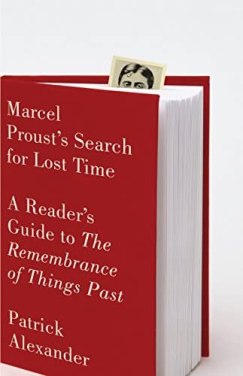
Marcel Proust’s Search for Lost Time: A Reader’s Guide to the Remembrance of Things Past – Patrick Alexander (2009) 
This is the most successful reading companion I’ve used! It is certainly not the most in-depth. If, however, you are looking to read In Search of Lost Time, this is a really useful guide for summary recaps, keeping track of the hundreds of characters throughout the novel, and exploring the series’ major themes. The historical and biographical information the book compiles about both Proust and the novel’s setting in late 19th Century France is remarkably helpful too.

white noise

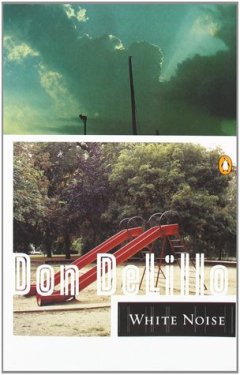
White Noise – Don DeLillo (1985) 
I wanted to revisit this before Noah Baumbach’s adaption comes out later this year. White Noise has left a huge impression on me. It was the first book that opened my eyes to postmodernism. Really, it was the first book that made me realize you could write in a non-classical or modernist way. As such, it’s kind of remained the platonic ideal of postmodernism for me, even as I’ve gone on to read authors like Thomas Pynchon, David Foster Wallace, and George Saunders. Revisiting this, I was honestly surprised at how well my impression of the book held up. I suppose it’s a classic for a reason. But in all honesty, I think I would still pick this out of any book if I were looking to define or introduce someone to postmodernism. It’s really that perfect.

2022 Movie Log: January

power of the dog
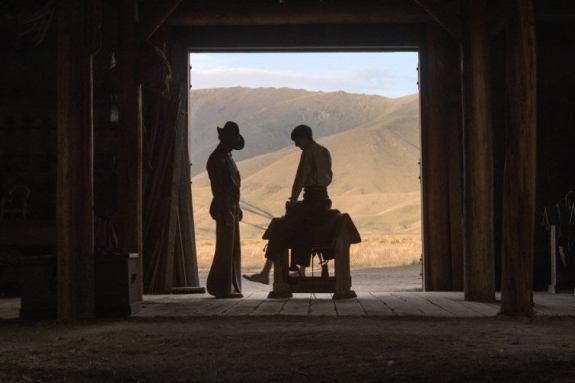
The Power of the Dog – Jane Campion (2021)

14th: Harry Potter and the Half-Blood Prince – David Yates (2009)
I’m starting to think that I should have two reviews for these films. Only a year ago, I rewatched Half-Blood Prince and gave it a good review. I knew then that the film didn’t stand up to the source material. Still, Half-Blood Prince is my favorite Harry Potter book. By extension, there’s a lot to like in the movie. That, more or less, would be review #1. Review #2 would then evaluate how the film works as an adaption of the book. And in that regard, this film is abysmal. Let me start by saying that I understand some of the changes these movies have to make. To perfectly adapt these novels would be impossible. However, my biggest frustration with this film is that the changes Yates and his team make seem to be for no reason. I honestly can’t believe some of them. Honestly, they remove all of the subtlety that makes this novel so extraordinary. What’s left is a fine film that, if you dig deep, doesn’t really make much sense.
Grade: C

15th: The Power of the Dog – Jane Campion (2021)
Some people are considered great filmmakers for a reason. The amount of information Campion conveys just with scenery, body language, and music is otherwordly. That she’s able to take this information and play it against the audience’s expectations is masterful.
Grade: A-

17th: The Lost Daughter – Maggie Gyllenhaal (2021)
This is a hell of a debut. Gyllenhaal clearly understands performance. The way she’s able to capture Coleman is remarkable. I think what impresses me most is how viscerally this film is able to present turmoil that’s wholly internal and emotional. That was my biggest concern going into a Ferrante adaptation, and it ends up being a strength of the film.
Grade: B+

21st: France – Bruno Dumont (2021)
This reminded me a lot of Armando Iannucci and something like VEEP. It’s a cold, satirical, unfeeling view of politics and life. What particularly interests me is the way this film centers on human feeling. The film circles around and around an idea of catharsis. Léa Seydoux’s character seems determined to achieve it. The close-up shots of her crying are brilliant. And yet, it seems like the film’s mission is to deny her any moment of transcendence.
Grade: B+

22nd: Talk to Her – Pedro Almodóvar (2002)
Maybe my favorite Almodóvar film to date. I honestly can’t pinpoint what makes it so brilliant. There is something in each scene that is so compelling. Reminds me a bit of David Lynch in that way. It’s one of the rare movies I would have watched if it kept going for another two hours.
Grade: A-

24th: Tie Me Up! Tie Me Down! – Pedro Almodóvar (1989)
Almodóvar is one of a kind. On paper, this shouldn’t work. And yet, in this director’s world, it’s perfect. I’m still unsure exactly how he makes these films work. I did notice in this film that he seems to anticipate and subvert the audience’s reaction to a character at every turn. Ricky, Marina, and Lola are all different from the characters you’d expect.
Grade: B+

My Favorite Shows of 2021

succession

If there’s a silver lining to entering year three of a global pandemic, it’s that at no other point in human history has there been so much tv to watch. After long hiatuses and halted productions last year, 2021 was more than just a return to form. In fact, I can’t quite remember a year in which there was so much to choose from. Just narrowing this list down to ten shows proved to be a challenge. So much so, that I must begin with a few series that narrowly missed the cut.

Honorable Mentions

betty season 2

Betty (Season 2) – Crystal Moselle (HBO)
Season 1 of Betty was a blessing. It was cool, funny, and above all, incredibly endearing. The series showed the power of friendship, community, and identity like few things I had seen before. Season 2 stays connected to these same characters and themes, but this installment, like the reality it’s steeped in, is darker. The show is as well-made as ever; it’s just a tougher hang this time around.

9/11: One Day in America – Daniel Bogado (National Geographic)
Look, there’s no way I was going to put a 9/11 documentary in my top ten list. I don’t know how you would even rank this against something like The White Lotus. It’s obviously easy to grow cynical about these events. The world is undoubtedly a worse place for the United States’ response to them. But by focusing specifically on the individual experience of these attacks, this documentary contends with something else. It engages with the humanity of the people who lived and died through this day, the end result being an enormously powerful and moving documentary.

Only Murders in the Building – Steve Martin, John Hoffman (Hulu)
An incredibly funny show starring two comedy geniuses plus Selena Gomez. I loved watching this series and am thrilled it is coming back for a second season. But in an incredibly crowded year for comedy, it just missed out on my top ten.

Curb Your Enthusiasm (Season 11) – Larry David (HBO)
I honestly am not sure how objectively funny Curb Your Enthusiasm is at Season 11. The familiarity and premise of the show are just too much for me to be objective about it. And yet, like every other iteration of this show, I found this season to be absurdly delightful. Pretty, pretty good!

The Top Ten

Mare of Easttown

10. Mare of Easttown -Brad Ingelsby (HBO) 
Mare of Easttown is a perfect embodiment of the current “Post Peak TV” era of television. It’s a series that has studied up on all the Mindhunters, True Detectives, and Night Ofs that came before it. The result is that Mare is not only a new installment in the genre but an update to it. The central characters in Mare are women. The episodes are staged and paced so that it’s impossible not to watch the next one. What’s more, it sounds like it could do the most “Post Peak TV” move of all and come back for a Season 2. I hope it does.

it's a sin

9. It’s a Sin – Russell T. Davies (Channel 4 / HBO Max)
It’s a Sin follows a group of gay young men and their friend Jill as they live in 1980s London amid the growing AIDS crisis. It is incredibly reminiscent of Rebecca Makkai’s The Great Believers, which, if you’ve followed my reading log, you’ll know is my favorite novel of the last few years. That’s to say that this had all the makings of a good show, but through Russell T. Davies’ brilliant execution, it becomes a great one. If there’s a secret strength to the series, it is its ability to capture beautiful and profound moments of characterization in all of a few minutes.

squid game 3

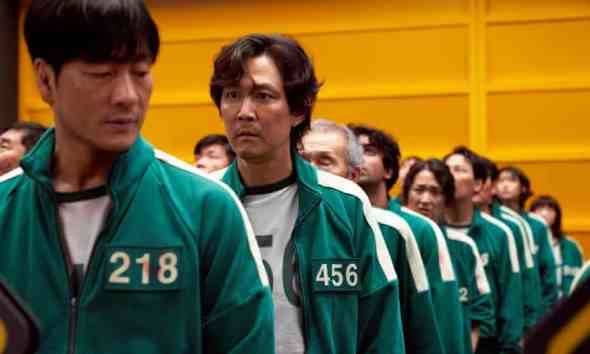
8. Squid Game – Hwang Dong-hyuk (Netflix) 
I don’t know how much I can add to the discourse surrounding Netflix’s most-watched series ever. If you have somehow managed to not watch Squid Game, I will offer this: the magnitude of violence and brutality in this show is decidedly not my cup of tea. And yet, I stuck with Squid Game because of everything else the show does. Its characters are complicated, compelling, and nuanced, the performances are magnificent, and the storytelling is incredibly smart and subversive. In short, Squid Game may be hyped up, but it is the rare show to live up to that attention.

What-We-Do-In-The-Shadows-Season-3-Vampire-Meeting-scaled

7. What We Do in the Shadows (Season 3) – Jermaine Clement (FX) 
What We Do in the Shadows will remain in these top ten lists until it retires. In all honesty, I thought this was the best season to date. “The Casino” belongs in the pantheon of all-time comedy episodes right alongside Seinfeld’s “Marine Biologist,” and It’s Always Sunny’s “The Nightman Cometh.”

how-to-john-wilson-2

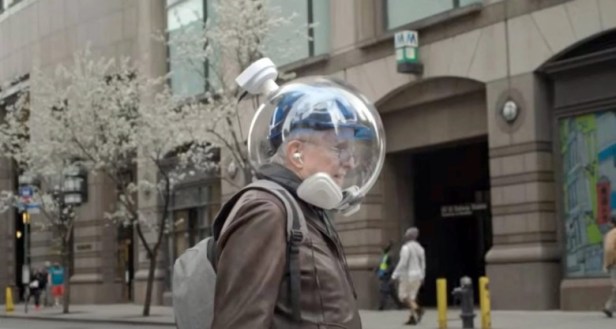
6. How To with John Wilson (Season 2) – John Wilson (HBO) 
There is more quality tv available than any one person could possibly watch (hopefully that’s apparent from this post!). Still, for this enormous boom, most of these shows are largely the same. I don’t mean to suggest that these series are unoriginal or in any way unworthy of attention, but for the most part, they all draw on the same trusted format provided by legacy tv shows like Breaking Bad, The Sopranos, or SeinfeldHow To… is different. Certainly, there have been video essays and docuseries before. But I can’t remember a project in which these video essays could seemingly go on forever, nor one in which the thematic basis for the project has more to do with a specific tone than its content. In terms of quality, I don’t think Season 2 necessarily does anything that Season 1 didn’t, but I’m just so impressed that this series proved it can keep going.

hacks

5. Hacks – Lucia Aniello, Paul W. Downs, Jen Statsky (HBO MAX)
Hacks has everything you could want from a show: brilliant performances, an enticing plot, so much comedy, and something meaningful to say. I’m astounded by how well this show was put together. It’s not drastically different from the dozens of other 30-minute serialized comedies out there. Yet, there’s something in this show’s alchemy that sets it apart. I’d be a fool to not start with the two lead performances by Jean Smart and Hannah Einbinder. They work exquisitely as partners and foils. What really stands out to me, though, is the writing. Particularly how it gives its main characters the space to have real drama and stakes. Jean Smart and Hannah Einbinder could easily carry this series with their comedy, and yet, Hacks is so well-structured, it almost doesn’t need them to. In that place, it offers incredible supporting performances by Kaitlin Olsen, Carl Clemons-Hopkins, Paul Downs, Megan Stalter, and Poppy Liu.

reservation dogs

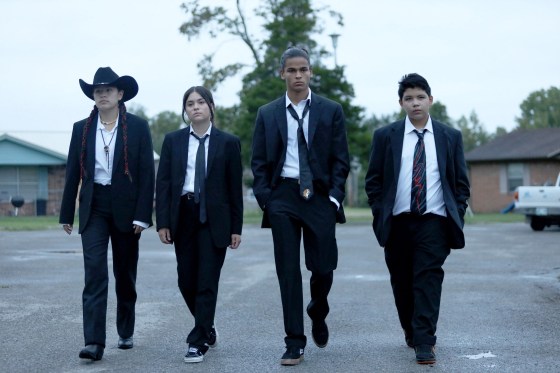
4. Reservation Dogs – Sterlin Harjo, Taika Waititi (FX on Hulu)
Even on just a surface level, there’s a ton to enjoy about this show. Res. Dogs follows a group of indigenous teenagers trying to break out of their reservation hometown in Oklahoma. There are obvious appeals to my taste. I love hangout shows and movies, I love series about young people coming into their own, and I love seeing perspectives that I hadn’t considered before.

What I didn’t expect was how fully-formed this series could be in Season 1. It reminds me of the debut album a band has been perfecting for years and years right until they finally got their shot. From the start, the storytelling is just masterful. The series deals so gracefully with intense and difficult subjects like grief, trauma, mental health, politics, race, and wealth. But what elevates the series into something transcendent is the way it blends mysticism, spirituality, and the supernatural into these hard realities. The end result is a highly-entertaining comedy featuring moments of surreal beauty unlike anything I’ve seen before.

white-lotus

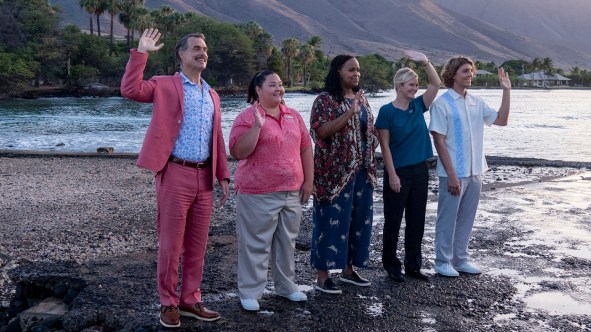
3. The White Lotus – Mike White (HBO) 
From the pilot, it’s clear that The White Lotus would be a worthwhile series. It’s dark, cynical, and wickedly funny. The cast and performances are exceptional. But what I didn’t count on is that it would have so much to say about class. This series touches on something real and maybe even profound by its conclusion, all without sacrificing any of the qualities I mentioned above. It feels like a parable without having to hit you over the head with the lesson. In fact, I think it’s possible one could watch and enjoy this show without engaging in any of the subtext. Of course, that person would miss out on just what elevates this show from being very good to being great.

succession season 3

2. Succession (Season 3) – Jesse Armstrong (HBO) 
There is no better feeling in television than when Succession is airing. For the nine weeks this show was back, it was the highlight of my week. Seriously, if every series in this blog aired its episodes at the same time, Succession is undoubtedly the one I’d watch first. And yet, for all that praise, I will say that Season 3 was (just very slightly) the weakest season to date. For the first time in the series’ run, you could feel the strain as the show hurtled toward its endpoint. On the other hand, this season’s conclusion was as brilliant and daring as anything Jesse Armstrong and his team have done. I would argue it ranks up there with the best season endings in television history (looking at you, Breaking Bad S4). All of which is to say that despite a few flaws here and there, Succession remains the best and most exciting series on TV.

i think you should leave s2

1.  I Think You Should Leave with Tim Robinson (Season 2) – Zach Kanin, Tim Robinson (Netflix)
My personal trajectory for ITYSL Season 2 went something like this: I waited and waited for the series to return. I watched the initial trailer for the season at least a dozen times. The season dropped on Netflix, and I consumed it all in one sitting, thinking, “That was good. Definitely not as good as Season 1, but still good. Oh well. Still, that Corncob TV sketch was mighty funny. I may have to go back…”

Since then, I have been unable to escape this show. Each sketch gets funnier and funnier to me the more I watch and think about it. I have now watched “Corncob TV” at least 20 times and have not hit a point of diminishing returns. Seriously, I think it’s safe to say that I have never watched a season of television more than I have watched ITYSL Season 2.

To that point, I would like to include a personal hall of fame for the Season 2 sketches that I find to be absolutely perfect. The fact that this list only continues to grow as I revisit the series says all you need to know. God bless Tim Robinson.

    • Corncob TV
    • Sloppy Steaks
    • Karl Havoc
    • Professor Yurabay
    • Ghost Tour
    • Calico Cut Pants
    • Jaime Taco
    • Parking Lot
    • Insider Trading

2022 Television Log

January

100 2

100 Foot Wave – Chris Smith (HBO)* 
There is a barrier for me when it comes to these extreme sports documentaries. No matter how amazing or compelling they are, I can just never relate to their subjects. I am not an extreme guy. The idea of surfing massive waves off a rocky coast in Portugal does not appeal to me. That being said, I enjoyed 100 Foot Wave far more than I expected to. Sure, in every episode, I found myself saying that these people are fools. But even so, I couldn’t help but admire what they’re able to do. I particularly liked how the documentary staged itself. There are compelling storylines throughout the series. You keep watching to see if they can catch that big wave.
*Aired 2021

station-eleven-tv-show

Station Eleven – Patrick Somerville (HBO MAX) 
A series like Station Eleven is the reason I watch TV. Honestly, I feel like a different person for having watched it. In fact, I think I am a different person for having watched it. I’m sorry to be so hyperbolic, but this series is that good. I really don’t know if a tv show has moved me as much as this one did. For me, that type of emotional release usually comes from a novel. Getting down to brass tax, I could praise just about every element of the series. The cast is phenomenal, the costume and set design is beautifully done, the score is outstanding. But for me, a series this successful will eventually come down to the writing. And man is the writing good. I’ve always understood art as a way to repackage and express truth. That’s pretty reductive, but I think it’s more or less right. What this series expresses about human existence, and specifically the way it expresses it (through time, Shakespeare, memory, and loss), is incomprehensively beautiful. Station Eleven is a masterpiece. 
101 - Pilot

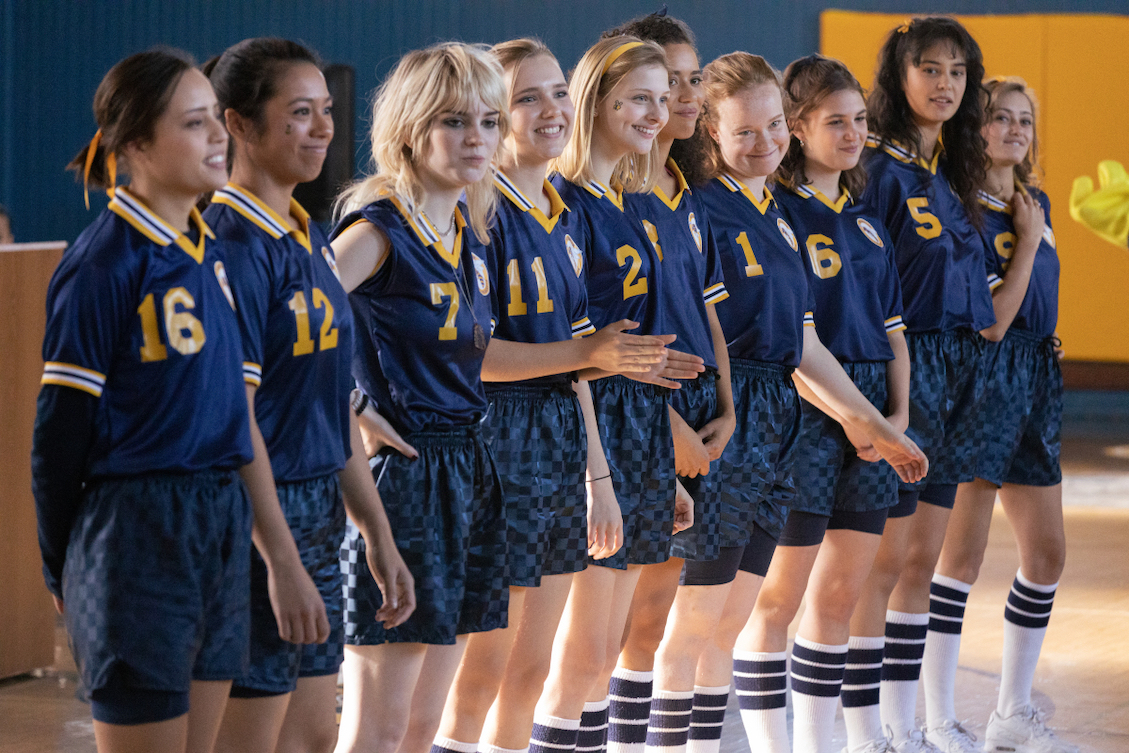
Yellowjackets – Ashley Lyle, Bart Nickerson (Showtime) 
This is the type of show that should have two different reviews. On the one hand, Yellowjackets is a lot of fun. Much of its premise feels stripped from Lost. But it also seems to understand the particulars of what made Lost so fun. Add those elements with a solid cast and a great soundtrack, and it’s hard not to like the show! On the other hand, this show will eventually have to provide answers for the mysteries it’s creating. That was Lost’s biggest failing. Though it’s still early, the answers that Yellowjackets has given so far have been pretty bad. To that point, the final two episodes of the season, in which some of these mysteries were revealed, were clearly the two worst episodes of the series to date. We’ll see if Season 2 can get back on track.

south side

South Side (Seasons 1* & 2) – Diallo Riddle, Bashir Salahuddin, Sultan Salahuddin (HBO Max) 
Is this the funniest show on TV? I can’t say enough good things about it. There are only a handful of sitcoms ever that could seamlessly weave this many characters in and out of its episodes. The writing and performance talent it takes to do that alone is immense. Luckily, this show has that talent in spades. The cast is so deep, it’s absurd. Throughout the series, it feels like almost every character could carry a show of their own. 
*Aired 2019, Comedy Central

February
Righteous Gemstones

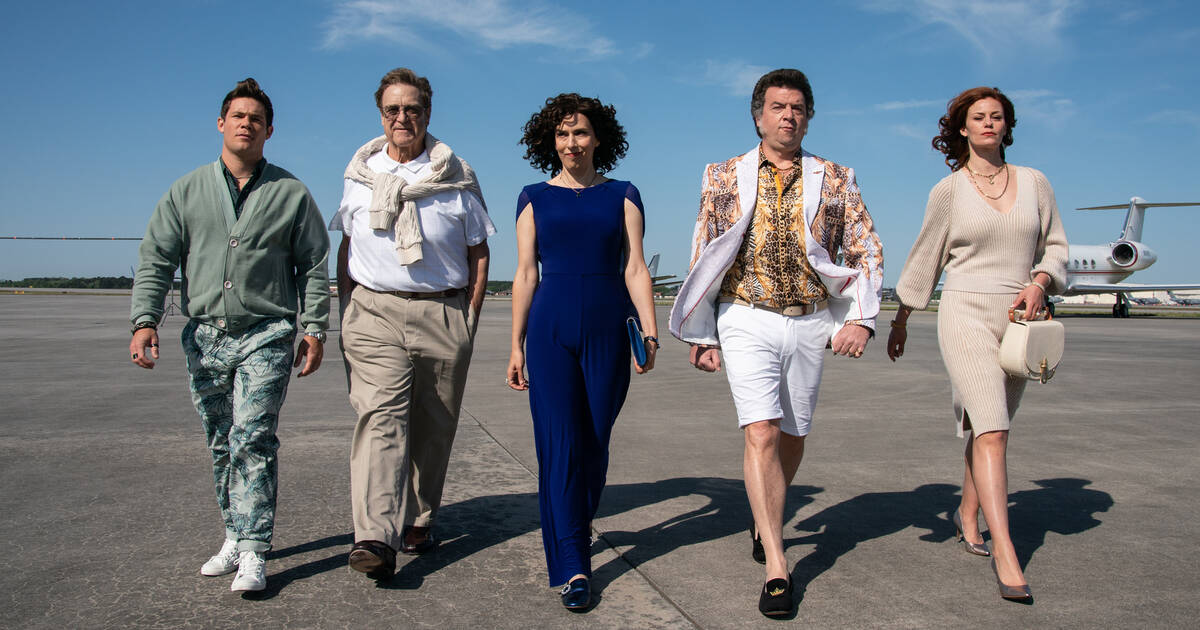
The Righteous Gemstones (Season 2) – Danny McBride (HBO) 
I wish I could provide more insight into Danny McBride’s shows. Like Vice Principals and Eastbound & Down, Righteous Gemstones is one of a kind. It’s filthy, gross, hilarious, and somehow endearing. Where Gemstones shines is in its loaded cast and high-end production. Despite being filled with the filthiest humor imaginable, this is a show that always looks amazing. What McBride, Jody Hill, and David Gordon Green have been able to create is honestly remarkable. There’s nothing else like it on tv. I can’t wait to see what Season 3 brings.

The Afterparty
CR: Apple TV+The Afterparty – Christopher Miller (Apple TV+) 
Boy, there have been a lot of murder mystery comedies lately! I have to imagine this is close to the best version of that genre. First off, the cast here is loaded. It’s wild that someone as funny as Ilana Glazer is like the fifth or sixth leading character in this show. For me, though, I think the standout feature was the genre filmmaking in each episode. The difficulty in pulling off a satire or parody is that, from the start, you are essentially saying that the story doesn’t really matter. By giving the audience something else to enjoy- here, the genre filmmaking – I thought Afterparty was able to remain constantly entertaining even when excitement in the story naturally waned.

April

severance

Severance – Dan Erickson (Apple TV+) 
Someone needs to take my blog-writing credentials away. At the start of every year (or so it seems), I watch something amazing and declare that it’s my series of the year: That, although it’s only January, nothing could possibly come along that could top x show. This year, x was Station Eleven, a series that I still regard as a singular and masterful achievement. My problem is not in singing its (or any other show’s) praises, but rather, in thinking that nothing else could possibly approach it. Already, Severance has proved me wrong. 

In fact, Severance may just be the best argument for the current era of TV programming. When looking at the television landscape in 2022, it’s pretty much impossible not to be overwhelmed. There are more great shows than any one person could possibly watch. Now, I’m not going to sit here and complain that there are too many quality shows. Still, I can’t help but long for the days when a series like Breaking Bad or Game of Thrones could seemingly capture everyone’s attention. 

But that proposition, of course, is a double-edged sword. Severance is a show that I believe would have been too ambitious, too high-concept, and frankly too strange to have been made in those days. And although it’s as good as anything I’ve seen in the past few years, it is not a series for everyone. I would be remiss not to mention all of the qualities that make Severance so great: The meticulous attention to detail, the phenomenal direction, and of course, the brilliant performances. But, if I were to give one reason to watch this series, it is that this show couldn’t have existed at any other time in TV history. 

abott

Abbott Elementary (Season 1)– Quinta Brunson (ABC) 
Could the network sitcom be back? Personally, I found it delightful having a week-to-week sitcom to return to. For as much as I appreciate the plethora of high-concept series available now, sometimes all I need is solid jokes and familiar characters. I’m excited to see where this series could go. Right now, it seems like the sky is the limit. 

May 

pachinko

Pachinko (Season 1)Soo Hugh (Apple TV+) 
There is just too much TV right now. So much so that, even as someone who would consider television to be their favorite medium, I am completely overwhelmed. What’s most frustrating to me is that many of these current shows are not necessarily uninteresting or unworthy of being series but instead are projects that really should be films. The main reason they are tv shows is not for any artistic reason but because that’s where the money is. Pachinko is the counter to all of this. It is the type of project that not only makes sense on television but would be ill-served if it were constrained to the format of a movie. It is a generational epic that spans languages, countries, and multiple distinct and interconnected timelines. Most importantly, Pachinko is a series centered on transcendent moments of emotional catharsis amidst waves of generational trauma. To genuinely pull that off, you need time. Something that, aside from a novel, only a television series can afford.
winning time

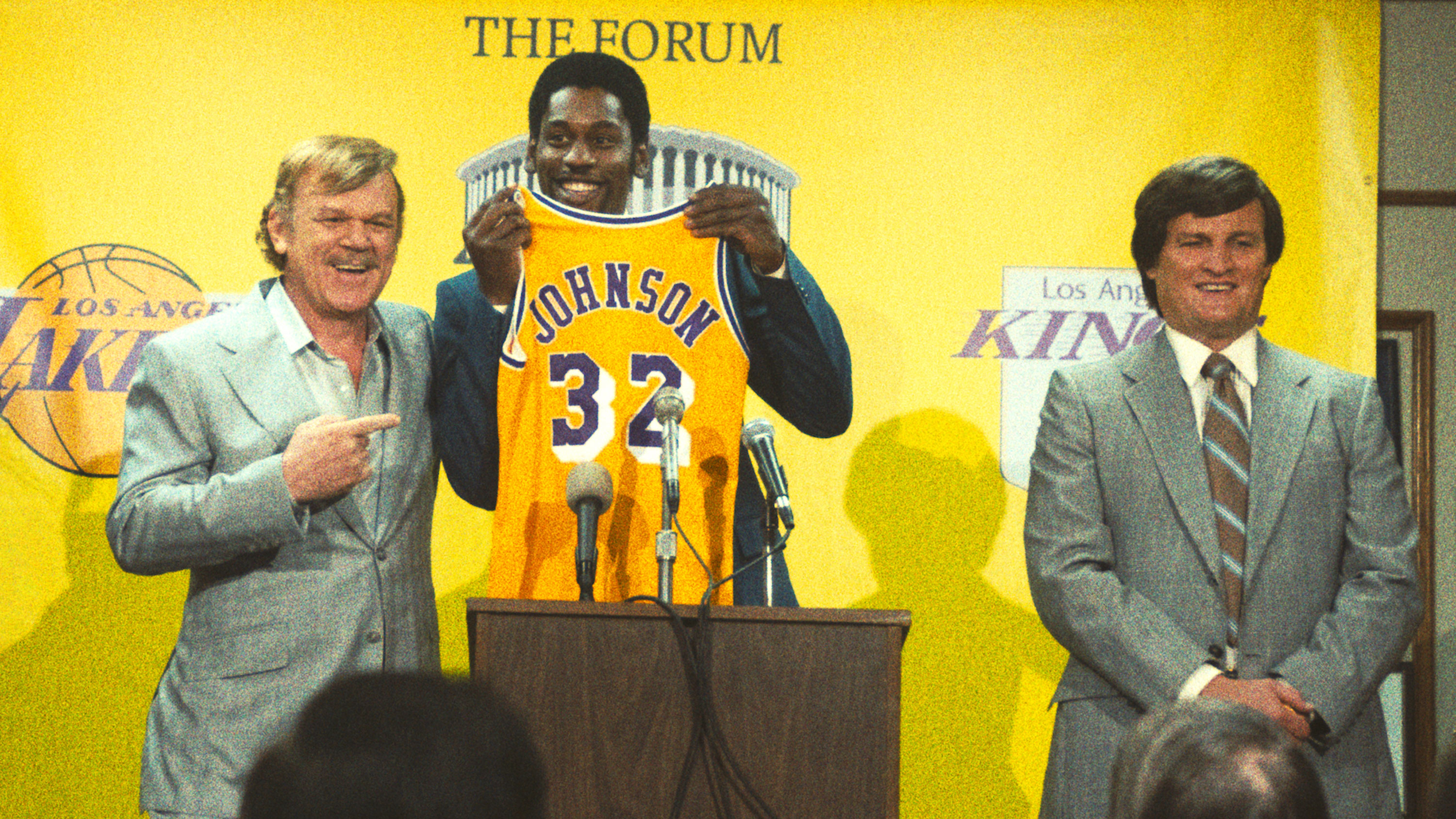
Winning Time: The Rise of the Lakers Dynasty Max Borenstein, Jim Hecht (HBO) 
Man, what can I say about Winning Time? It is undoubtedly an entertaining series. I would be lying if I said I didn’t look forward to each episode. What’s more, many aspects of the series are genuinely great. The performances especially are as compelling as any real-life adaption I’ve seen. Still, something about Winning Time rubs me the wrong way. The most obvious place to start would be its glaring and unapologetic historical inaccuracies. A natural counter to this point would be the hundreds of other films and series that do this very thing. Is the Social Network really any different from this series? Here, however, is where I’ll venture one idea about why these moments don’t work as well in Winning Time. Thus far in this series, they seem wholly unnecessary. Is the series any better for making Magic the finals MVP? Is it better for exaggerating the team’s struggles in that season? I don’t really think so. These moments feel so clichéd that I think sticking to a more realistic version of events would have added some much-needed nuance to the series.

atlanta season 3

Atlanta (Season 3) – Donald Glover (FX) 
Atlanta is in an interesting place this season. This series was, far and away, the best show on TV over its first two seasons. It was as entertaining, ground-breaking, surprising, and brilliant as maybe any television show in history. Season 3 is not on that level. Truthfully, it’s not even very close to that level. To be clear, that has more to do with the enormously high bar the show set in its first two seasons than a downturn in quality this season. So, where does this leave the show? Overall, I enjoyed every episode of the season. What’s more, I particularly loved how the formatting and subject matter of each episode has grown even more idiosyncratic from Seasons 1 and 2. So sure, maybe this season wasn’t as good as past iterations of the show. But, it’s still pretty special that, even in a down year, Atlanta can remain the most enigmatic show on television.

It Comes Down to This

Survivor (Season 42)– Charlie Parsons, Mark Burnett, Jeff Probst (CBS) 
This was a really, really good season of Survivor. I was skeptical of some of the new twists last year but after two seasons with them, I think most of them work. What this season improved upon for Season 41 was its cast. Across the board, this was one of the best and most likable casts in a while. To that point, Maryanne is one of the best winners in a while.

June
under the banner of heaven 2

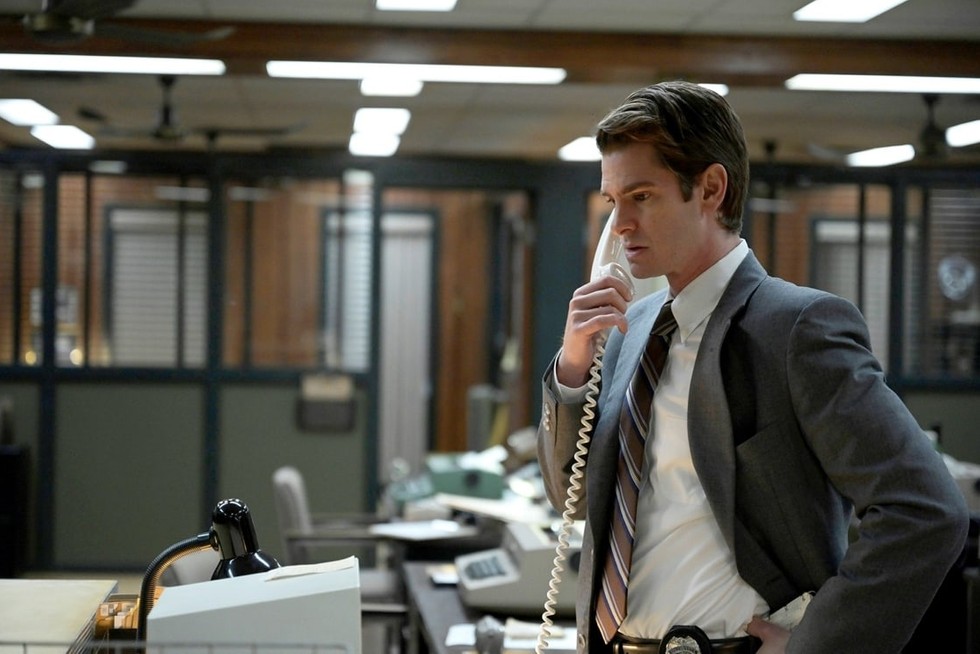
Under the Banner of Heaven – Dustin Lance Black (Hulu) 
Under the Banner of Heaven is basically everything I could want from a series. I don’t mean that to be dismissive of everything this show does really well either. In fact, Dustin Lance Black and his creative team nail just about every aspect of this series. Ideas like the thematic flashbacks to Joseph Smith, Brigham Young, and the founding of Mormonism probably shouldn’t work and here they are executed to perfection (to the point where I think not including these flashbacks would have been a detriment to the show). I also love the difficult tone the series is able to strike and maintain. This is a true-crime series about a heinous real-life double murder and yet, even when elements of the crime appear mystical, I don’t think the series ever made light of their harsh reality. But despite all of this praise for the show’s direction, theme, and writing, the real standout feature of the series is the performances. Down the line, this is one of the best casts I’ve seen assembled for a miniseries. Having performers like Wyatt Russell or Daisy Edgar-Jones appear even in non-leading roles serves this series so well. And of course, Andrew Garfield and Sam Worthington steal the show as the leads. They may very well carry my two favorite performances of the year.

bill-hader_0

Barry (Season 3) – Bill Hader, Alec Berg (HBO) 
Off the bat, let me say that Barry is as good as ever. In fact, I think that Season 3 is the series’ most ambitious and best season to date. The direction in the series rivals any show on TV. The performances are at once brilliant and totally surprising. From a technical standpoint, Barry is honestly as good as TV gets. So why am I saying all of this as a preface? Because, for whatever reason, I had trouble connecting with this season on a more personal or emotional level. It’s not that I didn’t see those aspects in the series itself, but rather that I felt removed from fully accessing them. Which, just for the record, is not necessarily the series’ fault. I spend so much time thinking about art in the dichotomy of whether it’s good or not. It’s easy to forget that this type of evaluation can omit a piece’s main purpose: to connect with you. For all the accolades and reception that an album like Pet Sounds has, does it really matter if you get more from listening to, I don’t know, Jack Harlow*? I mean, obviously, quality, ambition, and talent matter. I just want to point out that sometimes they are not the be-all and end-all of success, which is my way of trying to excuse myself for liking and admiring, but not loving, Barry.
*To be clear, I love Pet Sounds and have not, as of yet, listened to Jack Harlow.

hacks season 2

Hacks (Season 2) -Lucia Aniello, Paul W. Downs, Jen Statsky (HBO Max) 
For those who read my post above about admiring but not totally loving Barry, I do not have that problem with Hacks. In fact, Hacks is probably my favorite non-Tim Robinson comedy over the past couple of years. So what makes this show so special? For me, I think it comes down to the specific tone the show has crafted and maintained over its first two seasons. The show perfectly threads the needle between having meaningful, long-running story arcs that I genuinely care about and staying totally hilarious. As opposed to something like Ted Lasso, this is a series that I genuinely laugh out loud at. While that may seem like a trivial point for a comedy, it’s something that’s become increasingly rare lately. While Hacks is more ambitious and more clearly focused, it does remind me of the sitcoms I grew up loving (SeinfeldThe Office, etc.). The type of series, in other words, that I would watch endlessly just to spend more time with the characters. 
search party

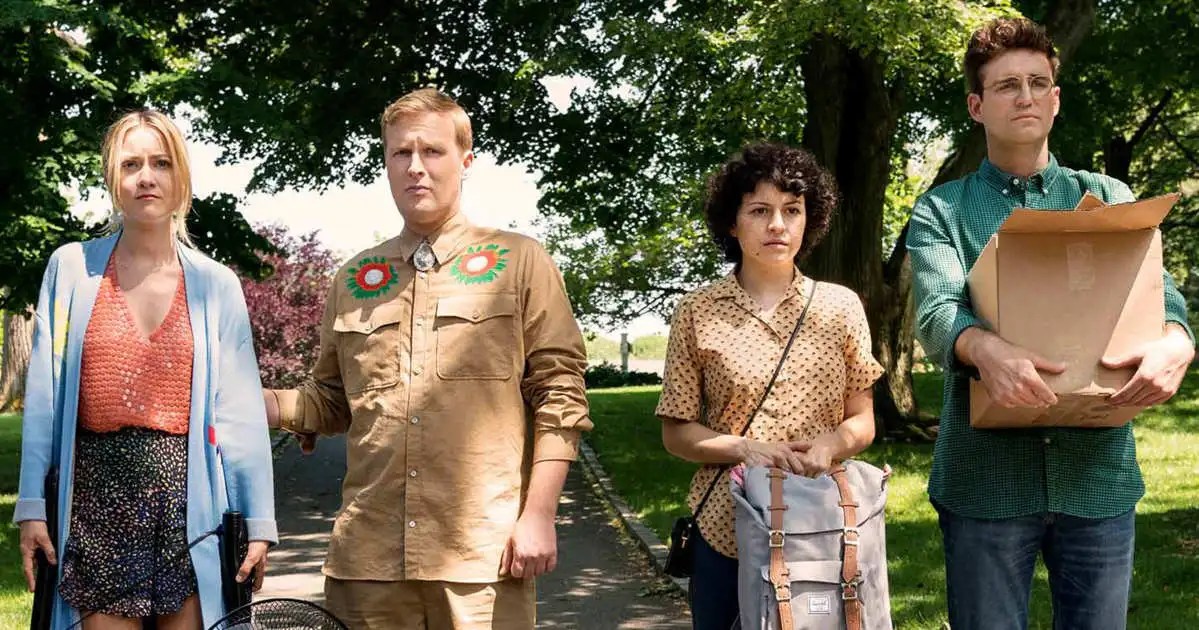
Search Party (Seasons 1-5*) – Sarah-Violet Bliss, Charles Rogers, Michael Showalter (TBS/HBO Max) 
The first three seasons of Search Party are as funny as anything I’ve seen on TV. Obviously, in that assessment, I am leaving out Seasons 4 and 5 of the show. That is not due to any major dip in quality (or in laughs) but more from a change of direction in the series. While those latter seasons don’t quite get to the level of their predecessors, they are incredibly ambitious. I’m not sure I’ve ever seen a comedy in which the landscape of the series changed so radically. I mean, the premise and circumstances at the end of Search Party are unrecognizable from the pilot, and somehow it all works. Here, I have to, of course, credit the four leads of the show. They are all so fucking funny. Their ability to carry any situation is what allows a series to get as bold and adventurous as Search Party did. 
*Aired 2016-2022

July

stranger things volume 4

Stranger Things (Season 4) – The Duffer Brothers (Netflix)
Out of any other series on this list, Stranger Things will be the most difficult for me to critically assess. First off, there is just an enormous amount of it to cover this season. Pretty much every episode in this season had a movie-length runtime. And while other series tend to stay at the same speed or pitch during their run, this season of Stranger Things was a bit all over the place. There are parts of it that are genuinely great. Take as prime examples the performances, music, visuals, and pop culture references. There are parts of the series that are a mixed bag. Here we can put the series’ grasp on its own mythology, the extension of the narrative into (at minimum) four primary storylines, and the show’s lack of substantial character building. Of course, there are a few parts of the show that don’t work at all too. This is where I would put the series’ tendency to undercut its own storytelling stakes as well as its inability to tell this story more concisely. So how does that all add up? For as much as I can complain about the series’ runtime or pick on bad writing in certain places, I really did enjoy this season. Maybe the best praise I can offer is that even when parts of the show didn’t work for me, I never found it a chore to sit through. Do I wish the series could be better? Of course. But I think that desire actually comes from a place of deep investment as a fan. My frustration (at times) stems from knowing that this show could be great. For now, I’ll be content with a good fourth season. 
the bear

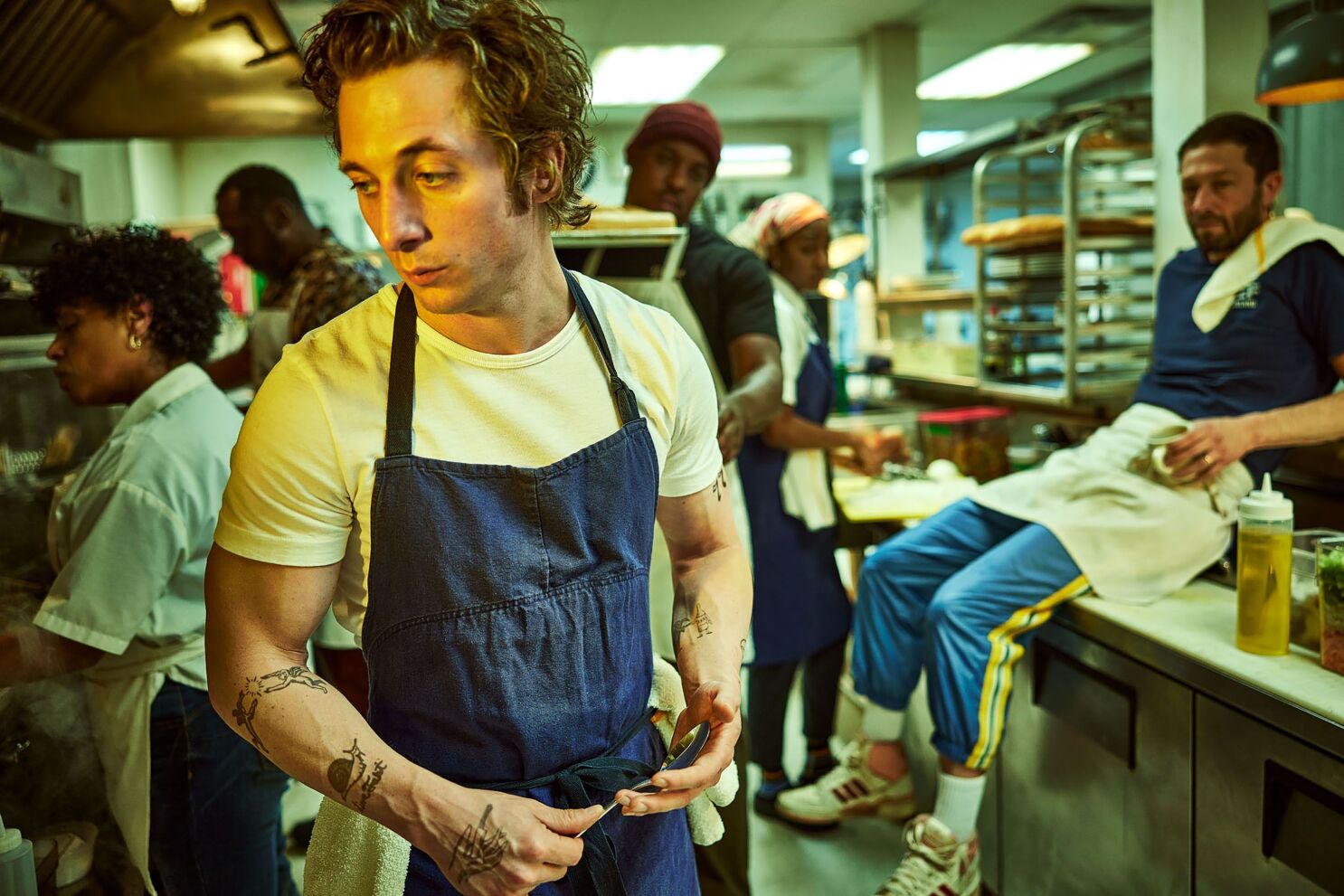
The Bear -Christopher Storer (FX on Hulu) 
2022 is on track to become my favorite television year ever, and in a year that good, The Bear may very well end up as my favorite show. There are a million things to praise about this show. It does all of the little things right. The series is perfectly shot. It’s fast, tight, and frenetic. The quick cuts match the exhilaration and panic of working in a high-end kitchen. The characters, across the board, are written and performed with such dignity. This is a funny show about a group of mostly fucked up people. And yet, the show never treats them as the punchline for the audience. Instead, we’re made to emphasize with the audience. Because the series brings us so fully into the world, we feel like we’re in on all the jokes, chaos, and stress that The Original Beef of Chicagoland has to offer. Lastly, I’ll just say for anyone skeptical of this review, you may have a slight point. After all, this is a food-centric show set in Chicago featuring needle drops from Sufjan Stevens, Wilco, R.E.M., and Radiohead. I’m just glad that a series catered this specifically to me lived up to the hype. 

August

irma vep

Irma VepOlivier Assayas (HBO) 
Olivier Assayas is the best. What fascinates me most about his films (and now TV series) is how he manages to take a completely unique, bizarre, and singular vision and create something that is so broadly enjoyable. Too often in art (and especially in film), there is an inverse relationship between accessibility and depth. That is not the case with Irma Vep. It is the rare series that will be rewarding no matter how deeply you choose to engage with it. 

better call saul

Better Call Saul (Season 6) – Vince Gilligan, Peter Gould (AMC) 
I’m going to keep this brief as I am (spoiler alert!) writing a book about the entire series. But, in short, my thoughts are as follows: No show has consistently challenged and dazzled me more throughout its run than Better Call Saul. It is a series that moves at its own pace, that delights in being subversive, and that always insists on digging deeper and deeper when any other series would have moved on to its next beat. Season 6 stays true to these ideas and in doing so pulls off one of, if not my favorite series ending of all time. I think we’ll look back at this show for years to come and be amazed by what it accomplished. 
the-last-movie-stars-director-ethan-hawke-opens-up-about-his-paul-newman-joanne-woodward-docuseries-1024x614

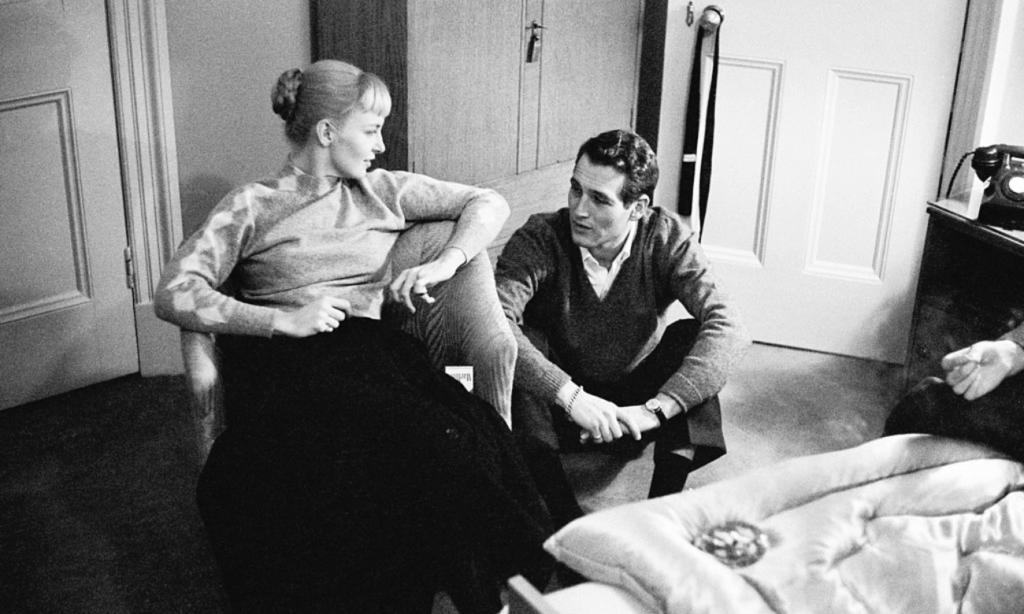
The Last Movie Stars – Ethan Hawke (HBO) 
There is nothing better than hearing artists discuss the people and works that they most admire. Aside from being one of my favorite actors, Ethan Hawke has long been a favorite of mine because of how passionate he is about the directors and actors he looks up to. It’s a trait that makes him especially well-suited to craft a documentary like this. The entire series is a celebration of Paul Newman and Joanne Woodward, not just as artists, but as people. As someone who has (shamefully) not seen much of their work, I can’t imagine a better entry point than this documentary. I’m confident that I’ll spend the rest of the year seeking out their films. 

the rehearsal

The Rehearsal – Nathan Fielder (HBO) 
Boy, has this show turned into a lightning rod! Having finished it, it is fairly easy to see why. This series is deeply, deeply discomforting. Merely watching this series forces you, as a viewer, to grapple with the ethics of what you are engaging with. It is an undeniably exploitative show. The question then becomes where do we draw the line in terms of that exploitation? Is this too far? If so, why? And for what it’s worth, I don’t have the answers to these questions. Perhaps my resistance to thinking through them is a failing on my part. What I can say, though, is that, in general, I believe art is supposed to push us out of our comfort zone. That in itself is not a carte blanche justification for this series. But one that makes me hesitant to really criticize it without thinking more deeply.

only murders s2

Only Murders in the Building (Season 2) – Steve Martin & John Hoffman (Hulu) 
Anecdotally, it seems like the general reaction to this installment of Only Murders has been good but not quite on Season 1’s level. Maybe it’s a delayed response, but I think I actually enjoyed this season more than Season 1. In particular, I’m really enjoying the old-school feel of this series. I love that it comes out in weekly installments and that, instead of prioritizing plot, the show excels on a character-driven level. 

September

what we do 4

What We Do In The Shadows (Season 4) – Jermaine Clement (FX) 
There was probably no way that Shadows could match the consistent heights they reached in Season 3. Thankfully, Season 4, while perhaps being a slightly down year for the show, is still good enough for Shadows to remain the best comedy on television. In fact, we are getting to the point where the main cast should start being compared to the likes of Seinfeld. Honestly, that may be the only series I can think of to compare with this core group of performers.

industry season 2

Industry (Season 2) -Mickey Down, Konrad Kay (HBO) 
Season 1 of Industry was lightning in a bottle. The combination of this world/business to explore, a cast of brilliant and previously unseen performers, and the multitude of drugs, sex, and twists made for one of the best debut dramas in a long time. Season 2 is undeniably both more mature (don’t worry, there’s still plenty of drugs, sex, and twists) and a slightly weaker season. Which, if you think about it, makes a lot of sense. Most of the characters in the first season acted with reckless abandon. Season 2, for the first time, carries real consequences for many of them. Ultimately, I think this will prove to help sustain the series for Season 3 and beyond.

October

res dogs

Reservation Dogs (Season 2) – Taika Waititi, Sterlin Harjo (FX on Hulu) 
I’m not sure I’ve seen anything before quite like Reservation Dogs. This show carries so much empathy and dignity for its characters and world, all while being one of the funniest and, at times, most joyful series on TV. It is also, often, the most heartrending. I can’t emphasize enough how difficult and impressive this balance is. This is a series that, in a nutshell, is the story of a group of Indigenous teenagers living on an economically depressed reservation town in Oklahoma that are grappling with the suicide of their friend. And, week-to-week, this is the series that I most look forward to seeing because even when an episode isn’t particularly funny (or even when it is), it delivers a level of warmth and beauty that is rare in any piece of art. 

lotr-rings-of-power-ep-1

The Lord of the Rings: The Rings of Power (Season 1) – J.D. Payne, Patrick McKay (Amazon Prime) 
This may be the series that I have least wanted to review in my time doing this blog. That’s not because of whether or not this series is good and/or “worthy” of J.R.R. Tolkien’s epic, but because every review and conversation around this show seems to be so fraught with bad intentions. Please note that I am not excluding myself from that group. On the whole, I found The Rings of Power to be pretty good. Now, perhaps I’m saying that out of some instinctive reaction against the truly awful negative trolling and review-bombing the series has had to endure. But, in all honesty, I thought that the world (and particularly the visual brightness) of the show was a delight. I was also quite enamored with most of the characters in this series. In fact, I particularly found the characters who have direct ties to the main works and films (Galadriel, Elrond, Halbrand, The Stranger?) to be the most engaging. Now, there are certainly some shortcomings in this series. Parts of the plot and their underlying logic are uneven, sometimes, the show is a bit too demanding of its audience, and of course, this series often struggles with the problem common to all prequels of managing expectations for a predetermined outcome. Alas, I still think the positives far outweigh the negatives, and if one needed some sort of anecdotal proof, I must admit that I eagerly anticipated each episode.  

House-of-the-Dragon-Still-RG_021222_OU_2278-HBO-Publicity-H-2022

House of the Dragon (Season 1) -Ryan Condal, George R. R. Martin (HBO) 
Another series that makes for a difficult review. While (anecdotally at least) it seems that the reception to House of the Dragon has been slightly more positive than The Rings of Power, it has still been met with much of the same review-bombing and trolling as its fantasy counterpart/competitor. Here, just as with Rings of Power, I feel compelled to list many of the series’ strengths. This new series, just like Game of Thrones before it, excels in its performances. Every aspect of this form, from casting to character development to the actual deliveries by the series’ actors, is impeccably done. In a series centered on scandal, spectacle, and dragons, it truly is the characters and performers that carry this show. I should also note, just as with Rings of Power, that I eagerly awaited each new episode. There is an alchemy in the plotting and world-building of this show that is gripping. What’s more, unlike Rings of Power, this series managed not to run into the existential problem with prequels. In fact, I think one of the series’ great achievements has been managing its relationship with Game of Thrones. Unfortunately, despite all of this praise, I cannot say that House of the Dragon isn’t without its flaws. The frequent time jumps in the first season prevented the series from really hitting a stride for more than a few episodes. What’s more, I think there are some baffling decisions and explanations for plot points within the show. Whether this is from the series not having the time to show its work or just lazy writing, it’s still a problem! All this, by the way, is without even mentioning the well-documented visual problems that plagued much of the season. In all honesty, I think everything listed above really speaks to the unparalleled (except for Rings of Power) size and scope of this series. On the one hand, I could make the case that House of the Dragon is the most thrilling and promising series on TV. On the other hand, it appears that the series has a decent amount of issues to resolve if it wants to approach the level of storytelling the best seasons of Game of Thrones reached. 
The-Vow-Part-II-Trailer-Still-1-Publicity-H-2022

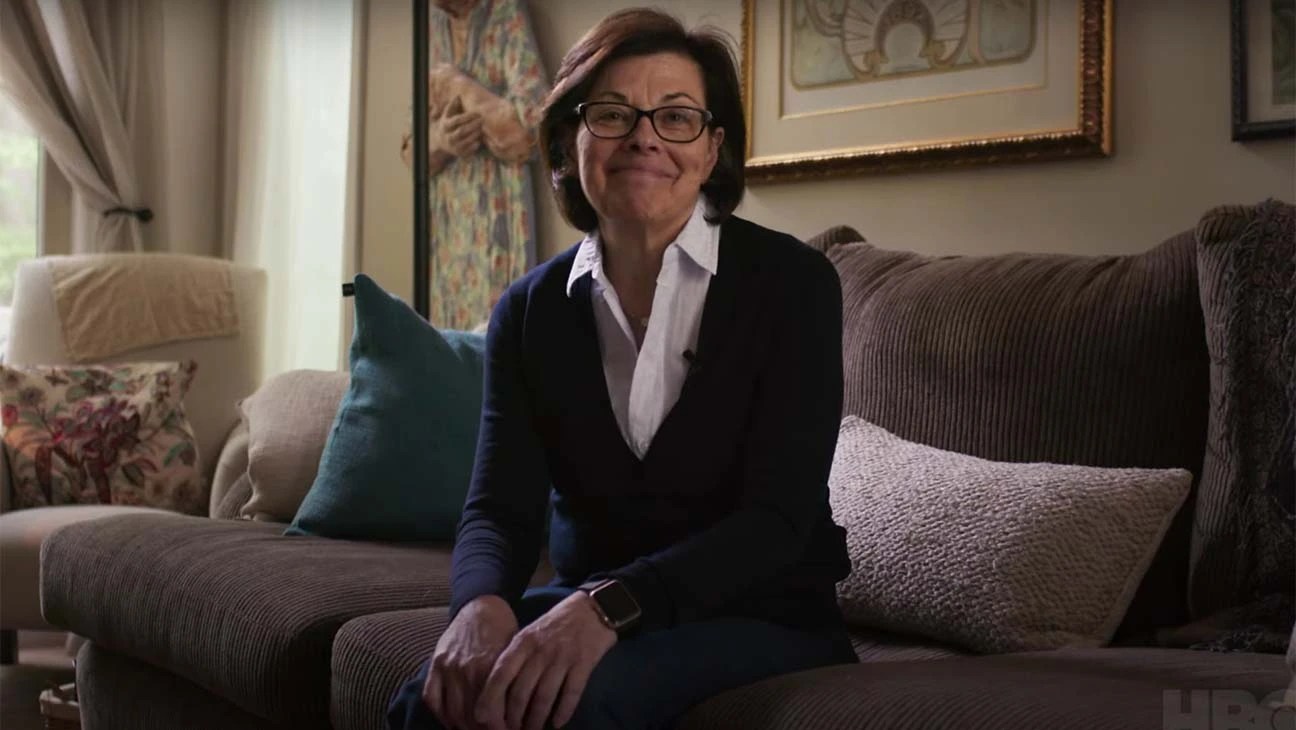
The Vow (Season 2)Jehane Noujaim, Karim Amer (HBO) 
To my great surprise, I found this second season of The Vow to be much more effective than the first. I still have some questions about the filmmakers’ point of view as well as their editing and production choices. But, whereas the first season often felt overlong and repetitive, I think the second season really found its footing by rooting the show into new POVs. All in all, it’s still not a show I would quickly recommend nor one that will make any year-end list. But this season was at least worth its airtime.  

December

Survivor (Season 43)– Charlie Parsons, Mark Burnett, Jeff Probst (CBS) 
I am not one to claim Survivor or any reality show of its kind is beyond thinking and writing about critically. That being said, I’m not sure I have a whole lot to say about this season other than it was the third straight “good not great” installment since Winners at War. For what it’s worth, the highs this season were about as high as Survivor gets. Jesse is already in my book as the greatest non-winner to ever play. Cody and Karla are also all-timers to me and will hopefully be back in future seasons. The downside? Well, not only did none of those players win, but instead, the winner was freakin’ Gabler. And look, I get that this is a game and crazy things happen, but it does stink to watch an entire season just to be surprised at the winner because of how much they sucked. 

The White Lotus (Season 2) – Mike White (HBO) 
Mike White is a god-tier television writer. What he did with the first season of White Lotus was not only brilliant but especially impressive considering the production considerations behind it (the need to make something self-contained and relatively isolated due to COVID). What he does in this second season is even more astonishing to me. First because while navigating constraints can be difficult, to some degree those same restrictions can also be instructive. As opposed to Season 1, in which external factors influenced the cast size, location, and narrative, Mike White had the opportunity to do almost anything for Season 2. That he is able to so neatly tie this new installment to the first season while telling a completely different story is just remarkable to watch. Second, and this may very well be on me for considering Mike White as a writer first, I think every aspect of the direction and production improves in this season of the show. The staging, set designs, and costumes are all inspired. But above all, I just can’t believe the depth and level of performance White gets from every single person in an absolutely loaded cast. Not only are there no weak links among the half-dozen or so storylines occurring in each story, each character feels fully formed with a rich backstory and unique point of view. The end result is that when these characters and storylines run up against one another, it feels organic in a way that is almost impossible to pull off in television or film. What’s more, I especially appreciate the way White is able to see these new performances and angles in both well-trodden actors and complete newcomers. The way, for instance, that he shapes Aubrey Plaza’s, Michael Imperioli’s, and Jennifer Coolidge’s performances to critique, echo, and subvert roles and archetypes they’re well-known for playing is sublime. Perhaps even better than this ability, is the way he is able to get star-making turns from someone like Simona Tabasco or Haley Lu Richardson. I hope I see these actors for the rest of my life.  

2021 Wrap Up!

How to with John Wilson – John Wilson (2021)

Ah, 2021. Another year spent mostly inside. Luckily, we live in a time in which a seemingly infinite amount of great films, books, and tv shows are available at our fingertips. Alas, not everything I read and watched turned out to be great. Some weren’t even good. Still, more than enough were. That’s all you can ask for in a year like this.

By the Numbers:

    • 177 Movies Watched (23 from this year)
    • 24 Books Read (2 from this year)
    • 42 seasons of TV watched across 26 series (22 series from this year)

Additions to the “A” List:

The films that were added to my running list of all A and A- movies since beginning this blog.

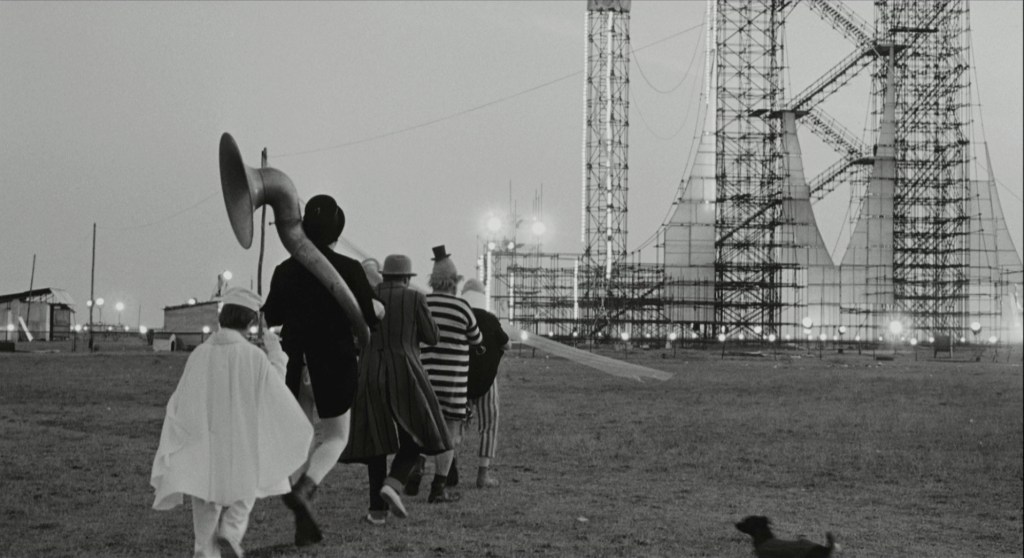
    • 8 1/2 – Federico Fellini (1963)
    • Nights of Cabiria – Federico Fellini (1957)
    • Three Colours: Blue – Krzysztof Kieślowski (1993)
    • Three Colours: Red – Krzysztof Kieślowski (1994)
    • Kicking and Screaming – Noah Baumbach (1995)
    • Memories of Murder – Bong Joon-ho (2003)
    • Jules and Jim – François Truffaut (1962)
    • Judas and the Black Messiah – Shaka King (2021)
    • Soul – Pete Docter (2020)
    • Michael Clayton – Tony Gilroy (2007)
    • Barking Dogs Never Bite – Bong Joon-ho (2000)
    • Nomadland – Chloé Zhao (2020)
    • Mustang -Deniz Gamze Ergüven (2015)
    • Varda by Agnès – Agnès Varda (2019)
    • Coming to America  – John Landis (1998)
    • Cléo from 5 to 7 – Agnès Varda (1962)
    • The Long Goodbye – Robert Altman (1973)
    • The Grand Budapest Hotel – Wes Anderson (2014)
    • California Split – Robert Altman (1974)
    • La Ciénaga – Lucrecia Martel (2001)
    • Blood Simple – The Coen Brothers (1984)
    • Burn After Reading – The Coen Brothers (2008)
    • The Last Detail – Hal Ashby (1973)
    • Bo Burnham: Inside – Bo Burnham (2021)
    • The Parallax View – Alan J. Pakula (1974)
    • Solaris – Andrei Tarkovsky (1972)
    • Roma – Federico Fellini (1972)
    • Y Tu Mamá También – Alfonso Cuarón (2001)
    • Ratatouille – Brad Bird (2007)
    • Shithouse – Cooper Raiff (2020)
    • Dune – Denis Villeneuve (2021)
    • Fat Girl – Catherine Breillat (2001)
    • Seven Beauties -Lina Wertmüller (1975)

Various Writings

Movie Logs:
January
February
March
April
May 
June
July
August
September
October
November
December

2021 Reading Log

2021 Television Log

Top Ten TV Shows

Movies

8 1/2 – Federico Fellini (1963)

January
Three Colours: Blue – Krzysztof Kieślowski (1993)
Three Colours: White – Krzysztof Kieślowski (1993)
Old Boyfriends – Joan Tewkesbury (1979)
Three Colours: Red – Krzysztof Kieślowski (1994)
Tenet – Christopher Nolan (2020)
The Peanut Butter Falcon – Tyler Nilson, Henry Schwartz (2019)
Fighting with My Family – Stephen Merchant (2019)
Variety Lights – Federico Fellini, Alberto Lattuada (1950)
The White Sheik – Federico Fellini (1952)
Dr. Strangelove… – Stanley Kubrick (1964)
I Vitelloni – Federico Fellini (1953)
Il Bidone – Federico Fellini (1955)
La Dolce Vita – Federico Fellini (1960)
Nights of Cabiria – Federico Fellini (1957)
The Town – Ben Affleck (2010)
Kicking and Screaming – Noah Baumbach (1995)
Memories of Murder – Bong Joon-ho (2003)
Jules and Jim – François Truffaut (1962)
8 ½ – Federico Fellini (1963)
Some Kind of Heaven – Lance Oppenheim (2020)
The Little Things – John Lee Hancock (2021)

February
Soul – Pete Docter (2020)
Michael Clayton – Tony Gilroy (2007)
Juliet of the Spirits – Federico Fellini (1965)
Mr. Jealousy – Noah Baumbach (1997)
Shoot the Piano Player – François Truffaut (1960)
Promising Young Woman – Emerald Fennell (2020)
Barking Dogs Never Bite – Bong Joon-ho (2000)
Framing Britney Spears – Samantha Stark (2021)
Judas and the Black Messiah – Shaka King (2021)

Death at a Funeral – Frank Oz (2007)
Nomadland – Chloé Zhao (2020)
One Night in Miami – Regina King (2020)
Ma Rainey’s Black Bottom – George C. Wolfe (2020)
Atlantics – Mati Diop (2019)
Saint Maud – Rose Glass (2019)
Skate Kitchen – Crystal Moselle (2018)
The Trial of the Chicago 7 – Aaron Sorkin (2020)

March
The Wolfpack – Crystal Moselle (2015)
Varda by Agnès – Agnès Varda (2019)
La Pointe Courte – Agnès Varda (1955)
Molly’s Game – Aaron Sorkin (2017)
Coming to America – John Landis (1988)
David Byrne’s American Utopia – Spike Lee (2020)
Paris is Burning – Jennie Livingston (1990)
Let the Sunshine In – Claire Denis (2017)
Crip Camp – James Lebrecht, Nicole Newnham (2020)
Sound of Metal – Darius Marder (2020)
The Muppet Movie – James Frawley (1979)
Tangerine – Sean Baker (2015)
American Factory – Steven Bognar, Julia Reichert (2019)
Free Solo – Elizabeth Chai Vasarhelyi, Jimmy Chin (2018)
The Great Muppet Caper – Jim Henson (1981)
Another Round – Thomas Vinterberg (2020)
El Camino – Vince Gilligan (2019)
Boyhood – Richard Linklater (2014)
Minari – Lee Isaac Chung (2020)
Mustang – Deniz Gamze Ergüven (2015)
Kajillionaire – Miranda July (2020)

April
Cléo from 5 to 7 – Agnès Varda (1962)
Can’t Get You Out of My Head – Adam Curtis (2021)
Shiva Baby – Emma Seligman (2020)
Shirley – Josephine Decker (2020)
Daguerréotypes – Agnès Varda (1976)
Hard Eight – Paul Thomas Anderson (1996)
Inherent Vice – Paul Thomas Anderson (2014)
California Split – Robert Altman (1974)
Honeyland – Tamara Kotevska, Ljubomir Stefanov (2019)
The Long Goodbye – Robert Altman (1973)
Ripley’s Game – Liliana Cavani (2002)
Strangers on a Train – Alfred Hitchcock (1951)
The Grand Budapest Hotel – Wes Anderson (2014)
The Lady Vanishes – Alfred Hitchcock (1938)
La ciénaga  – Lucrecia Martel (2001)
Rope – Alfred Hitchcock (1948)

May
Blood Simple – Joel Coen (1984)
Raising Arizona – Joel Coen (1987)
Burn After Reading – Joel & Ethan Coen (2008)
A New Leaf – Elaine May (1971)
The Heartbreak Kid – Elaine May (1972)
The Boy Downstairs – Sophie Brooks (2017)
10 Things I Hate About You – Gil Junger
Four Weddings and a Funeral – Mike Newell (1994)
Fast Times at Ridgemont High – Amy Heckerling (1982)
The Edge of Seventeen – Kelly Fremon Craig (2016)
Emma. – Autumn de Wilde (2020)
The Mitchells vs. The Machines – Mike Rianda (2021)
Zama – Lucrecia Martel (2017)
Cloudy with a Chance of Meatballs – Phil Lord, Christopher Miller (2009)
Midnight Run – Martin Brest (1988)
Hell or High Water – David Mackenzie (2016)
Romancing the Stone – Robert Zemeckis (1984)
Say Anything – Cameron Crowe (1989)

June
Klute – Alan J. Pakula (1971)
The Last Detail – Hal Ashby (1973)
Notting Hill – Roger Michell (1999)
Plan B – Natalie Morales (2021)
The Parallax View – Alan J. Pakula (1974)

July
No Sudden Move – Steven Soderbergh (2021)
Zola – Janicza Bravo (2021)

The Pelican Brief – Alan J. Pakula (1993)
The Lord of the Rings: The Fellowship of the Ring – Peter Jackson (2001)
Yi Yi – Edward Yang (2000)
My Winnipeg – Guy Maddin (2007)
3 Women – Robert Altman (1977)
A Brighter Summer Day – Edward Yang (1991)
Pride and Prejudice – Joe Wright (2005)
A Town Called Panic -Stéphane Aubier,Vincent Patar (2009)
Woodstock 99: Peace, Love, and Rage – Garret Price
Bo Burnham: Inside – Bo Burnham (2021)

August
Summer of Soul (…or, When the Revolution Could Not Be Televised)– Questlove (2021)
A Story of Floating Weeds – Yasujirō Ozu (1934)
The Green Knight – David Lowery (2021)
A Confucian Confusion – Edward Yang (1994)
Untold: Malice at the Palace – Floyd Russ (2021)
Solaris – Andrei Tarkovsky (1972)
The Secret of NIMH – Don Bluth (1982)
Paddington  – Paul King (2014)
Paddington 2 – Paul King (2017)
It’s Such a Beautiful Day – Don Hertzfeldt (2012)
Fantastic Planet – René Laloux (1973)
Fellini’s Roma – Federico Fellini (1972)
Sex, Lies, and Videotape – Steven Soderbergh (1989)
Y tu mamá también – Alfonso Cuarón (2001)
The Third Man – Carol Reed (1949)
Ratatouille – Brad Bird (2007)
The Incredibles – Brad Bird (2004)
The Incredibles 2 – Brad Bird (2018)
Monsters, Inc. – Pete Docter (2001)

September
After Hours – Martin Scorsese (1985)
Gosford Park – Robert Altman (2001)
Candyman – Bernard Rose (1992)
Together Together – Nikole Beckwith (2021)
Barb and Star Go to Vista Del Mar – Josh Greenbaum (2021)

Ticket of No Return – Ulrike Ottinger (1979)
Scarface  – Brian De Palma (1983)
Vivre Sa Vie – Jon-Luc Godard (1962)
Plus One – Jeff Chan, Andrew Rhymer (2019)
Baby Driver – Edgar Wright (2017)
Shithouse – Cooper Raiff (2020)

October
Daisies – Věra Chytilová (1966)
The Many Saints of Newark – Alan Taylor (2021)
Jennifer’s Body – Karyn Kusama (2009)
Candyman – Nia DaCosta (2021)
Dune – Denis Villeneuve (2021)
Last Night in Soho – Edgar Wright (2021)
Titane – Julia Ducournau (2021)

November
Harry Potter and the Sorcerer’s Stone – Chris Columbus (2001)
Safe – Todd Haynes (1995)
Harry Potter and the Chamber of Secrets – Chris Columbus (2002)
The Grand Bizarre – Jodie Mack (2018)
Fat Girl – Catherine Breillat (2001)
Leave No Trace – Debra Granik (2018)
Harry Potter and the Prisoner of Azkaban – Alfonso Cuarón (2004)
The French Dispatch – Wes Anderson (2021)
That Thing You Do! – Tom Hanks (1996)
Maggie’s Plan – Rebecca Miller (2015)
Desperately Seeking Susan – Susan Seidelman (1985)
Band Aid – Zoe Lister-Jones (2017)
How It Ends – Zoe Lister-Jones (2021)

December
King Richard – Reinaldo Marcus Green (2021)
Harry Potter and the Goblet of Fire – Mike Newell (2005)
Save Yourselves! – Alex Huston Fischer, Eleanor Wilson (2020)
Belfast – Kenneth Branagh (2021)
Buffaloed – Tanya Wexler (2019)
Seven Beauties – Lina Wertmüller (1976)
Citizenfour – Laura Poitras (2014)
Karaoke Girl – Visra Vichit-Vadakan (2013)
Butter on the Latch – Josephine Decker (2013)
Thou Wast Mild and Lovely  – Josephine Decker (2014)
Microhabitat – Jeon Go-woon (2017)
Harry Potter and the Order of the Phoenix – David Yates (2007)
Blow the Man Down – Bridget Savage Cole, Danielle Krudy (2019)
Don’t Look Up – Adam McKay (2021)
The Breadwinner – Nora Twomey (2017)
How to Build a Girl – Coky Giedroyc (2019)
The To Do List – Maggie Carey (2013)

Books

Breaking Bad – Vince Gilligan (2008-2013)
  • Invisible Man – Ralph Ellison (1952)
  • Mad Men Carousel – Matt Zoller Seitz (2015)
  • A People’s History of the United States – Howard Zinn (1980; 2015 edition)
  • V. – Thomas Pynchon (1961)
  • Breaking Bad 101 – Alan Sepinwall (2017)
  • Antkind – Charlie Kaufman (2020)
  • It’s Garry Shandling’s Book – Ed. Judd Apatow (2019)
  • The Wes Anderson Collection: The Grand Budapest Hotel – Matt Zoller Seitz (2015)
  • There are No Children Here – Alex Kotlowitz (1991)
  • The Dispossessed – Ursula K. Le Guin (1974)
  • The Aeneid – Vergil; Translation by Shadi Bartsch (2021)
  • Pride and Prejudice – Jane Austen (1813)
  • A Swim in a Pond in the Rain – George Saunders (2021)
  • Piranesi  – Susanna Clarke (2020)
  • Illusions: The Adventures of a Reluctant Messiah – Richard Bach (1977)
  • A Moveable Feast – Ernest Hemingway (1964)
  • Jitterbug Perfume – Tom Robbins (1984)
  • This Is How You Lose the Time War – Amal El-Mohtar, Max Gladstone (2019)
  • Moments of Being – Virginia Woolf (1972)
  • Harry Potter and the Sorcerer’s Stone – J.K. Rowling (1997)
  • Harry Potter and the Chamber of Secrets – J.K. Rowling (1998)
  • Harry Potter and the Prisoner of Azkaban – J.K. Rowling (1999)
  • Harry Potter and the Goblet of Fire – J.K. Rowling (2000)
  • Harry Potter and the Order of the Phoenix – J.K. Rowling (2003)

Television

I Think You Should Leave with Tim Robinson – Zach Kanin, Tim Robinson (2021)
  • Mad Men (Seasons 2-7) – Matthew Weiner (AMC)
  • It’s a Sin – Russell T. Davies (Channel 4 / HBO Max)
  • Breaking Bad (Seasons 1-5) – Vince Gilligan (AMC)
  • Mare of Easttown -Brad Ingelsby (HBO) 
  • Hacks – Lucia Aniello, Paul W. Downs, Jen Statsky (HBO MAX)
  • I Think You Should Leave with Tim Robinson (Season 2) – Zach Kanin, Tim Robinson (Netflix) 
  • Mythic Quest (Seasons 1 & 2) – Charlie Day, Megan Ganz, Rob McElhenney (Apple TV+)
  • Betty (Season 2) – Crystal Moselle (HBO)
  • The White Lotus – Mike White (HBO) 
  • Detroiters (Seasons 1 & 2) – Sam Richardson, Tim Robinson, Zach Kanin, Joe Kelly (Comedy Central)* 
  • 9/11: One Day in America – Daniel Bogado (National Geographic) 
  • Normal People – Sally Rooney, Alice Birch, Mark O’Rowe (Hulu / BBC)* 
  • Reservation Dogs – Sterlin Harjo, Taika Waititi (FX on Hulu) 
  • Ted Lasso (Seasons 1* & 2) -Jeff Ingold, Liza Katzer, Bill Lawrence, Jason Sudeikis (Apple TV+)
  • Squid Game – Hwang Dong-hyuk (Netflix) 
  • Only Murders in the Building – Steve Martin, John Hoffman (Hulu)
  • You (Season 3) – Greg Berlanti, Sera Gamble (Netflix) 
  • What We Do in the Shadows (Season 3) – Jermaine Clement (FX)
  • Impeachment: American Crime Story – Scott Alexander, Sarah Burgess (FX) 
  • Better Call Saul (Seasons 1-5) – Vince Gilligan, Peter Gould (AMC)
  • The Great British Baking Show (Series 12) – Anna Beattie (Channel 4 / Netflix) 
  • Survivor (Season 41) Charlie Parsons, Mark Burnett, Jeff Probst (CBS)
  • Succession (Season 3) – Jesse Armstrong (HBO) 
  • Curb Your Enthusiasm (Season 11) – Larry David (HBO) 
  • It’s Always Sunny in Philadelphia (Season 15) – Rob McElhenney (FXX)
  • How To with John Wilson (Season 2) – John Wilson (HBO)


Mad Men

peggy 3

Matthew Weiner, AMC, 2007-2015

Season 1 – 2007 
The last time I watched Mad Men, I decided it was the greatest series of all time. If you’ve read this far, you know that I’ve now ascribed that title to both The Wire and The Sopranos as well. To be honest, I think my pick will just be whatever is the most recent series I’ve seen between these three and Breaking Bad. But I do have to say that out of this Mount Rushmore, I think Mad Men is by far the most enjoyable. It’s probably the funniest of these shows. It’s the most visually pleasing. Along with The Wire, it has the deepest cast. It’s probably not as ambitious as The Sopranos or The Wire. And I know from watching that it is certainly not as consistent as Breaking Bad. But for whatever reason, it’s the one I most easily return to. That has to count for something.

Season 2 – 2008
I fear I was overly negative in reviewing Mad Men’s first season. Not that I was all that negative – I did say I thought it was one of the four greatest series of all time – but I did also say that it was clearly a step below The Wire and The Sopranos. I’m actually not sure that’s the case. In Season 2, I was reminded of just how masterful Mad Men can be, particularly in its storytelling structure. The series has an incredibly deep bench of talented actors. I think it clearly has the greatest assembly of characters of any show. And it’s extremely funny. While those are its greatest strengths, they can also make the series so enjoyable that you don’t see the work. Which should be a good thing, but probably plays against it in this instance. Mad Men wraps its stories and arcs so neatly, you sometimes forget how meaningful they can be. You can watch the show as sheer entertainment, but you can also dig deeper into it. If you work, you’ll see how Don’s storyline mirrors Peggy’s, or how Harry Crane’s mirrors Joan’s. It’s exceptionally thoughtful and it’s incredibly fun to watch. What more could you ask from it?

Season 3 – 2009
For whatever reason, Mad Men‘s events and seasons have always seemed to blend together for me. This is now occurring even as I watch. This is my third time through the series and I am still being surprised by when events occur or when characters show up. And it isn’t just because it’s a long-running series. It was easy for me to separate seasons of The Sopranos. It was even easier to do so for The Wire. But something about Mad Men seems to resist this categorization.

One theory for this is that Mad Men doesn’t center on major events the way most other shows do. Breaking Bad is obviously focused on the ups and downs of a man as he pursues meth-making. It’s easy to have a Tuco season or a Gus season because of this set-up. Same goes with The Sopranos. You can remember that Season 1 is Tony vs. Livia/Junior or that Season 2 is Tony vs. Richie Aprile. While Mad Men certainly has events and even villains, they’re kind of all the same: Don has an affair, he loses a client, the firm has to get out of a bind. It doesn’t make the show any less compelling to watch, but it does make it blend together.

So if this is true, why? Is the series trying to be a procedural? Maybe. Its strongest moments actually seem to be when it functions as a workplace drama. But I think there is a particular artistic reason for why Mad Men blurs its events. The series is an exploration into whether or not personal change is actually possible. On its surface, it’s about an ad-man who stole his identity and reinvented himself only for his past to keep catching up. As the show goes along, we see that this is more or less true for every character. Whether it’s Don, Roger, Peggy, Joan, or Pete, we see that they face the same situations again and again. Sometimes they even face situations we’ve seen other characters experience. This is especially true of the mirrored relationships between Don and Peggy or Joan and Peggy.

Maybe this is all just a long-winded excuse for Season 3 not standing out? But I don’t think that’s really true. Honestly, I thought Season 3 might be the best yet. There were a couple of lulls, but the additions of Connie Hinton, Lane Pryce, and Henry Francis are all tremendous. Moreover, the last two episodes of the season along with episode 6, “Guy Walks Into an Advertising Agency” are as good as the show has ever been. I guess I’ll just have to keep watching to see if my theory is right.

Season 4 – 2010
I was struggling with how to sum up this season. In general, it’s mostly more of the same. The series is always very good and occasionally excellent. And there are, of course, a few lulls. Don’s storyline reaches a necessary low point. This is the season in which he’s finally out of control with his drinking and clearly mentally unwell. But the season contains some high watermarks for many of the other characters. It’s painful to watch Joan deal with her marriage and all-around shitty husband, but it’s an incredible showcase for the character and Christina Hendricks. Peggy is as dynamic as ever. I love the introduction of her beatnik friends. And the additions of Jay Ferguson’s Stan Rizzo and Jessica Paré’s Megan Calvet are terrific! It’s kind of insane to think that they don’t enter the series until halfway through its run.

So, like I said, a pretty good season. But then I remembered that this season contains “The Suitcase,” arguably the greatest television episode ever. One of the things that I especially love about Mad Men is that it was never apologetic about being a TV series. That’s not the case for many other “Peak TV” shows. It’s clear, for instance, that The Sopranos always wanted to be a film or that The Wire really wanted to be a novel. And as good as those shows are, they almost seem to have a disdain for their medium. Mad Men, on the other hand, leans into the fact that it’s a TV show and actively recognizes all of the advantages of being one. That, for example, you can build undefined and complicated relationships like Peggy’s and Don’s. Or that you can slowly build to a character’s breaking point without forcing the issue. Or, especially, that if you spend 40 episodes doing one thing, you have a real opportunity to knock out the audience when you change up the formula as happens here. “The Suitcase” is so amazing precisely because it’s a TV episode. The writing, performances, and even historical backdrop of the episode are obviously flawlessly done. But what makes the episode really shine is that we waited 3 and a half seasons to get to this point. It was worth the wait.

Season 5 – 2012 
I have to say, I think Season 5 is in the running for the best Mad Men season. Everything I’ve said about the series and earlier seasons still applies. And before rewatching, I don’t know if I could have told you what specifically happens in this season. But after rewatching, I was struck by how much more of a thematic tie there is between these episodes than in seasons past. Up to this point at least (there will be plenty more in 6 and 7), this is the death season. Throughout Season 5, we see moments, images, and harbingers of death everywhere. While loaded imagery has always been in the series’ wheelhouse, explicit foreshadowing like this is a deviation from Mad Men’s formula. Major events have rarely felt destined to happen in the show thus far. On the contrary, the series often suggests the opposite. It’s largely about how these characters, and maybe humanity in general, can’t escape routines and habits.

The inevitable death in this season is that of Lane Pryce. It’s one of the series most tragic, and well-done arcs. It also feels like a major turning point for Don (perhaps not in action but in psyche). Lane’s arc here mirrors Don’s secret past. He’s someone who has wholeheartedly adopted a new identity (American) through Madison Avenue and seems willing to do anything to preserve it. When Don confronts Lane over his forged check, he tells Lane that he’s started over many times, that this is the worst part. That’s only half-true. Don has never had his secret exposed in a truly compromising way. When Bert Cooper found out, he didn’t care. When Betty found out, she left him (a subconscious relief for Don). The closest Don gets to being compromised is when his identity was flagged by National Security. In that instance, he was anything but calm or ready to start over.

So Don’s advice to Lane here isn’t based so much on past experience, but perhaps a subconscious wish for how he might behave if/when faced with this dilemma himself. Don needs a sign that if he were exposed and had to lose everything (money, partnership, reputation, Madison Avenue) he would be able to remake himself. Earlier in the season there was a moment in which the elevator doors opened for Don to reveal an empty shaft: the abyss. The sign that Don gets from Lane is another version of this. Faced with a dilemma that could always arise for Don, Lane kills himself.

Season 6 – 2013
Oh, Season 6. This was the place where, my first time through the series, I stopped. Then, when I rewatched the series, I discovered that bingeing made it a whole lot more tolerable. The third time around? I’m obviously not in any danger of quitting the show, I know that it rebounds. But man oh man, it’s just a tough season. I think it’s pretty easily the worst season of the SopranosWireBreaking Bad class of shows.

So how is it so bad? In some respects, you’d expect Mad Men to be able to avoid down seasons more than other series. And as I’ve said elsewhere in these reviews, the show mostly does the same things over and over. What’s more, it barely relies on plot in the interest of developing characters and themes. These are all aspects that, again, you’d think would insulate it from a forced storyline or arc. But I think what Season 6 shows is how fine a line Mad Men was walking between being a great show and being a mediocre one.

For instance, there’s nothing drastically different about Don here than in Season 5. He’s at another low point in his drinking, depression, and general lousing. But this time it just feels like an ounce too much. For someone who at the start of the series was one of the most exciting characters in TV history, Don is just unbearable at this point. The same generally goes for the series’ point of view. In the early seasons, I am able to forgive the lack of perspectives (particularly from any Black POV). The series takes place in a Madison Avenue office. It makes sense to me why the show would be so focused on WASPy men. On top of that, Weiner and his team have shown strength in portraying some types of diversity. Peggy and Joan are probably the two best characters on the series and Michael Ginsberg is one of the series’ best additions. But at this point, the lack of Black stories and representation feels like a major problem. I have to agree with Matt Zoller Seitz’s assessment that it feels like Weiner & Co. are just terrified of getting it wrong.

So what does this all mean for the series? Even at its best, it was criticized by some for being, essentially, an extraordinarily well-done soap opera. I think that’s pretty stupid. At its best, Mad Men was as good as anything that’s been on TV. It was complicated, funny, and profound. If you thought it was just a soap, I think you were missing what the series really had to say. But at its worst, that may be a fair assessment. It feels like by Season 6, Mad Men has mostly run out of things to say. And when it comes to issues of race, and the late 60s in general, it seems uninterested to even join the conversation. It’ll be interesting for me to see how the series rights itself in Season 7 (I know it does, I just can’t remember how). But again, I think the takeaway from me is how close the difference between being brilliant and tired can be.

Season 7 Part 1 – 2014, Part 2 – 2015 
Mad Men’s
final season is technically divided into two parts, but I think works as one piece. The first half, in a lot of ways, is business as usual for the series. It is a version of the show as if it were going to continue on in perpetuity. Don is on leave, fighting for his old role back at SC&P. He’s working (yet again) on self-improvement, especially in the wake of some low-points in Season 6. Most importantly, he’s constantly putting off the inevitable. He’s carrying on a dead-end marriage with Megan, he’s fighting to keep his job even as his partners look to remove him at the first opportunity, and he’s grappling to compete against the tech-centric future of the industry. The same can be said for many of the other characters. Joan works, and struggles, to establish herself in accounts. Peggy fights to get the respect and status she deserves and would have already received had she been a man. Pete tries to establish a viable wing of the business in California. Even the first half’s finale fits this mode. As Matt Zoller Seitz points out in his book, Mad Men: Carousel, it literally embodies specific aspects of every season finale to this point. It centers on one last impossible (and yet successful) scheme to save their business.

The second half of the season largely mirrors Part One as well as the rest of the series with a major exception. The show, along with these characters, can no longer prolong the inevitable. The run of episodes is appropriately titled, The End of an Era. Don’s marriage is finally over. He’s no longer fighting for his position. Instead, he has to finally just work as a creative director (something that despite his title, he’s never really done throughout the series). Eventually, SC&P will learn their scheme at the beginning of the season actually failed: they’re being absorbed by McCann. It is the end of the line in advertising for characters like Joan and Roger who have money but no longer a viable career. For Don and Peggy, they’ll have to claw their way back to what they had earned in the first seven seasons. For Pete, it’ll signal a new beginning and he’ll leave the industry (and New York) for the first time in his life. This statement of finality extends beyond the firm as well. Betty is diagnosed with terminal cancer. She tells Sally that she knows when it’s the end. As opposed to Part One, in which Matthew Weiner & Co. gave us a version of the series as if it were to run forever, Part Two gives us finality. We get endings to the stories we’ve been following for the past 7 seasons.
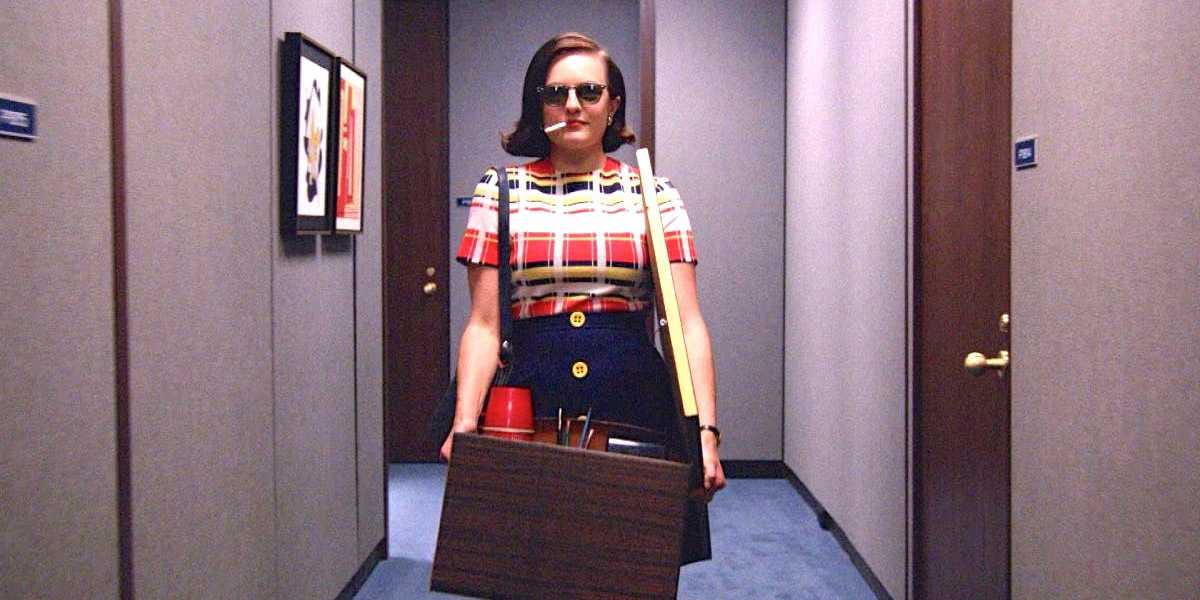
When I watched this final run of episodes originally, I was a bit thrown. Finality and ending seem almost antithetical to Mad Men‘s premise. As I’ve said before, this is a show that largely explores whether personal change, growth, or reinvention is actually possible. I think the answer you’d expect to that question is no. So when Matthew Weiner shows us countless instances of change at the end, it’s disorienting. Yet as I rewatch this series, I realize that Weiner’s answer to this question has probably been yes all along. That change is in fact possible (and perhaps even inevitable) but occurs so slowly that we hardly notice it. How else would you explain how Betty goes from being unable to discuss mortality at the beginning of the series to confidently facing her own death at the end? Or how Don goes from being unable to discuss his past with his own wife to being able to tell his kids, strangers, and even Peggy? And look at Peggy! She starts out in the series as a frightened and timid secretary and ends as someone who thinks waiting until 1980 to become a creative director is too long (it is). Or Joan, who starts out by telling Peggy that if she plays her cards right she’ll wind up with a husband and yet ends her own story by turning down prospects of a happy marriage to pursue a career.

This third time through the series, I’m astounded by how beautiful and poetic this ending is. I’ve gone from thinking that it was a relatively weak finale to thinking it’s perhaps the strongest close of The SopranosThe Wire, and Breaking Bad class of shows. The fact that it took me so long to see this I think speaks volumes of the show’s complexity and depth. As I reach the end once more, I have this feeling that there has to be more somewhere. Like a lost season I forgot to rewatch. My impression of these characters is just so deep, I feel as if I’ve spent more time with them than I actually have. It’s the greatest example of a show being more than the sum of its parts. It’s the reason why this show remains endlessly rewatchable.

2021 Movie Log: December

Seven Beauties – Lina Wertmüler (1975)

1st: King Richard – Reinaldo Marcus Green (2021)
A really solid sports movie. I was skeptical about Will Smith’s performance. Particularly, whether he would dominate this character. I think he pulls it off. Perhaps ironically, I think where this movie suffers is where it has to do the typical “sports movie” stuff. I’m thinking about the fights between the parents and the contention around whether Richard will let Venus play. Still, an enjoyable movie. It’s obviously a great story. I would not be surprised if this becomes a big hit.
Grade: B

3rd: Harry Potter and the Goblet of Fire – Mike Newell (2005)
I will say that this film is better than Sorcerer’s Stone and Chamber of Secrets as a piece of entertainment. But other than that, it’s a bit of a mess and a bad adaptation of the book. My main frustration with the movie is how and where it chooses to deviate from the novel. I am by no means a purist when it comes to adaptions. In fact, I believe Prisoner of Azkaban is the most successful HP film precisely because of where it differs from the novel. But the changes in Goblet of Fire just don’t make any sense to me. I seriously question whether this movie makes sense to non-readers. I mean, there’s not even an explanation for the big twist at the end of the film. It just happens. Oh well. If I could pick a movie in this franchise to get a do-over, it’d be this one.
Grade: C

6th: Save Yourselves! – Alex Huston Fischer, Eleanor Wilson (2020)
It’s hard to make movies. I assumed this film might be pretty mediocre going in. It turns out I was right. There are parts of the premise and overall concept that I do like. But besides that, there wasn’t much to enjoy. Oh well.
Grade: C-

7th: Belfast – Kenneth Branagh (2021)
First of all, I should say I quite liked this movie and was certainly moved by it. Perhaps it should be no surprise given Branagh’s acting talent, but the performances are the best part of the movie. Centering a film on a 9-year-old is always a tricky proposition. Fortunately, Jude Hill is able to carry the film. That being said, I did struggle with Branagh’s direction at times. This film is not for fans of subtlety. The cinematography across the film is incredibly busy. That feeling even extends to the storytelling mechanics. This movie gives a very broad picture of this time and place. There are good people and bad people. Perhaps that’s fitting given that a child is the focal point of the movie. Still, I think the film could have done with a bit more nuance.
Grade: B-

8th: Buffaloed – Tanya Wexler (2019)
As I said in a previous post, filmmaking is hard, especially for genuine independent features like Save Yourselves! or Buffaloed. I generally watch these films to see what directors, writers, and actors are able to pull off without a budget. When these movies are good, it’s thrilling. Unfortunately, this is a case in which almost every aspect of the film doesn’t work.
Grade: D

10th: Seven Beauties – Lina Wertmüller (1975)
This honestly may be one of the best films I’ve seen. It is certainly one of the boldest. I can’t find many comparisons to it. The filmmaking and central performance are highly reminiscent of Fellini. This film, like many of his, follows the misadventures of a laughable, despicable, tramp-like manchild. Still, I don’t know if I’ve seen that premise taken nearly this far. This film’s misadventures run through murders and dismemberment, psychiatric wards, and jarringly realistic sequences set at a Nazi concentration camp. What’s more, it seems like Wetmüller must have had a pretty big budget. The concentration camp scenes are shot with the same scope and precision as a great war movie. I’m going to need a few more viewings to fully process this film. But even after one viewing, this movie knocked me out. Oh yeah!
Grade: A-

11th: Citizenfour – Laura Poitras (2014)
Probably the most thrilling documentary I’ve ever seen. I kept forgetting that the events in this film are real. In other words, that Edward Snowden was not going to be killed during the film. I am someone who is shamefully ignorant of most of this story and its significance. I think the documentary really succeeds at getting its message across. We not only hear about Snowden’s findings first hand, we see the immediate fallout and repercussions of his decision to go public with it. The fact that he, these journalists, and Poitras are forced to hide in a hotel room as they publish these stories is significant!
Grade: B+

12th: Karaoke Girl – Visra Vichit-Vadakan (2013)
I really like this genre of blending documentary and narrative. I’m thinking of directors like Sean Baker and Crystal Moselle. Here, I thought the narrative aspects didn’t always hold up. The relationship with Sa’s boyfriend, for instance, felt forced. But the documentary bits more than made up for it. I also was a big fan of the surreal, surprise ending.
Grade: B-

13th: Butter on the Latch – Josephine Decker (2013)
My favorite of the three Josephine Decker films I’ve seen. I don’t know if there’s another director doing what she does. I also realized that this was shot by the same Ashley Connor who has directed almost every music video I like. It’s all coming together!
Grade: B

18th: Thou Wast Mild & Lovely – Josephine Decker (2014)
I stand corrected. This is the best Decker film to date. In any case, it’s the one in which her fever-dream style of filmmaking most aligns with the story she is telling. I was on the edge of my seat, waiting for the movie to finally turn. When it does, it’s both completely brilliant and utterly horrifying.
Grade: B+

19th: Microhabitat – Jeon Go-woon (2017)
There’s so much to like here. Esom’s performance, in particular, is phenomenal. She brings so much depth and empathy to her part. In fact, if I have a critique of the movie, I think it may be that her character, Miso, is too likable. To some extent, that’s baked into the story. But I thought this could have been more interesting if a) Miso was a little messier as a character or b) one of her friends, or especially her boyfriend, wasn’t a total loser. Just my thought. Still, a really well-done film.
Grade: B

26th: Harry Potter and the Order of the Phoenix – David Yates (2007)
Overall, a pretty good film and a decent adaptation of the novel. I feel bad that my recent reviews of this franchise have been less than positive. But after revisiting the novels, some of the decisions in these films are just maddening. Did they really have to make the longest book the shortest movie? And why, for the second straight film, do they cut the explanation for what’s just happened completely out of the movie? I’ll never understand it.
Grade: B

27th: Blow the Man Down – Bridget Savage Cole, Danielle Krudy (2019)
Hey! A Maine movie. A pretty good one too. I loved how intimate the world of this film was. Everything takes place in one town, across a few locations, and involves about 8 characters. It’s a really smart piece of filmmaking.
Grade: B-

28th: Don’t Look Up – Adam McKay (2021)
This is not nearly as bad as people are making it out to be. I’m not saying it’s a masterpiece or anything, but for the most part, I enjoyed it. When is the next time you’ll see so many A-list actors in a film not based on IP?
Grade: C+

29th: The Breadwinner – Nora Twomey (2017)
This reminded me so much of Persepolis. I think both films succeed at making a foreign, misunderstood place easily accessible for a wider audience. Here, that might even include children. I really liked the way Twomey weaves the story within a story back into the main narrative. If I struggled with a piece of the movie, it was probably the animation. Not that it was bad by any means. I just found myself wishing for a more tangible performance in the film.
Grade: B-

29th: How to Build a Girl – Coky Giedroyc (2019)
I hate to shit on movies but this was pretty much a disaster. In almost every regard it’s completely misguided. Also, they couldn’t have found an English actress for this part?
Grade: D-

29th: The To Do List – Maggie Carey (2013)
How had I never heard of this before? It’s great! Aubrey Plaza’s central performance is, of course, perfect. I honestly just found myself gravitating toward Bill Hader’s character. He’s so good at everything he does.
Grade:
Grade: B