

4th: Hamilton- Thomas Kail (2020)*
I am quite sure that I won’t have any profound or original insights into this production. For one, I don’t have the knowledge of musicals or Broadway in the first place to do so. And two, I mean what could you say about Hamilton that hasn’t been said in the first place? I suppose that logic could be applied o any of the classic films I write about. So why not try? More than anything, I just feel overwhelmed by the brilliance of the production. From the writing, the music, and the performances. It’s hard to come away thinking anything but what an achievement that was. It’s insane to me that someone could conceive of anything like this. The fact that it is all, more or less, an adaption of the biography of an 18th-century founding father feels even more remarkable. I think the highest praise I could offer is that it makes me want to read that giant biography. It’s been fun to keep listening to the soundtrack in the aftermath of watching the performance. I’m amazed at how many more details are in the music than a viewer could take in after a single performance. Even something as obvious as the repetitive musical themes feel so dynamic on repeat listens. The way the same song or a chorus goes on to change meaning throughout the play. It’s so well done. If I had any complaint, it would just be the translation of watching this on television. It’s still riveting, compelling, etc. But I’m certain there is a lot lost not actually seeing it live. Perhaps one day I will.
Grade: Five Stars
5th: Who’s Afraid of Virginia Woolf?– Mike Nichols (1966)
Christ almighty. I don’t know if I’ve ever seen anything so scathing. These people fucking hate each other. This movie had been on my list for a long time. What I had expected was nowhere close to what this movie turns out to be. It is two hours of being around the most toxic couple you’ve ever seen. It’s like watching the Before Midnight fight, but it’s even more vitriolic and lasts three times as long. Plus, the fight in Before Midnight ultimately comes from the struggle in reconciling love as the couple moves into another phase in their relationship. Elizabeth Taylor and Richard Burton are way past that. Their characters are trying to reconcile how to interact as two people who hate each other. The writing is perfectly done. It’s supposedly an almost exact translation of the play. The way the film moves effortlessly through the stages of this night without much in the way of plot feels quite like a play. The direction is really well-done too. Mostly in how Nichols stages and elicits these performances. Because it is these performances which are the crux of the film. This movie is a classic, specifically for them. I don’t know how much I can even say besides that. I fully believe that Richard Burton and Elizabeth Taylor are these people. There’s nothing that’s not 100% committed to their roles. It’s extraordinary to watch, though I have no desire to revisit them any time soon.
Grade: A-
Who’s Afraid of Virginia Woolf – Nichols, Mike (1966)
7th: Taipei Story – Edward Yang (1985)
I was a little skeptical of the film at first. Although it was beautifully shot and the performances were terrific, I couldn’t see where it was going. Both A Brighter Summer Day and Yi-Yi begin with similar, sprawling styles. But those movies are really long. I expected a slow-burn going into them. Here, I was enjoying the film, but halfway into it I still was trying to figure out what was happening. What are these characters’ relationships? Is there a narrative? Is this just a city-scape film as the title implies?
Thankfully, I’m a fool. This film is as meticulously written and plotted as any of Yang’s other films. And like Yi-Yi or A Brighter Summer Day it deals with a set of characters at a crossroads. On the one hand, it’s a slice of life film. Part of the reason the film is confusing at the beginning is precisely because Yang is such a naturalistic filmmaker. He shows us these authentic, human interactions and it takes a while to fully grasp their importance. But by the second half of the movie, we realize that Lung and Chin are childhood sweethearts trying to force a relationship. We realize that Lung has a close relationship with Chin’s father from their baseball days. We realize Chin and her sister are trying to remove themselves from his abuse. And we realize that at the center of everything is money.
Every character in this film is in dire financial straits. It is shown as being almost inextricable from living in Taipei. Chin’s company has been bought out by an American one. Lung’s sister and mother have moved to America for better prospects. At one point Lung discusses his American brother-in-law, a man who shot a defenseless black man just because he could. Not only does his brother-in-law get away with it, but his business is now thriving. This is the crux of the film. Could Lung or Chin ever do something so self-involved? Lung describes his brother-in-law’s act with appropriate disdain. But it’s clear he’s thinking about it not as a murder, but as an extreme sacrifice of personal accountability. That’s the world he knows.
In this film, we see these characters have to balance accountability time and time again. We see that Chin has a lover at her old company. Someone who may want to leave his wife for her. But she can’t act on it. She turns down his advances to tend to her family. It’s clear that while she may want to go that route, she is too keenly aware of the practicalities of sticking it out with Lung. And Lung too visits with his ex. It’s a tempting prospect even if he already knows it’s doomed to fail. The same thing could be said of Lung’s financial inclinations. As soon as he and Chin decide to move to the States, he gives away their money. He lends aid to Chin’s father and to an old friend, knowing that he won’t get it back. It’s both an insight into his true feelings of moving with Lung, and to the personal responsibility he feels for those around him.
Near the end of the film, Chin finally proposes the idea of marriage to Lung. He rebukes her. “Marriage is not a cure-all, the States are not a cure-all,” he says. And he’s right. These two characters are clearly not meant to be together. He would rather take his chances in Taipei than pretend that the prospect of something new will save him. As it turns out, he’s murdered hours later. Nothing could save him. But perhaps all isn’t lost for Chin. In the most extraordinary moment of this film, Chin watches as the power goes out on a group of teens as they sing and dance along to the ultra-American “Footloose.” Moments later, when it comes back on, we see that Chin has been crying. Everything she has done in this film has been a cover for her emotions. Without anybody watching, she was finally able to let go. Although Lung’s murder will undoubtedly be difficult, perhaps she’ll no longer have to always carry this mask.
Grade: A
Taipei Story – Edward Yang (1985)
8th: Terrorizers – Edward Yang (1986)
I followed up Taipei Story with Yang’s next film. Though, this may be the last one of his for a while as his other films are not available in the U.S. At first, Terrorizers seems like quite the deviation from Yang’s other films. It starts out with an old-school police shootout. Yang actually closes out the film with fantasy scenarios of other killing sprees. However, at the center of the film is a tangle of characters who were all physically close to the killing. And throughout the movie, they struggle with the same existential issues that most of Yang’s other movies focus on. Zhou and Li are contemplating their lives, their marriage, their careers. A photographer (like in Yi-Yi) links the characters together. And at the center of it all is the city of Taipei. The pleasure in Terrorizers is watching this puzzle unfold. It’s completely Altman-:. I’d be eager to re-watch just to see these threads all at the beginning. And while Terrorizers may not have the emotional catharsis that some of Yang’s other films have, this one uses other genre staples much more readily. At times it’s an action movie, a mystery, a comedy. It reminded me a bit of Haruki Murakami’s work. Perhaps it’s no coincidence that Li states that she loves Japanese mystery novels? Like most of Terrorizers, that’s something I’ll have to suss out next time.
Grade: B+
Terrorizers – Edward Yang (1986)
10th: Down in the Delta – Maya Angelou (1998)
This is the first installment of mine and Wills’ movie/book club! It is to be watched/discussed as we begin reading Their Eyes Were Watching God. As that discussion goes along, I may have more thoughts here. As a film, I was initially skeptical. Obviously, Maya Angelou is untouchable as a poet, writer, and activist, but I wasn’t sure if that would translate as a director. And at the beginning, it feels like it might not. The film starts with pretty broad depictions of the characters. Loretta is a crack addict, Rosa is a pious, disapproving mother, Thomas is a good-hearted kid being corrupted by the city. Sometimes it even seems comical, such as when shots are being fired and Loretta and her son duck behind their couch. But as this movie goes along, these characters begin to transition. We see that maybe they were painted so broadly because this movie is about transformation. Once this family is in Mississippi, you begin to feel such warmth and empathy for them. You realize that this film is about how people, and their actions, are created by the environments around them. Loretta has the space to be a good mother and even a businesswoman. She just needs someone to believe in her. This sentiment is echoed beautifully with the silver candelabra. It is initially introduced as a source of tension between Earl and Rosa. It is then revisited as a prophecy, a foretelling that the family needs to be strong. What it turns out to be is a powerful reminder of where this family comes from. It was taken by their ancestor, Nathan, when he was freed during the civil war. He took it because it was what was used to buy his father, and permanently separate this family. So whether it’s struggling on this farm, or in the projects of Chicago, we see what this family has always dealt with. The product of their struggles stems from their history as slaves. But, as Angelou points to, again and again, it is this painful heritage that makes the family so resilient as well. They keep the candelabra not just as a token of a painful history, but as a reminder of their strength.
Grade: B+
Down in the Delta – Maya Angelou (1998)
10th: Palm Springs – Max Barbakow (2020)
This is one of the most fun movies I’ve seen in a while. I would not be surprised if it turns into one I re-visit. Something along the lines of I Love You, Man or Forgetting Sarah Marshall. In a lot of ways, it’s a fairly typical comedy. In fact, the literal movie beats are so precise it can feel like this came from a script someone wrote in film school. But sometimes movies that work within well-worn structures can be just as good as those that break the rules. And even if this isn’t the most adventurous movie in the world, I think there are three things it does exceptionally well. First are the performances. Andy Samberg and Cristin Milioti are incredible. They’re so smart, clever, and charming. I would watch a sequel just to spend more time with them. The second goes along with these performances and is just the writing. Much like I Love You, Man, there’s nothing wildly original about how the movie is designed. But the jokes inside are constantly funny. Just every little remark or bit they do works. It’s such a high batting average. You can tell that the script had been thought over and over, and re-worked until it was the best version possible. The final thing is just the simplicity of the movie’s overall structure. It has a fun premise but doesn’t derail itself trying to solve it. For as much as there’s a time loop going on, it’s a really simple movie. It tackles one premise and solves it all within 90 minutes. It’s just the tightest version possible. So while this isn’t the most mind-blowing film, I am kind of blown away by how perfect they made it.
Grade: A-
Palm Springs – Max Barbakow (2020)
11th: High Heels – Pedro Almódovar (1991)
This is the third Almódovar film I’ve seen. It’s always a delight. The colors, the sets, the melodrama. He has one of the most distinct styles of any filmmaker I know. While each film I’ve seen has been distinctly his own, they all have parodied a movie-making style. Matador is a mock crime drama. Though it came out before it, it strikes me as being a parody of a film like Primal Fear. Women on the Verge of a Nervous Breakdown is a comedy of errors. Something like The Importance of Being Earnest. And High Heels is no different. This one is a mock soap opera. In that vein, I think it works incredibly well. We have this insane twisted web of sex, lies, deceit, and murder. And at the center of it all is not only a horrifying mother-daughter relationship but also one man who stays involved by constantly changing disguises. He’s a drag performer, a deceased drug addict, and a lead investigator. His only giveaway? The mole on his penis. It’s too good to be true. The only thing I can knock the film for is being so much of a parody that it doesn’t always shine on its own. Its value comes mostly from the way it so precisely skewers the genre. But being an Almodóvar film, that still leaves the performances, the dialogue, the humor, and the wardrobe all done so well that it’s of course still worth watching.
Grade: B+
High Heels – Pedro Almodóvar (1991)
12th: Popstar: Never Stop Never Stopping – Akiva Schaffer & Jorma Taccone (2016)
This absolutely belongs in the pantheon of great music films. There really is something so admirable about The Lonely Island’s style. I don’t think they ever do anything wildly original. This really feels like an update of Spinal Tap or Walk Hard more than its own idea. It’s the same feeling I had about Palm Springs (see above!) But what they do in these movies, they do so well. I’m not even sure how to explain their success besides that they nail most of their jokes. And I don’t mean to knock the ambition or scope of Popstar. After all, they invent an entire musician. They create performances, tours, and everything else. They get amazing cameos from other celebrities. I’m sure in no way was this movie easy to pull off. And while all these things are necessary for the film to work, the thing that actually works about this movie is really the jokes. They’re so funny. So while I appreciate the invention of a character like Connor4Real. What really works about the movie for me is not so much what they’re parodying, but how they utilize it as a vehicle for their comedy.
Grade: B+
Popstar-Never Stop Never Stopping – Jorma Taccone & Akiva Schaeffer (2016)
15th: Another Year – Mike Leigh (2010)
This one blew me away. I was somewhat familiar with Leigh’s work before. I had seen two of his earlier features, Life is Sweet, and Meantime. Both of those films have a number of things in common with Another Year. They’re both excellent. They both focus on the dynamics of a family in London. And they both have resistance or optimism to them in spite of the characters’ eccentricities and hard luck. I think Another Year might be the best one of Leigh’s I’ve seen yet. For one, it is incredibly funny. Lesley Manville’s performance is remarkable. Her character is really like a trainwreck. It’s so hard to watch and yet impossible to turn away. Still, Leigh paints her character, and even the more downtrodden Ken or Ronnie, with such humanity and warmth. He is never making fun of them. We see them as people who are struggling deeply. And while it is certianly funny to watch some of their eccentricities, it’s also remarkably sad to watch when they come to grips with their lives. The film does an amazing thing by almost putting us in Tom, Gerri, and Joe’s shoes. Like this seemingly perfect family, we watch as these friends and family struggle through life. And while it’s difficult to watch, it only makes you want to extend out to them more. To include them in this family unit. At the beginning of the film, you wonder why Tom and Gerri put up with Mary. By the end we know. It’s because for how much of a mess she is, she’s also still a human being worth caring for.
Grade: A
Another Year – Mike Leigh (2010)
16th: Naked – Mike Leigh (1993)
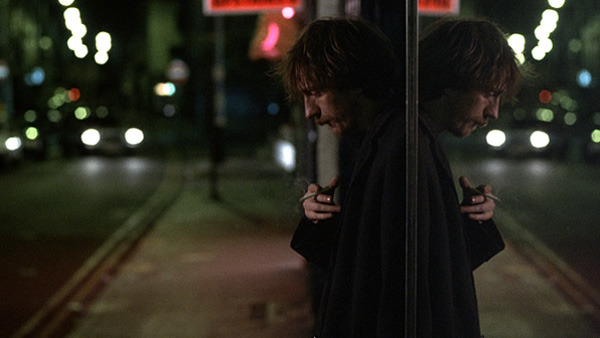
This almost feels like the opposite of Another Year. The movie is brutally dark. It opens with a rape scene (or at the very least, consensual sex that’s turned aggressive). Throughout the movie, there are many more instances of complicated, violent, and fraught sex. The protagonist, David Thewlis’s Johnny, is at once so compelling that you can’t help following him around through his nightmarish odyssey, and yet so despicable (and uniquely irritating) that at times all you want is to get away from him. In spite of all of this, I loved it. If it were made by any other filmmaker I would have hated something like this. But even with all of its darkness, this film is still somehow warm. It’s a magic trick that I have no idea how Leigh pulls off. As awful as these characters are, and as awful as the world they inhabit is, there’s a deep empathy to all of it. In Another Year, I noted how Lesley Manville’s character was comically pathetic. The charm was that Leigh never seemed to be making fun of her. It’s almost the same idea here but taken to its most extreme point. I cannot emphasize how despicable Johnny is. He’s a literal conspiracy theorist. His only pleasure seems to be in lying to women and using his looks to engage in aggressive, sometimes violent, sex with them. But you still end up feeling real sadness for him. This is a person, who by the end of the film, we see is completely broken. The arrogance and bravado he has when he enters the girls’ apartment are not there when he leaves it. As much as he’s a vicious predator, he’s also prey to this world. Leigh’s point seems to be that yes, Johnny is as awful a person as they come, but he’s still a person.
Grade: A
Naked – Mike Leigh (1993)
18th: Playtime – Jaques Tati (1967)
Playtime is Tati’s definitive achievement. It’s a slapstick comedy that seems to have pushed out beyond the genre. In a typical slapstick movie, we watch as the clownish character struggles to interact in the everyday world. The humor comes from the disasters the character brings out of the seemingly mundane. There can be complications to this. In Modern Times, Charlie Chaplin is skewering a world that is rapidly changing. But as surreal as the factory might be in that film, Chaplin is still the eccentric. Likewise, in Tati’s own Mr. Hulot’s Holiday (in which he plays Hulot, the same character as in Playtime), he is the one that’s out of place. Everyone else can manage their vacation just find. He’s the one that wreaks accidental havoc on the scenic beach town. But in Playtime, Tati plays Hulot as increasingly normal. The disasters don’t come from him as much as they do from this ultramodern version of Paris. And Tati emphasizes this point at the expense of his typical comedy. There are fewer laughs and gags than in any of his previous movies. In fact, Tati moves Hulot off-screen for long sections of the film. Even when we do see Hulot, he is played as increasingly normal. He meets with various friends and army buddies. He has a pretty successful interaction with a beautiful woman. The slap-stick comes not from Hulot, but from this sleek brave new world. More than anything the gags in the film come from what has been lost in this ultra-modernity. Often, they’re not even so much gags as little background cues. We see the real Paris in the reflection of the doorway. We watch as characters struggle to photograph a minuscule flower stand (the only remnant left of the old Paris). We see in the airport advertisements for various cities (all of which are exactly the same). Tati uses the genre to elicit sadness, beauty, and emotion as much as he does comedy. And to be clear, there is comedy. The gag in which Hulot breaks the restaurant door is maybe my favorite of his that I’ve seen. But Playtime is the best because Tati transforms the genre into a new expression.
19th: It’s a Mad, Mad, Mad, Mad World – Stanley Kramer (1963)
I ended up splitting this movie over two nights. On the one hand, it seemed like the logical thing to do. It’s three hours long and has a built-in intermission. On the other hand, I think I may have lost something not completing it all in one sitting. I was transfixed in my first night viewing. It’s remarkable how much mileage the film gets out of a really simple story. The motivations for each character are exactly the same. It’s just that there are many of them that make the movie so long. But the real pleasure is how almost all of the characters work. The film gives each of them a personality and plays up the most outlandish situations for them to find themselves in. You have the hot-headed truck driver, the exceedingly silly pair of bone-head friends, the “idyllic” husband and wife (on their second honeymoon!), and the emasculated seaweed salesman with his wife and her disproving mother. So whether it’s the truck driver single-handily tearing down a gas station, or the arrogant all-American husband failing to break through a single door with dynamite, it all works. This is a movie about performances. These characters all have to work for the movie to work. Otherwise, it’d just be exceedingly long and frustratingly stupid. However, my biggest takeaway from the film was just its sheer production. It is one of the most beautiful movies I’ve seen. The cinematography, the locations, the stunts! I can’t even imagine how expensive a movie like this was to make. It ended up being a good pairing with Playtime, another movie that uses slapstick comedy as a trojan horse for more ambitious filmmaking. Unlike in Playtime though, comedy is the point here. The end is so over the top. It’s hard not to think of it as the biggest slapstick stunt ever pulled off. As I said before, I do think I made the mistake of splitting the film in two. In the first portion, I was just mesmerized by its sheer audacity. It flew by. The next night though, I felt a bit restless. I think I had slipped out of the spell this film induces. I was looking for the logical conclusion to a film that doesn’t need one.
Grade: B+ / A-
It’s a Mad, Mad, Mad, Mad World – Stanley Kramer (1963)
22nd: Happy-Go-Lucky – Mike Leigh (2008)
Mike Leigh is incredible! This film falls closer in line to Another Year than his previous work. Meaning that while Happy-Go-Lucky may not have as an intense focus on socio-political issues (Mean Time, High Hopes) or even on human relativism (Naked) it is so thoughtful, well-executed, and just plainly enjoyable that it is every bit as worthy as those films. Comedy in general always takes a critical backseat to drama. Watching something like this reminds that this is an often misguided notion. Happy-Go-Lucky follows the unflappable Poppy, a woman who finds the best in all of her circumstances. If it’s the fact that she still has a roommate, she proves that they have an inseparable bond. If it’s the fact that she doesn’t have a boyfriend, she loves her freedom (the flamenco instructor suggests boyfriends are overrated anyway). Even if it’s the fact that she has back injury, hey that doctor was handsome! What Leigh is subtly doing in this film is testing Poppy’s optimism. This is mainly done by pairing her with the increasingly creepy, xenophobic, conspiracy theorist driving instructor, Scott. And it starts out as brilliant comedy. First with Poppy pushing Scott’s buttons. But as the lessons continue, Leigh paints Scott to be a more disturbing presence. He’s not just constantly annoyed with Poppy, he’s obsessed with her. This culminates when Poppy sees that Scott has maybe been watching her outside of these lessons. When she confronts him about it, we see how despicable he really is. He’s not only creepy and misguided, he’s intensely bigoted. What does this do to Poppy’s worldview? Perhaps it rattles her a bit, but it can’t shake her permanently. Michael Schur, the creator of many shows including Parks & Rec. has a quote that positivity can be just as powerful in comedy as negativity. And while that may be true, there are unfortunately not many examples of it. Most comedies get their laughs from making fun of their characters. But this isn’t the case with Mike Leigh’s work. The purpose of this film is to show that these obstacles in life aren’t with Poppy, they’re with the world. By framing the film like this, he makes a comedy as warm, positive, and powerful as his main character.
Grade: A
Happy Go Lucky – Mike Leigh (2008)
23rd: High Hopes – Mike Leigh (1988)
High Hopes is a bit of everything. There is romance (Cyril and Shirley’s relationship), slapstick (the detestable Yuppie neighbors), politics (the pro-choice argument), and tragedy (Cyril’s contentious relationship with his aging mother). At its core though, it is an interrogation into the meaning of family. Mainly what is a family, and what do you owe to one? There are two families at the center of the film. The first is Cyril’s biological one. He has his aging mother and his delusional sister. He feels obliged to help them despite the fact that he may not care for either. At the very least, he’s at political odds with both of them. The second family is the one he’s made for himself with Shirley. Though not married or bonded by children, they have stuck it out for ten years. It is clear that they love each other, but in Thatcher’s England, is that enough? Because of Cyril’s relationship with his biological family, he doesn’t want to have kids. Shirley does. Though only addressed in two scenes, the film is presenting a make-or-break moment for the couple. On the one hand, they have carved out a pretty nice life for themselves. Something that seems hard to do in England at this time. On the other hand, if they want different things, it may be time for them to break off. Ultimately, the film seems to land in the first direction. Shirley and Cyril bring his mother to their apartment. The film ends with them showing her the view from the roof. It’s not a bad.
Grade: A
High Hopes – Mike Leigh (1988)
27th: But I’m A Cheerleader – Jamie Babbit (2000)
I’m kind of stunned this has such a poor percentage on rotten tomatoes. First, even before watching I knew it was a hugely influential film. As much as I know Natasha Lyonne, Clea DuVall, and RuPaul from other things, I knew they got their start in this movie. Also, big shout to the character of Lipstick Lesbian played by none other than Julie Delpy! Second, the film is incredible. It’s really just about perfect. The set, the colors, the campiness, the soundtrack. It manages to be both a parody and earnest in its own right. What’s more, it’s all done in like 80 minutes. Luckily, the film has obviously enjoyed a critical reappraisal and a cult status. But it’s shocking to me it wasn’t there all along.
Grade: B+
But I’m A Cheerleader – Jamie Babbit (2000)
30th: My Own Private Idaho – Gus Van Sant (1991)
Another film that had been on my list for a while. I knew that it was a major part of the new Queer cinema movement. And of course that it was perhaps River Phoenix’s best performance. But I really had no idea how strange of a film this would be. Given its reputation, as well as Van Sant’s work on films like Milk or Good Will Hunting, I expected this to be more, I don’t know… traditional. It’s not! And it is better off because of it. This film is wonderfully bizarre. It’s almost aggressively so. Van Sant employs dreamscapes, purposefully anti-climatic cuts, strange editing, and almost lyrical dialogue to tell this story. The film is loosely based upon several of Shakespeare’s plays and it really feels like it. What I’m most impressed with is the balance that Van Sant arrives at with this influence. The characters both know and don’t know that they’re in this world. There are long sequences in which the characters are consciously performing for each other. Especially in interactions with Bob, it is the characters that are employing this Shakespearean dialogue and attitude, not the film. And yet, there are also large theatrical parts of the film that the characters are completely unaware of. The overall plot, for instance, in which Scott forsakes his life of squalor for one of luxury. The greatest takeaway from this film though has to be River Phoenix’s performance. It’s really just perfect, in a way that feels both deeply pained and effortless. It is tragically fitting that in a film that uses so many strange methods to call attention to its characters’ humanity, perhaps nothing stands out more than River Phoenix’s own.
Grade: B+
My Own Private Idaho – Gus Van Sant (1991)
31st: Secrets & Lies – Mike Leigh (1996)
Still on this Mike Leigh kick and it’s as good as ever! Maybe this shouldn’t come as a surprise with this film. It won the Palme D’Or after all. Still, it’s remarkable that I’ve now watched 7 of his films and have loved them all. I can see why this one feels like a special achievement though, even for him. With the exception of Naked, I think it’s his most ambitious project that I’ve watched. For one, the subject material is pretty intense. The movie follows three groups of characters as we (and they) slowly realize they’re all part of the same dysfunctional family. What impresses me most is how Leigh is able to express the individual pain and emotion in each of these characters. They’re all having deeply personal issues in the film. Moreover, it often comes unintentionally at the expense of another character. It feels like such an accurate depiction of how families work. This part of the film really comes together in the last half hour in which the family gathers together for the first time. As the major secret is revealed, we see the pain Cynthia is going through processing Hortense’s reemergence into her life. We see the pain Hortense is going through just trying to find out where she came from. We see how this discovery pains Maurice and Monica who can’t have children of their own. We see how it pains Roxanne to learn that her complicated relationship with her mother has only grown more complicated. And yet for all of this pain, it’s really fucking funny too. The best aspect is that this is all witnessed by two people who aren’t a part of the family, Maurice’s assistant, Jane, and Roxanne’s boyfriend, Paul. This is all not to mention the real strength of the film which are the performances. Especially Brenda Blethyn as Cynthia. Like the film she’s able to conjur this mix of emotions all at once. It’s breathtaking to watch.
Grade: A
Secrets & Lies – Mike Leigh (1996)

 Sam Writes Shit
2 thoughts on “2020 Movie Log: July”