2021 Movie Log: November

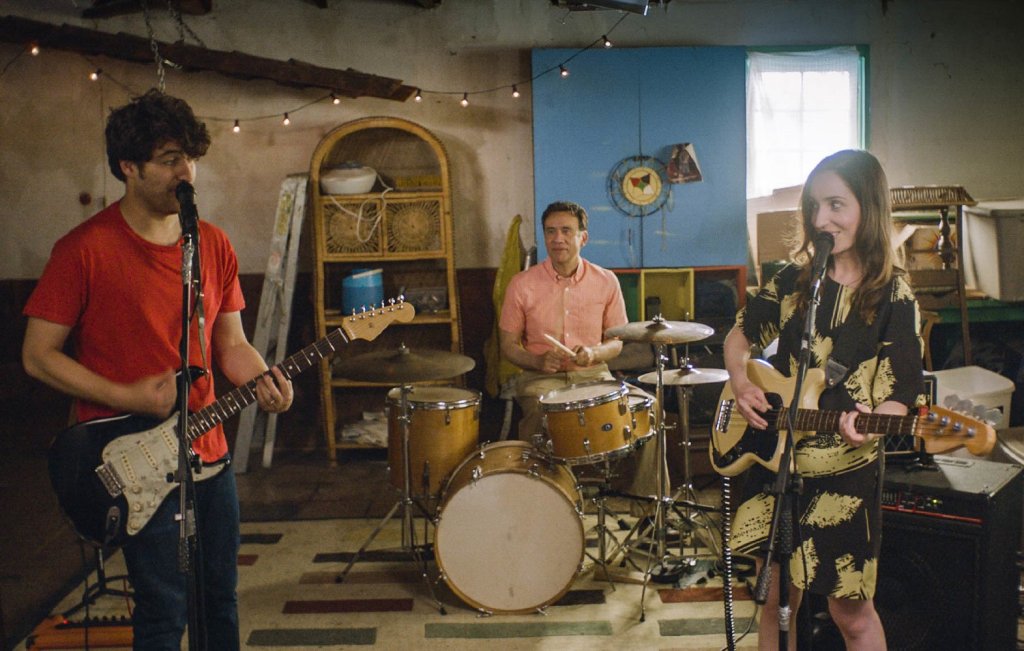
Band Aid – Zoe Lister-Jones (2017)

1st: Harry Potter and the Sorcerer’s Stone – Chris Columbus (2001)
On the one hand, this movie got almost everything right that it needed to. The cast, the set, and the score are about as good as you can do and ultimately help make the rest of the series work. On the other hand, this film is not very good and is extremely silly to watch. My favorite part from this viewing was how Madam Hooch dives out of the way once Neville has lost control of his broom.
Grade: C

4th: Safe – Todd Haynes (1995)
I had always seen this movie touted as one of the best films of the 90s. Because of that, it ended up being far different from what I was expecting. Typically, a movie with that reputation would have some major twist, revelation, performance, etc. Safe, instead, is a fairly reserved movie. Julianne Moore’s performance is undoubtedly good, but, like the rest of the movie, it’s quiet. Again, this is an atmospheric, slow-burn type of film. My friend Wills made the comparison to a Don DeLillo novel. I think that’s right. All of which is to say that I was initially a bit puzzled by it. It just wasn’t what I was expecting. But I did end up liking it quite a bit. And honestly, the further I’ve gotten away from the movie, the more I’ve found myself thinking about it.
Grade: B+

11th: Harry Potter and the Chamber of Secrets – Chris Columbus (2002)
The least successful film in the series. It also happens to be the longest one. I think those are correlated!
Grade: C-

14th: The Grand Bizarre – Jodie Mack (2018)
It took me three tries to sink into this movie. I’m glad I finally did. This belongs to a genre of film that I just don’t have the tools or language to critique. Still, I can try to make a few points. 1. It’s enormously impressive. 2. I did enjoy it! 3. There’s an almost hypnotic/meditative quality to watching it. 4. The score/soundtrack was as important as the images to me.
Grade: B

14th: Fat Girl  – Catherine Breilliat (2001)
There are not many films left that still shock me. This one did. At every turn, Breillat subverts your expectation of this movie. From the start, the film presents itself as a household drama about two sisters. Even the music reinforces that idea. And while I obviously love movies like that, they are a bit clichéd. But that’s not what this film is. Instead, it keeps evolving. It moves into something more biting. We see that there’s a sharp sense of humor. Breillat is doing something more interesting with the dynamic between these sisters than the movie’s title suggests. After that, the film becomes almost unflinching. I don’t know how else to describe a scene in which one sister pretends to be asleep while her 15-year-old sister is coerced into sex by a much older man. Not to mention how much nudity is presented in this assault. And then the last act, and especially the finale, is entirely something else. It is an explosion of all of the ideas and themes hinted at throughout the movie. I’m honestly just amazed by it. I can’t wait to check out Breillat’s other work. 
Grade: A-

15th: Leave No Trace – Debra Granik (2018)
I’m surprised this didn’t receive more attention when it came out. After watching it, it’s almost exactly the type of prestigious yet approachable movie that the Oscars consistently reward. In fact, if there was a film this reminded me of, it was reigning best picture winner, Nomadland. That all sounds a bit negative, but I did quite like this movie. What elevates it in my mind are the two lead performances. I don’t think this movie works nearly as well without Thomasin McKenzie or Ben Foster. I particularly like how reserved they are in these roles. There isn’t any explosion or big speech. Instead, you feel the movie through their body language. Perhaps that’s why this wasn’t a big awards winner? Even so, I think it makes for a better film. 
Grade: B

19th: Harry Potter and the Prisoner of Azkaban – Alfonso Cuarón (2004)
The best film in the series by a mile. I’d also argue that it’s the most important. While the first two Harry Potter films aren’t unwatchable, they’re not particularly captivating. Azkaban, on the other hand, is the first movie to really capture how special the series is. I’d also guess that it’s the first of these movies that could prompt a viewer to read the series for the first time. Maybe ironically, it’s the first HP movie to take significant liberty with the source material. There are a few instances in which I think that’s a mistake, particularly when it comes to cutting out the Marauders. But overall, it feels as though Cuarón is committed to making this the best film possible, even when that means straying from the book. 
Grade: A-

20th: The French Dispatch – Wes Anderson (2020)
Wes Anderson is extremely good at making movies. Like the rest of his work, the French Dispatch is dazzling to watch. I think it includes some of the best images he’s made to date. That being said (and I hate to do this), I did not feel this movie at all, which is a first for me when it comes to him. I’ll have to revisit this. Hopefully, I was just in a bad mood or something.
Grade: B

25th: That Thing You Do! – Tom Hanks (1996)
Man, I feel like this already belongs in my pantheon of comfort movies. I had so much fun watching it! In many respects, it’s a pretty simple story. Where I think this movie shines is in its execution. For any film about a band, its success will largely depend on the music. After all, that’s the whole buy-in. To believe in the band, you need to believe in their music. This movie uses a clever approach for that buy-in. Because the film is about a one-hit-wonder in the 1960s singles-era of pop music, it only has to nail one song. And it does! I think it’s legitimately one of the best movie songs I’ve heard. Hanks is remarkable at capturing the excitement of this moment. Like I said at the top, it’s just thrilling to watch. 
Grade: B+

26th: Maggie’s Plan – Rebecca Miller (2015)
I’m thankful to live in a world in which a movie featuring Ethan Hawke, Greta Gerwig, Bill Hader, and a Springsteen singalong could fly under my radar. Considering that information, I assumed this movie was probably pretty mediocre. I actually think it’s pretty good! It reminds me a lot of Noah Baumbach’s more acerbic films. After all, it’s full of pretentious, manipulative academics. Maybe it’s not for everyone, but it worked for me. 
Grade: B-

26th: Desperately Seeking Susan– Susan Seidelman (1985)
Holy moly. I don’t know if I’ve been more transfixed by someone than Madonna in this movie. And I don’t even like Madonna. But Seidelman does an amazing job at capturing her in this film. It’s a great argument for centering more movies around people who look great on screen. Besides that, I’m not sure how much this movie has going for it. It’s incredibly convoluted. You can poke holes through almost every piece of the plot. I’d guess some of that is intentionally done. Still, I had difficulty gauging precisely what I should make of this film. So even despite my fascination with Madonna, I have to say I was pretty underwhelmed. 
Grade: C

28th: Band Aid – Zoe Lister-Jones (2017)
My favorite thing that can happen when watching a new movie is to find a director or performer who seems to connect with your sensibility on a deep and personal level. A few months ago, I had that same feeling with Cooper Raiff and his film Shithouse. There just seemed to be something about what Raiff was doing that resonated with me. I feel the same way about Zoe Lister-Jones and this film. What surprised me a little is that this is a small indie comedy. I don’t think it’s intended to change your life. It’s a charming, funny and clever movie. Still, something about it really worked for me. It may just be the excellence of the filmmaking and performances. Whatever the case is, I’m glad I stumbled upon this movie. I can’t wait to see what else Lister-Jones does.
Grade: B+

28th: How it Ends – Zoe Lister-Jones, Daryl Wein (2021)
It’s official! I have a new favorite filmmaker/performer. There’s something that Lister-Jones is doing that really resonates with me. I love how strange this film is and yet how little of that strangeness is explicitly acknowledged. I feel like this is the type of film I would try to write (obviously, this version is better). Plus, what could be better than that Sharon Van Etten cameo? 
Grade: B

2021 Movie Log: October

Titane – Julia Ducournau (2021)

1st: Daisies – Věra Chytilová (1966)
Have not seen many (if any) movies like this. I typically have a limit when it comes to all-out postmodern experimental films. I will say this has a couple of things going for it. 1. The synchronization between the music, sound design, editing, and character movement is mesmerizing. I couldn’t tell you the message that most scenes were trying to convey, but I never really lost interest in any of them. 2. The movie is 75 minutes, a perfect length.
Grade: B

1st: The Many Saints of Newark – Alan Taylor (2021)
I loved every minute of this. I can’t think of a movie I’ve loved more this year. I’ve read and heard a decent amount of criticism about the film. Specifically that it lacks the subtlety, nuance, and subversiveness that made the series so special. And while I can buy into those critiques, it just didn’t matter for me. There is nothing like being back in this world. I thought the filmmaking and particularly the soundtrack were on par with the series. What can I say? The Sopranos is the best. I’m glad I got two more hours of it.
Grade: B

2nd: Jennifer’s Body – Karyn Kusama (2009)
An interesting one to assess. This movie is absurdly silly. While I think there are interesting things in it, Kusama leans heavily into irony and satire to justify the film in general. Typically, I don’t like movies like that. Movies that, in other words, are intentionally trying to be cult movies. This one worked for me. I thought it was genuinely smart and often funny. It’s certainly not my favorite movie, but I think it’s a worthwhile one.
Grade: B-

3rd: Candyman – Nia DaCosta (2021)
I had heard that this movie was not scary. That’s crazy to me. I was uncomfortable for the entire run time. Maybe that’s something slightly different, but it was still affecting. Honestly, it’s a bit difficult for me to assess the movie. Plainly, I did not enjoy watching it. But I’m not really sure you’re supposed to enjoy watching this. It’s extremely unpleasant. Overall, I guess I thought it was a worthwhile sequel to the original.
Grade: B-

29th: Dune – Denis Villeneuve (2021)
DUNE! I was not excited about this movie. I don’t really like the book. I didn’t want to watch a three-hour adaption of just the first half. Boy, was I wrong. This movie is so good it makes me want to reconsider my feelings about the novel. My problem with the source material was how removed the book was from its characters. That is, I should say, by design. Herbert presents the story as the gospel of Paul Muad’Dib (aka Space Jesus). It’s supposed to be the passed down telling of a messiah. Because of that format, it’s hard to feel anything about the characters. They’re presented as historical figures. That’s where a film serves as a great medium. By having people like Oscar Isaac, Josh Brolin, and Javier Bardem inhabit these figures, they bring life to them. It made the story so much more accessible and impactful to me. The other reason this movie works is that nobody makes big movies as well as Villeneuve. Even if the story was bad, Dune would work because of how stunning it is to look at.
Grade: A-

31st: Last Night in Soho – Edgar Wright (2021)
Wright is a director I’ve always admired more than felt genuinely connected to. Broadly speaking, he is as talented a stylist as anyone working. But I’ve felt that in many of his films, that style seems to cover up a lack of substance. With the exception of Scott Pilgrim, I haven’t come away from many of his films thinking more than, “Wow that looked amazing.” However, all of that is a personal preference. While I don’t love Wright’s work, you can’t argue that he’s incredible at making movies. That fact makes Last Night in Soho particularly disappointing. There’s too much talent for it to be an outright failure, but it’s pretty bad. The story isn’t compelling. The characters aren’t particularly likable. On top of this, I don’t think the movie has anything to say. Which, if everything else worked, might not be a problem. Here, it makes the movie feel like a waste of time.
Grade: C-

31st: Titane -Julia Ducournau (2021)
One of the most fucked up movies I’ve seen! It was a magnificent viewing experience. I would recommend anybody who can handle a movie like this to see it in the theater. That being said, is this movie good? Probably? I do wonder if there’s more shock-appeal than substance. In other words, what is this film trying to provoke? Or, is it trying to be provocative for its own sake? It reminded me a lot of Claire Denis. However, after watching a Denis film, I always have an idea of what she’s trying to get at. Here, I really don’t. Still, Titane made me react more viscerally than anything I’ve seen maybe ever. That has to count for something.
Grade: B+

2021 Movie Log: September

Shithouse
Shithouse – Cooper Raiff (2020)

1st: After Hours – Martin Scorsese (1985)
I loved this. It’s very apparent seeing the influence this movie has had. Something like Good Time feels particularly inspired by it. I’m sure there are dozens of other films and tv episodes. The biggest surprise for me was Griffin Dunne’s performance. Why didn’t he have more leading roles? He’s great in this part in which he has to carry the movie. There are a few things I would question. For instance, I’d be curious to read more on the portrayal of women and gay men in this film. There’s nothing particularly offensive (at least that I could tell), but they’re painted as the loony outsiders compared to Paul. Overall, I thought this movie had so much going for it. The gags are laugh out loud funny and the score is phenomenal. I particularly loved the way Paul’s appearance deteriorates over the course of the film.
Grade: B+

6th: Gosford Park – Robert Altman (2001)
Wow! I loved this movie. Perhaps even more than I thought it was particularly great. It’s a real showcase for what makes Altman so special. Perhaps ironically, I don’t think this movie ranks among his very best. There is a discrepancy between his non-judgemental worldview and this script’s murder mystery. I also think the first 30-40 minutes are a bit slow. Or rather, they were slow on a first viewing in which it’s impossible to take everything in. But that’s what’s so impressive about this movie! There are over a dozen important characters each with their own history, worldview, and relationships. This movie seems ready to provide as much information as a viewer is willing to work for. And yet, it’s all contained in a tight 2 hours. 
Grade: B+

11th: Candyman – Bernard Rose (1992)
This movie is legitimately very scary. I thought all of the horror elements aged really well. I was shocked by how far the movie pushed the ending. I really thought we were going to watch a baby burn alive. The legacy for this movie seems to be what it says about race. Those elements are certainly there and across the board seem well-done to me. I do feel like the movie is caught between trying to deliver scares and trying to deliver a message. For the most part, it’s succesful at both. But at times, it can feel a bit at odds with itself.
Grade: B

12th: Together Together – Nikole Beckwith (2021)
Really enjoyed this. Thought it even had flashes of greatness in it. The obvious one is Patti Harrison. I knew she was incredibly funny. I didn’t know that she could carry a movie. She’s so good in this part! To be fair to the movie, I really thought it was moving toward rom-com territory which was something I actively didn’t want. But I was wrong. The two characters don’t wind up together. I wonder if I would have liked this movie even more had I known they wouldn’t end up together?
Grade: B-

14th: Barb and Star Go to Vista Del Mar – Josh Greenbaum (2021)
An insane movie. It feels like a throwback to those National Lampoon style comedies. That is, of course, with the exception that this film was written by and stars two women. There’s a strange parallel I feel in something like this to postmodern literature. Mainly, that in both cases you have to balance that the piece of art is often actively shitting on its own form. It can be a trade-off. My favorite parts of this movie were those strange, illogical detours. The musical numbers or the talking crab, for instance. And yet, those asides make it difficult to really engage with the rest of the movie. How can you truly invest in the main plot when everything around it is so silly? 
Grade: B-

17th: Ticket of No Return – Ulrike Ottinger (1979)
Unlike anything I’ve seen before. The closest comparison I can come up with is a David Lynch version of Slacker or After Hours. The production is extremely impressive. In fact, without the brilliant cinematography, costumes, and music, this film just wouldn’t work. There’s not enough story. Which really is my only critique of the film. I wish this had been 65 minutes instead of 80. 
Grade: B-

19th: Scarface – Brian De Palma (1983)
I need to read more about De Palma and about this movie. Unless my impression is just way off, this is one of the campiest films I’ve ever seen. I mean, what is Pacino doing in this movie? It’s insane! Before I go further, I would like to say that I did like this movie. And there are sequences that I absolutely loved. The last 30 minutes of the film is incredible. The sets, costumes, and interiors are stunning. They’re intoxicating and spectacularly cold at the same time. That’s more or less what I want to know. My understanding is that De Palma is a good, and maybe even great, director. How much in this film is intentional. How much of this is a glorious accident? I am endlessly fascinated. 
Grade: B-

23rd: Vivre Sa Vie – Jon-Luc Godard (1962)
This film has some of the coolest, most exciting sequences I’ve seen. Anna Karina’s pool hall dance, in particular, is stunning. I also just found myself totally compelled by Godard’s style. For whatever reason, it clicked here with me even more than it did in Breathless. Maybe it’s because this is my second time with Godard? Maybe it’s because this movie has Anna Karina in every frame? She’s magnetic. If I have a complaint, it’s that I don’t really buy the story. I don’t feel there’s much substance behind it. I can’t think of Anna Karina as this woman. But the film’s focus is so heavily on style over substance, it doesn’t really matter. 
Grade: B

25th: Plus One – Jeff Chan, Andrew Rhymer (2019)
A highly enjoyable movie that’s pretty clever. It’s clear that the filmmakers have a great awareness of rom-coms in general. I particularly thought the staging of the film was well-done. That is takes place almost entirely at different weddings was a good conceit.  I should also say that this film doesn’t work without Maya Erskine and Jack Quaid as the leads. They’re both great. One thing this film leads me to wonder though, is if it’s even possible to nail down the supporting cast in a movie like this. My biggest complaint with recent rom-coms is that the friends and family never feel like real people. So while the relationship is usually charming, the surrounding circumstances always feel staged. I just don’t buy that any of the families or friends in this film are authentic people. I wonder though if that’s because the world today is so individualized, that’d be impossible to render a broadly authentic friendship? In other words, that a “real” friendship looks completely different depending on the audience member?
Grade: B

26th: Baby Driver – Edgar Wright (2017)
Edgar Wright might honestly be the best director working right now. From just a filmmaking perspective, this film is impeccably put together. In fact, it’s so seamlessly done, I think it’s easy to lose track of everything Wright accomplishes. I honestly have no idea how he syncs up all of the action in the film to music. I’d imagine that he must have had the soundtrack ahead of time? With that being said, Baby Driver is not exactly my cup of tea. I  don’t think Ansel Elgort works as the lead. I also think the last act is a bit of a mess. Fortunately, because of the type of film, those things aren’t enormously significant. 
Grade: B-

27th: Shithouse – Cooper Raiff (2020)
I haven’t been this jealous of a film in some time. I loved this movie. It’s exactly the type of film I’d hope to make. The entire second act, in which Alex and Maggie walk around all night, is perfectly done. The two leads, Cooper Raiff (also the director) and Dylan Gelula, are great. You can feel the chemistry and excitement in their night out. The film is able to capture that special moment when you meet an important person in your life. It also does a great job at rendering a specific aspect of the college experience. Luckily, I wasn’t as homesick in my own college experience as Alex is here. Still, I can relate to some of the depression and malaise he’s going through. Despite all my praise, there are a few things that don’t work about the film. The falling out between Alex and Maggie felt a bit too dramatic for me. I’d imagine there might also be some quibbles about the ending in which they get together. I personally really liked that choice whether or not it made sense. I guess I was just rooting for these two crazy kids. 
Grade: A-

2021 Movie Log: August

SUMMER-OF-SOUL-Sly
Summer of Soul – Questlove (2021)

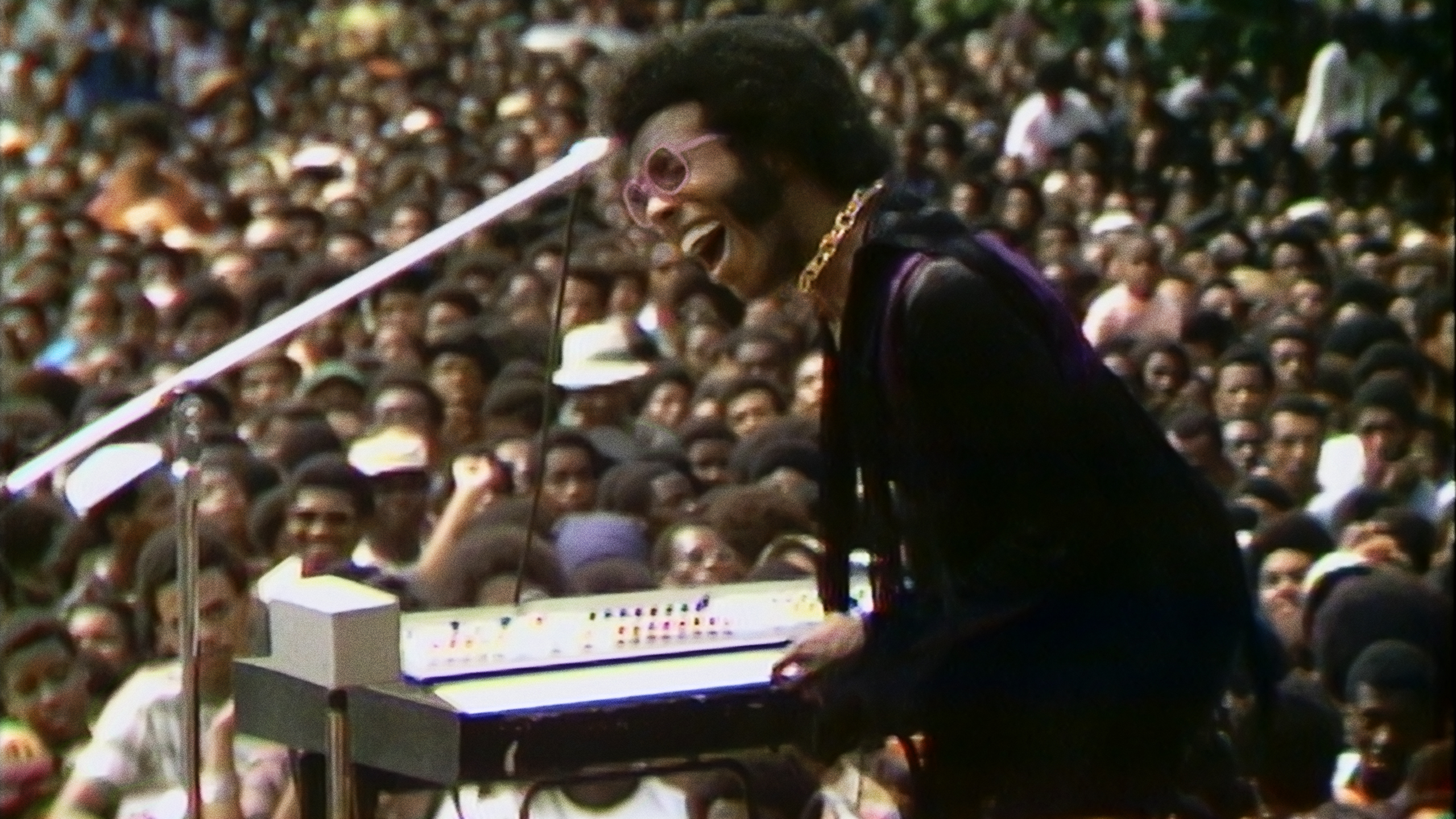
1st: Summer of Soul (…or, When the Revolution Could Not Be Televised)-Questlove (2021)
Talk about a 180. If you read my July movie log, you’ll have seen that I recently watched Woodstock 99. That was a documentary full of compelling footage that couldn’t figure out what it wanted to say. Summer of Soul knows exactly what it wants to say. Questlove does a masterful job letting the performances, festival attendees, and musicians tell this story. Unlike Woodstock 99, it doesn’t need to spend time trying to force a hypothesis at the viewer. In just witnessing this festival, it is clear what the film is saying. I can’t praise it enough. It’s easily one of the best music docs I’ve seen.
Grade: B+

1st: A Story of Floating Weeds – Yasujirō Ozu (1934)
Meant to watch the other one, whoops! Still good though. I wonder if Fellini’s Variety Lights was inspired by this at all. A lot of similarities.
Grade: B

2nd: The Green Knight – David Lowery (2021)
I liked this movie quite a bit. I don’t even know if it totally works. The film is far too opaque to answer that question after one viewing. But I think it’s an instance in which an interesting movie can be more enjoyable than a technically perfect one. The weirdness is really what works best. I can’t wait to see it again.
Grade: B+

6th: A Confucian Confusion – Edward Yang (1994)
I’ll preface this by saying that I watched this on a shitty youtube rip. That being said, this strikes me as a situation in which a filmmaker who is really good (maybe the best) at making one type of movie, makes a different type of movie. It’s not bad, but I couldn’t really sink into it either.
Grade: B-

8th: Solaris – Andrei Tarkovsky (1972)
Tarkovsky is something else. Watching his movies feels like serving a higher purpose. Getting through them makes me feel like a better person. I wish I could live in the stillness of his compositions. I should note that this is only the second film of his that I’ve watched. But I had an almost identical experience to when I watched Stalker. I was fully absorbed for about 85% of the film but in the last 15%, my attention gave way. Not through any fault of Tarkovsky’s. Instead, it feels like I need to work harder to meet Tarkovsky at his level. There are almost no other films I’ve seen that are so demanding, and in turn, so rewarding. 
Grade: A-

12th: Untold: Malice at the Palace – Floyd Russ (2021)
This documentary is interesting and important. I just wish the outlet were different. This should have been a 2-hour film. Instead, it’s a 70 minute installment as part of a Netflix series. Alas, that’s the world we live in.
Grade: B-

14th: The Secret of NIMH – Don Bluth (1982)
One of my favorites as a kid. Rewatching this film was almost surreal. I can’t believe how compact everything is. There appears to be a whole mythos behind this story, and yet it’s just touched on. I almost can’t believe how fast it moves. It feels like 3 hours worth of material packed into 75 minutes.
Grade: B

17th: Paddington – Paul King (2014)
Truly the best. I wish there were 100 Paddington movies. I can’t think of anything more comforting.
Grade: A

17th: Paddington 2 – Paul King (2017)
Even better than Paddington 1. Proves that good children’s movies are universal.
Grade: A

18th: It’s Such a Beautiful Day – Don Hertzfeldt (2012)
This was a trip. I had heard so much about this movie, particularly it’s sadness and beauty. What surprises me most is how profoundly strange it is. I did find the film moving, but I’m not sure I could really say why. It’s far too idiosyncratic for that.
Grade: B+

22nd: Fantastic Planet – René Laloux (1973)
This movie is crazy. It’s strange and intoxicating all at once. I particularly loved the futuristic jazz score. I did feel myself struggling through some of it. It requires attention and patience. Probably more than I had when I watched it. 
Grade:B-

22nd: Fellini’s Roma – Federico Fellini (1972)
This low-key might be my favorite Fellini film yet. He’s made at least 4 or 5 films that are clearly better, but I just love the vibe and feel of this one. It’s a tour of 20th century Rome made in the form of outrageous vignettes. I’d put it up there with Wings of DesireMy Winnipeg, and the other great city portraits captured on film. 
Grade: A-

25th: Sex, Lies, and Videotape – Steven Soderbergh (1989)
Easily one of the best debut films I’ve seen. I love that even though this is pretty far removed from the rest of Soderbergh’s career, you can still see plenty of his signature moves. The best example is in the third act in which we flash back to see what really went down. While this movie was fun and surprising on a first viewing, I’m really excited to dive back in. You can tell that it is overflowing with themes and ideas. 
Grade: B+

26th: Y tu mamá también – Alfonso Cuarón (2001)
Speaking of debuts! This is my favorite movie I’ve seen in a while. I’m not even sure it’s a five-star movie (although it’s pretty close!). The beginning is a little slow. I think I actively dislike the ending. I’d rather the movie not end on such a knowing and final tone. But everything in between is outstanding. It’s one of the best films about adolescence, sex, and friendship I’ve seen. To address the elephant in the room, this is like the horniest movie of all time. I love that about it. Sex is a major part of life. I feel like Cuarón really captures that here. In fact, I think one could argue that sex is one of the things that movies capture least accurately. Anyways, what a film. I can see how this guy went on to win an Oscar. 
Grade: A-

27th: The Third Man – Carol Reed (1949)
I watched this at the Music Box with Wills. The first time seeing this, I was admittedly blown away by the mastery of the filmmaking and particularly the ending. Seeing it with an audience made me realize just how funny this movie is. There are gags and punchlines galore. It’s the type of thing I need to better attune myself to in old movies. I think sometimes admiring the classics can make them feel stilted or artificially perfect. 
Grade: A-

28th: Ratatouille – Brad Bird (2007)
Is this my favorite Pixar film? It’d have to be pretty close. They do a remarkable job of making Remy so likable. It’s just a great story executed to near-perfection. Also, Patton Oswalt has to go down as giving one of the best Pixar performances.
Grade: A-

29th: The Incredibles – Brad Bird (2004)
I know this has come up as a Pixar favorite. I wanted to see if I could understand the hype. I think, for the most part, I do. Like the best Pixar films, this movie is almost perfectly told while being entertaining as hell. I think the character of Violet really helps carry the movie. Alas though, even here I just can’t care about superheroes as much as I’d like to. There must be some sort of block in my brain. Clearly this is one of the better Pixar films. I enjoyed it a lot. I just don’t think it’s in my top 5. 
Grade: B

29th: The Incredibles 2 – Brad Bird (2018)
A really fun sequel. It still falls into that trap of not being as good as the original. It also reuses a lot of material from the first movie. Still, this has maybe the funniest scene across both installments. I speak, of course, of the scene in which Violet spews water out her nose after seeing that her crush is waiting her family’s table. Classic comedy. 
Grade: B-

31st: Monsters, Inc. – Pete Docter (2001)
Boy, when will I get back to reviewing “real” movies? Just kidding! I think Pixar is great. Especially if you’re interested in writing and storytelling. They pretty much have that on lock. I have to say, Monsters, Inc. may go down as one of my favorites. It’s so sweet. The cast is particularly great. John Goodman, Billy Crystal, and Steve Buscemi are perfect for their parts. I also think this may be the funniest Pixar film I’ve seen. There are great bits of physical (digital?) comedy throughout. 
Grade: B+

2021 Movie Log: July

brighter summer day
A Brighter Summer Day – Edward Yang (1991)

1st: No Sudden Move – Steven Soderbergh (2021)
Man, this was one of the movies I was looking forward to most this year. It’s not bad but…you know what, it might be bad. Nothing about this movie really worked for me. Soderbergh is normally so good at the heist movie. He has this trick in which he shows the audience everything and then in the last 15 minutes reveals what really happened. It’s almost like a sleight of hand. This movie felt like a non-stop version of this. As a viewer you have no sense of what is happening until someone stops to explain it to you. On top of all of this, I don’t understand the way he shot this movie. He uses strange lenses to constantly warp what’s on screen. I guess that’s the trade-off with Soderbergh. He’s so exciting because he constantly experiments but sometimes you get something like this where it doesn’t really work. As a silver lining, I do love the cast. It’s fun to watch movies with movie stars.
Grade: C+

2nd: Zola – Janicza Bravo (2021)
My first movie back at the movies! Thank you Logan Theatre! This was so much fun. I’m kind of amazed at how Janicza Bravo balances everything in this movie. It’s a nightmare odyssey, it’s a comedy, it’s a horror movie. Adding to this difficulty is how Stefani is portrayed. She is partially the antagonist. She’s the reason that Zola finds herself in this terrible scenario. And yet, she may also be a victim. I found it interesting that at a real low point in the film, in which Stefani may be victimized, the movie cuts away to an inventive humorous recap of the events from Stefani’s perspective. Overall, it’s a really tough balance to strike and I think the movie pulls it off.
Grade: B

5th: The Pelican Brief – Alan J. Pakula (1993)
I wish blockbusters like these still existed. This movie is fun (and a little bit silly) in the best way. It’s a conspiracy / crime thriller packed with movie stars and directed by one of the best. Speaking of which, it makes me wonder if the collaboration here between Pakula and John Grisham is a spiritual pre-curser to David Fincher and Aaron Sorkin’s collaboration on The Social Network. Both movies are an odd pairing of a massively popular writer and an exacting cynical director. While I liked this movie quite a bit, it ultimately is not The Social Network. There are a few too many moments that are just impossible to believe. Still, I was thrilled for most of this movie’s 140 minute run-time. There aren’t a whole lot of movies I can say that about.
Grade: B

12th: The Lord of the Rings: The Fellowship of the Ring – Peter Jackson (2001)
I don’t know how much I can add to my previous entries about this film except to say that it hasn’t really lost any of its power over me. 20 years later and I’m still amazed at how good this movie is. It feels like the most impressive film of my lifetime. The constraints on what Jackson needed to and did accomplish are mind-boggling. There is so much exposition in this movie and it all works. There is so much CGI in this movie and 99% of it holds up. Across every part he cast the right actors. This is likely the movie I’ve seen the most in my life and I have never tired of it.
Grade: A

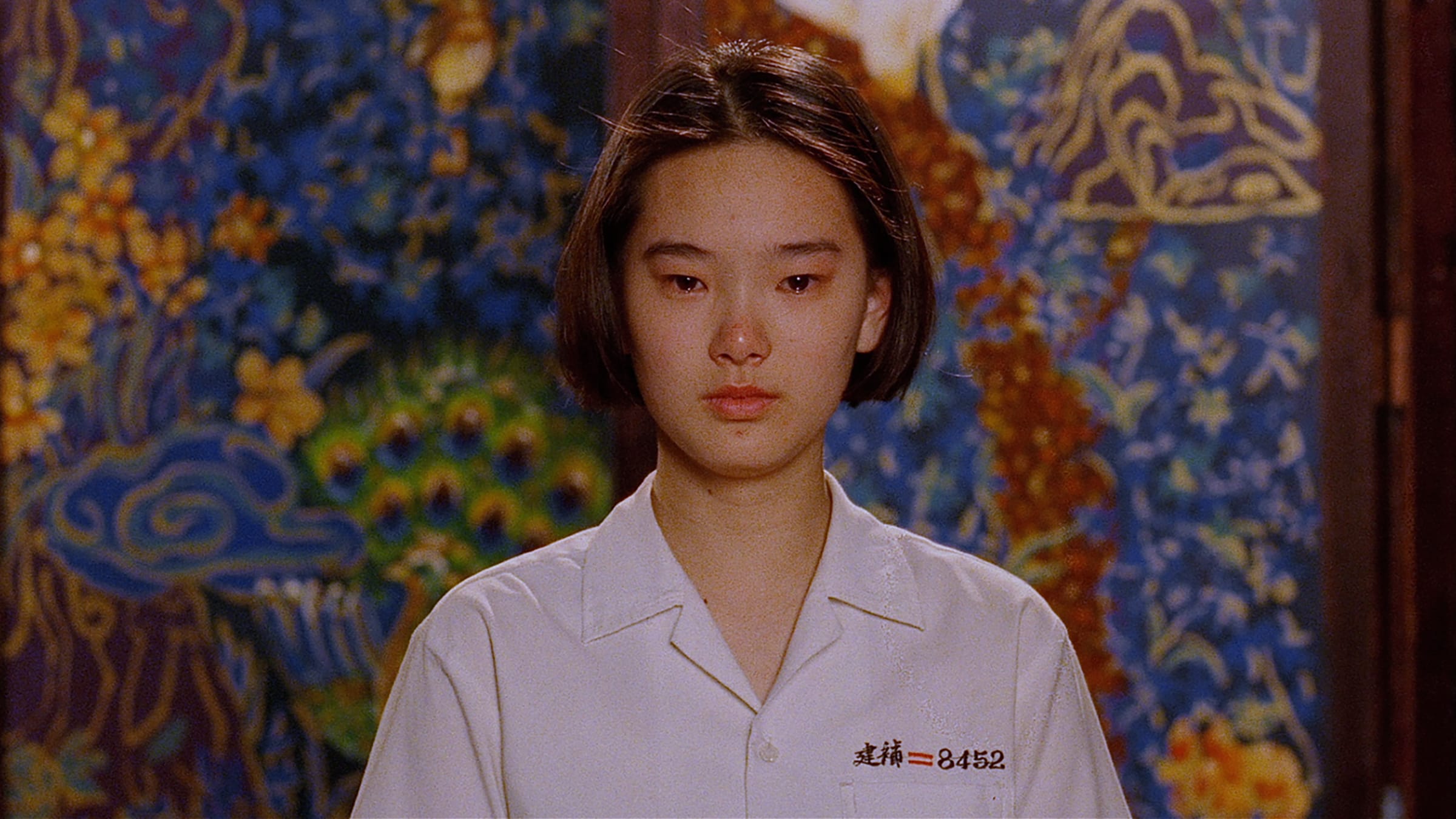
18th: Yi Yi – Edward Yang (2000)
An almost incomparable film. It’s far and way the most beautiful movie I’ve ever watched. I’m still just blown away by it. On its surface, everything in this film works. Yang’s direction is masterful, the performances are breathtaking, the score fits every scene perfectly. But what remains the most impressive aspect of this movie is its scope and storytelling. This film is about so many things, and speaks to each one profoundly. There are themes of age, wisdom, humanity, love, grief, depression, and modernity that Yang details in exquisite fashion. Almost every piece of action or dialogue seems to speak to at least to two others in this film. I’ve just never seen anything so in sync. Despite the cliché, it really is a film that feels like it changes your perspective on life. I love it so, so much. 
Grade: A

19th: My Winnipeg – Guy Maddin (2007)
The first time I watched this was at the end of a run of several Guy Maddin films. My opinion then, was that this was the most accessible, almost “normal” of his films. Rewatching My Winnipeg, I imagine that’s still the case. Even so, this movie is pretty far out there. Luckily, I found that I enjoyed the film this time more than my previous viewings. I would guess that I’ve become more accustomed to unusual and idiosyncratic films since then. In fact, I would say the thing I most appreciate about this film is its general strangeness.  
Grade: B+

24th: 3 Women – Robert Altman (1977)
One of the strangest films I’ve seen. It feels quite different from Altman’s usual movies. It focuses on just a few characters, it centers on women instead of men, and it mostly lives in a dreamy surrealistic landscape. In other words, this isn’t Altman necessarily reflecting back what he sees in the world. To get down to it, I liked it but didn’t love it. I probably would need to see it again for that to happen. Nonetheless, Shelley Duvall and Sissy Spacek are incredible in this film. The film would be well worth seeing just for their performances. 
Grade: B-

26th: A Brighter Summer Day – Edward Yang (1991)
I almost can’t believe that all of this can be a movie. It makes me want to speak in cliches:
-It’s a masterpiece
-It’s a novel on screen
-It will change your life
Those all might be true, but feel a bit too hyperbolic to give the film the credit it deserves. So instead, I’ll end this love letter with a quote from Edward Yang that I found particularly inspiring:
“There has never been a doubt in my mind that the present desperate shortage of resources, both human and material, in the film industry can be overcome by bringing in fresh blood on a large scale. During preproduction and production, I never hesitated to take on people who were inexperienced…Over 60 percent of my staff and 75 percent of the cast made their debuts in front of or behind the camera. Their untainted attitude and fearless enthusiasm make up for their lack of experience, providing the vital spirit of a fresh new cinema.”
Grade: A

28th: Pride and Prejudice – Joe Wright (2005)
I think this film is as good an adaptation as you can hope for. The action unfolds with the same force and emotion as the novel. Wright does an impeccable job at capturing the characters and setting of the book. For the most part, moments that are changed in the film are done so because of the medium. In other words, the changes make certain instances more suitable for film than they were originally rendered. But, through no fault of its own, I think the film pales in comparison to the novel. It’s just impossible to capture Elizabeth’s internal life in quite the same way. Moreover, the novel feels driven by its characters whereas the film feels driven as much by plot. Still, I liked the movie quite a bit. I think it’s just a great book, good movie situation. 
Grade: B

29th: A Town Called Panic -Stéphane Aubier,Vincent Patar (2009)
The absurdity of this movie is delightful. Aubier and Patar get so much mileage just from the minor details of their scenes: Mr. Horse’s horse shoes and bedding, the town’s jail, Steven’s farm animals. The movie can lag in parts. It certainly doesn’t have the room to expand upon its 70 minutes. But, if you give yourself up to this town, it’s a treat to watch. 
Grade: B

30th: Woodstock 99: Peace, Love, and Rage – Garret Price (2021)
The footage is incredibly compelling. For the most part, I buy the argument that this was a manifestation of corporate greed and economic disparity. Everything else is a mess. The other arguments put forward are contradictory and convoluted. And why is Moby the stand-in talking head against misogyny and assault?
Grade: C

Date Unknown: Bo Burnham: Inside – Bo Burnham (2021)
I originally didn’t log this because I wasn’t sure it was a movie. But, the more I think about, the more I’m convinced that it is a movie. What’s more, it’s a pretty great one too. 
Grade: A-


2021 Movie Log: June

parallax view
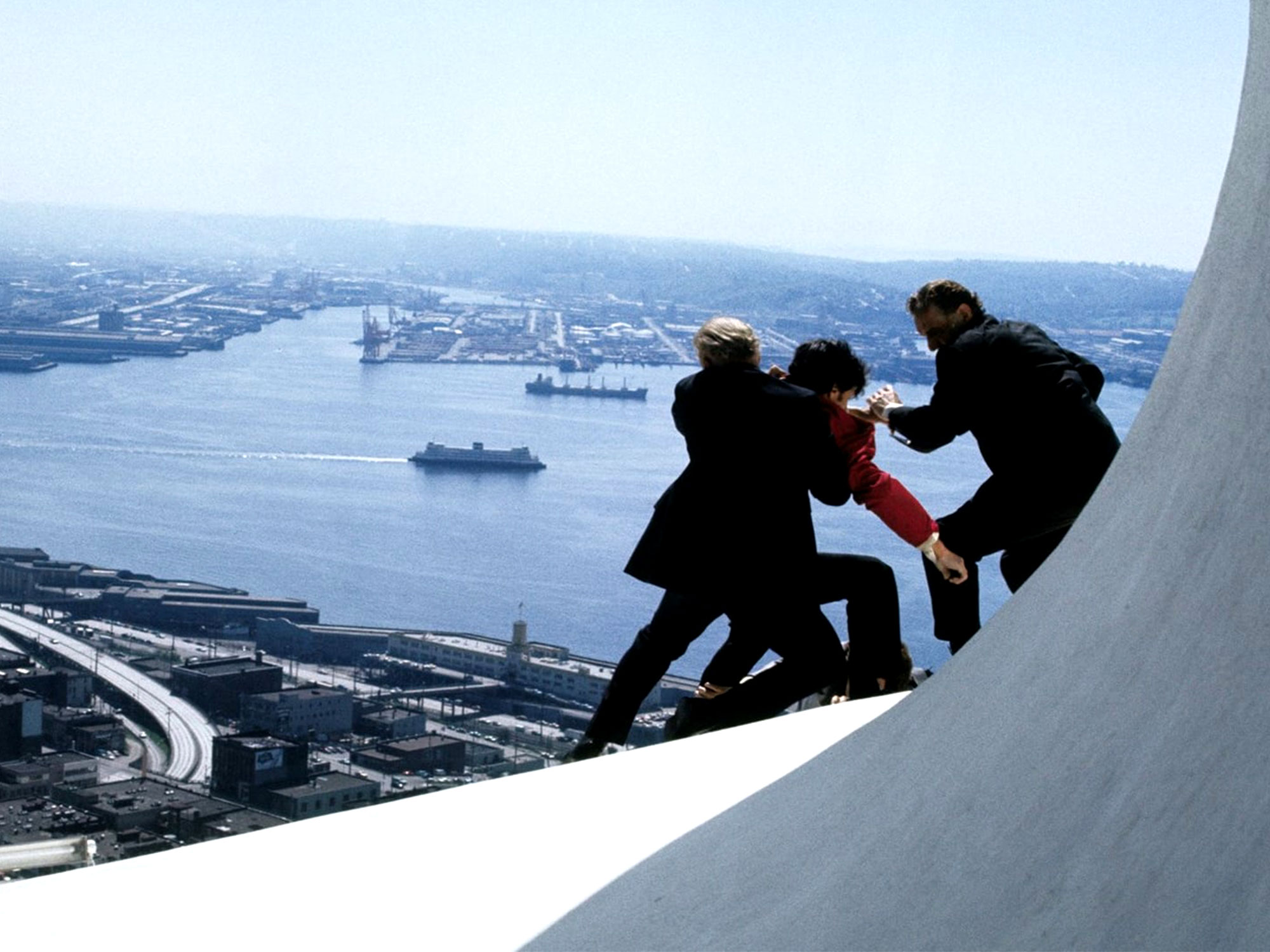
The Parallax View – Alan J. Pakula (1974)

10th: Klute – Alan J. Pakula (1971)
Boy oh boy is Pakula good at directing a conspiracy. I love the way he shoots this movie. Some of the images are just unbelievable. I love his use of shadows, objects, and even the color palette. This movie is kind of a horror movie too. The score is one of the more frightening things I’ve heard in some time. If I had a nitpick, it’s that the romance between Donald Sutherland and Jane Fonda’s characters feels a bit forced. They’re obviously both great looking people, but it’s a bit strange to focus on their budding relationship amidst a serial killer movie. All in all, I quite liked it. I’m excited to watch The Parallax View next. 
Grade: B+

12th: The Last Detail – Hal Ashby (1971)
70s films are so good. The Last Detail is a delight. The plot and stakes are there, but never forced. In fact, nothing in the film comes before the interactions of the three central characters. It’s one of the best road trip movies I’ve seen. It feels so natural, you can forget filmmaking is happening. I love the way Ashby frequently captures the three characters in the same shot. I love the way he cuts in and out of scenes. These cuts seem to reflect passing time as opposed to any real advance in the story. And I particularly love the ending of the movie. It feels so natural and effortless – something I think is antithetical to most films. 
Grade: A-

16th: Notting Hill – Roger Michell (1999)
I put this on as a film that wouldn’t require too much mental effort. I wanted something that would just be enjoyable. That is what this film is. And yet, for as much as I found the film to be pleasant, my attention was drifting the entire time. I don’t know if it had to do with the stakes, the genre, or just me. But I could not sink into this movie at all. And there are obviously some great things in there. Hugh Grant is unbelievably charming. I love how in this, and in Four Weddings and a Funeral, there’s a great group of friends centered in the movie. It almost reminds me of something like How I Met Your Mother. Maybe I can give this another go when I’m in a different head space. For now though, I have to admit that I was underwhelmed. 
Grade: B-

27th: Plan B – Natalie Morales (2021)
This is a good comedy. Perhaps more significantly, it answers a lot of questions people seem to have about comedies these days. Specifically, whether you can make something raunchy and full of debauchery in today’s “cancel” climate. I put “cancel” in hypotheticals because I don’t think it’s a real thing. Movies like Animal House or The Hangover weren’t canceled. Instead, I think people like me (straight white men) started to see how shitty some of those movies were the entire time. In other words, a small segment of the population is finally taking into account how shitty it is for straight white dudes to make non-straight white dudes the butt of the joke. Which brings back me to Plan B. This is a movie that pulls off the style of a film like Animal House but without objectifying or ridiculing its characters. It’s really funny and really endearing. There were some (brief) sections that fell flat, but again, I was just so impressed with this movie. I’m excited to see what everyone involved in it does next. 
Grade: B

29th: The Parallax View – Alan J. Pakula (1974)
This is an unbelievably cool movie. Everything in it is perfectly in tune. I particularly love the way Pakula shoots it. It appears there’s only one camera, usually at a distance, with most of the frame in shadow. Warren Beatty is amazing. It didn’t strike me until after the movie, but there’s really not that much dialogue in the film. It’s almost entirely action which adds to the overall sense of paranoia. As a viewer you sense things, but you don’t know them. I’m excited to revisit this at some point. My guess is that it rewards multiple viewings. 
Grade: A-

2021 Movie Log: May

say anything
Say Anything – Cameron Crowe (1989)

1st: Blood Simple – Joel Coen (1984)
For as acclaimed as the Coen brothers are, I think Blood Simple has become vastly underrated. It’s stunning. It’s so confidently made that it’s almost impossible to think of it as a debut. The cinematography and score are just immaculately done. If there’s a knock against the film, it’s that it can drag for a bit. It’s likely the slowest and most serious film the Coens ever made. But the last act would be worth any wait. I had forgotten a lot of the movie by the time I rewatched this. I didn’t forget any of that final sequence.
Grade: A-
Blood Simple – Joel Coen (1984)

1st: Raising Arizona – Joel Coen (1987)
This is the Coen Brothers’ film that’s never fully clicked for me. I think it’s just a bit too slapstick to fully work. That being said, everything in this movie is impeccably done. Almost every shot has a gag in it. And the opening is one of the best in any movie.
Grade: B
Raising Arizona – Joel Coen (1987)

4th: Burn After Reading – Joel & Ethan Coen (2008)
This may be the Coens’ funniest movie. I wish I could construct something with this much conspiracy and stupidity wrapped together. I almost forgot that this film is a story within a story. Hearing JK Simmons try to make sense of these events is incredible. It’s amazing how stacked this cast is. I forgot about half of the actors that make an appearance.
Grade: A-
Burn After Reading – Coens (2008)

7th: A New Leaf  – Elaine May (1971)
Comedy is hard. Elaine May is obviously one of the best to do it. Films like Tootsie and The Birdcage have remained hilarious years after they were made. I did like this film, but I have to admit that I didn’t find it particularly funny. More than anything, I was charmed by the the two lead performances. It’s a pleasant and easy film to watch. But not one I would put with the best of May’s work.
Grade: C+
New Leaf, A – Elaine May (1971)

8th: The Heartbreak Kid – Elaine May (1972)
I thought most of this movie was on par with the best things Elaine May has done. Her daughter, Jeannie Berlin, is particularly great as the spurned wife. I love how despicable Charles Grodin is in the lead role. It’s amazing to watch. The film loses a lot of momentum once it leaves Miami and the main tension is resolved. To be honest, the entire 3rd act didn’t work for me. Still, for the first 80 minutes I think this could be put up with almost any comedy.
Grade: B
Heartbreak Kid, The – Elaine May (1972)

8th: The Boy Downstairs – Sophie Brooks (2017)
I wish movies like this were better. On the one hand, this film does do a lot of good things. The lead performances by Zosia Mamet and Matthew Shear are endearing. I’ve wanted to see both of them in a lead role for some time. Brooks is able to pull that off here. I also think that she has a good eye as a director. There are some really striking shots in this movie. The main problem though is in the film’s storytelling structure. There’s just no point in using the flashbacks. The whole backstory should have been the film. But if Brooks had constructed the film like that, she wouldn’t have her title and the elevator pitch about someone moving into the same building as their ex. It’s especially frustrating because if she just told the story linearly I think it’d be a lot better.
Grade: C
Boy Downstairs, The – Sophie Brooks (2017)

8th: 10 Things I Hate About You – Gil Junger (1999)
My god is Heath Ledger charming. The entire cast of this film is kind of amazing. It’s really the thing that makes the film work. I wish more movies today would take swings like this. I can’t even imagine what a mid-budget, really ambitious, Shakespeare-inspired comedy would look like today. And yes, there are things that don’t work in this movie. But the parts that do work are so much more exciting than 90% of movies today. I guess what I’m really trying to say is that the 90s were a wild time. I miss the sort of half amazing / half insane movies that came out of them.
Grade: B
10 Things I Hate About You – Gil Junger (1999)

9th: Four Weddings and a Funeral – Mike Newell (1994)
My god is Hugh Grant charming. I can see why this film has the legacy it does. It almost feels designed to be rewatched. I particularly loved the ensemble approach to it. You get a sense of this group’s dynamic, but the film is only able to scratch the surface. I think you would pick up new things about the group each time you watched the film. I do think the film has a major flaw though. Andie MacDowell’s character is not likable enough. You kind of have to accept that Hugh Grant is hung up on her because it’s a rom-com. That being said, Hugh Grant more than makes up for any flaw with the film. He’s unbelievably good in this role.
Grade: B
Four Weddings and a Funeral – Mike Newell (1994)

10th: Fast Times at Ridgemont High – Amy Heckerling (1982)
This is a fascinating movie to watch in 2021. On the one hand, it seems destined to have aged badly. It’s a hyper-sexualized high school fantasy movie. Off the bat, we watch the 15-year-old protagonist lose their virginity to a 26-year-old man. On top of that, there’s gratuitous nudity that’s entirely from a male perspective. Obviously, it’s good that Jennifer Jason Leigh and Phoebe Cates were both adults when they made this. But I think there’s something to investigate about the choice to use two beautiful adult women to play hyper-sexualized high schoolers. On the other hand, movies today have basically stopped featuring sex. And sex is obviously a huge part of high school! If you’re going to make a high school movie, you have to involve it. Especially, if it’s a movie that seems to portray an almost fantastical high school like this one. This is all to say that I quite liked this movie and Jennifer Jason Leigh is a star.
Grade: B
Fast Times at Ridgemont High – Amy Heckerling (1982)

11th: The Edge of Seventeen – Kelly Fremon Craig (2016)
Hailee Steinfeld is unbelievable in this movie. On the whole, the film is good. It’s well-directed, it’s mostly well-written. But none of it would work without Steinfeld’s performance at the center of it. It’s a tricky role. Movies like this obviously require their protagonists to be smart, funny, and likable. After all, we have to watch them for two hours. At the same time, it has to be believable that somebody we like this much would be having such a rough time. There are certainly a few places where you have to suspend your disbelief. While this movie is a far more realistic version of high school than others (Fast Times…) it’s not exactly hyper-realistic. But what can I say? I was quite charmed by this movie. It was nice to see Blake Jenner in something besides Everybody Want Some!!. Woody Harrelson is quite endearing. It’s a solid high school movie.
Grade: B
Edge of Seventeen, The – Kelly Fremon Craig (2016)

13th: Emma. – Autumn de Wilde (2020)
I sometimes wonder how to assess a film like this. Everything about it is well-done. Anya Taylor-Joy is incredibly captivating. It is abundantly clear that Autumn de Wilde is a talented photographer. The compositions and general staging of this film are wonderful to look at. I especially like how vibrant and colorful the film is. There isn’t that stilted “period piece” look to it. It feels as fresh and exciting as if everything were modern. And yet…I just could not sink into it. I admired almost everything about it and still felt kind of bored for most of the movie. Perhaps everything was too precisely packaged? Perhaps there wasn’t enough of a hook into this story? In any case, it’s an interesting dilemma. How can a movie this well-made not work? I wish I had more of an answer.
Grade: C+
Emma. – Autumn de Wilde (2020)

14th: The Mitchells vs. The Machines – Mike Rianda (2021)
Pretty delightful. I loved the film’s almost chaotic tone. Specifically, the way it uses animation to employ flashbacks and asides rapidly throughout the movie. Ironically, my only problem with the film is that its narrative can feel a bit generic or predictable. In some places, you get the sense that this is a movie that’s gone through millions of revisions to get everything just right. It can feel like a movie overworked by a corporation as opposed to a unique and singular vision. 
Grade: B+
Mitchells vs The Machines, The – Mike Rianda (2021)

15th: Zama – Lucrecia Martel (2017)
It’s amazing to me that I didn’t know about Lucrecia Martel. I’ve only seen two films by her, but those two films would lead me to believe that she’s one of the best directors working right now. Zama, like La Cienaga, is an unusual, slow-burning, idiosyncratic film. Each film has a subtle, biting humor that sneaks up on you. To be honest, I’d have to rewatch Zama to get a better sense of it. The way Martel moves through its story feels almost surreal. It’s hard to get a sense of what’s happening until thinking about it afterward. 
Grade: B

15th: Cloudy with a Chance of Meatballs – Phil Lord, Christopher Miller (2009)
I was kind of let down by this one. I had always heard that it was really good. After watching The Mitchells vs The Machines, I was quite excited for it. Overall, I think this movie is good, but I wouldn’t say exceptionally so. There are places where it feels uneven. I would have liked one or two more narrative surprises in the story. I will say, this movie is leading me to question The Mitchells vs. The Machines a little bit. That film’s ending pretty much copied this one: a tech-illiterate dad has to upload a kill code for their son/ daughter to save the world. Really? They couldn’t have come up with something else? 
Grade: B-
Cloudy with a Chance of Meatballs – Phil Lord (2009)

18th: Midnight Run – Martin Brest (1988)
One of the best “mainstream” movies I can think of. Almost everything about it is right down the middle. The script follows the beats of a traditional feature to a T. There isn’t anything in this film that’s really risky or subversive. And yet, it’s so good. It works perfectly within its construct. It knows exactly what type of movie it is. There aren’t really any moments to over-dramatize the stakes of what’s happening. One of my favorite parts is how cutthroat Jack remains throughout the whole movie. I think a lesser movie would have really engineered his dilemma at the end of the 2nd act. Instead, he’s the same bitter, sarcastic character as ever. One last thing I’ll say is that I love the scope of the movie. They make it look much easier than it is to have so many moving parts. This movie subtly has about 10 key characters. That they’re all well-written and well-cast makes all the difference. 
Grade: B+
Midnight Run – Martin Brest (1988)

19th: Hell or High Water – David Mackenzie (2016)
Everything is pretty well-done in this movie. It has a tight plot. The heist is small enough where it’s believable they could pull it off. Jeff Bridges is even kind of endearing despite playing a racist cop. But I have to say, this film did not click with me at all. For one thing, it was so obvious that both the brother and the deputy would die. I also suspect that westerns just don’t appeal that much to me. I really can’t believe this was a best picture nominee. Well actually, I totally can. It’s technically excellent and substantively empty. About par for the course for the Oscars. 
Grade: C
Hell or High Water – David Mackenzie (2016) 

20th: Romancing the Stone – Robert Zemeckis (1984)
What a weird fucking movie. Both Kathleen Turner and Michael Douglas’ characters are so weird. I obviously know there’d be a romance in the movie, but I couldn’t believe it was with these two characters. I really admire how silly the film is willing to be. It’s refreshing considering how self-serious most movies are today. 
Grade: B-
Romancing the Stone – Robert Zemeckis (1984)

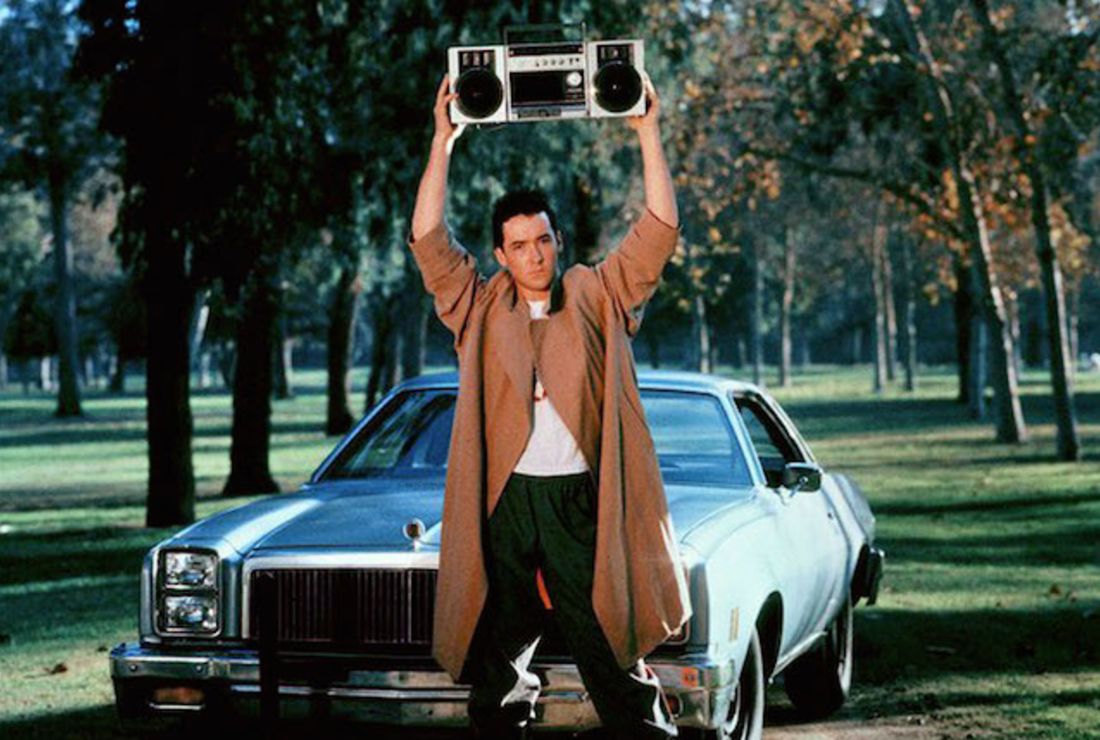
21st: Say Anything – Cameron Crowe (1989)
I kind of loved this. There are a million things that I think don’t work. Cameron Crowe clearly doesn’t understand high school. This should just be a post-college movie. They also don’t really give enough for the Diane character to be on Lloyd’s level. But goddamn is John Cusack charming. It’s really all you need. And because of it, the movie totally works. It makes me think that our generation is really missing movie stars. 
Grade: B+
Say Anything – Cameron Crowe (1989)

2021 Movie Log: April

California_Split
California Split – Robert Altman (1974)

3rd: Cléo from 5 to 7 – Agnès Varda (1962)
I think expectations can always be a bit off with a film considered one of the greatest of all time. The first time I watched this film, I was a little underwhelmed. I admired it for its realism and structure, but found it somewhat slow. For whatever reason, I was blown away this time around. To me, this is an almost flawlessly constructed film. I love the way that Varda sets up everything we need to know in the opening tarot card reading. I was particularly amazed by the construction of her shots. So much of this film takes place in mirrors. I’m fascinated to know exactly how she set up these scenes.
Grade: A

10th: Can’t Get You Out of My Head – Adam Curtis (2021)
No matter what you think of Curtis’s argument, this is a pretty singular and extraordinary film. I’ve never seen anything remotely like it. In a sense, it does feel completely galaxy-brained. Not that the arguments that Curtis makes are necessarily false. Just that he moves between these arguments so quickly using all 480 (!) minutes of run-time before putting it together. What’s interesting is that there are several arguments that Curtis makes that I plainly disagree with. He uses an example of a trans woman in 1970s Britain as an example of how when individuals step out of a society they are inevitably defeated. To me, that seems like a somewhat grand conclusion based on one instance. But that, more or less, is what Curtis uses all of his examples to do. They’re all part of a larger argument that goes something like: Most (if not all) collectives are corrupt and it takes an individual to step outside of them, but individualism is equally as problematic. What’s more interesting to me though, is that I’m not sure that agreeing with Curtis really matters. I think the ultimate goal for this film is to spur independent thinking. If that end is promoted from disagreeing with Curtis, so be it. The opening and closing quote the film uses almost says as much, “The ultimate hidden truth of the world is that it is something we make and could just as easily make differently.” Even in what I have just said, I feel a million contradictions that I need to correct. I think to actually get any type of grasp on this film, you just have to see it. From seeing it once, I know that to really get a firm handle on it, I’d need to see it again.
Grade: B+

11th: Shiva Baby – Emma Seligman (2020)
I found myself almost resisting this movie for most of its run. It is overwhelmingly unpleasant to watch. But somewhere around the halfway mark, it turned for me. Not that the movie gets any easier to watch. But I found myself really admiring what Seligman was doing. I think I finally caught up to what the film’s wavelength. She shoots this exactly like a horror movie. There are close ups, quick cuts, strange angles. It’s pretty remarkable. I don’t know if I’ve seen a mix of genres work quite like this before. 
Grade: B
Shiva Baby – Emma Seligman (2020)

15th: Shirley – Josephine Decker (2020)
This is one of the strangest biopics I’ve ever seen. To be honest, I don’t even know if it qualifies as a biopic. It seems to me like a lot of the events in this movie must have been invented. Either way, I still think it’s pretty good. Between Madeline’s Madeline and this film, it’s clear that Decker has a unique vision and plenty of talent as a filmmaker. Her approach actually reminds me of Emma Seligman’s in Shiva Baby. Decker shoots her films as surrealist horror films even though they’re primarily focused on (somewhat) ordinary characters’ psyches. I think there are a few things that don’t really work in the movie. Or rather, I should say that I don’t think everything in this movie adds up as it should. Still, between the direction and the central performances, this movie is more interesting than most other films. I’m excited to see what Decker does next.
Grade: B
Shirley – Josephine Decker (2020)

17th: Daguerréotypes – Agnès Varda (1976)
As a fan of movies about “real life,” this movie is right up my alley. It’s literally a documentary about Varda’s street, Rue Daguerre. Of course, nothing is ever that simple. There are all sorts of interesting questions. How much are these real people “performing” because they’re on camera? What conversations and encounters are staged? What’s the line between documenting with compassion and something more nefarious (like exploitation, indulgence, or condescension)? I think the answers to these questions, and whether the film works is ultimately up to the viewer. To me it works though I’m not sure anybody else could have pulled it off besides Agnès Varda. 
Grade: B+

17th: Hard Eight – Paul Thomas Anderson (1996)
There is so much to like in this film. It’s well-directed. It’s extraordinarily well-cast. Literally every part is played by an actor at the top of their field. This film is also quite strange. I’m not sure if it knows what it is for most of its run-time. In fact, the film seems to shape-shift into something else about every twenty minutes. I also think there’s some immaturity when it comes to the writing and portrayal of Clementine. Obviously, PTA only got better from this film. Still, it’s an impressive debut. 
Grade: B
Hard Eight – Paul Thomas Anderson (1996)

18th: Inherent Vice – Paul Thomas Anderson (2014)
With the massive caveat that I have not read Inherent Vice, this is a damn good Thomas Pynchon adaptation. The film is really able to capture the vibe, conspiracy, and general insanity of a Pynchon novel. Moreover, it’s able to do so and still work as a coherent movie. Maybe coherent isn’t the right word. Like Pynchon’s novel, this film’s plot makes little sense. Still, I think Anderson is able to convey that in a highly enjoyable way. Pretty groovy stuff. 
Grade: B+

19th: California Split – Robert Altman (1974)
Every time I watch an Altman film I think he has to be the greatest director ever. I should obviously just finish watching the rest of his movies. California Split is already one of my favorites even among a stacked filmography. It almost reminds me of something like I Love You, Man. This fells as though it could be the 70s prototype of that movie. California Split obviously has all the complexity Altman brings to it. A loose plot, a blurred sense of time, questionable (but delightful) characters. My favorite part of the movie is just the general atmosphere. But what really blew me away was the ending. In any other movie Bill and Charlie would have kept riding this hot streak and lost all their money. Here, they keep winning which presents its own problems. 
Grade: A-
California Split – Robert Altman (1974)

20th: Honeyland – Tamara Kotevska, Ljubomir Stefanov (2019)
I did not expect this film to be so punishing. I thought it was going to be mostly about bees. In all seriousness, this film is good. It’s amazing to me how much of a story / plot Kotevska and Stefanov are able to get. For the most part, it has the beats and arc of a traditional feature. I almost couldn’t believe when Hatidže’s neighbor stole her bees. It’s so evil. I’m amazed it was captured on film. As I’ve started to watch more docs, I’ve become fascinated with how they’re made as opposed to just the subject. Obviously, Hatidže is incredibly endearing. Still, I think where I’m most interested is the ethics of making a film like this. 
Grade: C+

22nd: The Long Goodbye – Robert Altman (1973)
More evidence that Altman is the best to ever do it. The Long Goodbye is actually the first Altman film I ever saw. I liked it quite a bit then but I’m not sure I knew what to make of it. Until you watch more of his films, the sound mixing, the loose dialogue, and the blending of genres are all fairly new. Watching it this time around (perhaps with more of an expectation of Altman’s style), I thought it was a masterpiece. I’d put it up against anything Altman (or anybody else) has done. The patience with which he tells this film is remarkable. More than anything though, this film works because of Gould’s performance. I typically think of Altman as the master of the ensemble drama. This is a reminder that he could still make great movies centered around one character.
Grade: A
Long Goodbye, The – Robert Altman (1973)

24th: Ripley’s Game – Liliana Cavani (2002)
I was wary of this film for its first half. The pacing felt rushed. A lot of its exposition was forced. I wasn’t sure how I felt about John Malkovich’s performance as Tom Ripley. Perhaps unfairly, I kept comparing the movie against The Talented Mr. Ripley. While I don’t think this film ever gets quite that good, I did end up liking it. In particular, I thought Ripley’s emergence into the action and the home invasion were both really well executed. Also, it’s just pleasant to watch anything set in the Italian countryside.
Grade: C+
Ripley’s Game – Liliana Cavani (2002)

25th: Strangers on a Train – Alfred Hitchcock (1951)
Bruno Antony might be the most frightening villain in a Hitchcock film. The scenes of him following Miriam, and then later Guy, are absolutely terrifying. This would probably be the most fun Hitchcock film to unpack psychologically. There’s so much going on! There’s the way that Hitchcock portrays Miriam as somehow deserving or (as Mr. Morton says) underserving to be killed. There’s Bruno’s entire character. He loves his mother, hates his father. I think there is some suggestion that he could be gay. Overall, I think this would be in the second or third tier of Hitchcock films. There are some pacing problems especially as the movie races toward its close. The cutting back and forth between Bruno and Guy is almost comical by the end. But the film never stops working even when it gets a little silly. 
Grade: B+
Strangers on a Train – Alfred Hitchcock (1951)

26th: The Grand Budapest Hotel – Wes Anderson (2014)
To me, The Grand Budapest Hotel is the culmination of everything Wes Anderson has done. I obviously like all of his movies quite a bit. I don’t think any of them come close to approaching the greatness of this one. The Grand Budapest Hotel just feels like a perfect film for Anderson’s style in every way. It’s the perfect merging of plot, sensibility, tone, and performance. I’m always amazed at the complexity of the story. There are so many layers to the narrative in this movie, and yet, it is flawlessly written. I wish I had more to say. Really though, I’ve watched this movie probably four or five times and each viewing I pick up new pieces. It’s an incredible film. 
Grade: A
Grand Budapest Hotel, The – Wes Anderson (2014)

27th: The Lady Vanishes – Alfred Hitchcock (1938)
What a strange movie! It’s almost a straight comedy for the first thirty minutes or so. Things do pick up once the plot kicks in. Still, there are moments of humor and levity throughout. The general structure is fascinating to me. For the first thirty minutes, I would have guessed that the two Englishmen would be the protagonists. I don’t think you realize that the movie will be a romance until about halfway through. I really did like this film quite bit. Maybe just because of how unusual it is. It’s clear that Hitchcock understands that having fun is as important as the general mystery. 
Grade: B+
Lady Vanishes, The – Alfred Hitchcock (1938) 

28th: La ciénaga – Lucrecia Martel (2001)
This had been on my watch list for quite a while. It did not disappoint. The comparison I keep coming to is Altman. Martel introduces us to this large family without going to great lengths to define each person or relationship. She, for lack of a better phrase, lets you feel it out. For most of this movie, I was trying to parse out exactly how two characters may or may not be connected. The result is that by the end of this film you almost feel a part of this extended family. You begin to understand the dynamics at play here. It’s something that really defines the setting of this film. Martel does as good a job as I’ve ever seen at capturing a place and time. It’s a pretty remarkable debut. I’m excited to check out her other work. 
Grade: A-

29th: Rope – Alfred Hitchcock (1948)
This feels like an entire movie of macguffins (a term that Hitchcock coined). The plot starts out seeming almost a bit absurd. Two men carry out the perfect murder just to prove that they can do it. They then invite over the victim’s family and friends for a dinner party just to heighten the tension and excitement. It makes for a film and characters ripe for psychological analysis. It also allows Hitchcock to film basically in one place. Despite these seemingly absurd constraints, the film ends up transcending all of it. Its premise is so twisted and evil, it’s really amazing to watch. I don’t think it’s the best of Hitchcock’s films, but it has to be one of his most interesting. 
Grade: B
Rope – Alfred Hitchcock (1948)

Shorts 
L’opera-mouffe – Agnès Varda (1958)

Les Dites Cariatides – Agnès Varda (1984)
Les Dites Cariatides Bis – Agnès Varda (2005)

Le Lion Volatil – Agnès Varda (2003)


2021 Movie Log: March

mustang
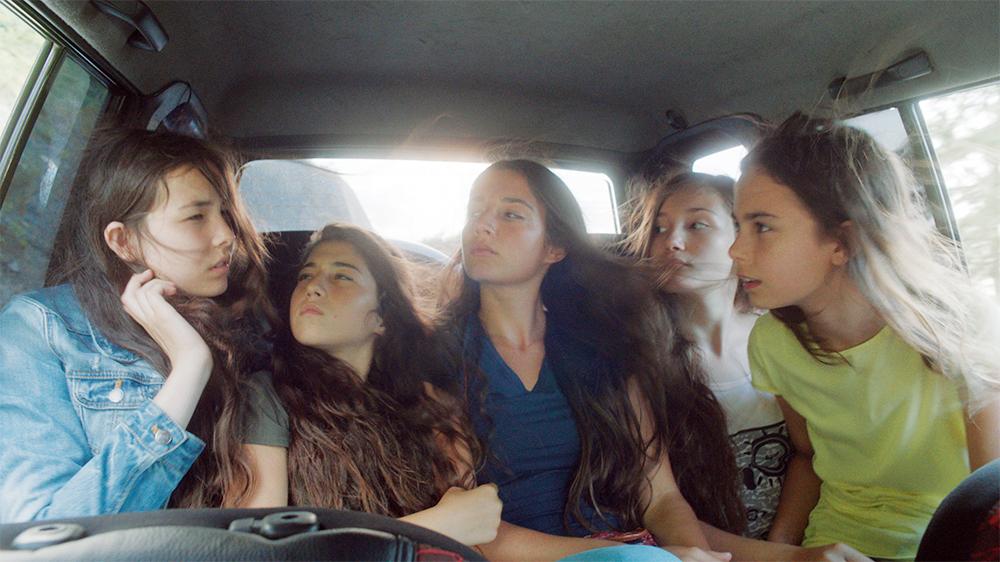
Mustang – Deniz Gamze Ergüven (2015)

2nd: The Wolfpack – Crystal Moselle (2015)
This documentary was billed as the story of an eccentric group of brothers who reenact movie scenes as a way of engaging with the outside world. And while that is certainly part of it, I think it undercuts the real subject that Moselle is exploring. While this doc does highlight the Angulos’ fanatical love of movies, it focuses most closely on the circumstances of this family’s upbringing. Maybe it’s a given, but we quickly learn that those circumstances have been pretty dark. It’s not what I was expecting from the clips I had seen of these brothers recreating scenes from Pulp Fiction and Batman. I do think the film is much better for Moselle’s approach to this story. It’s hard to really assess this documentary as a piece of filmmaking separate from its subject. With no disrespect to Moselle or anyone who worked on the film, most of what works about the movie is this family. You get both the horror of the abuse they suffered, and also the humanity that shines through as they tell their story. They’re funny, charming, completely unique, and just bursting with life. It’s a real thrill to watch as they slowly explore the world outside of their apartment.
Grade: B 

6th: Varda by Agnès – Agnès Varda (2019)
The start of my dive into Agnès Varda! I loved this film. It’s like the greatest TED Talk ever. It’s really as good an introduction as you could have for a filmmaker. On one level, this film is a staged lecture of Varda discussing her career and her work. On a second level, this lecture (and film) is also actively being made by Varda. It’s a documentary with her as both the viewer and the subject. Finally, the film is interspersed with moments of cinematic flourish and recreation. Varda interviews former collaborators. She recreates scenes from her films. You learn who she is both by what she is telling you and how she is telling it to you. Incroyable!
Grade: A-

7th: La Pointe Courte – Agnès Varda (1955)
According to the Criterion’s companion booklet, Varda had only seen ten films in her life when she decided to make La Pointe Courte. What in the actual hell? It’s not like this film is even some weird, half-baked, first try either. It’s great! There are shots in this this film that feel like a precursor to Ingmar Bergman’s Persona. There are moments that resemble a Mike Leigh film. One of the central plots is a direct forbearer to the Before Trilogy. Now, to be clear, it’s not like Varda was coming out of nowhere. She was already an established photographer. For as much as I like all aspects of the film, I would say the shots and compositions are the standout feature. Plus, Varda had Alain Resnais edit the film together. So there was obviously an abundance of talent behind this film. Perhaps it’s fitting that Varda went into this movie with little formal film knowledge? Like the rest of her career, she’s able to blend genres and styles here in a way that’s completely her own.
Grade: B+

10th: Molly’s Game – Aaron Sorkin (2017)
I was hoping this movie was going to be good. I like Aaron Sorkin. I like a lot of the actors. Poker movies are generally pretty fun. Although I remember it getting mixed reviews, it does seem to have found a second life. On top of that, I liked Sorkin’s most recent movie, Trial of the Chicago 7, which also got mixed reviews. Unfortunately, Molly’s Game doesn’t have the same luck (or skill if we’re talking poker). It’s pretty rough all around. The plotting and stakes are off, Jessica Chastain’s Molly isn’t likable or sympathetic, and Sorkin keeps pushing some type of morality onto this movie that I don’t think really exists. To be fair, there are a couple of vintage Sorkin exchanges but it’s really the only thing that saves it from being a total disaster. 
Grade: C-
Molly’s Game – Aaron Sorkin (2017)

11th: Coming to America – John Landis (1988)
This is the hardest I’ve laughed in a long time. I have to be honest, I was kind of nervous about this movie. I know it’s a classic, but a lot of the other classic National Lampoon / SNL styled comedies have not aged that well. Plus, this one’s about a fictional African prince. Now, I know I’m the last person who should examine the political correctness of this movie, but if anybody’s curious, I thought it held up incredibly well. And from just a comedy standpoint, this movie is fucking hilarious. I was cackling throughout the first half it. The 2nd half is still good, but much less funny. That’s generally the way it goes for comedies.
Grade: A-
Coming to America – John Landis (1988)

12th: David Byrne’s American Utopia – Spike Lee (2020)
It’s a bold move to make a concert film when you’ve already made the best concert film in history. Especially considering that Byrne uses many of the same songs as he did in Stop Making Sense. Fortunately, these songs are some of the best ever written and they easily hold up in another iteration. Across the board, I thought this concert was unbelievable. I love the songs, the band sounds amazing, and the choreography is incredibly compelling. I even thought Byrne’s spoken passages and the general themes of the show were moving. There are one or two lulls, stretches in which you wait for the next Talking Heads greatest hit. But really, I thought this was the best concert film I’ve seen in a while. Which is where I’ll say that Spike Lee does an amazing job filming this. I loved the way he cuts to perspectives in the audience. I love how he frames so many shots so you can see people dancing in the crowd. I was honestly kind of shocked by how dynamic the filming is. He circles the stage and weaves between the performers. It’s striking but perfectly complements this performance. 
Grade: B+

13th: Paris is Burning – Jennie Livingston (1990)
I can’t think of another film in which so much of the impact has to do with what’s not on screen. Just taking in what we see, there is an enormous amount to digest. This film sets out to profile the ball and house culture of 1980s Harlem. But from this focus, Livingston is able to touch on aspects of trans and queer culture, race and racism, homophobia, the widening class discrepancy of the 1980s, and eventually, the looming AIDS crisis. Incredibly, she does all of this in just 75 minutes. In just what’s presented on screen, the aspect that stands out most are the people. We meet the most prominent figures of this movement, all of whom are incredibly charming, funny, and witty. They share their greatest aspirations and stories of their struggles. There are a couple instances in which we see them attain the success they dream of. Willi Ninja, for instance, becomes a prominent dancer and choreographer. More often, we don’t see these successes. In the most devastating sequence of the film, we learn of the unsolved murder of one of the subjects, Venus Xtravaganza. But what my mind keeps returning to is what Livingston doesn’t capture in this film. Mainly, the AIDS crisis which eventually kills most of the film’s subjects. In many ways, it completely changes the meaning and impact of the movie. It’s one thing to hear the hopes and dreams of these people. It’s another to hear them all while knowing that many will die in the next few years. I don’t mean this in a general way either. Many, if not most, of the film’s subjects did die over the following few years. Moreover, some of the subjects in this film were unhappy with Livingston and the film in general. There are certainly complicated identity politics happening in the making of this movie. Livingston is a white person making a documentary about an almost entirely Black group of people. As you can tell, this is going to take me a while to process. Still, I thought it was an incredibly impactful piece of filmmaking. 
Grade: B+

14th: Let the Sunshine In – Claire Denis (2017)
This film explores a subject I’ve never really seen on-screen. It follows Isabelle as she navigates dating, sex, and love as a recently divorced, middle-aged person. I really admire how biting Denis is in this film. It’s one of the most unflattering movies I’ve ever seen. I don’t think anyone comes away looking good in it. That applies to Juliette Binoche’s Isabelle as much any one. Binoche is obviously an extraordinary actor and is able to garner some sympathy for the character through her performance. But it’s not much. For me, this is where the movie falls a bit flat. It’s so cutting, it’s hard to feel that much besides relief when it’s over.
Grade: B-
Let the Sunshine In – Claire Denis (2017)

15th: Crip Camp – James Lebrecht, Nicole Newnham (2020)
This is easily the most moved I’ve been by a movie in some time. I was on the verge of tears throughout. What is remarkable about it is that it’s not played for this type of sympathy. There are no cheap tricks or attempts to engineer a wave of emotion from the audience. In fact, it’s quite the opposite. This documentary highlights the landmark achievements made by disability advocacy groups and specifically those that emerged from Camp Jened. The reason I was moved by the film is because it is so overwhelmingly affirmational. We get a portrait of this camp, of a world in which these people are finally allowed to just be themselves. It’s moving because in watching it, you see just how much has been taken away from them. It makes you furious as you watch them have to fight so hard and for so long for what should already be theirs. Something that I really admired about the film is the way it subtly lays out how to carry out a successful movement. We see these people come together at camp and realize how the world should be. They then go out to advocate for this policy. They find a bill in which to include it. Once it’s passed, they then have to advocate for the government to enforce it. I am by no way endorsing the cruel system through which they have to navigate. But it does lay out a blueprint of how to carry out action in our fucked-up society.
Grade: B+

16th: Sound of Metal – Darius Marder (2020)
I wasn’t sure how I felt about this movie for most of its run time. As a baseline, I thought it was well-made and that the performances were great. And to my limited knowledge, it seems to handle deafness and disability in a thoughtful and considerate way. I really liked the first half of the film. I thought the sequence in which Ruben first loses his hearing was particularly amazing. I loved seeing the actual process of him and Lou trying to figure out what to do. I also loved that this film skips the part in which Ruben struggles to fit into the rehab community. For a moment, I thought that was going to be the main tension of the film. But suddenly the film fast-forwards and we see Ruben thriving. The problem with the movie for me is after this moment. As soon as Ruben contacts the doctor’s office, you more or less know what will happen the rest of the film. Which is a shame because the first part of the movie felt so unpredictable. This is all probably coming off as more negative than I intend. I just thought this movie was going to be great. At the end of the day, it’s pretty good. 
Grade: B
Sound of Metal – Darius Marder (2020) 

20th: The Muppet Movie – James Frawley (1979)
I know that The Muppets weren’t made just for kids. Still, I feel a little strange reviewing something that is certainly aimed toward children. There are many things I love and admire about this film (and The Muppets in general). The jokes are incredible. I am particularly fond of Fozzie’s magnificent introduction, “Here I am, Fozzie Bear, to tell you jokes both old and rare. Wocka Wocka Wocka!”  The characters are obviously endearing. I love all the cameos. I certainly did not realize or remember Orson Welles’s role in this film. Not to mention that this film features an unbelievable soundtrack. It’s amazing that “Rainbow Connection” became a legit hit song! Still, my point remains that anything I can say about the movie now is much less meaningful than what I would have said as a kid. Luckily, my impression of the movie is about the same as it was when I was 10: I loved it.
Grade: B+
Muppet Movie, The – James Frawley (1979)

21st: Tangerine – Sean Baker (2015)
Surprisingly enough, I first saw Tangerine in film school. Who knows, if more of the curriculum had been based around films like it, I might have stayed. Sean Baker is one of the most interesting filmmakers working. He makes films whose settings and characters are determined by real life. In keeping with that approach, he even casts many non-actors in his films. Watching the movie last night, I was struck by how fine a line he is walking. In this instance, he’s a white man making a film about two Black, trans, sex workers. And although I’m not the person to make this determination, I don’t think the film is exploitative. That all comes down to the portrayal of its main characters, Sin-Dee and Alexandra. It’s not that Baker focuses on two people who are rarely seen in the movies that works, it’s that these characters have life and personality beyond any stock characteristics. They feel like dynamic, real people. Which is where I’ll say that beyond all the big things that make this film interesting (the plot, setting, and characters), the success of it really boils down to the small things. It’s well-written, features amazing performances, and (if you can get past the iPhone of it all) looks pretty good too. 
Grade: B+
Tangerine – Sean Baker (2015) 

22nd: American Factory – Julia Reichert, Steven Bognar (2019)
I’m amazed that this documentary was made. I still can’t believe the access and (seeming) transparency Reichert and Bognar got to Fuyao. It’s really something to watch as these American and Chinese workers struggle to come together. It’s stunning when we how the executives at Fuyao are dictating the terms of this relationship. Overall, I think this documentary is fascinating. I agree with most of its politics. Yet, there’s something that makes me leery of it. Perhaps I’m just suspicious that Reichert and Bognar could get this type of unfiltered access to Fuyao? Perhaps I’m wary of the Obamas’ role in this film? There’s nothing I can point to and say “this was done wrong.” Still, I have a bit of unease about something in this movie. It’s probably just the robots.
Grade: B-

23rd: Free Solo – Elizabeth Chai Vasarhelyi, Jimmy Chin (2018)
I am almost certain that I will never watch this film again. The final stretch of it, in which Alex Honnold does a free solo climb of El Capitan, is some of the most stressful filmmaking I’ve ever seen. I loved how the film kept cutting back to the cameraperson’s own reaction as it was happening. Honestly, I’m surprised by how much I liked this documentary. I expected it to have breathtaking footage. I knew that watching someone do a free solo climb would be incredibly dramatic. Still, I’m not sure I expected everything else to be done so well. I particularly liked how the filmmakers inserted themselves into the movie. We watch as they discuss their own relationship with Alex, the effect that filming him during a climb could have, and especially how they’re preparing for a worst-case scenario in which Alex falls and dies. I think this film is a really interesting exploration of mortality. I’d love to read or see more about the ethics in making something like this. 
Grade: B+

23rd: The Great Muppet Caper – Jim Henson (1981)
I would say that across the board this is a step down from The Muppet Movie. The jokes aren’t as sharp and the songs aren’t as good. Still, it’s pretty entertaining to watch. I love the Hollywood spectacle Henson brings to it. It’s fun watching these muppets navigate a film of big sets, stages, musical numbers, etc. 
Grade: B-

24th: Another Round – Thomas Vinterberg (2020)
In the wrong hands, this movie could have been pretty bad. The premise is so broad that you can almost see the terrible American version of this movie. Luckily, this film is pretty wonderful. What I think really works about it, is that Vinterberg sticks out his premise to its logical conclusion. In the aforementioned (not yet existent) American version, we would probably have the same set up: four middle-aged colleagues and friends take up continuous drinking as a social experiment. From there, however, I’d imagine the film would devolve into wild, drunken shenanigans. Vinterberg, instead, takes this premise and tries to play out what would actually happen. It’s wonderful to watch as Martin and this group succeed with their experiment at first. We watch with horror as they continue to up the dosage. Then we see how quickly everything crumbles. For as wild as its premise is, this part feels true to life.
Grade: B+
Another Round – Thomas Vinterberg (2020)

25th: El CaminoA Breaking Bad Movie – Vince Gilligan (2019)
When I first watched this film, I praised it for essentially being three great Breaking Bad episodes rolled into a movie. However, that was my assessment after not having seen Breaking Bad since it left the air in 2013. Watching it after bingeing the series, I have to say it doesn’t quite rise to that level. Which, to be fair, makes sense. Breaking Bad is maybe the greatest series of all time. Its stretch-run was as close to impeccable as you can get. Moreover, how could you have a great episode of Breaking Bad without Walt, Skylar, Hank, Marie, Saul, or Mike? My point is that El Camino is good, but it’s not that good. I should say, everything in this movie is, of course, extremely well-done. The performances, the writing, and the direction is all top notch. Frankly, Gilligan is as good as anybody at what he does. But there are some elements that don’t work perfectly. The movie has to employ flashbacks to include the other Breaking Bad characters we want to see. It strikes me that this movie is in a kind of no man’s land. It’s not at the level of the best Breaking Bad episodes and it’s not really capable of being a standalone movie. Still, this is two more hours of Vince Gilligan and Aaron Paul exploring the Breaking Bad universe. I would be a fool to complain about it. 
Grade: B
El Camino- Vince Gilligan (2019)

27th: Boyhood – Richard Linklater (2014)
Unfortunately, this is not going to be a review so much as a rant. I suppose I’ve reviewed and talked about this movie enough anyway. Still, as someone who keeps a film journal and uses sites like Letterboxd, IMDB, and Rotten Tomatoes, I have to say that film criticism and discourse has gotten pretty stupid. It feels like it’s gone from a tool to unlock and explore films more deeply to something to quickly justify whether or not you liked a movie. Now, maybe I’m even using it in this second way to defend Boyhood (I am). But it’s incredibly frustrating to me that Boyhood, of all films, has become a somewhat divisive film. This is a technically innovative, independent, character drama filmed over 12 years on a tiny budget that didn’t even win Best Picture or Best Director. Why is this the lightning rod? To me, good film criticism comes from assessing a movie on its own terms. In other words, did this movie accomplish what it set out to do? A movie can both work and not be your cup of tea. A movie can also really speak to you and not totally work. So when I see people complain that Boyhood is too slow or too limited in focus, I don’t know if I think that they’re actually assessing the movie. I think maybe it’s just not for them. Which is fine if you actually approach it in that way. There could be a really interesting discussion about whether or not this film connects with people. I should also say, some of the criticism I’ve seen about this film is 100% valid. It would certainly be wonderful to have movies like this that chronicle the lives of women and people of color more closely. There are some films that I love that do this (one example being Celine Sciamma’s Girlhood released in the same year). However, to me, to make a quick dismissal of Boyhood for chronicling the life of a boy is pretty stupid. Like what did you expect? And if you want to direct your vitriol at a movie for chronicling the life of a white dude, I would say to look at some other films released that same year. Boyhood was made independently for $4 million. In that same year, Captain American: Winter SoldierThe Amazing Spider-Man 2, and Guardians of the Galaxy were each made for over $200 million a piece. You see what I mean? Hopefully, the next time I watch this movie, I can just focus on whether the movie works as its own entity. 

ETA: Reading back through this is pretty embarrassing. I should be better than to make arguments against a generalized, undefined point (i.e. Boyhood being a lightning rod). You know why it’s a lightning rod? Because people like me feel the need to always talk about how good it is. Catch-22, I guess. Still, I’m going to leave this post up because I think my points about film criticism, and about Marvel getting away with everything are generally true, even if not spoken to particularly well. 
Grade: A

28th: Minari – Lee Isaac Chung (2020)
It’s kind of crazy that not only does something like Minari exist, but that it’s a major movie this year. It feels spiritually in the lineage of Moonlight in that way. It’s a small, beautiful portrait of an America not often seen in the movies. Historically, when there’s a movie made about immigrants or non-white people in America, it is mostly about race and racism. This movie focuses so closely on this family, that overt racism is not even a major part of the film. In fact, while Korean identity is a major part of the film (much of the film is in Korean), I would say that this movie is most prominently a family drama. I think where Chung and this movie really excel is in its smallest moments. There is some great screenwriting here. I’m thinking of the use of the snake that David and his Grandmother see. She tells him that things that are hidden are much more dangerous than those out in the open. It serves as a thematic link throughout the film. It’s even the line she repeats when she has a stroke. Still, you (or at least I) wait for this literal snake to actually strike. It never does. Instead, there is a series of metaphorical snakes that strike: the burning trash, the tension between Jacob and Monica. Even at the end when things look (somewhat) optimistic, Jacob and David are at the Minari creek. This is the place David first saw the snake. It’s no coincidence that it’s hidden. Danger is always lurking. 
Grade: B+
Minari – Lee Isaac Chung (2020) 

29th: Mustang – Deniz Gamze Ergüven (2015)
A stunning movie. I can’t believe how rapidly its tone shifts. Despite the circumstances, this movie starts out as being fairly light-hearted. That the 2nd half becomes as tense as any movie I’ve seen is an amazing achievement. Remarkably, none of this feels disjointed or out of place. Ergüven uses these lighter moments to attach us to the characters and set up the stakes of the film. We watch as basic freedoms are slowly taken away from them. By the time things really go dark, it feels natural. Overall, I’m blown away by the perfromances and the writing. I’ve already had to go back and watch a couple of sequences a 2nd time to understand how Ergüven pulls it off. 
Grade: A
Mustang – Deniz Gamze Ergüven (2015)

30th: Kajillionaire – Miranda July (2020)
This may be the strangest film I’ve seen in some time. While I liked it, I don’t know if I ever got a handle on just what was happening. It almost reminds me of a David Lynch film in that way. It feels at times like July is communicating on her own wavelength. I can’t say this film emotionally hit me the way I was hoping. Still, I thought it was well done. July is as unique and exciting a filmmaker as there is. There aren’t many other directors who can make films like nothing you’ve ever seen before. 
Grade: B-
Kajillionaire – Miranda July (2020)

Shorts
That One Day – Crystal Moselle (2016)
Toby Dammit (segment of Spirits of the Dead)  – Federico Fellini (1968)
Les 3 Boutons – Agnès Varda (2015)
Ô saisons, ô châteaux – Agnès Varda (1958)
Du côté de la côte – Agnès Varda (1958)
Les fiancés of the Bridge Mac Donald
– Agnès Varda (1961)

Breaking Bad

breaking bad

Overview

Created by Vince Gilligan
AMC (2008 – 2013)

The first television show that I became truly obsessed with was Lost. As you might imagine, it was a frustrating love affair. And I wasn’t even watching it live! I didn’t have to wait a week between each one of its 121 (121!) episodes. I didn’t have to wait a year between the opening of the hatch and the introduction of Desmond. Still, it was hard not to become disillusioned and frustrated by what that series became (or didn’t become) over the course of six seasons. Here was a show that had maybe the greatest setup of all time and, like Oceanic Airlines, just couldn’t land the plane.

The second tv show that I became obsessed with was Breaking Bad. It’s a series with a more inauspicious start than Lost. In fact, I had a hard time convincing people to watch it at first. I remember one person at a party who told me that if he were going to watch a series about a middle-aged drug dealer, it’d be the comedy about a hot mom selling weed. Although Breaking Bad ended up in a whole other class of show than Weeds, it wasn’t that crazy of an assessment at the time. The first episodes of Breaking Bad were slow, strange, and often incredibly dark.

Ironically enough, it was these qualities that would ultimately set Breaking Bad apart from Lost, Weeds, and pretty much any other show in history. Its approach was actually not dissimilar from something like Lost. Vince Gilligan and his team would think of something amazing (an explosive wheelchair bell for example), put it in the series, and have to write their way to it. The difference from Lost, was that Gilligan and his team were methodical in setting up these moments. They were never afraid to move as slowly and granularly as possible to make these pay-offs work. If you look at my list below, you’ll see most of my favorite episodes are season finales. While these episodes are all amazing in their own right, they wouldn’t be nearly as good without the rest of their seasons, and the entire series, leading up to them.

When I think of Breaking Bad, I think of a series with complete mastery of television storytelling. Some of that was timing and luck. For as much as I have knocked Lost (a show that I do love by the way), it came at a time when series were expected to do 22 episodes a year with no end in sight. A few years later, Breaking Bad had the freedom to tell one story for exactly how long it would take, all while building to a finale that would satisfy its audience.

Still, that freedom shouldn’t take anything from what Vince Gilligan and his team were able to accomplish. Even compared with the other “greatest series of all time” contenders, Breaking Bad stands alone. Series like The Wire and The Sopranos often felt great in spite of the fact they were on tv. David Chase intended for The Sopranos to be a movie. David Simon aspired for The Wire to be a novel. Breaking Bad didn’t just tolerate the fact that it was on tv, it fully embraced the form! In doing so, it was able to tell the single greatest, most pristinely executed, story in television history. Not bad for a show that struggled to compete with Weeds at first.

Season Rankings

4, 3, 5.2, 5.1, 2, 1

Best Episodes

1. Ozymandias – Season 5, Episode 14
2a. Half Measures – Season 3, Episode 12
2b. Full Measure – Season 3, Episode 13
4a. End Times – Season 4, Episode 12
4b. Face Off – Season 4, Episode 13
6. One Minute – Season 3, Episode 7
7. To’hajiilee – Season 5, Episode 13
8. Dead Freight – Season 5, Episode 5
9. Felina – Season 5, Episode 16
10. Salud – Season 4, Episode 10

Season Reviews

Season 1 – 2008
We’re doing it! The last of the “big four” shows (along with The Wire, The Sopranos, Mad Men). It’s a bit strange to end with Breaking Bad. It was the first of these shows that I became a fan of. Honestly, it propelled me into being a tv and movie person as much as anything else in my life. Rewatching this first season I had such a strong wave of nostalgia for all the times I had seen it before. It was kind of surreal! I remember watching it over and over with my friends, roommates, and my parents. In hindsight, it’s shocking that not only did they all make it through the bathtub sequence in episode two, but that the show became a legitimate phenomenon. Out of these four greatest series, it finished its run by being (by far) the most popular show. Really, the only series in the 2010s to eclipse Breaking Bad’s place in the monoculture was Game of Thrones.

Having said all of that, I really can’t escape thinking how insane it is that this show became as popular as it did. Out of any great show I can remember, it has the least assured debut season. There are some technical reasons for that. The writer’s strike cut this first run of episodes from 9 to 7. There were some major decisions that Gilligan and his team made on the fly, the most significant of these being to keep Jesse alive for the rest of the series. But it’s a strange season, particularly with the knowledge of what the show will become.

The lasting impression I have of Breaking Bad is of complete mastery. My recollection of the series is of nothing being out of place, down to the smallest detail. It’s of anecdotes about how the meth lab in the series was so well put together that one could actually cook meth in it. Yet in this first season, there are missteps! We have threads that the series will never explore. The dangling line about Walt needing to call his mom, for instance*.  And more than in the later seasons, your suspension of disbelief has to be really high. Walt can just disappear for hours and days on end? At the same time that meth-making equipment is being taken from his lab? All while characters like Skyler can smell it on him? Or how about the end of the season? The explosion Walt causes at Tuco’s HQ is amazing, but how does he not blow himself up?

I don’t mean to knock the series. Even in a down season (relative to the rest of the series), the show is unbelievably entertaining. Gilligan, more than anybody I can think of, knows how to ramp up pressure on all his characters. He does it almost methodically. Walt’s talking to Hank? Why not have Jesse call him at that exact moment? But this is the point I’m coming back to. In the first season, Breaking Bad almost strikes me as the most well-done crime procedural in history. Like if you heard some show on CBS was actually unbelievably good. It reminds me of Lost in that way! The big difference though is that while Lost’s first season was its best, Breaking Bad only gets better from here.

*Edited to add: I was totally wrong on this. In Season 2, Walt will use visiting his mother as an excuse to do a marathon cook in the desert. Moreover, Skyler will confirm that Walt has been lying when she calls his mom and learns he was never there.

Season 2 – 2009
Season 2 is often thought of as the weakest Breaking Bad season. Not that it’s weak, per se, but compared against the rest of the series…well, you know. Rewatching this season, I actually think it’s a small step up from Season 1. The main complaint about this season stems from its ending and the events leading up to it. That’s totally valid. Breaking Bad is a series that prides itself on being as realistic and methodical as possible. The end of this season results in a series of interconnected events in which we see Walt’s actions inadvertently lead to a deadly plane crash over Albuquerque. This interconnectedness even involves him unwittingly having a drink with the father of the girl he will let die in the next episode. It’s something that feels ripped from the Lost universe. Moreover, throughout this season, Gilligan and his team heavily foreshadow a disaster. We repeatedly see wreckage and body bags at the Whites’ house. I have to imagine that some viewers felt let down by the fact that these events end up having nothing to do with the central tension of the series.

But let’s focus on the positives because there is a lot to like in this season. And while Breaking Bad was good from the start, I think this is the season where you first see flashes of greatness. For one, this season introduces us to some incredible characters and actors. You get Krysten Ritter’s Jane, Giancarlo Esposito’s Gus, Jonathan Banks’s Mike, and Bob Odenkirk’s Saul. Gilligan also lets Walt and Jesse’s relationship really flourish. Plus, we get to see Jesse as a person outside of Walt’s universe for the first time. I also think this season is a great showcase for Gilligan’s writing style. We see countless incidents of Walt and Jesse being in impossible jams and somehow working their way out of them. It’s something that will only get better as the series moves forward.

More or less, I think that’s the takeaway of this season. In a vacuum, perhaps Season 1 is better than Season 2. It is certainly a much tighter and focused season. But Season 2 is where Breaking Bad starts to feel like the show it will ultimately become. There are some hiccups along the way, but I’m not sure that the final seasons of the series would have been nearly as good without it. I suppose we’ll find out!

Season 3 – 2010
As you can tell from reading these previous entires, I have become a bit consumed with the question of what is the greatest show of all time. Having watched The Wire, and rewatched The Sopranos and Mad Men, all I’ve learned is that whichever show I think is the greatest is likely the one I’ve watched most recently. I honestly don’t feel any closer to being able to say that one is definitively the best. However, after rewatching the first two seasons of Breaking Bad, I did have the sense that for as much as I like it, it was one show I could take out of the running. While its first two seasons are good, they’re certainly not The Sopranos good. So what happens in Season 3? Breaking Bad more or less delivers the greatest season of television ever. So much for an easy out.

So how does Breaking Bad get so much better at this point? The stakes, for one, are much higher. In the first two seasons, Walt is mainly dealing with the prospect of being caught. Here, he has to face the prospect of getting him, and maybe his entire family, killed. What else? The antagonist here, Giancarlo Esposito’s Gus, is not only a level up from Tuco or the DEA, he’s one of the best television villains ever. Along with Jonathan Banks’ Mike, Gus presents a foe that Walt and Jesse can’t outsmart. What’s more, Gilligan brings us behind the curtain for scenes with just Gus. We never had sense of Tuco as a person outside of seeing him with Walt and Jesse. Here, we see just how smart, methodical, and ruthless Gus is. Frankly, we know Walt and Jesse are in a jam even before they do.

As much as all of those things add up to an unbelievable season (which they do), the thing I’m most struck by is the run of all-time episodes that Season 3 goes on. “Sunset,” “One Minute,” “Half Measures,” and “Full Measure” are all unimpeachable hours of television. They also exhibit Breaking Bad’s greatest strength. In each of these hours, Gilligan presents us (and his characters) with an impossible dilemma. We’re forced to root for outcomes that go against our best instincts. In “Sunset” we root for Walt and Jesse to outsmart Hank. Yet, in “One Minute” we root for Hank to survive, even if it keeps Walt and Jesse in peril. This idea is taken to its most extreme in “Full Measure” in which we are forced to root for Jesse to kill an (almost) innocent man, Gale, in order to save himself and Walt. It’s as high-level storytelling as you can do and it’s perfectly executed. Television literally doesn’t get any better than that.

Season 4 – 2011
The end of Breaking Bad’s fourth season is the best any tv show has ever been. It is quite literally the peak of peak tv. I don’t even think it’s that close. I’ve now watched this run of episodes at least a half dozen times and it still mesmerizes me. I can’t even imagine the thrill of watching this run, and in particular the final two episodes,”End Times” and “Face Off,”with fresh eyes. So because of this stretch of episodes, I’ve always defaulted to the thought that Season 4 is the best season of Breaking Bad and maybe any show ever.

Now, compared with the previous season, the beginning of Season 4 is a little slow. Well, maybe not the season premier, “Box Cutter,”  which has one of the best and most chilling moments in the series. But after that, the next few episodes are a slow and steady escalation of the stakes in the series. We don’t have the wild mid-season thrills of “Sunset” or “One Minute.” So in a vacuum, perhaps Season 3 actually has more highs than Season 4?

But, as I’ve already said, the end of Season 4 is the best any show has ever been. So how can I really lament a slow build-up to get there? Especially because it’s in this relatively slow build up that the show establishes so many incredible dynamics. It sets up Gus as an impossible foe and maybe the best villain in television history. It forces what seems like a permanent wedge between Jesse and Walt and even gives Jesse a new mentor in Mike. It puts Hank right on the heels of Walt, Fring, and the entire Los Pollos Hermanos operation. And it forces Walt, without money or a friend in the world, to laugh hysterically to himself as he faces his imminent death in that crawl space.

The best part about these threads is that none of them are independent of each other. Logically you can’t root for both Gus and Walt. But how can you root against Gus when he methodically takes out the entire Don Eladio cartel? Or against Walt as he rigs together the most unexpected explosive device of all time? The same goes for Hank. You desperately want him to discover the truth of Los Pollos and yet that would put an end to Walt, Jesse, Mike, Gus, and the entire series.

The brilliance of Season 4 is that it puts every character in an impossible predicament and somehow works its way out of it. Obviously some characters don’t survive, but even when they die they go out in spectacular fashion. My point with all of this is to say that the last minute of Season 4 remains just about the greatest thing I’ve ever seen. I’ll never forget the first time I watched it. Even knowing what happens, I still get chills watching it unfold. It’s the cap to a perfect season, probably the best in the television history.

Season 5, Part 1 – 2012 
In some ways, the first part of Breaking Bad’s final season feels like a victory lap. Within the series, the table is almost entirely reset. Gus is gone, the meth lab is destroyed, Hank and the DEA are (temporarily) off Walt’s trail. As Walt put it at the end of Season 4, he’s won. I remember watching the show live and wondering what they would really be able to do for this final season. You could have seen a world in which the end of Season 4 was the end of the series.

On top of all of this, Season 5 marks the point at which Breaking Bad exploded in the monoculture. Everyone had finally caught up on Netflix. In just a couple of years the show went from being a hidden gem to prime contender as the greatest series of all time. There’s no way of knowing, but it feels like this knowledge bleeds into the series. Breaking Bad in Season 5 is far more daring and confident than ever before. It almost mirrors Walt’s own cockiness.

Which is where I’ll say that I mean all of this in a good way. I think this swagger was incredibly beneficial at this point. As I’ve already said, Season 5 starts out as something of a blank slate. The show has an almost impossible task. It has to reel us back into an entirely new operation, all while knowing that whatever Walt and Jesse get into, the end is right around the corner. Think about the Los Pollos operation. That plotline extended from the middle of Season 2 all the way to the end of Season 4. The series has nowhere near that amount of time left. On top of that, there’s certainly an element of disbelief to everything Walt does at this point. He just survived Season 4 by the skin of his teeth. Could he really convince everyone to get back into business?

This is where Breaking Bad’s new self-assuredness kicks in. It helps gloss over these inconsistencies and cut-corners (features which had never existed in the series’ history until now). There are a couple of hiccups. Mike’s death feels a bit unlikely. Other plots, like Walt and Jesse’s relationship, feel rushed. But these moments are overshadowed by the thrills of the season. The magnets plot in the premiere and the train robbery in episode 5 are all-time highs. The same goes for the brilliant montages and musical cues. The “Crystal Blue Persuasion” sequence, in particular, is wonderful. Most importantly, this season nails the most important moment of the entire series. In its final minutes, Hank realizes who Walt really is. It’s the moment we’ve all been waiting for and the perfect transition to the end of the series.

Season 5, Part 2 – 2013 
I recently wrote about how I had come around on Mad Men‘s finale to the point where I thought it might be the strongest of any great show. While initially I found it disorienting and anticlimactic, in rewatches I’ve admired its subversiveness and complexity. The series closes with each of our main characters in unfamiliar destinations. Pete Campbell becomes a family man, Peggy falls in love, Joan chooses work over a relationship, Don finds (some) peace. I really admired that Weiner chose to have his characters grow and change even when it seemed counterintuitive to the show we had been watching.

Watching the last season of Breaking Bad, I have to wonder if subversion and complexity is overrated. Breaking Bad‘s final stretch of episodes is so good, and so fitting to the show that it is, that you almost wonder if it were preordained. It’s hard to imagine that this is the work of writers sitting in a room and figuring it out. It’s that good! And after watching this ending for a second time, I can’t imagine what it would have looked like had Gilligan and his team gone in any other direction.

Now, Breaking Bad and Mad Men are two very different shows. And while I think Mad Men did right by having characters grow and change in its final stretch, Breaking Bad does right by doing just the opposite. This final stretch of episodes centers on Walt finally reaping what he’s sowed over the course of 4 and a half seasons. It’s not about growth and transformation. That’s already happened. The ending of Breaking Bad is about a man who can no longer escape the transformation he’s undergone. In some way, it’s about whether he, and the people around him, can finally accept it.

What’s really amazing to me about Breaking Bad‘s final stretch of episodes is how it fits everything the show has done before, but to a biblical scale. Throughout the series, we’ve watched as Walt and Jesse are driven against each other. We’ve watched as their plans have gone disastrously awry. We’ve watched how every solution they come up with, no matter how miraculous, just leads to a bigger problem. So how does this final stretch of episodes end? Hank exploits Walt and Jesse’s fractured relationship to catch Walt. Walt’s solution, to have Uncle Jack and the Neo-Nazis kill Jesse, goes disastrously awry. Walt manages to avoid being caught and arrested, but gets Hank and Gomez killed in the process. To top it off, he hands Jesse over to Uncle Jack out of sheer spite.

As a viewer it makes you face everything you’ve rooted for and liked about the series with a new perspective. Walt is acting no differently from how he’s behaved all series. But now, his pride has gotten Hank and Gomez killed. It’s gotten Jesse captured by a group of villains so evil that we can’t even root for them.

Honestly, the series could have ended there if it chose to. It would have been a perfectly fitting, albeit dark ending. But, I have to say, I’m thankful that Gilligan and his team decided to give the audience a little salvation. Sure, Walt can’t right the wrongs he’s committed. But he can use his brain for one more amazing, impossible solution. It’s the best of everything that Breaking Bad has been or done, and it’s the perfect send-off to the series.

Appendix

Attached are reviews from my first two viewings of El Camino, Vince Gilligan’s 2019 Breaking Bad movie. The first is from when the film first came out. The second is from a rewatch after revisiting the series.
el camino

2019 Review
In many ways, this is the ultimate tv movie. I think your enjoyment of the film will be a 1:1 correlation with your enjoyment of Breaking Bad. This film does not work if you have no knowledge of Breaking Bad. The film also operates more closely to a television show than a movie. We follow Jesse through what feels like three compressed episodes of Breaking Bad. In the show, Gilligan would meticulously show what his characters were doing before unveiling the central dilemma. It works in that format because these instances are short and contained. We are compelled by the mystery, get a deeper level of the story with a reveal, and return for the solution. This is not how movies are typically set up. Here, for instance, the first act essentially starts with Jesse arriving at Todd’s house. In a normal movie, we would know why he’s there and what he needs. We don’t have that information in El Camino. We follow Jesse simply because we’re already watching the movie. Over the course of the second act, Gilligan explains what Jesse is doing, and the stakes and significance of why he’s doing it. All of that is to say, I think it still works. Breaking Bad is my favorite tv show of all time. This movie is on par with its good episodes, though maybe not its great ones. Gilligan remains the best filmmaker at presenting an unsolvable problem and having his character figure their way out of it. The way the fridge and the shootout unfold are both masterfully done. I did enjoy the cameos and flashbacks. Often, I felt like they provided a deeper level of reason and pathos for the events of the movie. Some of them were certainly more “fan service-y” than anything else. But hey, I’m a fan. This film was extremely well done and continued my favorite show of all time. To knock it for not being masterful feels unfair.

2021 Review
When I first watched this film, I praised it for essentially being three good to great Breaking Bad episodes rolled into a movie. However, that was my assessment after not having seen Breaking Bad since it left the air in 2013. Watching it after bingeing the series, I have to say it doesn’t quite rise to that level. Which, to be fair, makes sense. Breaking Bad is maybe the greatest series of all time. Its stretch-run was as close to impeccable as you can get. Moreover, how could you have a great episode of Breaking Bad without Walt, Skyler, Hank, Marie, Saul, or Mike? My point is that El Camino is good, but it’s not that good. I should say, everything in this movie is, of course, extremely well-done. The performances, the writing, and the direction is all top notch. Frankly, Gilligan is as good as anybody at what he does. But there are some elements that don’t work perfectly. The movie has to employ flashbacks to include the other Breaking Bad characters we want to see. It strikes me that this movie is in a kind of no man’s land. It’s not at the level of the best Breaking Bad episodes and it’s not really capable of being a standalone movie. Still, this is two more hours of Vince Gilligan and Aaron Paul exploring the Breaking Bad universe. I would be a fool to complain about it.