My Favorite Shows of 2020

tv

As I write this, I have only watched 12 new movies in 2020. I probably listened to even fewer new albums. I definitely read fewer new books. So alas, the lone category in which I feel (still not very) qualified to make any type of year-end list is television. And hey! That’s not so bad. I love TV.

The reputation for television has always been that it’s passive and escapist entertainment, especially compared with the lofty, high-art of cinema. And yet in 2020, movie theaters are closed, everybody is looking for an escape, and television can encompass almost anything. (If I were to list my favorite films, the top two would technically be episodes of an anthology series on a television streaming service.)

What I’m trying to get at is that 2020 was a down year for everything. And compared with last year, that probably extends to TV too. But, I also think television withstood the year better than most. There were plenty of good shows and even a few great ones. So without rambling any further, here are my ten favorite series of 2020.

As a final note, If a show didn’t make this list it’s because I think it is terrible and definitely not because there are literally hundreds of shows spread across dozens of streaming services.

industry hbo10. Industry (Season 1) – Mickey Down, Konrad Kay (HBO)
Industry is the most enigmatic show I’ve watched since Succession – by which I mean that I literally have no idea what is going to happen in each episode (except for copious amounts of drugs, sex, and bad decisions). To be honest, there are more than a few similarities to my favorite show: Industry documents the lives of people I don’t like doing work that I don’t understand in a way that is absolutely thrilling. But it would be unfair to say that Industry is anything but its own series. For one, it focuses on outsiders in a way few shows ever do. And two, the filmmaking and performances (in particular, Ken Leung in series-stealing role) are too spectacular to remain in the shadow of anything else.

what we do in the shadows

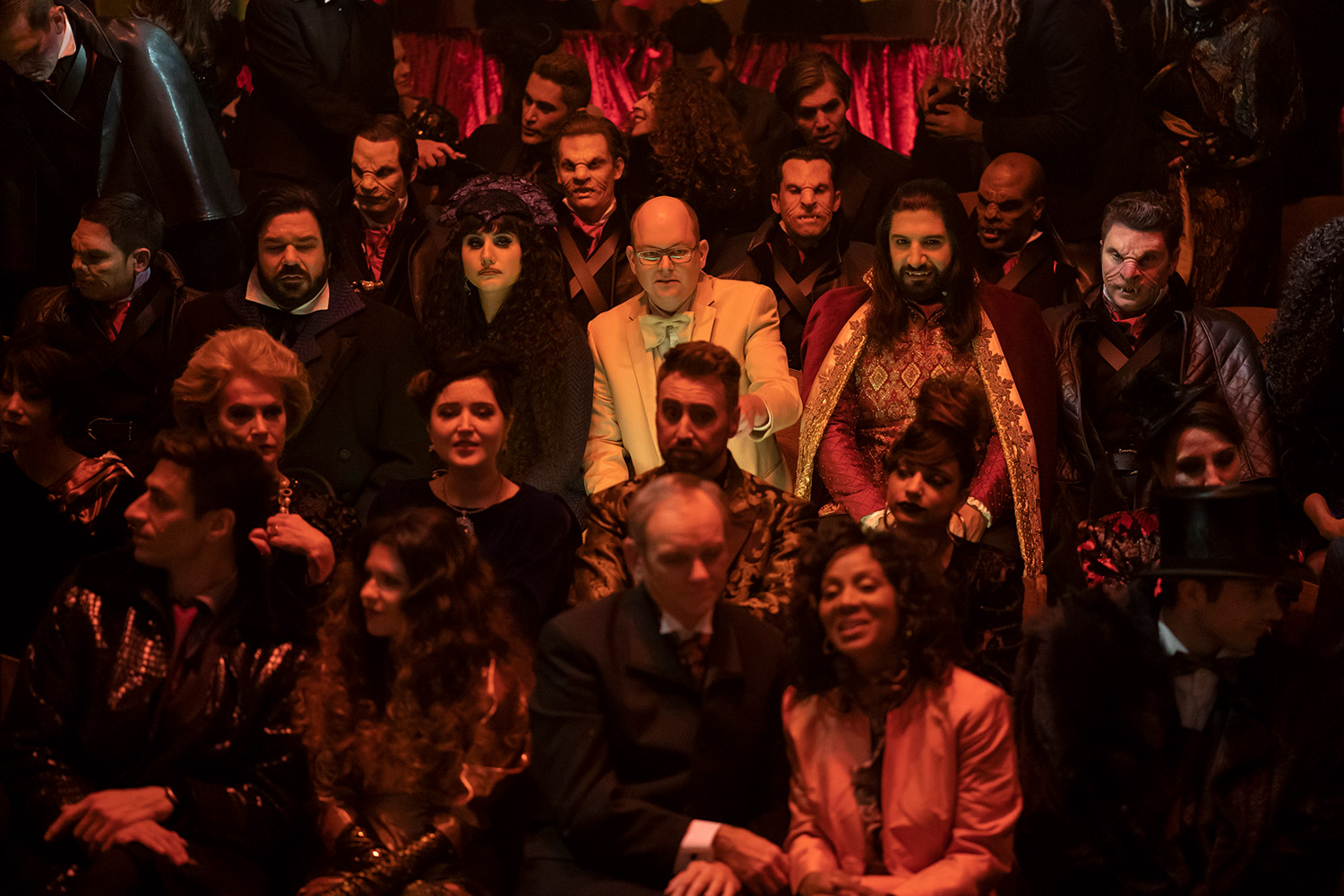
9. What We Do in the Shadows (Season 2) – Jermaine Clement (FX) 
What We Do in the Shadows is the funniest show on TV. It’s one of the only shows that can make me laugh out loud even when I’m by myself. It’s just utterly, stupidly, hilarious. To some extent, that does make sense. The series employs the same style of humor as Clement’s previous show, Flight of the Conchords. Plus, the ensemble cast (Kayvan Novak, Matt Berry, Natasia Demetriou, Harvey Guillén, and Mark Proksch) is as good as any sitcom since It’s Always Sunny.

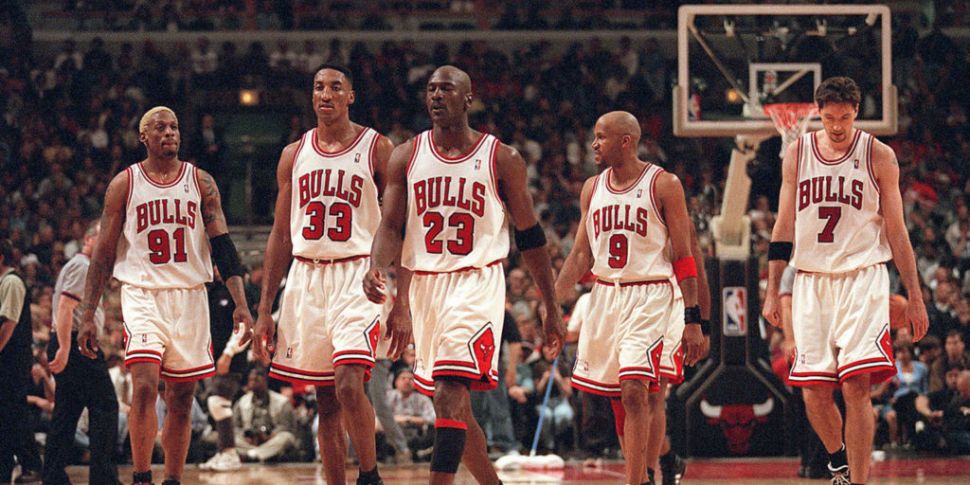
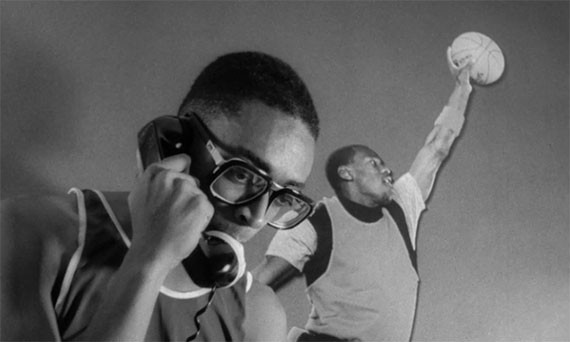
the last dance8. The Last Dance – Jason Hehir (ESPN / Netflix)
The Last Dance is so good that it doesn’t matter what your relationship to the 90s Bulls was to enjoy it. I loved it as a NBA fan who couldn’t wait to re-visit all these moments. My girlfriend loved it as someone who wasn’t sure whether or not the Bulls were going to win that last title (spoiler: they do). The standout feature of The Last Dance is of course its exceptional footage (I sincerely hope whoever made the decision to capture this season in film got their due). But Hehir still puts it together brilliantly with a non-linear timeline, meme-worthy interviews, and a killer soundtrack.

queen's gambit

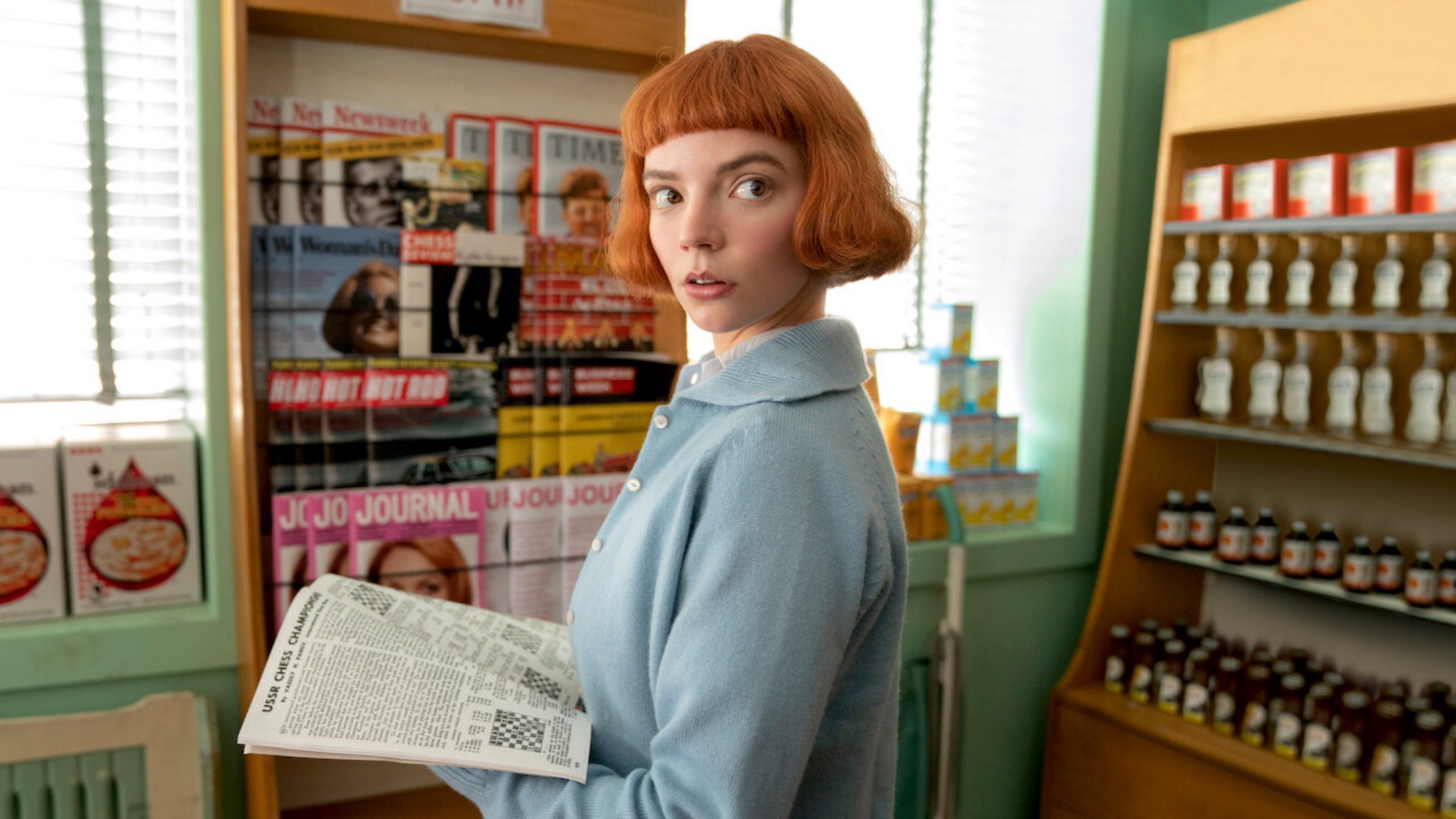
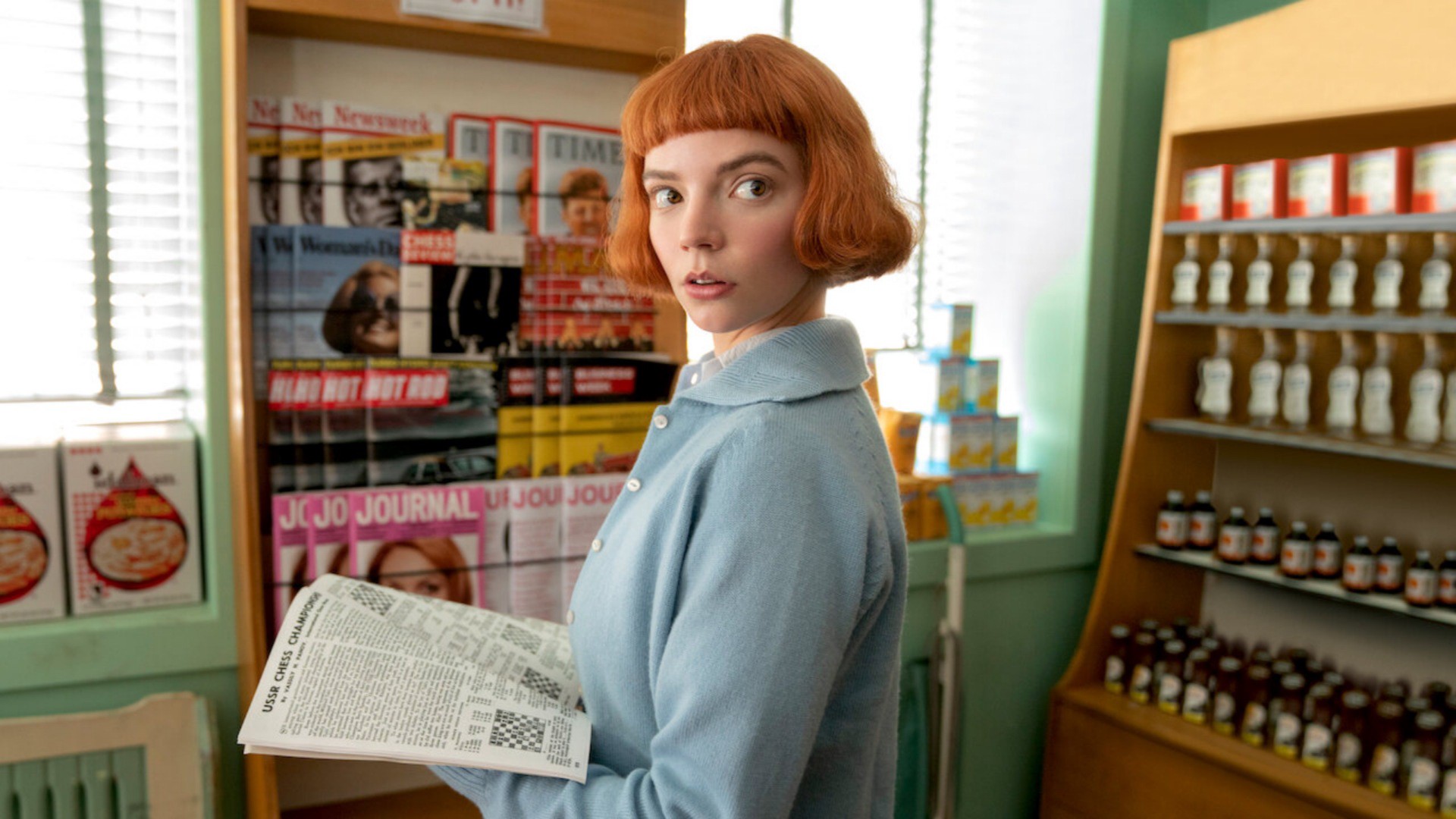
7. The Queen’s Gambit – Scott Frank (Netflix)
I can probably skip over this one considering everyone’s already seen it. Seriously though, how does a show about a fictional chess prodigy become this popular? Because it’s that good. The Queen’s Gambit is as addicting as the tranqs at the center of it. Everything from the 50s and 60s wardrobes and sets to the supporting performances to Scott Frank’s direction is flawlessly done. But the highlight is Anya Taylor- Joy. If The Queen’s Gambit were made ten years ago it’d be a movie. I hope that just because it’s a Netflix miniseries doesn’t take away from the fact that Anya Taylor-Joy is a movie star.

murder on middle beach

6. Murder on Middle Beach – Madison Hamburg (HBO)
It’s been an up and down year for true-crime docs at HBO. First there was I’ll be Gone in the Dark, a series that would be on my list if it didn’t scare me to death. Then there were the long and disappointing Atlanta’s Missing & Murdered and the somehow longer, even more disappointing, and newly-renewed The Vow. Thankfully, I closed the year on Murder on Middle Beach. Not only is this series the best of these true-crime docs, but it takes a fundamentally different approach from the others. Murder on Middle Beach does center itself on the unsolved murder of Hamburg’s mother but as the series progresses Hamburg increasingly turns his attention to issues of grief, trauma, family dynamics, and addiction in ways that are surprising and genuinely moving. Which is not to say that the true-crime of it all is any less interesting, but rather, that Hamburg achieves a level of empathy in this documentary that most others don’t even attempt.

how to with john wilson

5. How To with John Wilson (Season 1) – John Wilson (HBO)
It’s kind of impossible to talk about this show without just diving into how it’s made. How To…is comprised entirely of footage shot by one man (the titular John Wilson) linked together only by his hilarious, often insightful, and surprisingly poignant narration. I say surprisingly poignant because the episodes center on everything from small talk to scaffolding while using footage of…small talk and scaffolding? And yet, this series is often quite moving. The final episode is not only a gut-wrencher but easily the best COVID-specific material I’ve seen. Perhaps it’s fitting that in order to capture the absurdity of 2020, you need a show as strange as this.

103 - Mister Fred

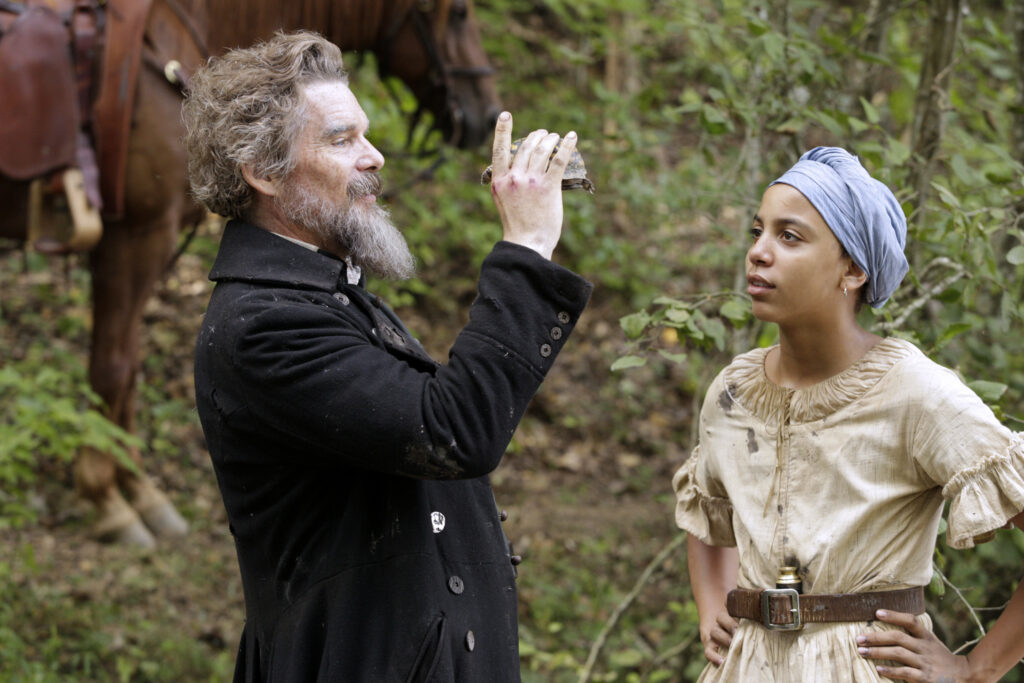
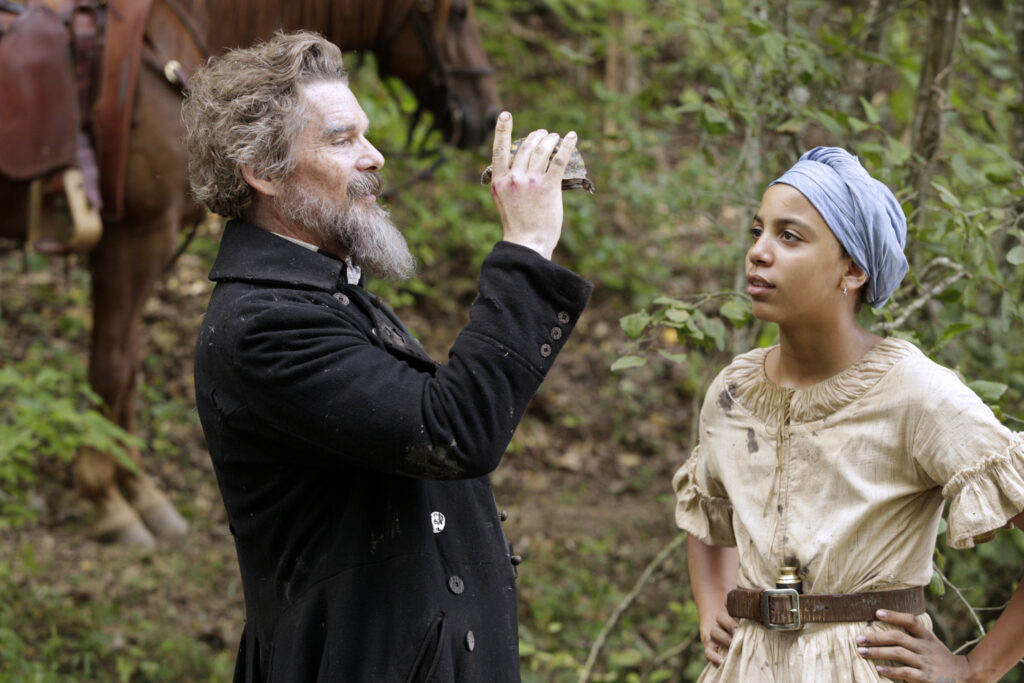
4. The Good Lord Bird – Ethan Hawke, Mark Richard (Showtime)
Making anything even vaguely political in 2020 is a tricky proposition. More than ever, audiences are aware of every optic and decision made behind a historical rendering: Who are portraying these figures? What story is this trying to tell? Whose story is this to tell? These are certainly important and overdue questions to ask, but it can also render most historical material these days pretty lifeless. This is not an issue for The Good Lord Bird. A career-best Ethan Hawke adapts James McBride’s novel, a fictional telling of John Brown and the Harpers Ferry Raid that is often…hilarious? Not only does this risk work, it overwhelms the series with real emotion and genuine humanity. The Good Lord Bird is a showcase for what you gain by taking risks. Making Daveed Diggs’s Frederick Douglass an overwhelmed ladies-man, for instance, is a choice. But it’s precisely the type of choice that makes this series and these events feel alive. As the tag before each episode says, “All of this is true. Most of it happened.”

betty

3. Betty (Season 1) – Crystal Moselle (HBO)
The highest praise I can give to Betty is that I watched it all in one sitting. It is genuinely that good (and also pretty short). On paper, it’s a fairly simple premise. The series sets out to capture the lives of an all-girl group of New York City skaters. And it does that masterfully. But every aspect of Betty, from the filmmaking to the performances, is so good that it elevates the show to being something beyond that. Just try to make it through the “F**kin’ Problems” scene in the first episode without smiling. Betty taps into the magic of being young, when each day can turn into its own adventure, in a way few shows or movies ever get right. In a year in which we can’t leave our homes, that was a special feeling to have.

mrs america

2. Mrs. America – Dahvi Waller (FX on Hulu)
Perhaps the most surprising part of Mrs. America was in its ability to ask difficult questions. After all, the series is historical. You’d think that we would know the answers by now. And it’s not like the series waffles in its outlook or politics either. The show is bitingly clear in its assessment: this country failed in its inability to ratify the E.R.A. The question it asks, rather, is why did we fail?

To answer this, Mrs. America turns what could have been a gimmick into its greatest strength. Each episode of the series focuses on one character involved in this battle. We get Cate Blanchett’s Phyllis Schlafly, Rose Byrne’s Gloria Steinem, Uzo Aduba’s Shirley Chisolm along with many other portrayals. And somehow this series, and these performances, are so good that you forget about this structure. Instead, you start to focus on every dynamic and debate happening within this battle. 

This approach fully pays off in the series’ penultimate episode, “Houston,” in which all of these characters and viewpoints converge. In the episode, we watch as members of both sides face a series of critical decisions. The questions they ask are not easily answered, but then again, the answers aren’t really the point. The point is in each side’s approach. 

At the end of this episode there is a brief glimpse of what this country should and could look like. Through it’s drive to meet these tough decisions, the Women’s Liberation Movement is briefly victorious (the fallout inevitably occurs in the appropriately-titled finale, “Reagan”). Without explicitly stating it, the series has finally given us its answer: The E.R.A failed because its supporters tried to do what was right while its opponents just did what was easy. But even with that outcome there is still a glimmer of hope. Mrs. America shows us that there is a power and importance in doing what is right. Unfortunately, it may never be easy. 

i-may-destroy-you-HBO

1. I May Destroy You – Michaela Coel (HBO)
For as much TV as there is in 2020, there are still very few perfect series (or even seasons of TV) out there. It’s just an almost impossible proposition to pull off. On top of having to be generally excellent across the board, a perfect show must do two things that are almost always in direct contention. The first is to operate with a fine-tuned internal consistency, rhythm, and logic. In other words, the show must remain true to its world and its characters. And yet the second thing it must do is be surprising, innovative, and unexpected. It’d be too boring to watch otherwise. But how do you pull that off while also staying true to the rules of your series?

The answer from I May Destroy You is by subverting expectations. The best example of this ability occurs in the episode, “The Cause is the Cure.” All season, the series has been building toward a revelation and conflict between Arabella, the main character, and her best friend, Terry. But just as we prepare for this fallout, Arabella returns home. She processes a series of revelations about her mother and her own childhood. These revelations aren’t connected to her current dilemma, but they inform it. In turn, she returns home and lets this potential conflict go. It’s flat-out incredible storytelling. It goes against decades of TV storytelling logic while also being 100% true to this world. And it’s the type of thing this series pulls off time and time again.

On a weekly basis, Michaela Coel’s show seemingly had the ability to be anything it wanted: a surreal horror-comedy about social media, a flashback vacation to Italy, or even a series of murderous fever-dreams. But no matter what I May Destroy You was, it was always true, it was always surprising, and it was always excellent. In other words, perfect. 

2020 Movie Log: November

fish tank

Fish Tank – Andrea Arnold (2009)

1st: Somewhere – Sofia Coppola (2010)
This movie is kind of an enigma to me. I really liked it! I’m drawn to it for reasons I can’t fully explain. It’s not that I think this movie is bad by any means. It’s not. But it is slow. There’s not much to it besides whatever is happening internally with Johnny. It seems to me that this movie shouldn’t work unless there’s an emotional payoff. It seems like this movie should hinge on the viewer having an emotional reaction to Johnny and his relationship with Cleo. And I just didn’t. And yet, as I keep saying, I liked this movie a lot. A lot of it was really funny. Stephen Dorff and Elle Fanning were both phenomenal. Visually, it’s stunning. It might be my favorite looking Sofia Coppola movie. 
Grade: B+

6th: Borat Subsequent Moviefilm – Jason Woliner (2020)
I really can’t even remember the first Borat film. It came out when I was 14 and I haven’t watched it since. That being said, I was pretty skeptical about this sequel. Honestly, I ended up watching it just as much for the Giuliani scene as anything else. In the end, I thought the movie was pretty good! It’s often funny. It’s exceptionally stupid. What more could you ask for?
Grade: C+ / B-
Borat Subsequent Moviefilm – Jason Woliner (2020)

7th: The Bling Ring – Sofia Coppola (2013)
The Bling Ring is way better than I anticipated. Although, to be fair, I was anticipating a disaster. It’s always listed as Sofia Coppola’s worst movie. People seem to have a lot of issues when Emma Watson is cast in anything. I’m not trying to say this movie is great or anything. It probably is Sofia Coppola’s worst film. But she’s a great director. This film still looks and sounds amazing. I don’t think Emma Watson is bad or even distracting. I think most of the other actors are really good. Where this doesn’t work for me, is just the story. And it’s a true story so I don’t even know what you’d do about that. It’s a movie about Hollywood, celebrity, and a group of exceptionally spoiled kids. I don’t know. I’m not sure there’s a world in which I would ever love this film. It’s a story that I just don’t care about. But I can’t really pick out anything wrong with it. It reminds me a bit of the types of minor films someone like Steven Soderbergh makes. It seems like Sofia Coppola took a chance on a story that doesn’t really work, but she still makes a decent movie out of it.
Grade: C+ / B-
Bling Ring, The – Sofia Coppola (2013)

7th: A Very Murray Christmas – Sofia Coppola (2015)
Apparently it’s Sofia Coppola week here. Thank you, On the Rocks and The Big Picture podcast for inspiring me. This isn’t even really a movie. Whatever it is though, I loved it. It’s so funny. It’s really warm. I love all the performances. I think the story is way more clever than it has a right to be. There’s a traditional Christmas story arc to it, even though it is already pretending to be a staged Christmas special.
Grade: Christmas Tree Emoji

9th: First Cow – Kelly Reichardt (2019)
I have now seen every Kelly Reichardt feature film. She’s just as elusive to me as ever. First Cow features all of her trademark filmmaking techniques. It’s a methodical, slow-building, human story set against the American west. I actually think the closest comparison to this movie is a film by another director, Robert Altman. Specifically, McCabe & Mrs. Miller, a film that is set in the same time, similarly slow-building, and works as an “anti-Western.” And like McCabe & Mrs. Miller, I do like First Cow quite a bit. I think this may even be Reichardt’s most beautifully-shot film. In terms of story and pace, I think I prefer Old Joy, a film that seems more suited to Reichardt’s contemplative style. Still, First Cow isn’t far behind and I imagine it’ll only grow on me as time moves forward. It strikes me as they type of film that didn’t blow me away at first, but I’ll find myself thinking about a year from now.
Grade: B
First Cow – Kelly Reichardt (2019)

12th: Citizen Kane – Orson Welles (1941)
I enjoy watching the classics. That’s why I try to keep up with various collections of them whether it’s Sight & Sound, AFI, or the Criterion Collection. But even when I enjoy these films, it’s often as much from a historical perspective as an entertainment one. In other words, I’m watching them in a different way than I would, say, a movie from 2020. And that’s okay. I think it’d be silly to try and compare the heists in Rififi to Ocean’s Eleven. They’re not just different films, they’re from different universes of movie making. What I’m trying to say is that I remember watching Citizen Kane and thinking of it as the first classic that I enjoyed as much (if not more than) I appreciated it. It’s so good! Re-watching it, that sentiment still holds up. Still, I was struck by how regimented it is. A news reporter talks to various people and we flash back to those points in time. Its approach feels like it should be gimmicky. And yet, it works flawlessly. To be honest, I’m having a hard time pinning down what specifically works so well about this story. Perhaps it’s that we know the end from the beginning? That we know the fall of this powerful man is inevitable? I think the film’s other attributes are far easier to point out. Welles and the cast are magnetic. The look and feel of the film is iconic. But something about the story perplexes me. Maybe it’s just that? That for as old as Citizen Kane is, and for as rigid as it is in structure, there’s still a mystery to its story. That I could re-watch this film in 2020, and still be thinking about what it means. 
Grade: A
Citizen Kane – Orson Welles (1941)

14th: Beau Travail – Claire Denis (1999)
I don’t think I can start anywhere except with the ending. It’s incredible. It almost makes the entire movie for me. And to be clear, I enjoyed the movie before that. Really, I spent the first 30 minutes or so trying to puzzle out what all of Galoup’s memories mean. But then the movie hooks you. And it’s not with plot or stakes. The tension between Galoup and Sentain is certainly there, but Denis lets it simmer in the background. It really serves more as backdrop to the activities of the legionnaire. So I spent the rest of the film just enjoying the vibe while we watch Galoup’s memories of his troop. It reminded me a bit of Everybody Wants Some!!, another film that centers the physical activity and interactions of a group of hyper-athletic young men over traditional stakes or narrative. And then of course, there’s the ending. It’s so strange, so delightful, and so perfect. I can’t think of many endings that are more surprising and yet still suit the film perfectly. What an achievement. 
Grade: A
Beau Travail – Claire Denis (1999)

18th: Dazed and Confused – Richard Linklater (1993)
We ended up watching this after attending a Zoom discussion with Richard Linklater and Melissa Maerz discussing her new oral history about the film. I (foolishly) wasn’t really anticipating watching the movie afterwards. But after listening to a 90-minute discussion about it, how could you not? Upon re-watching it, it is stunning. It is almost infuriatingly good. It’s funny, Dazed has never been my absolute favorite Linklater film (I’ve kind of leaned toward the Before series) and Linklater said the same was true for him. He thinks he’s made films that are technically better and that this one recalls a particular time of career frustration amid dealing with a big studio for the first time. But whether or not it’s my (or Linklater’s) favorite of his films, it is probably his greatest. If I’m being completely honest, I think it might be the greatest film ever made. Sure, you can argue for Jaws, Vertigo, The Godfather, or Stalker. But Dazed is really the purest distillation of my favorite type of movie. Re-watching it, I was almost moved by the pure joy I was having from watching it. And I don’t find anything in the film particularly moving. I wish I could critique this film more artfully. One of the things I appreciated hearing in the discussion is that while this is a movie that looks and feels effortless, it certainly wasn’t. Linklater worked hard on the script. He worked hard on the casting and the production. He fought a lot with the studio to achieve his vision. And yet, when it comes to thinking critically about it, I’m turned to mush (or the Chris Farrelly interview show). Honestly, every moment I was watching I was just saying “that was awesome.” So what can I say? I love all the characters. I love how rapidly they are introduced. I love how quickly Linklater is weaving these stories together. I think the dialogue is flat-out incredible. To some extent, I think I could capture the sense of a hangout movie. But it’d be so boring compared to Dazed simply because I couldn’t write the dialogue Linklater does. Almost every observation, however stupid, mundane, or seemingly pointless, is incredible. Occasionally, it’s profound. I love the moment when it turns to night and all the lights in this town come on. I love the music queues. I love the performances. Boy, I really just love this movie.
Grade: A
Dazed and Confused – Richard Linklater (1993)

19th: School of Rock – Richard Linklater (2003)
I LOVED this movie when I was a kid. Even before I knew who Richard Linklater was. And I’d have to imagine that even if this movie works for adults, 11 is still the best age to see it. But this movie does hold up. I found myself really appreciating Mike White’s script this time through. It’s not particularly subversive or surprising. As you’ll see from the beats, this movie’s outline is about as industry-standard as it gets. But the story works so well between these major beats. It’s one of the best examples of big studio filmmaking that I can think of. One of the things Linklater discussed in the Dazed and Confused discussion is that for Dazed he really had to compromise on aspects of his vision. Originally, it was supposed to be a much more conceptual, more heady movie. Perhaps even in line with the Before trilogy or Waking Life. To some extent, I think the concessions he made in Dazed make it a much better movie. I think the opposite is true here. Even with a good script, School of Rock could have gone badly with the wrong director. It features mostly child actors, the plot is unbelievable, the protagonist is literally committing a crime. It really could have been unbearably cringey or cheesy. I think the fact that Scott Rudin (and whoever else produced this film) went with Linklater makes this work. He’s able to inject so much enthusiasm and genuine life into the film. And all without making it overbearing. It’s the rare perfect marriage between a big studio and an indie director. And while I think School of Rock is definitely a major studio movie, it’s this little independent streak that really sets it apart.
Grade: B+
School of Rock – Richard Linklater (2003)

20th: High Fidelity – Stephen Frears (2000)
I kind of think this is an incredible concept and a pretty average movie. I don’t know? Perhaps I’m being too hard on it. My main issue, I suppose, is just with how much of an asshole the main character is. But I think the film certainly captures that him, and his friends, are snobs and losers. I don’t think the film views him as this great guy by any means. And I think, for the most part, the music queues are pretty good in this. It feels like the types of music and discussions that would exist in this world. Also, pretty sweet that Bruce Springsteen was in it.
Grade: B-
High Fidelity – Stephen Frears (2000)

21st: Sing Street – John Carney (2016)
I can’t recall if I’ve written about this film before on here or not. If I have, I think my takeaway would hopefully be the same. I like it a lot! It really should be too earnest and cringey for me to handle, but Carney does an amazing job of pushing this sweetness as far as it’ll go without become saccharine. I think he’s really smart in emphasizing the darker aspects of this world. For as much as this is a fun movie about teenagers forming a goofy band, the film also details failing marriages, abusive relationships, and economic strife. It’s this balance that lets you buy so fully into the story and especially the end. I also think Carney’s talent as a playwright is on full display. It’s really an amazing script. Again, it’s not the type of screenplay that’s particularly subtle or subversive. But it does everything so well and so efficiently. We meet our main character, like him right away, get stakes for the movie, and are off. It’s this type of work that allows you to pull off the flourishes in the movie: the costumes and the songs. There is one major flaw in this movie though, and that’s that the band’s songs get way worse as the movie goes on. I kind of think with like two more hits, this movie is almost perfect.
Grade: B+ / A-
Sing Street – John Carney (2016)

21st: Yes, God, Yes – Karen Maine (2019)
I feel as though I like this movie way more than I think it’s good. And it’s not really that I think this movie is bad either. But it feels so thin. I think the setup is great. I think the humor in it is delightful. Really, the reason I like the movie as much as I do is from how funny it is. But I do think there’s something missing. I kind of feel like the end is a huge cop-out. Everything just sort of resolves nicely without any real struggle. And it’s not that I needed a huge emotional moment either. I guess I just expected something surprising or subversive at the end and it wasn’t there.
Grade: C
Yes, God, Yes – Karen Maine (2020)

22nd: Chocolat – Claire Denis (1988)
Man, every Claire Denis film I watch is so different. I can’t think of another director with such a varied filmography. And that’s not to say there aren’t constants. I think it’s clear she has a meditative, hypnotic style of filmmaking. Many of her films deal directly or indirectly with colonialism and its legacy. And she seems interested in how individuals act as part of a collective body. Whether that’s an officer in the French Legionnaire, a father and daughter in an apartment complex, or an officer’s wife in this movie. This movie really is a startling portrait of life in colonial Cameroon. It reminds me of some of my favorite movies in that there’s not a ton of plot. But unlike most of those films, this is not a “hangout” movie. Even without plot, there is plenty of tension. I just think Denis does an amazing job at confronting the viewer on these issues of colonialism without explicitly making a statement. It feels like a nice pre-curser to White Material in that way.
Grade: B+

23rd: Me and You and Everyone We Know – Miranda July (2005)
What a weird fucking movie. I kind of loved it. There are some parts that I question more than others. The Heather and Rebecca storyline was a little rough. I guess I was just uneasy about that entire arc being about their sexualization. But uneasy does not mean bad. And July seems to be capturing a truth in these people’s lives, however uncomfortable it may be. After watching this film, I do trust her with these storytelling decisions. The highlight of this movie is Robby. His story is one of the funniest things I’ve every seen. It was so perfectly done. I especially just loved him copying+pasting in the online chat. What else can I say? I think the score and general filmmaking is really well-done, especially for as weird and low-budget as this movie is. Perhaps the film stretches on a tad too long? But generally I think July earns it with how great so much of the movie is.
Grade: A-

24th: Boyz n the Hood – John Singleton (1991)
This was one of the bigger films I had never seen. And to be honest, I didn’t realize it was going to be this dark or heavy. I threw it on expecting it to be a mainstream-ish blockbuster movie. It’s really not. This is a movie that focuses on capturing life more than traditional plot or stakes. Which isn’t to say those don’t exist in the movie, but they feel secondary. I read that Singleton modeled some of this movie after Stand By Me and I think that’s an apt comparison. Although, I will say again, I think Stand By Me relies on traditional plot a lot more than this film. In that movie they’re on a mission to find a body. Here, it’s not clear what the major tension is besides Tre and his friends trying to make it through life in the hood. But that’s more than enough for me. I’m kind of blown away by how well this movie did. I’d have to imagine this is the most successful movie in that hangout / slice of life type of genre. And to be clear, these are all things that I like about this movie. But even if this isn’t your favorite genre or type of movie, there’s still so much to hold on to. The performances are incredible. I was mesmerized by Laurence Fishburne in particular. The number of major actors Singleton gets is so impressive too. I think this was the breakout movie for Cuba Gooding Jr., Ice Cube, and Regina King. That’s pretty amazing. I think the biggest testament to this movie, especially given that it’s set in such a distinct place and time, is that it holds up incredibly well. It’s amazing that 30 years later, the rest of the country is finally catching up to some of the points Singleton was making. I think it’ll remain a classic for that very reason.
Grade: A-
Boyz n the Hood – John Singleton (1991)

26th: The Last Waltz – Martin Scorsese (1978)
The greatest concert film of all time is either this or Jonathan Demme’s Stop Making Sense. I don’t know that any others are particularly close. What’s funny or perhaps ironic about this fact is that each of these films present overly-rosy, largely-fictional renderings of the bands they highlight. This is a little more baked-in with the Talking Heads in Stop Making Sense. So much of that film, and the performance, is drawing attention to the fact that these things are staged. The setlist and performances are rigidly pre-arranged. In true post-punk fashion, the Talking Heads are commenting on the nature of concerts themselves: that they’re not organic. Still, Stop Making Sense can’t help but hide quite a bit: that these performances were not collaboratively planned and agreed on, that David Byrne was actively trying to get the others to quit the band, or even that he was furious at the idea of a Tom Tom Club song in the movie. So perhaps in a very round-about way, The Last Waltz is more honest? Not that the movie is “honest,” but unlike the Talking Heads, this depiction of The Band isn’t trying to comment on the nature of art or performances in any meaningful way. It’s just trying to pretend that the members of The Band still get along and are just calling it quits because it’s time. Not because, you know, they couldn’t stand each other and Robbie Robertson wanted a film to depict him as the musical architect during their swan song. To be honest, I really don’t know what to make of The Last Waltz given all the information surrounding it: that the guest musicians were all coked-out of their mind or that Levon Helm actively hated Scorsese, Robertson, and the film. In a way, I kind of think it makes the “message” in the movie all the more powerful. Intentionally or not, what Scorsese seems to capture in The Last Waltz is the sheer greatness of this music. So perhaps the fact that these performances are still this incredible given all the background drama, makes that message even more resonant.
Grade: A

26th: Happiest Season – Clea DuVall (2020)
Man, I feel like a real grinch for not liking this movie more. I love the cast, I love the idea, I love Clea DuVall. But I think this movie is pretty spineless. It really seems to exist just for reasons outside the film. And I suppose that’s not necessarily a bad thing. To have a Christmas movie centered on lesbian characters is long overdue. I just can’t help but feel that this is the only thing keeping this movie going. Not, you know, the story or stakes in the film. What I would guess is actually my main issue with the film is that I probably just don’t like these types of hallmark-y Christmas movies. Everything in this movie just seems so contrived, unnecessary, and unbelievable. But I’d imagine that’s the case with like, A Christmas Prince. To really boil it down to one example, I do not think Abby should end up with Harper in this movie. She’s actually the worst. But you can’t really make a Christmas movie where the couple doesn’t get together, can you? Oh well. As long as people feel seen and represented by it, I hope this movie is a success for everyone involved.
Grade: C-
Happiest Season – Clea DuVall (2020)

27th: The 40-Year-Old Version – Radha Blank (2020)
Finally! A good movie in 2020. I’m sure there are more than a few out there but this is certainly the best one I’ve seen. I loved everything about it. It’s incredibly funny, moving, beautifully shot, and totally unique. I think the biggest takeaway has to be Radha Blank. From her wikipedia page, it looks like this was really her breakthrough. It’s hard for me to think of a stronger debut in recent memory. I already can’t wait for whatever she does next. There are maybe a few minor things that didn’t fully work here. I think it’s a little long at the end? But honestly, she could have made it 30 minutes longer and I still would have dug it. What a film.
Grade: A-
40 Year Old Version, The – Radha Blank (2020)

28th: Fish Tank – Andrea Arnold (2009)
I added this film to my list because Arnold supposedly falls in the lineage of Mike Leigh and Ken Loach. And it is fairly easy to see the similarities (at least with Leigh, I don’t think I’ve watched any Loach films yet). This film concerns the lives of ordinary, working-class British people. Moreover, the film is definitely more concerned with the emotional well-being of its characters than any grand plot or journey. However, I do think Arnold grounds this film in more overt stakes and a more traditional arc than Leigh typically does. There is a clear main tension in this film: whether or not Mia’s mom’s boyfriend, Conor, will act on his attraction to the 15-year-old Mia. By Mike Leigh standards (perhaps with the exception of Naked), that is a horror movie. And this movie is unbelievably tense at parts. It’s almost unbearable to watch in certain scenes. What I think is truly amazing about all of this, is that Arnold never strays from the realism that associates her with people like Leigh and Loach to begin with. Everything that happens in this movie feels like it’s happening organically. Which, again, is horrifying. It’s an unbelievable feat of filmmaking. The only other thing I’ll say, which I’m not sure really connects with any of the above, is that the ending is an all-timer. One of the best I’ve watched in a while.
Grade: A
Fish Tank – Andrea Arnold (2009)


Miscellaneous Musings

A collection of various long-form writings, straight from the mayor himself! For all movie, reading, and television logs, follow the Year End Wrap-Ups.

tumblr_mxmzm1rzgB1qcga5ro1_500

2023

2023 Wrap-Up!

The Killers Best Songs, Ranked

The Killers Best Songs, Ranked Pt. 2

Time and Place: Berlin Alexanderplatz

2022

2022 Wrap Up!

Introducing: The SAMMIES

My Favorite Shows of 2022

2021

2021 Wrap Up!

My Favorite Shows of 2021

Mad Men

Breaking Bad

2020

2020 Wrap Up!

My Favorite First-Time Viewings of 2020

My Favorite Shows of 2020

Trump in the Trial

2019

2019 Wrap Up!

The first-ever, most legitimate, inarguable, completely accurate ranking of the films of Hayao Miyazaki

The Definitive Guide to Bruce Springsteen’s Street Songs

Game of Thrones S8E1: Winterfell

Game of Thrones S8E2: A Knight of the Seven Kingdoms

2020 Television Log Part 2

A continuation of my Television Log for this year. For January – July, click here

August

What we do in the shadowsWhat We do in the Shadows (FX on Hulu)

I’ll Be Gone in the Dark – Liz Garbus (HBO)
Out of all the true crime I have encountered, this was, by far, the scariest. I have never slept worse in my adult life. Why was this one so scary? One, the events covered in this series are truly terrifying. The scope and reach of the Golden State Killer (formerly known as the East Area Rapist / Visalia Ransacker / Original Night Stalker) were horrific. As the series repeatedly points out, the lack of awareness about him is tragic given how active and terrorizing he was. Two, until the last episode, this person remains unnamed. I think the documentary does a great job at investigating the power that unmasking someone can have. Watching the earlier parts of the series, it’s hard to remember that for all his evil, Joseph DeAngelo is just a human being. That, theoretically, he could trip, fall, hit his head, and die. I think the show does an exceptionally good job of capturing this balance. Joseph DeAngelo is obviously a monster beyond redemption, but he is still human. So while we don’t want to necessarily humanize him, it’s important to realize that he isn’t a mythic black hole of evil either. He’s not a supervillain. He’s just an extremely vile person. Three, I think this case scares me so much because his reign of terror affected men (albeit not nearly as much as women, but still). For really the first time, I had an awareness that I could have been like some of his victims. And this for me, is where I think the documentary really shines. It does a profoundly good job of investigating how crimes like these, and the media that covers them (true crime), disproportionately affect women. The whole series, and the last episode in particular, shows how widespread issues of rape, violence, and assault against women are. It’s not only the survivors and victims of Joseph DeAngelo who are affected. Almost every woman present in the series has a story of their own. The series even extends this to DeAngelo’s own family. We learn that his sister was raped at the age of seven. We learn that his young cousin experienced the same horrors (a burglary and assault) that DeAngelo inflicted on so many people. And this even extends to the investigators and Michelle McNamara who all have their own stories. Overall, I think the series handles so many things at once. It obviously explores the cases, but it also covers the culture around sexual assault, the fascination with true crime, and issues of grief, death, and addiction. What’s really remarkable is how well it treats them all. I’m really impressed. I don’t think I’ll ever be able to watch this series again, but I know that it will stick with me.

What We Do in the Shadows – Jermaine Clement (FX on Hulu)
(Seasons 1* and 2) 

This was a show that I had put off despite constantly hearing was excellent. I think I just had it tabled as something I would enjoy when I got to it. And that is more or less what happened. This show is delightful! What’s more, there are only 20 20-minute episodes total. Which is to say that watching the series is hardly any more demanding than watching the film that it’s based on. What more can I say? I think the show just excels in its stupidity. It makes sense that Jermaine Clement is responsible for the show. It’s the same type of humor as something like Flight of the Concords. The show reminds me of Bob’s Burgers in its ability to make me laugh out loud even if I’m watching it alone. It’s that good! The last thing to note is that the performances are all wonderful. They more than sell the absurdity of the series.
*Aired 2019

September

i-may-destroy-you-HBO

I May Destroy You (HBO)

I May Destroy You – Michaela Coel (HBO)
Holy fuck! What an achievement. I’m instantly reminded of two shows: Atlanta and Fleabag. Those shows obviously both portray people and ideologies not frequently shown on mainstream television. Atlanta deals pretty thoroughly with questions of black identity. Fleabag tackles themes of sexuality, grief, and mental health through a woman’s point of view. In its most compact phrasing, I May Destroy You is the portrayal of a black woman in London as she processes the trauma of being drugged and raped. So on the surface, the connection to these other shows does make some sense. But this is not why it reminds me of them. I May Destroy You feels in line with these shows because episode to episode I had absolutely no idea what to expect from it. The show seemingly had the ability to do anything it set its mind to. It could go back in time. It could go to Italy. It could even make its finale a series of fever dreams. What’s more, they all worked. More than even Arabella’s rape, the thread that tied these episodes together is that they were all uniformly excellent. I think it’s clearly the best show of the year. It is certainly the most ambitious.

The thing I admired most about the show was its approach. Micaela Coel is not interested in any easily-answered questions. I think the most incredible example of this is the building tension between Arabella and her best friend, Terry. Over the season we learn that it was Terry who told Simon to leave Arabella the night she was attacked. This came from Terry’s stemming frustration and jealousy over Arabella’s life. And we later learn, it also stemmed from a night in which Terry had her own sexual encounter under deceitful pretenses. She’s processing her own experience. So over the season, we see Arabella and Terry start to butt heads, particularly as Arabella befriends Shirley. What happens with all of this? Is there a major falling out? Arabella goes home and realizes that her mother had tolerated her father’s mistress for many years in order to keep a harmonious relationship with the family. She sacrificed confronting this betrayal in order to preserve their happiness. Arabella in turn goes home and forgives Terry. She would rather have her by her side than confront her over the mistake. It’s incredible storytelling. It actually reminds me of The Sopranos in its knack for subverting viewers’ expectations time and time again.

And this type of thing happens all over the series. It’s incredible! These impossible questions are maybe what define the show. We have a flashback to the characters’ school days. To an instance in which Shirley falsely accuses a student of rape. Why? Because he and other classmates were secretly taking pictures of her during sex. Arabella and Terry then are the ones to report Shirley in defense of their black classmate and friend. Who is in the right? Who is in the wrong? Another story concerns Kwame’s sexual encounter with a woman. He pursues it because he is processing his own sexual assault. But sleeping with a woman under false pretenses is problematic in its own right, even if it was consensual. He’s probably not at fault to the extent in which this woman berates him for it. And that certainly doesn’t excuse her racist and homophobic behavior towards him. But that doesn’t mean it absolves Kwame either.

And then of course, there is the central conflict of the show: Arabella’s rape. The last episode gives several ways for Arabella to process it after (in dream states?) she encounters her attacker. There’s a scenario in which she kills him. A scenario in which she makes him confess and has sex with him. Whatever the result, the show seems to end with her letting him go. The show seems to say that it (or life) cannot provide the answers to these questions. The answers don’t exist. All that you can do is process them your own way and try to move on.

The Boys – Eric Kripke (Prime Video)
(Season 1)*
I have to be honest, I feel like this show sort of came out of nowhere. I really don’t recall hearing much about it during its initial run. Given how insanely good 2019 was as a tv year, it’d be interesting to see where this would have ended up for me. The show this most reminds me of is Stranger Things. They do many of the same things. More precisely, they do many of these same things really, really well. Both shows draw from and play off of an established culture and canon. The Boys is an update on comic books and superheroes. Stranger Things is an update of all things 80s. They both feature absurdly good production values. Everything from the looks, the special effects, and the (I’m guessing quite expensive) music queues is fantastic. It’s hard to imagine these shows even being possible before this decade. Their biggest (and best) similarity though is that they both value fun over any other quality. I don’t mean that as a bad thing. I don’t even mean it as a partially-back-handed-compliment type of thing. There aren’t enough shows that know how to be pure fun. It’s a real skill. In the case of The Boys, I think the reason they pull this off is that they just go for it. Again, I mean this in the best way possible. There are major points in the plot of Season 1 that just don’t make sense. How is the media or Vought not constantly following Starlight or any of the other heroes around? How would Starlight even be able to see Hugh again after she learns his identity? Never mind the fact that she (pretty quickly) forgives him! And how would a world-wide operation in which the public can have their babies become super-powered stay completely undercover for so long? Now here is the real question. Do these things matter? They do if you don’t have thrilling action sequences, or a surprisingly dark sense of humor, or fantastic over the top performances, or a really compelling plot. The Boys has all these things. So not only does the show work, it works really well. We’ll see what Season 2 has in store.
*Aired 2019

Mrs. America – Dahvi Waller (FX on Hulu)
I was fairly confident that nothing could overtake I May Destroy You as the best show of this year. And just like last year, I spoke too soon. And who knows, Mrs. America may not be better than I May Destroy You. Truthfully, they’re incredibly different shows. It’s impossible to really compare them. My urge to do so stems solely from the fact that they’re both so insanely good. They each deserve to be at the top of year-end lists. 

As opposed to the specific, focused journey in I May Destroy YouMrs. America presents a somewhat serialized, episodic look at its subject: the battle over the ratification of the E.R.A during the 1970s. Each episode centers on, and is titled after, a particular woman in the movement. The two exceptions being the last two episodes which instead expand the show’s scope. The penultimate episode, for instance, centers on the fictional Alice McCray as she experiences the 1977 National Women’s Conference in “Houston.” McCray is used as both a stand-in to represent her own non-extreme conservative viewpoints, as well as an audience surrogate who wanders through this event to see the multitude of women participating in this movement. Mrs. America’s final episode, “Reagan,” similarly opens the show up. Although it does feature the voice of the titular figure, it really centers on what happened to the entire country in the aftermath of the E.R.A’s defeat and the rise of fanatical conservatism (spoiler: it wasn’t good!).

So maybe that’s the best way to compare these shows? I May Destroy You is a show about Arabella’s personal, intimate experience, both as a woman and as a person in general. The show is certainly focused on female identity but importantly, it is also focused on everything else that Arabella is: a Black woman, a survivor of rape and sexual assault, a creative, an influencer, an English citizen, etc. Mrs. America is about the collective, political experience of many women. And while different experiences and viewpoints are represented, the show really stays focused on one issue: the battle and ultimate failure to ratify the E.R.A. 

The thing I loved most about I May Destroy You was its refusal to ask easy questions. That same strength carries over to Mrs. America. A fact that should seem surprising. Mrs. America is a historical show after all. There can be no spoilers. We have the answers. What’s more, the debate at the center of Mrs. America does have an easy answer. The show is unequivocal in its view: this country should have ratified the E.R.A. Its failure to do so only highlights the hypocrisy and sexism so deeply embedded in our roots. 

Where Mrs. America excels is in interrogating what happened during this period of history. By doing so, it inevitably shows how these issues are still with us. If there is a central thesis to the show, it is that the women’s liberation movement failed because it (mostly) did what was right while its opponents did what was easy. This point can be seen as Bella Abzug and Gloria Steinem debate whether or not to keep supporting Shirley Chisholm for the Democratic nomination. The longer they do so, the more they weaken their movement’s hold on McGovern as the inevitable nominee. The same can be said as to whether the movement should hold a place for those who disagree with it. To do so is obviously more equal and representative of their mission, but it also elevates the likes of dissenters such as Phyllis Schlafly. Another question is whether the movement should hold a place for Betty Friedan, a woman invaluable to the origins of the women’s liberation movement but also someone whose political views have grown conservative and bigoted by the current standard. And finally, the show addresses the question of whether or not to support gay and lesbian rights in the movement, even if it is far less popular than the rest of the platform. 

These questions are not easily answered. And whether or not the movement answers them correctly is certainly up for debate. Their abandonment of Shirley Chisholm, for instance, proves costly. Likewise, one could argue that giving any oxygen to Phyllis Schlafly was a mistake. On the other hand, there is something so moving about the final scene in “Houston.” The movement decides to let anyone participate in this conference, regardless of their views. The result? Schlafly’s dissenters are vastly outnumbered. Betty Friedan rescinds her position as an opponent of gay and lesbian rights. We see an idealized picture of what American politics should look like. And all of this comes from these women who were willing to do the work, who were willing to ask hard questions, and who were willing to do the right thing. 

And yet, this movement, which was right and which was supported by an overwhelming majority of Americans, failed. Why? Because its opponents didn’t concern themselves with these issues. Instead, time and time again, they did what was easy. They never questioned themselves. They made up lies when they didn’t have good enough answers. And they acted in total self-interest. Even their champion, Phyllis Schlafly, didn’t truly care about the movement. She just cared about riding a wave of fanatical conservatism to the top. 

This probably sounds oppressively nihilistic. And I can’t lie, the show is deeply depressing. But I don’t think the show means to portray these things as hopeless. To me, the lasting image of this series is the moment at the end of “Houston” in which thousands of women have come together in the name of equality. There is an overwhelming power and importance in doing what is right. Unfortunately, it may never be easy.  

Mr. Robot – Sam Esmail (USA)*
(Season 1 – 2015)  
Mr. Robot is exceptionally well-done. The performances and filmmaking in particular are really, really good. Especially for cable television. The best thing about it though, by far, is its premise. The show tackles cybersecurity, the internet, and capitalism in ways that I haven’t seen before. These are incredibly intricate subjects and yet Esmail and his team rise up to meet them throughout the season. It’s easy to envision a show like this quickly becoming Westworld or even Lost. Those were series in which it was apparent that the creators didn’t have the answers. Through one season at least, I’m pretty confident that Esmail does. 

For as high-level as Mr. Robot is so far, I still have to say I’m a bit underwhelmed. On paper, I should like the show more than I do. Like I said, the performances, the filmmaking, and the concept are great. But I was often left to wonder if the show was maybe too smart or too cute for its own good. The entire series is a mystery. The conceit is that our protagonist and narrator is a schizophrenic. He sees things that aren’t there. One the one hand, this allows for Esmail and his team to add another layer into the show’s structure. It gives them a plausible reason to explain many of the complications of the season.

On the other hand…there are a lot of complications. To watch this show at face value, one has to believe that Elliot and his fsociety team are capable of pulling off the greatest cyberattack in history, all without getting caught. Moreover, we have to believe that they, along with other characters, are capable of murders, prison breaks, and many more outlandish events, again, all without getting caught. It’s a lot to ask. I don’t think many shows could pull it off. If Mr. Robot weren’t so well-made, it would likely be pretty bad. Luckily, it is so well-made that instead, the show is pretty good. 

PEN15 (Season 2) – Maya Erskine, Anna Konkle, Sam Zvibleman (Hulu)
Pen15 was hard to watch in its first season. It’s almost hard to look away in its second. I would describe the first season as being a comedy whose brutal honesty led to a lot of comedy and a few dramatic moments. I would describe Season 2 as a painfully honest look at adolescence with a few laughs. I think it’s important to say that Season 2 is as good as Season 1. The show is brilliantly written and performed. The filmmaking in this season is a major improvement. They even put a Copacabana shot into the finale! But I have to say, I struggled to watch it. Whatever this show decides to do for Season 3, I’ll certainly watch it. Still, I can’t help but hope that some of the comedy from Season 1 returns. 

October

queen's gambitThe Queen’s Gambit (Netflix)

The Boys (Season 2) – Eric Kripke (Prime Video)
I don’t think this season of The Boys is fundamentally different from Season 1 so it’s a bit strange to find myself feeling much less enthused about it. I think there are a number of factors playing into this. Gioia and I binged the first season and, strangely, I just think this show is conducive to that style. I wonder if that has more to do with my general taste than anything else? On paper, this show shouldn’t work for me at all. I’m not a comic book or superhero person. I don’t love excessively violent or graphic art. I am not a fan of the glib, nihilistic tone of this series. And yet, I  do like it! I think generally there’s enough heart and personality to the characters to pull me through. I guess what I’m wondering is whether the aspects of the show that I don’t like begin to fade when binge-watching the series? Whether binge-watching the show allows me to move past these aspects and appreciate the more nuanced and subtle qualities of the series that I do like? That’s one theory. The other theory I have for Season 2 is that I don’t feel like the show is developing in any interesting or particularly meaningful way. It’s getting stale. One of the things that I initially loved about this series is that it was a meta-commentary on superhero culture. And I think it still is. But after two seasons, you begin to realize that a meta-commentary isn’t very far apart from the thing it’s poking fun at. So whether or not it’s smart or clever, The Boys in a lot of ways is still a superhero show. What does this mean? Will I watch Season 3? Probably. The Boys is still well-written, directed, acted, etc. And frankly, that’s not a baseline most other shows even hit. But, I am also realizing that I don’t think this show will ever climb above a B or B+ for me. Hopefully it proves me wrong. 

The Jinx: The Life and Deaths of Robert Durst – Andrew Jarecki, Marc Smerling, Zac Stuart-Pointer (HBO)* 
I thought this series was flat-out incredible when it came out. I have to say that re-watching it, my admiration has only grown. There has been a tidal wave of true crime media in the five years since this originally aired. And that’s probably a good thing! There have undoubtedly been more voices, experiences, and types of stories told because true crime is such a popular genre. One of the topics they touch on in I’ll Be Gone in the Dark is that this is a media form that is extremely popular with women. That’s obviously great! On the flip side, this wave of true crime has also led to a lot of bad material. Just this year alone, I’ve watched Tiger KingAtlanta’s Missing and Murdered, and The Vow. These are not good documentaries. I think their subjects are, more or less, all worthy of coverage. But the execution in these projects is lacking to say the least. Tiger King is so overly-sensationalist there’s no feeling to it. Atlanta’s Missing and Murdered doesn’t have anything interesting to say, or even to ask. And The Vow is a 2-hour story in which (as I write this) we are somehow at hour 9. It’s brutal! And to be fair, when you look at The Jinx objectively, you have to note that a lot of its success comes down to sheer luck. How many of these true crime documentaries actually find the piece of evidence that catches their subjects? How many of them get their subjects to confess on tape? Andrew Jarecki and his team obviously put themselves in those positions, but come on. These are acts of God! But even aside from these revelations, Jarecki and his team do everything right. This story, which comprises three murders, multiple identity changes, a trial, a damning piece of evidence, and a freaking confession lasts a total of 4.5 hours. Not bad. And Jarecki and his team are never afraid of confronting Durst. They ask tough questions even as they know the last person to hold evidence against Durst was murdered by him! Finally, I have to say that the tone of the series is perfect. This is a wild case. Durst is undoubtedly charismatic. As a result the series is often funny. How could it not be? But it also never forgets that the subject is about three murdered women. What an achievement. If only true crime could get back to this standard.
*Aired 2015

Schitt’s Creek (Season 6) – Dan Levy, Eugene Levy (POP) 
I’m going to keep this post brief. Everything I could say about this season is in-line with my thoughts about the first five seasons. Schitt’s Creek is wonderful. I rarely think it’s the best, funniest, or most inventive show. But it’s always very good. Sometimes that’s all you need.

The Vow  – Jehane Noujaim, Karim Amer (HBO) 
This just got renewed for a second season. I can’t believe it. As I’ve mentioned elsewhere, this documentary is absurdly long. Having finished it the first season, I can also say that it is infuriatingly aimless. So what went wrong? I think there are (at least) three obvious things.

1. The greatest strength of this documentary is the amount of footage they have. Which, alas, is not because of any great foresight on the part of the documentarians, but because one of the members, Mark Vicente, was a filmmaker who was prompted by Keith Raniere to film NXIVM’s every move. Luckily, he also applied this thinking in his time leaving NXIVM. Unfortunately, this also means that this documentary started being made before they even knew what they had. This season lasts for 9 (9!) hours and doesn’t even touch on some basic things I knew about the company from reading The New York Times. How can that happen? Think about some other recent true-crime series. I’ll Be Gone in the Dark covers a serial killer whose attacks stretched over three decades, as well as the tragic death of the writer who worked to solve the case, all in the span of six hours. The Jinx is just about the craziest shit I have ever seen and wraps up in under five hours. The Vow’s premise could probably make a decent 90 minute movie. So far it has lasted 9 hours and still has left major things out. Obviously, the plan at some point became to address these missing pieces in Season 2. I’m skeptical that it will work.

2. Again, this documentary crew does not know what they have. As I just said, this appears to be literally true in that the case was unfolding while they were making it. (Really, why not just wait a year to make this?) Still, I really don’t think these filmmakers know what they find so interesting, disturbing, inspiring, enlightening, etc. about Keith Raniere, NXIUM, or the victims. To some extent, the show’s arc does make sense. They begin by showing the promise and allure of the company, peel that veneer away, and finish by revealing the most disturbing parts of it. But the show doesn’t even know what it finds interesting on an episode to episode basis. The revelations of this documentary feel like they were placed in a hat and pulled out at random. The show’s final episode, for instance, gives equal to time to the fact that Keith once made one of his victims eat dirt from a puddle as it does to the fact that he made people re-shoot parts of a promotional video after he cut his hair. Never mind that the show’s final hour pays no mind to the actual sex trafficking that Raniere and his company were engaged in and ultimately prosecuted for. 

3. The filmmaking in this documentary is really bad. I would much rather focus on the contents of the documentary itself. Honestly, this is the type of documentary in which the filmmakers shouldn’t even be noticed. But almost every production detail of this show is distracting. This extends from the grating music queues, to the awful re-creation graphics, down to the victim interviews. And these details detract from the series’ potential as much as its meandering focus, absent details, or even nine-hour run time. On top of all that, I can’t think of an end of any documentary as bad as this one. We have a montage comprised mostly of scenes from the opening credits set to a remix of the awful theme song. Then, the Season 2 teaser: after spending nine hours dissecting what a manipulative, sociopathic liar Keith Raniere is, we end with the promise to hear his side of the story. It’s almost offensively bad. I can’t believe I watched it. I can’t believe I’ll probably watch Season 2. 

The Third Day – Felix Barrett, Dennis Kelly (HBO) 
The Third Day has a major Lost problem. And no, it’s not that they’re both shows centered on strange, magical islands. Well, maybe it’s that a little bit. But Lost‘s biggest problem was that it was centered on questions that were ultimately unanswerable. Somewhat ironically, that is exactly what made the show so unbelievably good to begin with. The questions the show asked, and the mysteries it presented, were mind-boggling. It made for thrilling television. How could you not keep watching? Once the show had to answer these questions, well, it wasn’t so good. But Lost at least gave us dozens of hours of thrilling, poignant, and deeply satisfying television. It had a tremendous amount of time to invest in characters, themes, and even storylines that were all enormously successful, even if the central mystery was not.

To me, this is really the issue with The Third Day. Like Lost, this show began as a mystery so puzzling and idiosyncratic, it was extremely exciting. I hadn’t seen anything like it on TV. And while I certainly enjoyed the first 3-4 episodes, more than anything I was thrilled at the prospect of how it would come together. And unfortunately, like Lost, it doesn’t. But for this show, that’s an even bigger sin and perhaps one it can’t overcome. The Third Day is six hours total. Because of that, there’s no time for any of the things that redeemed Lost: heartfelt characters, successful side-quests and storylines, or even humor. At least it had Jude Law.

The Queen’s Gambit – Scott Frank, Alan Scott (Netflix) 
This show is good. Perhaps even great. I’m going to state that up front. One, because it’s a show about chess. Not something I would have guessed could be so riveting. And two, the largest conversation I’ve seen about this show is whether or not it should have been a movie. It’s hard for me to say. I love TV. I don’t think there’s anything better than having a show you can’t wait to watch. And for one week for me, that was The Queen’s Gambit. So why would I complain that this should have been a movie? Well, it definitely declines in quality as the show goes on. I think the drop off is really when Alma dies, about half-way through. And it’s not specifically that anything about the show gets worse. It’s that it is doing the same thing over and over again: Beth trains with a former opponent, they sleep together, she sabotages herself with pills and booze, she struggles to get sober. And it’s not that this doesn’t work. It’s really classic sports movie stuff (with chess being the sport in this scenario). But it just happens over and over again. So I really don’t know. I think if you removed all of the filler from this show, it’s still about 3-4 hours. Admittedly, that’s less than 7, but I’m not so sure I would have watched a 4 hour movie about chess wither. I guess I’m glad this was a show. If its worst problem is that it drags on, so be it.

November

103 - Mister Fred

The Good Lord Bird (Showtime)

The Good Lord Bird – Ethan Hawke, Mark Richard (Showtime) 
I’m not sure that The Good Lord Bird is necessarily the best series of the year. I think I May Destroy You is still probably the show to beat. But even if this is only the 2nd or 3rd best show of the year, it is certainly the one I enjoyed the most. I don’t know if there’s bigger Ethan Hawke fan than me, and I’m even in awe of his performance here. Sure, it is an extremely showy one. It’s the type of performance that’d be guaranteed to win an Oscar if this were a movie. But one, this is a magnificent performance, showy or not. And two, Ethan Hawke’s previous best work had come largely from roles in which he’s playing a version of himself. This is a departure, and not one that I knew he had in him. But for as great as his performance is, I think what’s most impressive about Hawke’s work is his stewardship of this story. The Good Lord Bird is, in concept, a white man telling a Black story adapted from a novel by a Black man. It could have gone disastrously. But Hawke smartly puts himself, and white perspectives, on the back burner as much as possible. I’ll have to see when I read the novel, but I’d guess that Hawke was as deferential to the source material as possible. This is a story about John Brown. But it’s a story about John Brown from the perspective of a freed Black slave. That Hawke knows the difference between these approaches (or again, just followed the novel) makes this series what it is. The ultimate example of this is the ending, which is incredibly moving. But you’re not moved by John Brown, or his execution. You’re moved because the last episode, in particular, does a beautiful job at portraying what the world is like for Onion and other Black men and women at this time. If you’re moved by Brown, it’s in his anger and incredulousness at the institution of slavery. There’s a reason the show ends with the faces of its Black characters, not Brown’s. The beginning of each episode of this series had the tag, “All of this is true. Most of it happened.” I can’t think of a better way to put it then that. This show was able to capture an essential truth about America’s history. That’s quite an achievement. 

The Great British Baking Show (Series 11) -Anna Beattie (Channel 4 / Netflix)
I thought this was a pretty mediocre season. The bakers seemed to be fairly middling compared to past contestants. And I think that the final three may be my least favorite in series. Still, even in a down year The Bake Off is the most comforting show on television. For ten weeks it was the best way to start my weekend. I’ll miss it. 

Industry – Mickey Down, Konrad Kay (HBO) 
This is the most enigmatic show I’ve watched since Succession. Sorry to do that up front, but it’s a comparison that’s going to come up a bunch. What I mean by that, specifically, is that down to each individual storyline I had no idea what was going to happen. I’m sure 75% of that is the business of it all. Honestly, I would say it’s even more veiled here than in Succession. The show is really trying to capture how it would feel to be on the floor of a bank like this. It’s not going to slow down or translate what any of this business means. You have to catch up. And that’s a huge plus. It is probably the show’s greatest strength. Besides Succession, which again is the greatest show on right now, I don’t think there’s another show that is so committed to its world and its story. As frustrating as many things can be in the “post peak-tv” era, it’s hard for me to imagine shows like Industry existing beforehand. Even a series like Mad Men had to translate some business and 60s lingo for the viewer. So is this show the successor to Succession (sorry)? Not yet. I will absolutely watch Season 2. Overall, I did like it. It’ll probably wind up in my top ten shows of the year. Still, I thought the last half of the season was a bit of a letdown compared to the first. Which makes sense with what I’m saying. If the show’s greatest strength was setting up this world, it makes sense that it slips in the execution after that. I will say too, one of the issues I have with the show may just be an issue on my end. It’s simply that I found all of the characters to be unlikable. And this is fundamentally different than say, Succession in which I find all the characters to be despicable, but I still like them quite a bit. But given that everything else about Industry seems accurate to its world, perhaps it makes sense that I don’t like these characters. I certainly wouldn’t like them in real life. 

December

how to with john wilsonHow to with John Wilson (HBO)

How To with John Wilson – John Wilson (HBO) 
This is my favorite show of the year. It’s creative, completely unique, and really just the perfect blend of weirdness, comedy, and compassion. It made me feel almost exactly how some of my favorite films do. It’s so entertaining and seemingly irreverent, but also kind of profound. I think by far the most impressive part of the series is how it was made. The entire show is comprised of footage shot by one person, the titular John Wilson, that he narrates over. And somehow, he’s able to use this footage, and this ambling narration, to make a coherent story. It’s remarkable! I literally don’t know how he did it. My only guess is that he has meticulous labels for everything that he films and spent years assembling them into the perfect story. But this obviously can’t be entirely true! The last episode deals with COVID-19, making the footage (at most) 9 months old. And not only was this episode a highlight in the series, I think it’s the best COVID-related material I’ve seen. I don’t know if there’s been another film or tv show that has captured this moment so well. I’m fascinated to see what it’ll be like to watch this episode in 5 or even 10 years. But for now, this was the perfect show to watch in this moment. I really needed it.

Murder on Middle Beach – Madison Hamburg (HBO)
I was quite skeptical of watching this after my experience with HBO’s other true crime docs this year. There was I’ll Be Gone in the Dark which overall was well-done but scared the absolute shit out of me. Then there were Atlanta’s Missing and Murdered and The Vow which were not only bad, but excruciatingly long-winded. Luckily, Murder on Middle Beach strikes the perfect balance, at least to me. Given how broad the true crime genre is, there are certainly different aspects and approaches that appeal to different people. But in terms of what I want out of a series like this, Murder on Middle Beach ticks all the boxes. 

According to my brother, Madison Hamburg has said that Minding the Gap was a big influence in how he approached this project. And I think that’s really telling (though I should say that Hamburg had been working on this project for over 5 years before Minding the Gap came out). But what I admired most about Minding the Gap was how Bing Liu focused so closely on the lives of his friends in order to tell a larger story. At it’s core, the film is really just telling a story about Liu’s, and his friends’, experience with abuse. But because Liu is able to tell this so truthfully, and with so much care, the film becomes universal. It touches on issues of race, skateboarding, friendship, and the collapse of the industrial Midwest in ways that feel more honest than if he set out to make those subjects his primary focus.

In Murder on Middle Beach, Hamburg sets out to tell the story of his mother’s murder. And the series is certainly focused on that. I don’t mean to say that this isn’t the central question of the documentary. But a frustration I have with most true crime is that often in exploring its case, the project loses track of the humanity involved. To some extent, I think that started to happen with I’ll Be Gone in the Dark. I think where Hamburg differs is that his series prioritizes the human toll of this murder over the whodunnit of it all. So while this series is about finding who killed his mother, it also explores family dynamics, trauma, secrets, alcoholism, and grief in ways that feel startlingly honest. And in fact, Hamburg turns his focus to these subjects in the last hour of this series. The climax is not a major revelation about the case, but rather, an address about the ways this murder has divided his family. It’s a beautiful decision and one that I think will make this documentary stand the test of time. 

2020 Movie Log: October

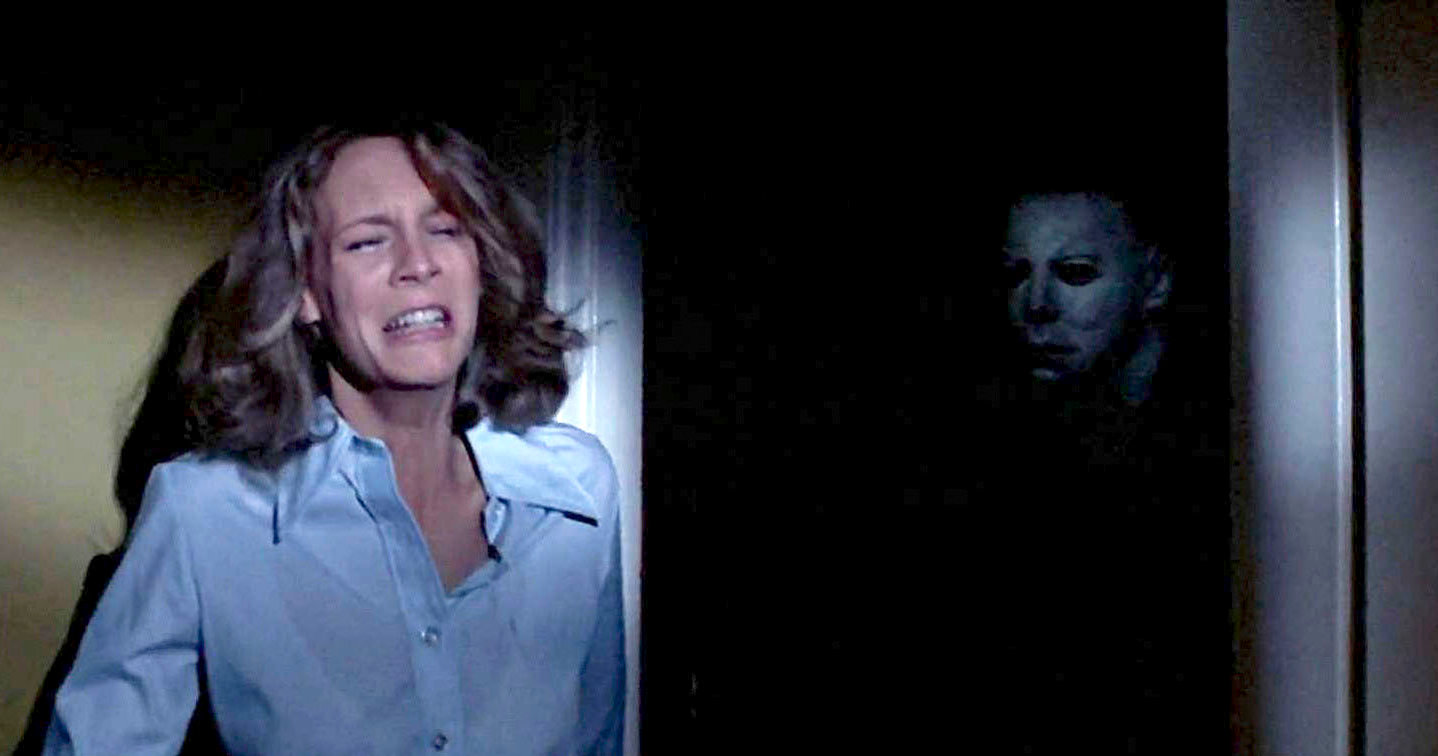
halloweenHalloween – John Carpenter (1978)

1st: Halloween – John Carpenter (1978)
I don’t think I’d seen this as an adult. It’s great! The score is iconic. Jamie Lee Curtis is incredible. To be honest, I think she carries the movie in a way that few others could. I don’t think this movie works without her. The scares are great. I love how Carpenter frequently shoots the movie from Michael Myers’ perspective. I don’t know what else to say? It’s a tight, low-budget, perfectly executed horror movie.
Grade: A-
Halloween – John Carpenter (1978)

2nd: Host – Rob Savage (2020)
I was excited for this movie! It sounded like an inventive idea. It’s only 50 minutes. Man. What a let down. First, the movie easily could (or should) have been 40 minutes. The opening 10 minutes is excruciatingly boring. It feels like you’re on a real zoom call with people you don’t know. Aside from that, I don’t know? I didn’t think the scares or the plot were that inventive or fun. I came away thinking I could probably make a better Zoom movie if I set my mind to it.
Grade: D

3rd: Cameraperson – Kirsten Johnson (2016)
This film had been on my list for a while. I finally watched it in anticipation of Johnson’s follow-up, Dick Johnson is DeadCameraperson is pretty remarkable. It consists almost entirely of footage Johnson has shot for other projects. In other words, any thread or plot in this film only comes from the way these scenes are stitched together. But not only are theses scenes mostly fascinating, they really do give the film strong themes and ideas. The most prominent is just the fragility of life. Many of Johnson’s projects deal with death, genocide, and human rights violations. One of the most striking vignettes is a scene in which a midwife struggles to deliver a baby that desperately needs oxygen. As the film progresses, Johnson weaves in a personal narrative too. We see scenes with her young family, as well as of her late mother who (when we see her) is suffering from Alzheimer’s. I wondered if the fractured nature of the film is meant to reflect Johnson’s mother’s disease. That even though most scenes in the film are devoid of context, it doesn’t render them meaningless.
Grade: B+

3rd: Sinister – Scott Derrickson (2012)
I feel like I could frame this review in two ways. The first is that for a pretty typical, low-budget horror movie, Sinister is surprisingly good. Ethan Hawke is, as always, fantastic. He brings life and substance to a character and movie that maybe doesn’t deserve that much. On top of that, this movie is pretty scary! And all for only $3 million. The second take would be that despite Hawke’s acting prowess, this movie is dumb as hell. There are so many things to nitpick. That Hawke has to write out his trains of thought is laughable. That he refuses to turn on any lights in his house is really something else. How convenient! Either way, I thought the movie was okay. Not the best, not the worst.
Grade: C
Sinister – Scott Derrickson (2012)

6th: Invasion of the Body Snatchers – Philip Kaufman (1978)
I can’t believe how loaded this cast is. Donald Sutherland, Brooke Adams, Jeff Goldblum. This movie is a re-make, so maybe they were able to get these stars to sign on. I think the best part of this movie, by far, are the practical effects. They’re gnarly. Truly grotesque. Besides that, this film was alright. The actors are obviously compelling. I guess my biggest gripe is that the movie goes on forever. It could have been 45 minutes shorter. And while I really like the ending, it’s pretty easy to see coming. Not to mention, that it’s preceded by like two other moments that feel like endings. Who knows? I guess I’ll have to watch the 50s version.
Grade: B-
Invasion of the Body Snatchers – Philip Kaufman (1978)

7th: The Host – Bong Joon-ho (2006)
Bong Joon-ho rules. This is a movie that in other hands could be pretty awful. I shudder to think of the proposed American re-make. But because of Bong Joon-ho, this movie is good and maybe even great in some parts. The Host is really a pretty standard genre movie. Its plot and tropes are not different from dozens of other monster movies. But Bong Joon-ho is so smart in his ability to work within the genre. In fact, unlike say, Parasite, I don’t think there’s anything radical or particularly surprising in this movie. But every decision is so well-executed it elevates the whole film. Take the characters! Like most monster movies, they’re each limited to just one or two central traits. Gang-du is so lazy he has a sleeping disorder. Nam-joo is a brilliant archer but just can’t release that arrow in time. Nam-il is a disillusioned intellectual. But somehow, these characters feel alive. I love the interplay between them. Their traits and quirks are so unusual and often charming, it’s disarming. Which speaks to the tone of this movie. On its surface, The Host is bleak. Spoiler alert: the family’s mission fails. In fact, half of their family dies. But Bong Joon-ho knows exactly when to inject the film with humor and eccentricity. It never feels like a slog.
Grade: B+
The Host – Bong Joon-ho (2006)

8th: The Neon Demon – Nicolas Winding Refn (2016)
I spent the first half of this movie thinking about how I would pan it for being offensively bad. I couldn’t even make it through the second half. Not because I found it particularly disturbing or challenging, but because I found myself so utterly un-moved by any of it. I wanted to hate it and couldn’t even work up the energy to do so. I’d love for somebody to explain the appeal of Refn to me. I can’t think of two movies that have left me feeling as empty as Only God Forgives and now this.
Grade: F

10th: The Cabinet of Dr. Caligari – Robert Wiene (1920)
This barely counts as an entry. Gioia watched this movie. I half-watched it between doom-scrolling through the news. The look of the movie is incredible. The expressionist style in which it was shot is obviously iconic. But it was still pretty amazing to actually see it. I’d be more interested in reading about this film than necessarily watching it. I find the ways that critics and historians have connected this artistic movement to Hitler’s rise and Nazism to be fascinating. It makes you wonder what 2000s films were anticipating our current situation.

13th: Certain Women – Kelly Reichardt (2016)
Someday, Reichardt is going to make my favorite film of all time. Who knows? Maybe she already has with Night Moves or First Cow. On paper, I love everything that she is doing in this film. It’s comprised of three beautiful, impeccably crafted, small short stories in which nothing happens. Sure, I suppose the first vignette features a hostage situation. But it has to be the most anti-climatic one in cinema history. The second vignette centers on a negotiation for sandstone. The third one, which I think really pulls everything together, is about an unrequited crush between a ranch hand and a lawyer. In a lot of ways I struggle to see the difference between this and a Richard Linklater or Mike Leigh film. Which makes me question why I don’t like this film just a bit more than I do. I think perhaps those movies, even if they’re devoid of plot, focus on a tangible quality of life. They’re centered on class, love, friendship, or time. This movie, by contrast, seems comprised of absences. These vignettes take place in rural Montana. At their core, they’re stories of isolation. I keep coming back to how brilliant Kristen Stewart is in this third vignette. And yet she really doesn’t do anything! She’s not even the protagonist of the story. But she feels so absolutely real, it’s uncanny. I kind of can’t shake it. In some sense, I think this is what the movie is: a portrait of life in the absence of everything else.
Grade: B

14th: Dick Johnson is Dead – Kirsten Johnson (2020)
I’m not sure how much I can say about this movie. It’s a lovely idea and a lovely film. Most of it is deeply moving. A lot of it is quite funny. I really liked how much of the documentary was specifically about making this documentary. Making this film is clearly a bonding / mourning / grieving exercise for Johnson. I love that she’s smart enough to center those aspects in the film.
Grade: B+

15th: The Exorcist – William Friedkin (1973)
This movie is fucked up! I can see why it elicited such an enormous response. Overall, I thought the movie was pretty good. I liked how many layers and stories there are within the film. For a movie with its central tension implied in the title, The Exorcist takes its time getting to the actual exorcism. That’s a good thing. I really liked the amount of time dedicated to Father Damien. I especially liked his friendship, and implied romance, with the other priest. The best part of the film is the exorcism. The stunts, the make-up, the head-spinning. It’s so gnarly! I have to say that I am a tad disappointed that I didn’t find the movie scarier. Based on its legacy, I really thought this was one of the scariest movies of all time. I think it’s certainly one of the most disturbing movies ever. Especially for the time it was made. But maybe not the scariest. Oh well.
Grade: B
Exorcist, The – William Friedkin (1973)

17th: Topsy-Turvy – Mike Leigh (1999)
This was the big one! The first film that Mike Leigh really took significant studio money for ($20,000,000!). And the first film, I presume, in which he deviated from his rehearsal / development style of filmmaking. Topsy-Turvy is, after all, a biopic. Even so, this is still very much a Mike Leigh film. There’s probably no place in which that’s more apparent than the leisurely pace this film takes. Leigh spends almost a full hour meandering through the lives of his protagonists before the stakes of the film take hold. Eventually, we realize that this movie will be the story of Gilbert & Sullivan’s opera, The Mikado. But that’s only apparent well into the film. It feels almost identical to the way that a narrative of one’s life is only apparent when looking back at it. I think the real achievement of this film, as in most of Leigh’s work, is in the performances. This film allows for more than a few prominent parts, and the actors in them all shine. Jim Broadbent and Shirley Henderson really stood out to me. I could see this film being compared with some of Altman’s more sprawling films: Nashville, The Player, or Short Cuts. While I largely enjoyed the film, I do have to say that I miss some of the focus and charm of Leigh’s smaller features. There are class issues and politics in this film, but they’re largely on the periphery. Likewise, I think Leigh does an okay job at portraying the complicated racial politics of an opera like The Mikado. He largely accomplishes this point by making fun of the ignorance of his protagonists. Still, I would have liked to see a more scathing or narrowed assessment of these issues. Especially since it is Leigh who chooses the development and staging of The Mikado as his period of focus.
Grade: B+

19th: Night Moves – Kelly Reichardt (2013)
Out of the Reichardt films I’ve seen (all of them except First Cow), I think this one appealed to me the most. Which is strange. It’s certainly the least like any of her other films. It’s the most straightforward. It’s the one that relies most heavily on plot. Really, it separates itself by relying on plot at all. But the best qualities of Reichardt’s other films are all still here too. The setting is the rural American West. The filmmaking is slow, beautiful, often hypnotic. You know, I really wouldn’t think that a thriller would be in Reichardt’s wheelhouse, but this film mostly works. I love her focused approach. I love the performances she gets. Jesse Eisenberg continues to be one of my favorite actors. I thought Dakota Fanning was really good. She even gets Alia Shawkat and Katherine Waterston to show up in minor roles. It’s no surprise to me either that this was written with Jonathan Raymond. Reichardt is the best at short story adaptations. If I had a complaint, I think the film teeters a bit in the third act. I almost wonder if this should have been an 80-90 minute film and ended in the aftermath of the bombing. Still, it never gets bad. It just started to lose its hold on me ever so slightly.
Grade: B+
Night Moves – Kelly Reichardt (2013)

22nd: Night of the Living Dead – George Romero (1968)
It’s hard to know what to say about some of these classics. Night of the Living Dead is undoubtedly one of the most important films in cinema history. And for the most part I liked it! It’s terrifying at parts. I was kind of stunned by how far Romero pushes the gore. The zombies eating the remains of Tom and Judy is gnarly. There are some things that I would probably tweak. The acting often leaves something to be desired. And I’d love to read more about any social commentary (or lack thereof) in the film. I really don’t know. I find the characterizations of Barbara and Ben to be challenging. Barbara is someone who’s incapable of thought or action throughout the entire film. She’s literally in some type of shock and never wakes up. Ben, on the other hand, is defined by the lengths he goes to to survive. For instance, he punches and knocks out Barbara after being annoyed with her and he shoots Harry for cowardice. I’d imagine Romero is trying to say something with these characters and instances of violence, but I can’t make it out.
Grade: B
Night of the Living Dead – George Romero (1968)

23rd: A Tale of Two Sisters – Kim Jee-woon (2003)
My least favorite mini-genre of movie is the “it’s all in their heads” films. Films like Black SwanFight Club, or Paprika. Which is not to say that I think those movies are bad. In fact, I think they’re all pretty good. Just, that it’s a trope or genre that I find extremely tiresome. I guess my major issue with it is just that it necessitates that director withholding information from the audience. To some extent it prioritizes the plot (or how we receive the story) over the story itself. Having said all that, I realize this is probably a limiting way to view a movie like A Tale of Two Sisters. Every aspect of this movie is done extraordinarily well. The direction is striking, the horror is thrilling, and even the story is handled extremely well. I don’t think that any of the plot devices Kim Jee-woon uses, detract from the movie. However, it’s still just not my favorite way to tell a story.
Grade: B
Tale of Two Sisters, A – Kim Jee-woon (2003)

29th: On the Rocks – Sofia Coppola (2020)
This movie reminds me a bit of The Laundromat or Where’d You Go Bernadette?. To be fair, it is probably better than both of those films. What I mean though is that while this movie doesn’t totally work, it’s so well-made that I can’t help but like it. There are scenes and images in On the Rocks that are so freaking good. The prologue of Laura and Dean’s wedding, for example, is magnificent. The same goes for any of the comedy set-pieces. Felix and Laura’s ride in the Alfa Romeo, or the conclusion of the Mexico trip. I think these sequences are some of the funniest moments in any of Sofia Coppola’s movies. That being said, the ending really bums me out. Coppola sets up this whole movie by making it inevitable that Laura’s husband is cheating. It’s the central tension of the movie. So for her then to wrap everything up by implying that he wasn’t cheating just feels like the easy-out. I think it makes the film so much less interesting.
Grade: B
On the Rocks – Sofia Coppola (2020)

31st: Idle Hands – Rodman Flender (1999)
I’ve never really understood having an ironic love of bad movies. Usually, those types of movies just seem bad to me. I have to say though, I had a pretty good time watching Idle Hands and it is objectively terrible.
Grade: D-

2020 Movie Log: September

social networkThe Social Network – David Fincher (2010)

Jungle Fever – Spike Lee (1991)
There is something I find to be so compelling and a little frustrating about Lee’s films. He is undoubtedly one of the most important and best filmmakers ever. Do the Right Thing and Malcolm X are two of the greatest films of all time. More than that, they’re two of the most important films of all time. They tackle issues of race, identity, and history so fearlessly. I don’t know if anyone has made better films than Lee on those subjects. I think perhaps the most important reason why these films work is because Lee is so honest in them. He avoids asking easy questions. He refuses to give easy answers. But I wonder if this very thing that makes so many of Lee’s films great is the same thing that makes so many of them messy? Jungle Fever seems like a perfect example of this. Lee tackles an incredibly nuanced and difficult subject in the film. Moreover, he asks the most difficult questions about it. Can an interracial relationship ever work? Is it immoral on some level, even with the best intentions? Is being interested in someone from a different racial background inevitably exploitative? And in asking these questions, Lee gets magnificent performances to carry these situations out. Wesley Snipes, Annabella Sciorra, Spike himself, John Turturro, Tim Robbins, Samuel Jackson, and Michael Imperioli all in one film? It’s dazzling. The way Lee films the scene of Wesley Snipes and himself gliding down the street? Get out of town. It’s so fucking good! And yet, I’m not sure if this movie works. It’s so messy. And while Lee refuses to give easy answers to the questions he asks, I can’t help but feel he turns his attention away from them. The climax of the film, for instance, is Flip’s brother being killed by his dad. To me, it seems to have little to do with the pressing issues posed in the rest of the film. Still, I might be wrong. After all, there is a long, long history of white people not understanding Spike’s work. It is entirely possible that could be happening here. 
Grade: C+
jungle-fever-e28093-spike-lee-1991-2

21st: Ford v Ferrari – James Mangold (2019)
I’m surprised by how much I liked this movie. It’s incredibly watchable. I mean that in the best way possible. The movie is two and a half hours long and mostly flies by. The action is thrilling. Christian Bale and Matt Damon are obviously compelling protagonists. It’s a well-made blockbuster on almost every level. Is it a good movie? Yes. Is it a great movie? Unfortunately, I think the movie lacks the flourishes that would really set it apart. There are few surprises. There isn’t much nuance. The dialogue and characterizations are good, but never complex. It feels like this movie was the biggest and safest version of what it set out to be. That makes for a good film. And in some parts, a very good film. To be great, it would need an element of subversion somewhere. That is something this movie has no interest in doing.
Grade: B
Ford v Ferrari – James Mangold (2019)

23rd: I’m Thinking of Ending Things – Charlie Kaufman (2020)
This was fun to watch. I particularly liked most of the 2nd Act. Toni Collette and David Thewlis are delightful. I admire Kaufman’s idiosyncratic vision. I can’t explain any of what it meant. 
Grade: B-
I’m Thinking of Ending Things – Charlie Kaufman (2020)

27th: Zodiac – David Fincher (2007)
This movie is unbelievably good. There are the obvious things I could point to: the way Fincher designs and shoots 1970s San Francisco, the lived-in performances of Jake Gyllenhaal, Mark Ruffalo, and Robert Downey Jr., the startling horror of the Zodiac attacks themselves. Yet, there is still something about this movie that I can’t put my finger on. This movie has a hypnotic, propulsive power to it that I don’t fully understand. I’m confident that it’s one of the five or ten best movies of this century, but I can’t say exactly why. What I do know is that once you start watching this movie it grabs hold of you and refuses to let go. Perhaps that’s the real power to it. That this movie does to its viewer exactly what the Zodiac case is doing to its protagonists. It’s a film about the power of obsession that obsesses the viewer. It’s a film about the worst aspects of humanity that reels the viewer into its darkness. Perhaps the thing I love most about this film is that it gets better with each scene. For how much I like this movie, the beginning is a little slow. We don’t even meet Mark Ruffalo’s character until the 30-minute mark. But that’s okay. It’s intentional. The film is laying an enormous amount of groundwork. Once it gets to a certain point, we realize that it’s just building and building. I’ve said before that I think the basement scene is the scariest movie moment I’ve ever experienced. And while I still think it is, I also have to say that it’s not even my favorite scene from the third act. The diner scene between Gyllenhaal and Ruffalo is incredible. It feels, at once, like the culmination of everything the movie has been building as well as a scene that completely transcends it. 
Grade: A
Zodiac – David Fincher (2007)

28th: The Social Network – David Fincher (2010)
This is widely considered the best movie of the decade. It probably is. I think the film’s greatest hallmark is in how dark, scathing, and corrosive it is. In a forward to one of her books, Ursula K. Le Guin notes that the best science fiction is not predictive. On the contrary, it’s extrapolative. She argues that the great writers don’t aim to predict the future but instead attempt to distill and express what currently exists. David Fincher couldn’t have known all of issues that would arise from Facebook and Mark Zuckerberg back in 2010. But he did know how Zuckerberg and the company conducted themselves in their founding. By being attuned to the present, he made a movie that feels predictive of our current situation. It’s remarkable! Given all of this, I think Fincher’s greatest achievement in this film is how effortless this movie is to watch. It’s a blast.
Grade: A
Social Network, The – David Fincher (2010)

29th: Magic Mike – Steven Soderbergh (2012)
This movie is really fun. I was struck last time by how good the movie is in contrast to its setting, plot, themes, whatever. I guess I just didn’t have high expectations. This time I went in remembering the film quite fondly. By contrast, I was mildly disappointed. I think in some sense this movie feels stitched together. Soderbergh really depends a lot on the strip club set-pieces to stretch the movie to 90 minutes. But they mostly work, and so does the movie.
Grade: B

30th: My Best Friend’s Wedding – P.J. Hogan (1997)
This movie is ludicrous. I could nitpick a million things about it. Almost every aspect of its set-up and plot is completely convoluted. But Julia Roberts is really good, Cameron Diaz is really good, Rupert Everett is amazing and the songs are great.
Grade: C
My Best Friend’s Wedding – P.J. Hogan (1997)


2020 Movie Log: August

On the set of Rear Window
Rear Window – Alfred Hitchcock (1954)

2nd: A Beautiful Day in the Neighborhood – Marielle Heller (2019)
For how recognizable Tom Hanks is, it’s remarkable how quickly I forgot this was him. Watching him in this movie really feels like watching Mr. Rogers. It’s as if they made a film about Mr. Rogers with Mr. Rogers just stepping in as himself. Why this is, I’m not sure. Perhaps it’s because Mister Rogers’ Neighborhood is so engrained in my childhood psyche that seeing this figure again just brings me back to that place, even if it’s an actor in the red sweater. Perhaps it’s because Tom Hanks largely has the same public image as Mr. Rogers. As Lloyd says in this movie, he’s “a living saint.” Whatever the reason, it’s hard to remember another biopic in which the actor was so perfectly suited to the role. And not just in the way they look or speak, but the external forces surrounding it. As I said, you don’t have to buy in that Tom Hanks is this man. In this film, it’s just Mr. Rogers. Talking about the film to Gioia (who for some maddening reason refuses to watch it), I realize how corny I make it sound. And it kind of is. On paper, this film is about a cynical magazine reporter who is assigned a profile on Mr. Rogers. As he struggles to find the real Mr. Rogers (who, as it turns out, is really just his public persona) he works through his own personal traumas. And yet, for some reason, the film works. It doesn’t feel like an empty, fluffy movie. I think it’s because the film never shies away from the fact that life is really hard. This movie (like Mister Rogers’ Neighborhood) doesn’t try to cover that up. It tackles it head-on. And in doing so, it makes Fred Rogers’ approach to life all the more inspiring. This is not someone who is profoundly different from any of us. In the film, his wife refutes Lloyd’s “living Saint” comment for this very reason. Mr. Rogers is exceptional because of how he handles the things all humans experience. If I have any complaint about the film, it’s that on brief occasions, the film struggles when it focuses solely on Lloyd. This is not his, or Matthew Rhys’, fault. In fact, I thought one of the best aspects of the film was how it views Mr. Rogers through Lloyd’s eyes. But Mr. Rogers’ is the star of the film and the film doesn’t always have its footing when he’s out of the picture.
Grade: A-
A Beautiful Day in the Neighborhood – Marielle Heller (2019)

3rd: Jojo Rabbitt – Taika Watiti (2019)
I was surprised to find how much I liked this movie. Obviously, that’s a back-handed compliment, but I really was quite skeptical of this film. While I admire Watiti’s work (What We Do in the Shadows in particular), I was dubious of a farcical movie about Nazi-era Germany. And to be clear, I think anybody who takes issue with a film that focuses on the plight of a 10-year-old fanatical Hitler Youth member has a fair point. But I did find this movie to be really quite sweet. I couldn’t help but think of it in the current climate of the United States. I think a film like this really speaks to how easily people can be corrupted and brain-washed into believing and espousing terrible things. It’s hard not to look at Jojo and hope that there are people in America that could have the same arc that he has by the end of the film (you know, broadening their horizons and violently kicking Hitler out of a window). One of the things that I think could get lost in this film is how well-made it is. For as much as Watiti kind of feels like an underdog director, he has worked in Marvel. And the filmmaking reflects that in the best way. There are really brilliantly choreographed sequences, long-tracking shots. Even something like the opening Hitler / Beatles montage works really nicely.
Grade: B+
Jojo Rabbit – Taika Watiti (2019)

3rd: Rear Window – Alfred Hitchcock (1954)
What can I say? This is a flat-out classic. I’m in awe of it. It’s a perfectly told, executed, bottled story. I have no idea how Hitchcock pulls it off. I think the highest praise I can offer is that it has an incredible concept and yet that concept never feels forced. You know going into it that this entire movie takes place in one location, and yet it never feels strained because of it. The fact that Hitchcock adds in a compelling personal narrative for L.B. and Lisa on top of a perfectly told murder plot is another feat in itself. Really, just amazing stuff.
Grade: A
Rear Window – Alfred Hitchcock (1954)

7th: Battleship Potemkin – Sergei Eisenstein (1925)
For the foreseeable future, I am going to try to watch as many of the classic, foundational movies that I haven’t seen as I can. This is pretty much at the start of the list. It’s a battle film that was highly influential. Apparently, it is Charlie Chaplin’s favorite film ever. Some of these older films can feel like homework. Which, how could it not. At this point, a film like this is more of a historical achievement than entertainment. I mean it’s literally 95 years-old. I will say that this film is still very watchable, and quite entertaining at parts. The scope and the scale of something like this super impressive. I’m glad I watched it.

7th: Bringing Up Baby – Howard Hawks (1938)
It’s funny that as much as I have praised Battleship Potemkin for being so good for its time (which it is), Bringing Up Baby is made only 13 years later and it might as well exist in a different universe. For one, there’s talking. But more than that, there’s a narrative that could exist in a film made today. There are even movie stars. Bringing Up Baby doesn’t feel like a historical artifact. Not only does it feel like a movie, it feels like a great movie. It’s so lively, funny, well-acted. I suppose things do get a bit derailed by the third act. But everything resolves itself nicely. And the first two acts are as funny as anything made today.
Grade: A-
Bringing Up Baby – Howard Hawks (1938_

8th: Psycho – Alfred Hitchcock (1960)
It’s a miracle I hadn’t had this movie spoiled for me. I did know that the famous shower murder occurs early in the film. So I guess it wasn’t completely unspoiled. But I was blissfully unaware of the major twist in the movie in which Hitchcock reveals Norman Bates’ mother to be the skeleton, and Bates to be his murdering mother. I couldn’t stop smiling. It’s so good! This is the second time that a Hithcock twist has surprised me even when I was expecting it. I had almost the exact same experience watching The 39 Steps. I thought it was a great movie but felt like there was some missing piece. Then, one last twist is revealed and you realize how perfect the film is. It’s absolutely masterful. I can’t wait to keep watching more of his work.
Grade: A
Psycho – Alfred Hitchcock (1960)

9th: Singin’ in the Rain – Gene Kelly & Stanley Donen (1952)
This was a really fun film to watch. The music, the dancing, and the performances are all remarkable. It’s like the most big-time Hollywood production I can ever remember seeing. And there is real power in that. Unfortunately, a few aspects of the film have aged poorly. Mainly that the entire plot is centered around dragging an untalented actress and culminates in a publicly-staged humiliation of her. I also could have done without a few of the musical numbers. Particularly the pointless “Moses” or the 7-minute “Broadway Melody Ballet.” But when this movie works (which it mostly does) it’s absolutely dazzling. It’s always fun watching something like this and realizing how many iconic images and scenes you already know. It’s the mark of a true classic.
Grade: B+
Singin’ in the Rain – Gene Kelly, Stanley Donen (1952)

11th: The Big Short – Adam McKay (2015)
I hadn’t seen this since it was in theaters. At that time, my whole takeaway was how strange this film was with characters breaking the fourth wall and celebrities making cameos to explain what we were watching. I believe I used the word “meta” a lot. Five years later, the film doesn’t seem quite as groundbreaking as it did then (though it is certainly unorthodox). What jumped out to me the most was just the power and conviction in its message. It strikes me as almost the embodiment of Steve Carrell’s entire character. I can’t lie, I just totally buy into it. It’s a message I believe in and it’s really well told. What more could you want?
Grade: A
The Big Short – Adam McKay (2015)

11th: Arrival – Denis Villeneuve (2016)
This is another movie that I hadn’t seen since it was in theaters. At that time it absolutely blew me away. I thought the script, and particularly the twist were just masterful. After re-watching it, I still feel that way. This might honestly be my favorite sci-fi movie. I just find the approach to be so interesting. I love that the film really seems to think through and address what would happen if aliens landed here. What would be the steps in communicating with them? What would the global response be? What would the public response be? They’re not the flashiest question, but I think they lead to a far more interesting movie. I also just think this film looks amazing. The way the aliens are presented especially is really cool. I love how their language looks. To be honest, I really only have one gripe which is that the climactic line “Do you want to make a baby?” still sucks. Besides that, what a film!
Grade: A
Arrival – Denis Villeneuve (2016)

12th: The Searchers – John Ford (1956)
I hated this movie while I was watching. It seems so fucking racist and just despicable. A whole subplot involves Marty unwittingly buying a Comanche wife and then kicking her because she doesn’t understand him. We don’t see her again until she’s found murdered, and the two comment that she didn’t deserve that. Now, reading about this film, it seems as if its intentions were maybe better than I presumed. I think most critics hail this as one of the greatest films ever made because it tries to depict a more accurate climate of the west. One that’s infected with brutal crimes and blatant racism. Even if that was the goal, the execution leaves something to be desired. If John Wayne’s portrayal of Ethan as a hard-nosed racist is supposed to demystify the west, I don’t think he should be the hero of the movie. I don’t know, there are some aspects I do admire about the film. You can infer a whole relationship between Ethan and Martha (and presumably that Debbie is Ethan’s daughter) without any dialogue suggesting it. That’s pretty cool. The same goes for some of the iconic shots the movie uses. Particularly when Ethan returns to see his family’s house burning (hello Star Wars). Unfortunately, all of this is clouded for me by the fact that this movie is racist as fuck. I hope we stop considering it a classic.
Searchers, The – John Ford (1956)

13th: On the Waterfront – Elia Kazan (1954)
What an incredible film! It’s so energetic, so compelling. The community of dock workers is so vividly portrayed. I would guess that this movie is as thrilling to watch now as it was back in 1954. Not all classics are like that. At the center are the performances. Marlon Brando is the star but the supporting cast is great too. Eva Marie Saint, Karl Malden, and Lee J. Cobb each more than hold their own. One of the things that really struck me about this film was the intensity of these performances. It’s something akin to the melodramas of the 30s or even a movie like Rebel Without a Cause. But something in this film makes these performances feel so real and life-like. Not purposely over-blown like in those other films. Perhaps it’s just the gritty nature of this dock community? Whatever it was, it really works for me.
Grade: A
On the Waterfront – Elia Kazan (1954)

14th: Vertigo – Alfred Hitchcock (1958)
The greatest movie ever made? According to the British Film Institute, it is. It is certainly worthy of consideration. Like Hitchcock’s best films, Vertigo is an intricately weaved mystery. The way Hitchcock unfolds plot is really just awe-inspiring to me. I don’t know how he does it. Obviously, I’m aware that he’s the master of suspense. But even with that title his films still always manage to surprise me. What else does this film have going for it? The two lead performances by Jimmy Stewart and Kim Novak are fantastic. The locations, costumes, sets, and colors are amazing too. Especially compared with Rear Window which is all in one location, or with Psycho which is shot in black and white. There are some truly iconic shots here. Kim Novak standing beneath the Golden-Gate Bridge, the crazy dream sequence at the end of the 2nd Act, and the Vertigo effect shot are all unforgettable. Having said all that, I am surprised this has become the film Hitchcock is most well-regarded for. Don’t get me wrong, I think it’s a brilliant film and can certainly believe it’s one of his best. But something about this one felt more sprawling to me than his other films. Perhaps it is a result of this one being more ambitious? Still, I think I might prefer Psycho or Rear Window. Films that are much smaller in scope, but more tightly packaged than this one.
Grade: B+
Vertigo – Alfred Hitchcock (1958)

15th: A Day in the Country – Jean Renoir (1946)
I’m not even sure this is really a film. It’s just 40 minutes and was left unfinished. Still, for these 40 minutes, it’s hypnotic. There’s something so lively about this set of characters. It’s not what I anticipated at all. I expected this to be more of a romantic, humanistic portrait of a trip to the country. More of a landscape film. The characters in this film are comically inept, oblivious, devious, whatever you want to say. They’re characters, not people. And still, in just 40 minutes, Renoir is able to put them in a story that flies by. It’s funny, it’s charming. I’m not sure the ending totally comes together. A romantic tryst has to come and go, and then years must pass afterward, all in a couple of minutes. Whatever the case, I’m excited to see Renoir’s work in a full feature.

15th: Police Story – Jackie Chan (1985)
I am not a huge action fan. Still, this was incredibly fun. It’s really about as good of an action film as I’ve seen. Even the plot and stakes are pretty well executed. And the stunts are unbelievable. It’s actually insane to think about how he might have made this movie. There are unfortunately some gags and jokes that have not aged well. It’s really unfortunate because the film doesn’t need them anyway. Besides them, it’s compelling, funny, and endearing.
Grade: B+
Police Story – Jackie Chan (1985)

16th: Inside Out – Pete Docter (2015)
This is the type of film that’s so funny, so clever, and so well-done that I don’t really know what to say. The way the film works as its own fantasy/adventure story and also as a framed allegory for human emotions is so impressive. I know a lot of it is puns (train of thought, etc.) but still, that the whole film works is just massively impressive to me. There were parts of this movie where I was afraid that this was all I might get. Not that that’s a bad thing. But I think Pixar films can, at times, feel so well-oiled that they lack a human element that puts them over the top. In other words, it’s such a well-run studio that nothing they produce will ever be below a B+, but I’m not sure how many of their (especially later) films really reach an A either. Luckily this one was able to break through that. Of course, there were the expected water-works. It’s not a mistake that sadness is the hero of the film. But I also found myself really wowed and delighted by some of the comedy. In particular, any scene with Fear just slayed me. I’m not sure this film rises to the very top of my Pixar list, but it certainly is close.
Grade: A-
Inside Out – Pete Docter (2015)

16th: The Princess Bride – Rob Reiner (1987)
The Princess Bride has to be close to the top for movies I was most ashamed to say I had never seen. I don’t know how I really missed it. I think it was rented for me once when I was sick and somehow I just never watched it. Well, no-more! I have watched it. Unfortunately, it didn’t quite rise to the level I was expected. I think that just has to be years and years of hearing about it and knowing so many quotes from it. It’s not bad by any means. It’s really charming and funny. I understand why it’s many people’s favorite movie. Alas, I think I just missed the chance for it to be mine.
Grade: B-
Princess Bride, The (1987) – Rob Reiner

17th: Career Girls – Mike Leigh (1997)
This movie is objectively good. It’s warm, funny, sincere, and sad. In other words, a Mike Leigh film. He understands people and relationships better than any filmmaker I can think of. Is this movie great? It probably depends on the viewer. To me, the answer is an unequivocal yes. Mike Leigh makes almost exactly the films I want to see. So even something like this, which feels a bit minor compared with his masterpieces like Naked or Secrets & Lies, still dazzles me. I thought the movie was really funny. I was moved to tears at the end. I thought the way he captured these girls’ friendship was beautiful. And more than anything, I just love watching the performances he gets in his films. They’re always unbelievably good. They feel so real and so raw. God, I just love Mike Leigh.
Grade: A
Career Girls – Mike Leigh (1997)

18th: McCabe & Mrs. Miller – Robert Altman (1971)
This was quite a bit different from what I expected. It is much smaller and more focused than Altman’s other major works like Nashville or The Player. It takes a while to sink into. In fact, I found the first act of this movie to be almost unbearably slow. There’s little dialogue. The dialogue we do get is obfuscated by Altman’s approach in which characters rarely speak above the surrounding noise. And in general very little is happening. We watch as McCabe comes into town and slowly begins setting up an enterprise. Luckily, all of these things are intentional and important. Altman is using this time to introduce the reader to this town. To a cast of players and places. When Mrs. Miller arrives in the second act, the movie takes off. It’s funny and charming. Altman called this an anti-western. I half agree with him. The opening is slow by any standard. It crawls compared to a “normal” Western. Moreover, McCabe is certainly not very heroic. Incompetent would be a closer description. He doesn’t come to save the town. His drunken actions are the very thing that puts it into danger. Yet, the last half of this movie unfolds pretty standardly. The entire third act is a shootout in which McCabe only succeeds through his wits. It’s brilliantly done, but I would hardly call it subversive.
Grade: B+
McCabe & Mrs. Miller – Robert Altman (1971)

23rd: Vera Drake – Mike Leigh (2004)
There is nothing I can really pick out that this movie does wrong. It accomplishes exactly what it sets out to do. Moreover, it tackles abortion. Not exactly the easiest subject to handle. I found the film to be almost unbelievable moving for its first half. I think it’s as good as anything Mike Leigh has made. By no means does the film fall off after this. In fact, I’d bet that some people admire the film particularly for its second half in which Vera is arrested and the family has to come to grips with her controversial service. There is a stretch of about 20 minutes in which Imelda Staunton delivers a breathtaking performance all without saying much of anything. It is purely through her pained expression. One that we’ve seen completely transformed from her chipper demeanor at the beginning of the film. And while I think Staunton absolutely steals the show, every performance in this film is brilliant. His characters are played with such warmth and humanity. It’s what sets Mike Leigh’s films apart. I’ll say it again, there is nothing I really would change about this film. Still, I suppose the almost traditional nature of its plot (again one that is well-executed) sets it slightly below my favorite Mike Leigh films. I think I just tend to appreciate his works when they’re a little more sprawling and messy.
Grade: B+
Vera Drake – Mike Leigh (2004)

27th: The Short & Curlies (short) – Mike Leigh (1988)
I don’t think I could love a short anymore. This film is so outrageously funny. I could watch David Thewlis tell one-liners all day. They definitely went a much darker direction with Naked.

28th: Life is Sweet – Mike Leigh (1990)
I believe this is the first Mike Leigh film I had ever seen. Either that or Meantime. I had remembered and recommended this one for its warmth, it’s quirkiness, and its affirmation of life. The qualities I seem most drawn to in any of Leigh’s films. And those are all there. What I forgot were the layers of trauma and grief that emerge in the second half of the film. Whoops! Ironically, it’s these qualities that I think most strongly emphasize the warmth in this film. The film is a portrait of a quirky but positive and relentless working-class woman (Alison Steadman). In the first half of the film, her positivity just seems to be an eccentricity. The way she and her husband (Jim Broadbent) cackle throughout the movie is an amazing touch. As the film moves forward and we come to see her daughter’s own identity not as an eccentricity but as a product of trauma and grief, Steadman’s relentless positivity changes meaning. We see it not as an identity but as her response to the cruel and unrelenting nature of life. We see that she is someone who is facing a meager and hard existence and meeting it with as much life and power as she can muster. I cannot emphasize how life-affirming this film is. Laying this all out there, it seems heavy-handed. Yet what really works about this film is how subtle Leigh makes these points. As powerful as the message is, we never lose track that the most important parts of the film are the people expressing it.
Grade: A
Life is Sweet – Mike Leigh (1990)

30th: All or Nothing – Mike Leigh (2002)
Easily my least favorite of Leigh’s films so far. And still, it wasn’t bad! I particularly liked the ending. My issue with this film is solely just how bleak it is. A matter of taste. This film is hard to watch. It feels relentless up until the final two or three minutes. Just briefly, you have one young woman who becomes pregnant and then is violently rejected by her abusive boyfriend, you have another young woman who feeds off the insecurity of her two alcoholic parents and pursues this same abusive boyfriend, you have a mentally ill young man who stalks around the courtyard before carving this girl’s first initial into his chest as a demonstration of his love, you have a young woman who works a dreary job as a maid at a nursing home and is subject to the unwanted sexual advances of a much older man, and then you have her brother who aside from being violent and unruly has a heart attack. And this doesn’t even touch on the real emotional center of the film which is the collapsing marriage of this boy’s, and his sister’s, parents. Ay, ay, ay. Listing it all out it’s impressive that this film is watchable. Again, I think it comes back to Leigh’s underlying feeling as a filmmaker. He is with these people, not against them. And to be fair, the film does end on its lightest note. It seems like this family has become bonded and may be repaired by the boy’s heart attack. It’s hard to feel certain that this change will last, but for now, it’s a much-needed reprieve.
Grade: B-
All or Nothing – Mike Leigh (2002)

2020 Movie Log: July

naked
Naked – Mike Leigh (1993)

4th: Hamilton- Thomas Kail (2020)*
I am quite sure that I won’t have any profound or original insights into this production. For one, I don’t have the knowledge of musicals or Broadway in the first place to do so. And two, I mean what could you say about Hamilton that hasn’t been said in the first place? I suppose that logic could be applied o any of the classic films I write about. So why not try? More than anything, I just feel overwhelmed by the brilliance of the production. From the writing, the music, and the performances. It’s hard to come away thinking anything but what an achievement that was. It’s insane to me that someone could conceive of anything like this. The fact that it is all, more or less, an adaption of the biography of an 18th-century founding father feels even more remarkable. I think the highest praise I could offer is that it makes me want to read that giant biography. It’s been fun to keep listening to the soundtrack in the aftermath of watching the performance. I’m amazed at how many more details are in the music than a viewer could take in after a single performance. Even something as obvious as the repetitive musical themes feel so dynamic on repeat listens. The way the same song or a chorus goes on to change meaning throughout the play. It’s so well done. If I had any complaint, it would just be the translation of watching this on television. It’s still riveting, compelling, etc. But I’m certain there is a lot lost not actually seeing it live. Perhaps one day I will.
Grade: Five Stars

5th: Who’s Afraid of Virginia Woolf?– Mike Nichols (1966)
Christ almighty. I don’t know if I’ve ever seen anything so scathing. These people fucking hate each other. This movie had been on my list for a long time. What I had expected was nowhere close to what this movie turns out to be. It is two hours of being around the most toxic couple you’ve ever seen. It’s like watching the Before Midnight fight, but it’s even more vitriolic and lasts three times as long. Plus, the fight in Before Midnight ultimately comes from the struggle in reconciling love as the couple moves into another phase in their relationship. Elizabeth Taylor and Richard Burton are way past that. Their characters are trying to reconcile how to interact as two people who hate each other. The writing is perfectly done. It’s supposedly an almost exact translation of the play. The way the film moves effortlessly through the stages of this night without much in the way of plot feels quite like a play. The direction is really well-done too. Mostly in how Nichols stages and elicits these performances. Because it is these performances which are the crux of the film. This movie is a classic, specifically for them. I don’t know how much I can even say besides that. I fully believe that Richard Burton and Elizabeth Taylor are these people. There’s nothing that’s not 100% committed to their roles. It’s extraordinary to watch, though I have no desire to revisit them any time soon.
Grade: A-
Who’s Afraid of Virginia Woolf – Nichols, Mike (1966)

7th: Taipei Story – Edward Yang (1985)
I was a little skeptical of the film at first. Although it was beautifully shot and the performances were terrific, I couldn’t see where it was going. Both A Brighter Summer Day and Yi-Yi begin with similar, sprawling styles. But those movies are really long. I expected a slow-burn going into them. Here, I was enjoying the film, but halfway into it I still was trying to figure out what was happening. What are these characters’ relationships? Is there a narrative? Is this just a city-scape film as the title implies?

Thankfully, I’m a fool. This film is as meticulously written and plotted as any of Yang’s other films. And like Yi-Yi or A Brighter Summer Day it deals with a set of characters at a crossroads. On the one hand, it’s a slice of life film. Part of the reason the film is confusing at the beginning is precisely because Yang is such a naturalistic filmmaker. He shows us these authentic, human interactions and it takes a while to fully grasp their importance. But by the second half of the movie, we realize that Lung and Chin are childhood sweethearts trying to force a relationship. We realize that Lung has a close relationship with Chin’s father from their baseball days. We realize Chin and her sister are trying to remove themselves from his abuse. And we realize that at the center of everything is money.

Every character in this film is in dire financial straits. It is shown as being almost inextricable from living in Taipei. Chin’s company has been bought out by an American one. Lung’s sister and mother have moved to America for better prospects. At one point Lung discusses his American brother-in-law, a man who shot a defenseless black man just because he could. Not only does his brother-in-law get away with it, but his business is now thriving. This is the crux of the film. Could Lung or Chin ever do something so self-involved? Lung describes his brother-in-law’s act with appropriate disdain. But it’s clear he’s thinking about it not as a murder, but as an extreme sacrifice of personal accountability. That’s the world he knows.

In this film, we see these characters have to balance accountability time and time again. We see that Chin has a lover at her old company. Someone who may want to leave his wife for her. But she can’t act on it. She turns down his advances to tend to her family. It’s clear that while she may want to go that route, she is too keenly aware of the practicalities of sticking it out with Lung. And Lung too visits with his ex. It’s a tempting prospect even if he already knows it’s doomed to fail. The same thing could be said of Lung’s financial inclinations. As soon as he and Chin decide to move to the States, he gives away their money. He lends aid to Chin’s father and to an old friend, knowing that he won’t get it back. It’s both an insight into his true feelings of moving with Lung, and to the personal responsibility he feels for those around him.

Near the end of the film, Chin finally proposes the idea of marriage to Lung. He rebukes her. “Marriage is not a cure-all, the States are not a cure-all,” he says. And he’s right. These two characters are clearly not meant to be together. He would rather take his chances in Taipei than pretend that the prospect of something new will save him. As it turns out, he’s murdered hours later. Nothing could save him. But perhaps all isn’t lost for Chin. In the most extraordinary moment of this film, Chin watches as the power goes out on a group of teens as they sing and dance along to the ultra-American “Footloose.” Moments later, when it comes back on, we see that Chin has been crying. Everything she has done in this film has been a cover for her emotions. Without anybody watching, she was finally able to let go. Although Lung’s murder will undoubtedly be difficult, perhaps she’ll no longer have to always carry this mask.
Grade: A
Taipei Story – Edward Yang (1985)

8th: Terrorizers – Edward Yang (1986)
I followed up Taipei Story with Yang’s next film. Though, this may be the last one of his for a while as his other films are not available in the U.S. At first, Terrorizers seems like quite the deviation from Yang’s other films. It starts out with an old-school police shootout. Yang actually closes out the film with fantasy scenarios of other killing sprees. However, at the center of the film is a tangle of characters who were all physically close to the killing. And throughout the movie, they struggle with the same existential issues that most of Yang’s other movies focus on. Zhou and Li are contemplating their lives, their marriage, their careers. A photographer (like in Yi-Yi) links the characters together. And at the center of it all is the city of Taipei. The pleasure in Terrorizers is watching this puzzle unfold. It’s completely Altman-:. I’d be eager to re-watch just to see these threads all at the beginning. And while Terrorizers may not have the emotional catharsis that some of Yang’s other films have, this one uses other genre staples much more readily. At times it’s an action movie, a mystery, a comedy. It reminded me a bit of Haruki Murakami’s work. Perhaps it’s no coincidence that Li states that she loves Japanese mystery novels? Like most of Terrorizers, that’s something I’ll have to suss out next time.
Grade: B+
Terrorizers – Edward Yang (1986)

10th: Down in the Delta – Maya Angelou (1998)
This is the first installment of mine and Wills’ movie/book club! It is to be watched/discussed as we begin reading Their Eyes Were Watching God. As that discussion goes along, I may have more thoughts here. As a film, I was initially skeptical. Obviously, Maya Angelou is untouchable as a poet, writer, and activist, but I wasn’t sure if that would translate as a director. And at the beginning, it feels like it might not. The film starts with pretty broad depictions of the characters. Loretta is a crack addict, Rosa is a pious, disapproving mother, Thomas is a good-hearted kid being corrupted by the city. Sometimes it even seems comical, such as when shots are being fired and Loretta and her son duck behind their couch. But as this movie goes along, these characters begin to transition. We see that maybe they were painted so broadly because this movie is about transformation. Once this family is in Mississippi, you begin to feel such warmth and empathy for them. You realize that this film is about how people, and their actions, are created by the environments around them. Loretta has the space to be a good mother and even a businesswoman. She just needs someone to believe in her. This sentiment is echoed beautifully with the silver candelabra. It is initially introduced as a source of tension between Earl and Rosa. It is then revisited as a prophecy, a foretelling that the family needs to be strong. What it turns out to be is a powerful reminder of where this family comes from. It was taken by their ancestor, Nathan, when he was freed during the civil war. He took it because it was what was used to buy his father, and permanently separate this family. So whether it’s struggling on this farm, or in the projects of Chicago, we see what this family has always dealt with. The product of their struggles stems from their history as slaves. But, as Angelou points to, again and again, it is this painful heritage that makes the family so resilient as well. They keep the candelabra not just as a token of a painful history, but as a reminder of their strength.
Grade: B+
Down in the Delta – Maya Angelou (1998)

10th: Palm Springs – Max Barbakow (2020)
This is one of the most fun movies I’ve seen in a while. I would not be surprised if it turns into one I re-visit. Something along the lines of I Love You, Man or Forgetting Sarah Marshall. In a lot of ways, it’s a fairly typical comedy. In fact, the literal movie beats are so precise it can feel like this came from a script someone wrote in film school. But sometimes movies that work within well-worn structures can be just as good as those that break the rules. And even if this isn’t the most adventurous movie in the world, I think there are three things it does exceptionally well. First are the performances. Andy Samberg and Cristin Milioti are incredible. They’re so smart, clever, and charming. I would watch a sequel just to spend more time with them. The second goes along with these performances and is just the writing. Much like I Love You, Man, there’s nothing wildly original about how the movie is designed. But the jokes inside are constantly funny. Just every little remark or bit they do works. It’s such a high batting average. You can tell that the script had been thought over and over, and re-worked until it was the best version possible. The final thing is just the simplicity of the movie’s overall structure. It has a fun premise but doesn’t derail itself trying to solve it. For as much as there’s a time loop going on, it’s a really simple movie. It tackles one premise and solves it all within 90 minutes. It’s just the tightest version possible. So while this isn’t the most mind-blowing film, I am kind of blown away by how perfect they made it.
Grade: A-
Palm Springs – Max Barbakow (2020)

11th: High Heels – Pedro Almódovar (1991)
This is the third Almódovar film I’ve seen. It’s always a delight. The colors, the sets, the melodrama. He has one of the most distinct styles of any filmmaker I know. While each film I’ve seen has been distinctly his own, they all have parodied a movie-making style. Matador is a mock crime drama. Though it came out before it, it strikes me as being a parody of a film like Primal FearWomen on the Verge of a Nervous Breakdown is a comedy of errors. Something like The Importance of Being Earnest. And High Heels is no different. This one is a mock soap opera. In that vein, I think it works incredibly well. We have this insane twisted web of sex, lies, deceit, and murder. And at the center of it all is not only a horrifying mother-daughter relationship but also one man who stays involved by constantly changing disguises. He’s a drag performer, a deceased drug addict, and a lead investigator. His only giveaway? The mole on his penis. It’s too good to be true. The only thing I can knock the film for is being so much of a parody that it doesn’t always shine on its own. Its value comes mostly from the way it so precisely skewers the genre. But being an Almodóvar film, that still leaves the performances, the dialogue, the humor, and the wardrobe all done so well that it’s of course still worth watching.
Grade: B+
High Heels – Pedro Almodóvar (1991)

12th: Popstar: Never Stop Never Stopping – Akiva Schaffer & Jorma Taccone (2016)
This absolutely belongs in the pantheon of great music films. There really is something so admirable about The Lonely Island’s style. I don’t think they ever do anything wildly original. This really feels like an update of Spinal Tap or Walk Hard more than its own idea. It’s the same feeling I had about Palm Springs (see above!) But what they do in these movies, they do so well. I’m not even sure how to explain their success besides that they nail most of their jokes. And I don’t mean to knock the ambition or scope of Popstar. After all, they invent an entire musician. They create performances, tours, and everything else. They get amazing cameos from other celebrities. I’m sure in no way was this movie easy to pull off. And while all these things are necessary for the film to work, the thing that actually works about this movie is really the jokes. They’re so funny. So while I appreciate the invention of a character like Connor4Real. What really works about the movie for me is not so much what they’re parodying, but how they utilize it as a vehicle for their comedy.
Grade: B+
Popstar-Never Stop Never Stopping – Jorma Taccone & Akiva Schaeffer (2016)

15th: Another Year – Mike Leigh (2010)
This one blew me away. I was somewhat familiar with Leigh’s work before. I had seen two of his earlier features, Life is Sweet, and Meantime. Both of those films have a number of things in common with Another Year. They’re both excellent. They both focus on the dynamics of a family in London. And they both have resistance or optimism to them in spite of the characters’ eccentricities and hard luck. I think Another Year might be the best one of Leigh’s I’ve seen yet. For one, it is incredibly funny. Lesley Manville’s performance is remarkable. Her character is really like a trainwreck. It’s so hard to watch and yet impossible to turn away. Still, Leigh paints her character, and even the more downtrodden Ken or Ronnie, with such humanity and warmth. He is never making fun of them. We see them as people who are struggling deeply. And while it is certianly funny to watch some of their eccentricities, it’s also remarkably sad to watch when they come to grips with their lives. The film does an amazing thing by almost putting us in Tom, Gerri, and Joe’s shoes. Like this seemingly perfect family, we watch as these friends and family struggle through life. And while it’s difficult to watch, it only makes you want to extend out to them more. To include them in this family unit. At the beginning of the film, you wonder why Tom and Gerri put up with Mary. By the end we know. It’s because for how much of a mess she is, she’s also still a human being worth caring for.
Grade: A
Another Year – Mike Leigh (2010)

16th: Naked – Mike Leigh (1993)
This almost feels like the opposite of Another Year. The movie is brutally dark. It opens with a rape scene (or at the very least, consensual sex that’s turned aggressive). Throughout the movie, there are many more instances of complicated, violent, and fraught sex. The protagonist, David Thewlis’s Johnny, is at once so compelling that you can’t help following him around through his nightmarish odyssey, and yet so despicable (and uniquely irritating) that at times all you want is to get away from him. In spite of all of this, I loved it. If it were made by any other filmmaker I would have hated something like this. But even with all of its darkness, this film is still somehow warm. It’s a magic trick that I have no idea how Leigh pulls off. As awful as these characters are, and as awful as the world they inhabit is, there’s a deep empathy to all of it. In Another Year, I noted how Lesley Manville’s character was comically pathetic. The charm was that Leigh never seemed to be making fun of her. It’s almost the same idea here but taken to its most extreme point. I cannot emphasize how despicable Johnny is. He’s a literal conspiracy theorist. His only pleasure seems to be in lying to women and using his looks to engage in aggressive, sometimes violent, sex with them. But you still end up feeling real sadness for him. This is a person, who by the end of the film, we see is completely broken. The arrogance and bravado he has when he enters the girls’ apartment are not there when he leaves it. As much as he’s a vicious predator, he’s also prey to this world. Leigh’s point seems to be that yes, Johnny is as awful a person as they come, but he’s still a person.
Grade: A
Naked – Mike Leigh (1993)

18th: Playtime – Jaques Tati  (1967)
Playtime is Tati’s definitive achievement. It’s a slapstick comedy that seems to have pushed out beyond the genre. In a typical slapstick movie, we watch as the clownish character struggles to interact in the everyday world. The humor comes from the disasters the character brings out of the seemingly mundane. There can be complications to this. In Modern Times, Charlie Chaplin is skewering a world that is rapidly changing. But as surreal as the factory might be in that film, Chaplin is still the eccentric. Likewise, in Tati’s own Mr. Hulot’s Holiday (in which he plays Hulot, the same character as in Playtime), he is the one that’s out of place. Everyone else can manage their vacation just find. He’s the one that wreaks accidental havoc on the scenic beach town. But in Playtime, Tati plays Hulot as increasingly normal. The disasters don’t come from him as much as they do from this ultramodern version of Paris. And Tati emphasizes this point at the expense of his typical comedy. There are fewer laughs and gags than in any of his previous movies. In fact, Tati moves Hulot off-screen for long sections of the film. Even when we do see Hulot, he is played as increasingly normal. He meets with various friends and army buddies. He has a pretty successful interaction with a beautiful woman. The slap-stick comes not from Hulot, but from this sleek brave new world. More than anything the gags in the film come from what has been lost in this ultra-modernity. Often, they’re not even so much gags as little background cues. We see the real Paris in the reflection of the doorway. We watch as characters struggle to photograph a minuscule flower stand (the only remnant left of the old Paris). We see in the airport advertisements for various cities (all of which are exactly the same). Tati uses the genre to elicit sadness, beauty, and emotion as much as he does comedy. And to be clear, there is comedy. The gag in which Hulot breaks the restaurant door is maybe my favorite of his that I’ve seen. But Playtime is the best because Tati transforms the genre into a new expression.

19th: It’s a Mad, Mad, Mad, Mad World – Stanley Kramer (1963)
I ended up splitting this movie over two nights. On the one hand, it seemed like the logical thing to do. It’s three hours long and has a built-in intermission. On the other hand, I think I may have lost something not completing it all in one sitting. I was transfixed in my first night viewing. It’s remarkable how much mileage the film gets out of a really simple story. The motivations for each character are exactly the same. It’s just that there are many of them that make the movie so long. But the real pleasure is how almost all of the characters work. The film gives each of them a personality and plays up the most outlandish situations for them to find themselves in. You have the hot-headed truck driver, the exceedingly silly pair of bone-head friends, the “idyllic” husband and wife (on their second honeymoon!), and the emasculated seaweed salesman with his wife and her disproving mother. So whether it’s the truck driver single-handily tearing down a gas station, or the arrogant all-American husband failing to break through a single door with dynamite, it all works. This is a movie about performances. These characters all have to work for the movie to work. Otherwise, it’d just be exceedingly long and frustratingly stupid. However, my biggest takeaway from the film was just its sheer production. It is one of the most beautiful movies I’ve seen. The cinematography, the locations, the stunts! I can’t even imagine how expensive a movie like this was to make. It ended up being a good pairing with Playtime, another movie that uses slapstick comedy as a trojan horse for more ambitious filmmaking. Unlike in Playtime though, comedy is the point here. The end is so over the top. It’s hard not to think of it as the biggest slapstick stunt ever pulled off. As I said before, I do think I made the mistake of splitting the film in two. In the first portion, I was just mesmerized by its sheer audacity. It flew by. The next night though, I felt a bit restless. I think I had slipped out of the spell this film induces. I was looking for the logical conclusion to a film that doesn’t need one.
Grade: B+ / A-
It’s a Mad, Mad, Mad, Mad World – Stanley Kramer (1963)

22nd: Happy-Go-Lucky – Mike Leigh (2008)
Mike Leigh is incredible! This film falls closer in line to Another Year than his previous work. Meaning that while Happy-Go-Lucky may not have as an intense focus on socio-political issues (Mean TimeHigh Hopes) or even on human relativism (Naked) it is so thoughtful, well-executed, and just plainly enjoyable that it is every bit as worthy as those films. Comedy in general always takes a critical backseat to drama. Watching something like this reminds that this is an often misguided notion. Happy-Go-Lucky follows the unflappable Poppy, a woman who finds the best in all of her circumstances. If it’s the fact that she still has a roommate, she proves that they have an inseparable bond. If it’s the fact that she doesn’t have a boyfriend, she loves her freedom (the flamenco instructor suggests boyfriends are overrated anyway). Even if it’s the fact that she has back injury, hey that doctor was handsome! What Leigh is subtly doing in this film is testing Poppy’s optimism. This is mainly done by pairing her with the increasingly creepy, xenophobic, conspiracy theorist driving instructor, Scott. And it starts out as brilliant comedy. First with Poppy pushing Scott’s buttons. But as the lessons continue, Leigh paints Scott to be a more disturbing presence. He’s not just constantly annoyed with Poppy, he’s obsessed with her. This culminates when Poppy sees that Scott has maybe been watching her outside of these lessons. When she confronts him about it, we see how despicable he really is. He’s not only creepy and misguided, he’s intensely bigoted. What does this do to Poppy’s worldview? Perhaps it rattles her a bit, but it can’t shake her permanently. Michael Schur, the creator of many shows including Parks & Rec. has a quote that positivity can be just as powerful in comedy as negativity. And while that may be true, there are unfortunately not many examples of it. Most comedies get their laughs from making fun of their characters. But this isn’t the case with Mike Leigh’s work. The purpose of this film is to show that these obstacles in life aren’t with Poppy, they’re with the world. By framing the film like this, he makes a comedy as warm, positive, and powerful as his main character.
Grade: A
Happy Go Lucky – Mike Leigh (2008)

23rd: High Hopes – Mike Leigh (1988)
High Hopes is a bit of everything. There is romance (Cyril and Shirley’s relationship), slapstick (the detestable Yuppie neighbors), politics (the pro-choice argument), and tragedy (Cyril’s contentious relationship with his aging mother). At its core though, it is an interrogation into the meaning of family. Mainly what is a family, and what do you owe to one? There are two families at the center of the film. The first is Cyril’s biological one. He has his aging mother and his delusional sister. He feels obliged to help them despite the fact that he may not care for either. At the very least, he’s at political odds with both of them. The second family is the one he’s made for himself with Shirley. Though not married or bonded by children, they have stuck it out for ten years. It is clear that they love each other, but in Thatcher’s England, is that enough? Because of Cyril’s relationship with his biological family, he doesn’t want to have kids. Shirley does. Though only addressed in two scenes, the film is presenting a make-or-break moment for the couple. On the one hand, they have carved out a pretty nice life for themselves. Something that seems hard to do in England at this time. On the other hand, if they want different things, it may be time for them to break off. Ultimately, the film seems to land in the first direction. Shirley and Cyril bring his mother to their apartment. The film ends with them showing her the view from the roof. It’s not a bad.
Grade: A
High Hopes – Mike Leigh (1988)

27th: But I’m A Cheerleader – Jamie Babbit (2000)
I’m kind of stunned this has such a poor percentage on rotten tomatoes. First, even before watching I knew it was a hugely influential film. As much as I know Natasha Lyonne, Clea DuVall, and RuPaul from other things, I knew they got their start in this movie. Also, big shout to the character of Lipstick Lesbian played by none other than Julie Delpy! Second, the film is incredible. It’s really just about perfect. The set, the colors, the campiness, the soundtrack. It manages to be both a parody and earnest in its own right. What’s more, it’s all done in like 80 minutes. Luckily, the film has obviously enjoyed a critical reappraisal and a cult status. But it’s shocking to me it wasn’t there all along.
Grade: B+
But I’m A Cheerleader – Jamie Babbit (2000)

30th: My Own Private Idaho – Gus Van Sant (1991)
Another film that had been on my list for a while. I knew that it was a major part of the new Queer cinema movement. And of course that it was perhaps River Phoenix’s best performance. But I really had no idea how strange of a film this would be. Given its reputation, as well as Van Sant’s work on films like Milk or Good Will Hunting, I expected this to be more, I don’t know… traditional. It’s not! And it is better off because of it. This film is wonderfully bizarre. It’s almost aggressively so. Van Sant employs dreamscapes, purposefully anti-climatic cuts, strange editing, and almost lyrical dialogue to tell this story. The film is loosely based upon several of Shakespeare’s plays and it really feels like it. What I’m most impressed with is the balance that Van Sant arrives at with this influence. The characters both know and don’t know that they’re in this world. There are long sequences in which the characters are consciously performing for each other. Especially in interactions with Bob, it is the characters that are employing this Shakespearean dialogue and attitude, not the film. And yet, there are also large theatrical parts of the film that the characters are completely unaware of. The overall plot, for instance, in which Scott forsakes his life of squalor for one of luxury. The greatest takeaway from this film though has to be River Phoenix’s performance. It’s really just perfect, in a way that feels both deeply pained and effortless. It is tragically fitting that in a film that uses so many strange methods to call attention to its characters’ humanity, perhaps nothing stands out more than River Phoenix’s own.
Grade: B+
My Own Private Idaho – Gus Van Sant (1991)

31st: Secrets & Lies – Mike Leigh (1996)
Still on this Mike Leigh kick and it’s as good as ever! Maybe this shouldn’t come as a surprise with this film. It won the Palme D’Or after all. Still, it’s remarkable that I’ve now watched 7 of his films and have loved them all. I can see why this one feels like a special achievement though, even for him. With the exception of Naked, I think it’s his most ambitious project that I’ve watched. For one, the subject material is pretty intense. The movie follows three groups of characters as we (and they) slowly realize they’re all part of the same dysfunctional family. What impresses me most is how Leigh is able to express the individual pain and emotion in each of these characters. They’re all having deeply personal issues in the film. Moreover, it often comes unintentionally at the expense of another character. It feels like such an accurate depiction of how families work. This part of the film really comes together in the last half hour in which the family gathers together for the first time. As the major secret is revealed, we see the pain Cynthia is going through processing Hortense’s reemergence into her life. We see the pain Hortense is going through just trying to find out where she came from. We see how this discovery pains Maurice and Monica who can’t have children of their own. We see how it pains Roxanne to learn that her complicated relationship with her mother has only grown more complicated. And yet for all of this pain, it’s really fucking funny too. The best aspect is that this is all witnessed by two people who aren’t a part of the family, Maurice’s assistant, Jane, and Roxanne’s boyfriend, Paul. This is all not to mention the real strength of the film which are the performances. Especially Brenda Blethyn as Cynthia. Like the film she’s able to conjur this mix of emotions all at once. It’s breathtaking to watch.
Grade: A
Secrets & Lies – Mike Leigh (1996)

2020 Reading Log: Part 2

A continuation of my reading log for this year. The entry was getting too big for one page!

July
people in the trees

1984 – George Orwell
I feel like this book was one of my most glaring blind spots as a reader. It’s just hard to believe that through high school or college it was never assigned to me. Well no more. I’ve finally read it. I had actually read Orwell’s Animal Farm before. In one sitting, in fact. And…I hated it. I think this feeling maybe aligns with some of my feelings about Catch-22 and satire in general. I just felt like Animal Farm was more of a lecture or thinly veiled allegory than a novel. I understand that’s probably why it is so renowned. And to be fair, Orwell is smart on the subject matter. But as a novel, it just didn’t work for me.

I was a little trepidatious of having the same feeling about 1984. But that fear was immediately quieted. I was hooked by the story from the start. Orwell’s universe, Winston’s perspective, the diary, O’Brien, Julia. It’s such a compelling mystery. I couldn’t stop reading. Perhaps fittingly, it really reminded me of my favorite books that I was assigned in high school. I felt that the first 200 pages of the novel were as good as literature gets.

So what happened after that? Nothing disastrous. Just that the last 100 pages didn’t work for me as much. They fall into a similar territory as something like Animal Farm. Orwell uses his final act to have his characters discuss the politics of the world they are in. It’s information, it’s a lecture. Which again, I don’t even think is bad. The level of detail to which Orwell has written the universe in this story is incredible. There’s a reason why it’s the canonical dystopia novel. But by this point, the drama of the novel is more or less over. We know Winston’s been caught. We know he’s doomed. It’s just a matter of seeing it play out.

This Tender Land William Kent Krueger (2020) 
I had only read one book by Krueger before this one. Still, it looms pretty large for me. I’ve now read that novel, Ordinary Grace, three times. I’m even adapting it into a screenplay. And while there are some threads in Ordinary Grace that aren’t perfect, I can’t think of a book with a better middle section. The second hundred pages of that novel do what the best Stephen King books do. You just can’t put it down.

To be honest, This Tender Land started out shaky for me. What I admired most about Ordinary Grace was its stark realism. The admirable but unglamorous portrait of the Drum family is a remarkable achievement. This Tender Land immediately signals a different type of story. The landscape and harsh realities of the world are still there. We meet the characters at the inhumane Lincoln Indian Trading School. The backdrop is the depression-era midwest. But right away we also have an almost mythic tornado that kills one perfect character. This is followed by a pair of killings that put our characters on the run. Along with those events, we have a young girl who (maybe) possesses prophetic abilities. As well as our main character, who can bring together everybody with his harmonica and his stories. It’s not totally unbelievable (well maybe some of it is), but it is certainly much more of a fantasy than Ordinary Grace. It’s an adventure story. An Odyssey as Krueger alludes to with his epigraph.

However, Krueger does something with the story that I really admire. He uses his quest to portray a grim look at the cruelty and inequality of 1930s America. So while we have these implausible adventures and the occasional divine intervention, we also have a horrifying look at the treatment of Indians during this time. We spend time in Hoovervilles. We meet Jewish characters who mask their identity for protection. We even get a sympathetic view of a brothel and sex work during this time.

Krueger ends his tale with a direct statement to the reader. “Some of what I’ve told you is true. The rest…well, let’s just call it the bloom on the rosebush.” It’s not the most nuanced of explanations for the extraordinary occurrences in the story. Then again, This Tender Land isn’t the most nuanced of stories. What it is, it does remarkably well. After reading a second book by Krueger, I think the Stephen King lineage fits more than ever. There is something so compelling about his storytelling. Even when every piece of it may not be working, you still can’t help but turn the page.

TV (The Book) – Alan Sepinwall and Matt Zoller Seitz (2016) 
It’s hard to think of a book more suited to me. I love criticism, I love television, and I love ranking things. Quite similar to Seitz’s Wes Anderson Collection, this really made me want to watch (and especially re-watch) all the shows mentioned. On the one hand, it’s reassuring to read something like this. I’ve seen a lot of these shows. I feel that I could actually even write something akin to this (though of course on a much smaller in scale). On the other hand, the amount of television covered is daunting. There are so many foundational shows that I will likely never see. Especially considering that up until the 21st century, most tv shows were required to do 20+ episodes a season. Or even the fact that there are literally over a thousand new shows coming each year. Who can keep up?! I suppose that’s the point of this book. To provide information on the most essential shows. A resource for someone to decide what to watch next. I do have one gripe with the book, which is that I wish its production had been closer to The Wes Anderson Collection. I wonder why this wasn’t executed as more of a coffee table book with pictures and essential details (like cast and creators included). Well, maybe I do know. The production of such a book would have been thousands of pages. Still, I would have liked to see something like that. Perhaps someday I can have a hand in creating my own (much smaller) version.

Their Eyes Were Watching God – Zora Neale Hurston (1937)
This was part of a book club with Wills! I’m surprised I had never read this in high school or college. It feels like such a great example of modernist literature. At its core, it’s an incredible story about the quest of a Black woman to find her voice in the early 20th century south. The novel is so elegant in depicting this woman’s (Janie’s) personal transformation, that it could have been relatively straightforward and still remarkable as a piece of literature. What really sets the novel apart though are the devices Hurston utilizes to tell this story.

First of all, most of the story is a framed narrative. It is told by Janie to her neighbor Phoeby. Yet this idea gets (intentionally?) complicated. We soon encounter narrative moments that Janie is not present for and thus would not be able to recount. What’s more, halfway through the novel Phoeby enters the story! Is Janie now describing her encounters with Phoeby to Phoeby’s later self? Is this a suggestion that we are moving into Phoeby’s perspective? Perhaps that this is not Janie’s framed narrative but the subsequent narrative that has been told and re-told until it has reached us? These questions are not easily resolved. In fact, I would guess that they are likely a major key to the lasting legacy and influence of the novel. Embedded in the story’s very nature is the question of identity. The question of whose story this is to tell.

And if that weren’t complex enough, Hurston’s narrative style is constantly shifting. We have, what Wills wisely framed as, a poetic, transcendentalist prose. They are beautiful, eloquent depictions of life as seen through the lens of nature. One of the frequent themes of this book is the presence of trees (a pear tree in particular). They are present at moments of awakening for Janie. Her sexuality, her identity. But as I’ve said, this isn’t the only writing style Hurston uses. Just as present in the novel is this Black, rhythmic dialogue of the characters. It reminds me of what you would see in a Faulkner novel. The language is framed to look and sound like the people who are speaking it. Now, if this were just to frame the characters speaking parts, perhaps it wouldn’t be so complicated. Most books have an omniscient narrator and then a replication of the dialect in the dialogue of its characters. Yet, Hurston’s style seemingly changes on a whim. We have large narrative passages written in this dialect. We have dialogue that starts as prose and switches mid-passage. It is impossible to untangle Hurston’s exact purpose as she does this. What’s clear though is that she is doing this to raise the issue of authorship over Janie’s story.

As I’ve said, Their Eyes Were Watching God is a novel about identity. More specifically, Janie’s quest to claim her own. We watch as she slowly claims parts of her independence. First her Black identity, then leaving her first husband, then leaving her widowed life to go with Tea-Cake, and finally narrating her whole tale at home. But what Hurston seems to imply is that these things are not necessarily willfully claimed. For most of the story, the novel remains starkly practical in its depiction. It is about life as it is. There is hardly any spirituality or religion (especially for a novel with “God” in its title). As we reach the conclusion, this slowly changes. During an almost biblical hurricane, Hurston makes several references as characters, helpless over their fate, look to God. It seems that Hurston’s idea about transformation is not that it is available to all, but rather that it is made by God. All these characters can do is watch and claim it when the time comes.

The People in the Trees – Hanya Yanagihara (2013) 
After reading both of Yanagihara’s novels I have come to the conclusion that she’s a humanist. Though perhaps not in the way I’d expect. Her two books are not the slice of life novels that I would typically associate with the genre. They are not stories about ordinary people. Instead, Yanagihara has spent her first (and for now, only) two novels chronicling exceedingly tortured and uniquely exceptional lives. Her second novel, A Little Life, is one of the most deeply painful and empathetic pieces of literature I have ever read. But it achieves this feat in a unique way. We do not come to grieve for these characters because we have attached ourselves to a group whose lives resemble our own. Instead, Yanagihara paints a portrait of four profoundly unordinary people. We watch as the most improbable events occur in their lives. They all become obscenely professionally rich and successful and they die in increasingly tragic ways. And it’s all centered on Jude, a character who perhaps has the most singularly painful existence of any fictional person I can recall. It is through all of these drastically exceptional circumstances that at the end of the novel we are still deeply moved. Through it all, you come to value these characters’ humanity over any other quality.

The People in the Trees is not about an ordinary person either. It is styled as the memoirs of one Abraham Norton Perina, M.D. He is a man that not only discovers a syndrome that causes immortality in the afflicted, but is also serving a prison sentence for sexually abusing his adopted children. The novel is introduced almost as an update on Lolita. We are to read the account of an unquestionably brilliant man and must come to grips with the fact that he is, of course, a monster. And while this is the tension at the center of the novel, I believe Yanagihara is perhaps doing something else here.

On the one hand, we see a modern miracle. This novel chronicles the discovery of an unknown island, people, and culture that hold the key to immortality. And yet it is presented through the lens of a thoroughly pragmatic and un-romantic narrator. It’s this contrast that really lets the reader grasp the wonderment in ordinary life. It leads you to think about all of the impossible things that have been accomplished in reality. All of the seemingly impossible miracles that we take for granted. And yet, it must also make us think of humanity’s unfailing ability to crush these miracles.

The island in this novel becomes increasingly modernized and eventually ruined. The turtles, the key to this immortality, are over-researched and go extinct. The centuries-old culture of these people is lost forever. It is replaced with Christianity and alcohol. And of course, lurking at the back of this novel is the acknowledgment of the monster within our narrator himself. What I think maybe separates Perina from the narrator in Lolita though, is that I don’t think Yanagihara ever intends to make Perina likable. He’s arrogant, petty, jealous, and of course, a convicted pedophile. So what is she doing? I think this novel is again, a unique way to chronicle what it is to be human. This novel presents us with the most inspiring aspects of what it is to live in the world, and also the most horrific.

I really, really liked this novel, almost in spite of myself. Given its approach, I’m just surprised at how much I enjoyed reading it. Not that there’s anything wrong with what Yanagihara sets out to do. I just mean that I’m not like a massive Lolita fan or anything. But her writing in this novel is truly remarkable. In both of her novels, she’s completely surprised me. She has quickly become one of my favorite writers.

August
the hundred year house

The Hundred-Year House – Rebecca Makkai (2014) 
I had given this novel to my mom as a gift after she (and I) had loved The Great Believers. But as she was reading it, she seemed pretty lukewarm. Not necessarily knocking the book but insisting that it was much different than The Great Believers. All of this to say that going into it, I was a little skeptical. I really shouldn’t have been! This novel is indeed different from The Great Believers but it is still expertly mapped out and incredibly well-written. My main takeaway from reading this was much the same as it was for Hanya Yanagihara’s The People in the Trees: that this is an important writer to watch.

So what sets Rebecca Makkai apart from other contemporary writers? I’d say that two main things jump out to me. First, is that she seems to have such a warmth and understanding for her characters. As much as it is a cliché, there is really something about her characters that feels so genuine. This is more transparent in something like The Great Believers, a story about gay men facing the AIDS epidemic in Chicago. The characters in that novel are not only likable, they’re constantly facing death. How could you not root for them? But this isn’t necessarily the case in The Hundred-Year House. The novel is split over the course of three distinct timelines (1999, 1955, & 1929) and centers on the residents of (you guessed it) one house. And in the first timeline that Makkai presents us with (1999), the characters are in fact, largely detestable. They’re all pathetically self-involved, struggling intellectuals. Their only focus is their own goals. Moreover, they do shameful things to achieve them. These are not the same likable people as The Great Believers. Yet, I have to admit, I do like them. They’re so real, so flawed, and so pathetic. Their antics and interactions are hilarious. Reading this section, you just get the sense that Makkai is unique in her ability to capture people at their best and their worst.

The following two sections do read a bit more like The Great Believers. The characters are far more likable. This is in part because, like The Great Believers, we know their inevitable fate. Which brings me to the second main strength of Makkai’s: plotting. It may sound simple enough, but really, the two novels I’ve read by her have been flawlessly executed. In The Great Believers, I was skeptical of the two timeline structure. But, I have to admit, she used it at the climax of the novel to great and tragic effect. It was not just a clever storytelling device to create suspense. It subtly informed the reader along the way so that at the end, the emotional payoff would be greater than simply understanding the events of this story.

She does this masterfully in The Hundred-Year House. As I’ve said, the novel is split into three timelines, traveling further back as we read. Thus, we generally know the broad strokes of the 1955 and 1929 stories before we read them. But Makkai is able to insert so many surprises, twists, and clever little ironies. It’s not as if she’s using it to throw a curveball at the reader. The major events of each story culminate how we expect. The 1955 storyline ends with the protagonist dying in a car crash (something we already knew) and the 1929 storyline ends with the arts colony being preserved for another 25 years (something we already knew). But what Makkai does instead, is to subvert the tiniest of details. What’s behind a boarded wall? Who was Edwin Parfitt? Who painted the landscape that hangs in the attic? These are the reveals that turn out to be surprises. And they don’t drastically change any of the information we have. But it adds so much life into the novel. It feels like magic!

Before Hollywood: From Shadow Play to the Silver Screen – Paul Clee (2005) 
Gioia had rented this from the library after reading Hugo. She thought I should check it out because of my interest in movies. I was a bit wary just because this book only covers the evolution leading to movies. It ends at Hollywood. But to my surprise, this book was not only informative but really enjoyable. I haven’t read any type of history book since college. After this, I think it may be worthwhile to revisit that. I don’t have much in the way of critique for this particular book. After all, it’s pretty much just information and as I’ve said, Clee presents it really well. If I have a critique, it is just that I’m still curious to know more about the invention of photography. Clee discusses it in some detail but I suppose I’ll just have to read more about that. Not necessarily a bad thing. So in lieu of a usual review, I’m just going to present the most fascinating things I learned from the book below:

  1. The first ancestor to motion pictures is the camera obscura first alluded to by Johannes de Fontana in 1420. Its first description is made by Leonardo da Vinci in 1500. This device is essentially a giant box that uses light and shadow to reflect an image.
  2.  The next major evolution is the magic lantern invented in 1656 by Christiaan Huygens. This was a camera obscura outfitted with a condensing lens, a focusing lens, a light source, and a mirror. It was able to illuminate a projection of an image.
  3. The use of magic lantern enters the public. Shows such as phantasmagorias combine projected images with music and practical effects (such as smoke and lights). They are also used to make projections that become panoramas.
  4. In 1826, a camera obscure is used to produce the first photograph – an image on paper that is permanently fixed. Louis-Jacques-Mandé Daguerre does the same fixing photographs on small metal plates. The first practical type of photography. These photographs are improved until things can be photographed in rapid succession. Because of the permanence of images, this can be manipulated to simulate motion.
  5. In 1885, George Eastman invents film. In 1888, Emile Raynaud creates perforations on his film so they can be run through a projector in fast motion. These are the first animated films.
  6. In 1895 Max Sklananowski shows the first films of everyday life in Berlin. A month later, the Lumière brothers show theirs for a paying audience at the Grand Café in Paris. These are all short films of everyday life, Workers Leaving the Lumiére Factory, Watering the Gardener, etc.
  7. George Méliès is in the audience. In 1896 he begins making the first of his “trick films,” the fist films with special effects. This culminates in 1902 with A Trip to the Moon, a narrative film that is the first science-fiction movie. in 1903 Edwin S. Porter’s The Great Train Robbers is the first western.
  8. In 1905 the first Nickelodeon opens. In 1911 the first film studio in Hollywood opens.

September
wuthering heights

Jane Eyre – Charlotte Brontë (1847) 
Jane Eyre is a classic. It’s probably one of the ten or twenty most famous novels ever written. That is all I knew about it going in. That’s obviously a lot left to fill. My first impression is plainly that Charlotte Brontë is a master novelist. She doesn’t have the most exciting prose. And I wouldn’t say that Jane Eyre is even a very exciting book. On the contrary, I was a little surprised by how little happens given that it’s a 500+ page novel. So why does Jane Eyre work so well? I think it’s mostly because Brontë so perfectly captures her protagonist and narrator. Jane Eyre is one of those books where you like the protagonist so much that you just can’t help but root for them. My feeling for this title character is really all that kept me moving page after page. And by that, I don’t mean to slight the other aspects of the novel. Brontë’s prose isn’t limited for lack of ability. It’s rendered to perfectly suit her narrator. The same goes for the events of the novel. This is a book about the interior passion of a 19th century working-class orphan. Even if there’s not a lot of action happening, there’s more than enough emotion in this novel. It reminded me in many ways of Little Women. Again, not a whole lot happens in Little Women. Louisa May Alcott’s prose is even plainer than Brontë’s. And yet her protagonists are captured so vividly, it’s a wonder to read. There are a few things that I didn’t love about the novel. I was surprised by how hard of a turn Brontë leans into Christianity towards the end. And there are statements about India and Asia that are gross to read by today’s standards. But given the time that this was written, I really can’t emphasize enough how impressed I was by it. Brontë breathes so much life into this novel, it’s not surprising it has withstood the test of time.

The Sopranos Sessions – Matt Zoller Seitz & Alan Sepinwall (2019) 
This is the best companion book I have ever read. Admittedly, I haven’t read many of them. Most notably, The Wes Anderson Collection (also by Matt Zoller Seitz). But I think this book really accomplishes what any book in this genre should do. To provoke, inform, and critique a work of art. The success of a book like this is obviously heavily dependent upon the art itself. Fortunately, for a couple of reasons, The Sopranos is pretty easily the best television show you could choose to cover:

1. It is (arguably) the greatest television show of all time.

2. It almost perfectly straddles the line between intent and interpretation. A show like Breaking Bad is certainly worthy of the same amount of criticism. I plan to read Alan Sepinwall’s book covering it when I re-watch that show. But (without reading said book) I’d imagine deciphering Breaking Bad isn’t nearly as much fun as deciphering The Sopranos. Things in Breaking Bad tend to be what they are. It’s exquisitely done, it is probably the most visually perfect show ever made, but it’s not ever very opaque. Now, the opposite would go for something like Twin Peaks, a show I am inclined to think is almost too opaque for similar criticism.

But the strongest part of this book, by far, is David Chase’s willingness to discuss the show. I am astounded by how much Sepinwall and Seitz got out of him. These interviews (which cover each season of the show individually and span 85(!) pages) are worth the price of the book alone. Chase’s thoughtfulness about the show and his honesty about the very human aspect of making it were incredibly eye-opening to me. I don’t know what else I can say. I am sad to have finished the show. I am sad to have finished this book. Luckily, I think reading it will make The Sopranos stick with me. What else could you want from a book like this?

Blood Meridian or the Evening Redness in the West – Cormac McCarthy (1985) 
One of the things I’m most proud of over the last couple of years has been really developing and discovering my taste as a reader. Until quite recently, I had a hard time differentiating between whether or not something was good and whether or not I liked it. I’m not sure I even understood that those things could be different! I have to assume this is the struggle of many a pretentious white dude. The literary canon is so engrained and so esteemed, it feels impossible to disagree with it. How are you supposed to read something like Ulysses (though I actually do quite like Ulysses) and say, “You know what, I think that book was pretty boring”? Even if that’s how you truly felt, you’re going against every significant piece of criticism over the last 100 years.

So here it is, I’m not sure I like Blood Meridian. And yes, I understand that most people consider it to be the best book of the late 20th century. I realize that Harold Bloom (which by the way, fuck Harold Bloom) considers it to be a pinnacle of literature. But I have to stick to my guns. I don’t think I really like this novel and I don’t think the fact that I disagree with the canon necessarily makes me wrong.

I read Blood Meridian almost as a response to novels like Lolita and A Clockwork Orange. I have no idea if McCarthy had any intention of responding to those books specifically. His more obvious target seems to be American myth making and the western. Still, those books are instances in which an author challenges the reader to recognize the humanity in even the most horrible and depraved of characters. Blood Meridian, on the other hand, looks at a historical events and says “there was never any humanity here.” And when I say that, I don’t simply mean that McCarthy shows nihilism triumphing over humanity (although that is in a sense what happens at the end). I mean that McCarthy presents an entire novel, a historical epic no less, in which he denies the reader even a shred of humanity in its pages. The central protagonist, known first as the kid and later as the man, does not have an interior life. No other character in this novel has an interior life. The only character with a compelling point of view is the judge. By the end of the book you realize that his point of view isn’t based upon anything but opportunity and self-preservation. There’s no logic or grand design. He just uses bullshit and misinformation where it’ll advantage him.

The more I write this out, I am compelled by it. I don’t think McCarthy’s thesis is necessarily bad. In fact, I think it may be a radically honest look at history. But, as I said before, it doesn’t mean I have to like it. One of the things I’ve discovered about myself is that I am probably a romantic or humanist. Or, if not those things, certainly drawn to those movements. There’s a reason my favorite books I’ve read this year are A Little Life and The Great Believers. Ironically, I think McCarthy approaches this type of literature in many of his other books. Suttree is a novel I quite like for its characters. The film No Country for Old Men culminates in an expression of remorse for how humanity has fled the world. Even The Road ends on a (small) note of hope.

I should also note, I’m sure I missed quite a bit of what’s happening in this novel. McCarthy’s narration is so obfuscated, muddled, and at times outright bizarre. An enormous part of Blood Meridian’s lasting legacy has to be that you could unpack it forever. I’m excited to see Wills’s final thoughts on the novel and see if it sways me. As a major piece of literature, I’m glad I read it. But as of now, I’m not sure I liked it.

Wuthering Heights – Emily Brontë (1847) 
In Rebecca Makkai’s The Hundred-Year House (see above!) a character makes a passing reference to Jane Eyre. Reading both Charlotte and Emily Brontë had already been on my to-do list this year. Reading this line (even in passing) made it feel like the perfect time to start, and so I read Jane Eyre (again, see above!). There is perhaps a bit of irony then that it is not Jane Eyre but Wuthering Heights that Makkai’s novel most closely resembles.

I have to say that I’m quite surprised about my feelings about Jane Eyre vs. Wuthering Heights. First, I should note that each of these novels stand on their own. They’re both landmark works. They are both readable as masterpieces, even today. This is not a situation in which only one can have staying power or that they must always be compared against each other. And I hope that’s not what I’m doing, inadvertently or not. But given that they are two novels written by a pair of sisters under a pair of pen names in the same year and that I have read them in succession, I’m going to compare notes.

The thing that most surprises me about the two novels is how wildly different they are. Truthfully, the similarities between these books only exist in the points I’ve made above. In their actual text, the novels couldn’t be more different. Jane Eyre follows the titular character over a period of about 20 years of her life. She’s our sole narrator. Very little happens. The testament of the novel is that her strength of character withstands the circumstances of her world. The power of the book is that Jane Eyre stays the same despite every possible pressure and opportunity from the outside world to become corrupt.

Wuthering Heights, on the other hand, spans a period of about 40 years and covers the (often violent and always nefarious) interactions between three generations of two families. There is no central protagonist. In fact, there are three different narrators who are all biased actors within the story. The plot of Wuthering Heights is almost the exact opposite of Jane Eyre. The power of the novel seems to be precisely how the world overpowers and shapes every one of these characters. Each character, despite their intentions, is corrupted into jealousy, resentment, or revenge by their circumstances. Unlike Jane Eyre, every character here succumbs to these temptations.

On paper, I should like Jane Eyre much more than Wuthering HeightsJane Eyre is really my favorite type of book. A close portrait of humanity that focuses on character over plot or action. Wuthering Heights is a soap opera. But strangely enough, I just love Wuthering Heights. It’s easily one of my favorite books I’ve read this year. I can’t remember a novel with a plot so wild and convoluted. I can’t remember a novel that embraces chaos in the way it does. But even in this absurdity, there is something so true about it. I think it comes back to what I admired so much in Makkai’s book. That the past is constantly shaping our present. I don’t know if a novel has ever captured that as clearly as Wuthering Heights.

Mike Leigh: Interviews – Ed. Howie Movshovitz (2000)
Mike Leigh has rapidly become one of my favorite filmmakers. After spending so much of this year watching his films, I thought I should read up on him. This book is part of the “Conversations with Filmmakers Series” published by the University Press of Mississippi. It’s a series that I will certainly be returning to. Essentially, this book is a collection of interviews and profiles done by various newspapers and magazines. It’s an immensely worthwhile collection for anyone interested in the subject. By reading the book, I got to read how the press covered Mike Leigh and his films from Abigail’s Party in 1977 to Secrets & Lies in 1996. I also, in most of the pieces, got to hear Leigh’s own thoughts and see how they have developed or stayed the same over time.

I think a book like this is perfect for getting a fundamental sense of the subject. With Mike Leigh for instance, every piece inevitably touches on the same points: that he was born straddling the line of upper and lower class by being the son of a Jewish doctor in Manchester, that he has an idiosyncratic filmmaking method born out of his work in theater, and that he is both deeply thoughtful and quite protective of his work and collaborators. By reading something like this, you can almost distill exactly what the book thinks makes Leigh unique. But I have to admit, by the end reading these same facts gets a bit tedious. Still, almost every one of these pieces was informative in some way. And the collection is edited so the interviews cover his various work. Thus, while the initial profile of Leigh remains constant, at least the subjects are somewhat different. One will cover Mean Time, and another will cover Career Girls, for instance. As I said, I think I’ll definitely return to this series. The list of filmmakers they’ve covered is quite impressive. I also think I’ll return to reading more on Leigh. But perhaps in a biography or a more in-depth piece of criticism next.

The Left Hand of Darkness – Ursula K. Le Guin (1969) 
I was knocked out by this book. A lot of that has to do with me. I, shamefully, wasn’t aware of this novel or even of Le Guin. Thankfully, better-read people seem to understand Le Guin as one of the most important and best sci-fi writers. It’s easy to see why. The Left Hand of Darkness is one of the best fantasy/sci-fi books I’ve ever read. It’s really right up there with Harry PotterGame of Thrones, or The Lord of the Rings. However, I think the closest comparison for the novel is actually with a book that I am not a huge fan of: Dune.

There are countless similarities between Le Guin’s novel and Dune. They’re both landmark sci-fi novels. They were released only 4 years apart. Their plots, in some way, cover competing factions who battle over the best way to govern a planet. And, importantly, Le Guin and Frank Herbert each use their novels as settings to explore political ideas and themes that reflect the “real world.” I should also note here, that each of these novels handles these themes and ideas deftly. They’re novels first, not political manifestos.

So what makes me like Left Hand of Darkness so much when I didn’t love Dune? In many ways, I think the novels are two separate approaches to the same goal. Two sides to the same coin, you might say (The light to the left hand’s darkness you might say after reading this novel.) Dune takes a broad and epic view of its world. We meet Paul. He’s the chosen one, a literal messiah. The novel chronicles his political exile and rise as the leader of a rebellion. It ends as he takes back his kingdom. The novel’s scope allows for Herbert to explore weighty, global themes such as environmentalism and fascism. But in doing so, he leaves very little room for humanity. To me, the failing of Dune is that it leaves out its most interesting part. Just as Paul reaches the Freman, the novel jumps in time. We miss the period of him learning a new way of life. We miss the period of him rising as a leader. In other words, we miss the most human aspect of the journey.

The Left Hand of Darkness, on the other hand, is all about this humanity. Although the novel chronicles the journey of a singular envoy to a foreign planet, it’s not really about that. The novel, instead, is about the relationship between this envoy and one of the planet’s inhabitants. It’s about how, despite being completely different species, there’s a shared experience of being alive. Herbert’s novel skips the journey in favor of reaching his resolution with Paul retaking his kingdom. Le Guin’s novel sets up her envoy’s mission only to close the novel before it’s resolved. She does the opposite of Herbert! She focuses on the journey to the point that she literally eschews the destination in favor of it.

Another comparison I keep coming back to with The Left Hand of Darkness is to the film Arrival. Perhaps a fitting one given that its director, Denis Villeneuve, is set to make the Dune film. Arrival is a movie I admire because it takes an extraordinary event and tries to extrapolate what our response to it would really be like. If aliens landed on earth, how would we communicate with them? How would different countries handle this event? What would the media response be? The Left Hand of Darkness, I think, takes a similar approach. And for what it’s worth, Le Guin is asking even weightier questions. How does the role of gender affect our daily lives? How does repressed sexuality affect us? What would it look like for a society to do away with gender divisions? The key to this approach, is that Le Guin isn’t merely doing this as a thought exercise. She uses these questions as the entry point to craft a moving and deeply felt novel. The novel isn’t extraordinary simply because of its scope or premise. It’s extraordinary because of Le Guin’s singular ability to understand and reflect the humanity of her readers.

We Need to Talk About Kevin – Lionel Shriver (2003) 
I do not like this book. I think in a lot of ways it is a base exploitation of the worst tendencies in people. It’s a book that preys upon the compulsion people have to watch the news anytime there’s a mass fatality. It’s a book that works in the same way that Keeping up with the Kardashians works. It dangles a trivial piece of information in front of you until you’ve given yourself over to it. All the while, the book knows that it doesn’t have the answers you seek. Nothing has these answers. On top of all of this, I don’t like Lionel Shriver. From what I’ve read, she honestly seems like an edgelord. I think the politics of this novel range from complicated to offensive.

And yet, I read this book in a week. She totally got me. More importantly, all of things that I’ve just criticized this book for being are purposeful. They’re part of Shriver’s design. This is a novel about a mass shooting after all. I’d be lying to say that I wasn’t completely compelled by this novel. I’d be lying to say that I wasn’t reading as fast as I could to get to the end. I needed to know how this incident occurred, even if it doesn’t ultimately matter. So whatever I criticize this book for, I have to recognize that it’s a quality that exists within me. I can act high and mighty and shun Keeping up with the Kardashians. It doesn’t mean that show doesn’t have the same hypnotic power over me that it does over everyone else. It just means that I’m choosing to ignore it.

What does this all mean? That the book is good? I suppose so. If I have a valid criticism of the book, it’s that I think the twist at the end is a cheap trick. One of my biggest pet peeves is when the twist in a movie or book is born out of the framework or design of the story as opposed to the story itself. It’s the same problem I have with Westworld. The twists there don’t occur out of any logic within the story. They occur because Jonathan Nolan thinks they’d be cool.

So there it is. I think any other criticism I could hurl at this book would stem from my personal feelings about it. Not, ultimately, about whether or not the novel actually works. It obviously does. That doesn’t mean I have to like it.

October
americannah

The Lying Life of Adults – Elena Ferrante (2019) 
It seemed like the reviews of this novel were fairly mixed. I think The New Yorker, in particular, gave a somewhat negative review. After reading this novel, that is quite surprising to me. Not just because this novel is good, which it is, but because it is so in line with the rest of Ferrante’s work (or at least the five novels I’ve read). In some ways, this novel reminds me of those stories about computer programs who are trained to watch every batman movie and then write a script. This novel centers on puberty, adolescence, deception, class, and budding sexuality all from the point of view of a young Neapolitan woman. What else would you want?

To be fair, I do think there are some significant differences between this novel and Ferrante’s other work. To some extent, The Lying Life of Adults feels more like an explicit piece of literature than any of her other writing. The Neapolitan Novels, for instance, do have the hallmarks of great works. But those novels’ grand themes develop and exist over the course of four books and their characters’ lifetimes. They feel far closer to life than anything precisely plotted out. There’s a perfect messiness to them.

The Lying Life of Adults, on the other hand, has an almost exact symmetry to it. Each event is mirrored by another episode in the novel. Take the novel’s central tension. Giovanna becomes distraught when she overhears her well-to-do, academic father compare her to her estranged, no-good Aunt Vittoria. Giovanna goes on a quest to meet this aunt to determine whether or not she is truly like her. As this quest proceeds, she discovers that she does indeed have some admiration for this aunt. She has to navigate the complexity in evaluating this relative who despite having an affair with a married man, has also reconciled with his family. As she starts to see that this estranged family member isn’t all bad, she learns that her parents aren’t all good either. Her father has been carrying out an affair with his best friend’s wife.

Giovanna is stuck in a crisis. At first, the tension seemed to be whether or not to live as a good or bad person. After examining her family, Giovanna sees that those distinctions don’t exist. She’s stuck. Every decision that she makes seems like it could condemn her to the fate of her father or her aunt. Both of which are  thoroughly undesirable. This culminates as Giovanna explores her desire for her friend’s fiancé, Roberto, an academic who has left his lower-class Neapolitan neighborhood behind. He’s a literal stand-in for Giovanna’s father. Moreover, if Giovanna does sleep with him, she becomes like her aunt. The decision to seduce him would mirror the worst qualities in both her father and her aunt.

So what does she do? Giovanna ends the novel by rejecting both of these paths. She instead pursues Rosario, a young man who would go against the wishes of both Vittoria and her father. The novel ends as he takes her virginity. It is gross and ugly. The scene is at once, thoroughly un-romantic and yet, perfectly placed. It feels both true to life and meticulously plotted. It’s the best of both worlds.

The Poisonwood Bible – Barbara Kingsolver (1998) 
This has to be one of the better reading experiences of my life. I got this book through a donation box meant to go to the dump and decided to read it on a whim. Thank god! It’s so good and, in so many ways, is right in my wheelhouse. One, this book in some sense is a commentary or an update on Little Women (maybe the best book I read all of last year). Its chapters are all told from the various perspectives of four sisters. Two, as you could probably guess, this book is specifically about people. Sure, it’s centered on a failed religious mission to the Congo, but it’s really about the lifelong experiences of these girls as a result of it. I think the greatest achievement of this book is how Kingsolver captures her four protagonists. They’re all distinct, incredibly charming, and if not likable, absolutely compelling. Third, Kingsolver is somehow able to use this novel as a Trojan horse to write about U.S. interference in Africa. This novel somehow becomes political before you even realize it. What’s more, these are incredibly complicated subjects and politics to tackle. Kingsolver is a white woman and each of her four protagonists are white women telling a story about Africa. This could have been offensively bad. I don’t think it is. In fact, I think Kingsolver navigates these issues masterfully. The perspectives of her protagonists become its greatest strength. This novel is not so much the story of Africa under U.S. interference, but the story of U.S. interferers in Africa. I should say here that I am of course a white American boy. Please come at me if this book, or Kingsolver’s perspective, is indeed problematic or more complicated than I make it out to be. As much as I try to investigate these things, I am not the most qualified to do so. But I really have to say that I just have an inordinate amount of admiration for this book. It’s witty, charming, funny, moving, and again, so informative. I can’t think of many books that do as much as The Poisonwood Bible. I can’t wait to check out more of Kingsolver’s work.

Americanah – Chimamanda Ngozi Adichie (2013) 
This is an incredible novel. It’s rare for a book to feel so real and utterly life-like as this one did. In fact, the only books I’ve read this year that fit this description are A Little Life and The Great Believers, two of my favorite books ever. What’s more, this novel tackles the lives and experiences of two Nigerians, Ifemelu and Obinze. It’s an experience that is largely unfamiliar to me. Yet Adichie’s writing is so honest and so compulsory, it transfers seamlessly across lines of experience, history, and especially race. Which is not to say that this novel reads the same to me as it would to a Black American or, as Ifemelu identifies herself as, a non-American Black. I doubt that it would. But I think a huge part of the appeal of this book to me is that it identifies, portrays, and grapples with situations that I am unfamiliar with as a white American. Reading something like this is enormously powerful in that it actively changes my thinking. I can’t help but think about the trials of immigration, both legal and illegal. I can’t help but think about how often extremely smart, capable people must be reduced to roles beneath their capabilities in our society based solely on the color of their skin or where they were born. And in fact, that might be what’s most impressive to me! Adichie accomplishes all of this within the context of an enormously successful novel. As I said before, this novel undoubtedly reads much differently to me than it would to say, a Nigerian who has immigrated to America. Regardless, this novel is still brilliant even as just the love story of Ifemelu and Obinze. It’s that good! I don’t know what else I can say. I loved this novel. It seems like Adichie is really one of the most prominent writers of this past decade. I can’t wait to read more of her work.

Sing, Unburied, Sing – Jesmyn Ward (2017) 
I am going to begin by looking at this novel in conversation with Toni Morrison’s Beloved and the works of William Faulkner. For me, these influences loomed over the novel to the point that it affected my perception of it. In other words, my reception of Sing, Unburied, Sing was influenced as much by these novels as it was by the contents of the book itself.

And to start, I think I should look at whether or not this impact was warranted. Let’s begin with Faulkner because from the first sentence, Ward’s writing evokes him. Her prose is lyrical and musical. The chapters are written from the point of view of its characters. What’s more, these points of view are distinctly complicated and colored by the consciousness of their respective characters. JoJo speaks from the perspective of a boy, Leonnie from the perspective of a drug-addicted mother, and Richie from the perspective of a ghost. On top of that, this novel takes place in Mississippi, the setting of Faulkner’s work. Which is not to say that Mississippi isn’t a big enough place for more than one writer. That’s preposterous. But it’s significant that Ward sets her novel, one that uses the writing style popularized by Faulkner, in the place of Faulkner’s work.

So what about Beloved? Just as the style and setting largely reflect Faulkner, I think the plot and subject matter directly reflects Toni Morrison. Beloved is a novel dealing with how the ghosts of slavery haunt its characters. Sing, Unburied, Sing tackles this same issue. Now, slavery is the fundamental legacy of this country. The sin of it looms over all aspects of our life, and therefore our literature. I don’t mean to suggest that by tackling this issue, Ward is automatically evoking Beloved. But, I think the fact that she chooses to illustrate this theme through the haunting of an actual ghost, just as Morrison does in Beloved, warrants comparison.

Okay. So let’s say that Ward is intentionally invoking these works to inform Sing, Unburied, Sing. What does that mean? Every novel invokes something else. Ulysses, which most people consider to be the greatest modern novel, is a chapter-by-chapter parable of The Odyssey. And in fact, that is in large part why critics consider it to be so masterful. By connecting itself to another work, it opens itself up to a multitude of interpretations and readings. Likewise, I think that Sing, Unburied, Sing benefits from these two connections. Ward choosing to update Faulkner is meaningful because her novel centers on Black characters, people and perspectives that are ignored in Faulkner’s work. Likewise, Ward’s connection to Beloved feels similarly necessary. Beloved is set in the immediate aftermath of slavery and the Civil War. Sing, Unburied, Sing is set in the present day. The message is unmistakable. Ward is showing how the legacy of slavery is still with us.

I think Sing, Unburied, Sing is an exceptional novel. And as I’ve just laid out, I think the weight of the influences it carries is more than justified. However, part of me is still curious to see what Ward’s writing would look like if it stood a little more on its own. Her prose and imagery are so exceptional. Despite the strength of this novel, I’m left wanting to read something by her that’s not so directly tied to other works. Luckily, she does have two other novels which I plan on checking out.

November 
The fire next time Queenie – Candice Carty-Williams (2019) 
I added Queenie to my list after seeing it recommended again and again in connection to Americanah. And to some extent that makes sense. They both tell the story of women dealing with love, work, and relationships all with a particular emphasis on the perspectives of Black women. I think it’s important to note too that they were both enormously popular and critically-acclaimed novels written by Black women. Something that is unfortunately pretty rare. However, I also think it’s important to note that after these similarities, both are very much their own book. They have about as much to do with each other as books by Dave Eggers and Jonathan Franzen do. So in light of that, I’d like to evaluate Queenie on its own terms.

The thing that stands out to me most about Queenie is how centered it is in the current moment. Writing this, I’m beginning to realize that I’ve hardly read anything with a focus on what life is currently like. Most of the books I’ve read recently were either written decades ago, or are centered in that time. Queenie was written in and is centered in the current moment. It touches on dating apps, sexual health, the #MeToo movement, and Black Lives Matter. There’s a reference to Dua Lipa for goodness sake!  Moreover, the story is told in various forms. Sometimes that is traditional prose. Just as often it comes in the form of emails, group chats, and dating app messages. 

To me, this was a bit overwhelming. I have the inclination to say that while I liked this book, I found it uneven. But I’m not sure this true. Objectively, I think this novel is quite consistent in its theme and story. It’s really the story of Queenie’s intense struggle stemming from a breakup. It reminds me quite a bit of Elena Ferrante’s Days of Abandonment in that way. The difference, I think, is that Ferrante only focuses on the breakup in her novel. In Queenie, Candice Carty-Williams uses this breakup to write about issues of mental health, trauma, identity, and sex. It’s really not uneven, it’s just broad. 

I’m curious to see how I’ll feel about this novel in time. While I like it already, I’m guessing it’ll only grow on me. I think most of my hesitation to love this book just comes from how modern and hyper-referential it feels. I feel resistant to the idea of a book filled with text messages, emails, and Netflix references. Which is stupid. That’s what life is like. In a lot of ways, Queenie felt more like a TV series to me than a book. And I think that’s okay. After all, I love TV. 

Jazz – Toni Morrison (1992) 
This was going to be another book club book, although I think the general stress around the election and pandemic may have derailed that. Still, I’m glad I read it. In fact, I think it’s probably my favorite of Morrison’s work that I’ve read so far. The fitting thing about this being a book club book is that its most striking feature is its narration. And that was the case for our previous books, Their Eyes Were Watching God, and Blood Meridian, too. In Jazz, Morrison details the aftermath of the murder of a young girl, Dorcas. The odd part is that there’s no mystery to it. From the beginning we know what happened and who did it. Still, Morrison uses this event to explore the humanity and histories of everybody involved. This includes Joe Trace, Dorcas’s former lover and murderer, Violet, Joe’s wife who attempts an attack on Dorcas’s body at the wake, Dorcas herself, as well as her friend, Felice. From these individual pieces, our collective understanding of the events and these people grow. These sections of narration build upon each other (perhaps in an attempt to mimic the style of Jazz music) to give us a more complete understanding of the whole. The most fascinating and perplexing part, to me, is the way some of these characters’ histories overlap. This centers, in particular, around the character of Golden Gray, a mixed race character that appears in both Violet and Joe’s histories. I think I’d have to re-read this novel in order to fully comprehend the details of this connection. There’s a lot going on, and I don’t think you really can understand the scope of all of these events and histories until the end. Still, there’s a lot to take away from an initial reading. So much of this novel seems focused on style. I wonder if perhaps understanding the rhythm and feeling of the book is ultimately more important than the details anyway?

The Fire Next Time – James Baldwin (1963) 
There is no way I’m going to be able to capture even a fraction of Baldwin’s argument and purpose here. The Fire Next Time is the most honest look at race and the experience of Black Americans that I have read. It belongs in the same realm of literature as our country’s founding documents, things like the The Declaration of Independence or The Federalist Papers. As such, I think a truthful reading of it would be to examine it like those other articles: As a comprehensive thesis and argument to be pored over. At least for now, I’m writing after reading this book just once.

There are two main components to this book. The first section, “My Dungeon Shook: Letter to My Nephew on the One Hundredth Anniversary of the Emancipation,” is almost like a prelude. Baldwin writes this letter and details the ways in which his nephew reminds him of his brother and father. He relates what living as Black men in America has done to these fore-bearers. And he implores his Nephew to have pride in himself as a Black American. To not believe what American society says about him through its words and actions every day.

The second, and lengthier section, “Down At The Cross: “Letter from a Region in my Mind,” is a far more comprehensive look at this sentiment. Baldwin details his experience as a young Black man. How as he entered adolescence, he realized that his opportunities were narrowed and almost entirely bleak due to his race. He realizes the intrinsic anger and suffering this country has embedded in Black people as well as the ways they have been forced to cope: through drugs, alcohol, and even the church. And Baldwin finds a brief refuge in the church. He becomes a dedicated youth pastor and leverages this position to pursue education. He quickly realizes though that the church is really just another institution subjecting Black people to a false sense of white superiority. He details how the church attempts to strip his intrinsic humanity as a Black man in order to achieve a white idea of salvation. And he notes the blatant hypocrisy in this pursuit. He notes how the church, throughout its existence, has been synonymous with power. And specifically, with white people and nations using it to degrade the humanity of so-called “infidels.” He notes how Christianity was used as the driving force behind the institution of slavery and the Holocaust. That the only people who need this salvation are the white Christian perpetrators of these atrocities. 

Baldwin moves from there to a dinner he had with Elijah Muhammad in which he was confronted by the aspirations of Black American Muslims. While Baldwin seems drawn to this movement, he notes it is in a similar sense to which he was drawn to the church. Because it is a movement testifying to a truth and a salvation he finds appealing. But Baldwin goes on to note some of the fundamental problems of this movement. That while they may not be wrong in their assertion that white Americans are bankrupt, they are pursuing a similar path as white supremacists. That they want a separate and segregated nation. Baldwin notes that unlike white Americans, Black Americans are entitled to these things. That they have been in this country the longest, building it for 400 years without having their rights has human beings recognized. But Baldwin doesn’t believe this is the solution either.

What Baldwin believes is the path to salvation is for Americans, white and Black, to truly examine and accept American history. That America will never be able to move forward if it doesn’t acknowledge the fundamental issue of race in this country. And this in large part, has to do with accepting the fundamentally corrupt way our society has been structured. That we cannot continue to look at the solution to this country’s problem with race as Black people achieving the status of white people. The only thing that white Americans have that Black Americans don’t is power. It is white Americans that need to repent to achieve the humanity of Black Americans. They are the ones who are in need of redemption. The title of the book comes at the end, in a quote, from the Bible. Baldwin compares the state of this country to that of Noah on the arc. That this time God has sent water, but if we don’t fix this issue soon it’ll be too late: “No more water, the fire next time!

All the Pieces Matter: The Inside Story of The Wire – Jonathan Abrams (2018) 
I’m not sure I’ll have a whole lot to say about this book that I haven’t already covered in my Television Log posts about The Wire. This book is fantastic. It felt like a perfect companion. I find everything about The Wire to be so inspiring. Getting to hear the story of how it happened, told by all the people who made it, is thrilling. By the end of the book, I was having the same feelings that I had at the end of the show. Mainly, that all art should be this progressive, reflective, considered, and important. The show is the type of thing that makes you want to change your life and this book does an amazing job of capturing that aspect of it. I’m glad I watched the show and I’m glad I own this book. 

December

Alright, Alright, Alright: The Oral History of Richard Linklater’s Dazed and Confused – Melissa Maerz (2020) 
I obviously think this is an extraordinary document. It’s literally a 400+ page book covering the development, production, and aftermath of my favorite director’s most well-known movie. To be honest, I felt pretty indulgent at times reading it. It was a similar feeling I had to when I was reading Lizzy Goodman’s Meet me in the Bathroom. Like, this is way too much fun to count as actual, honest-to-god reading. But I don’t mean to take anything away from Melissa Maerz or Lizzy Goodman by that. In fact, I think here it’s a real testament to Maerz’s work. The fact that this book is so fun and easy to read is kind of insane. She’s able to make the disparate interviews of 50+ people seem like one coherent conversation. And even if this book is extremely fun, there’s still plenty to be learned from it. The parts that were most fascinating to me were how Linklater got started. I never really understand how directors get a movie made. It always seems like it just happens. I appreciated that this book fully dives into the making of Slacker, how Linklater raised money for it, and by extension how he was able to turn that movie into a deal to make Dazed and Confused. The other aspect of the book which I just found riveting was how the actual film was shaped into being. It’s amazing to me how collaborative almost every aspect of Dazed and Confused is. In a lot of ways, it seems like that is the main idea of this book. Maerz seems to present filmmaking, at least in this case, as a constant negotiation between what’s in your head and what appears on screen. She shows the ways in which Linklater was open to this film becoming what it was both through positive collaborations with the cast and extremely bitter arguments with the producers. 

2020 Movie Log: June

*For those wondering, there was no May movie log because I watched no movies in May. 😦

she's gotta have it
She’s Gotta Have It – Spike Lee (1986)

8th: The Watermelon Woman – Cheryl Dunye (1996)
Watched at home. This was the first banner on the criterion channel, I gave it a watch, and am sure glad that I did. First of all, it’s a story I had not seen before. An exploration of race, sexuality, and identity through the eyes of a black, lesbian filmmaker. One of the things that struck me most was just how similar it was to other movies and tv shows that I love. I’m thinking of the stories that follow a person (almost always a straight, white man) through the trials of dating and just being a modern person. You know like Annie Hall, The Graduate, etc. Some of the most highly-esteemed movies ever made. I feel guilty that my biggest takeaway from this film was how refreshing I found the perspective in this one. I hope that I can watch more of Dunye’s films, or other black and queer filmmakers, and be able to pay more attention to the film as just a film. With that being said, I thought The Watermelon Woman really worked for the most part. I loved the style of short vignettes. My favorite one being the archive literally named C.L.I.T. (Center for Lesbian Information and Technology). I thought the way the plot unfolded was really well-done and poignant. I loved how Cheryl starts finding more and more connection with the Watermelon Woman. They’re both black filmmakers, they both are dating white women. And as Cheryl soon finds out they are both exploited by the film industry and by their partners. It’s heartbreaking when Cheryl finds out that Faye Richards (the Watermelon Woman) was embarrassed by her role in these white films. That the thing that connects Cheryl and her was so shameful for her. I think there are some things that don’t work quite as well. The film is pretty short and it still feels a bit stretched. I think the vignette style can only work for so long, especially as the main plotline picks up more steam. Still, I’m really stoked about this film. I’m excited to check out more of Dunye’s work.
Grade: B+
Watermelon Woman, The – Cheryl Dunye (1996)

19th: She’s Gotta Have It – Spike Lee (1986)
Watched at home. Right away you can tell Lee’s singular talent and unique vision. It’s remarkable how confident and ambitious he is. And I think for the most part his intent with the film has aged pretty well. It’s a pretty nuanced look at how awful men are when it comes to dating. A lot of what Nola Darling says, especially in her closing monologue, is really eloquent, thoughtful, and still-prescient stuff. I think no matter what, I should give Lee props for examining this issue, and really investigating it in the film. Now, even with his good intent, I’m not sure it totally works. The main issue is obviously the rape scene. It feels so unnecessary and incompatible with the tone of the rest of the film. It looks like Lee felt that way too saying later, “If I was able to have any do-overs, that would be it. It was just totally … stupid. I was immature. It made light of rape, and that’s the one thing I would take back. I was immature and I hate that I did not view rape as the vile act that it is.” My only other qualm with the film is perhaps with its approach. The film is presented as a documentary/reflection by Nola on why she doesn’t date men monogamously. And as I’ve said, her closing speech on it is brilliant. However, I can’t help but feel that for a movie that is promoting her freedom, it spends most of its time showing men treating her poorly. There’s something about her being the passive voice throughout most of the movie that kind of feels off. All that being said, I think filmmaking is incredible. I think, for the most part, it’s a really enjoyable movie. And honestly, it’s fitting that Lee’s first feature would be complicated and divisive. He never backs away from tough issues. It’s what makes him one of the best filmmakers.
Grade: B
She’s Gotta Have it – Spike Lee (1986)

19th: Inside Man – Spike Lee (2006)
A Spike Lee double feature! This one is quite different than She’s Gotta Have It. The only thing complicated about it is its elaborate plot. Does it work? Sure! There’s a ton of people in it. I mean, it’s hard to beat Denzel, Willem Dafoe, Jodie Foster, and Clive Owen all in one movie. Not to mention Ziggy from The Wire! And after consulting with Wikipedia, the plot is pretty cool. Now, that wasn’t really transparent to me from watching. I was left pretty confused. But I honestly enjoyed the movie enough to watch it again. And I think if I did, I’d probably understand the movie a whole lot better. Also, I loved the digs Lee takes at the police even in a bank heist movie.
Grade: B
Inside Man – Spike Lee (2006)

20th: Everybody Wants Some!! – Richard Linklater
I watched it again! Everybody take a drink.
Grade: A

23rd: School Daze – Spike Lee (1988)
Watched at home. I didn’t like it. I don’t think it works. And it has one pretty gross/problematic moment. Still, it’s probably more interesting than 99% of other filmmaker’s misses. For one, it’s a musical. It’s crazy to me that Lee’s instinct for his follow-up would be a musical. Second, it’s a musical about the escalating tensions at an all-black college centered around greek-life, apartheid, and whether adopting any white culture is selling-out. That’s probably not even the best way to put it. My point is that they’re nuanced issues. And it’s amazing to me that Lee tried to tackle it in a musical in his second feature. The other major thing going for this movie is talent. This movie has Lawerence Fishburne (credited as Larry), Giancarlo Esposito, and Samuel L. Jackson (credited as Sam). Lee obviously had an eye for talent and the performances really help to carry the movie. So what doesn’t work? I found the plot to be overly complicated. I’m not a huge fan of musicals anyway, but this one wouldn’t have worked even if I were. The songs are clever but they’re so long. It really felt like they were just there to stretch out the movie as much as possible. But the biggest issue is with the resolution of the movie. Once again, the main tension in the final act is a rape scene. And I know Lee is trying to make a point. He makes complicated films. But it’s still not handled that deftly and leaves you feeling like he fucked up.
Grade: C-
School Daze – Spike Lee (1988)

25th: Mo’ Better Blues – Spike Lee (1990)
Watched at home by myself. Still rolling through these Spike Lee movies. I thought this one was a mixed bag. I found it to be pretty slow, fairly clichéd, and a little lackluster as a story. And while the sexual politics of this film were better than in some other early Lee movies, I’m not so sure about the portrayal of the club owners here. As much as I love John Turturro, it felt unnecessarily stereotypical at best and perhaps anti-Semetic at worst. So that’s not great. On the other hand, this movie features Denzel Washington and Wesley Snipes. Washington’s performance, in particular, is so fucking charismatic. I found myself compelled by him and his talent even more than the character he’s playing. It was that transcendent. Especially in a scene like the “radio songs” rap. I’m not sure anyone else could have pulled that bit off. I’m not even sure it works in the movie. But his performance makes it worth watching. I also really liked Spike Lee’s performance! I think he’s a pretty underrated actor. I love how he inserts himself into this movie as a pathetic character. It’s really funny. Ultimately, I did think the last act and the ending did come together. I’m kind of a sucker for the cyclical-nature-of-things montage that Lee uses. And the actual filmmaking throughout the movie is really good. I loved the winding shots through the hallways. I loved how Lee shoots the performances. There’s a lot of similarities to how Scorcese shoots his movies. It’s clear even when the stories don’t work, that Lee has so much talent. So once again, while I don’t think this movie totally works, it is certainly interesting.
Grade: B-
Mo’ Better Blues – Spike Lee (1990)

29th: Clockers – Spike Lee (1995)
Watched at home by myself. This was one of Lee’s films that I was most excited about. It comes up often when people discuss his best works. You’ve got Harvey Keitel and John Turturro in lead roles, as well as Martin Scorsese producing. After watching it, there are a lot of things to admire. I particularly liked Lee’s focus on the corner itself and the frequent nods he makes to the history of black people in cities. I really liked his quick inserts of graphic violence, the close-ups of bullet holes in people, the small scenes of people taking these drugs. It was apparent right away that Lee wasn’t going to back down from the human toll that the drug trade takes. Even if he’s making a gangster / crime-film, his focus is going to be on the people. However, there was one major contextual element going against the movie for me. This film is so, so, so similar to The Wire. It really feels like a prototype to it more than a separate story. The film is written by Richard Price (who would go on to write for The Wire). It has almost the exact setting and set-up of season 1. We follow a mid-level gangster as he runs the drug trade in a courtyard. We focus on his relationship with his boss, to the kids nearby, and to the police. It seems like this person may be shying off of the drug trade due to his interests in the outside world just as an investigation begins looking into him. On its own, I think Clockers mostly works. The performances are great. The filmmaking is exciting. Where the movie falls short is really just in its execution compared to The Wire. And again, it’s just hard to watch the movie without comparing the two. The Wire has so many things going for it. But mainly, it just has time and space to tell an incredibly nuanced story. Clockers, on the other hand, feels rushed. Some of the elements, like Strike’s obsession with trains, just feel like a movie placeholder for an emotional payoff. What else can I say? On its own Clockers is a decent, well-made, film. Compared with The Wire, it falls a bit flat.
Grade: B-
Clockers – Spike Lee (1995)