2020 Movie Log: April

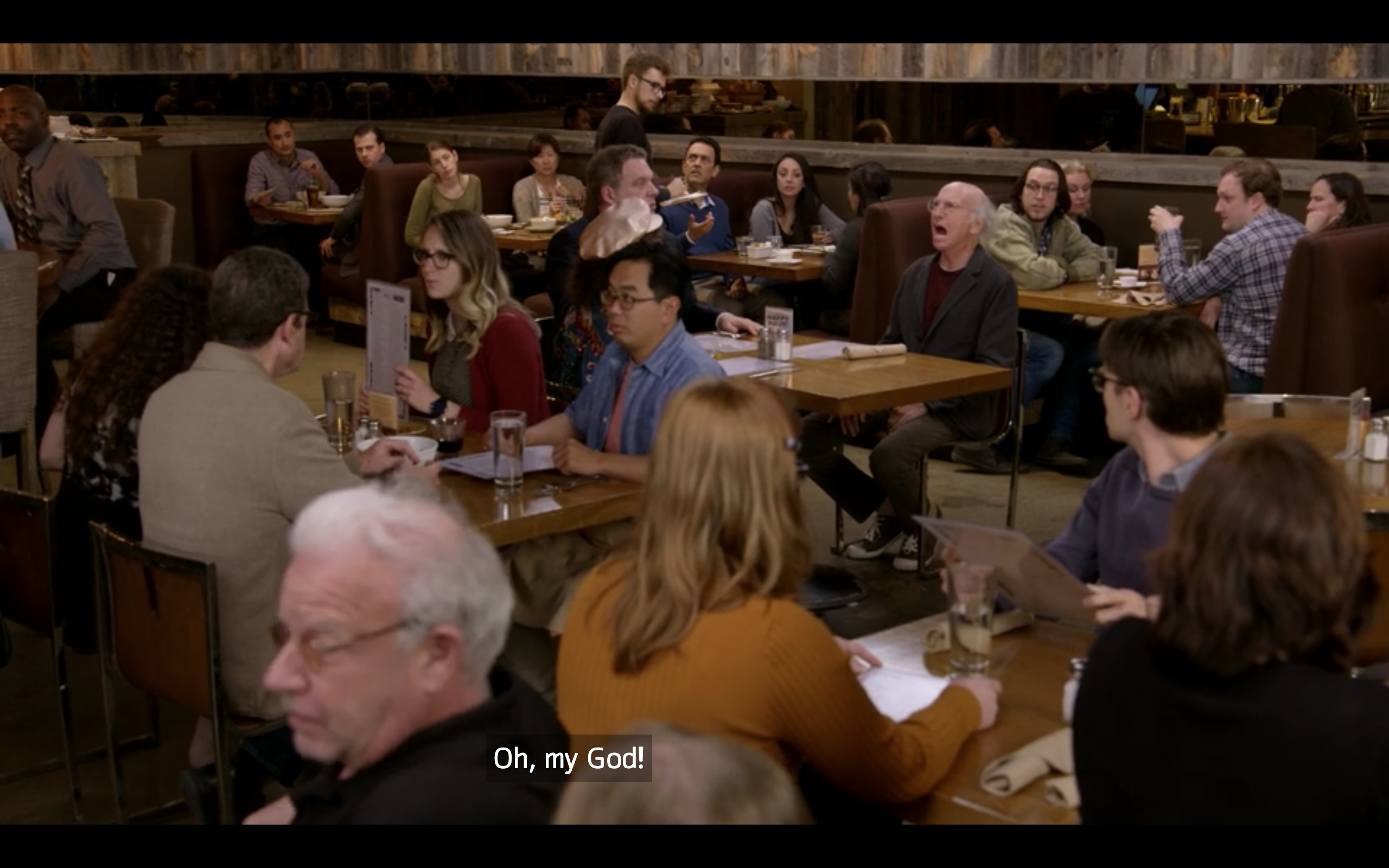
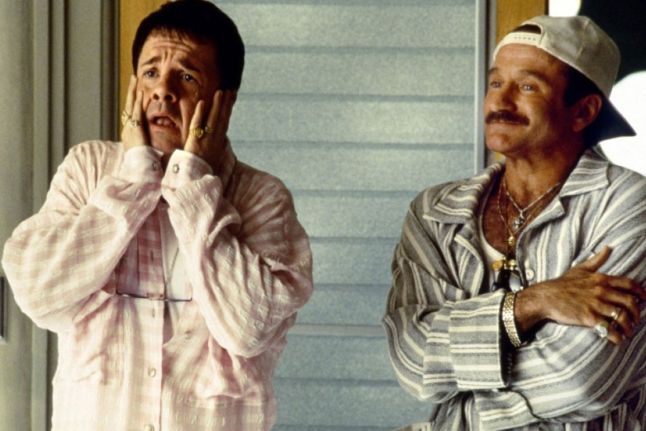
the birdcage
The Birdcage – Mike Nichols (1996)

3rd: Harry Potter and the Prisoner of Azkaban – Alfonso Cuarón (2004)
Another Harry Potter re-watch. Hopefully, I’ll get back to watching new movies soon. This is by far the best movie in the series. I think it’s the only one that’s shot in really exciting or creative ways. I think the story is still a little too long to make a perfect film. But as far as adaptations go, this one’s the best.
2/2018: A- | 4/2020: A-
Harry Potter and The Prisoner of Azkaban – Alfonso Cuarón (2004)

4th: Harry Potter and the Goblet of Fire – Mike Newell (2005)
Man, this is a pretty rough movie. There are some redeeming qualities for sure. The duel with Voldemort is great. I think the dragon challenge is pretty phenomenal. But there’s a lot to be desired. I think it’d be my pick if the film series got one do-over. I think a lot of it stems from how much information this book has to pack. Even aside from narrative shortcomings, there’s a lot of visual stuff that’s just not great. I think the biggest offender is the Dumbledore performance. It is distractingly bad in this movie.
2/2018:B- / B |4/2020: C / C+
Harry Potter and the Goblet of Fire – Mike Newell (2005)

A Brief Harry Potter Detour!

I wanted to see how my HP assessments would stack up. These are all my reviews of the series since I’ve kept this move log.

Full reviews can be found in the links here:
2018 Movie Log – February
2020 Movie Log: March
2018 Movie Log: November

Harry Potter and the Sorceror’s Stone – Chris Columbus (2001)
2018: C+
2020:
Harry Potter and the Chamber of Secrets – Chris Columbus (2002)
2018: B-
2020: C+
Harry Potter and the Prisoner of Azkaban – Alfonso Cuarón (2004)
2018: A-
2020: A-
Harry Potter and the Goblet of Fire – Mike Newell (2005)
2018: B- / B
2020: C / C+
Harry Potter and the Order of the Phoenix – David Yates (2007)
2018: B
2020: B-
Harry Potter and the Half Blood Prince – David Yates (2009)
2018: A-
2020: A-
Harry Potter and the Deathly Hallows Part One – David Yates (2010)
2018: B / B+
2020: B
Harry Potter and the Deathly Hallows Part Two – David Yates (2011)
2018: B+
2020: B / B+
Fantastic Beasts and Where to Find Them – David Yates (2016)
2018: B-
2018: B
Fantastic Beasts: The Crimes of Grindelwald – David Yates (2018)
2018: D

6th: Middle of Nowhere – Ava DuVernay (2012)
Watched at home. This was my first jump back into “serious” film watching (sorry HPs). There were so many things about Middle of Nowhere that I liked. I thought the cast and the performances were excellent. Especially the performances by Emayatzy Corinealdi and Lorraine Toussaint. This is the type of setting and film I’m really drawn to. I loved how DuVernay focuses on the tangible details of Ruby’s life. Her taking the bus, waiting at security, working third shift. It doesn’t surprise me to learn that DuVernay started out as a documentarian. She has a real knack at capturing special, human moments in everyday activities. I also especially liked the ending. It was such a nice call back to that one conversation prior. It really summed up the movie. You get the sense that maybe it was the seed for this whole movie. It was that good. So overall, lots and lots of good things. Unfortunately, there was one major problem with the movie that kept it from working for me. I just don’t buy Ruby and Derek’s relationship at all. She is so much better than him in every way. He shows no redemptive qualities throughout the whole movie. You never get any sense of “oh, this is why she’s staying with him.” The movie is supposed to show the push and pull Ruby is feeling in her situation. Yet, watching it, it’s so obvious that she should and will leave him. I understand that there are a lot of good women in shitty relationships. And maybe this movie’s trying to explore that. But still, I think I just need a little more from Derek for it to be compelling. He’s such a dickhead. It really doesn’t work.
Grade: B-
Middle of Nowhere – Ava DuVernay (2012)

7th: River of Grass – Kelly Reichardt (1994)
Watched at home. This was my first Reichardt film! It was really different from what I was expecting. I’m wondering now if she’s a genre-hopping director. I’m going to watch her subsequent films so I’ll find out soon! This one was a real goofy, downtrodden, dark comedy. It reminded me a lot of the Coens or perhaps of Mike Leigh. The filmmaking is really captivating, even if it is low-budget. I liked the montage of record sleeves, or the way Reichardt pans through different rooms the characters stay in. I found the movie to be a little slow. It seems more like a template or prototype for things to come later. We’ll see if I’m right about that too.
Garde: B
River of Grass – Kelly Reichardt (1994)

8th: Wendy & Lucy – Kelly Reichardt (2008)
Watched at home. This is exactly the type of movie I want…with one exception. I love how focused Reichardt is on the super nitty-gritty of life. The opening ten minutes of the film are so beautiful and slow. I love the logic of the plot too. Wendy gets to Oregon, has to get her car fixed, has to find her dog, etc. There aren’t major twists and turns. Instead, Reichardt hones in on the challenges that each situation presents. She’s making a critical examination of society, but not necessarily a critique…I don’t know if that makes sense. What I mean is that I don’t think Reichardt is making a an overtly political movie. I am sure that she has strong feelings about the justice system, the economy, and the other issues that arise in Wendy and Lucy. That’s obvious. But I think Reichardt’s intention isn’t to use her characters to examine these issues. It’s the other way around. She’s using the challenges of the modern world to reveal this character. So what’s the one thing? I have a tough time with pet movies. Not because I don’t love pets. I just think that they’re so sympathetic, it almost feels unfair. It is brutal to watch when Lucy is gone. It’s supposed to be. Still, something feels vaguely exploitative about being so attached to this dog. It’s a beautiful story, but one I’m almost a bit wary of.
Grade: B / B+
Wendy & Lucy – Kelly Reichardt (2008)

10th: Old Joy – Kelly Reichardt (2006)
Watched at home. This is the one that clicked for me. It’s an almost perfect distillation of the types of films I love most. It’s a perfect model of the types of films I’d like to make. This film is remarkably well-made. Reichardt leaves so much space in the film. Between the characters, in the scenery, in what they say. I know it’s in fact based on a short story, but it really feels like one in the best way. The film is this snapshot from which we can guess at, but not definitively know, these two characters’ entire lives. And I love what the film is about. It’s one of the truest movies I’ve seen. I’m not quite these characters’ age, but already I’ve had friendships that have started to thin. It’s not really a breaking but more of a growing apart. Your lives are moving in two different directions. Will Oldham’s speech about taking physics classes but knowing more than the teacher was so painfully funny. It just feels remarkably real. This film is really one of the most impressive documents of life I’ve seen. I’m torn. I really love everything about Reichardt’s approach. I think it’s an extraordinarily well-executed movie. And I still feel that maybe the movie is a hair too thin. I wouldn’t dream of changing it in any way. But it’s maybe just a bit slow, even for me. I’m going to keep thinking about it.
Grade: A-

11th: It’s Complicated – Nancy Meyers (2009)
Watched at home with Gioia. I believe I have seen both The Parent Trap and What Women Want but I don’t remember them. So this, in essence, is my first time watching Nancy Meyers. Her style is clear. The characters all live in lavish houses. They’re professionally very successful. They’re beautiful. And Meyers really has a knack for comedy. I was surprised at how slapstick this movie was. The characters around Meryl Streep are really hamming it up. Especially John Krasinski and Steve Martin. Alec Baldwin is doing some sort of bit that I can’t even begin to explain. But it works! It’s fun. It’s funny. It’s really pleasant to be in this world. How Meyers gets there is probably the hurdle to clear. The plot is convoluted. The characters contradict themselves to do whatever serves the plot or joke in the moment. These aren’t real people. And this isn’t real life. But that’s kind of Meyers’ bag. She leans really hard into this being a movie and not real life. I liked it.
Grade: B
It’s Complicated – Nancy Meyers (2009)

12th: The Holiday – Nancy Meyers (2006)
Round two! Watched this morning with Gioia. I’m surprised that I think I like It’s Complicated more. I think this is more of the cult classic. This movie’s a lot of fun. It’s so outlandish. But it’s great to be in England and in L.A. Kate Winslet and Jude Law really steal the movie. Everything in their stories is so over the top and cliched and it’s impossible not to root for them. It’s tougher for me to get on board with Cameron Diaz or Jack Black. The other two are just out of their league. I am baffled at how sad and alone Meyers tries to make Kate Winslet. It’s just hard to buy. But yeah, I liked it. It was really fun to watch. It’s also at least 30 minutes too long.
Grade: B
Holiday, The – Nancy Meyers (2006)

12th: You’ve Got Mail – Nora Ephron (1998)
My first Nora Ephron movie! Watched with Gioia. This is one of her favorites. It’s not hard to see why. The characters are so full of life. Both Meg Ryan and Tom Hanks bring a sense of wonder to the film. They are delighted and charmed by the magic in the world. They especially love New York. Ephron really captures the magic of the city. I’m obviously not the person to ask, but I believe when people say this is a great New York movie. You’ve Got Mail is really interesting in how wrapped up in technology it is. I don’t think it’s aged one way or the other. It’s just an all-encompassing aspect of it. This movie depends so fully on AOL and instant messenger which just aren’t part of life anymore. Of course, this movie also seems really prescient in how encompassing online messaging and dating have become. So the issue for me isn’t really the time, setting, or premise of the movie. In fact, those are all things I like. It’s fun to re-live the 90s a bit. The only thing that doesn’t really work for me is how tangled the plot is. I wouldn’t say it’s absurd or convoluted, it’s just very present. I think to get to the ending (which is great), you have to go through this weird dance where Tom Hanks and Meg Ryan have to shift from enemies into friends. It’s just a weird stage and buildup to the climax which I think kills the movie’s momentum a bit. Besides that, pretty solid.
Grade: B
You’ve Got Mail – Nora Ephron (1998)

13th: Sleepless in Seattle – Nora Ephron (1993)
The Nancy Meyers / Nora Ephron marathon continues. Watched with Gioia. This one was the most disappointing one so far. Not because it was bad. In fact, I think it was about as good as any of the others. Perhaps even the best. But I assumed this one would be great. It’s a classic. I think there are some really nice parts. Tom Hanks and Meg Ryan are phenomenal. They both are really funny. I think the sad parts work really well. The radio call with Tom Hanks is moving. You really hope these characters find each other. What doesn’t work for me, at all, is the kid. I found him to be so fucking annoying. I literally just couldn’t stand him. Besides that, the main thing that frustrates me with these movies is how illogical they are at times. I get the sense that Ephron has these big sweeping endings so firmly in mind that she often has to ignore how life works to get there. For instance, when Tom Hanks discovers his kid is on the airplane, why doesn’t he call ahead for them to hold him at the airport? It makes no sense. But we have to have it so Tom Hanks can chase him and he and Meg Ryan can, against all odds, end up on top of the Empire State Building together. Ay ay ay.
Grade: B
Sleepless in Seattle – Nora Ephron (1993)

14th: Julie & Julia – Nora Ephron (2009)
Watched at home with Gioia. This is by far my favorite Ephron movie to date. It’s delightful. Meryl Streep and Stanley Tucci, in particular, are so much fun. It’s very charming. Amy Adams is quite good as well. Her storyline becomes the one you end up caring about the most (we already know that Julia Child succeeds). But she’s really able to carry it in an impressive way. She’s essentially competing for screen time with Meryl Streep and she holds her own. I am impressed by a lot of the minor storytelling decisions Ephron makes in this movie. It really set it apart for me. They give these characters an extra layer of life that you don’t always see in movies like this. Amy Adam’s job is one example. It doesn’t add much to the story, but it really makes her character feel like a unique person. Or at least someone that everybody can identify with. The same thing goes for the brief moment that suggests Julia and Paul can’t have children. I really loved that scene. The movie certainly didn’t have to have it. And I’m glad they didn’t linger over it beyond that. But it suggests at a larger life than what we see on the screen.
Grade: B+
Julie & Julia – Nora Ephron (2009)

15th: Meek’s Cutoff – Kelly Reichardt (2011)
Watched at home by myself. This is a type of movie I really struggle with. It’s so beautiful. It’s so thoughtfully made. The consideration that goes into every frame is remarkable. It’s also slow as fuck. Which is undoubtedly part of its appeal. Reichardt is intentionally making barriers to grasping the movie. There’s a reason why the dialogue is so muted and difficult to understand. There’s a reason that for much of this movie, there is no dialogue. She wants to reward the viewers who are willing to do the work. But it does take work. And I don’t mean to imply that the only decisions Reichardt makes are for the viewer outside of the film. I don’t think this movie is like an art experience by any means. The decisions she makes in dialogue and tone are to create a very specific tension within the movie. Meek’s Cutoff is about anticipation and faith. We know these settlers are lost, but not how far gone. They come across an Indian. Is he dangerous? Will he lead them to water? We don’t know. We’re in the same situation as them. That is the central tension Reichardt is trying to create. And she does! It works extraordinarily well. Does that mean I love watching every second of it? Ehhhhh.
Grade: B
Meek’s Cutoff – Kelly Reichardt (2011)

16th: The Intern – Nancy Meyers (2015)
Watched at home with Gioia. I had just finished A Little Life. I needed something as comforting as possible. This was a good choice! I think it is simultaneously the best and worst Nancy Meyers movie I have seen. Why the best? It’s really charming. Robert De Niro and Anne Hathaway are delightful. It’s funny. It’s really cute. It’s just a lot of fun to watch. Why the worst? I am convinced that Nancy Meyers has not met a real person before. The characters, besides the two leads, are so cartoonish. Like when De Niro gets a massage and gets an erection. I don’t think his two coworkers would point it out and be chummy with him about it (fist bump!). These things continually take me out of the movie. Especially Anders Holm as Anne Hathaway’s husband. It’s a really bad casting choice. The plot too is so laughably convoluted at times. Meyers seems to explain every cause and effect that would lead to something happening. Anne Hathaway’s driver is drinking on the job? They have to break into her mom’s house to delete an email? Ben has to come to San Francisco with her because of Xyz. Whatever, I liked it.
Grade: B
Intern, The – Nancy Meyers (2015)

17th: Lost in Translation – Sofia Coppola (2003)
Watched at home with Gioia. This had been toward the top of my list for a while. A film that I hadn’t seen, but that I was already counting on loving when I finally watched it. And I did. I loved it. I’m not even sure how this film works. It’s so understated. There’s very little dialogue. The awkward pauses and foreign dialogue say more than what we can understand in the movie. There’s not a ton of plot or exposition. The entire movie is about mood. More specifically, it’s about the tension between Bill Murray and Scarlett Johansson. But Coppola zeroes in on this tension so expertly. It starts out, I think, as this weird sexual tension. You don’t really want the two characters to have sex. There’s the age difference, they’re both married. It would feel bad I think. But they have such chemistry. Their friendship feels so genuine. When Bill Murray’s character sleeps with the lounge singer (a more appropriate choice as Scarlett Johansson’s character points out) it feels bad. You realize that the tension between the two characters, at this point in the film, has transformed into a romantic tension. They feel right for each other. Not for a fling, but to be in love. And what’s crazy is that Coppola never forgets that they still shouldn’t wind up together. If they did, it’d probably end badly in two months. That’s, I think, why Bill Murray’s character doesn’t act on his feelings. But his feelings are still real. In this specific time and place, the two characters feel perfect for each other. I’ve just never seen a movie so masterfully explore a setting like this. Everything Coppola does works. The shots, the music, the montages. It’s brilliant.
Grade: A
Lost in Translation – Sofia Coppola (2003)

17th: History of the Eagles – Alison Ellwood (2013)
I finally watched this with Gioia. There’s nothing more I can add. It’s far and away the best music doc ever. I think the most interesting part is that some of that is intentional. There’s all the hallmarks of a great rock doc: drugs, women, concert footage, hits, fighting. And then there’s all the extra stuff. The second part of this doc is so petty and so unintentionally hilarious. Having to hear them explain the second part of their career where they make albums about Iraq and Spetemeber 11th is wild. Watching them claim they’ve achieved piece in the band while the documentary throws shot after shot at Don Felder is even better.
Grade: A

18th: Obvious Child – Gillian Robespierre (2014)
Watched at home. There really aren’t any aspects I dislike about the movie. I like Jenny Slate. She’s really charming in this. She and Jake Lacy have quite a bit of chemistry. It feels like an authentic start of a relationship. Their scenes together were my favorite parts of the film in fact. Unfortunately, taken as a whole, this barely felt like a movie to me. Not the subject. It’s a compelling story and I think a worthwhile plot. I loved the moment between Jenny Slate and her mom when she tells her about the pregnancy. But there’s just not a whole lot else happening in this movie. It opens and closes with Jenny Slate doing stand up. Which is fine, but really just feels like filler. I felt like I just needed one more component in this movie. Whether that would have been more interesting cinematography or another storyline, I don’t know. But this felt especially thin to me.
Grade: C+
Obvious Child – Gillian Robespierre (2014)

19th: Something’s Gotta Give – Nancy Meyers (2003)
Watched at home. This movie was pretty brutal. It’s so long. I don’t think it’s particularly funny or moving. I think the redeeming quality would be the cast and their performances. And it is interesting to see Keanu, and Diane Keaton, and Jack Nicholson interact. But still, it’s not enough for this movie to work.
Grade: C-
Something’s Gotta Give – Nancy Meyers (2003)

21st: Madeline’s Madeline – Josephine Decker (2018)
Watched at home. This is one of the most experimental films I’ve seen in a while. I think something I was particularly drawn to is that while it is quite experimental, there is still a narrative. In the first half of the film, there are a lot of visual tricks and strange images that I think are meant to highlight Madeline’s mental illness. These scenes explore part of why Madeline is such a good actor. How she can fully sink into the roles that she performs. And they really work! One of the themes of this film is how the theater director is essentially exploiting Madeline’s mental illness for her production. The ending of the film uses a similar trick. The climax is essentially an experimental theater piece. It’s Madeline mastering the art form to express herself and her exploitation back to Evangeline. It’s really clever. The acting in the film is phenomenal. Especially Helena Howard and Molly Parker. The film probably doesn’t come close to working without Howard’s performance. The thematic details that Decker intersperses in the film really elevate it as well. Madeline has a black father and a white mother. When she meets Evangeline’s family. She realizes that Evangeline’s daughter will be like her. Evangeline is white, her husband is black. These things are never stated. I actually wouldn’t say the film ever foregrounds race in the film. But of course, it’s there. A lot of what this film is doing is digging at the subconscious. I’d love to watch it again. I think it’s probably a movie that only gets better than more times you watch it.
Grade: B+ / A-
Madeline’s Madeline – Josephine Decker (2018)

21st: Near Dark – Kathryn Bigelow (1987)
Watched at home with Gioia. I thought it was alright. As Gioia said, sometimes it’s hard to tell why something is on the Criterion Channel. Near Dark is essentially just a low-budget, pulpy vampire story. I think there are some things that work really well. I love the Texas scenery. The score is really good. I think, aside from it hinging on blood transfusions, the plot isn’t bad. I also think there are a lot of silly things. After all, it’s about a coven of Vampires. There’s one thing that really stands out. It’s my guess for why this is on the Criterion Channel. The explosions are out of control. It’s clear to see Bigelow already has a talent for them. They’re pretty great, even when some of the other effects are pretty rough.
Grade: C+ / B-
Near Dark – Kathryn Bigelow (1987)

22nd: Ghost World – Terry Zwigoff (2001)
Watched at home with Gioia. I hated this movie. I hated it so much that it’s beyond the movie not working, or even whether or not the movie is good. If it were one of those issues, I wouldn’t have reacted so strongly. So let’s investigate. From what I can find Ghost World is beloved. It was nominated for a bunch of awards. It’s part of the Criterion Collection. It features a bunch of great actors. So there’s something there that’s working, just not for me. My best guess is that it’s the tone and approach of the film. I would classify this film as “post-ironic.” Everything in the movie is hyper-cool. Enid and Rebecca literally make fun of everything and everyone. Moreover, the movie is saturated with all these mock impressions of small-town consumerism. I think for a lot of people, that social commentary is funny. It’s probably something they can really identify with. And hey, I grew up in a small-ish town. I think chains are depressing too. But it’s so over the top in this movie. I just found it relentlessly grating and pretentious. I felt like the chance of having a genuine reaction to anything in the film is completely nullified by its tone. It makes fun of everything to the point that there’s no room for emotion. I will say that I found one of the jokes super funny. Not the Blockbuster 8 1/2 joke. That felt pretentious and mean. But the bar bluegrass band was hilarious. I also quite liked the performances in the movie. I don’t know what else to really say. This one just wasn’t for me.
Grade: D
Ghost World – Terry Zwigoff (2001)

24th: The Birdcage – Mike Nichols (1996)
Watched at home with Gioia. It’s one of the funniest movies I’ve ever seen. It’s also one of the warmest films I’ve seen. It’s a really impressive feat. There’s so much comedy in it and yet it’s never done at the main characters’ expense. Armand, and especially Albert, are wildly funny and eccentric to be sure. But we’re with them the whole time. We’re on their side. And for as much comedy as there is, it’s always clear that Armand and Albert are a genuine, loving couple. I suppose the movie does make fun of the Keeley’s and Republicans in general. But I can certainly live with that. This movie came out almost 25 years ago and for the most part, I think it holds up really well. I actually don’t find there to be anything problematic within the film. I think that’s a testament to Mike Nichols and the care he must have had when making the movie. I really think the only issue with the movie would be in the actors who portray these characters. If this were to be re-made, I think hopefully the cast would be made of actors who identify with the characters they’re playing. Having a gay actor in Robin Williams’ place, for example. And while that’s an impressive issue, I think it’s really hard to knock The Birdcage considering when it was made. I loved it.
Grade: A
Birdcage, The – Mike Nichols (1996)

25th: Monty Python’s Life of Brian – Terry Jones (1979)
Watched at home with Gioia. I don’t know what I was expecting, but this wasn’t it. It is undoubtedly one of the stupidest movies I’ve ever seen. It is so fucking silly. For the first half of the movie I really couldn’t decide how I felt about it. It was almost exhausting to watch. And then something turned the second half for me. The style and sense of humor just broke me. I was cackling at parts. It wasn’t any less stupid, but it was really funny. Aside from that, the only thing I’ll say is I loved how they filmed scenes of the masses. It’s so cacophonous. Just delightful.
Grade: B

30th: Good Boys – Gene Stupnitsky (2019)
Watched at home. This was one that I had secretly been wanting to watch. Almost like a guilty pleasure movie, I guess. Not because I’m that embarrassed to watch it, but I just suspected it would be a broad studio comedy. Which is exactly what it is and which, in this case, I think is a good thing. This is a type of movie that’s not made much anymore. There are a lot of similarities to Booksmart. It’s about naive students breaking bad for one night. Both are heavily indebted to Superbad. Both feature the same Run the Jewels song in the same way: as a hardcore rap song used to ironically score these innocent misadventures. Honestly, I think Good Boys and Booksmart work out to be about the same in my critical assessment. In terms of plot and story, both are outrageous. Whether or not either movie works depends on what you think of the jokes. And the thing I appreciated most about Good Boys is how much they just went for it. It’s pretty fucking funny. I kind of can’t believe how funny I found it. I will say I was impressed with the story’s end. I thought the idea of friends growing apart was surprisingly well-done. So it’s not like this movie is bad without the jokes. But it wouldn’t be very good without them either.
Grade: B / B+
Good Boys – Gene Stupnitsky (2019)

2020 Movie Log: March

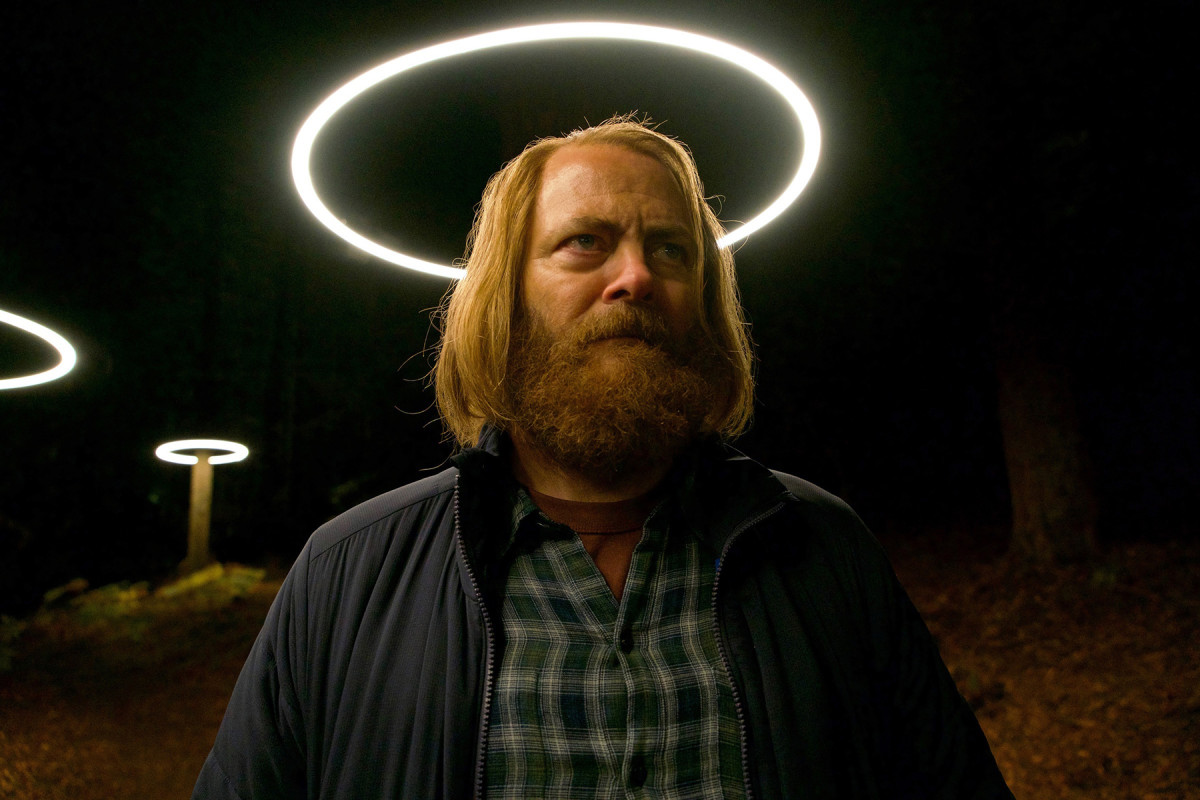
toni erdmann
Toni Erdmann – Maren Ade (2016)

1st: The Invisible Man – Leigh Whannell (2020)
Watched at the Logan with Gioia, Wills, Beronica, Terry, Matthew, and Tommy. I was really scared. I was gripped the whole way through. It turns out having an invisible person following you is scary as fuck. I thought those scenes in the movie were by far the scariest part. Adrian in the kitchen, the bedroom, and the attic. We know he’s there and we can’t see him. There were a lot of scares that made me laugh they were so good. In particular, the fashion mannequin in the bedroom and the knife being raised right before he kills Cecilia’s sister. For the most part, I thought the story was pretty smart. I think the explanation for what’s happening is mostly satisfactory. I’m glad it was scientifically based as opposed to magic. There are a lot of practical questions. If it’s just James in a suit how is he moving around so quickly? How is he able to follow Cecilia all the time? How often is his brother in the suit? How many cops work at this mental institution? For the most part, I think this is a movie where these things don’t really matter. But they do stick out as the movie wraps up. The whole last act is a little bit silly.
Grade: B / B+
The Invisible Man – Leigh Whannell (2020)

2nd: Happy as Lazzaro – Alice Rohrwacher (2018)
Watched at home. Between Corpo Celeste and The Wonders something just hasn’t fully clicked for me with Rohrwacher. There’s so much that I really admire in what she does. Her stories are utterly unique. I think the way she juxtaposes the modern world with old religion and mysticism is really fascinating. I definitely liked Corpo Celeste more. I think the second half of that movie is pretty brilliant. To be fair, I actually liked the second half of The Wonders quite a bit. Maybe there’s something with Rohrwacher’s films that just take a while to warm up. In fact, that is certainly true of this film. I think in many ways, the filmmaking alone is a major improvement for her. I loved the look of this movie. I’d be fascinated to know what she used to shoot it. Again though I struggled a bit with the pacing. This movie takes a while to get going. It doesn’t help that the main character is practically silent. However, the twist that comes at the midpoint, and then is revealed fully in the third act is incredible. It’s one of the smartest pieces of movie writing I can really remember. It’s so perfectly revealed. I have no idea what to make of the ending. It’s so mystical and ambiguous. I’m sure some, maybe even most people, will really love it. For me, I was hoping for a little more grounding.
Grade: B- / B
Happy as Lazzaro – Alice Rohrwacher (2018)

3rd: Pan’s Labyrinth – Guillermo del Toro (2006)
Watched at home with Gioia. This was definitely one of my bigger blind spots as a movie watcher. Especially after del Toro won Best Picture with Shape of Water. It’s really interesting. It’s plot, at least for the first 90 minutes, is extremely conventional. Combined with the literal storybook elements, it feels like a children’s movie. The story elements are more or less obvious. The captain / step-father is unambiguously evil. You know right away that Mercedes and the doctor are working for the rebels. Its set-ups are really stark. There’s not a ton of nuance. There are multiple instances of adults telling Ofelia she reads too much. Even the “eyes for hands” monster is narratively pretty simple. There’s not a good reason why Ofelia eats the food. It only happens because this a fable. Yet, even with all these relatively simple storytelling elements, the action is pretty graphic. There’s torture, gruesome deaths, and obviously the monsters. It’d be pretty scary for kids! Through the first 90 minutes, I was a bit underwhelmed by the story.  I still liked it. The production design is incredible. It’s really nicely made. I love the look of the monsters. You can tell it’s a low budget movie but extremely well-done. I think that aspect even lends some charm to it. Thankfully, the writing is really smart in the last act. All of these set-ups are so stark because del Toro has such a good ending in mind. Even though we already saw it, it’s pretty shocking when Ofelia dies. And then, he has another twist after that. Her act of courage was the final test to make it to her kingdom. Hooray! They’re happy, she’s happy, I’m happy.
Grade: B+
Pan’s Labyrinth – Guillermo del Toro (2006)

6th: Selma – Ava DuVernay (2014)
Watched at home with Gioia. It’s an incredibly powerful movie. The life that DuVernay is able to breathe into it is pretty remarkable. It’s obviously a worthy, and important historical event. But that doesn’t always translate to a good film. And even when it does, the chief emotion it elicits is rarely viscera. But that was DuVernay’s approach to this film and in my opinion what really sets it apart. I was so, so angry throughout the whole movie. It really puts into context how gross and recent these events were. It’s impossible not to think of the current president and political climate now. About what events today demand action. I was thinking about how I should have / should do more to protest ICE. That this film makes the viewer want to take action is probably the best compliment to it. There were some minor choices that I didn’t love in the movie. I thought the focus (even briefly) on Jeremy Strong’s character was distracting. I wasn’t a huge fan of the soundtrack and music queues. I do think it’s unfortunate that LBJ was probably misrepresented. It seems so unnecessary for how good the rest of the movie is. But these are minor pieces. I’ll certainly take them if it means getting a film as good as this.
Grade: A
Selma – Ava DuVernay (2014)

7th: Toni Erdmann – Maren Ade (2016)
Holy shit. I can’t believe how good this movie is. I liked Ade’s first film. I was lukewarm on her second. Even with the accolades and praise for this movie, I just didn’t see this coming. On paper, it really doesn’t make much sense. Ade’s films are so brutally awkward. I’ve suggested before that she’s like a humanist filmmaker that’s taken a magnifying glass only to the worst qualities in people. I found that approach pretty affecting in Forest for the Trees. It was way too much for me in Other People. In either case, I was about ready to be done after 90 minutes. This is a 160-minute comedy from that same director and it more than works. I would have kept watching for another hour. There are certain scenes and moments here that elicited the same feelings I had in Ade’s previous films. I don’t know exactly why they work in this context. To some extent, I think it’s because we really want this relationship to work out. It’s a father-daughter story. As painful as it is when the father keeps showing up where he’s not welcomed, we’re still rooting for him. It’s painful in a different way than in Ade’s other films. In Other People, for example, I was just rooting for the girl to dump her asshole boyfriend. Here, we want the relationship (against all odds) to survive. I suspect too, that this film works because of how absurdly far Ade pushes these situations. So much of the movie is delightful because I just haven’t seen any of this before. There are so many situations that I could not believe I was watching. So much of movies are homages and re-treads of familiar themes. I don’t know? I guess I found it refreshing to see the main character instruct the guy she’s sleeping with to jerk off on a pastry before she eats it. Call me crazy. This absurdity obviously includes the big birthday party scene which, I can say definitively, is the funniest scene of all time. It is flat out incredible. Perhaps more than anything, Ade’s writing is just tremendous in this film. The relationship is so complicated, nuanced, and understated. As painful as this trip is to watch sometimes, Ines’ father gets to see her life unencumbered. In a strange way, their relationship becomes much closer than a typical father-daughter bond. Winfried has now seen his daughter doing cocaine outside a club, working at business meetings, having a nude birthday party, talking to her girlfriends, talking to the person she’s sleeping with. These are not the types of things fathers are usually privy to. They are certainly not the types of things usually found in super acclaimed films.
Grade: A
Toni Erdmann – Maren Ade (2016)

14th: Frances Ha – Noah Baumbach (2012)
Watched at home with Gioia. For as much as I talk, think about, and love this movie, I’m pretty sure I had only seen it once. Baumbach, at least my first time around (more on that later), is not a director who totally clicks for me. I feel like he dips into intellectualism and the logic of trauma more than arriving at a sense of pathos. Take Squid and the Whale, for instance. It is brilliantly written and performed. But to a certain extent, I feel like it’s more or less just an exhibition of pain. I am sure many divorces are incredibly traumatic and inflict lasting wounds on its children. But to watch an entire movie of only that and the occasional biting humor is tough. Or at the very least, it’s not for me. When watching Frances Ha, I was surprised at how uncomfortable it is to watch for most of the movie. In fact, the majority of the movie is pretty close in style and tone to Baumbach’s other movies. But Frances Ha ends with this glimpse of hope and it makes all the difference. The feeling is so transcendent. It’s the best aspect of the film and arguably Baumbach’s career. When I recalled this movie, I thought that Frances and her old roommate got together in the end. In fact, it’s just a hint that he likes her. But the optimism at the end of the film is so overwhelming I guess I just assumed they did. I can’t talk about this film only in terms of feeling, so here are a few more things I like. I think it’s Baumbach’s best shot movie. The black and white is a wonderful choice. The “Modern Love” tracking shot is euphoric. Greta Gerwig is an incredible performer. She inhabits this person so fully. I just root so hard for her. And the writing is terrific. Especially a lot of the non-dialogue parts. There are so many visual call-backs. I love the trick with the name at the end. It’s all wonderful.
Grade: A
Frances Ha – Noah Baumbach (2012)

14th: Mistress America – Noah Baumbach (2015)
A Baumbach double feature. I guess wanted something funny. I think I wanted to focus on high society’s social dilemmas. For whatever reason Baumbach’s movies have been a bit of a balm lately. I think Mistress America is his most underrated film. I find it incredibly funny. Perhaps it’s his funniest movie. There are certainly problems with the film, but I don’t really mind. The final act, in which all of these characters coalesce at this house, is hilarious. The fact that they all turn on Tracy seems a bit over the top to me, but it does wrap up the plot. I think there’s a version of this movie where the ending, in which Tracy and Brooke attempt to reconcile, could be really emotional. It’s perhaps what Baumbach achieves in The Meyerowitz Stories. Still, I can’t think of many movies I like as much, even if they don’t fully work.
Grade: B+
Mistress America – Noah Baumbach (2015)

16th: The Meyerowitz Stories: New and Selected – Noah Baumbach (2017)
It’s a Baumbach marathon. This movie is criminally underrated. It is so smart, well-written, and clever. I keep thinking about how Harold has all of these quirks. He keeps telling the same stories over and over. It’s awkward but not incredibly out of character. And we catch glimpses that his children do the same thing. When he and Matthew go out for lunch they’re both talking over each other. But we quickly learn that Harold is having a stroke. It’s (partly) been a result of his brain. The way this movie is about inheritance is really remarkable. I can’t think of another movie that captures the generations of a family better. I do have one gripe with the movie. I really don’t think the ending works. I hate the transitions between scenes. Each one feels like a bad ending to this movie. And I think it goes on too long. Otherwise, great stuff.
Grade: B+ / A+
Meyerowitz Stories (New and Selected), The – Noah Baumbach (2017)

18th: Enemy – Denis Villeneuve (2013)
Watched at home with Gioia. Both Wills and Max texted me on the same day asking if I had seen this movie. I get why. This movie is so fucking weird. It’s really- I’m impressed it was able to get made. I’m impressed with how abstract and surreal the plot is. Nothing is really explained. To be honest, I don’t get it at all. And while it’s purposeful, the grayness of the movie was hard to take. I didn’t realize that Villeneuve directed this movie until after I saw it. It’s making me reconsider my feelings toward it. It certainly makes me think I missed something important watching it.
Grade: C+

20th: Tremors – Ron Underwood (1990)
Had a Netflix party with Gioia, Beronica, and Wills! it was fun. I think this movie is hella silly.
Grade: C+

20th: A Mighty Wind – Christopher Guest (2003)
Watched at home with Gioia. I can’t really critique it. It’s not as funny as Waiting for Guffman or Best in Show. But it is so comforting and ingrained in me. One thing that kind of sucked was that one of the jokes is about one of the musicians being a trans person. That made me sad.
Grade: B

27th: Harry Potter and the Order of the Phoenix – David Yates (2007)
Okay. I think this is the third time I’ve seen all these movies since I started keeping these logs. I’m going to write some brief impressions below and then compare grades. Order of the Phoenix is alright. We were watching it on the USA streaming app and either it is edited really bizarrely or this was a made for tv version. In any case, I think this is the one where they could have added more. This is the shortest film in the series (in maybe the longest novel). They take out the two-way mirror and Kreacher’s role. I think it’s a lot of set-ups that actually pays off in the other chapters. The duel at the end is fucking sick though.
2/2018: B | 3/2020: Grade: B-
Harry Potter and the Order of the Phoenix – David Yates (2007)

28th: Harry Potter and the Half Blood Prince – David Yates (2009)
I know this is the movie most hardcore fans malign. I just think the story is so fucking good. So even if it’s a shaky adaptation, it’s still pretty incredible. I love Slughorn. I love the momentum the movie finishes with.
2/2018: A- |  3/2020: Grade: A-
Harry Potter and the Half Blood Prince – David Yates (2009)

29th: Harry Potter and the Deathly Hallows Part One – David Yates (2010)
This was better than I remembered it. It is still too long and too slow. The “Three Brothers” animation is really sick though.
2/2018: B / B+ | 3/2020: Grade: B
Harry Potter and the Deathly Hallows Part One – David Yates (2010)

29th: Harry Potter and the Deathly Hallows Part Two – David Yates (2011)
It’s kind of amazing how many things this movie gets right. “The Prince’s Tale” and “Into the Woods” are perfect. I feel lucky that a movie franchise pulled it off. Everything after that is pretty shaky.
2/2018: B+ | 3/2020: Grade: B / B+
Harry Potter and the Deathly Hallows Part Two – David Yates (2011)

30th: Harry Potter and the Chamber of Secrets – Chris Columbus (2002)
This one’s not even that bad but it’s so fucking long. Oh my god.
2/2018: B- | 3/2020: Grade C+
Harry Potter and The Chamber of Secrets – Chris Columbus (2002)

31st: Only God Forgives – Nicolas Winding Refn (2013)
Watched on Netflix Party with Wills. This movie is so far removed from the types of movies I like. It feels silly to even try to critique it. It’s intentionally soulless, violent, and confounding. Is it worthwhile? I don’t know. But it was pretty fun.
Grade: D

2020 Movie Log: February

portrait of a lady on fire
Portrait of a Lady on Fire – Céline Sciamma

1st: Her Smell – Alex Ross Perry (2018)
Watched at home with Gioia. It’s a movie that’s been on my list for a while. It’s a genre and type of film I’m actually really fascinated by. I’m always intrigued by how a fictional music movie will incorporate the music into itself. It’s really tricky. I think most of them don’t work because they fail to feel authentic, even if the rest of the movie is good. I wouldn’t say Her Smell underwhelmed me but it certainly didn’t meet my expectations. The movie is punishing. The first 2/3rds of the movie are almost relentlessly so. They’re shot in a really jittery, claustrophobic way. Elisabeth Moss’s performance is jarring. She is playing a character in full-on substance abuse, mental health, and ego-trip crisis. I think the performance is remarkable. I kind of wonder why she can’t be nominated for something like this. Even if the movie wouldn’t work for the Oscars (and it certainly wouldn’t), I think the performance is undeniable. Anyway, what I think is difficult to reconcile in the movie (and may be intentional) is that Perry doesn’t give us anything to hang on to. There’s not really a reason for the audience to justify Moss’s character. Or at least to even find it destructively charismatic. She’s really just the worst. At the very end of the movie, we do get Moss’s character as a sober person. The scene in which she performs “Heaven” steals the movie. It’s supposed to redeem her character. To be the moment where we realize why this person is special, why all of these people have put up with her. Instead, it almost doesn’t work because the scene is so good. My takeaway was that the performance really kind of outshines the movie. However, it does make the ending sequence much more compelling. We have a reason to care now. We desperately don’t want her to relapse. I think it’s hard to justify the whole movie based on the last 30 minutes. Still, I think it’s really well made. Perry is trying to pull off some tricky things. I think it works to varying degrees. For me, it’s way too cynical.
Grade: B-
Her Smell – Alex Ross Perry (2018)

2nd: Blaze – Ethan Hawke (2018)
Watched at home with Gioia. It’s another film that had been on my list for a while. This was less about the mystery behind it. I think musician biopics tend to be pretty interesting (and often good). Plus all I had heard were good things about this movie. The performances are outstanding. Which makes sense given it’s an actor directing. But Ben Dickey as Blaze and Alia are really incredible. Dickey’s performance has the thing that Her Smell (I think intentionally) avoided. Blaze is so charismatic. His stories and little songs are so charming, warm, and funny. You really feel for him in spite of most of his behavior. Another advantage is that since the songs are real, they really pull you toward him. You can see and hear his talent pretty plainly. Dickey’s performance as Blaze is as good as anything I’ve seen this year. I probably could have done without some of the non-linear timeline things. I think for the most part they work. I love that so much of the movie is framed through Blaze’s last night and performance. A central thesis of the movie is the inevitability of things. That we know how Blaze will die from the beginning is important. The same with the fact that his marriage won’t work. I think it makes it all the more tragic as we watch these scenes knowing that it will go south. Still, there was something that felt a little too removed. Between his marriage, the Townes Van Zandt interview, the stage, and the house, we were sometimes cutting between four timelines. I’d be interested if the full force of the movie could have hit harder if one of those were removed.
Grade: B
Blaze – Ethan Hawke (2018)

3rd: Hail, Caesar! – The Coen Brothers (2016)
Watched at home with Gioia. I believe this is the third time I’ve seen this movie. One of the funny things about the Coen Brothers is that their best movies tend to improve upon subsequent viewings. I would argue that most of their best work is actually a little hard to gauge upon first viewing. That’s been my experience at least with Barton FinkThe Big Lebowski, and Burn After Reading. And in fact, I was pretty neutral the first time I saw this film. Watching it now, I can’t really explain why. It’s a classic Coen Brother’s comedy. I think you can make the case that the interaction between Ralph Fiennes and Alden Ehrenreich is the funniest scene they’ve ever made. Some of the “Hollywood” sequences are just stunning too. Particularly the synchronized swimming and Channing Tatum’s dance sequence. I love the reveal that the writers are all communist agents. And the performances in the film are out of control. This may be my favorite Josh Brolin performance. Now here’s the tricky thing about the Coen Brothers: It’s still probably not even in the top half of their films. Off the top of my head, Blood Simple, Miller’s Crossing, Fargo, Barton Fink, Big Lebowski, A Serious Man, No Country for Old Men, Burn After Reading, and Inside Llewyn Davis are all better. Still, Hail Caesar is probably a better film than the best work from most directors. It’s certainly more fun.
Grade: B / B+
Hail, Caesar – The Coen Brothers (2016)

4th: M.A.S.H. – Robert Altman (1970)
Watched at home with Gioia. It was my second time watching. I believe MASH was actually the first Altman film I ever saw. My feelings this time were complicated. It is pretty plainly racist and extremely misogynistic. From my reading, I found that a lot of that is arguably intentional. According to Wills, Altman’s philosophy as a filmmaker is along the lines of “that’s how the world is and as a filmmaker, I reflect the world.” Which I think is in line with this argument. There are some other bits I found in research that help explain it too. The film is obviously subversive and especially so toward dominant American political and sociological thought. MASH may, in fact, be the first film that openly mocked religion and Christianity. One explanation for the cruel shower prank, for instance, is that the MPAA had just changed its guidelines so this was one of the first times that nudity could be shown in a film. If you believe that, then the film is more of a commentary and satire on society as opposed to an investigation of its own world. I think that mostly works too. If there is a central ethos inside the film it’s that war, life, and death don’t make much sense so why bother rationalizing anything at all. With all of that being said, I don’t 100% buy this argument. Some scenes and jokes are too cruel or thoughtless to factor into this. Altman can both be subversive and also a product of his time. I generally don’t spend a whole lot of time sussing out whether or not a film “holds up” ethically. Art is too complicated for that. I think that you can like Bob Dylan or Patti Smith and think it’s regretable they appropriated the n-word in their songs. This morning I read that once, in a protest turned prank, Virginia Woolf helped to commandeer a military ship by wearing blackface and pretending to be Ethiopian. This is all complicated stuff. Luckily, Altman went on to make many more films that are more plainly enjoyable. And for what it’s worth, I like most of MASH. I think it’s incredibly well shot, often funny, brilliantly performed, and yes, a little problematic. In a way, having all those things in one film feels perfectly Altman-esque.
Grade: B

6th: Purple Rain – Albert Magnoli (1984)
Watched at home. I had never seen it before. I’ve shamefully never even really done the Prince deep dive. It’s one of the best music movies I’ve ever seen. I think there are some documentaries that are probably slightly better but I can’t think of a narrative music film that even comes close to it. Like I said in writing about “Her Smell,” the challenge with so many of these movies is that the music has to feel authentic. You have to believe that these songs are really winning people over. That’s obviously not a problem here. The performances are far and away the best part of the movie. And it leans into that. The whole third act of the film is a concert. I was actually pretty shocked by some of the narrative content in the film. I kind of still can’t believe that Prince hits Apollonia. I actually can’t believe how difficult and unlikable the film makes Prince. It does work. The performance of “Purple Rain” feels totally redemptive. I’m not sure the power of it is totally there if Prince isn’t doing it to repent. Still, I think it was a pretty unusual and kind of brave for him to portray himself like this. I can’t think of any other celebrities that have taken that on. I think some of the narrative choices are pretty stock. It’s a pretty basic template. But the plot doesn’t really need to be anything more complicated or subversive. The film knows it has Prince’s music to lean on.
Grade: B+
Purple Rain – Albert Magnoli (1984)

7th: Girlhood – Céline Sciamma (2014)
Watched at home. Like Sciamma’s previous films, Girlhood is beautifully composed. I really want to figure out how she gets the look that her films have. The electronic score was really fantastic in this one too. And some of the sequences were stunning. Particularly the “Shine Like a Diamond” sing along. This movie certainly worked the least for me of her films. Narratively, it’s by far the most ambitious. There is so much happening in this film. I really appreciate how little Sciamma explains it too. Still, I wonder if she tried to bite off one too many themes. I think by the time we discover Marieme’s sexuality it feels like more of a twist than a reveal. I’m not confident that’s the case, but in the moment it’s how it felt to me. Still, Sciamma is clearly one of the best filmmakers working and this isn’t a blemish on that record by any means.
Grade: B
Girlhood – Céline Sciamma (2014)

7th: The Royal Tenenbaums – Wes Anderson (2001)
Watched at home with Gioia. I believe this is only the second time I had seen it. This is definitely the Anderson film that, compared with its reception, works the least for me. I still like it better than say Life Aqautic…or Darjeeling, but of his “great films” this one never fully clicks. To me, the characters feel a little too muted and composed. I think the performances are great, but they’re each deliberately set to one note. None of them really have a chance to change, even though they all have by the end. I suppose this is the story that probably connects the least to me as well. It’s neater than Bottle Rocket or Rushmore, but those stories hit something in me that Tenenbaums never quite does. I suppose that could be from the fortune of not being a child of divorce. Okay, that’s a lot of negativity for a movie I quite like. The cast and performances are brilliant. I think Anderson deals with the sorrow and heaviness of the story really well. I forgot how sad this movie is. Richie’s suicide attempt is particularly brutal. The soundtrack, as always, is perfectly set. I love that Eli’s music queues are all The Clash. And, compared with the first two, the composition and visual design of this film is a major step up. It feels closer to the brilliance of his later films than of the first two.
Grade: B / B+
The Royal Tenenbaums – Wes Anderson (2001)

8th: 8 1/2: Federico Fellini (1963)
Watched at home. It feels almost impossible to really comprehend upon first viewing. I feel a little foolish trying to really say much of anything about it. It felt to me like something like Stalker in which you need a couple of viewings to really start to grasp the mechanics of what’s happening. With that being said, 8 1/2 is incredibly fun to watch, even on just one viewing. Certainly more so than something like Stalker. It is a comedy which certainly helps in that regard. And in fact, it’s often wickedly funny. They are vastly different films but I was reminded often of Tampopo. Both have loose plots but are more grounded in these wild, surrealist sequences. The look of the movie is incredible. I really love the idea of all these elaborate designs and sequences for a film that is mocking the whole process. For instance, characters constantly make fun of the giant alien spaceship that’s been built. It’s so wasteful and ridiculous. It really only exists in the film to be made fun of. And obviously, Fellini had it built, even as just a joke. This doubly pays off too at the end of the movie. While there isn’t a big alien landing, climax scene like in Guido’s film, there is this brilliant, surrealist, chaotic spectacle. It’s almost like an anti-climax. Marcello Mastroianni is brilliant in the lead role. He’s handsome, sinister, aloof, and perfectly lousy all at once. It’s really something to watch him try to maneuver through these insane situations. I already love this movie more than I did when I was watching it. I think it’s hard to figure out where it’s going until you realize. It kind of depends on the spectacle at the end. I’m really excited to watch more Fellini and will definitely rewatch sometime.
8 ½ – Federico Fellini (1963)

8th: A League of Their Own – Penny Marshall (1992)
Watched at home with Gioia. I had never seen it before. I loved it. It’s easily in the top tier of baseball movies (which of course is a favorite sub-genre of mine). I do think that the movie should or could be 20 minutes shorter. The start of it is slow. I know they probably have to go through the beats of Dottie initially refusing to play and the tryouts and everything, but it feels so standard and formulaic. It’s unfortunate because the rest of the movie is so fun and endearing. It’s really incredibly well done. The sequence of them playing and winning games is fantastic. It’s what the best sports movies are made of. The team is perfectly cast down the line too. Hanks and Geena Davis are obviously exceptional. But Madonna, Rosie O’Donnell, and Lori Petty really put the movie over the top. I actually thought the end of the movie works quite nicely. It’s a nice inversion of the usual tropes of a sports film. Dottie and Kit are split up and our rooting allegiances are split too. It’s cool to have Kit and Racine win. It feels right even though we expect for Rockford to win during the whole movie. The hall of fame thing at the end wasn’t my favorite, but I understand that it’s important.
Grade: B+
A League of Their Own – Penny Marshall (1992)

10th: Honey Boy – Alma Har’el (2019)
Watched at home with Gioia. I really liked it. It probably would have cracked my top ten of 2019. There’s so much, just in the surface details, that really works for me. The film is as short as it possibly can be. I’m really curious if scenes were cut or if the film was re-shaped in any major way. Either way, I think they found the best way to tell this story. It does a really smart thing at the beginning, where it compresses all of the details of “Otis’s” life into a short montage. We obviously already know the details of Shia Labeouf’s life so the film doesn’t need to go through them. And even if you don’t know, the montage conveys everything you’d need to know. I also loved the ambiguity in the ending. The movie is asking complicated questions. It’d feel wrong for it to really answer any of them. I think we get a glimmer that Otis could be all right, but we don’t know that he will be. Speaking of Otis, Noah Jupe is so good in this movie. It’s one of the best performances I’ve seen this year. There’s a part in the film in which Otis is acting in a movie and he has to cry during a scene. While I was watching, I was having the thought that it’s kind of crazy that children can act like that. Obviously not even realizing that Noah Jupe has been doing that this entire movie, and is doing it with an added layer in the very scene. Shia Labeouf is really outstanding as well. It’s a film written by him, in which he plays a version of his own father, and yet it never feels like a gimmick. He completely inhabits this character in the performance. And again, aside from the performance, I’m really just impressed by the script he wrote. It’s so clear and concise. There are layers throughout the film. It’s really smart. These factors obviously all make for a successful movie, but what really elevated it for me was the direction. I didn’t know it at the time, but Alma Har’el’s previous experience is in music videos. I think it makes a lot of sense. The look and feel of this movie is so clean and dynamic. You feel like you’re with these characters without it being distracting. I noticed that in the conversations, she uses almost all hand-held shots. It’s something that’s not distracting, but just noticeable. It creates an uneasy sensation when you’re at this motel. This is going to sound unfair (it probably is) but if there’s anything I held against the movie it was maybe an inch of this restraint or tightness that I like so much. The movie is exceptionally sad, but I noticed that the most emotional I became was thinking about it after. I wonder if there had been just five more minutes to let this sadness fester, would there have been more of an emotional climax in the movie.
Grade: A-
Honey Boy – Alma Har’el (2019)

11th: The Master – Paul Thomas Anderson (2012)
Watched at home with Gioia. I’ve used this description before (though rarely). The Master is the type of film that makes me want to go back and retroactively lower the grades I give most other films. It is so exceptionally good. It very well may be the best film of this century. It is certainly my favorite PTA film. The composition of it is incredible. The Master has more unforgettable shots than most directors create in their entire career. The way Anderson films Phoenix on the boat, on the motorcycle, even in the department store is striking. Not to mention some of the extended moving shots. The coat girl moving around the department store, or Phoenix sneaking aboard the ship. They’re such long, dynamic shots. The performances are out of control too. Especially Jaoquin Phoenix and Phillip Seymour-Hoffman. The dynamic between them is really as good as movies get. Not to mention Amy Adams who, I think, plays her role in a way that no other famous actor could. She blends right into her part. And as good as some of Jonny Greenwood’s PTA collabs are, I think this might be the best. It’s beautiful and classical and yet so unsettling at times. It’s lively and even funny. There are so many music decisions that every other director would have filmed a different way. When Phoenix runs across the field, we don’t have exciting chase music. Instead, we have this drony, unsettling, orchestral piece. Putting aside all of that praise, what I think works best in The Master are its themes. It tells a satisfying, concrete story. There’s really not a whole lot of ambiguity in it. I wouldn’t call it experimental or non-narrative by any means. Yet as much as the plot and the story work, it’s the themes that really set this movie apart. It feels like a work of literature in that way. The most important parts of the movie don’t even occur onscreen. They’re what we can conjecture through watching. I don’t have a really smooth way of addressing or tying together all of these themes. It’s probably one of the reasons this movie appeals so much to me. Still, here are a few of my untethered thoughts:

  • Control + Exploitation:
    • We know the movement is full of shit. It’s Scientology. Dodd uses scientific methods to exhaust and compel people into his beliefs. The basis of his plan lies in a belief that human nature can be controlled. Though what he is actually saying is that human beings belong to a higher class and have sunk below their species’ dignity. He depends on someone like Freddie, a man who continually indulges his most base instincts, because any improvement looks like proof of the effectiveness of his methods. At the same time, and upon any close examination, Freddie inadvertently disproves Dodd’s theory. The way Dodd attempts to prove that Freddie is not an animal is by treating him and relying on him to act like one.
  • Dependence:
    • At the end of the film, Dodd tells Freddie that if he can live without a master, he’ll be the only one in human history. So much of this film is about dependence. Freddie is addicted to alcohol. He has (at the least) an unhealthy preoccupation with sex. The film hints that the movement could be a solution for Freddie, even if it’s all bullshit. I was thinking about something like AA’s reliance on god (to be clear, I think AA is legit and good). Still, I think there’s evidence that what Dodd is pushing for would be beneficial to Freddie, even if it’s completely exploitative. I guess this can be applied to all religions in general. Aside from wars or conflicts started in their name, they generally elicit better behavior from people. And even aside from his addictions, Freddie is mentally ill. At least what the cause offers is some treatment and attention for him. There’s the scene in which Dodd has Freddie pacing back and forth through the house, literally like a caged dog. It’s pretty brutal to watch. It’s about as stark as Freddie’s exploitation is shown. And yet, this is probably the healthiest manifestation of Freddie’s manic energy that we see. It’s not channeled into something positive, but it’s exhausted. For a moment, it can’t be used toward his own destruction.
  • Service
    • After a processing/confrontation session with Dodd’s son-in-law, Freddie claims that he was on a battleship that won the war. It ties into the idea of serving a higher power. In both cases (the war and this movement) the worst impulses in man are being exploited. In the war, Freddie has to kill. Yet, it’s something that in society we accept and even laud. There’s a voiceover by General MacArthur toward the beginning in which he declares victory and an end to the war in the name of the world that God intended. When Freddie undergoes his first processing, he (after one denial) admits that he killed “Japs…during the war.” This is not questioned further by Dodd. What does concern him more is Freddie’s admission that he has had sex with his Aunt. This is a thin line to walk, but I’m going to try. The prospect of Freddie having sex with his Aunt would be considered abhorrent, disgusting behavior by almost any society. But it’s hard to argue that it’s worse than killing a man, or multiple men. Yet, one was done out of Freddie’s sex addiction and likely mental illness. The other was done in the name of country and, as MacArthur puts it, God. Over the course of the movie, you can see this same philosophy with the cause. Dodd depends on Freddie’s worst impulses to validate his movement. He’s trying to achieve godliness and perfection by controlling Freddie’s mental illness and worst predilections. The film ends with an interesting comment on where these services leave Freddie. As is explained by a Navy doctor at the beginning, Freddie’s mental illness is completely normal based on what he went through in the war. It’s very likely that Freddie had issues before the military, but his service certainly seems to have exacerbated it. The last shots of the movie are Freddie repeating the processing questions while he has sex. What the lasting impact of the cause will be upon him is uncertain, but at the very least it seems to have left a mark.

Grade: A
The Master – Paul Thomas Anderson (2012)

12th: Portrait of a Lady on Fire – Céline Sciamma (2019)
Watched at a sold-out Music Box Theatre with Gioia and Céline Sciamma! I enjoyed the movie throughout, but I have to admit that halfway through I couldn’t figure out what was so incredible about this one. Especially compared with Sciamma’s previous work. Needless to say, after that the film all comes together. Sciamma makes so many smart storytelling choices and it feels as though they all pay off in the last 15 minutes. For instance, you have Héloïse reading the story of Orpheus and Eurydice. It’s obviously a perfect choice for this movie. But I wondered why did she state it so explicitly? It seems like something that would normally exist in the background. Something Sciamma would suggest as a theme or interpretation of the story. It quickly becomes apparent why it’s explicitly acknowledged. The physical book Héloïse reads comes to play a huge role. It becomes the visual symbol of her and Marianne’s love. Additionally, we see Marianne paint an adaptation of this story. It comments both on the unusual way she chose to portray the lovers. She shows the moment they look at one another. Perhaps a nod to the defiance that she and Héloïse have shown in their love and their work. As is explained in the film, as a woman, Marianne is really only allowed by society to paint portraits. Here, she’s painting something else. What’s more, is that interspersed within the film, are these visions Marianne has of Héloïse wearing a white gown. Is she a ghost? Is it the attire she wears in death? No, it’s the wedding dress she wears at the end of the second act. This film is told through memory. It is where Mariane and Héloïse’s, and Orpheus and Eurydice’s, love exists. It is why the last image of the film is Héloïse watching a symphony. We are literally watching her remember her relationship through this music. Portrait… is Sciamma’s best and most ambitious work. It is made with such confidence and force. It feels like an affirmation that she has ascended to be in the top tier of filmmakers. I can’t wait to watch it again.
Grade: A
Portrait of a Lady on Fire – Céline Sciamma (2019)

13th: The 400 Blows – François Truffaut (1959)
Watched at home. I was inspired after reading so much about the film in my Wes Anderson book. It is clear why Anderson was so infatuated with the movie. It’s his style. First, there are a couple of shots and sequences that Anderson takes directly. The pinball shot is used in Bottle Rocket, as is a lot of the jail sequence. The classroom sequences are drawn from pretty extensively in Rushmore. More than that, this film really lays down the emotional language that I think Anderson’s early work goes for. It’s playful and fun, but full of sorrow. We have this really endearing, dynamic character who is struggling with what the world is throwing at him. I think the parts where this style is most evident are really wide city shots. We watch as Doinel walks and runs through Paris. A small boy amidst a huge city. It’s such a sharp contrast within the film too. Paris (at least to an Americano like me) is shot so romantically. The opening montage is this beautiful look at the city. It’s not a coincidence that Doinel is walking and running through these landmarks. Yet Doinel is having such a hard time in the city. His home life is a mess. His family’s poor. School is brutal and sometimes abusive. He’s supposed to be in one of the most beautiful cities in the world, a pinnacle of culture, and couldn’t be having a more miserable time. It really captures the sadness of youth and adolescence. We’re watching as Doinel is contending with the fact that his childhood is over. Which I think is what makes the ending sequence so powerful. What’s more youthful, joyful, and cathartic than running?
The 400 Blows – François Truffaut (1959)

14th: Minding the Gap – Bing Liu (2018)
Watched with Gioia. It’s the second time I’ve watched it in the past few months so I don’t have too much else to add. I will say that this time I really noticed how beautifully the film is shot. I think Liu could absolutely make narrative, feature films if he wants to. He really has an eye for film. He also, obviously, has a real gift for storytelling. This remains one of my favorite films from the decade.
Grade: A

14th: Man Up – Ben Palmer (2015)
Watched at home with Gioia. I have to admit, I was pretty out of it when we started the movie. It’s about as sick and feverish as I felt all weekend. I thought this movie was surprisingly funny. It wasn’t wildly radical or anything like that. It was a pretty straightforward rom-com. In fact, I would say that its set up and structure was that of a straightforward, pretty mediocre, rom-com. There are a couple of things that elevate it. One is that Lake Bell and Simon Pegg are very, very funny. They are really charming in these roles. I think there are more than a few lines and moments that could have been just okay that they make quite funny. The second thing is that there are just enough clever moments in the script to elevate the whole thing. That the whole film takes place in one night is a nice device, for instance. And the visual queue/call-back of Silence of the Lambs is really, really smart. I don’t know if I’ve ever seen that done in a movie before. That’s about all I have to say. I probably won’t watch this again. But I liked it.
Grade: B
Man Up – Ben Palmer (2015)

15th: The Life Aquatic with Steve Zissou – Wes Anderson (2004)
Watched at home with Gioia. The first time I went through Wes Anderson’s filmography, this was my least favorite film of his. Watching it now,  I was almost certainly unfairly influenced by the negative critical response of the film. It still may be my least favorite Anderson film, but it’s not bad by any means. In fact, I think a lot of the things I probably didn’t respond to are intentional features of the film. The stop motion animation or the melancholic, anti-climatic ending, for instance. One of the strange balances in Wes Anderson’s films is the contrast between artifice and humanity. I think critics would point to a film like this as an example of how removed and overly-polished everything is. They might suggest that there’s a lack of humanity. I don’t think that’s the intention. In fact, I tend to think of Anderson as a pretty emotive filmmaker. But I can certainly see that critique in something like this. I actually think that what may be happening specifically in this film, is that the end is so depressing and melancholy, people are uncomfortable with these feelings and instead point to the artifice. Or maybe that’s what I did? I guess what I’m trying to say is that this is probably my least favorite film by one of my favorite filmmakers. Take of that, what you will.
Grade: B- / B
The Life Aquatic With Steve Zissou – Wes Anderson (2004)

15th: The Darjeeling Limited – Wes Anderson (2007)
Did I just say that Life Aquatic…is my least favorite Wes Anderson film? I actually do like Darjeeling Limited more than The Life Aquatic. Again, I think I respond more to these “human” stories. This one is about as straightforward of a movie as Anderson has really made. There’s not even a ton of his signature visual touches. And I love that it’s a story about these three brothers. I think my issue with the movie is more or less the optics of it. It’s not intentional, and it may not even be fair, but the plot of this movie kind of is three privileged Americans going to India, watching a boy die, and then realizing their lives aren’t so bad. I think that analysis is overly simplistic and cynical. I don’t think all tourism is exploitative. I don’t even think that it’s amoral to make a movie about privilege. But I also don’t know if this has enough redeeming qualities for me to totally forget these questions either.
Grade: B- / B
The Darjeeling Limited – Wes Anderson (2007)

15th: Persona – Ingar Bergman (1966)
Watched at home with Gioia. I had seen this once before. I felt as though I should revisit it because all I remembered was that it was very weird, and was about two women at the beach. My recollection was accurate. I honestly don’t know if I can really parse out what this movie means beyond that. Is it about the nature of voyeurism? What it means to be an audience? I don’t know. I’d love to read more. All I know for certain is that the long, tracking shot on the beach is unforgettable.
Persona – Ingmar Bergman (1966)

16th: Jason and the Argonauts – Don Chaffey (1963)
Watched at home. I was prompted by The Wes Anderson collection in which he discusses the influence of the stop motion animation. It was funny watching something like this. It reminded me of the type of production they are making in Hail, Caesar!. I loved how they ended the movie at the Golden Fleece being like, he’s had enough trials for now. They really didn’t want to show Medea chopping up her brother and throwing him in the ocean I guess. Oh well.
Jason and the Argonauts – Don Chaffey (1963)

17th: Everyone Else – Maren Ade (2009)
Watched at home. Man, Maren Ade makes truly caustic films. I’ve never seen people portrayed so painfully. She’s like a humanist filmmaker who really just accentuates the worst qualities in people. I loved her first film, The Forest for the Trees. I think this film is probably better but I don’t know if it’s for me. It was really painful to watch at times. She is a really brilliant writer, for sure. The way the scenes and conversations mirror themselves in this film is really impressive. Especially how the two main characters have this intimate love language of being weirdos, but as soon as other people show up, it’s withheld. I would like to know why her movies look the way they do. It looks like a homemade documentary. Is that intentional?
Grade: B- / B
Everyone Else – Maren Ade (2009)

17th: Fantastic Mr. Fox – Wes Anderson (2009)
Watched at home with Gioia. What a delightful movie! It’s so charming. I was a little surprised by how simple so much of it is. It’s really short. And most of the story is actually just kind of elongated with these neat flourishes. I don’t know what else to say.
Grade: B+
Fantastic Mr Fox – Wes Anderson (2009)

18th: A Brighter Summer Day – Edward Yang (1991)
I feel like the fact that I’m writing these posts all subsequently will really do a disservice to this film. Edward Yang is a master. I feel confident saying that and I’ve only seen two of his movies. Watching A Brighter Summer Day was like discovering there was a Paul Thomas Anderson making epics in Taiwan in the 8os and 90s. I don’t know if I’ve seen a film this ambitious. I think The Irishman is really the only film I’ve seen that’s longer. And looking back, this movie doesn’t even feel that long. I don’t think I could even tell you what happens during entire hour-long durations of the film. You’re flung into this world. And you kind of float along just trying to take it all in. I read the plot summary on Wikipedia and there were so many details that I just plain missed. I had no idea that the gang divide stems from a military vs. government split. I didn’t even realize the inner workings of the love triangles between S’ir, Ming, Jade, and Ma. I didn’t realize until the end of the film that S’ir’s brother is the gambler. What I do know, is that the filmmaking in this movie is out of control. There is a shot in which it tracks a couple approaching an auditorium, pans around, passes dozens of extras, and lands on Honey as he walks up back to the auditorium. It’s stunning. The same can be said with the shot of the doorway and the basketball. The composition and staging of this film are some of the best I’ve ever seen. And I love that it’s all rooted in this family struggle. Yang is able to do something I find so fascinating. He takes these stories that, on their surface, are so melodramatic and huge, and reduce them to being so human. This film is a four hour epic about teenage gangs and a murder of a young girl, and somehow feels so tender and intimate. I really can’t even explain it. It’s just astounding.
Grade: A

18th: Moonrise Kingdom – Wes Anderson (2013)
Watched at home with Gioia. When I first saw it, it was probably my second favorite Wes Anderson film. Now? Honestly, it’s probably in the bottom half. It’s extremely well-made. I think the story is just the least interesting. I do like the shots of them on the beach quite a bit. Especially as they dance to the record.
Grade: B
Moonrise Kingdom – Wes Anderson (2013)

19th: The French Connection – William Friedkin (1971)
Watched at home. I was struggling through the first half of this one. Mostly because I was sick. But partially also because I think the movie takes a little while to get going. You’re following Gene Hackman, who we know is right, but nobody will listen to him. The last 40ish minutes are incredible though. It’s one of the best chase sequences I’ve ever seen.

19th: Waiting for Guffman – Christopher Guest (1996)
I have probably watched this movie 30 times. It never stops being funny for me. It is so brilliant and hilarious. An all-time favorite. I might rank my favorite 20 characters from it.
Grade: A
Waiting for Guffman – Christopher Guest (1996)

21st: Jerry Maguire – Cameron Crowe (1996)
Watched at home. I was feeling sick and tired. This movie never really held my attention. I struggled through it. I figured it was something of a classic, but to me, it felt predictable at best and really clichéd at worst. Especially some of the dynamics of the movie. There were a lot of aspects that just felt pretty outdated to me. There is a saving grace luckily which are the performances. Tom Cruise, Renée Zellweger, and Cuba Gooding Jr. are legitimate stars in this movie. Besides that, unfortunately, there wasn’t too much for me to hold on to.
Grade: C
Jerry Maguire – Cameron Crowe (1996)

22nd: Nashville – Robert Altman (1975)
Watched at home with Gioia. This one had been on my list for a while. Already, I think it may be my favorite Altman movie. Though that seems almost impossible to really assess after one viewing. I am in awe of how this movie works. It’s so sprawling, with so many characters. I did feel unsettled for the first hour or so. I think that’s natural. But the movie guides you through it too. While it’s sprawling and intricately made, it’s certainly not a chore to watch. In fact, it’s really the opposite. It’s so fun and alive. It’s hilarious in many parts. I do think the movie has a plot, which is not something I expected for the first 2 hours of the film. What really resonated with me were some of the central themes. Or maybe even just the way Altman approaches these themes. Throughout the film, we’re meant to reconcile two opposing ideas. One is of Nashville as this music utopia, a place that’s pure and uncompromised where the best musicians come to make their name and their legacy. It’s the idea that drives some of the characters to come to town. But what the film presents over and over again is Nashville as a deeply cynical, almost amoral city. Someone like Sueleen Gay, for instance, works as a waitress but dreams of making it as a star. And she gets a break! But it’s only to do a striptease for a presidential campaign. It’s about as cynical a look as you can get. On the other hand, we see another character who comes into town trying to escape her husband. And at the end, her song brings everybody together. So while the movie can be very cynical, it’s also deeply humanistic. It seems to me like Altman is trying to reflect every aspect of the city. You get his version of an honest look at things. The good and the bad. I think by the end you feel like you have a better understanding of humanity in the film, and maybe even in the world. It’s remarkable.
Grade: A

23rd: In the Mood for Love – Wong Kar-wai (2000)
Watched at home with Gioia. It’s a funny, double feature with Nashville. It takes an almost opposite approach with its story. We maybe meet five characters. We only get to know two. There are two characters who are mentioned frequently and drive the action of the story, and we only see one of them (and that’s for one scene). I’ve seen Chunking Express before, but it was at a time that I didn’t know what to expect. I didn’t really get it. I’d love to revisit that film. For now, this is my favorite Wong Kar-wai film. The film guides you through its story. For the first act, it’s hard to decipher exactly what is happening. We just see a lot of reoccurring patterns and shots. The neighbors going out and returning. These all pay off in the second half of the film. To me, this movie is all about these patterns and shots. We develop a relationship with these characters that gets stronger by the time these scenes and shots are repeated. It’s really cool. I hope it kind of unlocks Wong Kar-wai as a filmmaker for me. The ending of this film is really one of the better endings I can think of. We hope that the two characters will get together. There’s is the only relationship we’ve seen all film. And while it appears that they didn’t, we get a hint that they might of. Their whole relationship has been established through secret-keeping. And at the end, we see that Chow now has a secret. We hope it’s that they have carried on their relationship.
Grade: A

24th: The Wonders – Alice Rohrwacher (2014)
Watched at home. Actually over the course of a few days. I think it probably affected my feelings toward the movie. I had a really hard time getting into it. It’s unique and well-shot. It looks much better than something like Everyone Else. Yet, I just found it to be a tough hang. It’s slow. The characters are in a pretty bleak situation. Working on a run-down, rural bee farm. The film does come around in the second half. In fact, that’s what I thought of Rohrwacher’s first film, Corpo Celeste, too. I think if I had stuck through this one, it would have pulled together more. The sense of humor really ramps up in the second half. The complete squalor of their situation is heartfelt, but at times played for endearing laughs. Things become so much absurd in the final act. We get the camel and the reality television show. I quite liked this part of it. I’ll be interested to watch Happy as Lazarro to see if Rohrwacher can fully pull it together for me.
Grade: B-
The Wonders – Alice Rohrwacher (2014)

28th: Argo – Ben Affleck (2012)
Watched at home with Gioia. She had never seen it before! I kept almost spoiling it. I’m glad I didn’t. I really love this movie. There are some problems. Ben Affleck portraying a person of color is not good. Feels like that’s the type of thing that could / should have held it back from Best Picture today. But to the positives! This is an actor’s movie. The writing is mostly good. There are a few silly lines. The direction is so over the top. It’s so big that I think it only works if you get MOVIE STAR performances. Otherwise, it’d be funny in a bad way.  But Affleck gets the performances. So many of them. He does a great job of putting people in a position to go all out. John Goodman and Alan Arkin are so fun in this movie. It never distracts from the tension happening either. It actually provides a lot of comic relief. It’s almost cliched and over the top at times. Affleck does have the camera literally circling Bryan Cranston as he has a “movie star tough guy” meltdown about the situation. But you know what, he pulls it off. I think what I like so much about this movie is how fun it is. It really shouldn’t be. It’s the Iran Hostage Crisis after all. This movie just feels like an old-fashioned thriller. You’re on the edge of your seat the whole time. You couldn’t be pulling for these people anymore. The whole final act of the movie is so tense and fun.
Grade: B+ / A-
Argo – Ben Affleck (2012)

2020 Movie Log: January

paddington 2
Paddington 2

3rd: The Souvenir – Joanna Hogg (2019)
Watched at home with Gioia. I had heard so much about this film beforehand. Specifically that it centers on an unhealthy romantic relationship with an addict. And while that is what the film is about, it’s so much more quiet and meditative than I was expecting. One of the things that really blows my mind about the films is how little Hogg tells us. It’s a really smart and engaging decision. We understand that Anthony is a heroin addict even it’s not hammered home in every scene. Moreover, it feels more true to life that way. There’s a scene in which Julie asks Anthony if he’s high, stating that he acts differently when he is. And while that’s true, by the fact that she’s asking, we know she can’t completely tell. Throughout the film,  that’s the case for us as well. Anthony is charming, boring, engaging, disinterested, high, or sober by slight variations from scene to scene. Because there isn’t a major catastrophe, it’s hard not to root for the relationship even if Anthony is a shitty boyfriend. By the time he starts to do more egregious things, it’s getting too late. As impressive as the story and layout of the film is, what really stands out to me is the filmmaking. There are just so many striking shots. The film takes its name from a portrait and so much of this film feels staged like paintings. Many of the shots and even entire scenes are static, really emphasizing this quality. They’re so intricately detailed you never get bored. Toward the end, for instance, there’s a shot of Julie’s apartment in which a mirror is cracked. There’s no explanation of how it happened but we more or less know.
Grade: A-
The Souvenir – Joanna Hogg (2019)

4th: White Material – Claire Denis (2009)
Watched at home. I still don’t feel like I have a grip on Denis. The three films I’ve seen (this, 35 Shots of Rum, and High Life) have all been so different. White Material is really unlike any movie I’ve seen before. Just it’s the setting, premise, and scope is so ambitious. Denis is able to tell a pretty cutting, powerful, post-colonial story in an hour and a half. I really admired the details that surface in the movie. We gradually learn that Maria is not the heiress of the coffee plantation but married into it through her ex-husband. We see that her ex-husband’s son is half-black and then learn that the mother is his housekeeper. But these details never really surface. The movie is solely focused on whether or not Maria can keep her plantation open for the harvest. The end of the movie is so vicious and filmed in a completely natural way. It’s clear that Denis is trying to show something as unglamorous as possible.
Grade: B+
White Material – Claire Denis (2009)

4th: Smithereens – Susan Seidelman (1982)
Watched at home with Gioia. It’s a pretty fun movie. I thought some parts were incredibly funny. The best part of the film is its setting. It really captures New York and this punk scene in a pretty cool way. The music (by The Feelies) is fantastic. It reminded me a lot of Slacker in how it’s trying to capture a moment and croup of people.
Grade: B
Smithereens – Susan Seidelman (1982)

5th: Annihilation – Alex Garland (2018)
Watched at home with Gioia. I hadn’t seen it since it came out in theaters. It’s so good! Really one of the best movies of the decade. It is easily one of the most visually striking movies I’ve ever seen. I really like all the performances. I think it’s cool that most of the cast are women. I even noticed this time that (as brief as their backgrounds are) they do correlate to the actions of the film. Gina Rodriguez’s character, for instance, is a recovering addict. It makes sense to me that she is the one who doesn’t believe what they’re seeing if she’s had to become sober before. I think each of these factors would make the film pretty good on their own. What really sets it apart is the ending, which may be one of my favorite sequences ever. The way Natalie Portman’s moves with the mirrored cell body is so gripping. I love the music and sound design during this part. It sounds like the actual blares from a Lighthouse. I think the major argument (if you haven’t read the book) against the film is that it’s very ambiguous. But honestly, I’m okay with it here. Maybe I’m just picking and choosing, but I feel like we learn enough to understand the film. Sure, there’s a whole lot of unanswered questions, but there’s enough evidence to potentially answer them. The movie just doesn’t do it. I think there’s a chance we’ll look back and wonder about how this film was made. It’s an A-list, big-budget sci-fi movie that looks amazing, but is weird as hell. I think the obvious comp would be Arrival but besides that, I really don’t know of any others.
Grade: A- / A
Annihilation – Alex Garland (2018)

11th: The Player – Robert Altman (1992)
Watched at home with Gioia. It is an exceptionally funny movie. One that hit both of our sweet spots. It’s dark, cynical, and so outlandish. Tim Robbins’ performance, in particular, is extraordinary. He plays this perfect type of pathetic. It reminds me of the casting in Succession actually. On the surface, Tim Robbins is a tall, handsome man. He dresses stylishly. He has a sweet ride. He works as a high-level movie producer. But he is just scrambling throughout this movie. As much as the character presents as being in control, we can see that he’s unraveling. It’s brilliant. I loved at the end how much he is constantly playing with his greasy, sweaty hair. The plot is laid out in a really amazing way too. You feel like the main tension of the movie will be Robbins dealing with these threats. And it is. But it’s compounded with the fact that at the end of the first act he murders the wrong writer. It sets up the movie to be really surprising and subversive throughout. The end of the film is so funny too. It fits ties everything up perfectly. I was cackling as we see this movie we’ve heard pitched over and over again but this time with Bruce Willis, Julia Roberts, and Susan Sarandon. I loved all the cameos too. I don’t think there’s a lot to say. This movie is one of the smartest and most fun movies I’ve seen in a while.
Grade: A
The Player – Robert Altman (1992)

12th: Mikey and Nicky – Elaine May (1976)
Watched at home. It is an entertaining, well-made movie. But, up until the end, I was sort of wondering where the magic was with it. Why is it so significant? Why is it a Criterion movie? Luckily, the ending more than answers these questions! Throughout the film, we follow Mikey and Nicky. Nicky is pretty clearly a bad person. He’s drunk, paranoid, and out of control. He instigates a quarrel at the black bar. He cheats on his wife. He has a hard time following any type of direction. I think you’re supposed to be more drawn to Mikey who is looking out for him. However, this flips toward the end of the film. We see Mikey hit a woman because she won’t sleep with him. Then we get the revelation that he’s been setting Nicky up. he’s planning on turning him over. So basically, while we’ve been following these two characters and enjoying their company, at the end we’re left to think that they’re both pretty bad. So how does May end the film? By having Nicky gunned down while Mikey refuses to let them in. They’re both punished for their crimes. I thought the look and sound of the movie were amazing. I really liked the score.
Grade: B
Mikey and Nicky – Elaine May (1976)

13th: Corpo Celeste – Alice Rohrwacher (2011)
Watched at home with Gioia. I thought the film was pretty interesting and well made for the first half but nothing incredible. A pretty standard, low-budget, criterion foreign film. I found the second half to actually be pretty amazing. I was shocked by how much my opinion was changing watching it. In the first half, Rohrwacher introduces these questions and tensions that are important but not particularly unique: adolescence, puberty, isolation, and religion. But the way she returns and addresses these themes is so impressive. It’s really exciting! Now, I have to mention that there are kittens murdered in this movie. Which should be irredeemable. I’m still grappling with it. But it does work as a catalyst for Marta to have the courage to leave the Sunday School and start exploring. And I found the movie to totally open up here as Marta and the priest go to his mountain town. The filmmaking and scenery is incredibly striking. The appearance and scene with the other priest is maybe the best in the movie. And of course, the comedic pay-off with the crucifix going over the mountain is wonderful. I’m really excited to check out Rohrwacher’s later films. This certainly showed greatness in parts. And obviously, as a lapsed catholic, this type of film really appeals to me.
Grade: B / B+
Corpo Celeste – Alice Rohrwacher (2011)

14th: Wanda – Barbara Loden (1970)
Watched at home. About halfway through Gioia came home which I will get to later. I thought this movie was exceptionally, almost painfully slow at the beginning. There’s almost no dialogue. Aside from the court scene, Wanda is just wandering aimlessly. Which are cool, super-wide shots, but still it’s extremely slow. The movie does take a turn when we arrive at the bar and see a body on the ground. I laughed out loud. It is a truly funny sequence and really opens the movie up. I think the rest of the film is pretty good. I have read that it is an anti-gangster movie. Perhaps an inversion of something like Bonnie and Clyde. It’s not glamorous. Mr. Dennis treats Wanda like shit. Wanda herself is a totally passive character. I would say she could literally be defined by her passivity. This dynamic asks some really interesting questions. Can Wanda leave her family even if she’s not the archetypical feminist? Can she just exist as a passive, independent character? I feel like it’s an interesting subversion of a lot of female tropes. Now, Gioia I think, would disagree. She made a good point that she’s tired of all these 70s movies in which the female lead is totally passive and usually gets hit. Which, we have watched like three movies in a row (all directed by women) in which a man hits a woman. It does seem like a trope. Whether it’s a reflection of society or an attempt to de-glamorize a genre film, I don’t know. But it certainly is starting to feel like a staple of these films. Anyways, that’s obviously a lot to unpack. And I think that’s my feeling about Wanda in general. I think it’s probably a more interesting and important film than a masterpiece. Still, I’m sad we didn’t get any more films from Loden.
Grade: B
Wanda – Barbara Loden (1970)

15th: The Forest for the Trees – Maren Ade (2003)
Watched at home. This may be the most awkward/uncomfortable movie I have ever seen. It is so brilliantly and painfully constructed. I couldn’t help speaking aloud at times I was so uncomfortable for this character, Melanie. The performance, by Eva Löbau, is so wonderful. She’s able to evoke so much empathy from the audience, even as you watch her unravel. I think that’s actually what impressed me most about the film. While it does center itself on Melanie’s awkward interactions and the humor from them, it never really makes fun of her. I think her loneliness and good nature are always ahead of whatever gaffes she commits. It felt so realistic to me. When she goes on the date with the annoying teacher, for instance. You don’t want her to have to go on this date, but you also know how lonely she is. The way this film is shot is probably the hardest thing to overcome. There are aspects of it that really work. It makes these characters feel real and exposed. But the frames are quite unflattering and claustrophobic at times. I don’t know. I was so impressed and delighted by this film. I am really excited to see some more of Ade’s work.
Grade: A-
The Forest for the Trees – Maren Ade (2003)

16th: Can You Ever Forgive Me? – Marielle Heller
Watched at home with Gioia. It’s a wonderful story and Heller does a pretty remarkable job telling it. I was really impressed by her restraint at times. Especially given the source material. The entire film stays focused on Israel’s perspective. Much like Ade’s Forest for the Trees, Heller never makes fun of her characters no matter how outlandish they are. Instead, she focuses on their humanity. In lesser hands, this movie would be outlandish, cynical, and almost slapstick. I’m thinking of something like The Informant (which I like by the way). And while there is plenty of humor here, I would say the prevailing sentiment of the movie is sadness. It’s a decision that works. McCarthy and Grant deliver tremendous performances too. I don’t think you can pull off this movie without these performances. There were a couple of decisions that did bother me. I really liked the score throughout the film, although it was definitely prominent. I wouldn’t be surprised if it were distracting to some. But toward the end of the movie, Heller started incorporating some new music queues that I just didn’t think worked. The one exception being the drag performance of “Goodnight Ladies.” Overall though, a strong movie.
Grade: B+
Can You Ever Forgive Me – Marielle Heller (2018)

17th: Uncut Gems – The Safdie Brothers (2019)
Watched at the Logan with Gioia. It was cool getting to watch this a second time. In fact, that’s what I did with Good Time when it hit theaters. Something about the Safdies I guess. In all seriousness, there’s a lot going on in this movie and it was cool to watch how it’s all constructed. For as chaotic as the movie is, it’s really structured. I’m thinking of the scene when KG is first at Howard’s shop. When he looks at the Gem for the first time he breaks through the glass display. Watching it again, I realized that Howard asks him a half dozen times to not lean on the glass. There’s both a natural and a supernatural explanation of what happens. It just gets lost amidst all of the overlapping noise. I think the same could be said with Howard’s introduction in the film. He’s getting a colonoscopy. We’re meant to know he’s on borrowed time. Yet the ending is still so surprising. I thought the same thing with Arno’s hitmen. You don’t realize it at the time, but he’s lost control of them. It’s much like Howard’s problem throughout the film. No matter what the situation, they both ultimately fall to their instincts. Howard could pay back Arno a hundred times and chooses to keep gambling. Arno’s henchmen get what he needs. Howard wins the bet. But his instinct is to punish him anyway and so he does. It’s interesting to reassess this movie. I really love the Safdie Brothers. I would consider this and Good Time to be two of my favorite movies. But there’s something in both that doesn’t feel totally complete. I think Good Time fades just at the end. I think to some extent, the same happens here. It never gets bad or close to it. It just gets long. I think maybe what I’m missing is a sense of humanity that would pull you in. I hope that’s something they can add to their next movie.
Grade: A-
Uncut Gems – The Safdie Brothers (2019)

19th: Clue – Jonathan Flynn (1985)
Watched at home with Gioia. I don’t even know what happens in this movie. Though I think that’s more or less the point. The cast is phenomenal and really carries the movie. I’d honestly love to check out the script or rewatch to see if I can piece any of the structural elements together. If, for instance, all of the events really occur as the butler recounts them. If there are any inklings to a true series of events or an actual culprit. I love that they split up the endings and divided them amongst theaters. I find that to be truly hilarious. I do wonder if you can have a film that is so dependent on plot not have an actual resolution. This movie, in its construction, doe not have an ending to its mystery. And while that design, I think that it’s hard to really consider it beyond being fun and subversive. Which it was certainly both of those things.
Grade: B
Clue – Jonathan Lynn (1985)

21st: Just Another Girl on the I.R.T – Leslie Harris (1992)
Watched at home. Ariyan A. Johnson is so good in this. It’s a real shame she never became a star. She dominates the film. She’s by far my favorite thing about it. There were some sequences that were really spectacular. The party scene was my favorite. It’s so alive and exciting. I loved the choreographed dance the two girls perform. The movie completely changes halfway through, when we discover that Chantel’s pregnant. While I think it really drives home the messages of the movie, it drastically changes the feel of it. The ending is basically a horror movie at parts. I really liked how Harris leaned into filming it like that.
Grade: B+
Just Another Girl on the IRT – Leslie Harris (1992)

22nd: Ex Machina – Alex Garland (2014)
Watched at home with Gioia. This film is impressive. It’s arguably a flawless script. I was not surprised to learn that Garland got his start as a writer. The way the plot unfolds is really masterful. There are two twists that happen at the end. It’s a really brilliant move. I would guess most people can feel the first twist coming. You’re waiting on Nathan to show his brilliance. Surely, Caleb can’t pull this stunt off just by getting him drunk. What you don’t expect is that while Nathan does catch Caleb, Caleb’s already hatched his plan. What unfolds is what the film’s entire tension has been. What does AVA want? What will she do? The way it unfolds is Shakespearean. She has used Caleb as a means to escape and she does just that. One of the more clever parts of the movie is how you assess these events. If you believe Nathan to be cruel and are satisfied with AVA’s revenge at the end, it more or less confirms her AI status. The opposite is true if you don’t believe in her agency. If there’s anything to knock the movie it would be its lack of humanity. Nathan is a villain. Caleb isn’t much more charming. Any sympathy we feel for him comes from what we learn of his background. I think by design, AVA and the other AI specimens are the most “human” and sympathetic characters in the film.
Grade: A-
Ex Machina – Alex Garland (2014)

24th: Mad Max – George Miller (1979)
Watched at home with Gioia. It’s really excellent. One of the better action classics I’ve ever seen. The movie is able to convey so much excitement just through it’s editing. Some of the sequences are flat out thrilling. It’s really quite something. Especially with the budget and time, it was made. Aside from this component, I think the legacy of the film is obviously it’s world-building. The characters are so strange. This film is obviously way more tethered to reality than say, Fury Road. But still, it is funny, charming, weird, and endlessly compelling to watch. I really loved it.
Grade: A-
Mad Max – George Miller (1979)

25th: Chevalier – Athina Rachel Tsangari (2015)
Watched at home. What a fucking weird movie. Really one of the stranger films I can remember. And honestly, I think I have liked it more in its aftermath than at any point watching the film. It’s a really hilarious parody of masculinity and competition. It kind of takes a while to realize that this is what the whole film will be. One of the things I think that really works is that the characters are related and connected in complex ways. Two of the men are brothers. One is The Doctor’s son-in-law, the other is his assistant and former son-in-law. You don’t realize until after the movie how much stakes and tension is built into these ridiculous competitions. The lip-sync performance is one of the funniest moments I’ve ever seen in a movie. I feel in many ways I’m still assessing this movie. I think it’s one that I could grow to even love if I rewatched it.
Grade: B+

25th: Cléo from 5 to 7 – Agnès Varda (1961)
The first film by Varda that I’ve ever watched. It’s so ambitious. It’s hard to believe how early it was made. It’s stunning to look at and easily one of the best movies I’ve seen in capturing a city. Aside from that, I found there isn’t too much to hold on to. We follow Cléo as she awaits a cancer diagnosis. But she’s pretty helpless throughout the movie. I enjoyed watching, but I’m more excited to check out some of Varda’s other work.
Grade: B

25th: Late Night – Nisha Ganatra (2019)
Watched at home with Gioia. I thought the movie was a little shaky at first. It’s not especially funny. I think you struggle to like Emma Thompson’s character for a while. And I didn’t latch on right away to Mindy Kaling’s character. I think the movie really picks up as it goes along though. When the show starts succeeding in the second act it’s really fun. Moreover, I think the way they intertwined so many of the stories and tensions really paid off at the end. I thought the ending was really successful and arguably the best part of the movie.
Grade: B- / B
Late Night – Nisha Ganatra (2019)

25th: Set it Up – Claire Scanlon (2018)
A four-movie day? You bet! Gioia and I watched this after Late Night. Surprisingly, this was my favorite of the day. I thought it was a really charming, smart romantic comedy. Now, I’m not exactly an expert on the genre so I can’t say if it’s truly subversive, but it felt smart enough to wink at, acknowledge, and subvert many of the typical tropes. The main and overwhelming reason this movie works though is because of the chemistry and performance of Zoey Deutch and Glen Powell. I’ve rarely liked characters so much in any film. Not to mention that the supporting cast, for the most part, is pretty good too (well, mainly Taye Diggs and Lucy Liu. One of the things I really liked about the movie is how fleshed out the world was. While I didn’t particularly care for the dynamic between Zoey Deutch’s roommates, I thought it was refreshing that they felt they had a real storyline. I thought the workplace situations for both Harper and Charlie did this much more successfully. The movie definitely wasn’t perfect, but I really, really liked it.
Grade: A-
Set it Up – Claire Scanlon (2018)

26th: Water Lilies – Céline Sciamma (2007)
Watched at home. I haven’t been this blown away by a first film in a while, maybe ever. In a lot of ways, it does what I am hoping to try to do in my screenplay. That it does it so stunningly is both reassuring and pretty intimidating. Sciamma is able to capture adolescent sexuality so stunningly. It is sympathetic and sexy. It feels how you felt in these moments. I think for me, and maybe for everyone, there is a level of discomfort. These are like 14-year-olds after all. Still, the film doesn’t feel exploitative or gross which I think is an incredible accomplishment. I really can’t get over how good this film looks and sounds. It really is one of the best movies I’ve seen.
Grade: A
Water Lilies – Céline Sciamma (2007)

27th: Tomboy – Céline Sciamma (2011)
Watched at home. Sciamma is incredible! She is rapidly becoming my favorite filmmaker. Tomboy is just as good as Water Lillies. It may even be better. I’m amazed at the type of actors and performances she gets. I thought it was impressive with adolescent aged actors in Water Lillies. The main characters here are between 6-10. And they’re amazing. There’s so much compassion in her films. It’s overwhelming. As I was watching, I had the sensation that this was a fun, feel-good movie. Which it really isn’t. It’s so painful and sad. Still, Sciamma portrays her characters with such care it’s hard not to feel affection toward the film. Nothing captured this better than the relationship between Laure and her sister. It’s so tender and sweet. It’s heartbreaking that she so willingly embraces Laure’s identity when everyone else cannot. I really am blown away. I’m sure I’ll be watching Girlhood tonight.
Grade: A
Tomboy – Céline Sciamma (2011)

29th: Paddington – Paul King (2014)
Watched at home. What a remarkable movie. I laughed, I cried, I cried laughing. I really couldn’t help myself. This movie is just so overwhelmingly delightful without ever being saccharine. What I think really sets this one apart, even from great family movies, is how smartly it was designed. All of the characters have great features and personalities and something that ties them into the tension of the movie. It’s so simple and yet still so hard to do. Mr. Brown is overly cautious, Judy is insecure, Paddington is clumsy. These things originally set the characters apart, but ultimately, and seamlessly, bring them back together. What this movie has to say about humanity and indirectly immigration is remarkable. Man, I just loved it. I cannot wait for Paddington 2.
Grade: A
Paddington – Paul King (2014)

30th: Paddington 2 – Paul King (2017)
Watched at home with Gioia. Okay, so this is supposedly like the best-reviewed movie of all time. Does it live up to it? Yup! It’s everything that made the first film so delightful and charming, plus an incredible Hugh Grant performance. It’s so moving at the end too. It really is just a perfect movie. My only request is for Paddington 3 to be a film in which Paddington just has shenanigans with the Browns and nothing bad ever happens. Thanks.
Grade: A
Paddington 2 – Paul King (2017)

31st: Force Majeure – Ruben Östlund (2014)
Watched at home with Gioia. It is dark. I haven’t seen this bitter of a comedy in a while. It’s really well done. The things said and not said by the two lead characters are brutally funny. I also thought the movie looked quite good. There aren’t many skiing movies. It’s a beautiful setting. I was especially impressed with how the “avalanche” incident was shot. The movie hinges on it. It is surprising, confusing, terrifying, and ultimately not damaging. As the characters try to explain it later, you realize as a viewer you’d have a hard time explaining exactly what this incident was. I don’t think there’s a whole lot to knock this movie for. It’s a little too bleak for my taste, but that’s a personal thing. Judged against what it sets out to do, it’s pretty brilliant. We’ll see how the American remake is.
Grade: B / B+
Force Majeure – Ruben Östlind (2014)

Trump in the Trial

trumptweet

The unauthorized, still updating, and infinitely more deflating sequel to George Saunders’ Lincoln in the Bardo.

The following are all real quotes, headlines, and tweets. God help us.


Chapter One: The Whistleblower

Trump was using the power of his office to solicit interference from a foreign country in the 2020 U.S. election.

-Anonymous Whistle Blower Report

You know what we used to do in the old days when we were smart? Right? The spies and treason, we used to handle it a little differently than we do now.

-President Trump

Whistleblower claimed that Trump abused his office and that White House officials tried to cover it up.

-Washington Post

Sounding more and more like the so-called Whistleblower isn’t a Whistleblower at all. In addition, all second hand information that proved to be so inaccurate that there may not have even been somebody else, a leaker or spy, feeding it to him or her? A partisan operative?

-President Trump

There’s a lot of talk about Biden’s son, that Biden stopped the prosecution and a lot of people want to find out about that so whatever you can do with the Attorney General would be great. Biden went around bragging that he stopped the prosecution so if you can look into it … It sounds horrible to me.

-President Trump (transcript of the call to Volodymyr Zelensky)

Did he also mention to me in passing the corruption related to the D.N.C. server? Absolutely. No question about that…That’s why we held up the money.

W.H. Chief of Staff Mick Mulvaney

Once again, the media has decided to misconstrue my comments to advance a biased and political witch hunt against President Trump. Let me be clear, there was absolutely no quid pro quo between Ukrainian military aid and any investigation into the 2016 election. The president never told me to withhold any money until the Ukrainians did anything related to the server.

-W.H. Chief of Staff Mick Mulvaney

Today, as speaker of the House, I solemnly and sadly open the debate on the impeachment of the president of the United States.

-Speaker of the House Nancy Pelosi (D-CA)


Chapter Two: To Impeach or…

Officials Testify Trump Call Was Inappropriate; One ‘Couldn’t Believe’ It.

-New York Times

I couldn’t believe what I was hearing. It was probably an element of shock — that maybe, in certain regards, my worst fear of how our Ukraine policy could play out was playing out, and how this was likely to have significant implications for U.S. national security.

– Colonel Alexander Vindman (National Security Council)

When Jesus was falsely accused of Treason, Pontius Pilate gave Jesus the opportunity to face his accusers. During that sham trial, Pontius Pilate afforded more rights to Jesus, than Democrats have afforded this president in this process. #ShamImpeachment

-Representative Barry Loudermilk (R-GA)

A dozen more witnesses, some with direct knowledge of Mr. Trump’s actions, were blocked from speaking to investigators, and the Trump administration refused to produce a single document under subpoena.

-New York Times

The White House said Friday it would not participate in House Democrats’ impeachment proceedings.

-L.A. Times

House Democrats have wasted enough of America’s time with this charade. You should end this inquiry now and not waste even more time with additional hearings.

– Pat Cipollone, Trump’s White House lawyer

Trump Impeached for Abuse of Power and Obstruction of Congress

-New York Times

SUCH ATROCIOUS LIES BY THE RADICAL LEFT, DO NOTHING DEMOCRATS. THIS IS AN ASSAULT ON AMERICA, AND AN ASSAULT ON THE REPUBLICAN PARTY!!!!

-President Trump


Chapter Three: So We’ll Definitely Hear Evidence, Right?…Right?

Everything I do during this, I’m coordinating with White House counsel. We’ll be working through this process, hopefully in a short period of time, in total coordination with the White House counsel’s office. I’m going to take my cues from the president’s lawyers.

-Senate Majority Leader Mitch McConnell (R-KY)

I would anticipate that it is likely that I would vote to have more information brought forward, whether witnesses or documents or both.

-Senator Susan Collins (R-ME)

The Senate’s fair process will draw a sharp contrast with the unfair and precedent breaking inquiry that was carried on by the House of Representatives.

-Senate Majority Leader Mitch McConnell (R-KY)

McConnell makes changes after key Republican senators, including Susan Collins of Maine, argued that the rules for Mr. Trump’s impeachment trial should not deviate significantly from the rules used during the only modern precedent, the impeachment trial of President Bill Clinton in 1999.

-New York Times

Ultimately, the real test will be if they pressure Senator McConnell to allow witnesses and documents.

-Senate Minority Leader Chuck Schumer (D-NY)

Senate rejects a Democratic push for State Dept. documents.

-New York Times

Senate rejects bid to subpoena Mick Mulvaney for testimony.

-New York Times

Senate rejects effort to subpoena documents from the Pentagon.

-New York Times

Senate blocks push to hear from 2 administration officials.

-New York Times

Senate turns back amendment over admission of evidence.

-New York Times

Senate rejects a third bid by Democrats to subpoena records.

-New York Times

Senate rejects request for more time to respond to motions.

-New York Times

Bid forcing Roberts to rule on subpoena motions is rejected.

-New York Times

Senate rejects bid to subpoena Bolton for testimony

-New York Times


Chapter Four: Here’s Johnny!

I have concluded that, if the Senate issues a subpoena for my testimony, I am prepared to testify.

John Bolton (former National Security advisor)

The problem with John is it’s a national security problem. He knows some of my thoughts. He knows what I think about leaders. What happens if he reveals what I think about a certain leader and it’s not very positive?

-President Trump

Bolton Revelations Anger Republicans, Fueling Push for Impeachment Witnesses

-New York Times

According to an unpublished manuscript by the former adviser, John R. Bolton…President Trump told his national security adviser in August that he wanted to continue freezing $391 million in security assistance to Ukraine until officials there helped with investigations into Democrats including the Bidens.

-New York Times

For a guy who couldn’t get approved for the Ambassador to the U.N. years ago, couldn’t get approved for anything since, “begged” me for a non Senate approved job, which I gave him despite many saying “Don’t do it, sir,” takes the job, mistakenly says “Libyan Model” on T.V., and…many more mistakes of judgement, gets fired because frankly, if I listened to him, we would be in World War Six by now, and goes out and IMMEDIATELY writes a nasty & untrue book. All Classified National Security. Who would do this?

-President Trump

On Capitol Hill, Mr. Trump’s aides circulated a letter informing Mr. Bolton that the White House was moving to block publication of his forthcoming book.

-New York Times

I think it’s increasingly likely that other Republicans will join those of us who think we should hear from John Bolton.

-Senator Mitt Romney (R-UT)

The reports about John Bolton’s book strengthen the case for witnesses and have prompted a number of conversations among my colleagues.

-Senator Susan Collins (R-ME)

John, you’ve kind of thrown the country into a ditch here. Just come forward and say what’s on your mind, hold a news conference and we’ll consider what you’ve got to say if you think it’s that important.

-Senator Lindsey Graham (R-SC)


Chapter Five: But maybe, like, it’s not that big of a deal? …If he did do it that is.

Republicans Move to Block Impeachment Witnesses, Driving Toward Acquittal

-New York Times

Efforts to bring wavering Republicans into line appeared to be working.

-New York Times

We’ve always known it will be an uphill fight on witnesses and documents because the president and Mitch McConnell put huge pressure on these folks. Is it more likely than not? Probably no. But is it a decent, good chance? Yes.

-Senate Minority Leader Chuck Schumer (D-NY)

If President Trump had more than one motive for his alleged conduct, such as the pursuit of personal political advantage, rooting out corruption, and the promotion of national interests, how should the Senate consider more than one motive in its assessment of Article I?

-Senators Mitt Romney (R-UT), Lisa Murkowski (R-AK), & Susan Collins (R-ME)

-Samuel Knutsen

What appears to rankle Ms. Collins is the suggestion that her votes are mere political calculations.

-New York Times

-Samuel Knutsen

As a matter of law, does it matter if there was a quid pro quo? Is it true that quid pro quos are often used in foreign policy?

-Senator Ted Cruz (R-TX)

Every public official I know believes that his election is in the public interest. Mostly, you’re right… If the president does something which he believes will help him get elected, in the public interest, that cannot be the kind of quid pro quo that results in impeachment.

-Alan M. Dershowitz, Lawyer for President Trump

Chapter Six: Wait! There’s Hope!

Democrats will need four Republicans to vote with them to allow witnesses as part of the trial — or three Republicans and Supreme Court Chief Justice John Roberts to step in to break a tie and side with them.

-The Hill

As promised, Sen. Mitt Romney will vote Friday for witnesses to testify in the impeachment trial of President Donald Trump.

-The Salt Lake Tribune

He is a decent, honorable man.

-Former Vice President Joseph Biden.

I think this is Senator Romney’s moment to shine. Hopefully he can bring some people with him.

-Senator Amy Klobuchar (D-MN)

Senator Mitt Romney’s ability to recruit Republican colleagues to his position has been minimal at best.

-New York Times

I believe hearing from certain witnesses would give each side the opportunity to more fully and fairly make their case, resolve any ambiguities, and provide additional clarity. Therefore, I will vote in support of the motion to allow witnesses and documents to be subpoenaed.

-Senator Susan Collins (R-ME)

It was inappropriate for the president to ask a foreign leader to investigate his political opponent and to withhold United States aid to encourage that investigation. When elected officials inappropriately interfere with such investigations, it undermines the principle of equal justice under the law. But the Constitution does not give the Senate the power to remove the president from office and ban him from this year’s ballot simply for actions that are inappropriate.

-Senator Lamar Alexander (R-TN)

The President, Vice President and all civil Officers of the United States, shall be removed from Office on Impeachment for, and Conviction of, Treason, Bribery, or other high Crimes and Misdemeanors

-Section II Article IV, United States Constitution

If Murkowski votes for witnesses and no other senator crosses party lines, that would set up a 50-50 tie. It’s not clear whether Chief Justice John Roberts, who is presiding over the trial, would break the tie. If Murkowski decides she’s heard enough, that likely sets up a 51-49 vote against witnesses.

-USA Today

I’m going to go back to my office and put eye drops in so I can keep reading. I’ve been forming a lot of thoughts so that’s going to be my job now at almost 11:00.

-Senator Lisa Murkowski (R-AK)

Chapter Seven: …Nevermind

Result all but Certain as Murkowski says No

-New York Times

Trump did it, some Republicans concede, but should not be removed

-New York Times

Given the partisan nature of this impeachment from the very beginning and throughout, I have come to the conclusion that there will be no fair trial in the Senate. I don’t believe the continuation of this process will change anything.

-Senator Lisa Murkowski (R-AK)

If you are persuaded that he did it, why do you need more witnesses?

-Senator Lamar Alexander (R-TN)

Republicans Block Impeachment Witnesses, Clearing Path for Trump Acquittal.

-New York Times

The Democrats’ push for more witnesses and documents failed 49 to 51, with only two Republicans, Mitt Romney of Utah and Susan Collins of Maine, joining Democrats in favor. A vote on the verdict is planned for Wednesday.

-New York Times

The Radical Left, Do Nothing Democrats keep chanting “fairness” when they put on the most unfair Witch Hunt in the history of the U.S. Congress. They had 17 Witnesses, we were allowed ZERO, and no lawyers. They didn’t do their job, had no case. The Dems are scamming America!

-President Trump

America will remember this day, unfortunately, where the Senate did not live up to its responsibilities when the Senate turned away from truth and went along with a sham trial. If the president is acquitted, with no witnesses, no documents, the acquittal will have no value because Americans will know that this trial was not a real trial.

-Senate Minority Leader Chuck Schumer (D-NY)

Chapter Eight: Meanwhile in Iowa…

The question then is not whether the president did it, but whether the United States Senate or the American people should decide what to do about what he did. I believe that the Constitution provides that the people should make that decision in the presidential election that begins in Iowa on Monday.

-Senator Lamar Alexander (R-TN)

Iowans, Famously Indecisive, Worry the 2020 Race Is ‘a Mess’

-New York Times

In poll, Democrats care more about victory than ideology in 2020 nominee

-USA Today

Uncertainty, verging on anxiety and even panic for some Iowa Democrats, reflects the responsibility they feel as they seek a nominee who can beat the president in the general election.

-New York Times

Confusion and Anger as Democratic Results Are Delayed in Iowa

-New York Times

At this point, it’s been 3.6 hours since the start of the caucuses and 1.9% of precincts have reported results, which extrapolates out to knowing the results in a mere 189 hours, which would be at 9:30 pm next Tuesday, after voting in the NH primary has already closed.

-Nate Silver (FiveThirtyEight)

Pete Buttigieg claims victory in Iowa caucuses, though no results have been released

CNBC

Results in the Iowa Democratic caucuses were delayed Monday evening, creating widespread confusion among the presidential campaigns. Party officials said the results had been delayed because of “inconsistencies” in their reporting. The reporting problems are believed to have only delayed the results, not called them into question.

-New York Times

Iowa, you have shocked the nation. By all indications, we are going on to New Hampshire victorious. Tonight, an improbable hope became an undeniable reality.

-Former Mayor Pete Buttigieg (Democratic Presidential Candidate)

Iowa Democratic Party hopes to report results on Tuesday

-New York Times

When will the Democrats start blaming RUSSIA, RUSSIA, RUSSIA, instead of their own incompetence for the voting disaster that just happened in the Great State of Iowa?

-President Trump

Troy Price, the chairman of the Iowa Democratic Party, said shortly after 1 a.m. that he expected to have caucus results to report “later today” after party officials had manually tallied the data.

-New York Times

While our plan is to release results as soon as possible today, our ultimate goal is to ensure that the integrity and accuracy of the process continues to be upheld.

-Troy Price (Iowa Democratic Party Chairman)

Iowa Might Have Screwed Up The Whole Nomination Process

FiveThirtyEight

The Democrat Caucus is an unmitigated disaster. Nothing works, just like they ran the Country. Remember the  5 Billion Dollar Obamacare Website, that should have cost 2% of that. The only person that can claim a very big victory in Iowa last night is “Trump”

-President Trump

Chapter Nine: Senate Votes to Acquit President Trump – New York Times

Article 1: Abuse of Power:

Guilty (48)

-Tammy Baldwin (D-WI)
Michael Bennet (D-CO)
Richard Blumenthal (D-CT)
Cory Booker (D-NJ)
Sherrod Brown (D-OH)
Maria Cantwell (D-WA)
Benjamin L. Cardin (D-MD)
Thomas R. Carper (D-DE)
Bob Casey (D-PA)
Chris Coons (D-DE)
Catherine Cortez Masto (D-NV)
Tammy Duckworth (D-IL)
Richard J. Durbin (D-IL)
Dianne Feinstein (D-CA)
Kirsten Gillibrand (D-NY)
Kamala Harris (D-CA)
Maggie Hassan (D-NH)
Martin Heinrich (D-NM)
Mazie K. Hirono (D-HI)
Doug Jones (D-AL)
Tim Kaine (D-VA)
Angus King (I-ME)
Amy Klobuchar (D-MN)
Patrick J. Leahy (D-VT)
Joe Manchin III (D-WV)
Edward J. Markey (D-MA)
Robert Menendez (D-NJ)
Jeff Merkley (D-OR)
Christopher S. Murphy (D-CT)
Patty Murray (D-WA)
Gary Peters (D-MI)
Jack Reed (D-RI)

Mitt Romney (R-UT)
Jacky Rosen (D-NV)
Bernie Sanders (I-VT)
Brian Schatz (D-HI)
Chuck Schumer (D-NY)
Jeanne Shaheen (D-NH)
Kyrsten Sinema (D-AZ)
Tina Smith (D-MN)
Debbie Stabenow (D-MI)
Jon Tester (D-MT)
Tom Udall (D-NM)
Chris Van Hollen (D-MD)
Mark Warner (D-VA)
Elizabeth Warren (D-MA)
Sheldon Whitehouse (D-RI)
Ron Wyden (D-OR)

Not Guilty (52)

-Lamar Alexander (R-TN)
John Barrasso (R-WY)
Marsha Blackburn (R-TN)
Roy Blunt (R-MO)
John Boozman (R-AR)
Mike Braun (R-IN)
Richard M. Burr (R-NC)
Shelley Moore Capito (R-WV)
Bill Cassidy (R-LA)
Susan Collins (R-ME)
John Cornyn (R-TX)
Tom Cotton (R-AR)
Kevin Cramer (R-ND)
Michael D. Crapo (R-ID)
Ted Cruz (R-TX)
Steve Daines (R-MT)
Michael B. Enzi (R-WY)
Joni Ernst (R-IA)
Deb Fischer (R-NE)
Cory Gardner (R-CO)
Lindsey Graham (R-SC)
Charles E. Grassley (R-IA)
Josh Hawley (R-MO)
John Hoeven (R-ND)
Cindy Hyde-Smith (R-MS)
James M. Inhofe (R-OK)
Ron Johnson (R-WI)
John Kennedy (R-LA)
James Lankford (R-OK)
Mike Lee (R-UT)
Kelly Loeffler (R-GA) 
Mitch McConnell (R-KY)
Martha E. McSally (R-AZ)
Jerry Moran (R-KS)
Lisa Murkowski (R-AK)
Rand Paul (R-KY)
David Perdue (R-GA)
Rob Portman (R-OH)
Jim Risch (R-ID)
Pat Roberts (R-KS)
Michael Rounds (R-SD)
Marco Rubio (R-FL)
Ben Sasse (R-NE)
Rick Scott (R-FL)
Tim Scott (R-SC)
Richard C. Shelby (R-AL)
Dan Sullivan (R-AK)
John Thune (R-SD)
Thom Tillis (R-NC)
Patrick J. Toomey (R-PA)
Roger Wicker (R-MS)
Todd Young (R-IN)

Article II: Obstruction of Congress

Guilty (47)

-Tammy Baldwin (D-WI)
Michael Bennet (D-CO)
Richard Blumenthal (D-CT)
Cory Booker (D-NJ)
Sherrod Brown (D-OH)
Maria Cantwell (D-WA)
Benjamin L. Cardin (D-MD)
Thomas R. Carper (D-DE)
Bob Casey (D-PA)
Chris Coons (D-DE)
Catherine Cortez Masto (D-NV)
Tammy Duckworth (D-IL)
Richard J. Durbin (D-IL)
Dianne Feinstein (D-CA)
Kirsten Gillibrand (D-NY)
Kamala Harris (D-CA)
Maggie Hassan (D-NH)
Martin Heinrich (D-NM)
Mazie K. Hirono (D-HI)
Doug Jones (D-AL)
Tim Kaine (D-VA)
Angus King (I-ME)
Amy Klobuchar (D-MN)
Patrick J. Leahy (D-VT)
Joe Manchin III (D-WV)
Edward J. Markey (D-MA)
Robert Menendez (D-NJ)
Jeff Merkley (D-OR)
Christopher S. Murphy (D-CT)
Patty Murray (D-WA)
Gary Peters (D-MI)
Jack Reed (D-RI)

Jacky Rosen (D-NV)
Bernie Sanders (I-VT)
Brian Schatz (D-HI)
Chuck Schumer (D-NY)
Jeanne Shaheen (D-NH)
Kyrsten Sinema (D-AZ)
Tina Smith (D-MN)
Debbie Stabenow (D-MI)
Jon Tester (D-MT)
Tom Udall (D-NM)
Chris Van Hollen (D-MD)
Mark Warner (D-VA)
Elizabeth Warren (D-MA)
Sheldon Whitehouse (D-RI)
Ron Wyden (D-OR)

Not Guilty (53)

-Lamar Alexander (R-TN)
John Barrasso (R-WY)
Marsha Blackburn (R-TN)
Roy Blunt (R-MO)
John Boozman (R-AR)
Mike Braun (R-IN)
Richard M. Burr (R-NC)
Shelley Moore Capito (R-WV)
Bill Cassidy (R-LA)
Susan Collins (R-ME)
John Cornyn (R-TX)
Tom Cotton (R-AR)
Kevin Cramer (R-ND)
Michael D. Crapo (R-ID)
Ted Cruz (R-TX)
Steve Daines (R-MT)
Michael B. Enzi (R-WY)
Joni Ernst (R-IA)
Deb Fischer (R-NE)
Cory Gardner (R-CO)
Lindsey Graham (R-SC)
Charles E. Grassley (R-IA)
Josh Hawley (R-MO)
John Hoeven (R-ND)
Cindy Hyde-Smith (R-MS)
James M. Inhofe (R-OK)
Ron Johnson (R-WI)
John Kennedy (R-LA)
James Lankford (R-OK)
Mike Lee (R-UT)
Kelly Loeffler (R-GA) 
Mitch McConnell (R-KY)
Martha E. McSally (R-AZ)
Jerry Moran (R-KS)
Lisa Murkowski (R-AK)
Rand Paul (R-KY)
David Perdue (R-GA)
Rob Portman (R-OH)
Jim Risch (R-ID)
Pat Roberts (R-KS)
Mitt Romney (R-UT)
Michael Rounds (R-SD)
Marco Rubio (R-FL)
Ben Sasse (R-NE)
Rick Scott (R-FL)
Tim Scott (R-SC)
Richard C. Shelby (R-AL)
Dan Sullivan (R-AK)
John Thune (R-SD)
Thom Tillis (R-NC)
Patrick J. Toomey (R-PA)
Roger Wicker (R-MS)
Todd Young (R-IN)

Chapter Ten: Lessons Learned

I believe that the president has learned from this case…[He] will be much more cautious in the future…The president has been impeached. That’s a pretty big lesson.

-Senator Susan Collins (R-ME)

It was all bullshit.

-President Trump


2020 Reading Log: Part 1

For Part 2 click here!

January

wind up bird

The Wind-Up Bird Chronicle – Haruki Murakami (1997)
The longest book I had read since Gravity’s Rainbow. It was my first time reading Murakami’s fiction. I love his prose. He writes simply and beautifully. His sentences are short and crisp much like Hemingway. There is a dry humor that really helps to carry you through this book. The novel is split into three parts but I think it ostensibly functions in two halves. The first half of the book is a bizarre noir-like mystery. The main character first loses his cat, then his wife. Mysterious women keep calling his phone and then appearing in his life. Each of these interactions seems to mirror the others in strange ways. As if they are the same experiences but seen through a different lens. We meet Creta Cano, for instance, who reveals that for most of her life she had planned to kill herself. She had lived life in an intense, unbelievable, and unexplainable, physical pain. After a failed suicide attempt, she could no longer feel anything. She went through the world numb, desperate for any sensation. We meet May Kasahara, a young girl who grew up not feeling anything. In an attempt to feel alive, she blindfolded her boyfriend on a motorcycle with her hands. He was killed and she’s left to process this in the aftermath. This section was by far my favorite portion of the book. It was so strange and sleepy. Reading it was this bizarre almost hypnotic experience. Not a whole lot was happening but you felt struck by it all.

The second half of the novel introduces magic into the world. Our main character can now transport through a well. He’s in search of a netherworld hotel room in which his wife might be held. We meet a couple characters who take him under their wing. They use him as a medium of sort. Exactly what he does, we’re not sure. Intertwined with this is a history of the Manchukuo conflict told through a few characters’ points of view. How it ties to our main character, we’re not sure. We just know it does. For Gioia, a Murakami fan, this was her favorite part of the novel. It’s this strange magical-realism that opens the book up for her. I would guess that it is a storytelling method that opens up more possibilities of reflecting truth. By writing in magical terms, you can more accurately capture the “real world.” For me, unfortunately, this part never fully clicked. I admired the imagination, the prose, and the story quite a bit. I just struggled with the uncertainty of it all. I believe Murakami to be an elite writer. A genius perhaps. But I also suspect that even he doesn’t even know where he’s going. I tend to prefer more structured stories. But it’s only that, a preference. I’m glad I read this and suspect I’ll return to Murakami before long.

Circe – Madeline Miller (2018)
When I was in undergrad I had considered devoting most of my reading to classics and specifically greek myth. I have always found it an endlessly fascinating subject and wished to have more of a mastery over it. I really liked the way these stories framed and essentially dictated so many aspects of Greek history. The trojan war being the most obvious example of this. I wish that at this point in my life, Circe, had been made available to me. The novel is a narrative retelling of the life of Circe, a character from The Odyssey. Aside from finding the novel plainly compelling to read, I really admired the way Miller told its story through an updated lens. Her re-contextualization of this myth and character is remarkable. It is thoughtful, complex, and nuanced. It is impossible to dismiss the novel as a gimmick or product of “woke culture.” Certainly, the times we live in, as well as Madeline’s world view, shape this novel. Circe is repositioned. She is no longer a selfish, and cruel witch. Instead, she is an abandoned and sympathetic character. The events of her life don’t change, but the reasonings and motivations behind them do. I’m really excited to check out Miller’s first novel, The Song of Achilles. I think her approach and writing is really exciting. I thought this novel had a wonderful premise, and was overall a good book. It just never blew me away. I’m hoping that in Miller’s other or future work the impact of her writing will fully hit me.

February

achilles

Watchmen – Alan Moore (author) & Dave Gibbons (illustrator) (1987)
This is the first graphic novel I’d ever read. It’s quite an experience. There was certainly a learning curve to it. In some ways, the book teaches you how to read it. I found it fascinating how different frames would have two concurrent dialogues happening at the same time. The most prevalent example is the recurring scenes at the newsstand. The news seller would be in conversation with someone, often himself. Simultaneously, we get excerpts from a comic book that a customer is reading. It was pretty disorienting for me in the first couple of instances. By the end of the book, I found I had different voices in my head for each of these texts. I was able to decipher back and forth between them subconsciously. One of the things I’ve always heard about Watchmen is that it’s unadaptable. I find I kind of disagree with that. Now, I think it would be pretty difficult to make a film that approaches the greatness of the novel. But I’m not convinced that a mini-series couldn’t capture most of the magic (the HBO series is essentially a sequel). What really struck me about reading Watchmen is how much it feels like the experience of watching television. In most panels, there is both dialogue and the actual action of the characters. It’s the same as watching television or film in which a character is saying one thing and doing another. It’s not explained, it’s shown. Likewise, I think some of the interstitial material would work really nicely on television. In the novel, these items are postscripts for each chapter or edition. I think most would fit neatly as prologues or openings in a visual medium.

As for the content itself, it’s really remarkable. It’s an incredible story. Moore’s design is masterful. The scope of the novel is surprisingly limited. It really only takes place across one week in New York City. The novel flashes back to other years and the characters take us to Florida, Mars, and Antarctica. But I was still surprised by how narrowly focused it was. Paradoxically, I think that’s what opens the book to containing so many universal themes and ideas. The last thing I’ll mention is just how smart and subversive the writing is. Toward the end, we need a lot of exposition. It’s the tricky thing about a really good mystery. You need to give the reader a satisfying explanation. And we get one. Ozymandias goes through the whole outline and justification of his plan. Most of the mysteries of the novel are explained to us. And as satisfying as the answers are, I found myself disappointed by how straightforward the approach was. It’s the bad guy laying out his plan. But then, in a remarkable twist, Ozymandias reveals that these aren’t his plans, they’re his actions. He’s already completed them. There’s nothing left to be done. It exquisitely ties together the central theme of the novel: inevitability. And to be clear, it doesn’t erase any of the things that I just mentioned. It’s still a bunch of exposition dumped at the end of the novel. But it’s done so smartly, and within the confines of traditional storytelling, that it elevates the whole novel. To me, that feels like a perfect summation of Watchmen’s brilliance.

A Room of One’s One – Virginia Woolf (1929)
I don’t know if I’ve ever read anything like this. I haven’t really read any outright feminist literature for sure. But, more specifically, I can’t recall encountering a narrative quite like this. It’s an essay that’s framed as the transcript of a lecture. I was kind of amazed by how compelled I was by it. Not by the arguments or their importance. I already expected that this is a significant piece of literature. Plus I already really like Woolf’s prose in her novels. I guess I didn’t expect just how readable this essay was. In many ways, it felt like one of her novels and we might just be in a character’s head.

The way the argument is framed is certainly fascinating. I think depending on each section, certain elements have held up better or worse (at least to me). Woolf starts out in a plain display of how men and women are treated unequally. A fictionalized version of herself spends time on a men’s campus and a women’s campus. One has all of the resources that an academic mind would need. One does not and it proves distracting. From there, Woolf moves into the way that literature, like these resources, has been unequal. She starts by researching opinions and thoughts about women and realizes that they’ve all been written by men. Similarly, she finds, there is no such literature on men. Woolf supposes a practical reason for this. She finds that if a woman were to write, she would need 500 pounds per year and a room of her own. Both of which were legally unavailable to her until quite recently. Woolf also supposes a less practically-minded reason. She believes that women have always served as a mirror for men. An object for them to raise their egos. She notes that the mind of a creator is fragile. Men have needed women to feel a sense of superiority. It’s why, she realizes, that women function so high and mighty throughout works of fiction and not in the societies they are supposed to reflect.

From there, Woolf details a hypothetical situation in which Shakespeare had an equally talented sister. Based on history, she imagines that even in the best situation, she would have gone mad and killed herself without any of her talent becoming known. We then move into an outline of the first women who wrote fiction. All were wealthy, independent, and had advantageous situations. Yet, there were still other concerns. There was no literary tradition for women. They had to either write untethered from a previous style or in the shadow of men. What’s more, since women hadn’t written before, they had to go through their own evolution. Their literature had to reflect the world they lived in. Because of that, they often wrote only of the interior lives led by women. Not of wars or conquests. Moreover, they only wrote novels when many would have been suited to history or poetry. Woolf argues that this was because to write poetry one needs completely undivided time and attention, which obviously wasn’t available to women.

But, there are other remarkable things that came from women writing. Woolf recounts reading a scene in a book in which one woman remarks that she liked another. Woolf realizes that in the history of literature, there hasn’t been a scene like this. In all previous novels, women have only had opinions of men. Why would they have an opinion of another woman? It would be of no interest to the author or male reader. This indirectly points to the importance of women writing. Not just for women or for equality, but because it would actually serve as an accurate reflection of society. At the end, Woolf finally moves to a thesis of the gendered mind. She argues that each mind has both masculine and feminine sides of their brain and that genius is achieved by reconciling a balance between them. Shakespeare, she insists, had a balanced and androgynous mind.

This last bit is the part of the argument that loses me. I think by now we have a more nuanced understanding of sex and gender. We can realize that gender is not dual and opposed, but fluid. Still, this is really the only part of Woolf’s whole essay that I see as flawed. I think the rest of the book does a really remarkable job of providing irrefutable evidence and hypotheses on the subject. What’s remarkable is that these explanations satisfy both real examples from the past as well as hypothetical cases in the future. At the risk of sounding like a total fuckboy, so much of Woolf’s essay felt completely right and accurate and yet had never occurred to me before. The bit that totally blew me away was the reflection on the lack of tradition for women writers. I didn’t realize how this would influence and obscure the work a current writer puts out. And it totally would! I’d be really interested to read the subsequent literature about this essay. I’m sure there are dozens of nuances, updates, and rebuttals to Woolf’s opinions that similarly have not yet occurred to me. If anything, I think that proves the importance of reading a work like this, especially if you’re a straight white dude like me. 

The Wes Anderson Collection – Matt Zoller Seitz (2013)
A few years ago, I read Trouble Boys, the biography of The Replacements. I decided then that that’s the best way to get into a band. I had already liked The Replacements, but reading their biography made me dive right in. I was suddenly a super fan. To this day, they are still one of my favorite bands. I don’t know why I hadn’t considered doing this with film. Or more precisely, why I hadn’t actually done this with film. I’ve had this book on my coffee table for a couple of years. Really, the only thing keeping me from reading it was the fact that it was too big to take anywhere. I’m glad I finally decided to start reading it. It was wonderful! I can’t say that I’m a Wes Anderson expert, or that I even feel really enlightened in terms of filmmaking, but I do think I learned quite a bit from this book. For one, Anderson mentions so many movies that it really helped me curate a list of things to watch. It’s always nice to have context behind some of these classics too. It’s been really cool to watch some of these and connect them with Anderson’s films and the influence they may have had. The other big takeaway for me was just learning a little bit more about visual filmmaking. Or even more precisely, the language of visual filmmaking. I’m still nowhere close to having a proficient knowledge of it. But reading this book was a helpful start down that road. I already feel as though I’m watching films differently. I may not know why they’re done, and I certainly don’t know how, but I can look at some shots and identify them. That’s more than I can say before I read this book. The final thing I’ll say is that this book obviously uncovers Anderson’s identity as a filmmaker. And while many of his traits are obvious, it’s not always easy to identify what makes them his. This book was able to point those out for me.

The Song of Achilles – Madeline Miller (2011)
I sought this out after reading Miller’s second novel, Circe, earlier this year. I’m actually not sure why I was so drawn to it. I liked Circe but was never totally blown away by it. In fact, there were a few parts of the prose that I struggled with. Looking back (or above) to my review, I’m probably overselling my hesitation. I clearly loved the subject matter and Miller’s approach in Circe. Anyways, all of that is to say, whatever I was looking for in Circe I found in The Song of Achilles. It is my favorite thing I’ve read so far this year. I think I’ll remember it as one of my favorite novels ever. The writing and story absolutely knocked me out. It is so heartfelt and stirring. You feel as though you are a part of it.

The novel frames the relationship between Achilles and Patroclus as a love story. Now, I believe there is some evidence in The Iliad to read their relationship this way but it is certainly not explicit. Much in the way Circe re-contextualized and updated parts of The Odyssey, this book does that with The Iliad.  I think there are a few reasons why it works so well.

First, Greek myth is really fun! There’s a reason I considered studying it full-time. Yet, for as wonderful and essential as these stories are, they have not been adapted that successfully. I think most suffer in the balance of portraying events strictly as they happen in the text. A lot of the details in these myths aren’t that conventionally cinematic. I think where this novel really succeeds is in highlighting the more human moments within them. The best part of the novel, for instance, is when Patroclus and Achilles train at Mount Pelion. It’s a section of the book that focuses on adolescence and their budding love for one another. It doesn’t arise from any grand myth or event. It’s focused strictly on their intimate love story.  And, in fact, I think this is Miller’s approach to the whole novel. When we do arrive at Troy, her focus is on the camp, not on the battlefield. That part of it is completely secondary. In these instances, she focuses again and again on character. Finally, at the end of the novel, this approach is almost stated explicitly. Patroclus laments that Achilles’ war memorial focuses only on his battles, not on all the things that truly made him special. This is kind of radical! Achilles is the greatest warrior in storytelling history and this novel is challenging that notion.

I haven’t been this bummed to be done with a novel in a while. I really can’t wait for what Miller publishes next. My guess is that it’d be a companion/update to The Aeneid, the last of the great epics she has to tackle. Whatever it is, I will certainly read it. After this, I think she may be one of the most exciting writers working.

March

white album

The White Album – Joan Didion (1979)
This was my first time reading Joan Didion! I’m hoping that this is a theme of this year! I.e. this was my first time reading ____. Didion is an incredible writer. The hype is legitimate. In terms of prose, she’s really one of the best that I’ve ever read. Her style and command of language is remarkable. In fact, I’d say there are few people whose strict use of language I have enjoyed reading more. Some of the essays reminded me of the pleasure I get from reading some of my favorite writers. People like George Saunders and David Foster Wallace. When you read them you get the thrill of getting to live inside their heads for a little while. It’s as if they’re guiding you through their thoughts. Obviously, both Saunders and Wallace come after Didion and there’s no doubt in my mind that she provided a heavy influence on them.

The White Album is a series of essays and criticism that are meant to reflect the sixties. The title essay does this most clearly. It is one of the best short pieces I have ever read. Didion weaves these funny, strange, and disturbing scenes from her own life together with the larger events of the sixties. The result covers both that period in American history as well as some of her personal history. You get the mainstays of popular culture. She writes about Charles Manson and The Doors. But it’s really a personal piece. The essay juxtaposes her own growing mental health issues in the wake of these events.

I think “The White Album” is certainly the best essay in the collection. It’s the most ambitious. It captures the scope of what the entire collection is meant to do. But I liked all of the pieces. I thought the closing essay, “Quiet Days in Malibu,” was the most affecting. It was a perfect cap to the book. I was also partial to “In bed,” an essay about being a migraine sufferer. If there was a knock against the book for me it’s that some parts have aged better than others. Not in any political correctness kind of way. But, this is a collection of pieces written in the sixties. There were some essays on figures, people, and events I just wasn’t familiar with. It was never a barrier to reading, but I can’t help but feel I missed the full weight behind what the writing may have once meant. I don’t know? In a strange way maybe that works even more for what Didion was setting out to do. I will certainly revisit Didion. Most likely with The Year of Magical Thinking. Until then…

Girl with Curious Hair – David Foster Wallace (1989)
For years I’ve had this collection on my bookshelf. It was one of the books that I had put off, kind of because I knew I’d be really excited to read it. It would be a safety net if I was ever on a run of books that were tough to get through. Unfortunately, this really didn’t live up to those expectations. In fact, I really couldn’t wait to get through this by the end. I am glad I read it. I think it provided a lot of insight into what I like about Wallace’s writing. Unfortunately, that was because those things aren’t really there in this collection. I think what Wallace really achieved with Infinite Jest (and his non-fiction) was a response to irony and postmodernism. It’s not a refutation of those things, but a reconsideration of them. While Infinite Jest has all the hallmarks of a postmodern novel, it works so well because it underlies those aspects with a profound sense of humanity. The reason why so many people are obsessive about that book is that it’s overwhelmingly earnest, even in its outlandish setting. This collection of stories feels like Wallace learning, mimicking and working within the confines of postmodernism, but not having anything to say about it. There are so many elements in these stories that appear and are improved in his later work. There’s the emphasis on entertainment, attempts at capturing dialects of the downtrodden, and a reimagining of popular figures. But, there’s not really any humanity. I came away thinking the stories were clever, funny, and mostly well-written, but never moving. What’s more, I wonder if some of these stories were over-written. One of the cool things about reading someone as smart as Wallace is getting to live in his brain for a bit. But here, that experience was often exhausting. Some of the choices of language and theme were so hyper-intellectual. It just felt show-offy and self-serving. Like I said, I’m glad I finally read this. I can’t say I’ll ever go back.

April

a little life two

The Great Believers – Rebecca Makkai (2018)
This is one of the most humanistic, heart-wrenching, and beautiful books I have ever encountered. I’m still floored. I still feel real sadness for these characters. I think the overwhelming power of this novel is the fact that these are people’s stories, even if they’re not literally any one person’s story.  The gay community in this book is made of fictional characters. And the way the AIDS crisis impacts their lives did not literally happen. But the AIDS crisis did happen. And it happened to real people. One of the things that I think is so significant about this work is how tender it is. Makkai treats these characters so lovingly. As devastating as this book is, its sadness isn’t because it’s a litany of tragedies against an oppressed community. Its power comes from these characters who are so well-considered, lived-in, nuanced, and flawed. They’re written so beautifully. You feel and consider their lives as if they were real.

This novel really has me considering what I want to do with my life. I want my stories to be meaningful and represent the lives of those who society doesn’t treat fairly. A complicated issue in doing this is the line between allyship and appropriation. In this book, I’m sure this line is different depending on the reader. To me, I thought Makkai wrote with respect and sensitivity. I think the book gives a comprehensive view of what this epidemic was like. But I wasn’t there. I’m not gay. I’m sure to some in the gay community or those who lived through the crisis, there are issues of portrayal. These are complicated issues that I certainly can’t untangle now. But I wanted to mention them. They’re really important and this novel had me thinking about them a lot. I found Makkai’s approach to be really thoughtful and well-done. It gives me hope, as someone with privilege, that I could do meaningful work in fiction.

Aside from its approach and subject matter, Makkai strikes me as an incredible writer. I found her prose endlessly captivating. Perhaps even better than her writing was the way she shaped the novel’s story. At first, I didn’t love that the book moved between two stories in two timelines. I preferred the 80s storyline far more than the 2015 one. But as the novel moved, it became clear that Makkai had a real plan for this approach. The way she was able to reveal information in one timeline and have it affect the other was remarkable. Toward the beginning, in the 80s timeline, we learn that Fiona told Charlie that Yale was with Teddy. It is a piece of misinformation that leads to Charlie cheating on Yale. But that fact doesn’t fully come together until the 2015 timeline when we learn that Fiona was in love with Yale, and though she was drunk, that was perhaps a subconscious reason why she made up the lie. The way things unfolded in the novel was continually surprising. For instance, I expected Charlie to cheat on Yale, but I thought that would be the climax of the book, not the beginning. I expected Yale to get the virus, but I thought that would be an aftermath, not a midpoint. And I had no anticipation that the ending, by which we already knew how things would unfold, would be more powerful for the very fact that we already knew it. Reading as Yale dies, even if we know it’s coming, is devastating.

I can’t say enough good things about this book. I will be seeking out the rest of Makkai’s work. It is definitely the best thing I’ve read this year.

Pastoralia – George Saunders (2000)
George Saunders is my favorite writer. It’s official. This collection is so wickedly funny. I’m starting to hone in on the characteristics of his stories that I find so appealing. He is the best at writing interior monologues. At capturing the insane, mundane, and often sick games people play in their heads. I’m thinking of the titular barber in “The Barber’s Unhappiness” or of Firpo in “The end of FIRPO in the world.” Both of these characters are inherently unlikable. Yet, there’s something in the way they communicate with themselves that rings true. It feels so human, even though their actual thoughts are despicable. I can’t help but read along with them. Going with that. I love how these stories all center on the truly downtrodden. These aren’t characters who are inherently winning but just haven’t had a fair shake. They’re ugly, stupid, cowardly, old, and they haven’t had a fair shake at the world. I find it to be such a charming perspective. It’s certainly unique. I wanted to briefly mention both “Pastoralia” and “Sea Oak.” They are truly brilliant stories. I think the two best in this collection. I’m so fascinated by the way Saunders just tweaks a piece of reality and it radically changes the story. The job Saunders invents in “Pastoralia” is so outlandish and yet sickeningly imaginable. It’s brilliant. And in “Sea Oak” he employs a bit of magical realism. He has this dead aunt come back to life. There’s no explanation for it. There doesn’t need to be. It’s devastatingly funny and changes the complexion of the entire story. That’s all I can really say. I can’t wait to read more.

Ordinary Grace – William Kent Krueger (2013)
This is the second time I’ve read this book in the past year. The reason is that I’m trying to adapt it into a screenplay. I think this book is almost perfectly suited to be a movie. Krueger’s description of the town is so vivid it feels like you’re already watching it. What really struck me the first time I read the book is Krueger’s focus. The novel is set over a summer in a small town in which five deaths happen. And on the surface, the majority of the plot centers on the death of the narrator’s sister. But for the most part, Ordinary Grace isn’t exploring these tropes. It doesn’t hinge itself to the true-crime nature of its plot.  Instead, it turns inward. Into grief, death, and growing up. It’s about the narrator’s path to letting this summer go. I was really struck by how subversive that felt the first time I read it. And that aspect of it was still there the second time through. But I did notice how there was more plot than I remembered. I think because it was everything else that really grabbed me. It’s what I’m going to hold on to as I attempt this adaptation.

A Little Life – Hanya Yanagihara (2015)
A Little Life starts out as my favorite type of story. Its first section is a document of life. It’s a hangout movie. We follow four friends: Malcolm, JB, Willem, and Jude as they adjust to life after college in New York City. They eat, they go to parties, they strive toward the professional breakthroughs that have not come yet. It’s so ordinary. It feels so wholly realistic. I understand these interactions and these desires. I recognize myself in these characters. Then, we learn about Jude.

Although it starts out as a story about ordinary life, A Little Life is anything but that. As we meet Jude, we learn that he has had an exceptionally horrific life. One that transforms the novel from what it may have been to a story about trauma. And Jude’s life is not the only way in which Yanagihara strays from the tone of the opening section. Willem becomes an A-list movie star. JB becomes a world-renowned artist. Malcolm becomes a world-renowned architect. Jude, despite his horrific first fifteen years of life, goes on to have massive professional success as well. He becomes a partner at a top law firm. He makes millions and millions of dollars. All of these characters do. These are not ordinary people, and this book doesn’t document ordinary lives.

And while the characters have success and make tons of money, it’s really only a silver lining. Because the novel hones in so closely on Jude’s physical deficiencies, his mental illness, and most especially the trauma that exists in his past and present. In fact, I would argue that Yanagihara only gives her characters professional success because if it wasn’t there, I don’t know how they would keep going. I don’t know how I would have kept reading.

A Little Life is easily the most painful, sad, and horrific book I’ve ever read. It is so utterly deflating. I have said again and again that its premise and circumstances are not ordinary. This novel punishes Jude beyond imagining. We read detailed accounts of his life. Details that I cannot imagine any human being recovering from. By my count, there are five major traumatic periods we learn about: his early life at the monastery, his adolescent life on the road with Brother Luke, his life as a prisoner of Dr. Traylor, his relationship with Caleb, and the untimely death of Willem, his best friend and partner. Each trauma seems like one too many for any human being to ever recover from. And that’s not to mention the death of Jude’s social worker and first friend. Nor to mention the various physical deficiencies that haunt Jude’s present. And to be fair, Jude doesn’t really recover from any of these by the end. But up until the end of the book, he keeps living.

Now, I certainly would have preferred some changes in the novel. I don’t know ultimately that I can really accept that Yanagihara kills Willem too. It seems like one punishment too far. I hate that the last character left standing is Harold. Harold who has lost everyone. It’s just so fucking brutal. There are minor points I have issues with too. There’s no way in my mind that Jude wouldn’t have been committed to a psychiatric hospital long before he is in the book. I think the transition of Willem from friend to romantic partner works, but it’s not very nuanced. But these are minor issues. Especially in an 800+ page novel. Especially in a novel that elicited more sadness and grief from me than any piece of fiction I can ever remember reading.

So what’s the point of all of this? To depress the reader beyond belief? Maybe. It is certainly successful at that. I thought there would be a silver lining at the end. Some happy coda. But there’s not. The story ends in the worst way it could. With Jude’s suicide. I think Yanagihara’s goal in this novel is to document the most horrific life she can imagine. One that seems in its very nature to defy reason. One that asks the same question Jude asks, why would he keep going? And as a reader, I think we’re meant to ask the same question. But the novel gives us an answer. It’s because as unequivocally terrible as Jude’s life has been, there are so many joys in it too. There are Harold and Julia. There is Andy. There is Richard. There are Malcolm and JB. And of course, there is Willem. These things don’t add up to a full recovery, or even close to one, for Jude. He kills himself and he does so with all of his demons with him. But as a reader, it is also unequivocal that Jude’s life was worth living, even if he couldn’t go on any longer. That despite all of the pain, there was so much love. That even though there is extraordinary evil in the world, there is extraordinary goodness as well. 

The Golden Compass – Philip Pullman (1995)
Part 1 of His Dark Materials! I’ve decided that I will journal about each book as I read them. So that being said, all my comments should be taken with a grain of salt considering I don’t know where the books are going. This series has been frequently recommended to me, usually in the context of my love for Harry Potter. However, The Golden Compass actually reminded me most of The Lord of the Rings. The world seems to consist of good and evil characters. A young, innocent person is given a magical object. She has to use it to navigate through different regions of the world. Although she doesn’t possess any magical properties, she’s aided in her quest by characters who do.

I think the most impressive part of the novel so far is its world-building. I love how this world closely resembles our own, but with strange and subtle differences. I’m really excited for this concept to be explored in the subsequent books. I think the best invention of the series so far is the concept of dæmons. It’s a remarkable idea. I love the idea of your soul being shared by another creature. The bond between Lyra and Pantalaimon is so endearing. It’s my favorite part of the series thus far.

There is one major issue I have. I’m hoping as the series continues, it’ll improve. It is the sheer amount of exposition in the book. On the one hand, it’s obviously necessary. Exposition is part of any story and we as readers need a lot of information about this world. Yet, Pullman is not subtle at all in delivering it. Most of our information comes in huge downloads in these really unnatural conversations. They almost take me out of the story. One of the major things that irked me about these downloads too is that they often happen outside of Lyra’s perspective. For instance, there is a long conversation between Lee Scoresby and Serafina Pekkala when they’re in the hot air balloon. While we’re privy to that information, Lyra is asleep. She’s not hearing it. Another instance would be the end of the book. Which, I actually thought the end was tremendously compelling. However, there is this long and unnatural conversation between Lord Asriel and Mrs Coulter in which they explain everything that’s happening. I just can’t believe a conversation would ever occur like that.

Now, even with this gripe, there is more than enough to keep me excited for the rest of the series. I do like the story quite a bit. I think Pullman’s world-building and character development is quite good. But I do hope some of the storytelling becomes more nuanced. I’ll soon find out!

The Subtle Knife – Philip Pullman (1997)
Well, that didn’t take long! I loved this book. Quite a bit more than The Golden Compass in fact. These are a few reasons:

One, the book doesn’t have much set-up in it. Pullman’s already established the world and most of the stakes in book 1. So this book doesn’t really need to have much of a beginning or even a resolution. And Pullman uses this advantage really well. The Subtle Knife is all action. There’s hardly a wasted moment. And he ends it at the most exciting part.

Two, I love the introduction of Will. He’s as compelling a protagonist to me as Lyra. I loved seeing them work together. I loved the fact that they each have a companion now. It’s so cool how Pullman expands this story out to multiple universes. To see Will and Lyra interact, being from two separate worlds, is really fascinating.

Three, one of my favorite things in fantasy stories is this idea of how the fantastical world would interact with ours. One of my favorite chapters in Harry Potter is the opening of Half Blood Prince in which the Minister of Magic has to contact the Muggle Prime Minister. I can’t really explain it beyond that, but it’s a topic that really intrigues me. Needless to say, I thought it was incredibly compelling to see Lyra enter our universe. I was even delighted just by some of the comic relief in it. I loved reading about her trying omelets and hamburgers and cokes.

Four, I just think this book was incredibly thought out and still constantly surprising. I loved how when Lyra first consults the alethiometer about Will it says he’s a murderer. It’s technically true because of the opening chapter. But it felt off to me. It was really bothering me the whole book. I just wouldn’t have said that Will being a murderer was his defining feature by any means. But at the end of this book, we learn why the alethiometer said it. It’s his purpose as the bearer of the subtle knife. He’s destined to kill The Authority. Likewise, I loved Lee Scoresby’s last stand. I could hardly believe that he was going to die. The same goes for Will’s reunion with his father (I do have to toot my own horn and say that as soon as I saw the name Jopari I called that it was Will’s dad). We get hints throughout the book that that one witch is seeking revenge on John Parry, but it’s still shocking to see her kill him.

I feel like this book was the one that made the series really click for me. That being said, I do hope we reunite with some of the characters from book one. I miss Iorek especially!

May

his dark materials

The Amber Spyglass – Philip Pullman (2000)
So how did it all come together? Mostly well, I think! The Subtle Knife remains for me the highlight of this series. It feels the most unencumbered. The first book obviously has to set up this whole world. As much as this series is not a “kid’s series,” I think the first book is certainly a “kid’s book.” Much in the way The Hobbit is a kid’s book compared with The Lord of the Rings. For as much as The Golden Compass is accessible to kids, it is hard for me to imagine any kid reading and fully grasping The Amber Spyglass. It is so ambitious. There is so much going on, both in terms of the actual novel and in Pullman’s writing. He is drawing on The InfernoThe Iliad, William Blake, and of course the bible. It’s really heavy stuff. Honestly, my main reaction to The Amber Spyglass is sheer admiration for Pullman’s ambition. I think the thing I’ll really remember most about this series is how Pullman expanded the scope so rapidly. It’s amazing to me that The Amber Spyglass and The Golden Compass exist in the same trilogy. They’re so wildly different in style, scope, and even genre. I think it’s remarkable that Pullman doesn’t introduce Will until the second book when he has such a major part to play. I think, in fact, the major change in the HBO show is that Will is introduced much earlier.

As I’ve said though, The Subtle Knife remains for me the highlight. For as much as I really admire Pullman’s ambition in The Amber Spyglass, I think it’s honestly too overwhelming. The things that work best for me are the most human moments. Lyra and Will leaving their dæmons behind, Mary meeting and interacting with the mulefa, Lyra and Will making their sacrifice at the end. These moments are so good, I wish we could have got more of them. I think where this novel feels bogged down is in how quickly it has to race to an epic conclusion. And it is purely epic. I like the way in which Pullman writes it as almost chaos and madness. Before we know it, we’re reading about the battle to end all battles. There are bears, witches, angels, spectres, and a whole procession of the dead. I actually found it comical and quite brilliant that The Authority is killed in about two lines. It’s really a great subversion. To kill The Authority is Will’s whole destiny and it happens so fast you could almost miss it!

I got the sense when I was reading it though, that I was almost just along for the ride. I’m not sure how to quite explain this feeling. I feel bad for comparing all fantasy to Harry Potter, but here I go anyway. I think the thing that works so profoundly well about the end of Harry Potter is that you, as a reader, are making the discoveries at the same time as Harry. I remember reading Deathly Hallows and just being gutted reading “The Prince’s Tale.” Because while you discover that Harry must sacrifice himself in that moment, you also know that’s always been the case. That there would be no other way to satisfy this ending. It’s the only thing that would work for the series.

I don’t think there’s anything bad about the ending in The Amber Spyglass. As I will say for the millionth time, it is so ambitious it’s hard to have anything but admiration for it. But as I was reading it, I didn’t have any inkling about where the story had to go. Frankly, I still find it a little weird that the big revelation is Lyra and Will’s sexual awakening. I think their parting and sacrifice after that is really moving. But the lead up to it left me underwhelmed. It was almost as if Pullman is just going through answering all of the prophecies, foreshadowing, and questions of the novel as quickly as possible. I don’t know? I just didn’t feel a spark for finally discovering what was happening to dust, or where the spectres came from. I was more or less like, “man, this dude really hates the church.”

But let’s end on a positive note! Because there is so much to love about His Dark Materials. When I think about this series, I’ll think about how it started out as a simple quest and ended so grandly that killing God was almost a footnote. I’ll think about Pullman’s wonderful inventions. I’ll think about how fun it is to travel between worlds. About how exciting it is to read about Lyra and Will meeting each other and comparing their own Oxfords to one another’s. I’ll think about the Gyptians, and Iorek, and Lee Scoresby. And most of all, I’ll probably think about how fucking cool it is to have dæmons. It’s one of my favorite fantasy inventions ever.

The Iliad – Homer; Translation by Caroline Alexander (2015)
I had been wanting to revisit The Iliad since reading The Song of Achilles earlier this year. And whether by coincidence or fate (a major theme of The Iliad!), Max got me this recent translation for my birthday. I had read Robert Fagles’ translation in an Ancient Epics class that studied The Iliad as well as The Odyssey and The Aeneid. But shamefully, I had lost a lot of it to memory. I think that is partially due to reading the poem along with two other ancient epics. It’s just a lot of material to retain. It’s probably only natural that they would blend together. However, revisiting The Iliad, I think a lot of it has to do with the text itself.

In fact, I was a bit disappointed in re-reading the first half. I think there were two main things happening. One is that the first half of The Iliad does blend together. Book One gives us Achilles and Agamemnon’s quarrel. Book Two lays out the two armies as they approach. Book Nine offers a reprieve from fighting as Agamemnon entreats Achilles for his forgiveness. Book Ten is a bizarre interlude in which Odysseus spies upon and kills enemy soldiers during the night. But besides these books, every other book covers different stages of the same battle. Which isn’t to say that the poetry, description, and general action in these parts isn’t enticing. At times it’s riveting. There are characters and moments that really stood out to me from these sections. I forgot, for instance, how forceful Diomedes is. I loved the descriptions of Ajax and Teucer working together. The interplay of the gods in the story never ceases to amaze me. But I did feel this time that the story doesn’t really begin in earnest until Book Sixteen in which Patroclus decides to enter the battle.

The other major thing that was a struggle for me was Alexander’s specific translation. Now, I am not a translation or language expert by any means. I wouldn’t even consider myself a student. I’m a complete novice. But examining Alexander’s text side-by-side with Fagles’, I noticed how literal Alexander’s feels. There are many places in which Alexander will mention a character by their lineage. “The son of Cronus” for example where in Fagles’ translation he just writes Zeus. So much of Alexander’s translation writes things out beat to beat. It’s more rhythmic and poetic. Fagles doesn’t ignore the poetry of Homer by any means, but I think he often cuts to a more concise or specific description. So in the first half of this translation, I was adjusting to the language. I really believe it was a barrier to entry for me. I had to focus so specifically on the meaning, it was hard to just enter the story. It took me time to adjust to the rhythm of the poetry. Once I was able to do this, I found it incredibly rewarding.

Reading the last ten books of this poem I was floored. It was so gripping, so compelling, and so beautiful. The inherent story of The Iliad is, of course, foundational. Its drama feels so essential to humanity even if thousands of subsequent stories have borrowed from it. And it doesn’t feel outdated for it but all the more remarkable to read. The other part that really blew me away was the specific language of this translation. It is remarkably beautiful. I felt almost in a trance reading the back half of the poem. And I’m sure Alexander’s translation works like this throughout the poem. But once the barrier started to slip away for me, somewhere during the middle of the poem, I felt so rewarded for it. I wouldn’t want to read another translation of this text.

I would love to revisit both The Odyssey and The Aeneid soon. Perhaps even later this year. For my own good, I think I have to pace them out. I find reading any Greek myth so addictive that I only want to read more. I would love to be able to hold on to these texts, as well as those of Sophocles, and the comics as well. Hopefully, I can revisit them all over the next couple of years, and this time really retain these myths and names and characters. Until then, I at least have The Iliad fresh in my mind.

June

mason & dixon

Mason & Dixon – Thomas Pynchon (1997)
“A screaming comes across the sky. It has happened before, but there is nothing to compare it to now.” So begins Gravity’s Rainbow. A novel that is seemingly everything at once. Historical war novel, middle-finger to the literary canon, profane sex-farce. Most importantly, it is always consistent with the grim tone of this opening. For as fun as the musical banana breakfast is in the next pages, the rocket is always coming for us. The novel literally ends with its imminent landing all while Pynchon invites us not to look up, but rather to sing along, “Now everybody-.” I can’t say that I even understand 75% of Gravity’s Rainbow, but I’m confident that the unrelenting mania in the face of the ceaseless destruction of World War II is its point. So for as wild, fun, and unpredictable as the novel is, each piece of it ultimately becomes quite purposeful.

Now, Mason & Dixon is another enormous, historical (almost) war novel complete with all of Pynchon’s usual flourishes. There are talking animals, sing-alongs, sex, drugs, conspiracy, and an intense fascination with the metaphysical. Yet, there is one major difference from Gravity’s Rainbow and that is apparent from the start. This novel is for fun. “Snow-Balls have flown their Arcs, starr’d the Sides of Outbuildings, as of Cousins, carried Hats away into the brisk Wind off Delaware-…” It is about as stark contrast from the rocket as you can get.

This is not to say that Pynchon is letting up his guard. After all, the novel focuses on the historical establishment of the Mason-Dixon line. He is fully aware of the enormous consequences that event has. And while this may not always be the novel’s main focus, he never lets us forget that wherever these characters go (Cape Colony, Saint Helena, or America), slavery is the constant. In fact, the main focus of Mason & Dixon is precisely in the way that history is recorded. The novel is told from the perspective of one Rev’d Wicks Cherrycoke. A man whose primary motivation is not to convey an accurate telling of this story, but to entertain his audience with it. Unlike Pynchon’s other works, we have a legitimate excuse for some of the more unbelievable events in this novel. After all, what’s more, entertaining to an audience than talking dogs, time-travel, alien abduction, or were-beavers? Moreover, we see Wicks’ story change depending on who his audience is. When there are children, it’s a wild fantasy. When there are amorous teens, it’s a romance.

When I read Gravity’s Rainbow I always had the historical weight of the novel in the back of my mind. I was reading it as a masterpiece. I had reference books, I took notes, I re-read. This worked for better and for worse. I did take an incredible amount away from the novel. Just comprehending the amount of research Pynchon put into it was mind-blowing. There are so many pieces that would have gone right over my head had I not been working so hard at deciphering them. But unfortunately, Pynchon’s work is not always the best for logical analysis. Part of the point of Gravity’s Rainbow is that it doesn’t make logical sense. It’s emotional. It’s a fever dream. I do wonder if I would have been better served to just read straight through it.

So in a way, reading Mason & Dixon was completely freeing. I took the latter approach to it. And not for nothing, it certainly lends itself to this kind of reading much more than Gravity’s Rainbow. There’s not much pressure to understand Pynchon’s references or allusions. Many of them are just there for coloring. Many of them are literally just there because Cherrycoke is making this story up. So on the one hand, this approach made reading and enjoying the novel much easier than I anticipated. Especially for Pynchon. On the other hand, it is not always easy for a 773-page book to hold you, particularly when the author seems to be constantly reiterating that this is all just for fun.

Luckily, the novel really is fun. Have I mentioned the talking dog? So yes, it is easily worth reading. Pynchon’s zaniness shines through as brightly as ever. What was most surprising to me though, is that I found the novel to be moving. You begin to really care about Mason, Dixon, and their friendship by the end. It’s not something I ever would have expected from Pynchon. And for as wild as this novel gets, I somehow keep thinking of it as being restrained. Which…that is certainly not a descriptor of its literal content. I mean, there is lovelorn anthropomorphic mechanical duck after all. The novel’s flourishes are as wild as Pynchon ever gets.

But I  really do find something about his approach to Mason & Dixon to be more tender. I think with Gravity’s Rainbow or even The Crying of Lot 49, Pynchon is (metaphorically) standing on a table, holding two middle fingers up, and screaming about every conspiracy in the world. These novels are so fucked up precisely because the real world is fucked up. Yet, with this one, it seems like Pynchon is okay sitting back a bit. Instead of saying “fuck you” to everyone and everything, he is making his point with a wink. And honestly, for me, that worked just as well.

Catch-22 – Joseph Heller (1961)
Catch-22 is a novel I had been meaning to get to for a long time. I think I’ve had it on my shelf since I moved to Chicago. The funny (or perhaps Heller-ian) thing about it is that I always anticipated it would be kind of a light read. It’s highly esteemed. It’s one of the best selling novels ever. Stephen King has a blurb on the back of my edition. I just assumed it’d be a breezy time. It’s not!

To be fair, I did read it pretty quickly. And it’s big too. So the novel is certainly, engaging, readable, engrossing, etc. But it really never clicked for me. For most of the time I was reading, I was just waiting for something in it to change. I was waiting for the big revelation, for some “oh shit!” moment. Honestly, for most of it, I just didn’t get the appeal. I think this comes down to a few things. First, I have a suspicion that I might just not be a fan of the genre. I haven’t read a ton of literary satire, but even someone like Vonnegut, who is so esteemed in the genre, has never fully hit me the way it does for so many other people. I have to believe part of the reason I didn’t love Catch-22 is just that.

The second reason is that the novel doesn’t really click into gear until pretty late. The first 400 pages are strictly just satire or even slap-stick. There’s not a ton of humanity or emotion behind them. Which I get is done purposefully. But to me, it seems hard to satirize war without the emotional aspect of it. Even something like Gravity’s Rainbow oscillates from absurdity into deeply personal and painful passages. In Catch-22, Heller only starts lifting this veil in the last hundred pages. And according to the afterword in my edition, this was apparently the part of the novel that didn’t work for most readers. But for me, I thought it was far and away the best part. Once again, I suppose I just may not like the genre.

And in fairness to the ending, I have to say that I really can’t remember a book that pulled me so drastically with its final pages as much as Catch-22. Perhaps The Elegance of the Hedgehog? So for as much as I have issues with the rest of it, I did really love Catch-22‘s ending. To me, it’s what the book should have been all along. Perhaps the only way to get there was the route Heller took. Unfortunately, for me, that was a bit underwhelming.

2020 Television Log Part 1

I present my Television Log for this year. For August – December, click here!

January

you.jpg
You (Lifetime)

You (Season 1) – Greg Berlanti & Sera Gamble (Lifetime)*
Wow! Can’t imagine another Lifetime series will make it on here. Never say never, I suppose. I watched the first season after watching Season 2 with Gioia. I don’t know how much more I can say. I’m a bit befuddled by the show’s power over me. It’s so addictive. I honestly miss having it in my life. It operates perhaps in the way that Stephen King’s books do. It centers itself almost entirely on plot and is so, so compelling. I don’t say that to knock it. I love Stephen King! I think the ability to turn out plot is a skillset. And in both cases, your mileage is entirely dependent on the author. By any objective, the story in You is pretty stupid. But! You could say the same about It or Pet Semetary. And you know what, they all work. I will say I liked Season 2 a bit more than Season 1. I think Season 2 leans in further to how trashy the show really is. I also think that the characters in Season 2 are more engaging. The main issue (which may be intentional) with me for Season 1 is that I don’t understand why Joe is so hung up on Beck. I find her to be pretty unlikeable. OBVIOUSLY, some of that is meant to reflect how problematic it is to root for Joe, a serial killer. Still, I’m not exactly watching this show for commentary on the culture.
*Aired 2018

Ramy – Ramy Youssef, Ari Katcher, Ryan Welch (Hulu)*
An incredibly thoughtful, well-made show. I was trepidatious after the first couple of episodes. Not that there was anything bad about it. Almost the opposite, in fact. It just felt like one of the dozens of well-made shows centering on one person’s view of the world. Pilots are really hard. Especially if they’re only 20 minutes. This one had to do so much groundwork in laying itself out, it was hard for anything to really stand out. Well, besides one thing. The production of this show is magnificent. I don’t know if it’s specifically A24’s resources or just the people involved, but the look of the series is really exceptional. Luckily, the writing and content of the show itself really lived up to that standard for the rest of the season. It turned out to be an extremely thoughtful, and ultimately pretty sad show. In most series, I find the episodes where they explore secondary characters to be kind of gimmicky. Here, they were the best episodes. The trio of episodes: about the younger family during September 2001, about his sister, and about his mom were the three best episodes. I think it contained some really brilliant writing. The show fizzled slightly at the end. I was amazed and delighted the series actually took us to Egypt. It was so cool to see. Unfortunately, I thought the cousin plot line was a bit underwhelming, especially to close out the season. But, whatever, I am still on board for Season 2.
*Aired 2019

Escape at Dannemora -Brett Johnson, Michael Tolkin (Showtime)*
Stiller’s direction of this series is incredible. I just have to say that first. I think it’s understood that he’s a good director (Reality BitesTropic Thunder), but this show relies so heavily on its direction and Stiller just murders it every episode. I don’t think I’ve ever seen a show as methodical and slow-moving as this (and I watched Season 5 of The Americans). Stiller is so fascinated with this world. I think he really tries to portray the feeling of being in prison. So many episodes feel trapped, slow, and claustrophobic. I thought the job he does in the last episode is remarkable. I have never been as infuriated at a character as I was with Benicio del Toro’s. This series is so unflattering and unflinching. I am still in shock over Patricia Arquette’s performance as Tilly. It is a complete transformation. I don’t know if I’ve ever seen a character appear so unflattering. Just Arquette’s voice acting alone should have won her the Emmy. Obviously, I have just heaped a metric ton of praise on this show. Did I like it? Yes. But I also appreciate how well it’s made much more than I enjoyed it. I found this world, characters, and story to be so punishing. It just holds me back from loving it.
*Aired 2018

March

Oh my god
Curb Your Enthusiasm (HBO)

American Vandal (Season 2) -Dan Perrault & Tony Yacenda (Netflix)*
I LOVED the first season of this show. I thought it was so much funnier than it had any right to be. I should honestly rewatch it. I’ve forgotten so many of the details about exactly why I responded so strongly to it. Anyways, I finally got around to Season 2. I don’t really know why I put it off. Probably because I thought the magic of the first season would be impossible to recapture. And ti is. The second season is certainly not as good as the first. It’s not nearly as funny. But those are tough metrics to grade it against. The show is still really well done. I still just love it so much. I find it to be absurdly delightful. It’s something I watch and really, really wish that I had made. I’m almost jealous of it. What I think was cool about this season was some of the messaging at the end. They tried to tackle some big themes and I think they mostly hit them. That’s a pretty big accomplishment for a season that starts with an entire school shitting their pants.
*Aired 2018

Curb Your Enthusiasm (Season 10) – Larry David (HBO)
What a treat. This may have been Curb’s second-best season. It’s almost definitely in the top three. Considering the show premiered 20 years ago, that’s mind-blowing. I don’t have a whole lot I can really say. Larry David’s writing has profoundly influenced the way I look at stories. Just on its own, it’s amazing how David plants every element and storyline to come together and pay off at the end. It’s fundamentally good writing. The fact that each of these payoffs was still surprising and brutally funny is on a whole other level. It’s genius-level stuff. It’d be like a pitcher telling you the three pitches he’s going to throw and still striking you out. To even out my praise, I will say that I found the finale a bit lackluster. Still, that was truly the only non-exceptional moment of the entire season. Incredible stuff.

Schitt’s Creek ( Seasons 1-5) – Eugene Levy & Dan Levy (POP)*
I really couldn’t tell you what it is about this show. It’s not the funniest sitcom by any means. It’s not the most clever or most adventurous. It’s pretty old-school in a lot of ways. There’s not much of a narrative. The show really only focuses on the same 7-8 characters, in the same places, with the same problems over its entire duration. I remember Mike Schur having a quote that there’s as much humor in positivity as there is in negativity. Which I appreciate, but I don’t think my sense of humor gravitates that way. And for the most part, every other show does do the opposite. Something like Parks and Recreation was so rare because it did focus mostly on the positives. But whether it’s CurbSeinfeld, or The Office, I’ve always been drawn to the shows that make fun of their characters and worlds. Schitt’s Creek may be the first truly positive comedy that I’ve loved. To be clear, Schitt’s Creek is funny. I don’t mean to knock how good or tight of a show it is. The performances by the four leads are wonderful. The energy and the chemistry they have is as good as tv gets. But for the first few seasons, I could really take it or leave it. The show was pleasant enough. It’s really short. I think the episodes are all under 20 minutes. I enjoyed watching it but I thought I probably would fall off if something better came along. And then, the world went to shit. For the first time in a while, I didn’t want to watch movies. I didn’t even want to watch most tv. What I really wanted was comfort. And no show could have been better for that moment than Schitt’s Creek. I’m glad I had it.
*Aired 2015-2019

April

DEVS -- Pictured: Nick Offerman as Forest. CR: Miya Mizuno/FX
DEVS (FX on Hulu)

Tiger King: Murder, Mayhem, & Madness – Eric Goode, Rebecca Chaiklin (Netflix)
This is the craziest shit I’ve seen since Making a Murderer. It’s really fun. I would say the first half of the series is certainly better than the 2nd half. I think it probably should have been condensed into 5 episodes. Did I like it? Absolutely. It was almost impossible to stop watching. The way the documentary doled out information, especially at the beginning, was phenomenal. Is Tiger King good? Ehhhh. I think the filmmaking and general approach leave a lot to be desired. I’m not a documentary aficionado by any means, but even I felt some of the tricks this one employed were cheap. The way they subtitled some characters, the way they filmed or pretended to film others. Even if it wasn’t problematic, it often seemed to be done without a ton of consistency or forethought. I think the fact that the end is supposed to be a plea for animal rights and conservation was weak-sauce. Why pretend that’s what this documentary was ever about?

The Outsider – Richard Price (HBO)
Unfortunately, I think this is going to become a bit of a theme. I found The Outsider to be well-made, considered, and ultimately super underwhelming. I just never really cared. I can pretty confidently say that I only kept going to finish. And there’s a lot in this show that I should like. I like Richard Price, Stephen King, and Jason Bateman. I was really delighted by Ben Mendelsohn and especially Cynthia Erivo. But it never really got off the ground for me. It reminded me a bit of Pet Sematary. That novel is compelling because of King’s writing. Adapting it to the screen is challenging because resurrected pets are pretty stupid. The monster in The Outsider is better. But it’s so wholly mythological. The show has a really difficult time translating it. I think, in fact, that underlies the more important issue with the series. It has to spend so much time getting us up to speed on this monster, that it can’t spend any time on the stakes. I feel like the human element is so reduced to cliches. The Anderson’s dealing with their dead son. The way this community is devastated by this crime. It just doesn’t work.

Devs – Alex Garland (FX on Hulu)
I am not a sci-fi fan. I don’t hate it by any means but compared with other genres, it’s never been my favorite. And yet, I love Alex Garland. I find his approach to be fascinating. He approaches technology from a moral lens. Is it ethical? Is it human? In both Ex Machina and in Annihilation, he leaves these questions open (if someone can explain to me what happens in Annihilation, I’m here). And for some reason, I still love Garland’s work. I think it’s because he asks the right questions, even if he doesn’t answer them. I think it’s also because he’s just a way better filmmaker than his peers in the genre. His sense of sound, of dialogue, and especially of aesthetic is really in an elite class of directors.

All of these aspects carry over to Devs. It’s one of the most beautiful, visually stunning shows I’ve ever seen. Some of the images are jaw-dropping. And the premise, the plot, and the questions that Garland asks are as good as ever. The way the show winds down is really remarkable. I think it is more or less the first time he’s conclusively ended one of his stories. And it’s brilliant. The mystery is solved, there’s a twist, and it’s all answered satisfactorily. I really can’t say enough how impressed I am with the writing. And yet…

…I just never loved this show. I don’t really have a reason why not. All of the plot mechanics work. It’s beautiful. The cast is exceptional. I have two theories about why I was left a little cold on it. One, I think with any of Garland’s films I’m always happy to get out. I wouldn’t want Ex Machina to be any longer. It’s a great question, a chilling plot, and then I’m ready to be done with it. Maybe I just wish that Garland had made Devs a movie? The second reason is a chemistry issue. Not with the cast, but with the balance in Garland’s approach to the story. I think the reason I’m compelled by Garland’s previous work is how he grounds the technology and sci-fi aspects with a human approach. His films are usually viewed through the lens of someone trying to understand the technology. They’re like us. I think this show is so plot-heavy that there’s not any room for genuine human emotion, even if the show is staked in grief and loss. Those aspects feel more like a means to an end.

May

last dance
The Last Dance (ESPN / Netflix)

Atlanta’s Missing and Murdered: The Lost Children – Sam Pollard, Maro Chermayeff, Jeff Dupre and Joshua Bennett (HBO)
I was really excited about this documentary. I was interested in the true crime aspect of it, of course. I shamefully didn’t know about this case until Mindhunter. It was numbing to me that 30 people (mostly kids) could be killed and I didn’t know about it. I think the case is super compelling and I think it’s really likely that Wayne Williams killed most of these kids. But there’s a lot of evidence that some of the victims weren’t his. And in that case, what happened to them? What I was really hoping, is that this documentary would follow in the lineage of OJ: Made in America. A multi-part documentary that took a case that we very likely know what happened, and expanded it out to the surrounding factors. How would something like this happen? Why was the reaction so divisive? What are the reasons so many people could feel that Williams is innocent despite the overwhelming evidence?

This documentary does not do that. This documentary really doesn’t do much of anything new. I really don’t have that sophisticated a view of this case and I don’t think I learned anything new from this documentary. I think the most disappointing aspect of the documentary was its scope. This doc promised to explore the city of Atlanta and how it was made in an image and how these murders complicate or even contradict that image. And it really doesn’t do that at all. Instead, it spends its first three episodes outlining the murders, the police work, and the eventual capture of Wayne Williams. I think that should have been done in episode one. It then spent the next two episodes detailing every suspicion that perhaps Wayne wasn’t the guilty party. But it doesn’t even really explore the idea that Wayne could be guilty of some of the murders, but not all of them. It doesn’t even seem to explore any of the major reasons why Wayne is such a likely suspect. The fact that no murders took place after he was caught, the fact that Wayne was on the bridge the night something was dropped into the water, the fact that Wayne was meeting frequently with kids posed as a music producer, or even that the night after he was stopped by the police he burned a bunch of photographs in his backyard.

What’s more, is that this documentary presents itself as the re-openings of these cases. It begins with the current mayor of Atlanta doing just that. And yet, this current investigation is never touched on. We never hear from current experts or detectives on what might have been missed in the initial investigation. Instead, this documentary spends all five parts just going through all the people who were involved in the prior case. It’s impossible to learn anything new because of how this documentary is set up. We’re only meeting and learning from people with clear biases. What’s Wayne’s former defense attorney going to tell us? I really don’t understand why this documentary was released now. If it were going to tie in the re-openings of the cases, why not wait until there’s something new from these investigations? If it is just going to detail these crimes, why not do it with a comprehensive scope? Honestly, at times, this felt like bad propaganda for the city of Atlanta. Also, the theme song sucked.

Survivor – Charlie Parsons, Mark Burnett, Jeff Probst (CBS)
(Season 40: Winners at War)
Survivor is a reality show. And not to knock the value of that, or the enjoyment I got from watching it, but I’m not going to go in-depth trying to evaluate it. This season was super fun. It’s the first season I’ve watched in years and I found it compelling to the very end. There are things I would certainly change about the game (extinction island, fire tokens, some of how tribal works) but overall I think it’s about the best game show on television.

(Season 7: Pearl Islands)*
Well, I remember why I don’t watch reality TV. I literally couldn’t stop watching this show. It’s so addicting. And to be fair, Pearl Islands is considered to be one of the best seasons ever. But I really struggled to do anything else besides watch this show. One of the things I find most intriguing about it is how the perception of morality on this show, and reality tv in general, has shifted. The things that are scandalous in this show feel so benign by 2020 standards. The lying and cheating aren’t just less offensive today, it’s an expected part of the game. I also found it bizarre the way people were portrayed in this show. You had characters making fun of Rupert for being effeminate and wearing a skirt. The way the show portrays men and women as like two different species is fucking bizarre. There’s so much emphasis on which of the women are good looking. All of that feels so gross by today’s standard. Not that those things aren’t still present in 2020. But it was like this show was simultaneously thinking of itself as more pure in 2003, while inadvertently being way more offensive. On a lighter note, because I really did enjoy this season, I do think Survivor has to be the best game/reality show ever invented. Sandra is an all-time winner. Watching this, I honestly want to go on the show. Part of me thinks I could be really good. Perhaps one day we’ll see.
*Aired 2003

(Season 15: China)*
Another season of survivor. This was supposed to be one of the best. It wasn’t bad, but personally, it was not my favorite. Too many of the characters were just unlikable. This season seemed to prize contestants who were true outliers. Everybody had something that set them apart from a “typical person.” And that did lead to a lot of great moments. There was certainly a lot more conflict between characters in this season than in others. I guess I’m still figuring out exactly what makes a great season in my book. Honestly, I think I’m drawn to characters who I like which is a weird discovery to make in regards to a show like Survivor. Still, whatever I thought of this season (I did like it) I watched it just as fast as any other. I don’t know if I’ve ever found something so addicting.
*Aired 2007

(Season 18: Tocantins)*
It keeps going! This has been my favorite season so far. Every element of the show was at its best. The setting was the most beautiful they’ve had so far. The characters were not only great but were mostly likable too. JT, Stephen, Taj, and Tyson are some of the best “good guy” characters we’ve had. Maybe Tyson wasn’t even a “good guy” but I was rooting for him. What really set this season apart is that it featured the best villain so far, Coach. I have not ever enjoyed a survivor character so much. I was rooting for him solely because I didn’t want him out of the show. Just an absolutely incredible persona.
*Aired 2009

(Season 20: Heroes Vs. Villains)*
Maybe the best season we’ve watched! It’s becoming clear what makes a great season: compelling characters. This had the most interesting mix of contestants. It was almost impossible to be neutral on anybody. Every interaction, conversation, or move tended to pit players against one another. As a viewer, you can’t help but root for one outcome over another. It’s impossible not to be compelled.
*Aired 2010

(Season 37: David Vs. Goliath)*
I was actually quite wary at the start of this season. The show leaned so hard into this theme of David vs. Goliath. Built into this was a constant illustration of how the members of the David tribe are always up against the wall in life. They’re the type of people that have never gotten a fair shake. Yet, they haven’t just fought against this injustice, they’ve managed to overcome it. Sure, it’s inspirational, but it’s also kind of a bummer. As much as I appreciated it, I have to be honest, I don’t watch Survivor for life lessons. On top of this, the first few episodes featured two members of the David tribe having to leave for medical emergencies. It was really a downer. Luckily, this flipped once the game kicked in. This was by far the best game I’ve seen played on Survivor. Every idol, advantage, and strategy was executed almost perfectly. The tribal councils were thrilling. I think other seasons have had better characters. Nick and Christian were really the only two that stand out to me from this season. But, in terms of game play, this one was as good as it gets.
*Aired 2018

(Season 32: Kaôh Rōng)
I watched this season solely for Michele. She’s probably my favorite survivor ever. Unfortunately, the rest of the season is pretty lackluster. I will say that my three favorite contestants did make it to the end. Besides them though, I did not care for anyone. Moreover, this season has too many factors outside the game to make it really compelling (at least to me). I suppose others may like this season specifically for that reason. There are three medical evacuations. There are also three idols (with a twist that they can become a super idol). There is an advantage. Yet all of these were used to no effect. The only real twist of consequence was a final reward challenge in which someone could vote out a jury member. I found the twist to be pretty exciting. However, it does slightly undercut the essence of the game: that to win you have to be voted as the winner by the people you eliminate. What can I say? Michele is one of the best. This season is not.
*Aired 2015

(Season 31: Cambodia)
This may be my favorite final three ever. Honestly, the final five were more or less my five favorite players. Jeremy is easily one of my favorite winners. And the second half of the season was incredible in terms of gameplay. There were idols, incredible blindsides. It was a really good season. But there’s something holding this season back from being one of my favorites. I’m not exactly sure what it is. Part of me thinks it’s because outside of the final five, I really disliked almost everybody. I found the jury to be mostly insufferable. I don’t know? Maybe a season of Survivor can have all the elements of success and be missing that one “it-factor.” Which is not to say this season was bad. It’s easily one of the better ones. I’m just a little surprised. On paper, it seems like it would be the best. In reality, it’s just pretty good.
*Aired 2015

The Last Dance – Jason Hehir (ESPN / Netflix)
The Last Dance had already been built up as a major, major event. The previews were unbelievable. The footage is literally legendary. Even before any of the events of this year, it had been eagerly anticipated. Then, a pandemic hits. There are no sports. There are almost no new movies. Everyone is stuck at home. Aside from Survivor (see above), this was the best and almost only new content available. And its reception reflected this. I can’t remember something that was so unanimously watched. It felt like a Super Bowl or an NBA Finals. I’d argue it easily stretched beyond that. Someone like Gioia, who doesn’t even watch basketball, watched it. Several of my non-sports podcasts turned to cover it. It dominated social media. It honestly felt like we were back in a “monoculture.” It was kind of similar to how it felt watching the final seasons of Breaking Bad, Mad Men, or even Game of Thrones.

So what’s this documentary setting out to do? First and foremost, I suppose it is covering the basketball career of Michael Jordan. Implicit in that, is the argument that Michael Jordan is the greatest basketball player of all time. Its approach is, of course, to cover the 97-98 Chicago Bulls, the “Last Dance” team. Which is why it spends episodes and time covering Scottie Pippen, Phil Jackson, Jerry Krause, Steve Kerr, and Tony Kukoc. I think it totally works as an entry point and a premise. It’s the last Jordan Bulls team. It’s the closest they came to losing in their six championship seasons. And the NBA had a film crew following Jordan and the team for the season. They literally have the footage.

I found this documentary incredibly compelling. It contains some of the best sports footage I’ve ever seen. Some of the behind the scenes footage of Jordan is frankly incredible. I’m thinking of him hanging out in the locker room with his security team, him at his hotel celebrating the championship, him talking to Larry Bird, Kobe, Magic Johnson, and Karl Malone. One thing this documentary really conveyed is that you couldn’t replicate something like this with another athlete. It’s clear from watching that Michael Jordan is singular. I can’t even conceive of another sports team/person/topic that would warrant a ten-hour series. And it never felt gratuitous here.

I’ve seen two main complaints about The Last Dance. I feel pretty comfortable dismissing them both. I think they’re an unfortunate byproduct of the time that we’re living in. People have no choice but to cycle through every possible take you could have about this series. The first complaint has to do with the timeline approach of the documentary. Hehir chronicles the 97-98 season by linking each episode with another point and time of Jordan’s career. I understand the frustration of watching an entire episode, only for the last piece to cover “The Last Dance bulls. But the approach this documentary took was to cover Michael Jordan’s basketball career. I don’t know a better way they could have tied all of that history into this Bulls team. I suppose you could go chronologically and end with the last couple of episodes covering the 97-98 team. But that’s a long time to delay the subject of the doc. Moreover, it’d be a long time to delay showing all of the archival footage. I understand that in some places the shifting back and forth feels clunky or perhaps even forced. But I think in most places it works. It sets up stakes as the series moves along. We learn more and more about Jordan and about the team. By the time we get to the 98 Finals, we have all the information we need.

The other main complaint I’ve seen is that people feel like they haven’t learned enough new things from the series. And I can say that I was pretty surprised about how much I knew about this team. Or even just basketball in the 90s. But I never felt cheated because of it. I was so entertained and compelled by this documentary. I don’t know why I would lament that there weren’t enough twists or new secrets. In fact, I think the biggest revelation of this series is spending all of this time with Jordan. Hearing him discuss these games, topics, and events in his own words. Getting to learn about what a killer, competitive person he was. And whether or not you knew that already, it’s something else entirely to see it in action. As I said earlier, the goal of this documentary is to cover Michael Jordan’s basketball career and to argue for why he’s the greatest player of all time. I can’t imagine anyone watching this series and thinking it failed to do either of those things.

June

betty

BettyCrystal Moselle (HBO)
Betty is easily my favorite show of the year so far. Honestly, it’s hard to think of many shows that I’ve ever loved as much. We watched the entire season in one night! It’s only 6 25-minute episodes so maybe that’s not the most impressive feat in the world. But I honestly feel like I could have watched twice as much in the same sitting. And even though it was a perfect season, I really do wish there were more.

There are three things that really stand out to me when thinking about this show. First, is the filmmaking, which is apparent right away. The first images of the series are following Kirt as she skates down the middle of a Manhattan street. It’s fast, it’s exciting. Television has obviously come a long way in terms of filmmaking since even something like The Sopranos. Still, it’s pretty clear that Betty was made with filmmaking prominently in mind. Not just as an afterthought about how the series should or could look. There are a lot of moments that feel transcendent because of how they’re shot. The montage set to “F**kin’ Problems” is magnificent. And the sense of place Moselle is able to capture is infectious. I’ve never wanted to live anywhere as much as I want to live in this New York. I think the story and the performances in this show are so good, that I’d still have loved it even if the filmmaking was average. The fact that it’s this good really elevates every other part of the show.

The second major achievement is the performances. They’re straight-up incredible. And from what I understand, they’re all made by non-actors too. Which is a decision that really pays off. These characters feel so unique, so dynamic, and most importantly, real. One of the major feats of this show is its scope. In just a short time, the series tells a full story for each of its central characters. For Kirt, it’s organizing the all-girls skate. For Janay, it’s confronting her best friend who’s been accused of sexual abuse. For Honeybear, it’s finding the confidence to pursue Ash, her love-interest. For Camille, it’s navigating the attention of Bambi. And for Indigo, it’s establishing herself as a legitimate drug-dealer. Having storylines like this isn’t uncommon in television (though having six competing ones that are held at equal value probably is). What’s really remarkable is that not only do all six of these stories work, they are wildly successful. I can’t think of another show in which there’s not at least one weak character or storyline. Here, you care equally about all of them. I just can’t emphasize enough how impressed I am with it.

The final thing that stands out to me is really only a product of everything else the show does so well. I’m struggling with what to call it. For now, maybe I’ll just say it’s the show’s conscience. This show addresses so many societal and systemic issues in such a short time. To list a few, there’s feminism, accusations of sexual abuse and the #MeToo movement, racial discrimination, as well as gay, lesbian, and queer issues. One of the things that I think really adds to the show is that the characters are almost all non-white. The only white main character is Kirt, who is a lesbian. What’s more, the show even dedicates a portion of its limited time to address Kirt’s privilege as a white person within this group.

However, the reason I’m struggling with exactly how to write that is because while these factors all undoubtedly add to the show, they’re not the reason why the show works. The show works because it’s extraordinarily well-made, features incredible performances, and is simultaneously one of the funniest and most moving stories that I’ve ever seen. The fact that the show is so honest and willing to address complicated issues feels like an incredible bonus. And I don’t mean to say that any of these issues are beside the point. More than ever, they feel essential. But it just feels so rare to see a scripted television show tackle topics like this without ever feeling preachy. It’s a remarkable achievement. I think it’s something that only comes from allowing different voices the space to make stories that reflect their experiences and vision. Hopefully, the success of Betty can give more people that opportunity. For now, I feel incredibly lucky that we got this one.

The “A” List

A running list of the films to which I’ve given an “A” or “A-” rating. The Samterion Collection:

taipei story
Taipei Story – Edward Yang (1985)

July 2024
Rap World – Conner O’Malley, Danny Scharar (2024)

June 2024
Vagabond – Agnès Varda (1985)
RoboCop – Paul Verhoeven (1987)
Showgirls – Paul Verhoeven (1995)

May 2024
Three Times – Hou Hsiao-Hsien (2005)
Green Fish – Lee Chang-dong (1997)
Poetry – Lee Chang-dong (2010)
Total Recall – Paul Verhoeven (1990)

April 2024
Late Spring – Yasujirō Ozu (1949)
The Red Balloon – Albert Lamorisse (1956)
The Lusty Men – Nicholas Ray (1952)
A Man Escaped – Robert Bresson (1956)

March 2024
Priscilla – Sofia Coppola (2023)
The Green, Green Grass of Home – Hou Hsiao-Hsien (1982)
Fallen Angels – Wong Kar Wai (1995)
Widows – Steve McQueen (2018)
Once Upon a Time in America – Sergio Leone (1984)
For a Few Dollars More – Sergio Leone (1965)

February 2024
Berlin Alexanderplatz – Rainer Werner Fassbinder (1980)
Sunset Boulevard – Billy Wilder (1950)
Some Like it Hot – Billy Wilder (1959)
Double Indemnity – Billy Wilder (1944)
Chungking Express – Wong Kar Wai (1994)
The Apartment – Billy Wilder (1960)
The Holdovers – Alexander Payne (2023)
Imitation of Life – Douglas Sirk (1959)
Once Upon a Time in the West – Sergio Leone (1968)
Dune: Part Two – Denis Villeneuve (2024)

January 2024
Mahjong – Edward Yang (1996)
The Godfather – Francis Ford Coppola (1972)
Blow Out – Brian De Palma (1981)
The Godfather: Part II – Francis Ford Coppola (1974)

December 2023
Dust in the Wind – Hou Hsiao-Hsien (1986)
Carol – Todd Haynes (2015)
The Daytrippers – Greg Mottola (1996)
The Battle of Algiers – Gillo Pontecorvo (1966)
News From Home – Chantal Akerman (1976)

November 2023
28 Days Later – Danny Boyle (2002)
The Age of Innocence – Martin Scorsese (1993)
The Beatles: Get Back – Peter Jackson (2021)

October 2023
Killers of the Flower Moon – Martin Scorsese (2023)

September 2023
The Time to Live and the Time to Die – Hou Hsiao-Hsien (1985)
The Iron Giant – Brad Bird (1999)
Petite Maman – Céline Sciamma (2021)

August 2023
The Boys from Fengkuei – Hou Hsiao-Hsien (1983)
Le Bonheur – Agnès Varda (1965)
Mission: Impossible – Ghost Protocol – Brad Bird (2011)
Mission: Impossible – Rogue Nation – Christopher McQuarrie (2015)
Shiva Baby – Emma Seligman (2020)
Mission: Impossible – Fallout – Christopher McQuarrie (2018)
Documenteur – Agnès Varda (1982)
Night and Fog – Alain Resnais (1956)
A City of Sadness – Hou Hsiao-Hsien (1989)

July 2023
Intervista – Federico Fellini (1987)
Mission: Impossible III – J.J. Abrams (2006)
Barbie – Greta Gerwig (2023)

June 2023
Crooklyn – Spike Lee (1994)
Legally Blonde – Robert Luketic (2001)
The Mummy – Stephen Sommers (1999)

April 2023
Jeanne Dielman, 23, quai du Commerce, 1080 Bruxelles – Chantal Akerman (1975)

March 2023
Seven Samurai – Akira Kurosawa (1954)
That Day, on the Beach – Edward Yang (1983)
Dog Day Afternoon – Sidney Lumet (1975)
The Color of Money – Martin Scorsese (1986)
Aftersun – Charlotte Wells (2022)
Silence – Martin Scorsese (2016)
Secret Sunshine – Lee Chang-dong (2007)
Tokyo Story – Yasujirō Ozu (1953)

February 2023
The Fly – David Cronenberg (1986)
Black Narcissus – Emeric Powell, Michael Pressburger (1947)
The Red Shoes – Emeric Powell, Michael Pressburger (1948)
The Life and Death of Colonel Blimp – Emeric Powell, Michael Pressburger (1943)
Au Hasard Balthazar – Robert Bresson (1966)
Boogie Nights – Paul Thomas Anderson (1997)

January 2023
C’mon C’mon – Mike Mills (2021)
Possessor – Brandon Cronenberg (2020)

December 2022
The Squid and the Whale – Noah Baumbach (2005)
Crimes of the Future – David Cronenberg (2022)
His Girl Friday – Howard Hawks (1940)

October 2022
Shoah – Claude Lanzmann (1985)

September 2022
Children of Men – Alfonso Cuarón (2006)
Under the Silver Lake – David Robert Mitchell (2018)

August 2022
Come and See – Elem Klimov (1985)
Amarcord – Federico Fellini (1973)
There Will Be Blood – Paul Thomas Anderson (2007)
Contagion – Steven Soderbergh (2011)

July 2022
Dekalog: Six – Krzysztof Kieślowski (1988)
RRR – S. S. Rajamouli (2022)
Dekalog IX – Krzysztof Kieślowski (1988)
Dekalog X – Krzysztof Kieślowski (1988)
Clouds of Sils Maria – Olivier Assayas (2014)
Ali: Fear Eats the Soul – Rainer Werner Fassbinder (1974)
Ghost Dog: The Way of the Samurai – Jim Jarmusch (1999)

June 2022
Irma Vep – Olivier Assayas (1996)
Big Trouble in Little China – John Carpenter (1986)
Thief – Michael Mann (1981)
Everything Everywhere All at Once – Daniel Kwan, Daniel Scheinert (2022)
Top Gun: Maverick – Joseph Kosinski (2022)

May 2022
Cha Cha Real Smooth – Cooper Raiff (2022)

April 2022
Drive My Car -Ryusuke Hamaguchi (2021)
Flowers of Shanghai -Hou Hsiao-Hsien (1998)
The Worst Person in the World -Joachim Trier (2021)
Saving Private Ryan – Steven Spielberg (1998)

March 2022
Dekalog: One -Krzysztof Kieślowski (1988)

February 2022
The Girl with the Dragon Tattoo – David Fincher (2011)
The Beta Test – Jim Cummings, PJ McCabe (2021)
Licorice Pizza – Paul Thomas Anderson (2021)

January 2022
The Power of the Dog – Jane Campion (2021)
Talk to Her – Pedro Almodóvar (2002)

December 2021
Seven Beauties -Lina Wertmüller (1975)

November 2021
Fat Girl – Catherine Breillat (2001)

October 2021
Dune – Denis Villeneuve (2021)

September 2021
Shithouse – Cooper Raiff (2020)

August 2021
Roma – Federico Fellini (1972)
Y Tu Mamá También – Alfonso Cuarón (2001)
Ratatouille – Brad Bird (2007)

July 2021
Solaris – Andrei Tarkovsky (1972)

June 2021
The Last Detail – Hal Ashby (1973)
Bo Burnham: Inside – Bo Burnham (2021)
The Parallax View – Alan J. Pakula (1974)

May 2021
Blood Simple – The Coen Brothers (1984)
Burn After Reading – The Coen Brothers (2008)

April 2021
Cléo from 5 to 7 – Agnès Varda (1962)
The Long Goodbye – Robert Altman (1973)
The Grand Budapest Hotel – Wes Anderson (2014)
California Split – Robert Altman (1974)
La Ciénaga – Lucrecia Martel (2001)

March 2021
Mustang -Deniz Gamze Ergüven (2015)
Varda by Agnès – Agnès Varda (2019)
Coming to America  – John Landis (1998)

February 2021
Judas and the Black Messiah – Shaka King (2021)
Soul
– Pete Docter (2020)
Michael Clayton – Tony Gilroy (2007)
Barking Dogs Never Bite – Bong Joon-ho (2000)
Nomadland – Chloé Zhao (2020)

January 2021
8 1/2 – F
ederico Fellini (1963)
Nights of Cabiria –
Federico Fellini (1957)
Three Colours: Blue – Krzysztof Kieślowski (1993)
Three Colours: Red
 – Krzysztof Kieślowski (1994)
Kicking and Screaming – Noah Baumbach (1995)
Memories of Murder – Bong Joon-ho (2003)
Jules and Jim – François Truffaut (1962)

December 2020
La Strada – Federico Fellini (1954)
Time
 – Garrett Bradley (2020)
Mangrove – Steve McQueen (2020)
Lovers Rock – Steve McQueen (2020)
Education – Steve McQueen (2020)

November  2020
Fish Tank – Andrea Arnold (2009)
The Last Waltz – Martin Scorsese (1978)
Dazed and Confused –
Richard Linklater (1993)
Beau Travail
 – Claire Denis (1999)
Citizen Kane – Orson Welles (1941)
Me and You and Everyone We Know – Miranda July (2005)
Boyz n the Hood – John Singleton (1991)
The Forty-Year-Old Version – Radha Blank (2020)

October 2020
Halloween – John Carpenter (1978)

September 2020
The Social Network – David Fincher (2010)

August 2020
Career Girls
 – Mike Leigh (1997)
On the Waterfront – Elia Kazan (1954)
Arrival
– Denis Villeneuve (2016)
The Big Short – Adam McKay (2015)
Psycho
– Alfred Hitchcock (1960)
Rear Window – Alfred Hitchcock (1954)
A Beautiful Day in the Neighborhood – Marielle Heller (2019)
Bringing Up Baby – Howard Hawks (1938)

July 2020
Secrets & Lies – Mike Leigh (1996)
High Hopes –
Mike Leigh (1988)
Happy-Go-Lucky –
Mike Leigh (2008)
Naked –
Mike Leigh (1993)
Another Year –
Mike Leigh (2010)
Taipei Story – Edward Yang (1985)
Palm Springs – Max Barbakow (2020)

April 2020
Lost in Translation – Sofia Coppola (2003)
Old Joy – Kelly Reichardt (2006)

March 2020
Frances Ha – Noah Baumbach (2012)
Selma
– Ava DuVernay (2014)
Toni Erdmann – Maren Ade (2016)

February 2020
The Master – Paul Thomas Anderson (2012)
Portrait of a Lady on Fire – Céline Sciamma (2019)
A Brighter Summer Day – Edward Yang (1991)
Waiting for Guffman – Christopher Guest (1996)
Nashville – Robert Altman (1975)
In the Mood for Love – Wong Kar-wai (2000)

January 2020
Annihilation – Alex Garland (2018)
The Player – Robert Altman (1992)
Water Lilies – Céline Sciamma (2007)
Tomboy – Céline Sciamma (2011)
Paddington – Paul King (2014)
Paddington 2 – Paul King (2017)
Uncut Gems – Safdie Brothers (2019)
The Souvenir – Joanna Hogg (2019)
Ex Machina  – Alex Garland (2014)

December 2019
Star Wars Episode IV: A New Hope – George Lucas (1977)
Star Wars Episode V: The Empire Strikes Back – Irvin Kershner (1980)
Rogue OneA Star Wars Story – Gareth Edwards (2016)
Star Wars Episode VII: The Force Awakens – J.J. Abrams (2015)
Minding the Gap – Bing Liu (2018)
Little Women – Greta Gerwig (2019)
35 Shots of Rum – Claire Denis (2008)

November 2019
Knives Out – Rian Johnson (2019)
Gattaca – Andrew Niccol (1997)
The Texas Chainsaw Massacre – Tobe Hooper (1974)
I Love You, Man – John Hamburg (2009)
Days of Heaven – Terrence Malick (1978)
Green Room – Jeremey Saulnier (2016)
Rosemary’s Baby – Roman Polanski (1968)
The Thing – John Carpenter (1982)
The Irishman – Martin Scorsese (2019)
The Martian – Ridley Scott (2015)

October 2019
The Third Man – Carol Reed (1949)
Persepolis – Marjane Satrapi & Vincent Paronnaud (2007)
Mean Streets – Martin Scorsese (1973)
My Neighbor Totoro – Hayao Miyazaki (1988)
Parasite – Bong Joon-Ho (2019)
Carrie – Brian De Palma (1978)

September 2019
Kiki’s Delivery Service – Hayao Miyazaki (1989)
Spiderman: Into the Spider-Verse –Bob Persichetti, Peter Ramsey, & Rodney Rothman (2018)
Yi Yi – Edward Yang (2000)
Porco Rosso – Hayao Miyazaki (1992)
Network – Sidney Lumet (1976)
Rebecca – Alfred Hitchcock (1940)
The Shawshank Redemption – Frank Darabont (1994)

August 2019
Babette’s Feast – Gabriel Axel (1987)
Spirited Away – Hayao Miyazaki (2002)
Women on the Verge of a Nervous Breakdown – Pedro Almodóvar (1988)
Harold and Maude – Hal Ashby (1971)

July 2019
Midsommar – Ari Aster (2019)
Midnight Family – Luke Lorentzen (2019)
Moneyball – Bennett Miller (2011)
Bottle Rocket – Wes Anderson (1996)
Once Upon a Time…In Hollywood – Quentin Tarantino (2019)
Rolling Thunder Revue – Martin Scorsese (2019)
Girlfriends – Claudia Weill (1978)
His Master’s Voice -György Pálfi (2018)

June 2019
LOTR: The Fellowship of the Ring – Peter Jackson (2001)
LOTR: The Two Towers – Peter Jackson (2002)
LOTR: The Return of the King – Peter Jackson (2003)

May 2019
Lady Bird – Greta Gerwig (2017)

April 2019
Everybody Wants Some!! – Richard Linklater (2016)
Bicycle Thieves – Vittoria De Sica (1948)
Rashomon – Akira Kurosawa (1950)

March 2019
Before Sunset – Richard Linklater (2004)
Heat – Michael Mann (1995)
The Graduate – Mike Nichols (1967)
Don’t Worry, He Won’t Get Far on Foot – Gus Van Sant (2018)
Transit – Christian Petzold (2018)
Us – Jordan Peele (2019)

February 2019
Roma – Alfonso Cuarón (2018)

January 2019
A Serious Man – The Coen Brothers (2009)
If Beale Street Could Talk – Barry Jenkins (2018)

December 2018
Burning – Lee Chang-dong (2018)
All the President’s Men – Alan Pakula (1976)
Shoplifters -Hirokazu Kore-eda (2018)
The Favourite– Yorgos Lanthimos (2018)

November 2018
First Reformed – Paul Schrader (2018)
Tampopo – Juzo Itami (1987)
Raging Bull – Martin Scorsese (1980)
Paris, Texas – Wim Wenders (1984)

October 2018
Young Frankenstein – Mel Brooks (1974)
Suspiria -Luca Guadagnino (2018)

July 2018
The Big Lebowski – Coen Brothers (1998)
Stand by Me – Rob Reiner (1986)

June 2018
Barry Lyndon – Stanley Kubrick (1975)
Eyes Wide Shut – Stanley Kubrick (1999)
Taxi Driver – Martin Scorsese (1976)
Bull Durham – Ron Shelton (1988)
History of the Eagles – Alison Ellwood (2013)
Die Hard – John McTiernan (1988)
The Piano – Jane Campion (1993)
Bound – Lilly Wachowski, Lana Wachowski (1996)
The Witch – Robert Eggers (2015)

May 2018
My Dinner with Andre – Louis Malle (1981)
Hoop Dreams – Steve James & Simon Schumann (1994)
Almost Famous – Cameron Crowe (2000)

April 2018
The Florida Project – Sean Baker (2017)
Meantime – Mike Leigh (1983)
Life is Sweet – Mike Leigh (1990)

March 2018
Schindler’s List – Steven Spielberg (1993)
Badlands – Terrence Malick (1973)
Goodfellas – Martin Scorsese (1990)

February 2018
Harry Potter and the Half-Blood Prince – David Yates (2009)
Harry Potter and the Prisoner of Azkaban –
 Alfonso Cuarón (2004)
Jackie –
Pablo Larraín (2016)
The End of The Tour
 – James Ponsoldt (2015)

January 2018
Before Midnight – Richard Linklater (2013)
Boyhood – Richard Linklater (2014)
Good Time – Safdie Brothers (2017)
Call Me by Your Name – Luca Guadagnino (2017)
Phantom Thread – Paul Thomas Anderson (2017)
Spotlight – Tom McCarthy (2015)
20th Century Women – Mike Mills (2016)
Get Out – Jordan Peele (2017)
Zodiac – David Fincher (2007)

2019 Wrap Up!

succession 4.png

Alright! Here is the comprehensive list of everything I read and watched in 2019. Entries from this year are in bold type. I’ll come back to rank my favorites in the next few weeks. I (fortunately or unfortunately) still have plenty of 2019 content to get to first.

You can find full recaps and reviews at the links below. I’ve also attached a few other pieces of writing from the year. Cheers!

2019 Movie Log: January
2019 Movie Log: February
2019 Movie Log – March
2019 Movie Log: April
2019 Movie Log: May
2019 Movie Log: June
2019 Movie Log: July
2019 Movie Log: August
2019 Movie Log: September
2019 Movie Log: October
2019 Movie Log: November
2019 Movie Log: December

2019 Television Log

2019 Reading Log

Game of Thrones S8E1: “Winterfell”
Game of Thrones S8E2: “A Knight of the Seven Kingdoms”
Mindhunter Season 2 Review
The first-ever, most legitimate, inarguable, completely accurate ranking of the films of Hayao Miyazaki
The Definitive Guide to Bruce Springsteen’s “Street” Songs


Movies

uncut-gems-furby-lead

Magic Mike – Steven Soderbergh (2012)
I Heart Huckabees  – David O. Russell (2004)
The Kindergarten Teacher – Sara Colangelo (2018)
Bernie – Richard Linklater (2011)
A Serious Man – The Coen Brothers (2009)
Fyre  – Chris Smith (2019)
If Beale Street Could Talk – Barry Jenkins (2018)
Mascots – Christopher Guest (2016)
Black Panther – Ryan Coogler (2018)
Roma – Alfonso Cuarón (2018)
Bohemian Rhapsody – Brian Singer (2018)
Green Book – Peter Farrelly (2018)
A Star is Born – Bradley Cooper (2018)
The Ballad of Buster Scruggs – The Coen Brothers (2018)
Solo – Ron Howard (2018)
Heat – Michael Mann (1995)
High Flying Bird – Steven Soderbergh (2019)
Chinatown – Roman Polanski (1974)
The Graduate – Mike Nichols (1967)
Reality Bites – Ben Stiller (1994)
Don’t Worry, He Won’t Get Far on Foot – Gus Van Sant (2018)
Clueless – Amy Heckerling (1995)
Before Sunset – Richard Linklater (2004)
Transit – Christian Petzold (2018)
Support the Girls – Andrew Bujalski (2018)
Captain Marvel – Anna Boden + Ryan Fleck (2019)
The Fabulous Baker Boys – Steve Kloves (1989)
Good Time – The Safdie Brothers (2018)
Us – Jordan Peele (2019)
The Beach Bum – Harmony Korine (2019)
Sightseers – Ben Wheatley (2012)
Guava Island – Hiro Murai (2019)
Dune – David Lynch (1984)
High Life – Claire Denis (2019)
Rashomon – Akira Kurosawa (1950)
Bicycle Thieves – Vittorio De Sica (1948)
Everybody Wants Some!! – Richard Linklater (2016)
Widows – Steve McQueen (2018)
Lady Bird – Greta Gerwig (2017)
Saved – Brian Dannelly (2004)
Rocketman – Dexter Fletcher (2019)
LOTR: The Fellowship of the Ring – Peter Jackson (2002)
LOTR: The Two Towers – Peter Jackson (2003)
LOTR: The Return of the King – Peter Jackson (2004)
Stranger than Fiction – Marc Forster (2006)
Rolling Thunder Revue: A Bob Dylan Story – Martin Scorsese (2019)
The Dead Don’t Die – Jim Jarmusch (2019)
Picnic at Hanging Rock – Peter Weir (1979)
The Virgin Suicides – Sofia Coppola (1999)
Thunder Road – Jim Cummings (2018)
Midsommar – Ari Aster (2019)
Girlfriends – Claudia Weill (1978)
Midnight Family – Luke Lorentzen – MIFF (2017)
His Master’s Voice – Gyorgi Palfi – MIFF (2018)
Moneyball – Bennett Miller (2011)
A Quiet Place – John Krasinski (2018)
Rupture (short) – Pierre Étaix and Jean-Claude Carrière (1961)
Bottle Rocket – Wes Anderson (1996)
Monsieur Hulot’s Holiday – Jacques Tati (1953)
Once Upon a Time…In Hollywood – Quentin Tarantino (2019)
The Love Witch – Anna Biller (2016)
The Suitor – Pierre Etiax (1962)
Modern Times – Charlie Chaplin (1936)
City Lights – Charlie Chaplin (1931)
Safety Last! – Harold Lloyd (1923)
Fry Day (short) – Laura Moss (2017)
Dance, Girl, Dance – Dorothy Arzner (1940)
Babette’s Feast – Gabriel Axel (1987)
Before Midnight – Richard Linklater (2013)
Scary Stories to Tell in the Dark – André Øvredal (2019)
Baby Face – Alfred E. Green (1933)
Howl’s Moving Castle – Hayao Miyazaki (2004)
Blinded by the Light – Gurinder Chada (2019)
Akira Kurosawa’s Dreams – Akira Kurosawa (1990)
Performance – Donald Cammell and Nicolas Roeg (1970)
Harold and Maude – Hal Ashby (1971)
First Man – Damien Chazelle (2018)
Christopher Strong – Dorothy Arzner (1933)
Spirited Away – Hayao Miyazaki (2002)
Gone Girl – David Fincher (2014)
Matador – Pedro Almadóvar (1986)
Women on the Verge of a Nervous Breakdown – Pedro Almodóvar (1988)
The Farewell – Lulu Wang (2019)
Kiki’s Delivery Service – Hayao Miyazaki (1989)
The 39 Steps – Alfred Hitchcock (1935)
It Chapter Two – Andy Muschietti (2019)
Spiderman: Into the Spider-Verse – Bob Persichetti, Peter Ramsey, & Rodney Rothman (2018)
Personal Shopper – Olivier Assayas (2016)
Porco Rosso – Hayao Miyazaki (1992)
Network – Sidney Lumet (1976)
Rebecca – Alfred Hitchcock (1940)
Perfect Blue – Satoshi Kon (1997)
Princess Mononoke  – Hayao Miyazaki (1997)
Yi Yi – Edward Yang (2000)
Nausicaä of the Valley of the Wind – Hayao Miyazaki (1984)
Days of Heaven – Terrence Malick (1978)
The Wind Rises – Hayao Miyazaki (2013)
The Shawshank Redemption – Frank Darabont (1994)
The Castle of Cagliostro –Hayao Miyazaki (1979)
The Third Man – Carol Reed (1949)
Ponyo – Hayao Miyazaki (2008)
Ad Astra – James Gray (2019)
Joker – Todd Phillips (2019)
Castle in the Sky – Hayao Miyazaki (1986)
American Gigolo – Paul Schrader (1980)
Eyes Without a Face – Georges Franju (1960)
Persepolis – Marjane Satrapi + Vincent Paronnaud (2007)
El Camino – Vince Gilligan (2019)
Mean Streets – Martin Scorsese (1973)
A Girl Walks Home Alone at Night – Ana Lily Amirpour (2014)
My Neighbor Totoro – Hayao Miyazaki (1988)
Parasite – Bong Joon-Ho (2019)
Carrie – Brian De Palma (1978)
Stalker – Andrei Tarkovsky (1979)
Black Swan – Darren Aranofsky (2010)
The Lost Boys – Joel Schumacher (1987)
The Invitation – Karyn Kusama (2015)
Gangs of New York­ – Martin Scorsese (2002)
The Lighthouse – Robert Eggers (2019)
Star Wars Episode III: Revenge of the Sith – George Lucas (2005)
Green Room – Jeremy Saulnier (2015)
Snowpiercer – Bong Joon-ho (2013)
American Psycho – Mary Harron (2000)
Rosemary’s Baby – Roman Polanski (1968)
Zombieland – Ruben Fleischer (2009)
I Love You, Man – John Hamburg (2009)
The Texas Chainsaw Massacre – Tobe Hooper (1974)
The Thing – John Carpenter (1982)
The Irishman – Martin Scorsese (2019)
The Martian – Ridley Scott (2015)
Rounders – John Dahl (1998)
The Talented Mr. Ripley – Anthony Minghella (1998)
Rogue One: A Star Wars Story – Gareth Edwards (2016)
The Matrix – The Wachowskis (1999)
Gattaca – Andrew Niccol (1997)
Who’s That Knocking At My Door – Martin Scorsese (1967)
The Hurt Locker – Kathryn Bigelow (2009)
Booksmart – Olivia Wilde (2019)
Spring Breakers – Harmony Korine (2012)
Stockholm – Robert Budreau (2018)
The Witches – Nicolas Roeg (1990)
Knives Out – Rian Johnson (2019)
Where’d You Go, Bernadette – Richard Linklater (2019)
Thor: Ragnarok – Taika Watiti (2017)
Iron Man – Jon Favreau (2008)
Guardians of the Galaxy -James Gunn (2014)
Guardians of the Galaxy Vol. 2 – James Gunn (2017)
Star Wars Episode IV: A New Hope – George Lucas (1977)
Star Wars Episode V: The Empire Strikes Back – Irvin Kershner (1980)
Marriage Story – Noah Baumbach (2019)
Star Wars Episode VI: The Return of the Jedi – Richard Marquand (1983)
Star Wars Episode VII: The Force Awakens – J.J. Abrams (2015)
Star Wars Episode VIII: The Last Jedi – Rian Johnson (2017)
Star Wars Episode IX: The Rise of Skywalker – J.J. Abrams (2019)
The Laundromat – Steven Soderbergh (2019)
Minding the Gap – Bing Liu (2018)
The Long Shot – Jonathan Levine (2019)
The Nightingale – Jennifer Kent (2018)
35 Shots of Rum – Claire Denis (2008)
Little Women – Greta Gerwig (2019)
Hustlers – Lorene Scafaria (2019)
Uncut Gems – Safdie Brothers (2019)
The Report – Scott Z. Burns (2019)

Television

watchmen

True Detective (Season 3)Nic Pizzolatto (HBO, 2019)
My Brilliant Friend – Saverio Costanzo (HBO, 2019)
Veep (Season 7)– David Mandel (HBO, 2019)
Trigger Warning – Killer Mike (Netflix, 2019)
Pen15 – Maya Erskine, Anna Konkle, Sam Zvibleman (Hulu, 2019)
Killing Eve (Season 1 & 2) – Phoebe Waller-Bridge, Emerald Fennell (BBC America, 2018-2019)
Game of Thrones (Season 8) – David Benioff and D.B Weiss (HBO, 2019)
Tuca & Bertie – Lisa Hanawalt (Netflix, 2019)
BoJack Horseman (Season 5) – Raphael Bob-Waksberg (Netflix, 2018)
I Think You Should Leave – Tim Robinson (Netflix, 2019)
Fleabag (Season 1 & 2) – Phoebe Waller-Bridge (Amazon, 2016 & 2019)
Deadwood (Season 1) – David Milch (HBO, 2004)
Chernobyl – Craig Mazin (HBO, 2019)
Barry (Season 2) – Bill Hader & Alec Berg (HBO, 2019)
Stranger Things (Season 3) – The Duffer Brothers (Netflix, 2019)
The Knick (Season 1) – Steven Soderbergh (Cinemax, 2014)
Broad City (Season 5) – Ilana Glazer & Abbi Jacobson (Comedy Central, 2018)
Vice Principals – Danny McBride, David Gordon Green, Jody Hill (HBO, 2016 – 2017)
Mindhunter (Season 2) – Joe Penhall (Netflix, 2019)
Succession (Season 1* & Season 2) – Jesse Armstrong (HBO, 2018-2019)
The Righteous Gemstones – Danny McBride, David Gordon Green, Jody Hill (HBO, 2019)
Watchmen – Damon Lindelof (HBO, 2019)
Unbelievable – Susannah Grant, Ayelet Waldman, Michael Chabon (Netflix, 2019)
You (Season 2)-Greg Berlanti & Sera Gamble (Netflix, 2019)
The Mandalorian – Jon Favreau (Disney +, 2019)
Lodge 49 (Season 1) – Jim Gavin (AMC, 2018)
It’s Always Sunny in Philadelphia (Season 14) – Rob McElhenney (FXX, 2019)

Books

gravity's rainbow.jpg

My Brilliant Friend – Elena Ferrante (2012)
The Story of a New NameElena Ferrante (2013)
Those Who Leave and Those Who StayElena Ferrante (2014)
The Story of the Lost ChildElena Ferrante (2015)
The Days of Abandonment – Elena Ferrante (2002)
Crossing to Safety – Wallace Stegner (1987)
Zen and the Art of Motorcycle Maintenance – Robert Pirsig (1974)
Dune – Frank Herbert (1965)
Gravity’s Rainbow – Thomas Pynchon (1973)
Suttree – Cormac McCarthy (1979)
What I Talk About When I Talk About Running – Haruki Murakami (2007)
The Hundred Secret Senses – Amy Tan (1995)
Seven Plays – Sam Shepard: {True West (1980), Buried Child (1979), Curse of the Starving Class (1976), The Tooth of the Crime (1972), La Turista (1967), Tongues (1978), Savage / Love (1981)}
Ordinary Grace – William Kent Krueger (2013)
Calypso – David Sedaris (2018)
To the Lighthouse – Virginia Woolf (1927)
Pet Sematary -Stephen King (1983)
The Haunting of Hill House – Shirley Jackson (1959)
The Bluest Eye – Toni Morrison (1970)
Little Women – Louisa May Alcott (1868)
The Elegance of the Hedgehog – Muriel Barbery (2006)
The Secret Life of Bees – Sue Monk Kidd (2001)
The Art Of Hearing Heartbeats – Jan-Philipp Sendker (2002)
Tenth of December – George Saunders (2013)
The Hitchhiker’s Guide to the Galaxy – Douglas Adams (1979)
The Old Man and The Sea – Ernest Hemingway (1951)


2019 Movie Log: December

a new hope
A New Hope (1977)

7th: Thor: Ragnarok – Taika Waititi (2017)
Airplane movie! This is the Marvel movie that everyone is like “it’s actually the good one.” And it is good. It’s excessively silly. It’s pretty funny. It’s probably the best one to see if superhero movies aren’t your thing. It goes to great lengths to actively parody films in the genre. But while I liked the movie and did find it to be funny, I may end up counting some of the humor against it. At times it was so irreverent I was left to wonder what’s the point. To add to this point, the stakes of this movie are just barely foregrounded. Most of it is just squeezed in at the beginning and the end. Still, it was a good time. Tessa Thomson and Cate Blanchette are amazing. Taika Waititi’s characters are delightful. If it weren’t a Marvel movie, I’d probably say it was a really good blockbuster.
Grade: B

7th: Iron Man – Jon Favreau (2008)
Airplane movie! I don’t get this one. I thought this was supposed to be a big turning point in cinema history. The superhero movie that started it all! And yet, it seems quite like every superhero origin movie that I had seen up to this point. It really felt like the Sam Raimi Spiderman movies or the Christopher Nolan Batman ones. I think it’s pretty stupid that Tony Stark’s main character flaw is that he’s a playboy and that we’re supposed to measure his growth by how he cleans up his act. Oh well. What are you gonna do?
Grade: C+

7th: Guardians of the Galaxy -James Gunn (2014)
Airplane movie! Easily my favorite of the Marvel movies I’ve seen. It’s really not even that close. This one seemed the most self-aware and as a result, had a ton of fun with it. I’m a sucker for animals. I loved Rocket. I really cannot get over that it’s Bradley Cooper. The thing that set this apart from Ragnarok, for me, is that it still functioned as an actual movie. There are lots of jokes and self-referential gags, but this one takes its stakes and plot more seriously. I really thought it was pretty good. After watching three Marvel movies in a row, it is remarkable at how similar they all are. For instance, in both this movie and in Ragnarok the main character gets annoyed that people keep mistaking his nickname. And in all three movies, the main character is a swaggering, playboy, Han Solo with a heart of gold. It’s a little grating. Still, pretty fun.
Grade: B+

7th: Guardians of the Galaxy Vol. 2 – James Gunn (2017)
Watched at home. It is just stuffed with so much stuff. I get the sense that none of these movies can really be that bad. I think there’s so much oversight that they’re all going to be somewhere between a B- and B+. The characters are all still cool. Baby Groot is cute. But this movie is too long and has like 20 plot points it doesn’t need.
Grade: B / B-

13th: Star Wars Episode IV: A New Hope – George Lucas (1977)
Watched at home. What can you even say at this point? It’s a landmark achievement. It’s probably the most well known, ubiquitous movie in cinema history. To say anything about it, I feel like you have to acknowledge that this was the blueprint for movies going forward. It actually changed cinema. And deservedly so. The movie is brilliant. It’s striking, moving, funny, awe-inspiring – whatever you can say. I’m going to make a brief point here that it’s also imperfect, a result of the same alchemy that gives it its brilliance. Some scenes really stretch the limits of its technology and budget. For the most part, that’s the very thing that works so well about the movie. I think the prequels showed how having unlimited resources can actually ruin this world. But here, in the “duel” between Obi-Wan and Darth Vader, it feels like more of an attempt at what would come later. The same thing can be said about the pacing in the front half of the movie. It’s by no means slow or mediative, but the first act does move a bit leisurely. There’s a lot of things that Lucas is cramming into the world-building. Luke refuses to join Obi-Wan even though it’s all he dreams of doing. It’s things that make sense in the pacing of a movie but not in this actual universe. More than anything, I was blown away by the main trio of characters. For all the shit that Lucas gets, he did create this world and movies. But he also got extremely lucky. He came across Harrison Ford, Carrie Fischer, and Mark Hamill. It’s three star-making performances. Given all the effects and mythology, I think it’s important to acknowledge that these three human performances are the best part of the movie.
Grade: A
Star Wars Episode IV A New Hope – Geroge Lucas (1977)

15th: Star Wars Episode V: The Empire Strikes Back – Irvin Kershner (1980)
Watched at home. Off the top, I just realized that this movie is not directed by Lucas. Has there ever been a movie so removed from the actual director? I know nothing about Kershner. What’s more, Empire is usually praised for things like its design, concept, and tone. All things that would be attributed to the director. Okay. Second question. Is this the best Star Wars movie? Ehhhhhhhh…probably? I’m more surprised that I don’t know. Like A New Hope, I’m kind of struck by the fact that this movie too, is imperfect. Especially considering that its the movie that truly ushered in the concept of a blockbuster. The types of movies that are so over-produced that they are “perfect.” Anyways, let’s talk about what is perfect. The design of the movie is incredible. Just the locations in the movie are breathtaking: Hoth, Dagobah, Cloud City. The duel between Luke and Darth Vader is stunning. The score is mesmerizing. This is the first movie where we get the death march. It’s chilling! I think the plot is on par with the first movie as well. The big twist/reveal at the end of is magnificent. I also have to say that Yoda is fucking funny in this movie. I guess I forgot that he is a crazy person. Truly wild stuff. Once again, the best part of this movie is the main trio. I cannot get over how good they are.
Grade: A
Star Wars Episode V The Empire Strikes Back – Irvin Kershner (1980)

15th: Marriage Story – Noah Baumbach (2019)
Watched at home with Gioia. It’s a movie that we had been anticipating for quite some time. It looked like a real achievement. Did it deliver? I think mostly. It is, no doubt, a very good movie. Perhaps even a great one. Baumbach is a director who’s always been tricky for me to assess. His movies are hyper-specific and really emotionally based. They usually concern themselves with hyper-intellectual characters processing their primitive and raw emotions. It’s often a powerful mixture. The Squid and The Whale is probably the pinnacle of this. It is a deeply uncomfortable movie. One that I respect and admire, but don’t actively like. I’ll probably never watch it again. Baumbach’s movies that I like more are the lighter ones: Mistress AmericaWhile We’re Young, The Meyerowitz Stories. They are also not as good. The only movie of his to really bridge the gap is Frances Ha. I think it’s a masterpiece. Back to Marriage Story. This movie is a detailed and intricate portrait of a couple going through a divorce. It starts after the breakup and (for the most part) ends when the paperwork is complete. It’s honest, raw, and upsetting. The performances are quite dynamic. This movie is also really uncomfortable. I find the characters to be mostly unlikable. Adam Driver’s Charlie is the protagonist of the film and he sucks. He cheated on his wife, he says nasty things in their arguments, he’s cocky and pretentious. Johansson’s Nicole isn’t that much better. For one, the movie is mostly from Charlie’s POV so she’s presented as the default antagonist in some respects. But she’s the one that goes to a cut-throat lawyer. She’s the first to really lament all the regret she has about the marriage. We also see her hook up with one guy and end up with someone else after the breakup. What does this all add up to? What divorce feels like (I’m guessing). It’s ugly, messy, and upsetting. There’s been a lot of attention to the big fight scene at the end of the movie. I actually found Driver’s performance of “Being Alive” leading into the letter to be the best thing Baumbach’s ever done. It’s just a shot to the gut.
Grade: B+
Marriage Story – Noah Baumbach (2019)

16th: Star Wars Episode VI: The Return of the Jedi – Richard Marquand (1983)
Watched at home with Gioia. We even got to watch the original theatrical version which, compared with the remastered versions of the first two, looks so much better. It’s hard to comprehend Lucas’s obsession with digital effects. This is definitely the weakest of the original three movies. And I would say that it’s by a pretty large margin. I should note that I like this movie and do not by any means think it’s bad. It’s just that the bar is high and this one is underwhelming. This one seems to be the least grounded in this universe. Its ideas feel less developed than the other two movies. Which is kind of amazing considering this is the culmination. It’s supposed to be the payoff. I think it’s evident that Lucas didn’t really have this series totally planned out. The first hour of this movie, for example, involves Luke’s rescue of his friends from Jaba. It’s a showcase for his newly developed Jedi skills. An important marker to have in the movie. But there’s no way this side quest should take up almost half of the final movie. Likewise, so much of the movie is dedicated to the reveal that Leia is Luke’s sister. But it’s a reveal that I think feels empty and particularly added on. It just doesn’t line up with the rest of the series. It also helps to squash an idea I quite like from the first movie. We’re so attached to Luke because he’s an everyman. It’s the feeling that anybody can be a Jedi. To reveal that Leia is secretly a Skywalker diminishes this feeling. There are, of course, some great moments. The final battle between Luke and Darth Vader is exceptional. As is Luke’s rescue of his friends from Jabba. But too much of this movie feels like re-treads or re-writes of the first two films for it to truly stand out.
Grade: B-
Star Wars Episode VI The Return of the Jedi – Richard Marquand (1983)

17th: Star Wars Episode VII: The Force Awakens – J.J. Abrams (2015)
Watched at home with Gioia. This movie is good! It looks stunning. It’s a strange realization to come to, but this is probably the best looking Star Wars movie ever (at least to this point). The originals are incredible and help define science fiction film, but they were made so long ago. And the prequels just look like CGI trash. The Force Awakens has this amazing balance of humanity, practical effects, and well-integrated CGI. I was really blown away by the vastness of it all. The opening scenes of Rey on Jakku is the perfect distillation of what Star Wars can be. Rey scavenges for parts in this massive trashed space ship. It instills wonder, magnificence, and awe all while being a reminder that this world is full of history. It’s lived in. The lives of our protagonists are trying and hard. There’s a war. What’s more, I think Abrams and these producers did an extraordinary job of crafting the characters for this installation. They all feel like clever tweaks to the original trilogy. Poe is so charismatic. You’re immediately brought to the Resistance’s side by him. It’s a nice reversal of Leia’s role in A New Hope. Finn is so funny in this movie. It really brings so much life to the film. But his humor, unlike Han’s, is from his lack of bravado. He has the jacket but is working to find the swagger. Rey is brave and clever. The way she tinkers with the Millennium Falcon is so charming. Instead of Luke’s eagerness and brashness to master this world, Rey is more reserved. She’s not even sure if she wants to join the Resistance. I love that they made Kylo Ren unsure and angsty. I like that this series seems to focus on his pull to the light as opposed to a Jedi’s pull toward the dark. And of course, BB8. Just a magnificent piece of CGI fan service. It is my second favorite character in all of Star Wars (after R2 of course). That is obviously a lot of praise. Are there things that don’t work? Absolutely. And they all fall into a category of being too indebted to A New Hope. I think you can have some of these ties, but definitely not all. I like the character inversions and that BB8 gets sent to nowhere with a secret message. I think having another Death Star (and then saying: no, it’s way bigger than the Death Star!) is silly. I love Carrie Fisher and Harrison Ford but I’m not sure how much these movies being focused on them really makes sense. I would have liked if Kylo Ren was a nobody as opposed to a Skywalker. Overall though, pretty incredible movie. I’m honestly surprised by how much I loved it.
Grade: A-
Star Wars Episode VII The Force Awakens – J.J. Abrams (2015)

18th: Star Wars Episode VIII: The Last Jedi – Rian Johnson (2017)
Watched at home with Gioia. It was my third time seeing it, but my first since the movie came out. The opening 45 minutes is incredible. It may be my second favorite segment of any Star Wars films (behind the end of Rogue One). What I found most surprising this time is that there isn’t a single storyline or moment that really loses me. I really didn’t mind the Finn and Rose storyline. It’s overly-complicated but I don’t think there’s much that’s bad about it. In fact, I really enjoyed most of it. The issue with that story is that it’s built up for either Finn or Rose to sacrifice themselves, and neither does. I think my main issue with the movie overall is that there’s so much happening. It is one of the most plot-heavy movies I can remember. And individually I think these plots and storylines are riveting. I love everything with Rey and Kylo. I love that Snoke gets taken down in this movie. I think the struggle between Poe and Holdo is really compelling. The moment that she sacrifices herself is a visual achievement. The way they re-contextualize Luke is incredible. Yoda setting fire to the Jedi texts is maybe my favorite part of the movie. The idea of killing the past is so powerful and exciting, especially in the midst of a Disney franchise. I think critically, this is the most difficult Star Wars movie to comprehend. There are so many things in it that I absolutely love. I really hope the way Empire helped establish the darker more mature sequel, Last Jedi will do for subverting expectations. Especially since all blockbuster movies are part of franchises now. I really can’t think of a franchise movie that functions so independently. It’s fascinating to me that the first two Star Wars sequels have set up such a stark dichotomy. The Force Awakens is an almost perfectly crafted movie. The only real knock against it is that it’s too safe. It follows too closely to the original movies. The Last Jedi, on the other hand, is messy and complicated. Two of the storylines in the movie end in failure. The biggest complaint against it is that it is too untethered from the original movies. That it fails to honor some of those central themes (a criticism I disagree with). But Last Jedi is also undoubtedly the more exciting of the two. It certainly has the highest peaks. But it by no means is perfect or that close to it. I think honestly, they both work out to be in the same range for me: B+ / A-. As a movie, I probably prefer The Force Awakens. As an idea, I definitely prefer The Last Jedi.
Grade: B+ / A-
*ETA: Can’t believe I wrote this much without mentioning porgs. I am sorry sweet porgs.
Star Wars Episode VIII The Last Jedi – Rian Johnson (2017)

19th: Star Wars Episode IX: The Rise of Skywalker (2019)
At the Logan with Gioia! Opening night!  Woohoo-Oh no! As a stand-alone movie, The Rise of Skywalker is plot-heavy, complicated, and completely convoluted. My main complaint with The Last Jedi was that it had too many storylines. That it was overly messy. This is even more plot-heavy than that movie. Most of the film centers on our gang chasing down the location of this Sith planet, Exegol. On the surface that works, but what ensues is a series of needless complications and MacGuffins. They get trapped in quicksand, Chewie gets captured, they have to get C3P0 reprogrammed, they have to travel to get the wayfinder. I think it could have worked if the wayfinder or the Sith planet had been established earlier in the series. I think if successfully done, it could have even worked like the Horcruxes do in Deathly Hallows. But it feels so fast and abrupt. The wayfinders, in particular, just seem exceptionally stupid to me. On top of this, I think the B and C plots are fairly weak as well. We have no clear intention of what Kylo Ren or Palpatine really want for most of the movie. We don’t even know how Palpatine survived Return of the Jedi! I think the idea that all of the First Order’s ships now are planet-destroying is ludicrous. That all of these threads have to come together in the final act, it just doesn’t work. It’s way, way, way too much. Even more distressing to me is how this movie functions as part of the series and as a response to The Last Jedi. This movie honestly feels like a fuck you to Last Jedi. They ret-con so many of the key plot points from that movie. Rey isn’t a nobody, she actually has the most powerful lineage in the galaxy. Kylo just reforges his smashed helmet. Snoke was really Palpatine the whole time. Rose gets like no screen time and there isn’t any connection with her and Finn. He’s back to being in love with Rey. The idea of killing the past in The Last Jedi was genuinely thrilling. This idea of being able to forge your own destiny is so powerful. It felt like the most impactful Star Wars movie since A New Hope. That this movie then chooses to spend so much of it’s, already stretched, time to actively erase these messages is immensely disappointing. Are there positives? Of course! Everything with Rey and Kylo is mostly terrific. The moment where she force connects his lightsaber to him was chilling. I think this movie is funny. There’s a lot of great one-liners. The best being when Hux reveals he’s the spy. Even the C3P0 memory wipe (which I’m distressed by) plays for laughs. In fact, I would say though the first hour of the movie I was totally on board. The chase through the desert planet was wonderful. Somebody outside the theater was lamenting how he couldn’t believe they made a movie worse than the prequels. In terms of a movie, that’s just not true. This one has life and humor and good lead performances. But it certainly is the most disappointing movie since the prequels. Based on how it chose to conclude this saga, it may be more disappointing than any Star Wars movie. At least we knew where the prequels were heading. Two last notes: 1. This is the second time Abrams has had an incredible tv actress in these movies and then chooses not to show her face. 2. Glad we got to see these sweet, sweet porgs again.
Grade: C – / C
Star Wars Episode IX The Rise of Skywalker – J. Abrams (2019)

20th: The Laundromat – Steven Soderbergh (2019)
Watched at home. We are taking Soderbergh for granted. I feel the same way about Linklater and Where’d You Go, Bernadette. This movie is uneven and messy. Some things work and some don’t. But Soderbergh is really experimenting here. From the start we have characters breaking the fourth wall. They pass by other characters at grocery stores and bars and never connect. This is all used as a means to detail the release and meaning of the Panama Papers. I found most of the movie to work. It’s informative and funny. Most of all, I was just excited by what Soderbergh is going for. I love the idea of all these vignettes. He’s trying to cover an impossible amount of material in 90 minutes. For him, I think this movie is all about emotion and energy. Is it one of his ten best movies? No. But it’s certainly interesting and well-made. I think we should be careful about dismissing that out of hand.
Grade: B-
The Laundromat – Steven Soderbergh (2019)

20th: Minding the Gap – Bing Liu (2018)
Watched at home. This movie destroyed me. It’s really just one of those special ones. I don’t know if I can put into words what it meant to me. It’s the most human film I can really ever remember watching. I have never skated. I have (thankfully) avoided the domestic violence that looms over the people in this documentary. And yet, the whole time watching it, I saw myself. It’s amazing that this movie is only an hour and a half. You feel like you spend a lifetime with these people. The range of subjects that Liu not only touches on but deeply explores in this documentary is stunning. There are illuminations on adolescence, masculinity, inherited trauma, domestic violence, and the economy of a rust belt town in America. Not to mention, of course, skating. I am so blown away I’m going to leave it at that. I’m sure I’ll be back to write more later.
Grade: A

21st: The Long Shot – Jonathan Levine (2019)
Watched at home. There’s not a whole lot to say. This movie is well-made, funny, a little bit subversive. I think the performances stand out. Especially, Charlize Theron. But I had a hard time staying engaged with this one. Everything was just okay. Unfortunately, there was nothing that wowed me.
Grade: C+
The Long Shot – Jonathan Levine (2019)

22nd: The Nightingale – Jennifer Kent (2018)
Watched at home. This movie is punishing. Easily the most brutal movie I’ve seen since High Life. Off the top of my head, I think there are five rape scenes. Not to mention that a baby gets murdered. It’s a testament to Kent that this movie is able to pull you back in. I honestly was on the fence after the first act. It reminded me a bit of Unbelievable in that it’s so horrifying that you either have to quit or see it through. The two lead performances (Aisling Franciosi and Baykali Ganambarr) are fantastic. It’s been a while since I was this captivated by two people I’ve never seen before. I think what I found most impressive about The Nightingale was Kent’s tone and approach to the material. For as violent and brutal as this movie is, it’s strangely meditative. Its plot is Tarantino-esque, yet the approach couldn’t be further apart. That difference becomes most clear in the oddly subtle and muted climax in which Billy kills the villains. The scene is played as a necessity, not a triumph. I am not an expert, but Kent’s approach to the material also seems inclusive and respectful. This is essentially a film about slavery. Kent does a good job of illustrating how it affects everyone. Our protagonist is white, but Kent spends a lot of time on the injustices done to the native people too.
Grade: B+
The Nightingale – Jennifer Kent (2018)

22nd: 35 Shots of Rum – Claire Denis (2008)
Watched at home. I don’t think anyone could have had as weird an experience watching it as me. After seeing High Life I was on the edge of my seat. Waiting and expecting the worst to happen. This movie is totally different. It’s charming, meditative, and poignant. A really beautiful movie. This film is permeated by death. It’s in the fabric of every scene. Although we don’t know it, the forge of Lionel and Josephine’s bond is her mother’s death. When we meet Noé, we learn that he is dealing with the death of his parents. The catalyst for the ending of the film is two deaths: Noé’s cat and Lionel’s coworker. But the movie doesn’t feel heavy. In fact, I would argue that it’s quite optimistic. In a lot of ways, the film seems to be an illustration of what comes from death. Josephine and Lionel have this beautiful closeness from having experienced loss. Lionel’s coworker’s death plays less like a tragedy and more as a catalyst. Lionel has to find deeper meaning in his life or else could face the same depression as his coworker. And the end of the movie is not a funeral, but a wedding. We’re unsure how Noé and Josephine will do, but there’s reason to be optimistic. Although Lionel didn’t do the 35 shots at the beginning of the film, he does them here. After all, it is a once in a lifetime occasion.
Grade: A-
35 Shots of Rum – Claire Denis (2008)

26th: Little Women – Greta Gerwig (2019)
Watched at The Nickelodeon with my parents. I was on the verge of tears the entire film. It really was one of those special movie-going experiences. Gerwig’s filmmaking is just so exciting and warm. It’s hard not to be moved. What impressed me most about the film was Gerwig’s translation of the book. I guess that comes with any adaptation of a book. But I think the way Gerwig adapts it is especially smart. She chooses not to do a strict or chronological retelling. Instead, she mirrors scenes from the first and second parts. It seemed to me that she really understood the emotional aspects of the book. Even if some things weren’t strictly accurate, they conveyed a total understanding of the source material. Take for instance Jo’s speech at the end. It’s an invention of the film but it conveys everything the reader feels at that part of the book. Jo is a literary achievement. She’s literally the archetype for the tom-boy, aspirational girl. There’s a reason she’s everybody’s favorite character. But at the end of the book, when she’s all alone, you still feel for her even if she didn’t want to be married. Jo’s speech in the film perfectly conveys all this. It’s so wrenching. The best part of the movie is the 25-30 minute stretch in which Beth gets sick, Jo leaves Mr. Baher and New York, Beth recovers, Mr. March returns home, Beth gets sick again and then dies, and Jo turns down Laurie. It’s so gutting and never feels cheap. Really some of the best emotional filmmaking I’ve seen. About 20 minutes after that sequence, when Mr. Lawerence tells Jo that he can’t go back into the house without Beth, I heard my mom start crying again. I feel so lucky to have this film and to have Greta Gerwig as a filmmaker in my life. I can’t believe I haven’t even mentioned the performances, all of which are astounding. I really think we’ll look back and be amazed that Saroise Ronan, Timothée Chamalet, and Florence Pugh were in the same movie. Which obviously doesn’t even mention Laura Dern, Chris Cooper, or Meryl Streep. This is certainly my favorite movie of the year. It’s one of my favorite of the decade. I think a movie like Parasite might be doing more on a technical level, but nothing else this year has hit me like this film.
Grade: A
Little Women – Greta Gerwig (2019)

27th: Hustlers – Lorene Scafaria (2019)
Watched at home. I thought it was pretty average. I’m not sure I totally get all the hype for it. I got the feeling that the movie was unsure of what it wanted to be. Now, that could easily be me just not understanding it. Still, it seemed like they were trying to bring in a lot of elements to the story that were never fully realized. The film’s backdrop is the stock market collapse of 2008. And I think there’s supposed to be some tension about whether or not what the characters are doing is immoral. But the film never seems that comfortable fully exploring it. My favorite scene of the movie, by far, was the Usher scene. Which was just incredible. Unfortunately, I think the reason it stood out so much was because the rest of the movie was fairly average.
Grade: C+
Hustlers – Lorene Scafaria (2019)

28th: Uncut Gems – Safdie Brothers (2019)
Watched at The Nickelodeon with Arman. The Safdies are insane. They are so good at making these incredibly high anxiety movies. I’m not sure I liked this one as much as Good Time. Still, it’s hard to argue that this isn’t a major step up for them. The performances they get are unbelievable. Sandler, Garnett, and even Mike Francesca are good. For as fun as they are, they don’t pull you out of the movie at all. The best performance though (aside from Sandler) belongs to Julia Fox, who is just unbelievable. I can’t remember the last time I was that captivated by someone. And it’s her first film! The way the Safdies weave real-life events into the movie is beyond impressive to me. I really can’t believe how they were able to carve out this movie. I haven’t seen anything quite like it. The level of detail they add totally makes the film. In an interview, I heard that they wrote and recorded fully offscreen characters and conversations just to add to the sound mix. It’s the type of thing that really separates them from other up and coming filmmakers. I will undoubtedly see this again and may update the review.
Grade: A-
Uncut Gems – The Safdie Brothers (2019)

30th: The Report – Scott Z. Burns (2019)
Watched at home with Gioia. It’s a classic type of movie. A legal, doc review movie. Something like A Few Good Men, All the President’s Men, or Spotlight. It’s kind of amazing to me how little attention this movie got. It’s really solid and seems appealing to a lot of people. There is one major counter to this. I get the sense this movie didn’t do very well precisely because of its political messaging. Maybe Americans really can’t take a hard look at ourselves? I thought the performances were strong throughout. They got a lot of good people to come in for small roles and it pays off. Tim Blake Nelson, Annette Benning, Sarah Goldberg, and Matthew Rhys all deliver in small parts. Adam Driver is, of course, outstanding. He’s charged with delivering the whole movie and does it well. While I found this movie to totally work, it was very straightforward. There aren’t any major twists. I think it probably holds it back from being an all-time legal movie. But it’s a solid one nonetheless.
Grade: B
The Report – Scott Z Burns (2019)